Tag: xiaomi

  • Xiaomi HyperOS secret codes: uncover hidden features and more

    Xiaomi HyperOS secret codes: uncover hidden features and more

    For users of Xiaomi smartphones running the Xiaomi HyperOS operating system, there are hidden codes that can unlock additional features and settings, providing a deeper level of customization and control. In this article, we’ll explore some of these secret codes and the functionalities they offer to enhance your Xiaomi HyperOS experience.

    *#06# – IMEI

    Need to check your device’s International Mobile Equipment Identity (IMEI) number? Dial *#06# to quickly access this information.

    *#*#*54638#*#* – Enable/Disable 5G Carrier Check

    Toggle the 5G carrier check with this code, giving you control over your network settings and the ability to enable or disable 5G functionality.
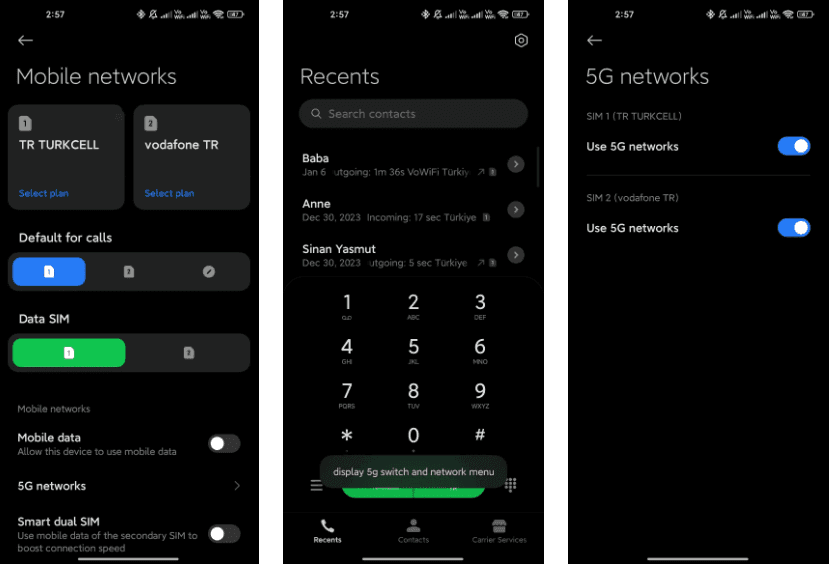
    5g switch

    *#*#726633#*#* – Enable/Disable 5G SA Option on HyperOS

    Unlock the 5G Standalone (SA) option on your network settings using this code, providing more control over your device’s connectivity.
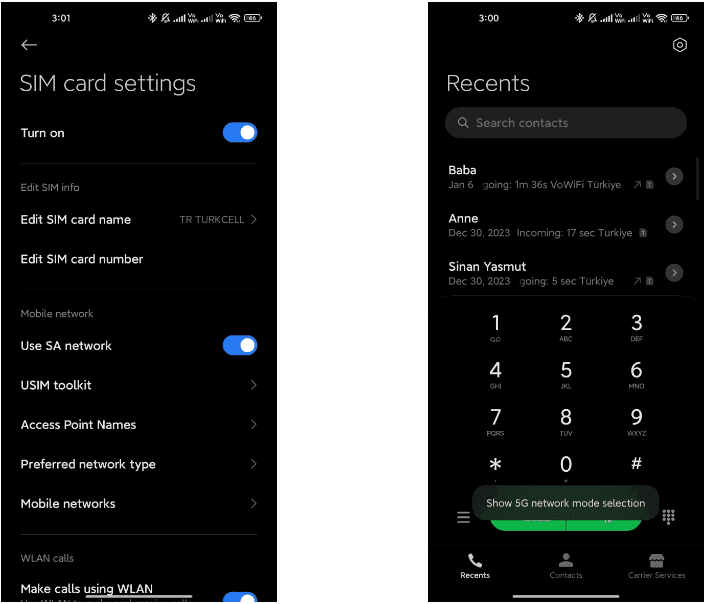
    5g sa

    *#*#6484#*#* – Xiaomi Factory Test Menu (CIT)

    Explore the Xiaomi Factory Test Menu for advanced testing and configuration options.
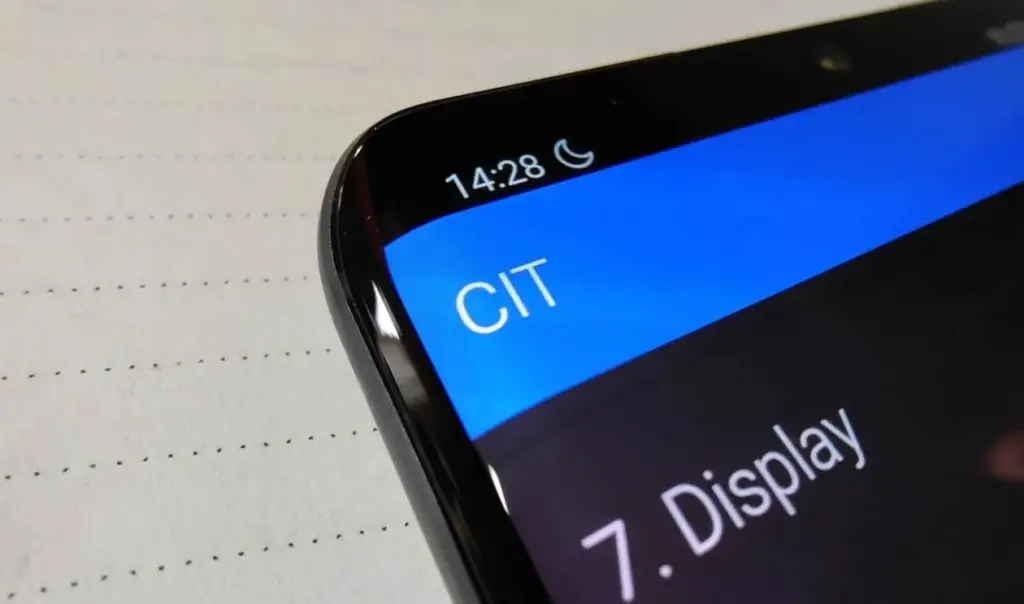
    xiaomi cit menu

    *#*#86583#*#* –  Enable/Disable VoLTE Carrier Check

    Toggle the VoLTE (Voice over LTE) carrier check to customize your network settings and enable or disable this feature.
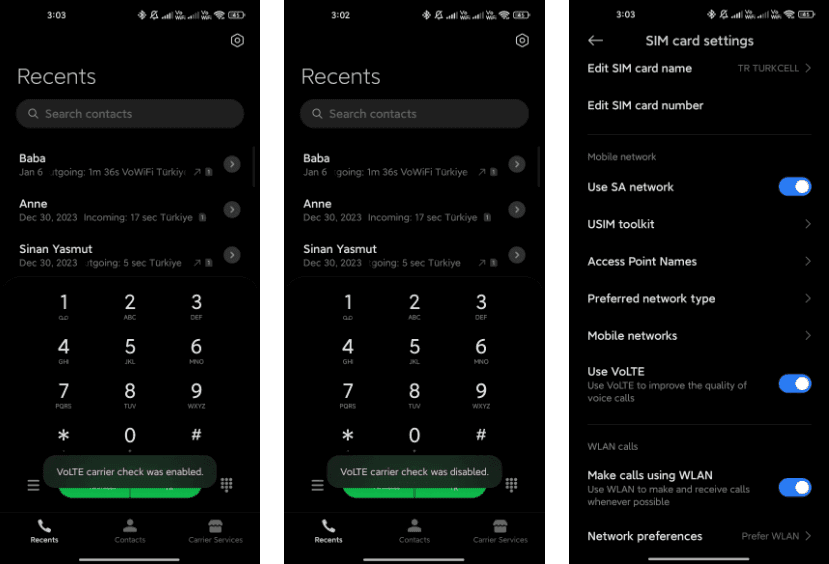
    volte carier check

    *#*#869434#*#* –  Enable/Disable VoWi-Fi Carrier Check

    Take control of your Voice over Wi-Fi (VoWi-Fi) settings by using this code to enable or disable the carrier check.
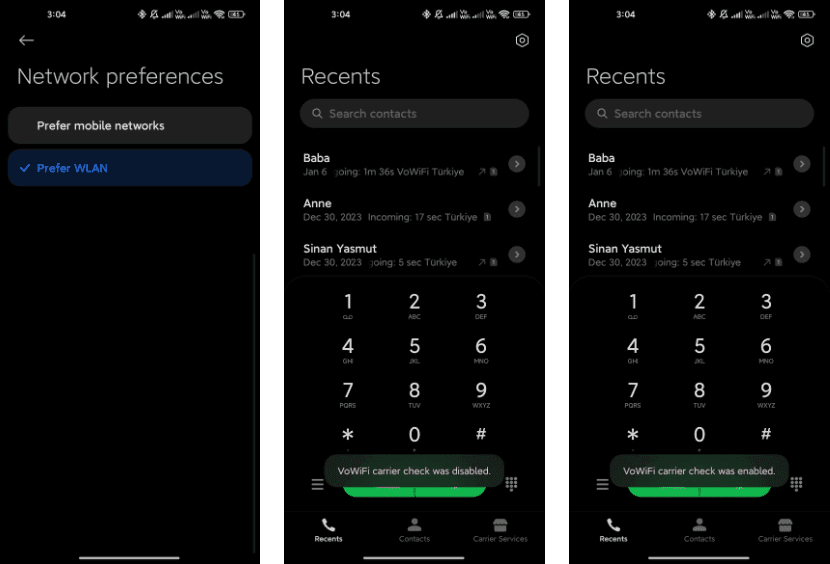
    wofi

    *#*#8667#*#* – Enable/Disable VoNR

    Manage Voice over New Radio (VoNR) settings with this code, providing more options for your device’s voice capabilities.
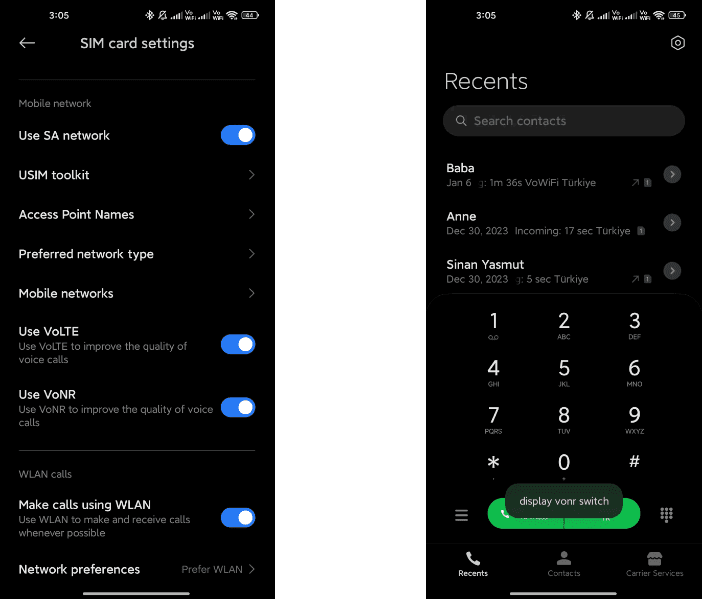
    vonr

    *#*#4636#*#* – Network Information

    Access detailed network information to check your device’s status and connection details.

    *#*#6485#*#* – Battery Information

    Get insights into your device’s battery, including cycle information, actual and original capacity, charging status, temperature, health status, and charging protocol type.

    6485.jpg

    *#*#284#*#* – Capture System Log

    Generate a BUG report to capture system logs, providing valuable information for debugging purposes. The report is saved in the MIUI\debug-log\ folder.
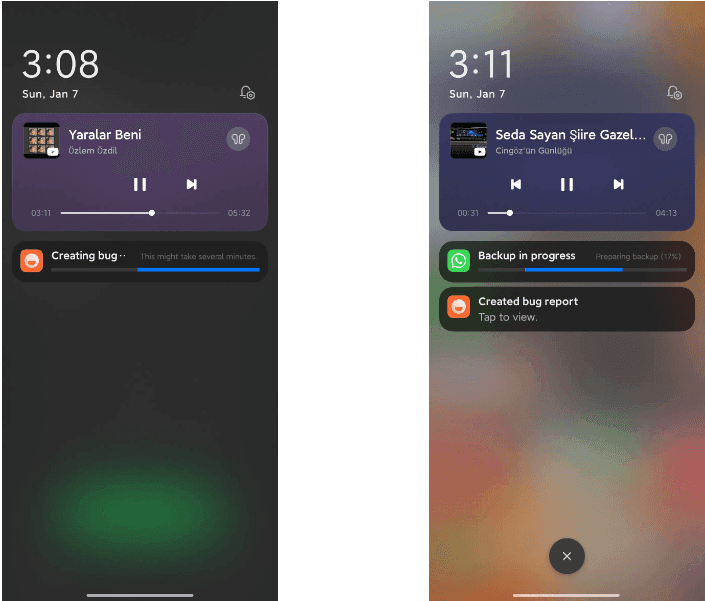
    system log

    *#*#76937#*#* – Disable Thermal Check

    Turn off thermal checking with this code, potentially preventing your device from throttling performance due to high temperatures.

    *#*#3223#*#* – Turn on DC DIMMING Option

    Activate the DC DIMMING option using this code, allowing you to adjust the display settings for a more comfortable viewing experience.

    Unlock the full potential of your Xiaomi device with these secret codes, and improve your Xiaomi HyperOS experience. These hidden codes offer Xiaomi HyperOS users a range of functionalities, from network customization to battery insights and advanced testing options. Users should exercise caution and be mindful of potential impacts on device settings while exploring these codes.
  • Which Xiaomi devices will not experience HyperOS?

    Which Xiaomi devices will not experience HyperOS?

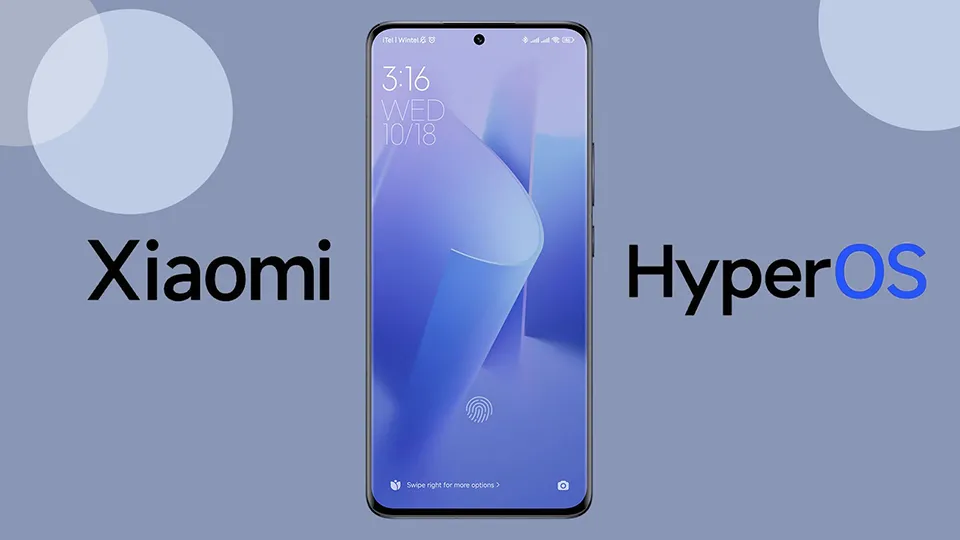
    The world’s flagship phone owners can prepare for rollouts beginning early next year, with the newest models receiving priority. Xiaomi has unveiled its exciting HyperOS update, a stable release built on Android 14 for its top-of-the-line devices. However, there is a twist: not all Xiaomi devices will unlock the full spectrum of HyperOS features.

    Xiaomi has decided to tailor the update based on different Android versions. Some lucky phones will jump straight to the Android 14-powered HyperOS, while others will receive a version tailored for Android 13.

    The selected devices set to experience the Android 14-based HyperOS include Xiaomi Mi Mix Fold 2, 12X, Mi 11X, 11i / Hypercharge, Pad 5, Mi 10S, Redmi K40, Note 11 Pro 5G, Note 11 Pro+ 5G, Note 11 NFC, Redmi Note 11S, Redmi 10 / Prime, Redmi 10C / 10 Power, Poco X3 GT, Poco X4 Pro, Poco M4 Pro 5G, Poco M4 Pro 4G, Poco F4, Poco F3, and Poco F3 GT. This strategic approach ensures that users of specific devices will receive an optimized HyperOS experience tailored to the capabilities of their device and the Android version it operates on.

    Xiaomi hyperos

    Xiaomi HyperOS global rollout in early 2024

    Xiaomi recently began to roll out HyperOS 1.0, a stable update based on Android 14. This is a major software innovation step forward, bringing a plethora of new features and optimizations. While the initial release of HyperOS was restricted to five particular Xiaomi models in China, the global rollout is scheduled for mid-2024, with a primary focus on the newest flagship devices.

    But not every Xiaomi device will go to HyperOS goodies. Xiaomi decided to divide the update according to Android versions, so some devices will get the Android 14-based HyperOS, while others will only get the Android 13 version. This separation is because some HyperOS features require the more sophisticated features that Android 14 brings.

    These are the Xiaomi devices that will miss out on HyperOS

    Here is a brief overview of the Xiaomi devices deemed worthy of the Android 14-based HyperOS:

    1. Xiaomi Mi Mix Fold 2
    2. Xiaomi 12X
    3. Mi 11X
    4. Xiaomi 11i/Hypercharge
    5. Xiaomi 11i 5G
    6. Xiaomi Pad 5
    7. Xiaomi Pad 5 Pro 5G
    8. Mi 10S
    9. Redmi K40
    10. Redmi K40S
    11. Redmi Note 11 Pro 5G
    12. Redmi Note 11 Pro+ 5G
    13. Redmi Note 11
    14. Redmi Note 11 NFC
    15. Redmi Note 11S
    16. Redmi 10/Prime
    17. Redmi 10C/10 Power
    18. Poco X3 GT
    19. Poco X4 Pro
    20. Poco M4 Pro 5G
    21. Poco M4 Pro 4G
    22. Poco F4
    23. Poco F3
    24. Poco F3 GT
    Xiaomi HyperOS update

    Android13 was a challenge

    Good news for owners of older Xiaomi devices: the company plans to release an update called HyperOS, which is based on Android 13, for these devices sometime in the second quarter of 2024. However, if your device receives this version, it will not have all the features that come with the full HyperOS package.

    Nevertheless, while some devices will enjoy the full Android 14-based HyperOS experience, others will have to settle for a slightly scaled-down version. Despite the excitement surrounding the future of smartphone technology, not everyone will get to experience it in its entirety.

    Hopefully, Xiaomi continues to push boundaries, ensuring that future updates are inclusive, bringing innovation to all corners of their extensive user base. Fans of Xiaomi are eagerly awaiting the HyperOS update, but the split based on Android versions adds some complexity to the situation.

  • Huawei & Xiaomi surpass iPhone sales in China

    Huawei & Xiaomi surpass iPhone sales in China

    Over the course of the holiday sales period, Huawei and Xiaomi handsets outsold Apple’s iPhones in the Chinese market. Local firms appear to have benefited the most from China’s Singles Day sale, which is held on November 11.

    Huawei Xiaomi phones beat out th

    Huawei and Xiaomi register outperform Apple in China

    The latest iPhone 15 lineup from the Cupertino-based company was surpassed in sales by the Chinese tech giants, according to a Counterpoint Research report. The report also noted that domestic brands’ smartphones saw higher sales during the 11.11 shopping period, while iPhone sales fell by 4 percent in the two weeks from October 30 to November 12.

    However, Xiaomi also saw a notable 28 percent increase during this same period. Notably, the two domestic companies’ jump in sales also boosted the local market’s smartphone sales overall by 5 percent year on year during the Singles’ Day sales period. Huawei, on the other hand, saw a sizeable 66 percent year on year increase in its Singles’ Day sales, driven primarily by its latest flagship 5G series (the Mate 60 lineup).

    In terms of pricing, the Huawei Mate 60 series is priced at 5,499 Yuan, or approximately 775 US dollars, starting at 3,999 Yuan, or roughly 563 US dollars, while the Xiaomi 14 lineup is priced at 5,999 Yuan, or approximately 845 US dollars. Xiaomi even revealed sales figures from the shopping festival, stating that sales totaled over 22 billion Yuan, or approximately 3 billion US dollars.

  • HyperOS 1.0 – which Xiaomi device will be the first to get the update?

    HyperOS 1.0 – which Xiaomi device will be the first to get the update?

    With the goal of increase user experiences across all of Xiaomi’s products, the company is preparing the release of its much awaited HyperOS 1.0, a cutting-edge integrated system based on Google’s Android 14. This new operating system is meant to accommodate the growing Internet of Things (IoT) ecosystem, seamlessly connecting various devices for enhanced performance and interconnectivity. HyperOS is built on Linux and leverages Xiaomi’s Vela system for enhanced efficiency and resource management. Moreover, Xiaomi is encouraging open-source development by utilizing Xiaomi Vela to create a human-centric ecosystem connecting personal devices, automobiles, and smart home technology.

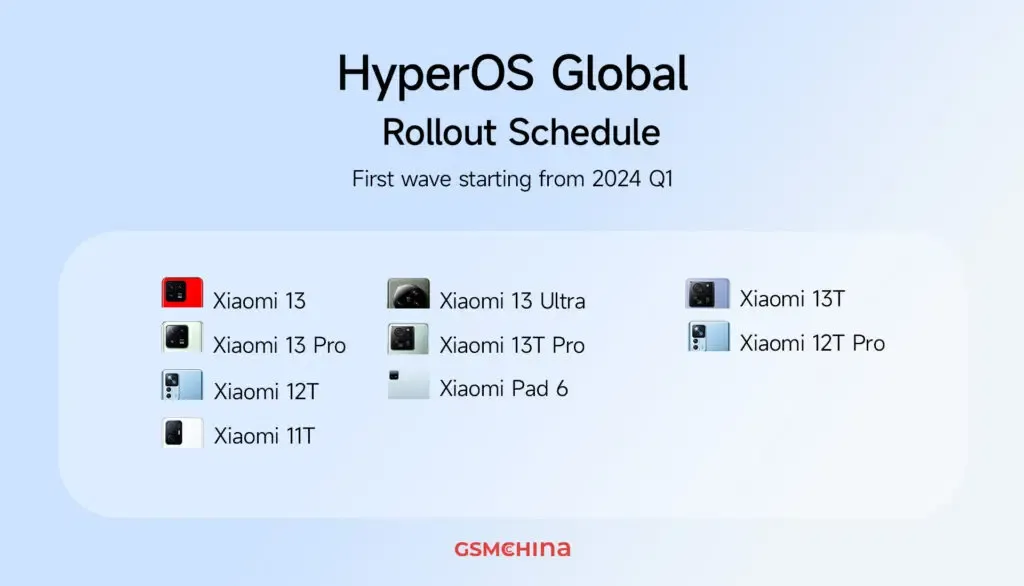
    The first wave of updates to HyperOS 1.0 will cover nine devices, including different models from the Xiaomi 13 and 12 series as well as the Xiaomi Pad 6. GSMChina reported that Xiaomi has already published its update roadmap for Chinese models, but for the global audience, the rollout of updates is scheduled to begin in the first quarter of 2024.

    HyperOS 1.0 update schedule

    Here’s the complete list of nine global devices that are set to receive the HyperOS 1.0

    • Xiaomi 13 Ultra
    • Xiaomi 13 Pro
    • Xiaomi 13
    • Xiaomi 13T Pro
    • Xiaomi 13T
    • Xiaomi 12T Pro
    • Xiaomi 12T
    • Xiaomi 11T
    • Xiaomi Pad 6

    The official Xiaomi server has verified these updates, according to GSMChina. Devices that were not included in the initial release should expect updates in later HyperOS 1.0 releases. Xiaomi is currently in the final testing stage, collaborating with its engineering team to make sure HyperOS 1.0 is ready for daily use upon launch. The initial HyperOS domestic release is planned for December 2023 in China, accompanied by a wide array of devices, including smartphones such as the Xiaomi 14 (which comes pre-installed) and Redmi K60 Ultra, the Xiaomi Pad 6 Max 14-inch tablet, the Xiaomi TV S Pro series, the Xiaomi Watch S3, the Xiaomi Sound speaker, and the Xiaomi Smart Camera 3 Pro.

    (Source)

  • Leaked information on the Redmi K60 Ultra’s release date, appearance, and projected cost

    Leaked information on the Redmi K60 Ultra’s release date, appearance, and projected cost

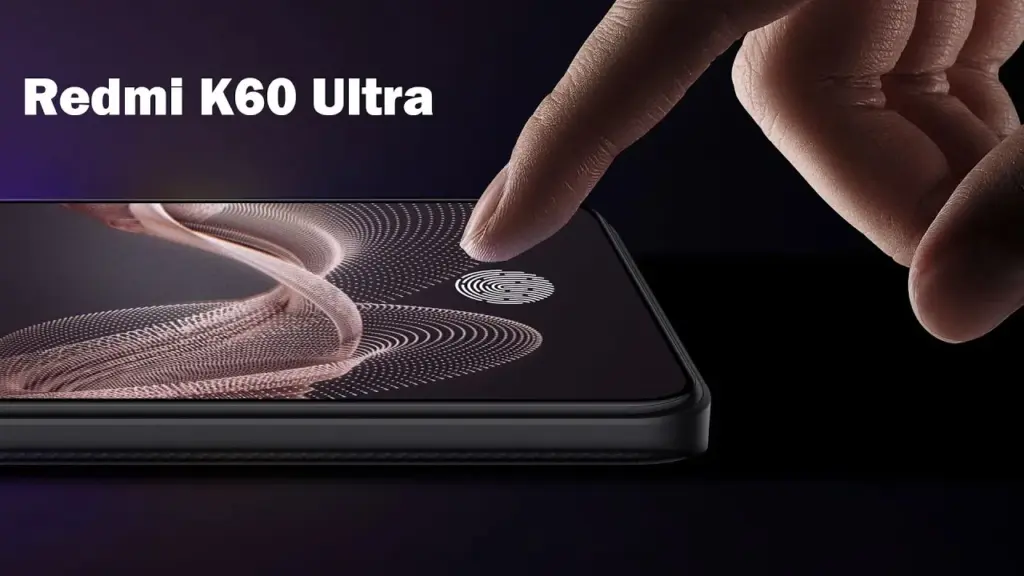
    Leaked Redmi K60 Ultra launch date, style, features, and anticipated cost. The Redmi K60 Ultra is the forthcoming flagship model for the Chinese market from Xiaomi’s Redmi sub-brand. The device will be made available as a replacement for last year’s Redmi K50 Ultra.

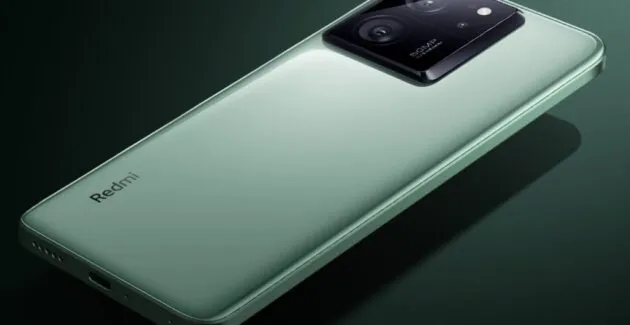
    Like its predecessor, the K6 Ultra is projected to exclusively be offered in the Chinese market. Similar to how a modified version of the K50 Ultra was introduced with the Xiaomi 12T Pro moniker in the foreign market, a customized model of the K60 Ultra is rumored to arrive soon globally under the Xiaomi 13T Pro label.

    Here is a summary of all the information we currently have on the K60 Ultra. On August 14 at 7 o’clock (local time), the Redmi K60 Ultra is scheduled to go on sale in China. The event will be aired live in China on Weibo and other streaming services.

    redmi k60 ultra

    Rumors on specifications

    At the same launch, the Xiaomi Mix Fold 3 folding phone, Xiaomi Pad 6 Max tablet, and Xiaomi Band 8 Pro will all be introduced. The Redmi K60 Ultra will come with a 6.67-inch OLED display with a 1.5K resolution, 144Hz refresh rate, P3 color gamut, and 2,600 nits of brightness.

    The company has already disclosed that a PixelWorks X7 display chip will power the screen, providing a superior viewing experience. Nothing is known about the Redmi K60 Ultra’s front camera. But, the 50-megapixel Sony IMX800 primary camera on its back panel will feature OIS and have an 8K video recording capability. There is currently no information available concerning the extra cameras on the device.

  • Although MIUI 15 was spotted on Xiaomi’s website, its launch is still months away.

    Although MIUI 15 was spotted on Xiaomi’s website, its launch is still months away.

    miui 15

    Although MIUI 15 has been planned for development and release by Xiaomi for a number of years, it is still in the alpha testing phase. Yet this marks the first time that MIUI 15 has been reported to have appeared on MIUI.com without the words “alpha” or “test” next to it. Sadly, this time only a text string was discovered in a webpage’s HTML code; there was no beta test version released into the open. Yet, its release represents a significant turning point in the development of MIUI 15.

    Although MIUI 15 has been planned for development and release by Xiaomi for a number of years, it is still in the alpha testing phase. Yet this marks the first time that MIUI 15 has been reported to have appeared on MIUI.com without the words “alpha” or “test” next to it. Sadly, this time only a text string was discovered in a webpage’s HTML code; there was no beta test version released into the open. Yet, its release represents a significant turning point in the development of MIUI 15.

    Many Xiaomi consumers are still awaiting the MIUI 14 upgrade for their devices even though MIUI 15 is still a few months away. It is yet unknown whether all eligible devices will be updated before the launch of MIUI 15, as delayed upgrades are never helpful for a tablet or smartphone manufacturer’s reputation.

    Source(s): Xiaomiui

  • Xiaomi MIX 5 live image – design, UD camera & key specs

    Xiaomi MIX 5 live image – design, UD camera & key specs

    The mysterious Xiaomi Mix 5 is now again a hot topic of conversation after reports about it died down last year. The MIX 5 was supposed to launch in 2022, but for reasons that are still a mystery, that plan was scrapped. But a new source boosted the prospect of a 2023 release, raising hopes for the much awaited gadget.

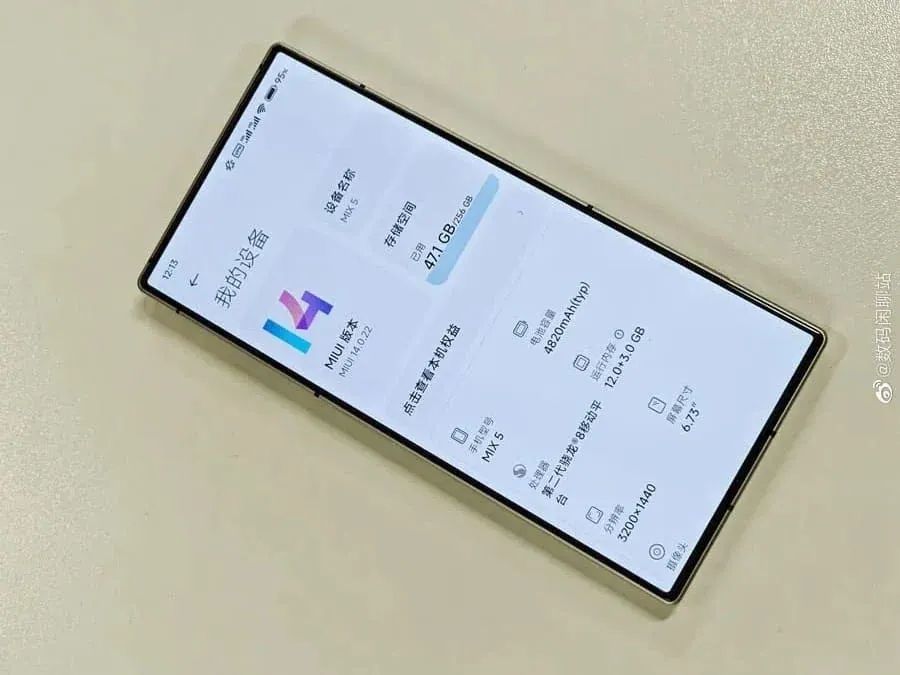
    Popular tipster DCS published a live image on Weibo that was purported to be the Xiaomi MIX 5 in a recent leak. The gadget has a boxy form with symmetrical bezels and an under-display camera, which appears to depart from the typical design language associated with Xiaomi. Intriguingly, the recently unveiled Red Magic 8 Pro gaming smartphone and the MIX 5 look remarkably similar. Given that the antenna lines are in precisely the same locations, it is quite likely that this is a Red Magic 8 Pro upon closer investigation. But on the off chance that this is the real deal, the gadget might have the following specifications.

    xiaomi mix 5

    Specs

    The Xiaomi MIX 5 is expected to have outstanding features, according to a live image that tipster DCS posted on Weibo. According to reports, the smartphone has a huge 6.73-inch display with a resolution of 3200 x 1440 pixels, most likely an AMOLED panel. The MIX 5 is expected to include a Snapdragon 8 Gen 2 SoC under the hood, along with a huge 12GB of RAM and 256GB of internal storage. The smartphone is anticipated to include a substantial 4820mAh battery to run all day. The picture also reveals that MIUI 14, which is based on Android 13, will operate on the MIX 5.

    Overall, these specifications indicate that the MIX 5 will be a powerful and capable device that could be worth waiting for.

    Harware

    In the past, it was rumored that the Xiaomi MIX 5 would come with an impressive 200W fast charging capability. It is unclear if this feature will be included in the upgraded version of the device. Furthermore, earlier reports suggested that the MIX 5 would be equipped with a 48MP front-facing camera and a triple-camera setup on the back. This setup was said to consist of a 50MP OIS lens, a 48MP ultra-wide sensor, and a 48MP telephoto lens with 2x optical zoom. However, there is no official confirmation regarding these camera specifications as of yet. It remains to be seen if the final product will match these rumors or if there will be changes made to the device.

  • Xiaomi will end OS updates for these devices

    Xiaomi will end OS updates for these devices

    Six different Xiaomi, Redmi, and POCO devices will no longer receive official support, according to a new announcement from Xiaomi. Since these devices have been available for two years, MIUI and Android upgrades will no longer be provided for them. The MIUIs telegram channel shared the information, including the precise models that Xiaomi would stop supporting as of April 21, 2023.

    The original model and all of its variants are on the list of devices that will no longer receive updates. Also, each model’s internal name is included to aid in identification. Despite the fact that some of the listed devices have just been on the market for two years. They won’t get any further official help from the business.

    xiaomi os devices update

    The six devices that will no longer receive updates:

    • Redmi K40 Pro/+/Xiaomi 11X Pro/Xiaomi 11i (haydn)
    • Redmi K40/Xiaomi 11X/POCO F3 (alioth)
    • Redmi K40 Gaming/POCO F3 GT (ares)
    • Redmi Note 10 Pro/POCO X3 GT (chopin)
    • Xiaomi 10S (thyme)
    • Xiaomi 11 Lite 5G (renoir)

    The development of the beta version of the Chinese MIUI ROM for these models will stop. Which means that they will reach the end of their support period. However, Xiaomi has clarified that the stable versions of these models will continue to receive updates until all the features planned for the current version have been implemented, and all the bugs present in the current version have been fixed. So, users of these devices will still receive updates and bug fixes until the stable version has reached its final update.

    It is important to note that several of these models have existed under many names in various parts of the world. As a result, both the original model and its several variations are included in the list. Moreover, each model’s internal name. so that consumers may more easily recognize their gadgets.

    In conclusion, Xiaomi has revised its list of products that the company will stop supporting. The stable versions of MIUI and Android will continue to receive updates until they have all the features that are in the works and a fix for all the bugs that are present in the current version, even if the devices will no longer receive MIUI and Android updates.

  • Android 13 update through Mi Pilot program started rolling out for Xiaomi 12 – MIUI 14

    Android 13 update through Mi Pilot program started rolling out for Xiaomi 12 – MIUI 14

    Despite Xiaomi’s official presentation of MIUI 14 in December, the OS update has not yet been widely released. At the time, Xiaomi stated that the OS update would be made available for the Xiaomi 12 series starting in January 2023, and it followed through with the Xiaomi 12 Lite. The Xiaomi 12 has now been added to the short list of devices that can download MIUI 14 in one way or another. Before February is up, the Xiaomi 12 Pro, MIX Fold 2, Xiaomi 12S series, and Redmi K50 series are all scheduled to receive MIUI 14.

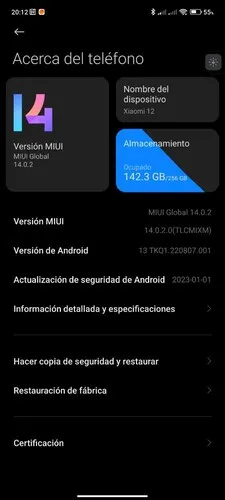
    Currently, Xiaomi has only made MIUI 14 available to Xiaomi 12 devices that have been accepted into the Mi Pilot Program. The build number suggests that Xiaomi issued MIUI 14 as MIUI 14.0.2.0 to the Xiaomi 12 at this early stage of the OS’s lifecycle, according to The Update Box. For perspective, the update is 4.45 GB in size and comes with the January 2023 set of Android security updates. Before switching from MIUI 13 to MIUI 14, Xiaomi advises users to create a complete backup. The following is the URL to download MIUI 14.0.2.0:

    Xiaomi 12 – MIUI V14.0.2.0.TLCMIXM

    miui 14

    Unless Xiaomi finds any significant flaws, Mi Pilot Program builds typically take a few weeks before they are released to a larger audience. Even though MIUI 14 is a hefty download, once loaded, the OS should use less storage space than MIUI 13 did. In addition, MIUI 14 offers more system program uninstall options than MIUI 13 provides, which when combined with an automatic duplicate file finder can help users use built-in storage more efficiently. It is claimed that MIUI 14 consumes up to 22% less power than MIUI 13 while loading apps up to 60% faster. However, it is unknown whether all the advancements featured in the Chinese version of MIUI 14 will be included in the international release.

  • Xiaomi 13 Pro vs  iPhone 14 Pro Max –  Snapdragon 8 Gen 2 wins real-world gaming testing

    Xiaomi 13 Pro vs iPhone 14 Pro Max – Snapdragon 8 Gen 2 wins real-world gaming testing

    After making its debut in November, the new Snapdragon 8 Gen 2 is now slowly making its way into the market. The new Xiaomi 13 series is powered by the company’s flagship processor, and the Xiaomi 13 Pro has just been put to the test in a competitive gaming environment.

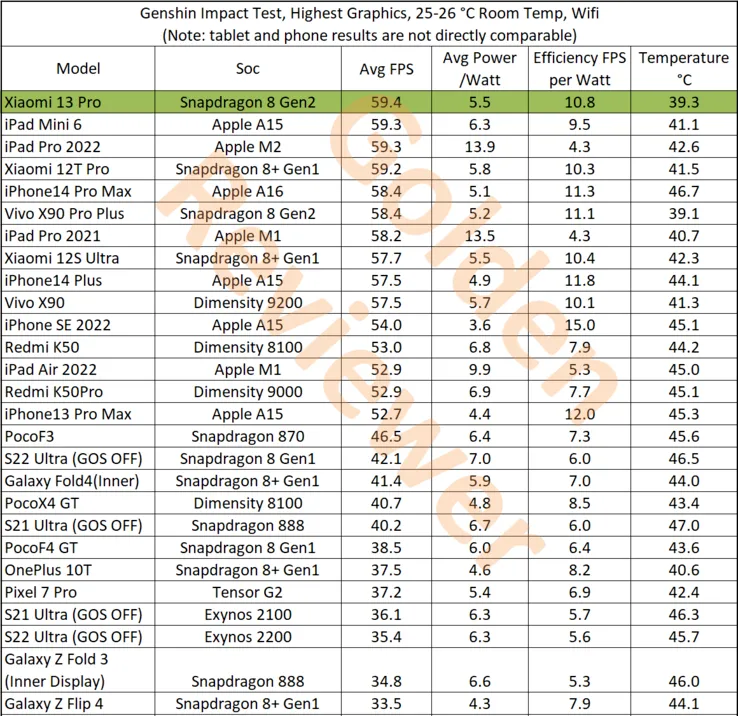
    This test, conducted by Golden Reviewer on the well-known game Genshin Impact, demonstrates the Snapdragon 8 Gen 2 in the Xiaomi 13 Pro’s performance, which easily exceeds all competitors. The Xiaomi 13 Pro has the highest tested raw performance, averaging 59.4 frames per second (FPS). Comparatively, the Dimensity 9200 on the Vivo X90 achieves 57.5 FPS while the iPhone 14 Pro Max and its A16 Bionic accomplish 58.4 FPS.

    With higher efficiency scores and lower power consumption than the Dimensity 9200, the Xiaomi 13 Pro and Snapdragon 8 Gen 2 also outperform it in terms of efficiency. However, the iPhone 14 Pro Max does have a slight edge in some areas. Most impressively, though, is that the Xiaomi 13 Pro achieves these performance benchmarks while remaining cooler than every other tested tablet. It only reaches a maximum temperature of 39.3°C. In contrast, the iPhone 14 Pro Max achieves a maximum temperature of 46.7°C, while a tablet like the iPad Pro 2022 only hits 42.6°C.

    Snapdragon

    Source: Golden Reviewer