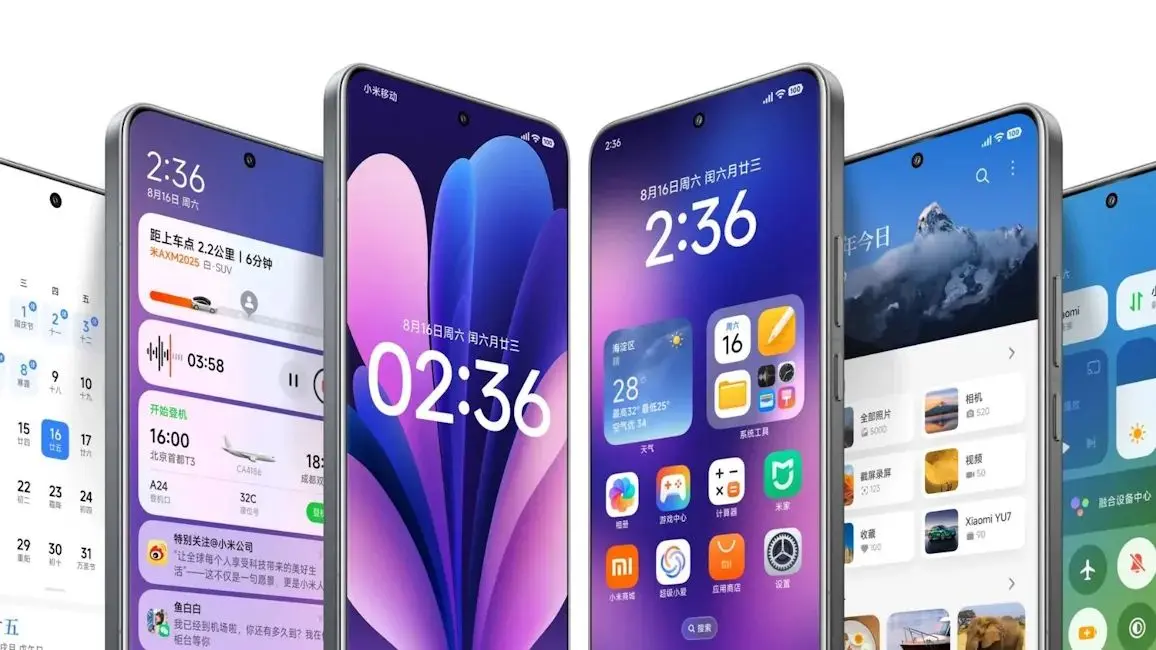
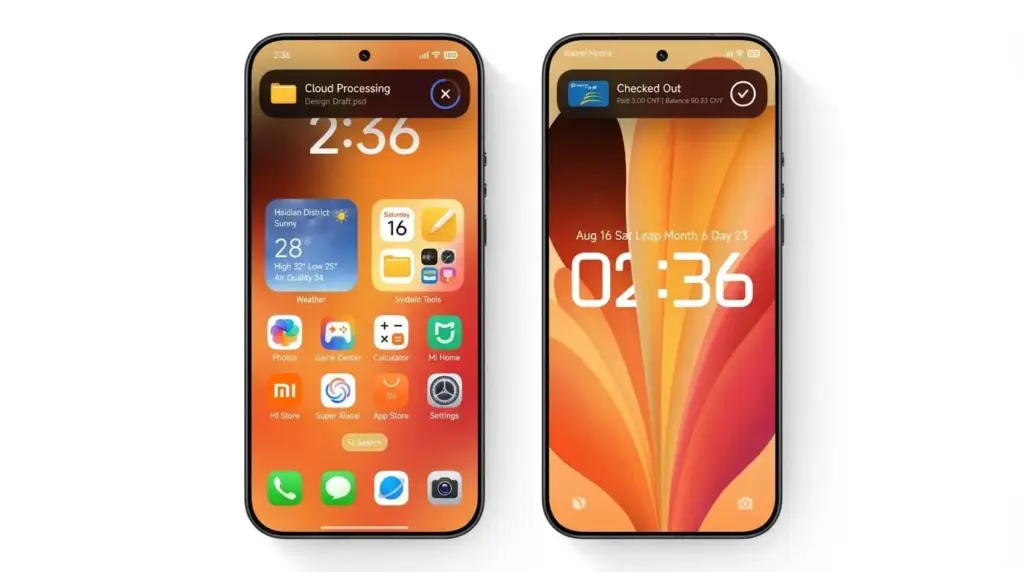
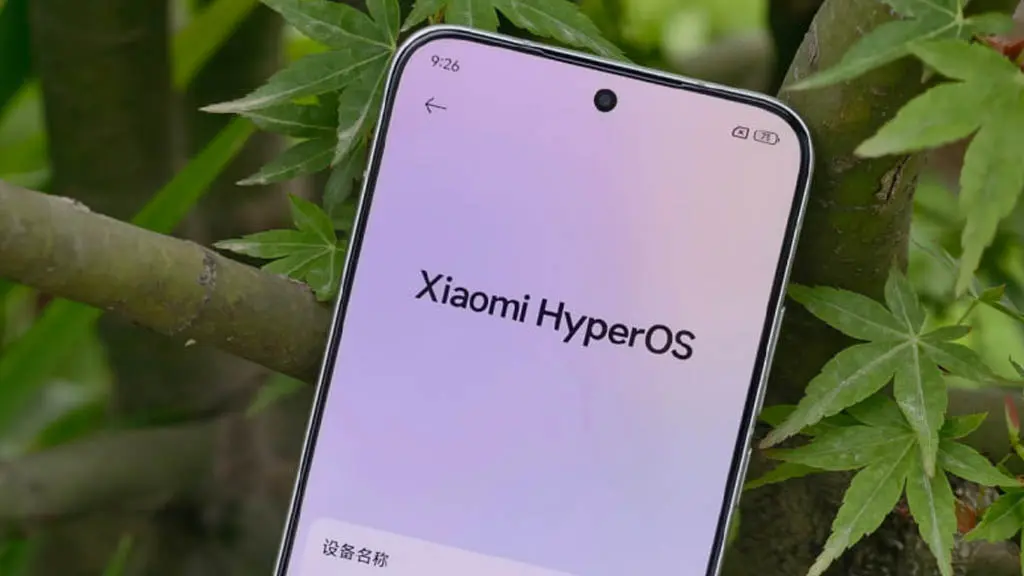
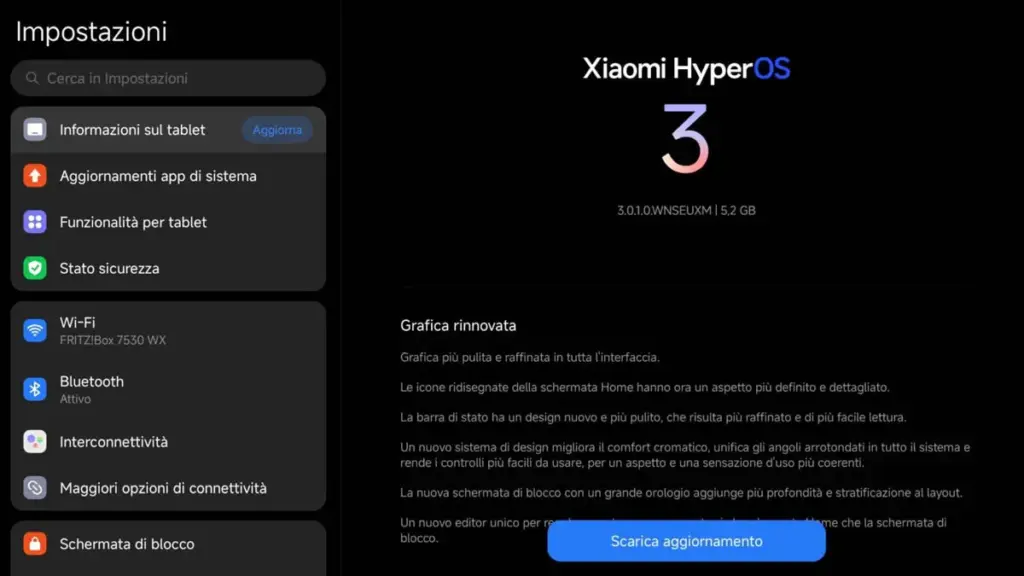
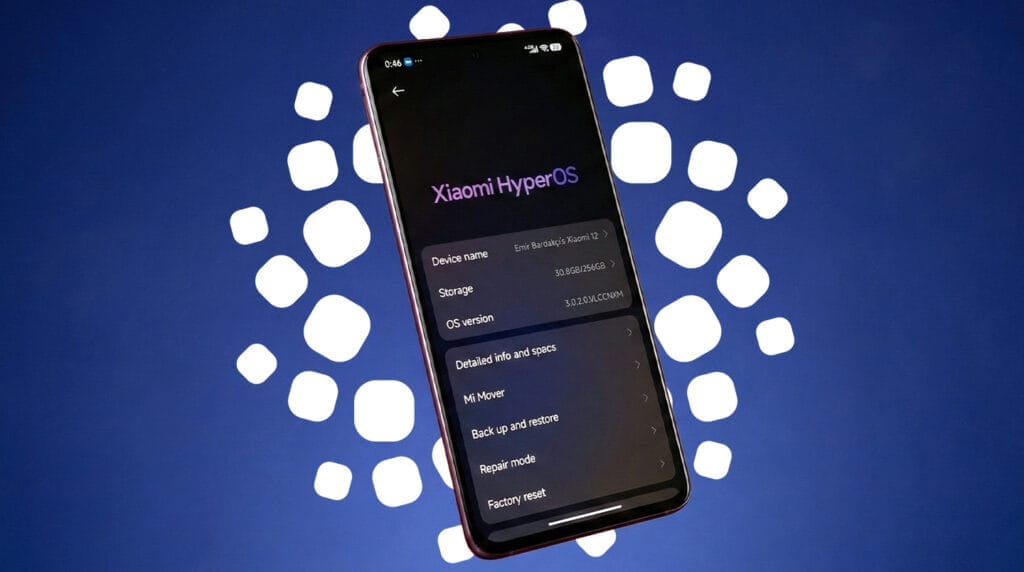
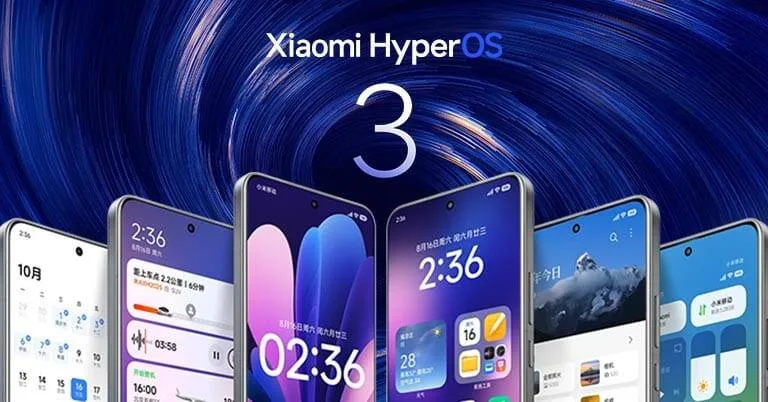
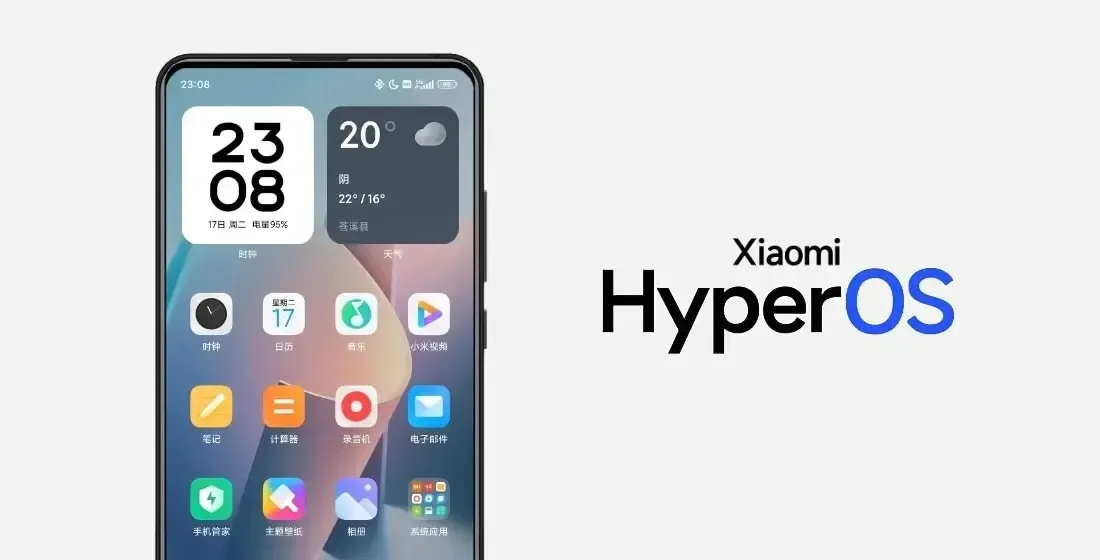
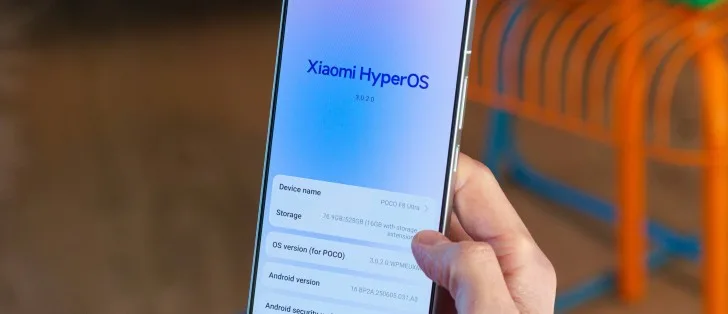
Xiaomi has hit a significant milestone in its software rollout, with HyperOS 3.1 distribution now surpassing 85% globally. Built on Android 16, the update has reached nearly all eligible devices across the Xiaomi, REDMI, and POCO lineups — making it one of the fastest deployment cycles the company has executed to date.
Every Android 16-capable Xiaomi device has received HyperOS 3.1, with only a handful of entry-level and mid-range models still in the queue. The speed of the rollout reflects Xiaomi’s broader push toward software consistency across its increasingly large device portfolio.
What HyperOS 3.1 Brings
This isn’t a minor maintenance update. HyperOS 3.1 delivers several system-level changes spanning the UI, connectivity, and multitasking experience.
Advanced HyperIsland Interface
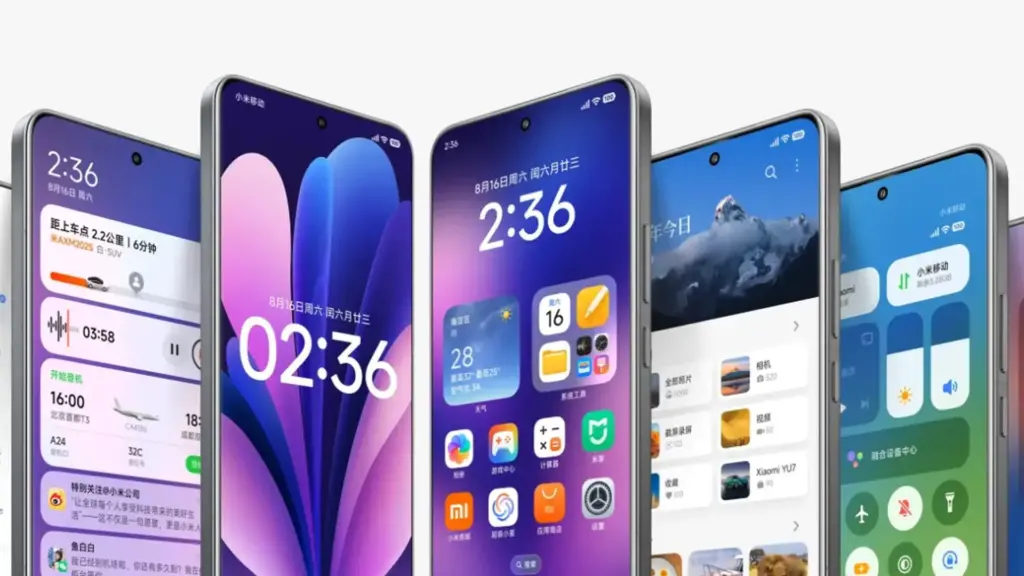
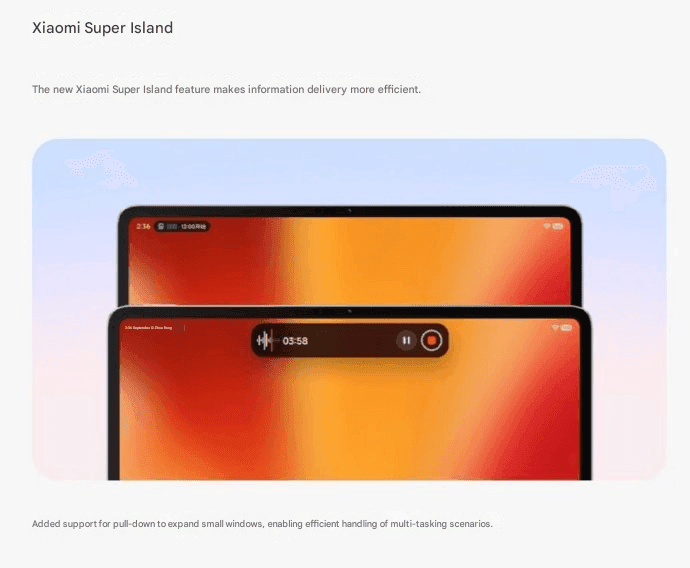
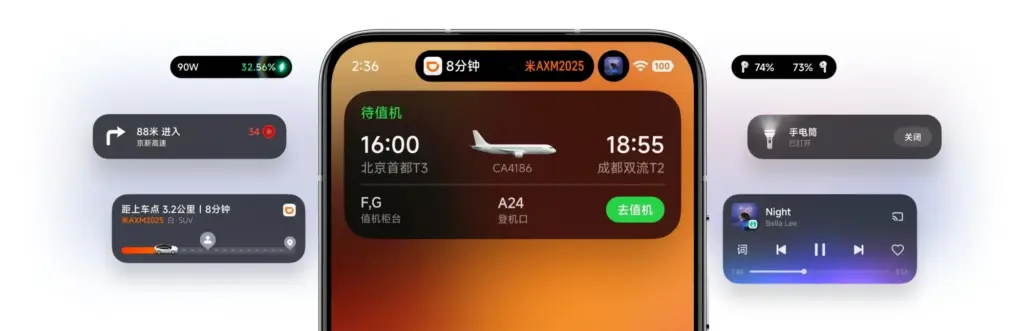
The HyperIsland notification layer has been further developed, now supporting real-time activity tracking for calls, timers, and media playback. Animations and transitions have been refined, and third-party app compatibility has been expanded. The result is a more dynamic and interactive notification system that positions HyperIsland as Xiaomi’s take on the kind of live activity UI that competing ecosystems have popularized.
Enhanced Xiaomi HyperConnect
Cross-device functionality gets a meaningful upgrade in HyperOS 3.1. File transfers between devices are faster, latency in device syncing has been reduced, and multi-device control — covering phones, tablets, and wearables — is more responsive. For users invested in the Xiaomi ecosystem across multiple device categories, this update makes the connected experience noticeably more reliable.
iOS-Inspired Recent Apps Interface
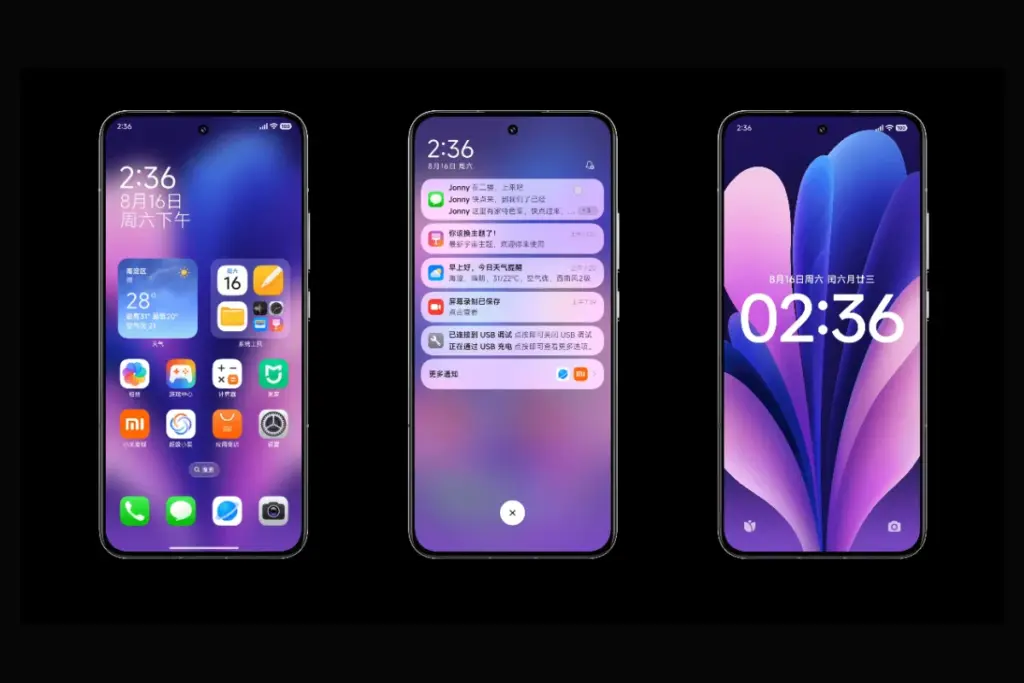
The Recent Apps menu has been redesigned with a horizontal, card-based layout that draws clear inspiration from iOS. Gesture navigation is smoother, and memory management is more visually transparent. The change fits into Xiaomi’s ongoing UI modernization effort under the HyperOS platform.
Devices Still Waiting for HyperOS 3.1
Despite the broad rollout, the following devices have not yet received the update:
REDMI 14C
REDMI A3 Pro
REDMI 13
REDMI 13X
REDMI Note 14 Pro 4G
REDMI Pad 2 Pro 5G
REDMI Pad SE 4G
REDMI Pad 2
REDMI Note 14 4G
REDMI A4
POCO C75 5G
POCO M6
POCO C75
POCO Pad M1
POCO C85 4G
POCO M7 4G
REDMI Note 15 Pro 4G
These models are expected to receive HyperOS 3.1 in the final rollout phases. The delays are likely down to a combination of hardware optimization requirements, regional firmware certification timelines, and the additional tuning often needed for entry-level chipsets.
With HyperOS 4 already on the horizon, the pace and breadth of the HyperOS 3.1 rollout points to a clear strategic shift – Xiaomi is no longer treating software updates as a routine obligation, but as a core part of building a unified ecosystem across its entire device range.
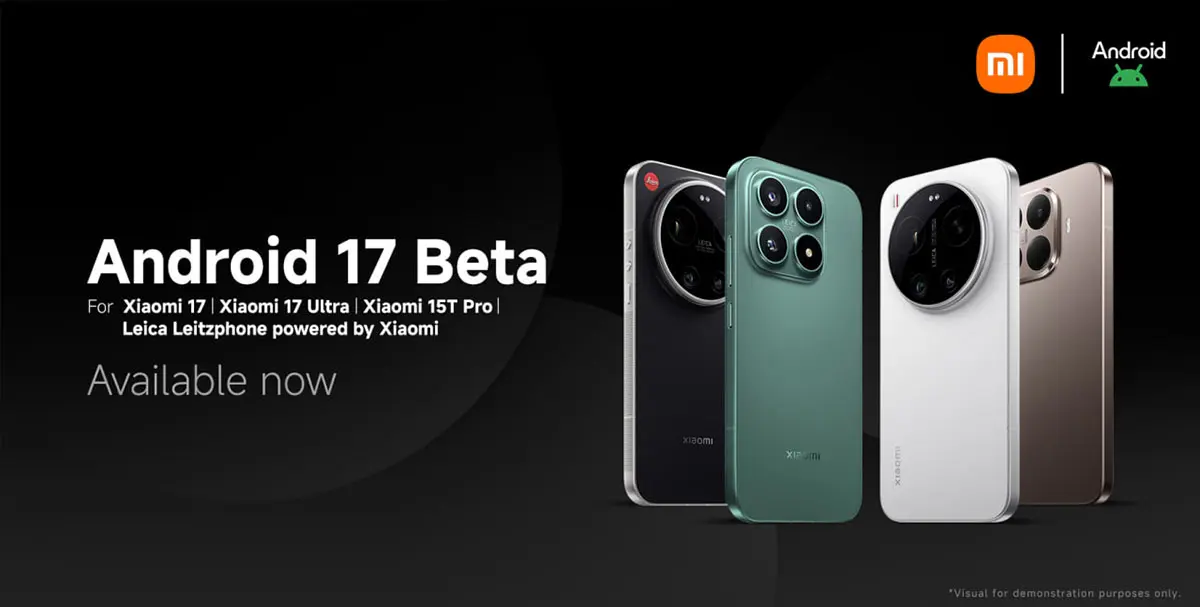
Xiaomi has officially stepped up its Android 17 transition after publishing a developer adaptation announcement that appears to have indirectly revealed the company’s rollout roadmap. The notice urges developers to wrap up Android 17 compatibility work before July 1, 2026 — a deadline that strongly implies stable Xiaomi HyperOS builds based on Android 17 are arriving much sooner than most anticipated. The move puts Xiaomi alongside OPPO, vivo, and Honor as one of the most aggressive Android manufacturers in preparing their ecosystems for the new platform.
Xiaomi already testing Android 17 Beta 2 on the Xiaomi 17 series
According to Xiaomi’s official developer notice, developers with access to the Xiaomi 17 Ultra, Xiaomi 17 Ultra Leica Edition, and Xiaomi 17 can now install Xiaomi HyperOS 3.3 Developer Preview firmware based on Android 17 Beta 2. This is one of the clearest signals yet that Xiaomi’s Android 17 development has moved into an advanced stage. The company is pushing application developers to complete adaptation work before July 1, 2026, to ensure full compatibility with upcoming HyperOS builds.
What the July 1 deadline says about Xiaomi’s roadmap
Xiaomi hasn’t formally announced a stable Android 17 release date, but the adaptation deadline paints a fairly clear picture of what’s coming and when. Based on the company’s previous software release patterns, the likely Android 17 roadmap looks something like this:
July 2026 — Final application compatibility verification, system stability improvements, and carrier and ecosystem preparation
Mid-July to August 2026 — First stable Xiaomi HyperOS 3.3 or 4 Android 17 builds, with an initial rollout targeting flagship Xiaomi devices
Q3–Q4 2026 — Wider rollout across Xiaomi, REDMI, and POCO devices globally
The timeline makes clear that Xiaomi intends to keep HyperOS among the fastest-updated Android platforms in the industry.
Xiaomi HyperOS Android 17 rollout expected to start with the Xiaomi 17 series
The Xiaomi 17 lineup is shaping up to be the first stable Android 17 HyperOS platform. With Android 17 Beta 2 developer firmware already being distributed for these devices, the series is effectively serving as Xiaomi’s primary validation hardware for the new Android version. This mirrors Google’s own Pixel beta rollout strategy, where new flagship devices act as the initial optimization platform before broader expansion begins.
The urgency behind the developer adaptation push also suggests Android 17 introduces platform behavior changes substantial enough to require early preparation. The likely changes include stricter background activity limitations, enhanced permission management, improved battery optimization, new security sandboxing features, updated notification behavior, advanced AI framework integration, and better optimization for large-screen and foldable devices.
Apps that don’t adapt in time risk crashes, background execution failures, notification delays, or UI instability on Android 17 hardware. That’s precisely why Xiaomi and other major manufacturers are pressing developers to act well ahead of stable releases.
OPPO, vivo, and Honor join the Android 17 adaptation push
The ecosystem preparation extends well beyond Xiaomi. OPPO, vivo, and Honor have each published official Android 17 adaptation notices with the same July 1, 2026 deadline for developers. OPPO has gone furthest in spelling out the consequences, warning developers that apps failing to meet adaptation requirements could face search warning labels, device compatibility restrictions, and potential removal from app stores. That’s a strong signal of how seriously Android manufacturers are treating ecosystem stability ahead of what promises to be one of the more significant Android platform transitions in recent years.
The long-awaited Android 16 phase has now officially started for Xiaomi’s flagship family. Today, the stable Xiaomi HyperOS 3.1 update began rolling out to Xiaomi 15 users in the European Economic Area (EEA). This major release is an important step in Xiaomi’s software progress, moving beyond earlier beta builds and delivering a fully public, stable version directly through the Updater app.
System Architecture & New Features
This update brings a major refresh to the system interface, the underlying code structure, and the company’s cross-platform ecosystem features. Here is the technical breakdown of the main additions in HyperOS 3.1:
Advanced Hyper Island System: The dynamic notification and system status area has been noticeably refined, with smoother animations and richer, more interactive live activities around the camera cutout.
Enhanced iOS Connectivity: Xiaomi has significantly improved its cross-platform workflow, making it easier to share files, sync clipboards, and interact between the Xiaomi 15 and Apple’s iOS ecosystem.
iOS-Style Stacked Recent Apps: The multitasking menu has been redesigned with a stacked, card-based layout similar to iOS, making background app navigation quicker and the visual presentation more intuitive.
Rust-Based System Applications: In a major move toward security and memory safety, several core system applications have been rewritten entirely in the Rust programming language, cutting system overhead and reducing the risk of memory leak vulnerabilities.
Update Details
Device Name: Xiaomi 15 Device Codename: dada Target Region: EEA (Europe) OS Version: OS3.0.301.0.WOCEUXM Android Version: Android 16 Release Type: Stable (Publicly available via the system Updater)
For everyday users, the move to Android 16 and HyperOS 3.1 should make the phone feel noticeably smoother and more responsive. The Rust-based system apps help memory allocation work more efficiently, which should reduce the chances of the UI dropping frames during heavy multitasking.
The upgraded iOS connectivity is also likely to be especially useful for users working across mixed-device setups. It removes much of the friction involved in moving media or documents between a Xiaomi flagship and an iPad or Mac, which should make day-to-day file sharing feel far less tedious.
The HyperOS 3.1 stable update has begun to roll out for devices worldwide, which is fantastic news for Xiaomi users. In the first phase, the company pushed the most recent version to the highest-end devices, but it will soon be extended to more compatible phones.
Xiaomi HyperOS 3.1 is a little but important update. The new OS version, which is based on Android 16, offers improvements for multitasking and file sharing.
With the improved HyperConnect, it enhances Apple Ecosystem integration, which is more environmentally friendly. As a result, transferring files between devices is made simpler and more seamless.
Regarding the worldwide devices, the following models are compatible with the Xiaomi HyperOS 3.1 stable update (refer to the software version indicated next to the devices):
Xiaomi 17 – HyperOS 3.0.301.0
Xiaomi 17 Ultra – HyperOS 3.0.301.0
POCO Pad/Redmi Pad Pro – HyperOS 3.0.301.0
The facts suggest that the HyperOS 3.1 stable update is currently available in Europe. The updated version will soon be available in more markets and phones from Xiaomi. Let’s see what new features HyperOS 3.1 offers consumers in the interim.
1. Smart Island on tablets: For its tablets running HyperOS 3.1, Xiaomi has finally released Hyper Island. Large-screen users can now enjoy a rich and unfettered experience while monitoring the real-time activities of specific apps at the top of the display.
2. Fluent System Apps: Many system apps were rewritten by Xiaomi using the most recent version of the Rust programming language. This technique makes multitasking loads more fluid and enhances memory security.
3. iOS-inspired Recent Apps Menu: Users will now get an iOS-style Recent Apps Menu with a new card-swiping gesture.
4. Enhanced Apple Ecosystem: Xiaomi HyperConnect enables users to bridge the gap between Xiaomi’s tablet lineup and the Apple Ecosystem. They get seamless cross-device file sharing and improved workflow continuity.
With HyperOS 4, Xiaomi intends to make significant changes. The old MIUI code is entirely removed by the business. The system becomes more stable and quicker as a result. In August 2026, HyperOS 4 will be available. It turns into the initial “Zero-Legacy” version.
In HyperOS 3.1, Xiaomi begins to clear up outdated code. The MIUI SDK is eliminated from the Weather and Gallery applications. All legacy code from MIUI 1 to HyperOS 3 is removed. The system eliminates outdated dependencies and sluggish function calls. A new operating system is produced as a result. It decreases bugs and increases speed.
Key changes:
Removes MIUI backward compatibility layer
Uses only HyperOS SDK in all modules
Deletes over 10 years of old code
Makes updates faster and more stable
HyperOS 4 brings high-performance apps with Flutter and Rust
Xiaomi uses Rust and Flutter to rework key apps. The Weather app on HyperOS 3.1 checks this. These tools are extensively utilized in HyperOS 4. UI is made fluid via Flutter. Rust improves safety and speed. Versions of new apps are not available to older HyperOS users. This eliminates older phones’ backward compatibility.
Key features:
Flutter for standard UI rendering
Rust for secure and fast core code
Modular apps that update independently
Better stability on all devices
Small improvements are made to flagship phones. Large speed increases are seen in low-cost phones. Xiaomi resolves outdated code issues. The most stable experience in Xiaomi history is what it promises.
On January 22, 2026, Xiaomi launched the HyperOS 3.1 beta, which included minor but significant UI and privacy improvements. Phones become smoother and speedier as a result. Additionally, the HyperOS 3.1 update uses AI to extend battery life.
With improved app switching and adjustable settings, it improves the user interface. Additionally, it offers improved multitasking, smoother animations, and increased privacy and security.
A more reliable, refined, and connected experience is provided by HyperOS 3.1. It also offers support for iOS calls and security updates for Android 16. Let’s examine the characteristics of HyperOS 3.1 in more detail below:
Quick look at Xiaomi HyperOS 3.1 features coming to your device
Category
Feature
Explanation
iOS Integration
AirPods Native Pop-Up
Let users hide unlock pattern traces
iOS Integration
Spatial Audio Support
Enables 360-degree immersive audio on Xiaomi phones
iOS Integration
ANC & Transparency Control
Manage noise cancellation and sound modes easily
iOS Integration
Find My AirPods
Locate lost AirPods without needing an Apple ID
UI & Animations
New System Animations
Smoother, more fluid transitions across the system
UI & Animations
iOS-Style Recent Apps
Card-like multitasking view inspired by iOS
Apps Overhaul
New Gallery & Weather Apps
Faster apps with rewritten code for better performance
Accessibility
New “Assistance” Menu
Easier access to vision, hearing, and control tools
Accessibility
Active Visual Perception
Helps users better understand on-screen content
Motion & Comfort
Motion Sickness Feature
Reduces visual motion to prevent dizziness
Super Island
Live Update Support
Real-time updates from apps like Uber and Spotify
Super Island
Todo Notes & QR Access
View tasks, QR codes, and maps directly on Island
Lock Screen
Card Swipe Support
Swipe payment and transit cards on lock screen
Media
Music Progress Bar
iOS-style glowing progress bar on media player
Ecosystem
Xiaomi + iPhone Call Support
Answer Xiaomi calls directly on an iPhone
System Core
Biometric Redesign
Improved fingerprint and unlock settings
System Core
Quick Gestures
Faster gesture shortcuts on select premium phones
Security
New Password App
Stores passwords, Wi-Fi logins, and passkeys
Security
Password Breach Alerts
Warns if your passwords are compromised
Privacy
Shake Permission Update
Limits app access to camera, mic, or location
Privacy
Hidden Pattern Trail
Lets users hide unlock pattern traces
Performance
Faster & Smoother System
Improved speed and stability
Battery
AI Battery Optimization
Smarter power saving using AI
Android Core
Android 16 Security Patches
Latest system-level security improvements
iOS integration
You may have overlooked many Apple-only features if you have Apple AirPods and a Xiaomi phone. The AirPods’ battery level was visible before the introduction of Xiaomi HyperOS 3.1. Similar to Apple AirPods, Xiaomi phones have developed as a local brother that will never be alone.
Important improvements like Apple-like native Pop Up support are included in the latest version of HyperOS 3.1. A brief card with details about the battery and connectivity now appears on your screen when you open the AirPod
Spatial Auido, one of Apple’s most exclusive features, is now accessible. Users of Xiaoimi can now enjoy native 360-degree immersive audio. Additionally, the HyperOS club allows you to control the connection time, ANC, and Transparency mode.
Additionally, instead of displaying the standard Bluetooth icon, it only displays the appropriate AirPods model icon. Notably, Xiaomi’s “Find My” Integration allows you to locate your misplaced AirPods using Xiaomi Online Search without even requirin
New UI animations
Xiaomi rewrites Gallery and Weather and changes its animations. To enhance system performance, all outdated code has been eliminated. The new APK files will crash when installed on older HyperOS 3 devices as a result of this modification.
Additionally, the company imitated the latest iOS 26 app animation. Switching between programs feels more contemporary because to the new style, which resembles the iOS cards.
Improvements have been made to the white bar at the bottom of the screen that indicates when you are in full-screen mode. It now responds better to touch and moves more fluidly.
HyperOS 3.1 now has a new Motion Sickness function from Xiaomi. Motion sickness-causing visual motion cues are lessened by this featur
Improved Super Island
Although Super Island now uses the native Android 16 “Live update” API, it was completely inspired by iOS Dynamic Island. Thus, Xiaomi-specific code will no longer be required for international apps such as Uber, Spotify, or other food delivery services to display real-time information on Super Island
Following this upgrade, Xiaomi added a Todo Notes feature. You no longer need to open the app landing page in order to view a variety of notifications, QR codes, and map instructions in Island. Additionally, a function known as Lock Screen Card Swipe is added. This makes it simple to swipe through your cards, including transit and payment cards, directly on the lock screen. You won’t have to visit a different wallet website.
The new Music Progress Bar, which was completely lifted from iOS, is one of my favorites. The media player on the island now has a glowing progress bar thanks to a straightforward yet lovely modification.
System Core enhancements
The “Assistance” Menu functionality was implemented in HyperOS 3.1 (Accessibility Settings Change). This indicates that Xiaomi renamed and relocated the accessibility options to a new main menu called “Assistance.” Those who require simpler phone controls or who have vision or hearing issues can benefit from these options.
Features, for instance, relocated there. Active Visual Perception improves the clarity of what users see or comprehend on the screen. Screen readers, text size control, and tools for hearing and vision assistance.
Additionally, the new biometric area offers a more contemplative experience. Additionally, Xiaomi included Quick Gestures control, which is only available on more recent high-end models like the Poco F8 Ultra and Redmi K90 Pro Max.
As I have stated, deep ecosystems are greatly impacted by Apple AirPod integration. Additionally, the most crucial brick is iPhone Cross-Compatibility (Xiaomi + iPhone). You can now answer and receive calls from your Xiaomi phone directly on your iPhone if you have both an iPhone and a Xiaomi phone. To put it simply:
When your Xiaomi phone calls, you may answer it on your iPhone. Thus, you don’t always need to touch your Xiaomi phone. Since Apple and Xiaomi often don’t collaborate closely, this function is unique in that it links two competing ecosystems.
Many security improvements
The Passwprd App, similar to iOS, is now one of the key features of HyperOS 3.1. Similar to Apple, this new tool helps you manage your Wi-Fi passwords, passkeys, and app logins.
It can detect and alert you if your passwords have been stolen. Additionally, it allows you to manage all of your passwords in one location by combining them from several online browsers. Additionally, it offers a simple method for your passwords to be automatically filled in throughout the system.
The way you can use patterns and fingerprints has changed in the latest release. The pattern trace can now be concealed once more. Additionally, it is now simpler to select your security options because the fingerprint unlock is independent of the private password settings.
Shake Permission Update is a new function that allows you to modify your privacy. This enables you to restrict access to your location and camera, for example, only when your screen is on. Additionally, you have the option to restrict these permissions to eight seconds following the opening of an application. By doing this, you can stop apps from following you when you’re not
Overall, HyperOS 3.1’s improvements prioritize polish over a significant redesign, enhancing ecosystem connectivity, privacy, battery efficiency, and smoothness. This beta seems more polished, reliable, and prepared for the future than earlier HyperOS iterations thanks to Apple-inspired features and Android 16 security improvements.
The latest version of Xiaomi’s HyperOS is almost here, and it looks like there will be a lot of changes. Xiaomi HyperOS 3.1 appears to be attempting to improve the appearance of their software by drawing inspiration from well-known skins. There is a significant hitch, though, that could let some users with outdated specs down. According to the most recent reports, this upgrade will only come on Android 16 devices because it is closely related to the underlying OS design.
What are the new features that are coming to HyperOS 3.1?
We have also been monitoring the development of Xiaomi’s latest software update, and version 3.1 has a long list of features. The “Stacked Layout Style” in more modern apps is likely to be the first thing you notice. You will therefore recognize this design if you have used an iPhone within the last year or so. A horizontal scroll where the apps stack seamlessly one after the other has replaced the conventional two-column grid. It’s noteworthy to note that individuals who are prepared to take the risk can already download this launcher upgrade.
Improved “Super Island”
Additionally, Xiaomi is creating a Super Island settings page that lets users select which apps are linked to the animation effect and improving the HyperIsland feature. Not only is functionality being enhanced, but visual effects are as well. The media playing progress indicator on the island is now interactive thanks to new light effects. Additionally, the Super Island logic has been improved for smoother transitions. This was a problem that many users had previously brought up because animations were stuttering.
More customizations
In terms of versatility, HyperOS 3.1 is a great choice for home screen organizers. Drag-and-drop folder size changes are now properly regarded. To enable users to conceal numerous apps in a tiny area without sacrificing accessibility, new folder sizes including 2×1 and 1×2 have been included, along with page turning. A complete photo editing suite is added to the Lock Screen to facilitate the placement of widgets and the incorporation of depth effects.
System-wide improvements
There are other “under the hood” adjustments in addition to the aesthetic modifications that are intended to make the phone appear smarter.
Multi-Volume Adjustment: Managing media, ringer, or alarm volume all at once gets a new design.
Bluetooth Memory: The system will now remember the connection status of Bluetooth devices more accurately.
HyperAI Suggestions: The active suggestions in the app drawer and negative screen are getting the optimization boost. (China only)
Roadmap
The HyperOS 3 Beta Phase 2 recruitment will take place in two waves from January 22 to January 30, according to the official Xiaomi announcement. In its job ad, the business makes it clear that these are engineering builds that are not stable and should not be used as everyday drivers. The first round of updates, which concentrated on the newest flagship devices, started on January 22.
The following gadgets will be compatible with the first wave of upgrades for China:
While the testing process is underway, Xiaomi claims that beta testers are unable to upgrade to the stable build right away. Users in the first batch will begin receiving OTAs on January 22; users in the second batch will receive the update ten days after the distribution process begins.
When the update is expected?
According to our sources, Xiaomi HyperOS 3.1 is anticipated to become available in China in February. However, it is limited to Android 16-capable smartphones. This implies that the Xiaomi 17 series and other flagship devices, like the Xiaomi 15T Pro, will receive the updates first. The aforementioned upgrades might not be accessible to you if you are currently using a device that won’t be receiving the Android 16 update. Xiaomi typically transfers some of the functions to the outdated operating system, though.
The HyperOS 3 upgrade for a new range of devices has started to be released by Xiaomi. This build of HyperOS 3 is unique. Its foundation is Android 15, which just started to be released for the Redmi K60 and Xiaomi Pad 6 Pro series. It is now being extended to further devices, such as the Xiaomi 12 series, Xiaomi 12S series, and others.
Currently, only China has access to the HyperOS 3 build, which is based on Android 15. According to Xiaomi Time, the most recent Xiaomi devices receiving this update are listed below, along with the firmware versions:
For these devices, the HyperOS 3 update is now accessible as a Mi Plot release, which is essentially a beta release. You must register to be a beta tester in order to receive this update (click here for all the processes). After Xiaomi confirms that the build is free of serious defects, the update will shortly be made available to non-beta customers.
The HyperOS 3 update, which is based on Android 15, has not yet been verified to be released worldwide by Xiaomi. Nonetheless, the inclusion of international versions like the Xiaomi 12, Xiaomi 12 Pro, and Xiaomi Civi 3 on the aforementioned list is encouraging. Usually, the company releases the update in China first, and after a few weeks, it spreads to the rest of the world.
We’ll continue to update our Xiaomi area with the most recent HyperOS updates. For the most recent information, don’t forget to frequently check this section. As an alternative, you may sign up for our Telegram channel to receive real-time notifications about new product releases, software updates, and the greatest tech news.
Xiaomi gives owners fantastic news to start 2026. For several models, the company offers up to five years of HyperOS support. POCO, Redmi, and Xiaomi tablets and phones get longer updates. For years, gadgets remain safe and continue to receive updates.
Strong software support is currently available from Xiaomi. Updates for flagship phones will be available until 2031. Budget and mid-range gadgets come next. Tablets are also added to the list.
The most recent HyperOS versions are longer enjoyed by users. AI tools, longer battery life, and security updates are added to phones. This aligns with Google’s and Samsung’s policies. People tend to keep gadgets longer. It benefits the environment and saves money.
Launch date determines the duration of support. More years are awarded to newer models. Extra months are given to the elderly.
HyperOS Eligible Devices – Support End Dates
Updates until 2031: Xiaomi 15T / 15T Pro, Xiaomi 15 Ultra, Xiaomi Pad 7, Redmi 15 / 15 5G / 13C, Redmi Note 14, POCO F8 Ultra / F8 Pro, POCO F7 / F7 Pro / F7 Ultra, POCO M7 / C85
Updates until 2029: Xiaomi 14T / 14T Pro, Xiaomi 14 Ultra, Xiaomi MIX Flip, Xiaomi Pad 7 Pro, Redmi A5, Redmi Pad 2 / 2 Pro / 2 Pro 5G series, POCO M7 Pro 5G, POCO Pad M1
Shorter support: Xiaomi 13 Lite (until 2027), older Xiaomi 12T / 12 series and some Redmi 12 models (extra months only)
Updates are released progressively per area. To find the most recent version, check the settings on your phone. This list of devices that are compatible with HyperOS brings significant value. Xiaomi phones are becoming more intelligent purchases.
The extended assistance is adored by fans. The action strengthens Xiaomi.
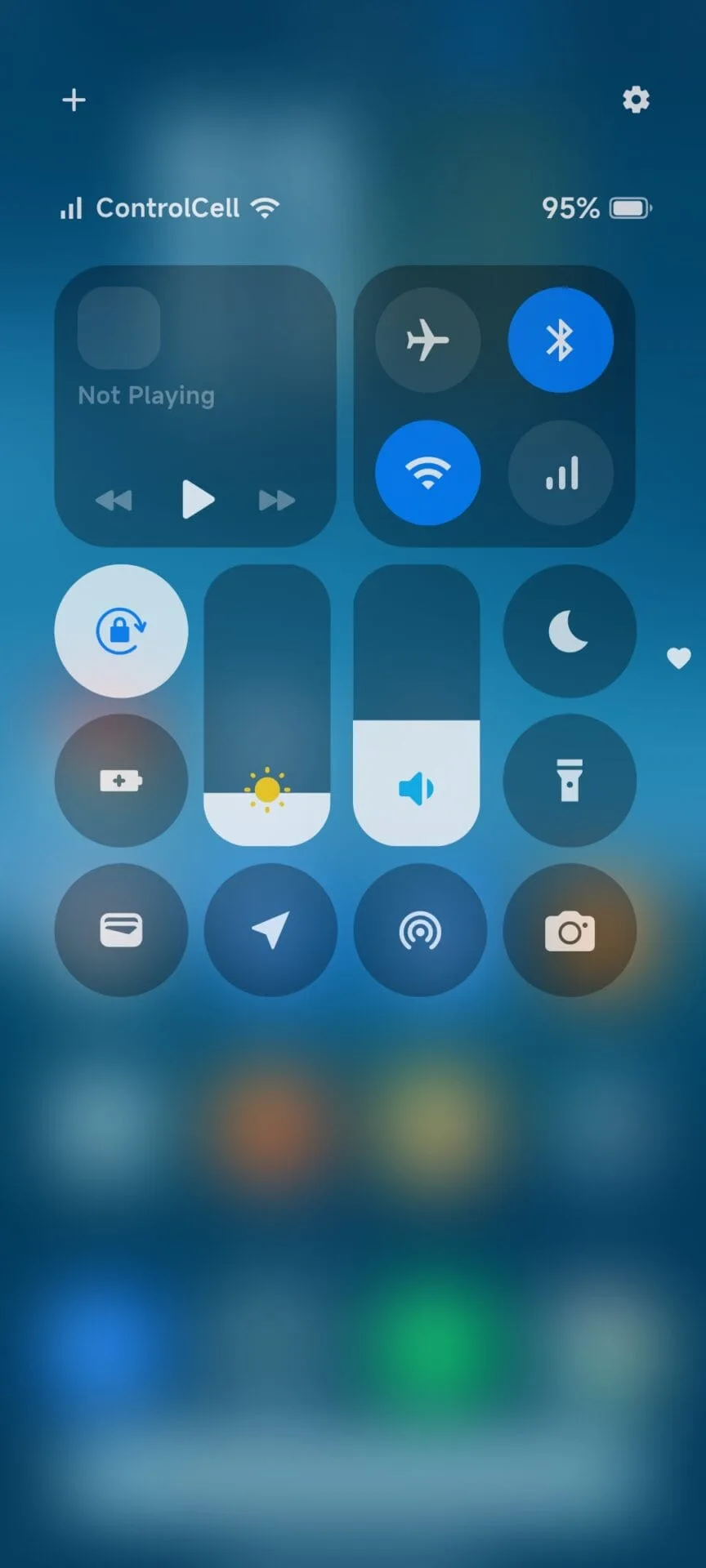
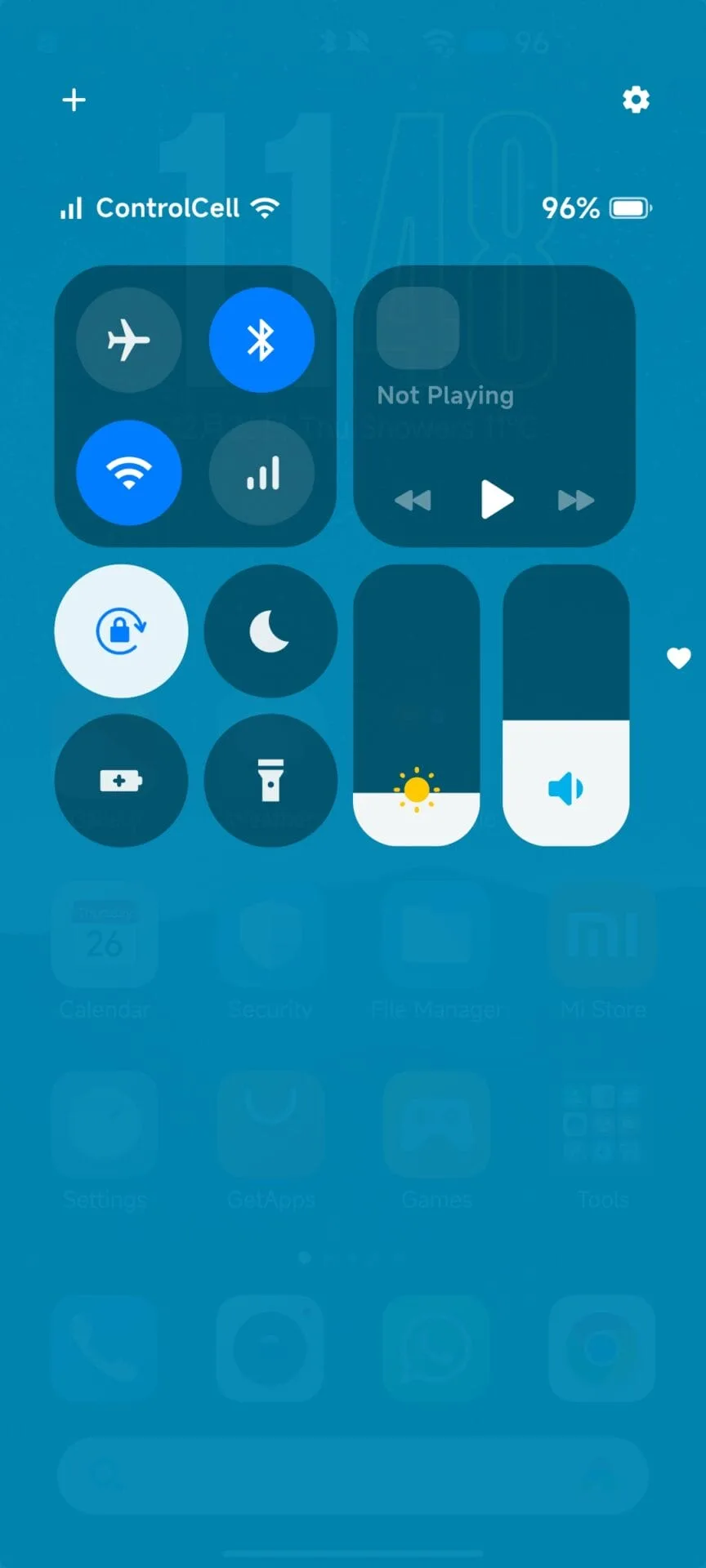
Many affordable Xiaomi phones, such the Redmi 15, Redmi 14C, and Redmi 13X, continue to use the conventional Android-style control panel rather than the contemporary iOS-inspired Control Center found on high-end phones running HyperOS. The main cause of this limitation is hardware and performance issues, which make it difficult to execute sophisticated animations and transitions smoothly.
Users of Xiaomi do not have to give up the new features and design in spite of this. It can be set up to mimic the new Control Center appearance on the majority of Redmi and POCO phones with the aid of third-party modification applications like Control Center 18.
Announced alongside HyperOS 1.0, Xiaomi’s new Control Center features an iOS 18-like interface, smoother animations, and adjustable brightness adjustments. But not every gadget satisfies the necessary performance requirements. Xiaomi limits the new UI to mid-range and flagship smartphones since entry-level handsets with low GPU and memory capacity can encounter lag or frame drops.
Xiaomi’s software framework is still adaptable, though. You may still improve the visual experience using third-party solutions like Control Center 18, which essentially replicates the look and functionality of the HyperOS Control Center, even if your phone doesn’t support the most recent control center natively.
Get the New Control Center with Control Center 18
You can simply duplicate the new Control Center with Control Center 18 app if your Redmi or Xiaomi phone does not have it natively loaded. With smooth animations, toggleable toggles, and quick access to your most commonly used options, this layout is almost exact.