Tag: hyperos

  • Stable HyperOS 3 update now available for 6 Xiaomi phones

    Stable HyperOS 3 update now available for 6 Xiaomi phones

    Following the initial beta release on August 25, 2025, Xiaomi has released the stable HyperOS 3 for six of its flagship devices in China. Better AI features, more fluid animation, and greater device unity across the Xiaomi platform are all included in the current upgrade, which represents the most recent advancement in Xiaomi’s system development. new week, the upgrade is anticipated to roll out globally in the models, marking the beginning of Xiaomi’s new generation of user interfaces.

    he HyperOS 3 stable rollout’s initial roll out happens with the following devices in China:

    • Xiaomi 15 — OS3.0.2.0.WOCCNXM
    • Xiaomi 15 Pro — OS3.0.3.0.WOBCNXM
    • Xiaomi 15S Pro — OS3.0.4.0.WODCNXM
    • Xiaomi 15 Ultra — OS3.0.2.0.WOACNXM
    • REDMI K80 Pro — OS3.0.2.0.WOMCNXM
    • REDMI K80 Ultra — OS3.0.2.0.WONCNXM

    The Xiaomi 15 series will soon be available globally, and these structures are currently housed in Xiaomi’s Chinese OTA server stores.
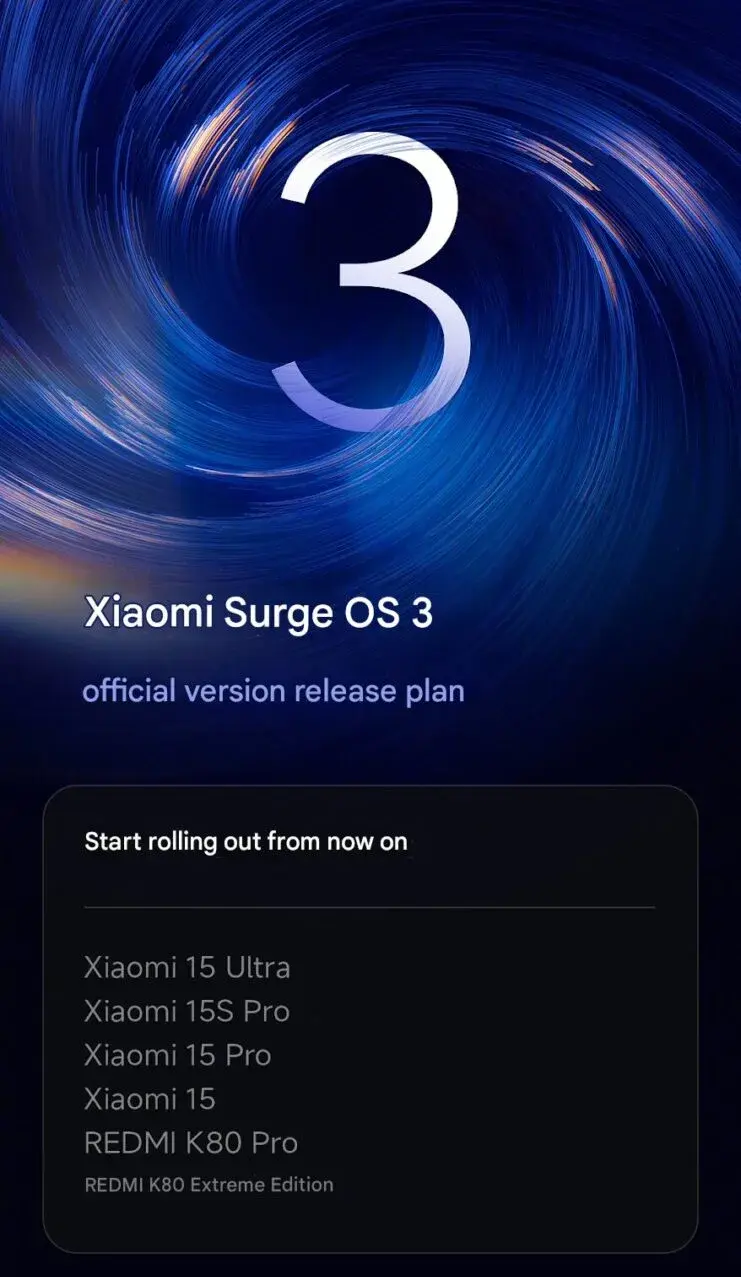
    hyperos 3 update

    What’s New in HyperOS 3

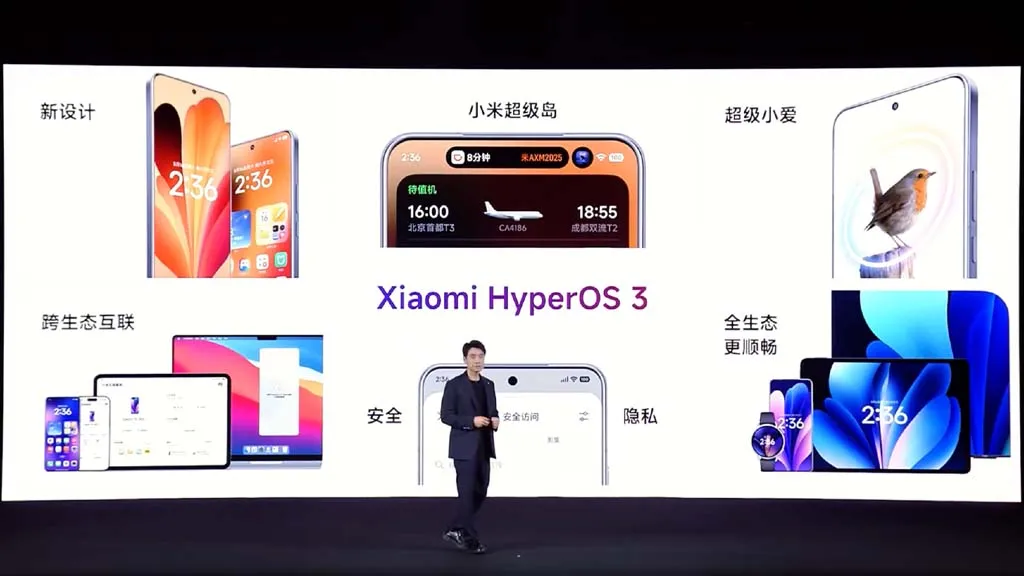
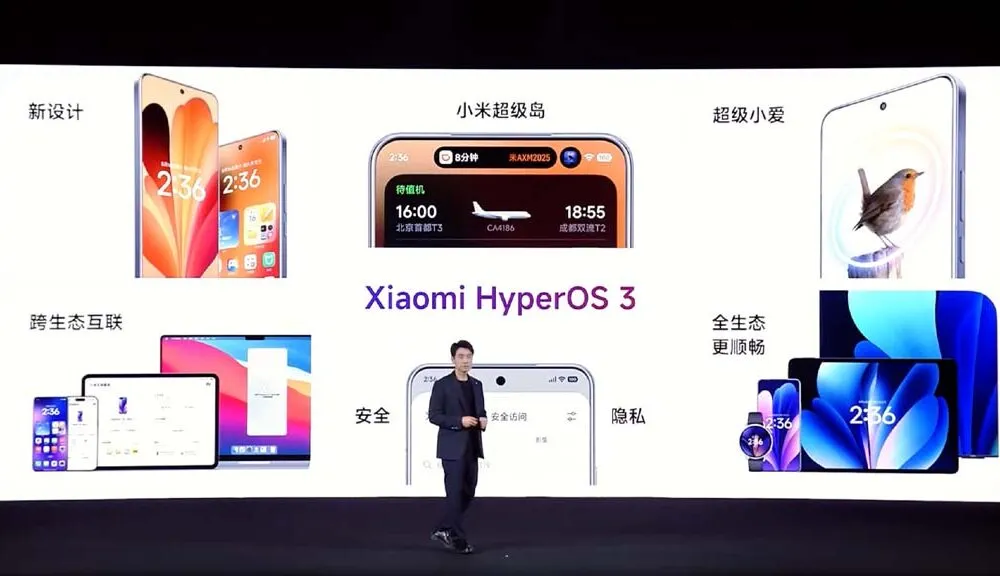
    In order to make the Xiaomi ecosystem more intelligent and connected, HyperOS 3 delivers a sophisticated UI along with a number of clever AI-enabled capabilities.

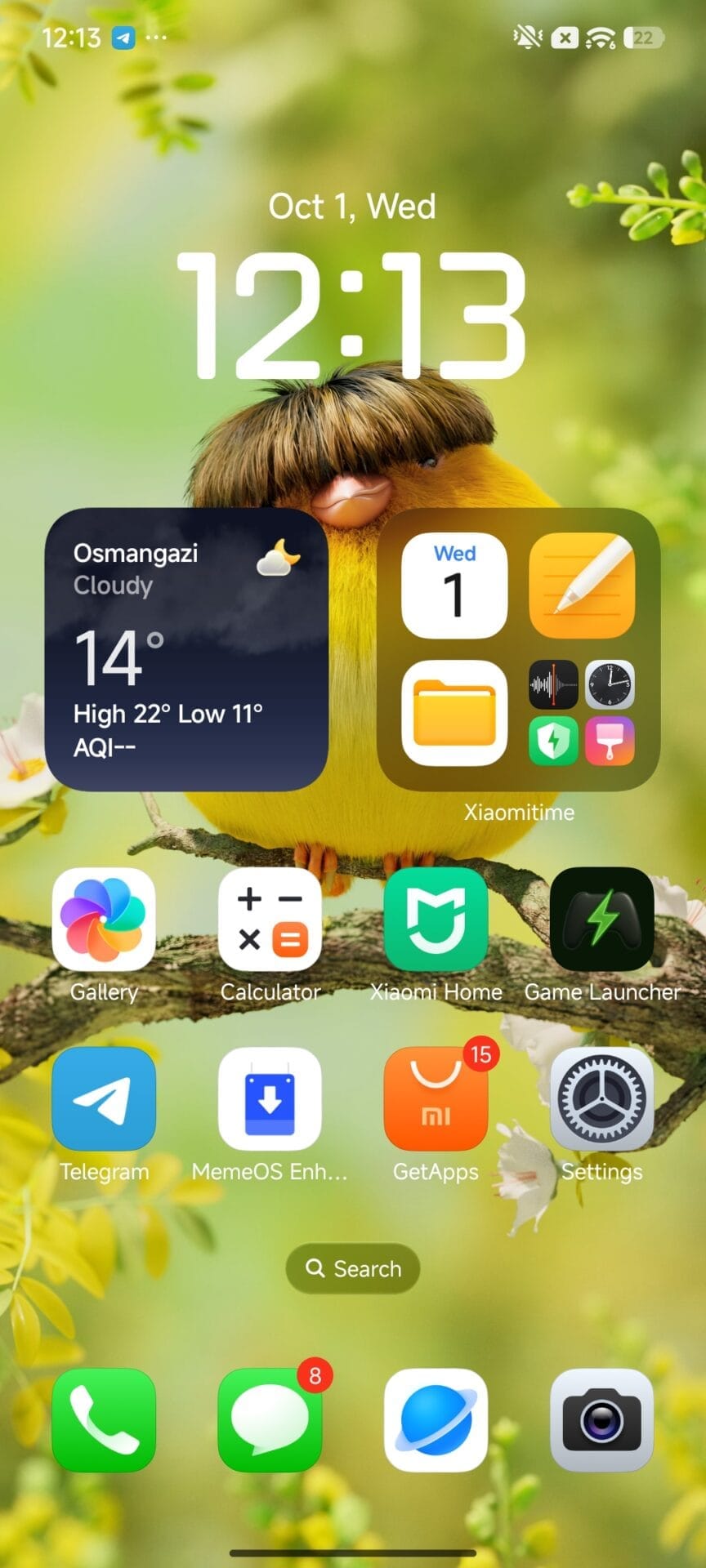
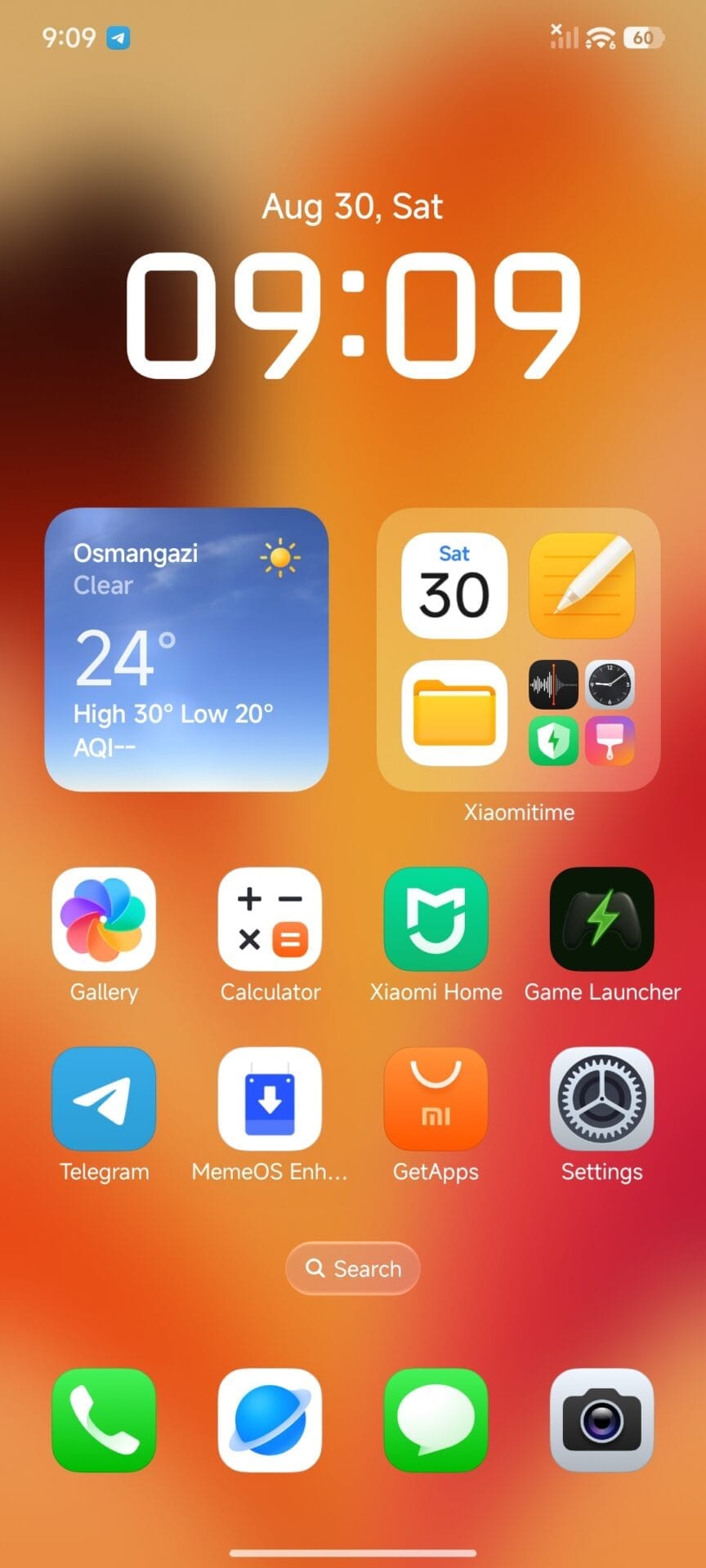
    • New look and new feel: new color scheme, fresh look and feel throughout the UI.
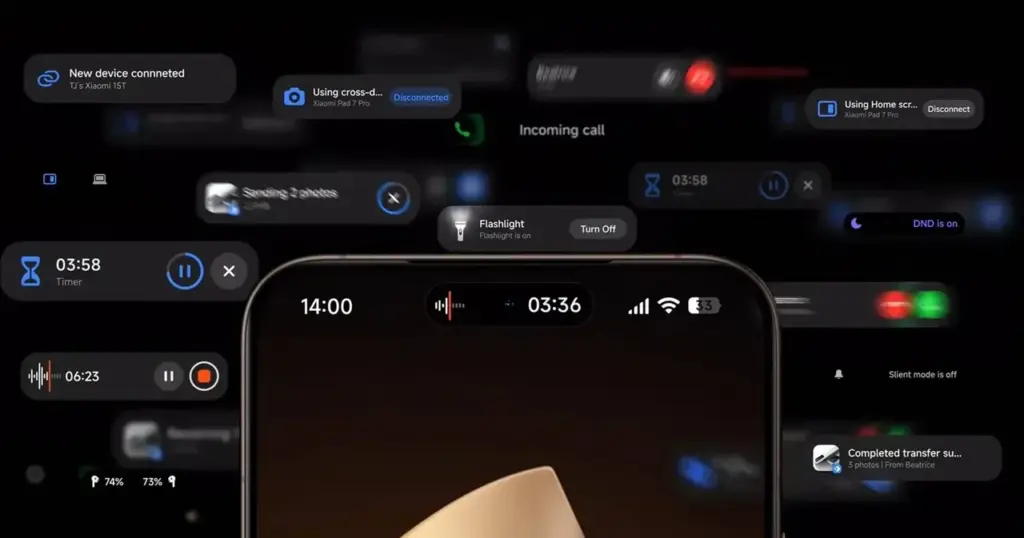
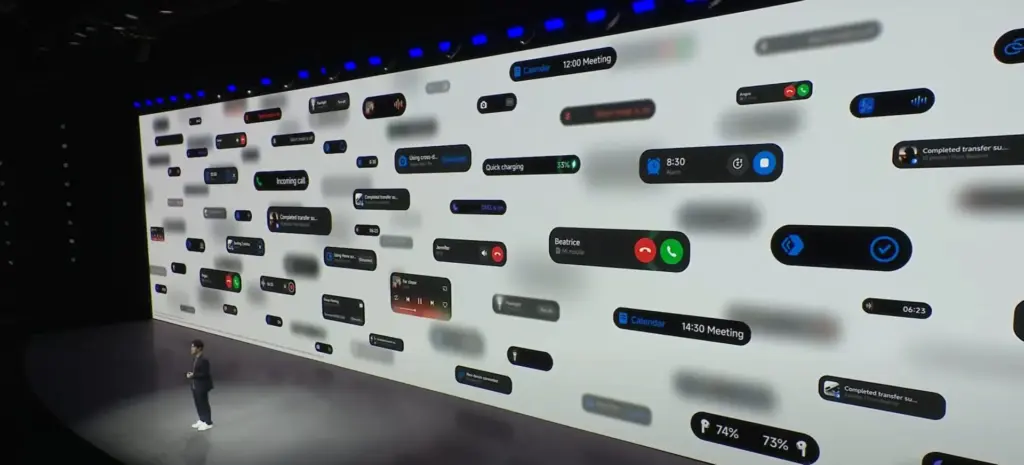
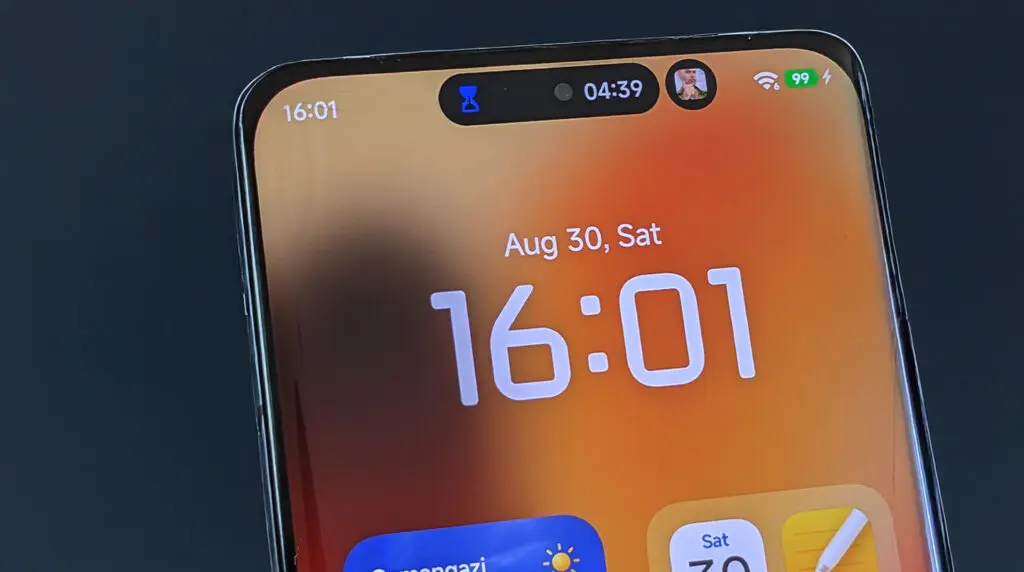
    • Hyper Island: Xiaomi’s interpretation of the Dynamic Island, providing smoother animation and better multitasking choices.
    • Cross-device synergy: effortless call, message, and screen-sharing integration between Xiomi smartphones, tablets, and laptops.
    • AirDrop-like file transfer: seamlessly exchange files just by bringing the Xiaomi devices nearer.
    • Better performance: 30% faster and more stable system tuning.
    • Improved AI capability

    In the coming week, customers worldwide will begin receiving the upgrade, even though the initial rollout was restricted to Chinese versions. With this extension, Xiaomi has reaffirmed its commitment to offering coordinated worldwide update rollout dates that align with its ambitions for the whole HyperConnect ecosystem.
  • Xiaomi’s HyperOS 3.1 update introduces iOS-like recent apps view

    Xiaomi’s HyperOS 3.1 update introduces iOS-like recent apps view

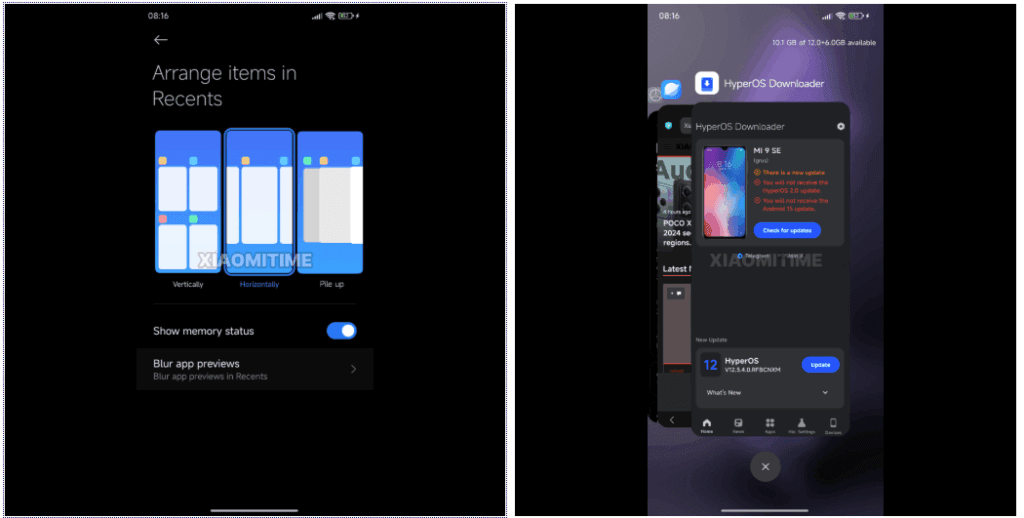
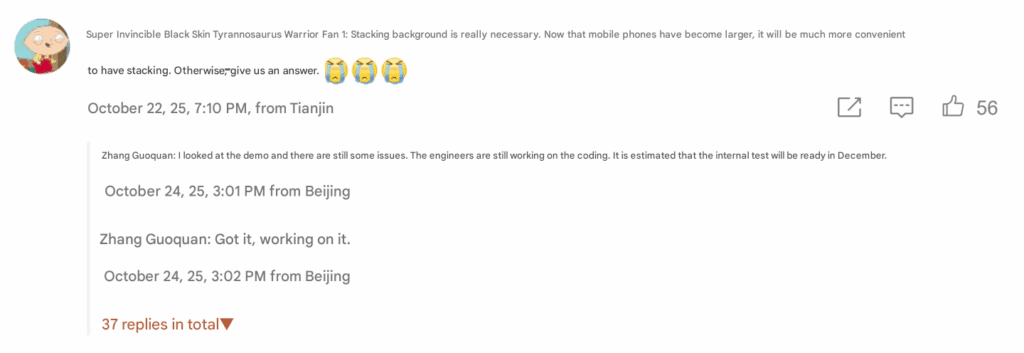
    Zhang Guoquan, the director of mobile software for Xiaomi, has stated that the business will start testing the layered background interface in HyperOS internally in December. This impending update will improve Xiaomi phones’ multitasking capabilities by providing a more user-friendly and aesthetically pleasing background management experience. Through Zhang’s interactions with Weibo users, the functionality was made public, demonstrating Xiaomi’s ongoing dedication to enhancing the real-world user experience using HyperOS, the company’s unified operating system.

    A Xiaomi devotee responded in a Weibo debate by calling for the inclusion of a stacked background interface, particularly given the larger screens of modern smartphones that necessitate more fluid multitasking capabilities. Zhang Guoquan replied, “Received, working on it,” to the comment. He then added that the functionality is currently in the demonstration stage but still undergoing optimization. The code is now being finished by programmers, and internal testing is expected to start in December.

    translated image en 16

    Stacked Background Interface?

    Users can see running apps as a deck of cards arranged on top of each other, from largest to smallest, depending on which card is accessed first thanks to the stacked background interface. Similar to the multitasking interfaces found in webOS (2009) and later in Apple’s iOS 9, users can swipe up to close apps or left or right to navigate between them.

    In place of conventional grid-patterned task lists, this structure provides an interactive and spatial method of managing applications. It makes it possible to maximize screen real estate, which is particularly helpful on devices with large screens like the Xiaomi 15 Pro and Xiaomi Pad 7.

    xiaomi hyperos 3.1 stacked recent interface

    Originally developed in webOS, stacked multitasking was first used on phones like the Palm Pre, which also popularized features like wireless charging and gesture navigation, which are now commonplace on the majority of contemporary smartphones. This kind of multi-application management became popular once Apple adopted the UI in iOS 9.

    With HyperOS, Xiaomi appears to be bringing back these antiquated ideas while modernizing them with fluid animations, AI enhancements, and improved performance scaling.

    It is anticipated that the stacking interface will be included in HyperOS’s 2025 upgrades, maybe in the feature package that comes after HyperOS 3.1. When public testing starts, Xiaomi customers should anticipate smoother animations, more fluid multitasking, and better use of display real estate. These features are in line with Xiaomi’s overarching goal of using Xiaomi HyperConnect to build an intelligent, connected user ecosystem.

  • October 2025 update now rolling out to 23 Xiaomi and Redmi devices

    October 2025 update now rolling out to 23 Xiaomi and Redmi devices

    The October 2025 security patch was formally released by Xiaomi for 23 models, including well-known gadgets like the Xiaomi 12 series, Redmi Note 14 Pro+, POCO F7, and Xiaomi 14T. The EEA region is currently experiencing the deployment, which began early on Monday. Other global versions will follow shortly. Updates may be viewed via HyperOSUpdates.com, our MemeOS Enhancer app on Google Play, or the Settings → About phone → System updates.

    The update improves overall device stability and fortifies system security throughout Xiaomi’s tablet and smartphone lines. The complete list of devices that are part of this wave is provided below:

    • Redmi Series: Redmi Note 12 4G, Redmi Note 13 4G, Redmi Note 13 4G NFC, Redmi 15 4G, Redmi Note 14 Pro+, Redmi Note 14 Pro 4G, Redmi Note 13 Pro, Redmi 12, Redmi 12 5G
    • POCO Series: POCO M7 4G, POCO F6, POCO F7, POCO Pad, POCO X6 5G, POCO X7 Pro, POCO M6 Pro
    • Xiaomi Series: Xiaomi 12, Xiaomi 12 Pro, Xiaomi 13 Ultra, Xiaomi 14T
    • Tablets: Redmi Pad Pro 5G, Redmi Pad SE, Redmi Pad 2

    The new version is mostly being made available for the EEA region, but it will also be available in the future weeks for the India and global versions.

    What’s New in the October 2025 Update

    The main goals of the October 2025 security patch are to improve HyperOS performance stability, address vulnerabilities found, and strengthen the device’s system-level protection. Customers will notice more seamless speed and memory management improvements, particularly on premium smartphones like the Xiaomi 13 Ultra and POCO F7, even though there aren’t any significant visual or functional upgrades.

    Along with connectivity improvements to Xiaomi HyperConnect devices, the update also provides productivity software compatibility improvements for devices like the Redmi Pad Pro 5G and POCO Pad.

  • The hidden Xiaomi battery setting you should enable right now

    The hidden Xiaomi battery setting you should enable right now

    From background controls to looks, Xiaomi’s HyperOS offers consumers a great deal of customization options for their phones. Nevertheless, one tiny switch among all of these choices could stealthily drain battery life without your knowledge. Owners have recently complained of unexpected power consumption in user forums and on Reddit, even while their phones are just sitting on a desk.

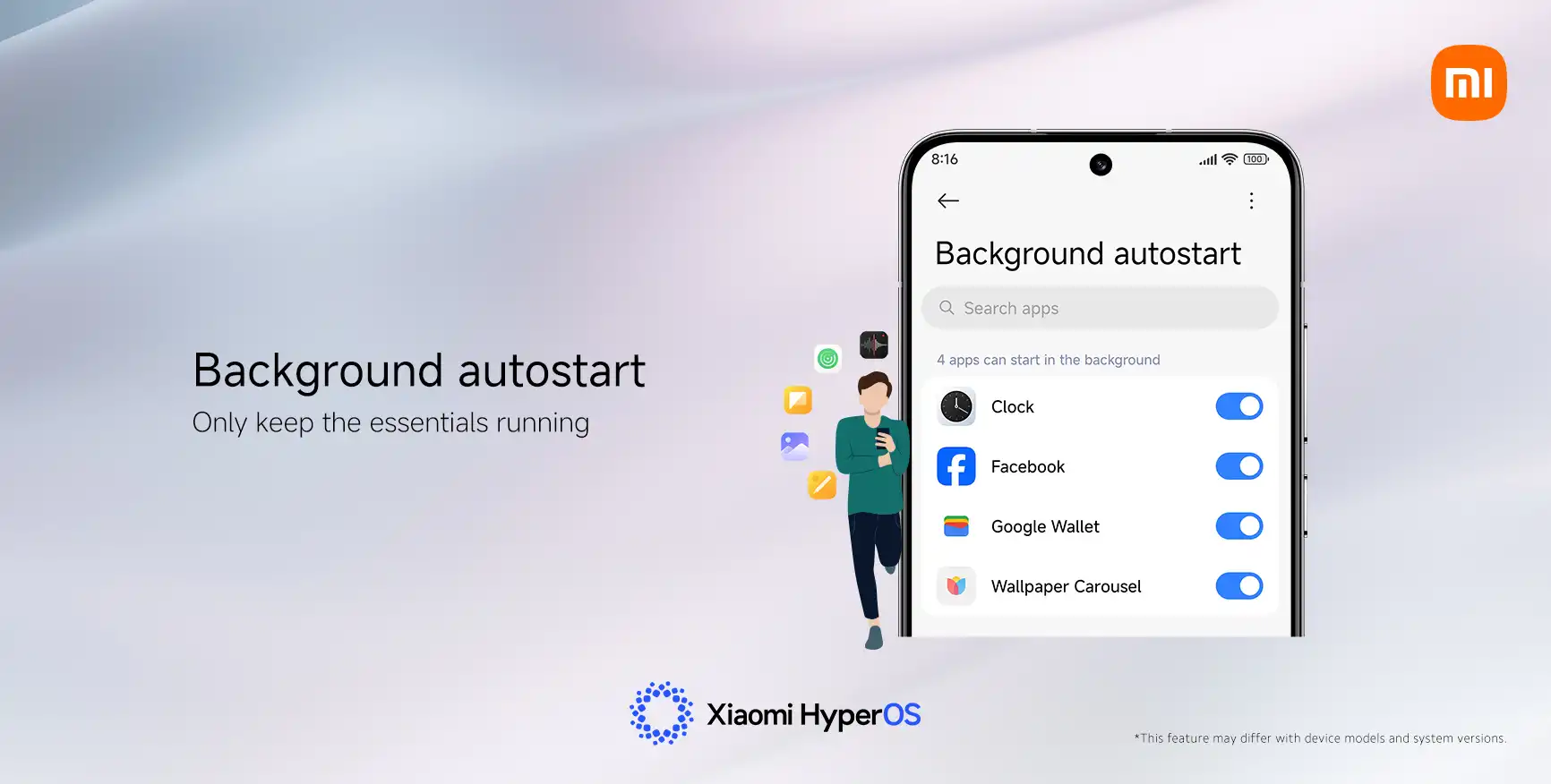
    “App Autostart” is one feature that frequently appears. Its original purpose was to speed up the delivery of notifications in older MIUI systems. However, Xiaomi has already made improvements to HyperOS‘s notification system, so this choice is no longer as important.

    Apps can operate automatically in the background when Autostart is enabled. Those apps continue to use memory and power even while you are not accessing your device. According to several users, turning off unnecessary autostart permissions can extend the standby duration of their phones by up to ten times.

    How to Fix It in a Few Steps

    You don’t need to be a tech expert to save battery life. Here’s the simple way to manage it:

    1. Open Settings on your Xiaomi phone.
    2. Tap Apps, then Permissions.
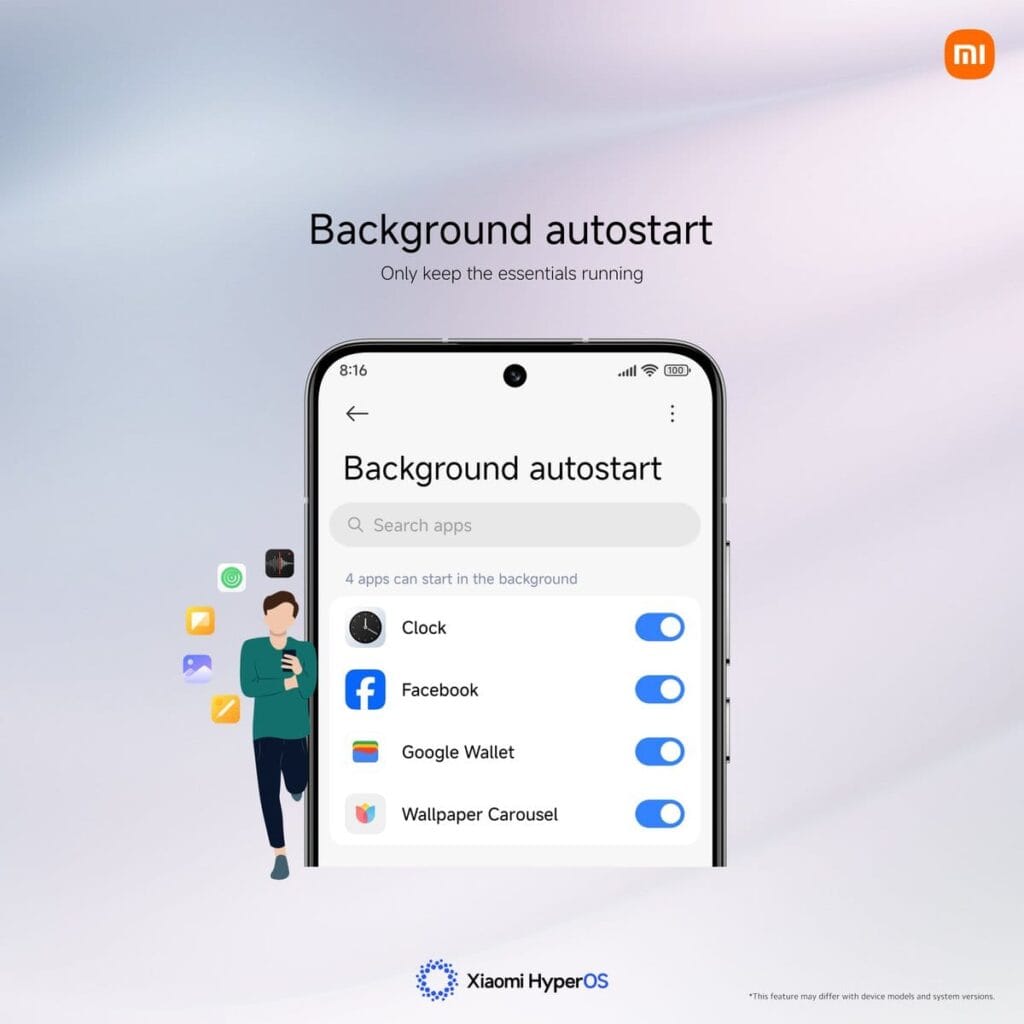
    3. Select Background Autostart.
    4. Check which apps are allowed to start automatically.
    5. Turn off Autostart for any that aren’t essential.
    xiaomi hyperos battery autostart apps

    It makes sense to limit the use of this feature to essential messaging apps like Telegram and WhatsApp. You can safely leave off tools you don’t use often, games, and shopping apps.

    Other Easy Ways to Get More Battery Life

    Turning off Autostart is a big help, but you can stretch your power even further by combining a few other habits:

    • Limit or disable Always-On Display to cut screen power use.
    • Use Dark Mode, especially on AMOLED screens.
    • Review notification permissions and mute apps that alert too often.
    • Shorten screen timeout so the display turns off faster.
    • Activate Battery Saver mode for less important apps.

    A HyperOS developer recently explained on Xiaomi’s forum that small tweaks like these often have the biggest effect: “You don’t need deep settings knowledge—just consistency. Tiny adjustments add up to big savings.”

    Key Points

    1. “App Autostart” can drain battery silently in HyperOS.
    2. Turning it off saves power and improves standby time.
    3. Only key messaging apps should keep it active.
    4. Combine small changes for longer daily use.
    5. Xiaomi keeps battery controls simple but powerful.

    Ultimately, practical flexibility is what Xiaomi strives for. Deep control is available when you want it, but the default settings are still user-friendly enough for everyone. A phone that drains quickly can be made to last from morning to night with a few well-considered adjustments.

  • HyperOS 3 Launcher October update now rolling out for Xiaomi devices

    HyperOS 3 Launcher October update now rolling out for Xiaomi devices

    It’s time for your favorite Xiaomi gadgets to receive yet another essential update! This most recent version demonstrates Xiaomi’s dedication to improving the user experience, which is something the team is always working to do. The latest version of the Xiaomi HyperOS 3 Launcher, RELEASE-6.01.02.1236-09241346, may appear minor at first glance, but these important internal enhancements are what keep the system operating without a hitch.

    Getting this version is a no-brainer for consumers who want to keep their performance and stability at their best. You’ll be happy to hear that this updated launcher version is compatible with HyperOS 2 devices as well, guaranteeing that a larger user base may take advantage of the improved stability if you’re using a device running the current HyperOS platform or even somewhat older versions.

    hyperos 3 launcher update

    HyperOS 3 launcher gains more stability

    With build number RELEASE-6.01.02.1236-09241346, this particular version is solely focused on bug fixes and overall stability improvements. These upgrades are essential for resolving any small performance issues or unexpected crashes that users may have experienced with previous releases, even if Xiaomi hasn’t published a comprehensive changelog of every fix. A more dependable and pleasurable everyday usage experience is guaranteed by this commitment to polish.

    Since it’s the program you use the most, a reliable launcher forms the cornerstone of your whole phone experience. As a result, fixing these little issues will greatly increase user happiness overall.

    hyperos 3 launcher update

    Officially, the firmware of the much awaited Xiaomi 17 Pro Max running its internal OS build OS3.0.17.0.WPBCNXM contained this version of the HyperOS 3 Launcher. Given that it is powered by Xiaomi’s state-of-the-art flagship hardware, this is a fantastic indication of the build’s quality and optimization. Xiaomi is effectively providing a stability boost by making this important system program accessible on other smartphones, which was formerly tailored for its newest and most potent hardware.

    How to get the new HyperOS update

    Since this is an application update, there are a few simple ways to obtain the most recent version and take advantage of the increased stability.

    • Official System Update: Keep an eye on your device’s System Updater, as the official rollout should be reaching all eligible devices soon.
    • Manual Installation: For those who prefer to update immediately, you can download the latest launcher APK. The best way to ensure you’re getting official, safe, and up-to-date system applications is by using a dedicated application manager. You can use MemeOS Enhancer to get all system app updates.
  • Xiaomi confirms over 20 devices ineligible for HyperOS 3 upgrade

    Xiaomi confirms over 20 devices ineligible for HyperOS 3 upgrade

    Before the year ends, Xiaomi will stop supporting more than 20 devices. Many devices, ranging from the Xiaomi 12X to the Poco F4, have not yet been included in HyperOS 3 deployment schedules and will shortly reach end-of-life status.

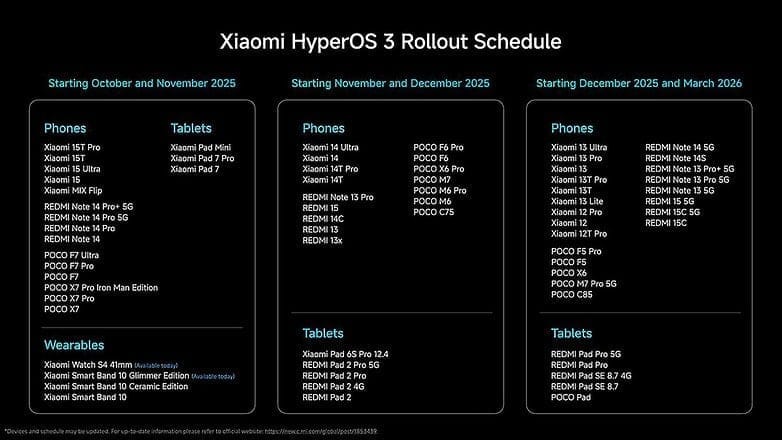
    Xiaomi has now stated that HyperOS 3, its upcoming big OS update, will be released globally initially. In summary, Xiaomi now divides the HyperOS 3 Rollout Schedule into three batches, with the first batch beginning this month and the third batch ending in March 2026. Just before to that, Xiaomi released a comparable update for the Chinese market that featured products tailored to that country, such as the Redmi K series and Mix Fold foldables.

    Xiaomi HyperOS 3

    Some older recent smartphones, such as the Xiaomi 11T series, have now gotten their final upgrades, as we previously noted. As a result, they are not eligible to upgrade to HyperOS 3. Even yet, some HyperOS 3 compatible devices—like the Redmi Note 14 Pro Plus—will not be able to access Hyper Island features.

    It is now evident which Xiaomi devices have been left out of the company’s plans as the HyperOS 3 release timetables have been moved until the spring. For example, by February 2026, when it should get its last security update, the Poco X5 Pro 5G will be in end-of-life status. As a result, Xiaomi has excluded the gadget from its list of devices compatible with HyperOS 3. The following Xiaomi, Redmi, and Poco devices are currently scheduled to reach end-of-life status this year and are not part of the official HyperOS 3 distribution plans:

    • POCO F4
    • POCO F4 Pro
    • POCO F4 GT
    • POCO M5
    • POCO M5s
    • POCO X4 GT Pro
    • POCO X4 GT
    • POCO X5 Pro 5G
    • Redmi A2
    • Redmi A2+
    • Redmi 12C
    • Xiaomi 11 Lite 5G NE
    • Xiaomi 11T
    • Xiaomi 11T Pro
    • Xiaomi Mi 11i
    • Xiaomi Mi 11 Lite
    • Xiaomi Mi 11 Lite 5G
    • Xiaomi Mi 11 Ultra
    • Xiaomi Mi Mix Fold
    • Xiaomi Mix 4
    • Xiaomi 12X
  • Xiaomi expands Android 16 rollout with HyperOS 3.0 update

    Xiaomi expands Android 16 rollout with HyperOS 3.0 update

    One of the Android oems speeding up the release of Android 16 is Xiaomi with HyperOS 3.0 skin. The company has now disclosed the whole list of smartphones and tablets that will receive the significant OS update, including Redmi and Poco models, in response to last month’s introduction of HyperOS 3.0, which is based on Android 16.

    The Xiaomi 17 Pro was the company’s flagship smartphone when it introduced a number of others last week. However, we also discovered more fascinating information regarding the HyperOS 3.0 deployment, in addition to the new hardware portfolio.

    First devices to receive HyperOS 3.0

    A limited number of smartphones, including the recently revealed Xiaomi 15T series, the flagship Xiaomi 15 (Pro) and 15 Ultra, and mid-range models like the Redmi Note 14 Pro, Poco X7, and Poco F7 (Ultra review), will start receiving HyperOS 3.0 in October. The Xiaomi Pad 7 and Pad Mini will be the first tablets to be supported.

    Xiaomi expands Android 16 rollout with HyperOS 3.0 update

    The update has already begun to roll out for wearables, including the Xiaomi Watch S4 and the Smart Band 10 Glimmer Edition. Although a precise date has not yet been determined, this will eventually extend to the Smart Band 10 Ceramic and regular variants.

    Another batch for November and December

    In November and December, HyperOS 3.0 will be released for additional devices. These consist of the Redmi Note 13, Redmi 13, Redmi 14C, Redmi 15 4G, Redmi Pad 2, and Xiaomi 14 Ultra. The Poco F6 Pro, Poco X6 Pro, Poco M6 Pro, and Poco M7 are also categorized under the Poco sub-brand.

    The rest of the flagship, mid-range, and low-cost smartphones will be released between December and March. These consist of the Xiaomi 13T series, Xiaomi 12T Pro, Xiaomi 13 Lite, and Xiaomi 12. This release window also includes the Redmi Note 14, Note 13, Redmi 15 5G, and Redmi 15C.

    Not receiving HyperOS 3.0

    The basic Xiaomi 12T was released alongside the 12T Pro, thus it’s still unknown why it’s not included. The Redmi 12 and Redmi 12 Pro, which have reached the end of their main OS update support but will still receive security updates for another year, are a more noteworthy omission.

    What’s new in HyperOS 3.0

    What’s new in HyperOS 3.0

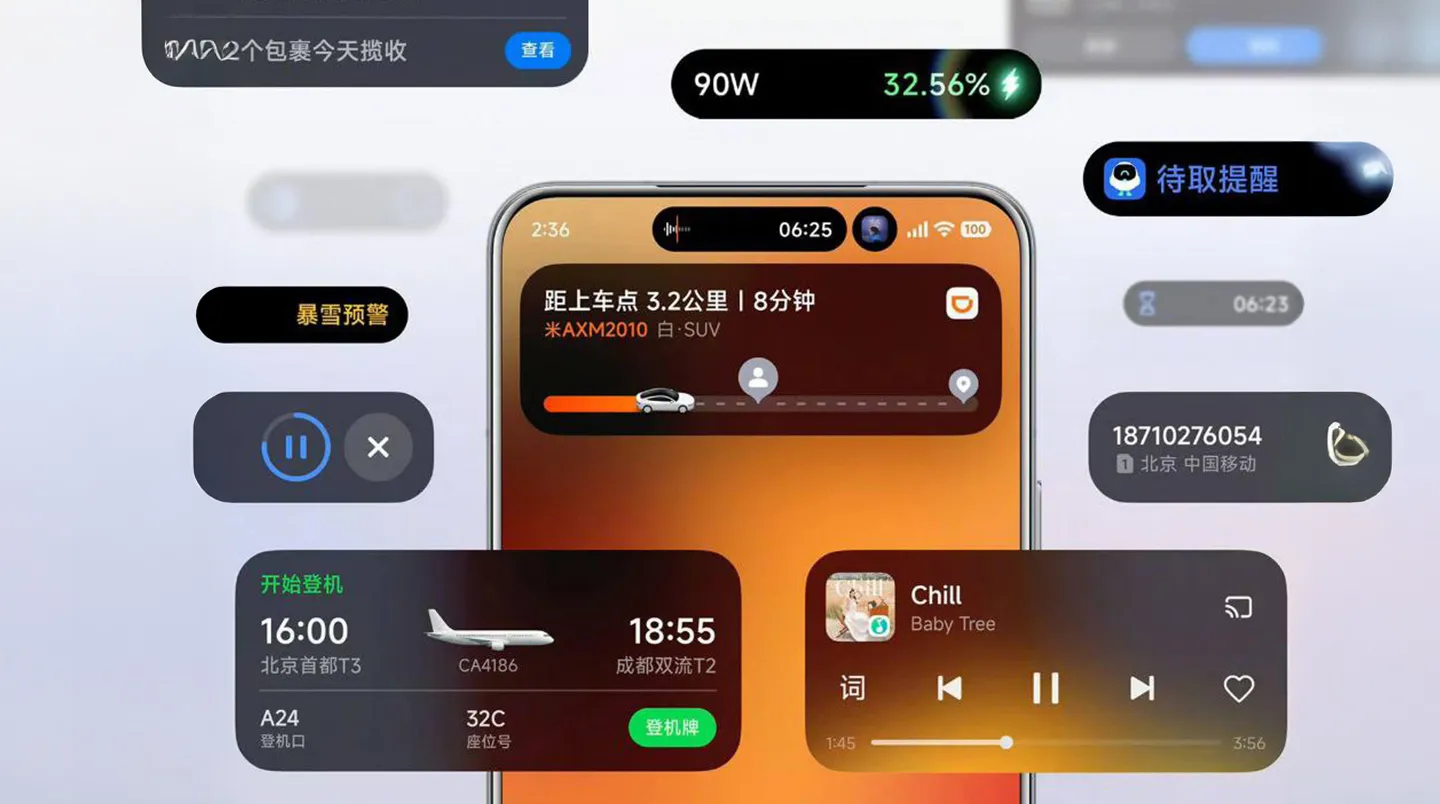
    Performance and visual design have undergone significant upgrades in HyperOS 3.0. Super Island, Xiaomi’s version of Apple’s Dynamic Island, is introduced in the user interface. It allows for dynamic and real-time content overlays surrounding the punch-hole camera. AI-generated options for new background and lock screen styles are also included.

    According to Xiaomi, HyperOS 3.0 offers performance gains of up to 30%. Ultra-low latency and pressure-sensitive pens and styluses are becoming more compatible with large-screen devices, such as tablets.

    With capabilities like HyperAI Writing, real-time transcription, and subtitle production, AI improvements are also a top priority.

  • HyperOS 3 beta now available on 12 additional Xiaomi and Redmi models

    HyperOS 3 beta now available on 12 additional Xiaomi and Redmi models

    The Xiaomi 14 series, MIX Flip, MIX Fold 4, and Redmi K70 range are among the additional smartphones that Xiaomi is releasing HyperOS 3 for. Owners of these phones can now receive an early sample of the Android 16-based upgrade before the stable release occurs later this year, while testing is still ongoing.

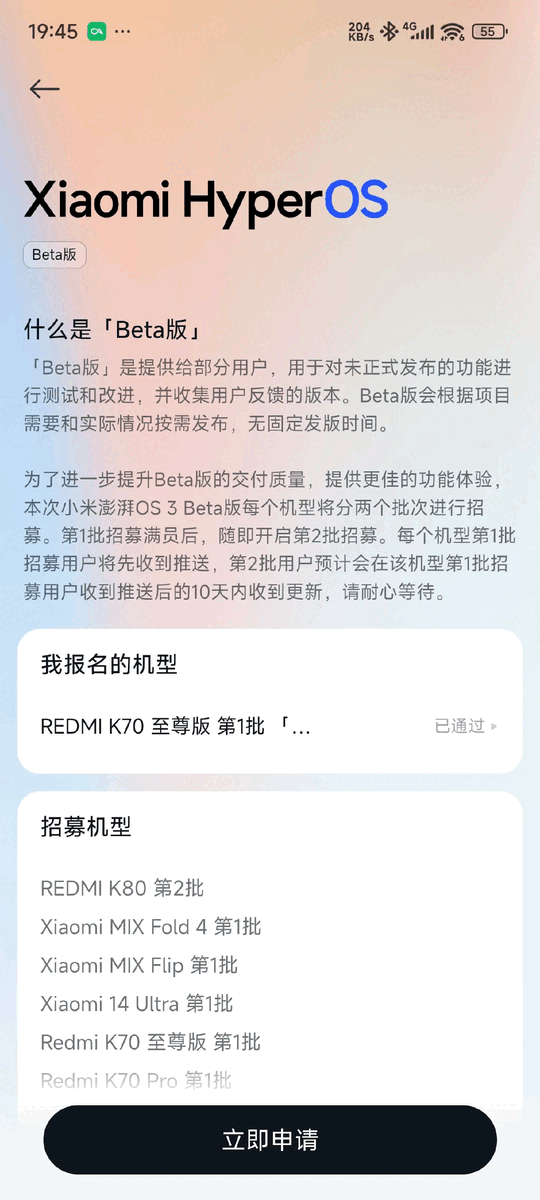
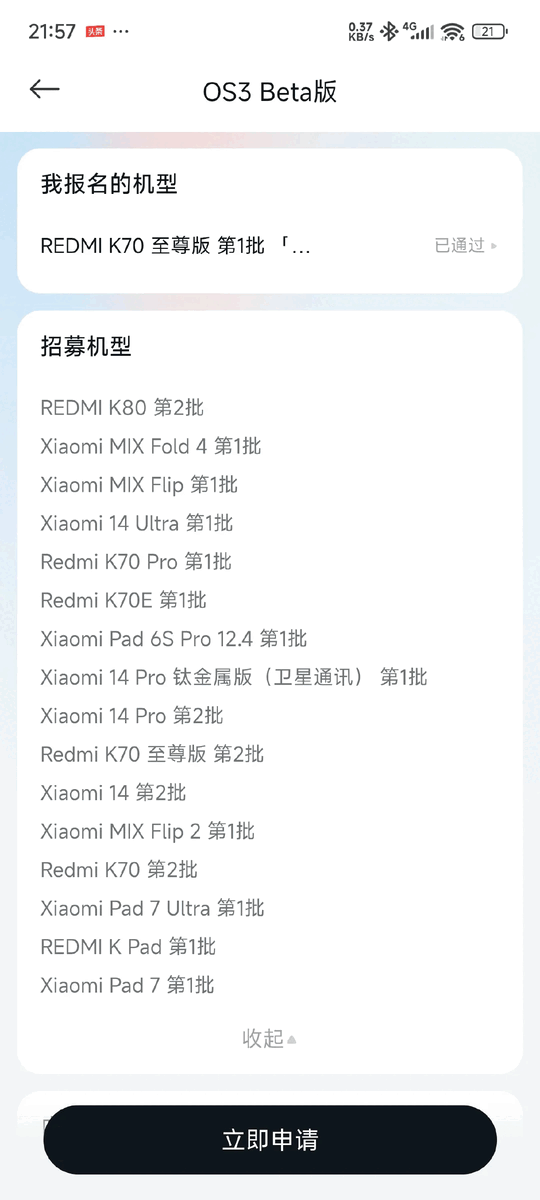
    A new batch of Xiaomi and Redmi smartphones have been added to the HyperOS 3 beta program, which enables a small group of customers to test drive the company’s latest software prior to its general release. Owners of the Xiaomi 14 series, MIX Flip, Redmi K70 lineup, and Xiaomi Pad 6S Pro are being invited to participate in the most recent round. They will have the opportunity to test an early build of HyperOS 3, which is based on Android 16, and assist the software team in resolving any significant bugs or issues before the scheduled stable rollout.

    The list of gadgets receiving the most recent wave of the HyperOS 3 beta:

    • Xiaomi MIX Fold 4
    • Xiaomi MIX Flip
    • Xiaomi 14 Ultra
    • Xiaomi 14 Ultra Titanium Edition
    • Xiaomi 14 Pro 
    • Xiaomi 14 Pro Titanium Edition
    • Xiaomi 14
    • Redmi K70 Pro
    • Redmi K70 Ultra
    • Redmi K70 (sold internationally as the POCO F6 Pro)
    • Redmi K70E (sold internationally as the POCO X6 Pro)
    • Xiaomi Pad 6S Pro 12.4

    Although the closed beta is now only available for Chinese models, international versions will soon follow. A broader deployment appears inevitable, as Xiaomi has already begun similar beta tests for international models such as the Xiaomi 14 Ultra, Xiaomi 14T, POCO F7, Redmi 15C, and POCO C85.

    csm HyperOS 3 Chinese beta 83208f7bb5

    To obtain HyperOS 3, you must apply for a position in the program through the Xiaomi Community app if you possess any of the devices mentioned above that have a China ROM. For every device, two groups of testers will be hired; testers in the first batch will have instant access to the update, while testers in the second batch may have to wait up to ten days. Before beginning, make sure you have a complete backup of your device and have read the instructions.

    csm HyperOS beta 3 China 1 f7f5b85a0e

    HyperOS 3 global rollout confirmed for November-December

    The Chinese Xiaomi 14 series, MIX Fold 4, MIX Flip, and Redmi K70 devices are expected to receive the stable HyperOS 3 update in November. Global variants such as the Xiaomi 14 series, the Xiaomi Pad 6S Pro 12.4, the POCO F6 Pro (a rebranded Redmi K70), and the POCO X6 Pro (a rebranded Redmi K70E) will be released in November, with the full deployment continuing into December.

  • Hyper Island coming to Xiaomi phones: eligible devices revealed

    Hyper Island coming to Xiaomi phones: eligible devices revealed

    Prepare yourself for a whole new way to use your Xiaomi gadget! As part of the forthcoming Xiaomi HyperOS 3 upgrade, the company is introducing an exciting new feature dubbed Hyper Island. This creative new menu will show up in a pill-shaped notch area surrounding the camera cutout on your screen, much like Apple’s Dynamic Island. You will be able to quickly and easily access media controls, navigation instructions, and notifications.

    Hyper Island

    This revolutionizes the way you handle your daily responsibilities on your phone by providing a seamless and user-friendly interface that makes multitasking effortless. Users greatly benefit from Xiaomi’s ongoing dedication to software innovation, which solidifies their position as a market leader in the mobile space.

    What is Xiaomi Hyper Island?

    Without taking up too much space on your screen, the Hyper Island function is made to place important information where you need it. A fluid, interactive pill-shaped menu will extend from the top of your screen in place of a typical notification banner or pop-up, giving you a seamless view of everything from incoming messages to media playback controls and even detailed instructions when using maps. This is a totally redesigned user experience that is entertaining and highly useful; it’s about more than simply notifications.

    Beginning in late 2025, Xiaomi intends to release the HyperOS 3 update in stages. This is a complete list of devices that have been confirmed to get the update, arranged according to when it is expected to be released.

    xiaomi hyper island launch

    Starting October and November 2025

    • Phones:
      • Xiaomi 15T Pro, Xiaomi 15T, Xiaomi 15 Ultra, Xiaomi 15
      • Xiaomi MIX Flip
      • REDMI Note 14 Pro+ 5G, REDMI Note 14 Pro 5G, REDMI Note 14 Pro, REDMI Note 14
      • POCO F7 Ultra, POCO F7 Pro, POCO F7
      • POCO X7 Pro Iron Man Edition, POCO X7 Pro, POCO X7
    • Tablets:
      • Xiaomi Pad Mini, Xiaomi Pad 7 Pro, Xiaomi Pad 7
    • Wearables:
      • Xiaomi Watch S4 41mm
      • Xiaomi Smart Band 10 Glimmer Edition, Xiaomi Smart Band 10 Ceramic Edition, Xiaomi Smart Band 10

    Starting November and December 2025

    • Phones:
      • Xiaomi 14 Ultra, Xiaomi 14
      • Xiaomi 14T Pro, Xiaomi 14T
      • REDMI Note 13 Pro, REDMI 15, REDMI 14C, REDMI 13, REDMI 13X
      • POCO F6 Pro, POCO F6, POCO X6 Pro, POCO M7, POCO M6 Pro, POCO M6, POCO C75
    • Tablets:
      • Xiaomi Pad 6S Pro 12.4
      • REDMI Pad 2 Pro 5G, REDMI Pad 2 Pro, REDMI Pad 2 4G, REDMI Pad 2

    Starting December 2025 and March 2026

    • Phones:
      • Xiaomi 13 Ultra, Xiaomi 13 Pro, Xiaomi 13
      • Xiaomi 13T Pro, Xiaomi 13T, Xiaomi 13 Lite
      • Xiaomi 12 Pro, Xiaomi 12, Xiaomi 12T Pro
      • REDMI Note 14 5G, REDMI Note 14S, REDMI Note 13 Pro+ 5G, REDMI Note 13 Pro 5G, REDMI Note 13 5G, REDMI 13 5G, REDMI 13C 5G, REDMI 13C
      • POCO F5 Pro, POCO F5, POCO X6, POCO M7 Pro 5G, POCO C65
    • Tablets:
      • REDMI Pad Pro 5G, REDMI Pad Pro, REDMI Pad SE 8.7 4G, REDMI Pad SE 8.7
      • POCO Pad

    For many Xiaomi consumers, this is wonderful news, demonstrating the company’s commitment to enhancing the user experience through innovative software solutions. Your devices will feel new again and be even more productive thanks to the Hyper Island function.

  • Xiaomi HyperOS 3 update solves major bugs for smoother performance

    Xiaomi HyperOS 3 update solves major bugs for smoother performance

    For those who have been having a few small problems, Xiaomi’s recent official progress update for HyperOS 3 is great news. In an effort to provide a dependable and seamless customer experience, the firm is addressing a variety of defects and performance issues. Fans are reassured that their opinions are valued and taken into consideration by this weekly announcement, which is posted on the Xiaomi Community and provides an inside peek at the continuous enhancements.

    The update describes how the business is methodically resolving a list of issues that have been reported, ranging from little visual bugs to more serious issues that impact the usability and performance of the app. Additional details regarding these updates are available on websites such as our own HyperOSUpdates.com and the official Xiaomi.cn community page.

    xiaomi hyperos 3 update with bugfix

    HyperOS 3: whaty has been fixed?

    The most recent announcement states that Xiaomi has been working diligently to address a number of significant problems that users have voiced with the HyperOS 3 beta version. Future updates are anticipated to incorporate these changes, guaranteeing a significantly enhanced experience. Among the most noteworthy problems that have been fixed are:

    • TikTok Volume Abnormalities: On the REDMI K70, a bug causing abnormal volume levels in TikTok has been fixed.
    • Wallpaper and Search Glitches: Issues with the desktop wallpaper turning black and the global search function jumping erratically have been addressed.
    • WeChat and App Behavior: Multiple problems related to the popular messaging app WeChat have been resolved, including display issues and a bug where the app’s background keep-alive function was failing.
    • Security and Display Bugs: Fixes have been implemented for security concerns, such as a hidden app’s preview image being displayed in recent tasks, and for visual glitches like the “Xiaomi Super Island” not disappearing after face authentication.

    The release details numerous improvements, these being only a handful. Xiaomi is demonstrating its commitment to its user base and fostering confidence by proactively announcing these fixes.

    HyperOS 3 features revealed — here’s what’s new and coming soon

    HyperOS 3 is introducing some exciting new features that will transform how you use your Xiaomi device in addition to bug fixes. Prepare yourself for intelligent functioning and an entirely new degree of customisation.

    • Refreshed Look and Feel: You’ll notice new icons, as well as updated battery and signal symbols. These small but impactful changes give the interface a fresh, modern look.
    • Enhanced Interconnectivity: Inspired by the seamless flow of other ecosystems, Xiaomi is introducing new features that allow for easy file sharing between devices by simply bringing them close together, similar to what you might know as Airdrop.
    • AI-Powered Features: HyperOS 3 is packed with artificial intelligence enhancements. AI features include note-writing, describing images, voice translation, and noise reduction for voice recordings. You can also look forward to an AI search feature and AI-powered photo searching within the Gallery app.
    • Dynamic Wallpapers: The popular AI Dynamic Wallpapers feature, which turns your photos into videos, is now available globally, allowing more users to enjoy this creative tool.
    • Performance Boost: The new update boasts a 30% improvement in performance optimization, meaning your favorite Xiaomi phone will feel faster and more responsive than ever before.

    This update demonstrates Xiaomi’s dedication to expanding the capabilities of mobile operating systems in addition to paying attention to customer comments on issues.