Tag: xiaomi

  • Xiaomi HyperOS 3.1 Rollout Tops 85% Globally – Which Devices Are Still Waiting?

    Xiaomi HyperOS 3.1 Rollout Tops 85% Globally – Which Devices Are Still Waiting?

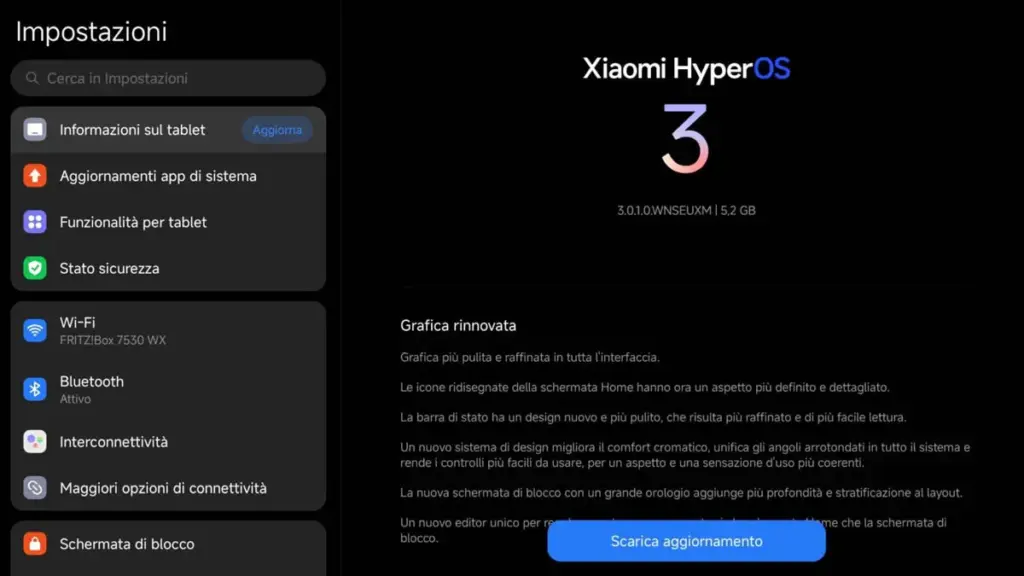
    Xiaomi has hit a significant milestone in its software rollout, with HyperOS 3.1 distribution now surpassing 85% globally. Built on Android 16, the update has reached nearly all eligible devices across the Xiaomi, REDMI, and POCO lineups — making it one of the fastest deployment cycles the company has executed to date.

    Every Android 16-capable Xiaomi device has received HyperOS 3.1, with only a handful of entry-level and mid-range models still in the queue. The speed of the rollout reflects Xiaomi’s broader push toward software consistency across its increasingly large device portfolio.

    What HyperOS 3.1 Brings

    This isn’t a minor maintenance update. HyperOS 3.1 delivers several system-level changes spanning the UI, connectivity, and multitasking experience.
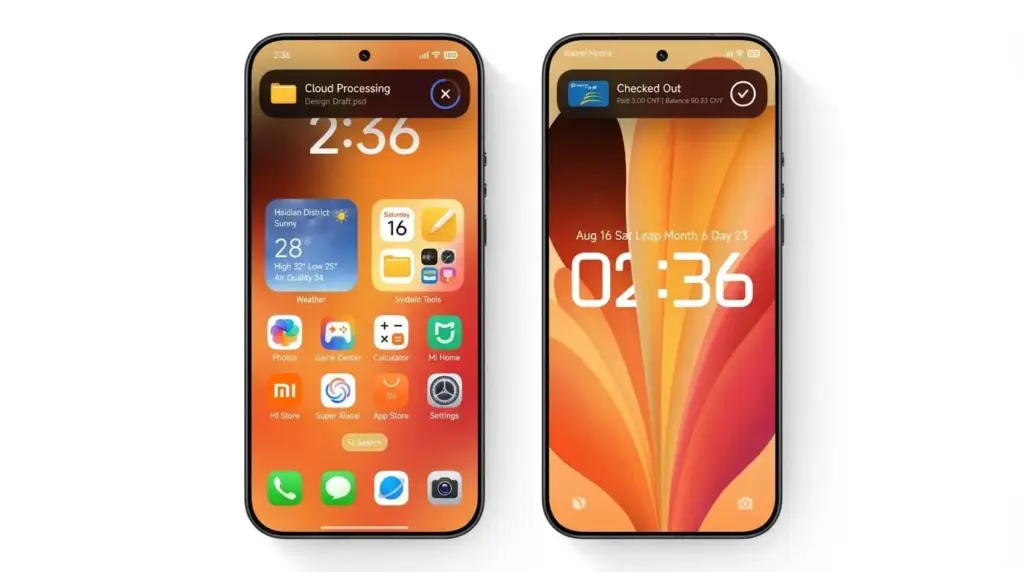
    HyperOS 3.1 visual changes

    Advanced HyperIsland Interface

    The HyperIsland notification layer has been further developed, now supporting real-time activity tracking for calls, timers, and media playback. Animations and transitions have been refined, and third-party app compatibility has been expanded. The result is a more dynamic and interactive notification system that positions HyperIsland as Xiaomi’s take on the kind of live activity UI that competing ecosystems have popularized.

    Enhanced Xiaomi HyperConnect

    Cross-device functionality gets a meaningful upgrade in HyperOS 3.1. File transfers between devices are faster, latency in device syncing has been reduced, and multi-device control — covering phones, tablets, and wearables — is more responsive. For users invested in the Xiaomi ecosystem across multiple device categories, this update makes the connected experience noticeably more reliable.

    iOS-Inspired Recent Apps Interface

    The Recent Apps menu has been redesigned with a horizontal, card-based layout that draws clear inspiration from iOS. Gesture navigation is smoother, and memory management is more visually transparent. The change fits into Xiaomi’s ongoing UI modernization effort under the HyperOS platform.

    Devices Still Waiting for HyperOS 3.1

    Despite the broad rollout, the following devices have not yet received the update:

    • REDMI 14C
    • REDMI A3 Pro
    • REDMI 13
    • REDMI 13X
    • REDMI Note 14 Pro 4G
    • REDMI Pad 2 Pro 5G
    • REDMI Pad SE 4G
    • REDMI Pad 2
    • REDMI Note 14 4G
    • REDMI A4
    • POCO C75 5G
    • POCO M6
    • POCO C75
    • POCO Pad M1
    • POCO C85 4G
    • POCO M7 4G
    • REDMI Note 15 Pro 4G

    These models are expected to receive HyperOS 3.1 in the final rollout phases. The delays are likely down to a combination of hardware optimization requirements, regional firmware certification timelines, and the additional tuning often needed for entry-level chipsets.

    With HyperOS 4 already on the horizon, the pace and breadth of the HyperOS 3.1 rollout points to a clear strategic shift – Xiaomi is no longer treating software updates as a routine obligation, but as a core part of building a unified ecosystem across its entire device range.
  • Xiaomi Reveals Android 17 HyperOS Rollout Timeline – Stable Builds Expected This Summer

    Xiaomi Reveals Android 17 HyperOS Rollout Timeline – Stable Builds Expected This Summer

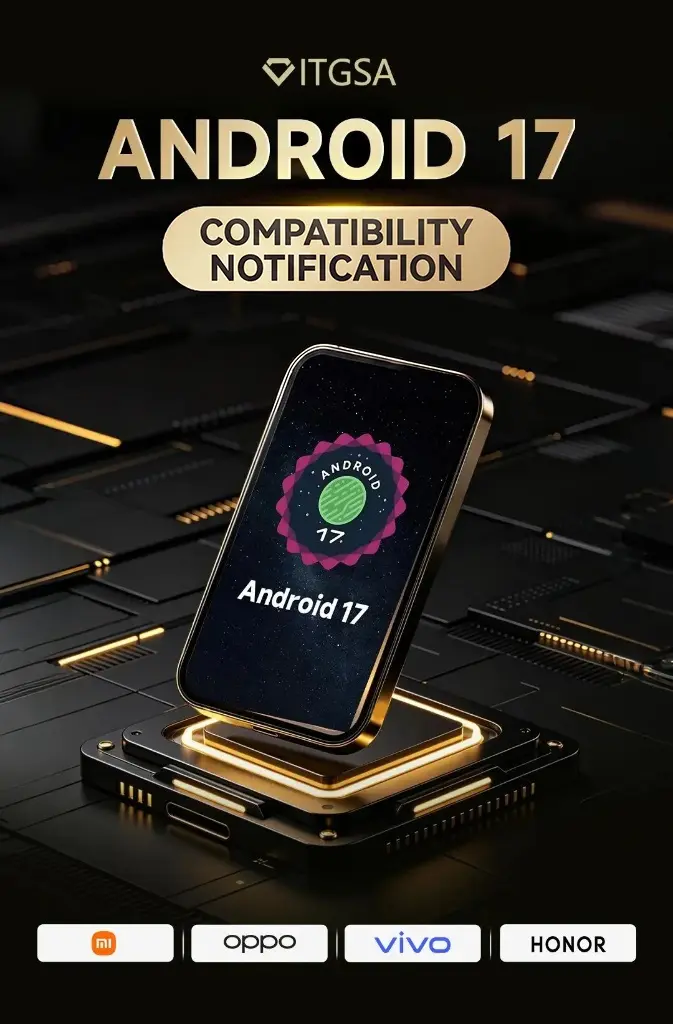
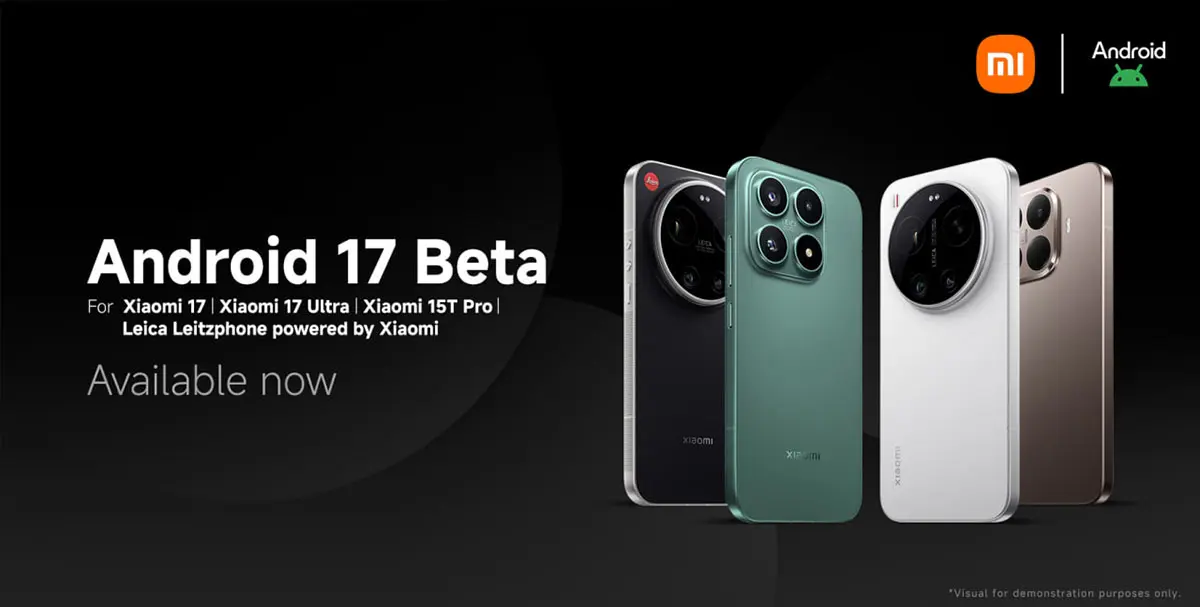
    Xiaomi has officially stepped up its Android 17 transition after publishing a developer adaptation announcement that appears to have indirectly revealed the company’s rollout roadmap. The notice urges developers to wrap up Android 17 compatibility work before July 1, 2026 — a deadline that strongly implies stable Xiaomi HyperOS builds based on Android 17 are arriving much sooner than most anticipated. The move puts Xiaomi alongside OPPO, vivo, and Honor as one of the most aggressive Android manufacturers in preparing their ecosystems for the new platform.

    hyperos android 17 update

    Xiaomi already testing Android 17 Beta 2 on the Xiaomi 17 series

    According to Xiaomi’s official developer notice, developers with access to the Xiaomi 17 Ultra, Xiaomi 17 Ultra Leica Edition, and Xiaomi 17 can now install Xiaomi HyperOS 3.3 Developer Preview firmware based on Android 17 Beta 2. This is one of the clearest signals yet that Xiaomi’s Android 17 development has moved into an advanced stage. The company is pushing application developers to complete adaptation work before July 1, 2026, to ensure full compatibility with upcoming HyperOS builds.

    What the July 1 deadline says about Xiaomi’s roadmap

    Xiaomi hasn’t formally announced a stable Android 17 release date, but the adaptation deadline paints a fairly clear picture of what’s coming and when. Based on the company’s previous software release patterns, the likely Android 17 roadmap looks something like this:

    Expected Xiaomi Android 17 Timeline

    • May–June 2026 — Android 17 Beta testing phase, developer adaptation period, and internal HyperOS optimization
    • July 2026 — Final application compatibility verification, system stability improvements, and carrier and ecosystem preparation
    • Mid-July to August 2026 — First stable Xiaomi HyperOS 3.3 or 4 Android 17 builds, with an initial rollout targeting flagship Xiaomi devices
    • Q3–Q4 2026 — Wider rollout across Xiaomi, REDMI, and POCO devices globally

    The timeline makes clear that Xiaomi intends to keep HyperOS among the fastest-updated Android platforms in the industry.

    Xiaomi HyperOS Android 17 rollout expected to start with the Xiaomi 17 series

    The Xiaomi 17 lineup is shaping up to be the first stable Android 17 HyperOS platform. With Android 17 Beta 2 developer firmware already being distributed for these devices, the series is effectively serving as Xiaomi’s primary validation hardware for the new Android version. This mirrors Google’s own Pixel beta rollout strategy, where new flagship devices act as the initial optimization platform before broader expansion begins.

    Android 17 brings significant system-level changes

    The urgency behind the developer adaptation push also suggests Android 17 introduces platform behavior changes substantial enough to require early preparation. The likely changes include stricter background activity limitations, enhanced permission management, improved battery optimization, new security sandboxing features, updated notification behavior, advanced AI framework integration, and better optimization for large-screen and foldable devices.

    Apps that don’t adapt in time risk crashes, background execution failures, notification delays, or UI instability on Android 17 hardware. That’s precisely why Xiaomi and other major manufacturers are pressing developers to act well ahead of stable releases.

    android 17 compatibility

    OPPO, vivo, and Honor join the Android 17 adaptation push

    The ecosystem preparation extends well beyond Xiaomi. OPPO, vivo, and Honor have each published official Android 17 adaptation notices with the same July 1, 2026 deadline for developers. OPPO has gone furthest in spelling out the consequences, warning developers that apps failing to meet adaptation requirements could face search warning labels, device compatibility restrictions, and potential removal from app stores. That’s a strong signal of how seriously Android manufacturers are treating ecosystem stability ahead of what promises to be one of the more significant Android platform transitions in recent years.

    Via

  • Redmi K100 Series: Specs, Chipset & Launch Leaks

    Redmi K100 Series: Specs, Chipset & Launch Leaks

    Xiaomi’s Redmi K-series has operated on a reliable schedule for years – debut in China around October, then resurface internationally under the Poco brand shortly after. The Redmi K100 series appears to be following that same playbook, with two distinct devices now showing up across multiple leak sources. The standard K100 and the K100 Pro Max aren’t simply different sizes of the same phone. They’re targeting separate chipsets, different price brackets, and based on what’s leaked so far, different priorities entirely.

    Summary

    Two models have been confirmed: the Redmi K100 (codename “Athens,” model Q11) and the Redmi K100 Pro Max (codename “Songyuan,” model Q11X), each built around a distinct chipset. The standard K100 is expected to use the Snapdragon 8 Elite Gen 5, continuing the K-series tradition of pairing the previous generation’s top chip with a more accessible price tag. The Pro Max, meanwhile, is tipped to run the Snapdragon 8 Elite Gen 6 Pro (SM8975) — a 2nm chip with LPDDR6 RAM support, making it the higher-tier variant rather than the standard Gen 6.

    On the camera side, tipster Digital Chat Station has leaked a 200MP main sensor in a 1/1.28-inch format for the Pro Max, alongside a 50MP periscope telephoto. Both phones are expected to launch in China in October 2026, with global versions anticipated as the Poco F9 Pro (Redmi K100) and Poco F9 Ultra (K100 Pro Max) sometime in Q1 2027.

    redmi k100 china leak

    The Standard K100: Snapdragon 8 Elite Gen 5 and a Proven Formula

    The Redmi K100, internally codenamed “Athens,” is tipped to ship with the Snapdragon 8 Elite Gen 5 — the same chip inside the current Redmi K90 Pro Max and a growing number of 2026 Chinese flagships. That’s not a weakness. The K-series standard model has always been positioned as a high-value performance device rather than a spec-ceiling chaser, and this generation looks no different. Any meaningful differentiation from the K90 line will likely come through display and battery upgrades, though neither has been specifically detailed in leaks yet. Xiaomi hasn’t officially confirmed anything about the Redmi K100 beyond its codename and model number.

    redmi k100 images and specs leak

    The K100 Pro Max: The Real Generational Leap

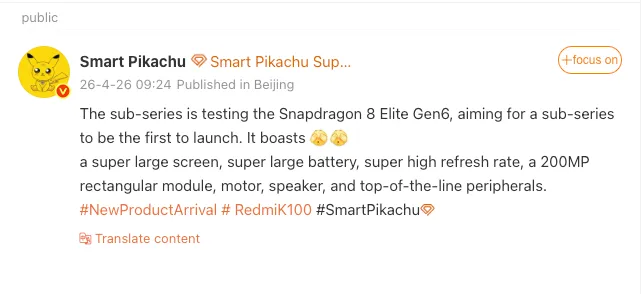
    The Pro Max is the headliner. Tipster Digital Chat Station posted a Weibo leak confirming that a Xiaomi sub-brand device — identified across multiple sources as the K100 Pro Max — is currently in testing with the Snapdragon 8 Elite Gen 6 Pro (SM8975). The distinction between the Pro and standard Gen 6 is worth understanding: the Pro variant is the only 2026 Qualcomm flagship chip confirmed to support LPDDR6 RAM, which delivers roughly double the peak memory bandwidth of LPDDR5X. Paired with up to 1TB of UFS 5.0 storage, the memory subsystem alone marks a clear step forward from anything in the current generation.

    Interestingly, Digital Chat Station noted that camera performance isn’t expected to be the headline story here — the emphasis is described as “core performance and upgraded display experience” rather than imaging. That said, an earlier separate leak from the same source pointed to a triple camera system led by a 200MP main sensor on a 1/1.28-inch format, accompanied by a 50MP ultra-wide and a 50MP periscope telephoto. These two leaks aren’t necessarily in conflict — saying the camera isn’t a major upgrade relative to dedicated imaging flagships doesn’t rule out the presence of a 200MP sensor.

    Pricing and the Global Rebrand Path

    A price leak from the same Chinese source puts the K100 Pro Max starting at roughly CNY 5,000, which works out to around $725 at current exchange rates. That’s a noticeable step up from the K90 Pro Max, reflecting the premium silicon under the hood. Internationally, past K-series rebranding patterns suggest the K100 will arrive as the Poco F9 Pro, while the K100 Pro Max becomes the Poco F9 Ultra, with a Q1 2027 launch window for global markets.

    What Remains Unknown

    Display size, battery capacity, charging speeds, refresh rate, and software versions are all still unconfirmed for both models. The Snapdragon 8 Elite Gen 6 and Gen 6 Pro haven’t been officially announced by Qualcomm — both designations remain leak-based placeholders for now. Official confirmation from either Qualcomm or Xiaomi isn’t expected until the Xiaomi 18 series launch in September, which will likely serve as the public debut for the Gen 6 platform.

  • Critical Snapdragon Exploit Takes Over Devices in Just 5 Minutes – What You Need to Know

    Critical Snapdragon Exploit Takes Over Devices in Just 5 Minutes – What You Need to Know

    Kaspersky ICS CERT has publicly detailed a critical hardware vulnerability hitting a wide array of Qualcomm Snapdragon chipsets. The exploit, presented at Black Hat Asia 2026 on April 23 and tracked as CVE-2026-25262, has rattled the security community. First confirmed by Qualcomm in April 2025, full technical details are now available, exposing a backdoor capable of total device takeover and data destruction.

    snapdragon exploit takes over device

    The Sahara Protocol and BootROM Flaw

    The issue lies deep in the BootROM, the silicon-hardcoded firmware that runs first when a device powers up. Because this code is etched into the hardware itself, standard OTA software updates can’t touch it, making patches nearly impossible.

    Researchers uncovered a major weakness in Qualcomm‘s Sahara protocol handling. For those who work with device flashing, Sahara manages low-level communication in Emergency Download (EDL) mode to load critical software before the main OS starts.

    With just a few minutes of physical access, attackers can exploit this to sidestep the entire secure boot chain. Once inside the application processor, they gain the ability to:

    • Install persistent backdoors that survive reboots.
    • Pull sensitive data like passwords, files, contacts, and real-time location.
    • Take over device sensors for covert camera and microphone access.

    The malware even fakes a system reboot to throw off users. Clearing the infection often requires draining the battery completely to wipe volatile memory, and detection remains extremely challenging.

    Affected Chipsets and Devices

    While newer flagships like Snapdragon 8 Elite have stronger defenses, this flaw hits many older and mid-range chips still in widespread use.

    Vulnerable Qualcomm Chipsets:

    • MSM8916 (Snapdragon 410) (Xiaomi REDMI 2)
    • SDX50 (Xiaomi Mi MIX 3 5G and Mi 9 Pro 5G)
    • MDM9x07
    • MDM9x45 (Xiaomi Mi 5, Mi 5s, Mi 5s Plus, Mi Note 2, Mi MIX)
    • MDM9x65
    • MSM8909
    • MSM8952

    Real-World Impact

    Physical access requirements limit mass remote attacks, but the risk to supply chains, repair shops, and targeted users remains severe. Compromised devices turn into perfect surveillance tools. With hardware deployed across consumer REDMI phones to industrial IoT systems, the potential fallout spans far beyond typical mobile threats.

    Source: Kaspersky

  • Xiaomi MIX Fold 5 Spotted with XRING O3 Chipset in Mi Code Leak

    Xiaomi MIX Fold 5 Spotted with XRING O3 Chipset in Mi Code Leak

    Fresh clues from the Mi Code database point to Xiaomi’s next foldable flagship making a comeback. After scrapping last year’s prototype, the company seems more committed than ever to foldables, with a device that hits a key hardware milestone: Xiaomi’s first foldable running its own silicon.

    The Foldable Comeback and XRING O3

    MIX Fold 5 Spotted with XRING O3 Chipset

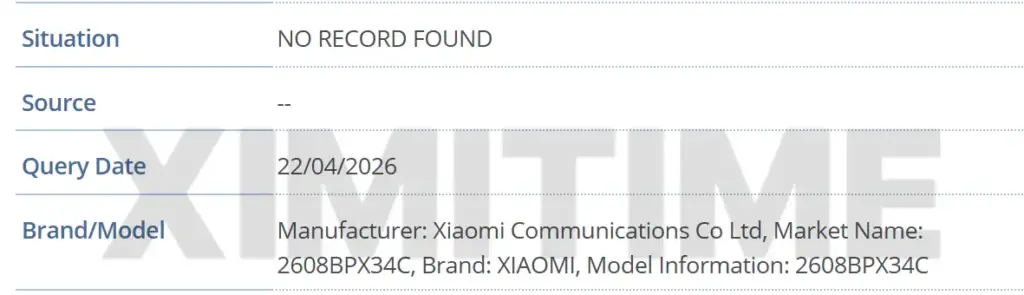
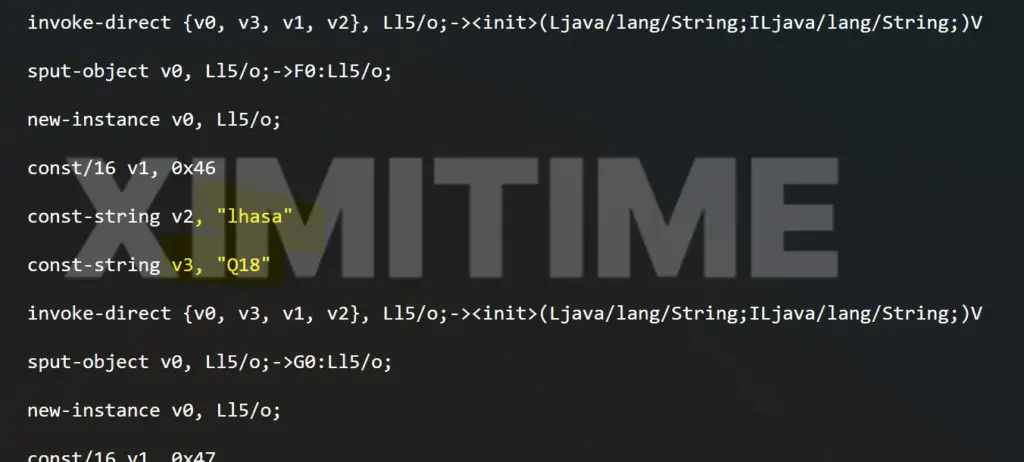
    Mi Code data lists a new entry with model number 2608BPX34C and internal designation Q18. Within Xiaomi’s naming system, the “18” series is reserved exclusively for Fold devices, making Q18 a clear match for the upcoming Xiaomi MIX Fold 5 (or possibly Xiaomi 17 Fold, though it’s currently tagged as MIX Fold 5).

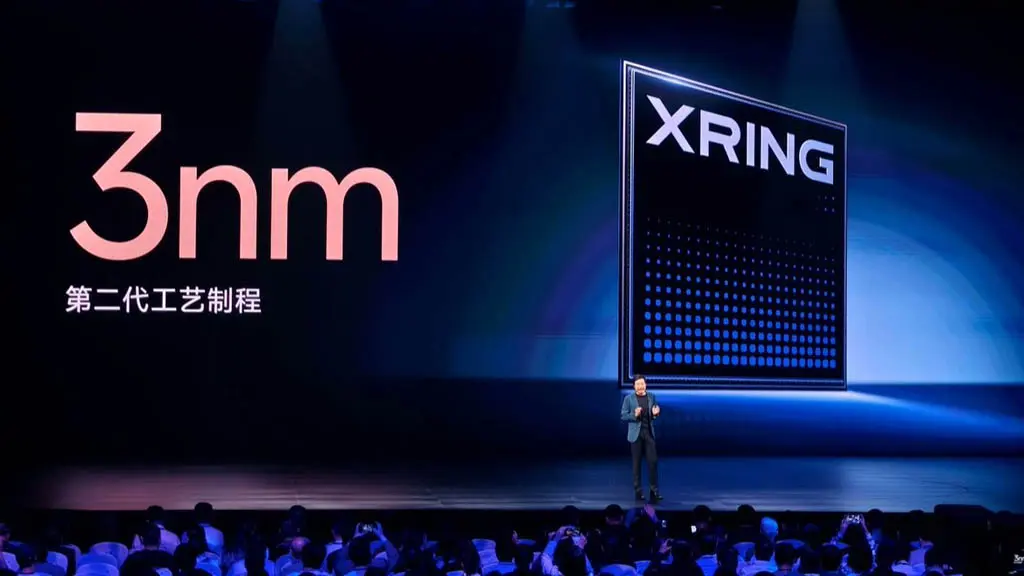
    The biggest surprise is the chipset. The listing confirms the device will run on the XRING O3 processor, following the XRING O1 that launched in the 2025 Xiaomi 15S Pro. This marks Xiaomi’s boldest step yet in custom silicon for premium “Special Edition” China models, reducing dependence on third-party suppliers. For reference, the Xiaomi MIX Flip 3 sticks with a Snapdragon chipset.

    MIX Fold 5 Spotted with XRING O3 Chipset

    The project carries the codename “lhasa.” Last year’s abandoned foldable worked under codename “nirvana” with model O18. By shelving O18 entirely, Xiaomi redirected efforts to “lhasa,” ensuring smooth XRING O3 integration with Xiaomi HyperOS from day one.

    Availability

    The Xiaomi MIX Fold 5 will launch exclusively in China initially. While exact pricing remains under wraps, analysts anticipate a high-end starting point around $1,399 to take on premium foldable rivals. The model number hints at an August 2026 debut, potentially timed for Xiaomi Day on 8.16 with a special unveiling event.

    Dropping the XRING O3 into a flagship foldable shows Xiaomi’s growing trust in its chip team. These processors currently power only top-tier China models, but Xiaomi’s broader plans point toward global XRING devices once the supporting ecosystem fully matures.

  • Xiaomi 15 Gets Stable HyperOS 3.1 Based on Android 16 in EEA

    Xiaomi 15 Gets Stable HyperOS 3.1 Based on Android 16 in EEA

    The long-awaited Android 16 phase has now officially started for Xiaomi’s flagship family. Today, the stable Xiaomi HyperOS 3.1 update began rolling out to Xiaomi 15 users in the European Economic Area (EEA). This major release is an important step in Xiaomi’s software progress, moving beyond earlier beta builds and delivering a fully public, stable version directly through the Updater app.

    Xiaomi 15 starts receiving stable HyperOS 3.1 with Android 16 in EEA

    System Architecture & New Features

    This update brings a major refresh to the system interface, the underlying code structure, and the company’s cross-platform ecosystem features. Here is the technical breakdown of the main additions in HyperOS 3.1:

    • Advanced Hyper Island System: The dynamic notification and system status area has been noticeably refined, with smoother animations and richer, more interactive live activities around the camera cutout.
    • Enhanced iOS Connectivity: Xiaomi has significantly improved its cross-platform workflow, making it easier to share files, sync clipboards, and interact between the Xiaomi 15 and Apple’s iOS ecosystem.
    • iOS-Style Stacked Recent Apps: The multitasking menu has been redesigned with a stacked, card-based layout similar to iOS, making background app navigation quicker and the visual presentation more intuitive.
    • Rust-Based System Applications: In a major move toward security and memory safety, several core system applications have been rewritten entirely in the Rust programming language, cutting system overhead and reducing the risk of memory leak vulnerabilities.

    Update Details

    Device Name: Xiaomi 15
    Device Codename: dada
    Target Region: EEA (Europe)
    OS Version: OS3.0.301.0.WOCEUXM
    Android Version: Android 16
    Release Type: Stable (Publicly available via the system Updater)

    For everyday users, the move to Android 16 and HyperOS 3.1 should make the phone feel noticeably smoother and more responsive. The Rust-based system apps help memory allocation work more efficiently, which should reduce the chances of the UI dropping frames during heavy multitasking.

    The upgraded iOS connectivity is also likely to be especially useful for users working across mixed-device setups. It removes much of the friction involved in moving media or documents between a Xiaomi flagship and an iPad or Mac, which should make day-to-day file sharing feel far less tedious.

  • Redmi Buds 8 Debut With 50dB ANC, LHDC Audio, and 44-Hour Battery Life

    Redmi Buds 8 Debut With 50dB ANC, LHDC Audio, and 44-Hour Battery Life

    Redmi Buds 8 have officially launched in China, bringing a mix of premium audio features and long battery life to the company’s latest true wireless stereo (TWS) lineup. The earbuds support active noise cancellation (ANC) of up to 50dB, feature 11mm dynamic drivers, and use Bluetooth 5.4 for connectivity. They also support the LHDC audio codec and carry Hi-Res Audio Wireless certification. Additional highlights include multi-device pairing and AI-powered call noise reduction. The launch comes alongside several upcoming Redmi products, including the Redmi K90 Max, Redmi K Pad 2, and Redmi Book Pro 2026, which are scheduled to debut in China later today.

    Redmi Buds 8 Price, Colour Options

    The Redmi Buds 8 are priced at CNY 229. Buyers can choose from three colour options: Cyan, Dusk Black, and White. The earbuds are currently listed on the official Xiaomi China website.

    Redmi Buds 8 color variants

    Redmi Buds 8 Features, Specifications

    The earbuds are built around 11mm dynamic drivers and support a wide frequency response range from 20Hz to 40kHz. With Hi-Res Audio Wireless certification and support for LHDC alongside SBC and AAC codecs, the Buds 8 are designed to deliver higher-quality wireless sound across compatible devices.

    For noise control, Redmi integrates up to 50dB active noise cancellation. The earbuds use a three-microphone system with AI-backed call noise reduction, helping reduce wind interference at speeds of up to 12m/s for clearer voice calls. Users can switch between multiple ANC modes, including depth, balanced, light, and an adaptive option that adjusts automatically. There are also three transparency modes available: standard, vocal enhancement, and environmental enhancement.

    Connectivity is handled via Bluetooth 5.4, with a claimed range of up to 10 metres in open spaces. The earbuds support dual-device pairing, allowing them to stay connected to two devices simultaneously, along with audio sharing and smooth switching between connected devices. Redmi also includes support for the Xiaomi Headphones app, enabling customisation and controls, as well as gesture-based functions such as one-tap photo capture.

    Redmi Buds 8 anc

    Battery performance is another key focus. Each earbud houses a 54mAh battery, while the charging case packs a 475mAh unit. Redmi claims up to 11 hours of playback on a single charge without ANC, extending to a total of 44 hours with the charging case. With ANC enabled, the earbuds are rated for up to 6.5 hours per charge and up to 28 hours in total with the case. Charging is handled via a USB Type-C port.

    In terms of durability and design, the Redmi Buds 8 come with an IP54 rating for dust and splash resistance. Each earbud weighs around 5g, and the total weight including the charging case is approximately 44.5g.A/B seamless updates will be mandatory for Android 11 devicesA/B seamless updates will be mandatory for Android 11 devices

  • HyperOS 3.1 Stable Goes Global: Surprising List of Xiaomi Devices Getting It Now

    HyperOS 3.1 Stable Goes Global: Surprising List of Xiaomi Devices Getting It Now

    The HyperOS 3.1 stable update has begun to roll out for devices worldwide, which is fantastic news for Xiaomi users. In the first phase, the company pushed the most recent version to the highest-end devices, but it will soon be extended to more compatible phones.

    Xiaomi HyperOS 3.1 is a little but important update. The new OS version, which is based on Android 16, offers improvements for multitasking and file sharing.

    With the improved HyperConnect, it enhances Apple Ecosystem integration, which is more environmentally friendly. As a result, transferring files between devices is made simpler and more seamless.

    hyperos 3.1 update

    Regarding the worldwide devices, the following models are compatible with the Xiaomi HyperOS 3.1 stable update (refer to the software version indicated next to the devices):

    • Xiaomi 17 – HyperOS 3.0.301.0
    • Xiaomi 17 Ultra – HyperOS 3.0.301.0
    • POCO Pad/Redmi Pad Pro – HyperOS 3.0.301.0

    The facts suggest that the HyperOS 3.1 stable update is currently available in Europe. The updated version will soon be available in more markets and phones from Xiaomi. Let’s see what new features HyperOS 3.1 offers consumers in the interim.

    1. Smart Island on tablets: For its tablets running HyperOS 3.1, Xiaomi has finally released Hyper Island. Large-screen users can now enjoy a rich and unfettered experience while monitoring the real-time activities of specific apps at the top of the display.

    2. Fluent System Apps: Many system apps were rewritten by Xiaomi using the most recent version of the Rust programming language. This technique makes multitasking loads more fluid and enhances memory security.

    3. iOS-inspired Recent Apps Menu: Users will now get an iOS-style Recent Apps Menu with a new card-swiping gesture.

    4. Enhanced Apple Ecosystem: Xiaomi HyperConnect enables users to bridge the gap between Xiaomi’s tablet lineup and the Apple Ecosystem. They get seamless cross-device file sharing and improved workflow continuity.

  • Snapdragon 8 Elite Gen 6 Pro leak reveals massive 16MB L2 cache

    Snapdragon 8 Elite Gen 6 Pro leak reveals massive 16MB L2 cache

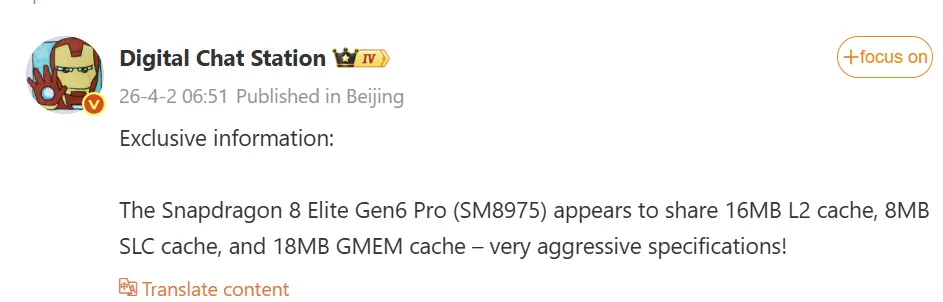
    Before September 2026, the mobile tech scene is getting hotter. The aggressive specs of Qualcomm’s upcoming flagship CPU, the Snapdragon 8 Elite Gen6 Pro (SM8975), have been revealed by reputable source @DigitalChatStation. As expected, Xiaomi is set to unveil this powerhouse with the eagerly awaited Xiaomi 18 series, making it the first company to do so. Additionally, the future REDMI K90 Pro Max in the domestic market will be built around this silicon beast. Please take note that this device will be released worldwide under the POCO brand as the POCO F9 Ultra.

    Inside the architecture redefining modern silicon

    Snapdragon 8 Gen6 Pro 2

    Now let’s explore the technological specifics. It appears that the Snapdragon 8 Elite Gen6 Pro will be an architectural monster. An enormous shared 16MB L2 cache, 8MB of SLC (System Level Cache), and an amazing 18MB of GMEM (Graphics Memory) are confirmed by leaked customs manifests and insider accounts. This configuration, when paired with an improved Adreno 850 GPU, is built to handle demanding workloads and intense gaming sessions.

    Snapdragon 8 Gen6 Pro 1

    Two super cores, three performance cores, and three efficiency cores make up the CPU’s unusual 2+3+3 cluster architecture. The SM8975 efficiently breaks existing memory bandwidth limitations by supporting next-generation LPDDR6 memory up to 16GB to fuel this demanding processor.

    The system changes that are moving markets right now

    Hardware doesn’t tell the whole story. Xiaomi HyperOS 4 will launch on these new flagship devices. HyperOS 4, which was designed from the ground up to be a very effective Android skin, will make full use of the new Snapdragon chip’s optimized 2+3+3 architecture and enormous L2 cache. Unprecedented battery life and excellent thermal control are anticipated as a result of this combination. HyperOS 4’s background task handlers will be able to maintain your most popular apps in memory without depleting the battery thanks to the aggressive cache architecture, guaranteeing that the user interface will stay instantly responsive even under high loads.

  • HyperOS 4 arrives August 2026 — Xiaomi promises its most refined update

    HyperOS 4 arrives August 2026 — Xiaomi promises its most refined update

    With HyperOS 4, Xiaomi intends to make significant changes. The old MIUI code is entirely removed by the business. The system becomes more stable and quicker as a result. In August 2026, HyperOS 4 will be available. It turns into the initial “Zero-Legacy” version.

    In HyperOS 3.1, Xiaomi begins to clear up outdated code. The MIUI SDK is eliminated from the Weather and Gallery applications. All legacy code from MIUI 1 to HyperOS 3 is removed. The system eliminates outdated dependencies and sluggish function calls. A new operating system is produced as a result. It decreases bugs and increases speed.

    xiaomi hyperos 4 update for all devices

    Key changes:

    • Removes MIUI backward compatibility layer
    • Uses only HyperOS SDK in all modules
    • Deletes over 10 years of old code
    • Makes updates faster and more stable

    HyperOS 4 brings high-performance apps with Flutter and Rust

    Xiaomi uses Rust and Flutter to rework key apps. The Weather app on HyperOS 3.1 checks this. These tools are extensively utilized in HyperOS 4. UI is made fluid via Flutter. Rust improves safety and speed. Versions of new apps are not available to older HyperOS users. This eliminates older phones’ backward compatibility.

    Key features:

    • Flutter for standard UI rendering
    • Rust for secure and fast core code
    • Modular apps that update independently
    • Better stability on all devices

    Small improvements are made to flagship phones. Large speed increases are seen in low-cost phones. Xiaomi resolves outdated code issues. The most stable experience in Xiaomi history is what it promises.