Tag: xiaomi

  • Download and install Google Camera for Xiaomi Poco F4 | GCam APK

    Download and install Google Camera for Xiaomi Poco F4 | GCam APK

    Xiaomi Poco F4

    With a Qualcomm Snapdragon 870 SoC and a 6.67-inch full-HD+ AMOLED screen with a 120Hz refresh rate, the Poco F4 5G was introduced in India. The gadget is powered by MIUI 13 on top of Android 12. Triple rear cameras on the Poco F4 include a 64 MP primary sensor, an 8 MP ultra-wide camera, and a 2 MP macro camera.

    We will share the most recent Google Camera for the Poco F4 with you in this article. The Google Pixel’s default camera app is called Google Camera. The camera uses the most recent HDR+ technology, which enhances image quality, particularly on low- and mid-end smartphones. The app also offers slow motion, lens blur, 60 frames per second video, portrait mode, motion photographs, and Night Sight.

    This tutorial is for you if you want to install the Google Camera on your Poco F4. Thank you to a few talented and dedicated developers, namely Arnova8G2, BSG, and Urnyx05, who are working hard to port GCam APK files to the majority of devices out there. The Poco F4 devices now support the Google Camera port.

    Xiaomi Poco F4 Device Overview

    The 6.67-inch AMOLED display on the Xiaomi Poco F4 has a refresh rate of 120 Hz. It has a 20:9 aspect ratio and an FHD+ display with a resolution of 1080 x 2400 pixels. Peak brightness for the screen is 1300 nits. The Qualcomm Snapdragon 870 processor is housed inside and was created using a 7nm manufacturing technique. One Kryo 585 core runs at 3.2 GHz, three Kryo 585 cores run at 2.42 GHz, and four Kryo 585 cores run at 1.8 GHz, making it an octa-core CPU. We have the Adreno 650 to handle activities that require a lot of graphics. The smartphone comes pre-installed with the MIUI 13 skin over Android 12.

    In terms of optics, we have a single selfie camera up front and a triple camera arrangement at the back. The 64 MP primary sensor and f/1.8 lens on the triple rear camera system are joined by an 8 MP ultrawide sensor and f/2.2 lens, and a 2 MP macro sensor and f/2.4 lens. The front-facing selfie camera has a 20 MP main sensor and an f/2.5 lens. The front camera can only record videos in 1080p while the rear camera arrangement can shoot 4K videos at 60 frames per second.

    The smartphone comes in four storage options: 128GB internal storage + 6GB RAM, 128GB internal storage + 8GB RAM, 256GB internal storage + 8GB RAM, and 256GB internal storage + 12GB RAM. We do not get a MicroSD slot for storage expansion. In terms of communications, we get Wi-Fi 802.11 a/b/g/n/ac/6, Bluetooth 5.2, GPS, NFC, Infrared port, and USB Type-C 2.0. And for sensors, we get a side-mounted fingerprint sensor, accelerometer, gyro, proximity, and compass.

    Powering it all is a 4500 mAh battery that can be topped up quickly using a 67W power adapter. The company claims that the phone can go from 0% to 100% in just 38 mins. The smartphone is available in three color options: Moonlight Silver, Night Black, and Nebula Green.

    Download Google Camera Port for Poco F4

    Also Read: Download Google Camera 8.0 APK from Pixel 5 | GCam 8.0 APK Mod

    Steps to install Google Camera on Poco F4

    The Google Camera APK file installation process is as simple as installing any other third-party APK file. You don’t have to root your device for this.

    • Download the GCam APK file from the download link above and tap on it.
    • Make sure that the Unknown Sources option is enabled on your device. To do this, go to the device Settings menu > Security/Privacy > enable it. [If already enabled, skip to the installation]
    • It will launch the package installer and tap on the Install button.
    • Once the installation is done, open and use it.
    • Enjoy!

    Still, if the camera app doesn’t work, enable the Camera2api by using build.prop (Not for every device)

    Persist.vender.camera.HAL3.enable=1

    I hope this guide will help you a lot, and you have now successfully installed the Google Camera ported app on your Poco F4 handset. If you’re facing any trouble, feel free to write it down in the comments below.
  • Speed up Xiaomi devices – make cheap devices fast

    Speed up Xiaomi devices – make cheap devices fast

    There are much more entry-level cellphones than flagships on the market. Because of the low-end specifications of these cellphones, it is highly typical for them to have poor speeds. Even tiny apps can cause the smartphone to hang on low-end hardware. Furthermore, many web pages may take a long time to load. If you have a Xiaomi entry-level smartphone, though, you’re in luck. There are a few basic things you can do to boost the speed of your smartphone. Xiaomi’s most popular smartphones are entry-level models. As a result, they come with insufficient hardware, which may cause them to slow while under strain. You can make the MIUI UI run faster and prevent these smartphones from hanging or freezing.

    Boost MIUI speed

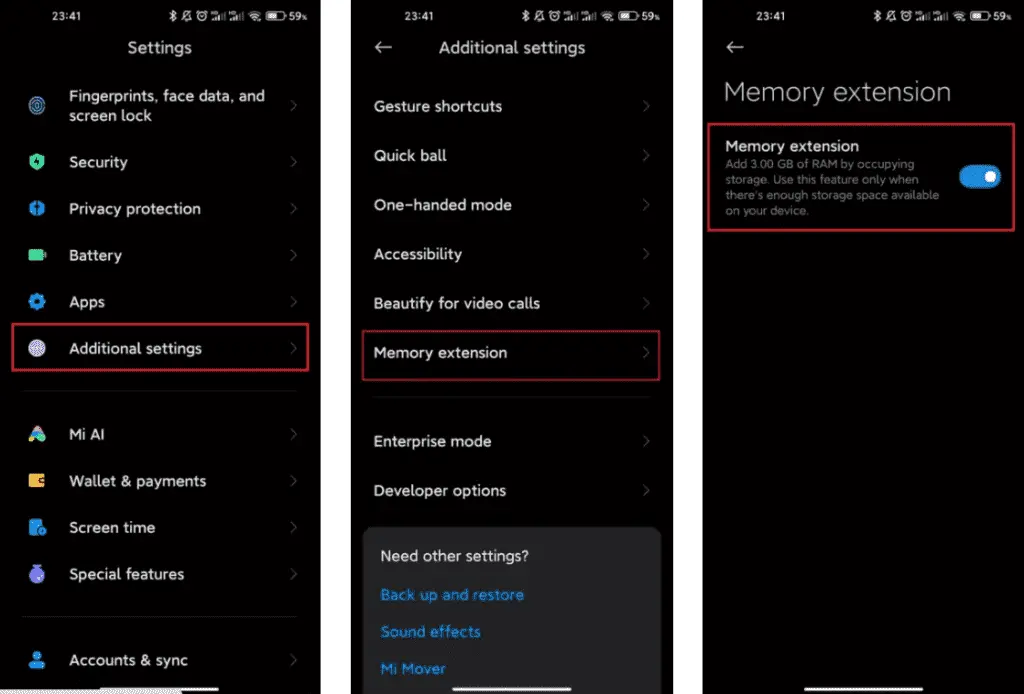
    1. Extend your memory

    Xiaomi, a Chinese company, has added a feature to its devices that may be of assistance. This is where the RAM expansion feature comes in. This capability has been available for the company’s smartphones since last year. This feature frees up RAM by using internal storage to create SWAP storage space. If you can activate this option, you’ll be able to boost the MIUI system’s speed. Although it is not as fast as physical RAM, it is a significant improvement.

    xiaomi extend memory

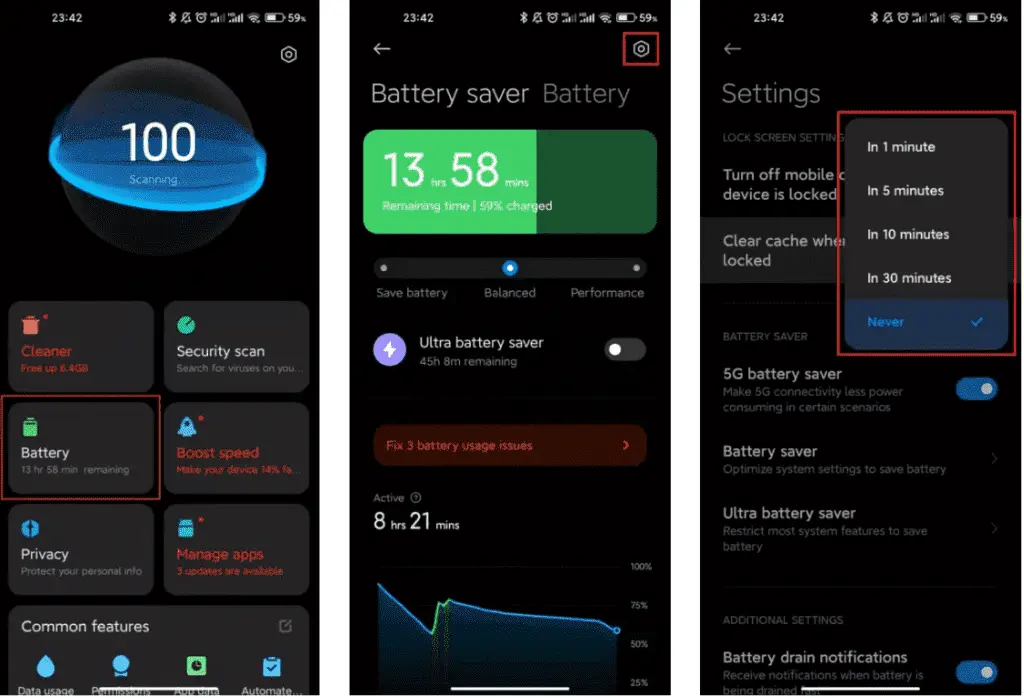
    2. Clean cache

    Whethere its a smartphone, tablet or even a desktop, clearing cache is very good for operation. When the cache storage is too heavy, it could cause the device to lag. The rate at which your cache storage fills up depends on how you use your device. With the automatic cache clearing feature, it is now very easy to clear cache. You no longer need to clear the cache via recovery mode.

    MIUI Memory a 1024x698 1

    Xiaomi MIUI automatic cache cleaning feature ensures that your cache is always clear. Whenever you lock your smartphone screen, this feature clears the cache. Furthermore, you can manually set this feature to clear the cache at intervals. Thus, whether your hardware is insufficient, clearing the cache will ensure that all its limited resources are spent on relevant operations.

    3. Disable system apps and ads

    You may have noticed that the MIUI system app has in-built advertisements when you run it. It’s vital to realize that these adverts consume some hardware resources. This means that it has the potential to slow down the smartphone. They can create delays in the opening of some functionalities since they require system resources. Xiaomi makes it optional to see these advertising because they might be quite unpleasant.

    MIUI Memory b 1024x697 1

    You may quickly disable advertising that you don’t want to see, and they won’t appear again. All you need to do is set up a private DNS server. In the private DNS provider, type “dns.adguard.com.” Then, just to be sure, look to see if these adverts are still visible. This will free up some hardware resources while also speeding up the MIUI system.

    4. Disable system animations

    This solution is compatible with any smartphone operating system. For entry-level cellphones, some functions are a great luxury. One of these features is system animation. Deactivating this feature is a common technique for making the operating system run faster. Make certain that the animation scales are set to 0 or 0.5. These animations will be faster than before, and MIUI itself will speed up.

    MIUI Memory c 1024x699 1

    5. Keep the storage clean

    Obviously, filling your storage with “crap” is a recipe for disaster. This is because the storage capacity of your smartphone has a big impact on its use. This is also not unique to MIUI devices, but rather to all gadgets.

    MIUI Memory d 473x1024 1

    The pace of the smartphone slows down when the internal storage is full. You may notice minor latency and the device freezing at this stage. This can be avoided by keeping storage as basic as possible.

  • Themes are coming to MIUI 13

    Themes are coming to MIUI 13

    Many of us have wanted the customization layers to merge with Android 12 since it was announced and the new mechanism for customizing mobiles with that version was released. The first to add it to One UI 4 in its own unique way was Samsung, and the next to do so will be Xiaomi, according to a leak shared on Twitter by user Mishaal Rahman.

    This has discovered within the Android internal code that the so-called Monet themes, which are hallmark of the purest version of Android, will also be in the Chinese manufacturer’s popular layer.

    A very important change, which gives more personality to Xiaomi brand mobiles, which with the themes already gave us a thousand and one possible style configurations. The colors are based on the wallpaper, but we can also choose our favorite combination of tones.

    The color arrives at Xiaomi

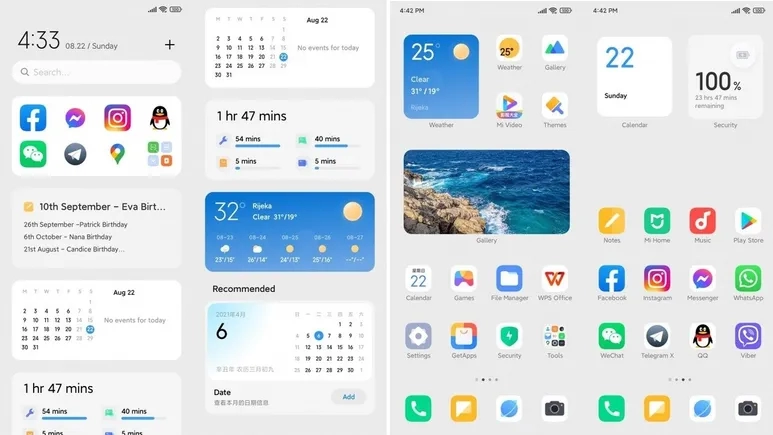
    Because of the photographs supplied by Xiaomi ui, we currently know how they operate and how they will behave on the Xiaomi’s smartphones, but it shouldn’t be long before we see additional circumstances where the adaptive colors of Android 12 reach Xiaomi smartphones. The feature is included in MIUI 13 version 22.1.17, which is currently only available in China.

    This option will be available to everyone in the future, albeit we will have to wait because it will not be included in the first global editions of MIUI 13. The program will be released later, allowing us to customize the appearance of our Android phone as if it were a Google Pixel.

    colores temas android 12 xiaomi miui 12 1

    The images show how the new Android 12 widgets, as well as Google Chrome tabs and even system components, adapt to the selected hue. All Google applications are expected to accept this shift, and we will gradually learn how other areas of the Xiaomi, Redmi, and Poco terminals will follow suit.

    For the time being, devices running Android 12 in its stock form can apply Monet themes to the icons and control panel, which is not possible with MIUI 13. However, we do not give up hope that they will arrive following this first application.

    What will happen to the themes?

    Until now, the best way to change the look of our Xiaomi device was to use MIUI’s themes app. We may find many other style combinations there, which we can customize to our liking on the smartphone by changing the icons, colors, and shapes. The incorporation of this new Android function raises a lot of questions about what will happen with this benefit.

    In recent months, the app has stopped integrating as many options in Europe, and some notable themes have been left alone in China.

    This could be the first step for Xiaomi to become more pure, at least for Spain and other countries, where stock Android is preferred and other systems that are visually much more complex are less popular.

  • Redmi K50 powered by Snapdragon 8 Gen 1 SoC to be launched first before other models

    Redmi K50 powered by Snapdragon 8 Gen 1 SoC to be launched first before other models

    Xiaomi is planning to release the Redmi K50 series in China in February. According to the newest information, Xiaomi will release the Snapdragon 8 Gen 1-powered Redmi K50 first, followed by the Dimensity 9000-powered variant. These new advances coincide with the Chinese New Year, which is celebrated according to the Lunar calendar, and most Chinese firms have planned releases and activities to commemorate the auspicious occasion. Xiaomi, predictably, will be present at these events, where the much-anticipated Redmi K50 series will be unveiled. The Redmi K50 series will have four variants with AMOLED high-refresh display panels, new-generation processors, multi-camera configurations, and rapid charging capabilities.

    Xiaomi Redmi K50 Ultra

    Snapdragon 8 Gen to launch first

    Xiaomi has planned to introduce the Redmi K50 devices with Qualcomm’s Snapdragon 8 Gen 1 CPU, according to Xiaomi executive Lu Weibing. The Redmi K50 models with the Dimensity 9000 processor will be released later. However, the real cause behind the launch’s spread is unknown. The Redmi K50 lineup is likely to include many variants and is expected to come with a variety of processing units, including the Snapdragon 8 Gen 1, the Dimensity 9000, the Dimensity 8000, the Dimensity 7000, and the Snapdragon 870.

    Redmi K50 series specifications

    ReRedmi K50, K50 Pro, K50 Pro+, and K50 Gaming Edition are expected to be included in the Redmi K50 series. The Snapdragon 8 Gen 1 SoC is believed to be used in the Redmi K50 Pro+, while the MediaTek Dimensity 9000 SoC or Qualcomm’s Snapdragon 870 SoC could be used in the Redmi K50 Pro. The Dimensity 9000 SoC could be included in the Redmi K50 Gaming Edition. Finally, either the Dimensity 8000 or the Dimensity 7000 are expected to power the vanilla Redmi K50.

    The Redmi K50 series is expected to come with MIUI 13 based on Android 12 (expected). Lower-end models will get a 50W/67W fast charging support while the higher and more expensive models will benefit from a 120W fast charging support. The device is expected to get a 108MP main camera sensor accompanied by other sensors. The Redmi K50 Pro can be launched as a rebadged POCO.

    Via: 91mobile

  • Xiaomi 12 Pro specs leaks ahead of upcoming announcement

    Xiaomi 12 Pro specs leaks ahead of upcoming announcement

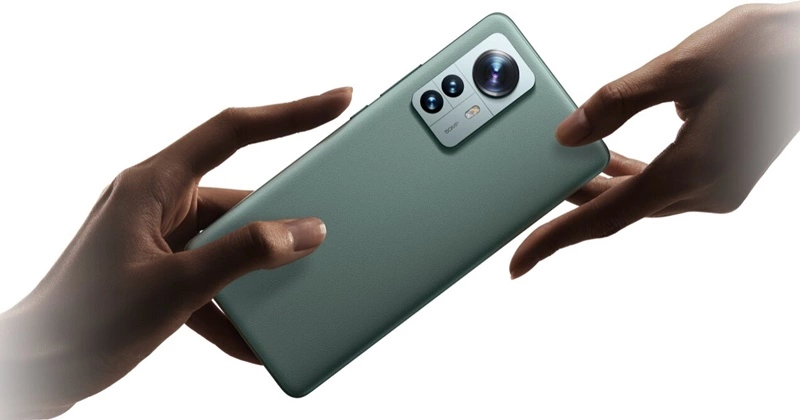
    It’s no secret that Xiaomi is about to announce a new flagship phone series – like, “in a matter of hours” soon. Prior to their introduction this week, the Xiaomi 12 and Xiaomi 12 Pro have been leaked in great detail – we know how they’ll appear and what specs they’ll have. We got a look at a few videos and press renders of the Xiaomi 12 a few days ago. As the phone’s entire spec sheet becomes public, we’re now focusing on the larger Pro model.

    The information first leaked on Chinese microblogging site Weibo, before leaker SnoopyTech posted the device’s specifications on Twitter. There are a few distinctions between the Xiaomi Mi 11 Pro and its lower-end brother, and they are immediately evident. The Mi 11 and Mi 11 Pro both featured identically sized panels, but the Xiaomi 12 breaks the mold: the Pro will have a 6.73-inch display, while the normal model will have a 6.28-inch panel, as we already discovered.

    Other specifications are consistent with earlier reports, leaks, and Xiaomi’s official statements. Instead of a 108MP rear triple camera arrangement, we’ll get a Snapdragon 8 Gen 1 SoC and a 50MP triple camera setup on the back. The battery will be 4,600mAh, down from 5,000mAh in the 11 series, but we’ll have significantly faster charging speeds this time around, with 120W cable charging and 50W wireless charging capabilities.

    xiaomi 12 pro leak

    The pricing, which is indicated in the spec sheet as 9,999 yuan, may or may not be correct (and it would be a shame if it were). Since that works up to nearly $1,500, it’s been suggested that this could be a placeholder.

    Pricing will presumably closer to what the 11 series went for, and we’ll hopefully have more details soon, with plans to announce the phone on December 28.

  • Xiaomi 12 series will launch next week alongside MIUI 13

    Xiaomi 12 series will launch next week alongside MIUI 13

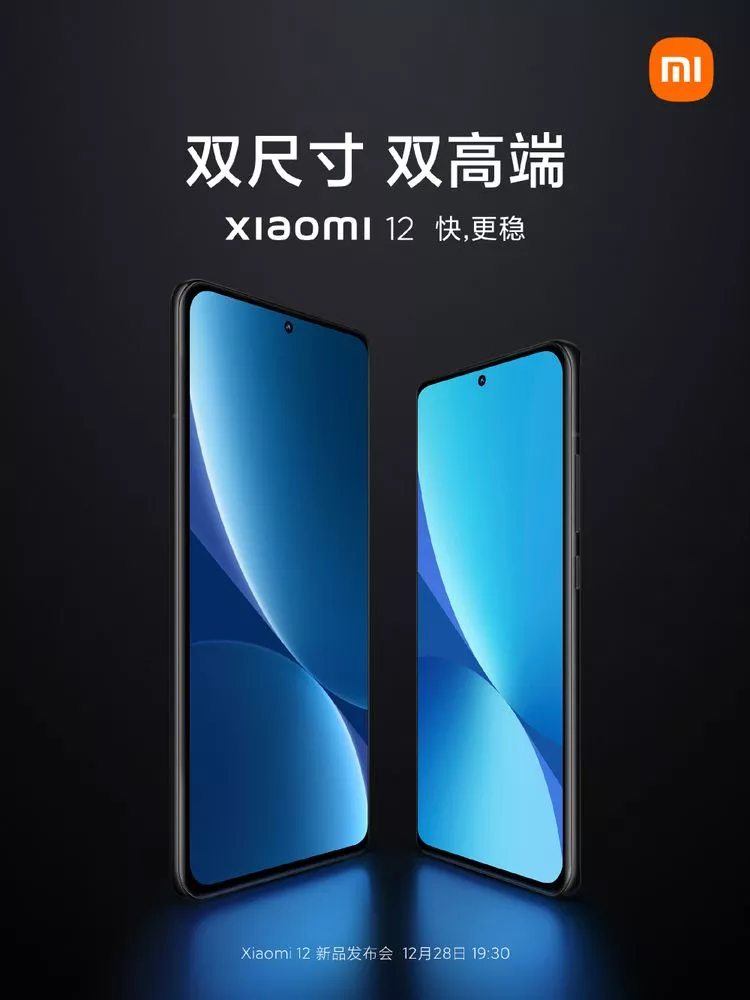
    We’ve already heard a lot about the Xiaomi 12 series, with leaks revealing the 12 Ultra’s large camera module and renders giving us an idea of how the normal 12 will look. Xiaomi is now preparing to make these phones public, as the firm announced on Weibo (via XDA Developers) that its new flagship series will be available in China on December 28.

    xiaomi 12

    Initially, the series will consist of at least two phones, the Xiaomi 12 and the Xiaomi 12 Ultra, but if previous lineups are any indication, a few additional models, such as a more cheap Xiaomi 12X, may be released in the near future. The series will premiere alongside MIUI 13, Xiaomi’s latest generation of its own skin on top of Android, according to the company’s CEO Lei June.

    Aside from that, we haven’t heard much about the new flagship series from the company. Only Qualcomm’s latest Snapdragon 8 Gen 1 chip will power the flagships, and the graphic hints that one of the phones, most likely the 12 Ultra, would be substantially larger than the other.

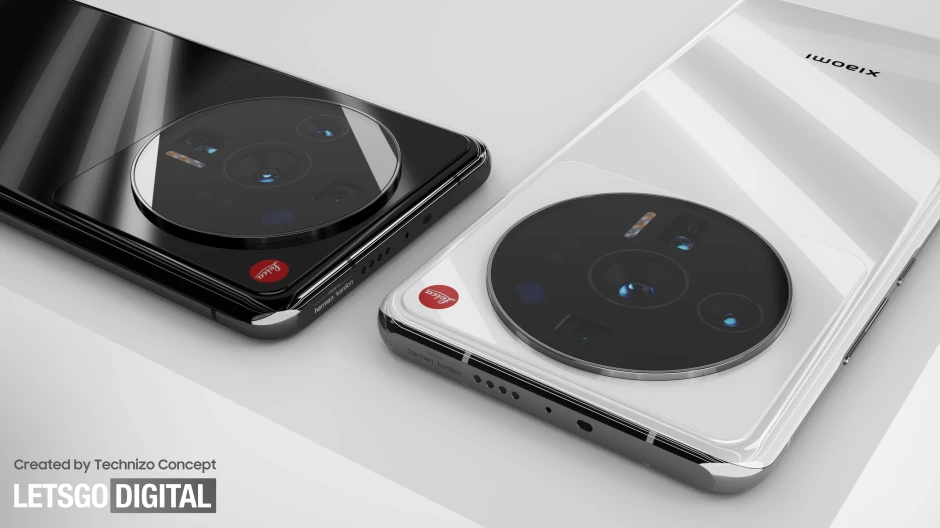
    A few more significant details have surfaced as a result of rumors and leaks. The Xiaomi 12 is said to have a 50MP camera, an OLED display with a high refresh rate, and 100W fast charging. The enormous camera array on the 12 Ultra reminds us of a washing machine, and it’ll reportedly have technology comparable to its smaller sister, including a QHD+ high-refresh rate screen, 120W fast charging, and a 5,000mAh battery.

    xiaomi 12 poster

    Aside from that, we haven’t heard much about the new flagship series from the company. Only Qualcomm’s latest Snapdragon 8 Gen 1 chip will power the flagships, and the graphic hints that one of the phones, most likely the 12 Ultra, would be substantially larger than the other.

    A few more significant details have surfaced as a result of rumors and leaks. The Xiaomi 12 is said to have a 50MP camera, an OLED display with a high refresh rate, and 100W fast charging. The enormous camera array on the 12 Ultra reminds us of a washing machine, and it’ll reportedly have technology comparable to its smaller sister, including a QHD+ high-refresh rate screen, 120W fast charging, and a 5,000mAh battery.

    We won’t have to wait long to learn everything there is to know about the smartphones when Xiaomi launches them in China on December 28. After that, the 12 series will make its way across the world.

  • MIUI 13 – stable system with multiple changes

    MIUI 13 – stable system with multiple changes

    Xiaomi is actively developing MIUI 13, its upcoming Android skin. Remember that the MIUI 12 system was notoriously buggy, and the business had to cope with a slew of issues. In fact, Xiaomi will have to release an improved version of MIUI 12.5 to address the majority of the flaws. As it optimizes the MIUI 13 system, the Chinese maker keeps this in mind. Despite its flaws, MIUI is still one of the greatest Android skins created by Chinese manufacturers. MIUI is making every effort to improve and will undoubtedly perform better,” Xiaomi CEO Lei Jun said.

    Furthermore, Lu Weibing, general manager of the Redmi brand, credits MIUI’s work with the Redmi Note 11 Pro’s exceptional battery performance. The Redmi Note 11 Pro battery, he claims, gets people more excited about the MIUI system. These remarks from Xiaomi executives have sparked suspicion that the MIUI 13 operating system may include a slew of new features. Of course, it’s reasonable to expect a significant number of changes in MIUI 13. This is due to the fact that its predecessor did not do much, so it will have a lot to deal with.

    Furthermore, popular Weibo leakster, @DCS claims that the MIUI 13 comes with tons of changes. He further claims that many of the system interfaces have new UX. This Android skin will be based on Android 11 as well as Android 12.

    miui 13 1

    MIUI 13 – launch at the end of the year

    Not long ago, the Xiaomi MIUI team set up a pioneer team to fix various bugs and complaints coming from users. According to many user feedbacks, with the efforts of the MIUI pioneer team for several weeks, the current lagging and issues of many models have significantly reduced. The fluency and stability of the system are now gradually increasing.

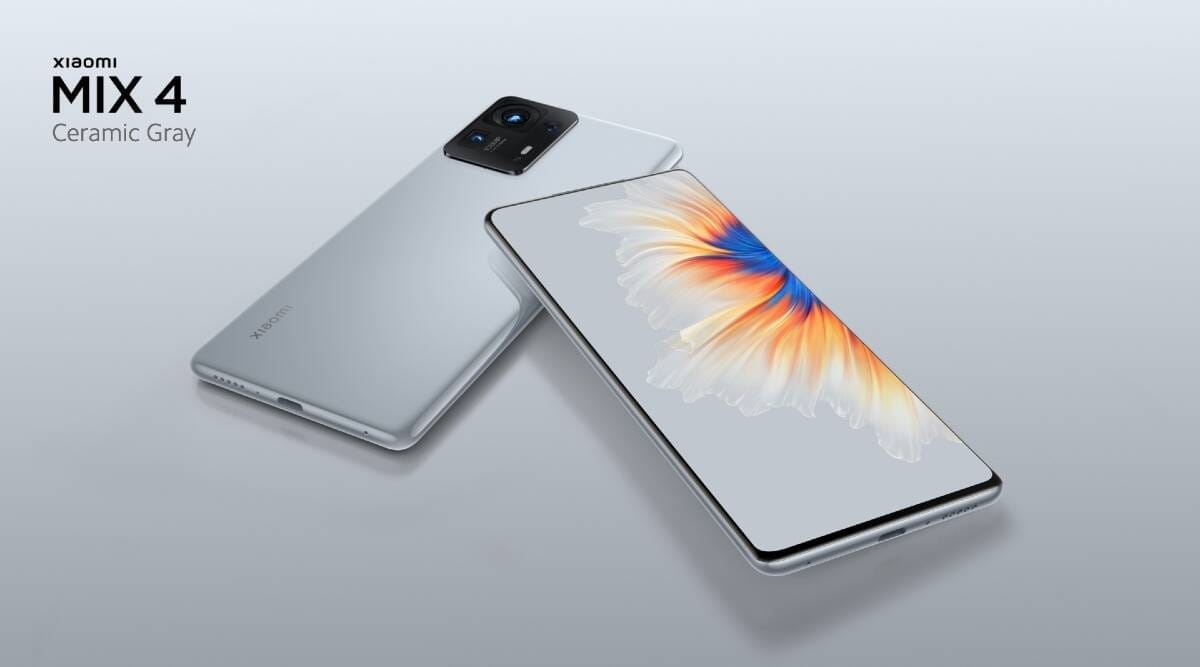
  • The Xiaomi Mix 4 is a revolutionary Android powerhouse

    The Xiaomi Mix 4 is a revolutionary Android powerhouse

    Xiaomi took advantage of Huawei’s troubles with the US government to take a major portion of the market for a purpose. Over the years, the Chinese smartphone manufacturer has been chastised for ripping off Apple. Xiaomi, on the other hand, has taken risks of its own, introducing technologies that rivals can’t match. 

    To make the company more appealing the company offered exceedingly competitive prices and connected gadgets, which does not only make the company’s mobile environment on the same hand more appealing. Xiaomi has revealed its a new phone in the most fascinating time.  A day, before the launch of Samsung’s Z fold 3, the Mix 4 was made official. Xiaomi not only introduced a camera hidden behind the display but also several exhilarating features.   

    xiaomi mi mix 4

     The Xiaomi has 4 has remarkable specs.

     The Xiaomi appeared to be familiar on the paper, it’s not like the other high end-end Android Phones. It has taken the title of being the world’s first phone that has used Snapdragon 888+ CPU, which is quicker than the Snapdragon 888 that will be found in many Android devices in 2021.

    The phone comes up with the storage of 8GB or 12GB of LDDR5 RAM, up to 512GB of UFS 3.1, and 5G connectivity.   The “exclusive UWB technology,” of the Xiaomi mix 4 has been said to improve the phone’s interaction with other internet-connected gadgets. To achieve this improved UWB experience, the Mix 4 has 19 antennas and supports 42 bands. The device is capable of carrying out functions such as iOS transfer with ease.

     The brilliance of the under-screen camera

     Caducity has been waited for Xiaomi to launch its first under-screen camera. The CUP (Camera Under Panel) on the Mix 4’s 120Hz 6.67-inch screen stands for Camera Under Panel.  Xiaomi used micro-diamond pixels, a new circuitry array, and transparent sub-pixel circuitry, to make the CUP camera. As a result of this, the Mix 4 is designed to provide a seamless screen. At, first You will not be able to find the fabulous camera. According to Xiaomi, the software also certifies that photographs and videos taken with the CUP selfie cam “retain genuine colors and details.

    Xiaomi y comes with a majestic camera that has a 108-megapixel primary camera with 4-in-1 1.6-micron Super Pixels and a 4-in-1 1.6-micron secondary camera. The optical lens of a free-form in a 13-megapixel ultra-wide-angle camera reduces wide-angle distortion. An 8-megapixel periscope camera with 5x optical zoom and 50x digital zoom rounds out the package.

      The Xiaomi uses a graphene battery

     Xiaomi has a wireless charger of 50 watts and a 4,500 mAh battery that supports cable charging at 120 watts.  Depending on the model, it promises to charge the phone in 15 or 28 minutes. Graphene anodes, which are 1,000 times more conductive than carbon black anodes, are used in the battery. The Mix 4 also has intelligent, fast charging, according to Xiaomi, which “helps optimize charging temperature and speed for different conditions, as well as improving battery charge cycles by up to 25%.”

    For heat management, Graphene is used in other parts of Mix 4. The material is a component of a heat dissipation structure with a total surface area of 11,588 square mm.

     Android has introduced a lot of innovative features

      Xiaomi’s Mix 4 will include AI Translation at the system level, which will operate with text, images, and audio. According to the business, the service would also interpret and transcribe audio. The SIM lock function may make it impossible for a stolen Mix 4 to be repurposed. When changing the SIM card, the user must enter the right password.

     Cost of Xiaomi and launch date 

     Ceramic Black, Ceramic White, and Ceramic Gray are the three amazing colors available for the Xiaomi Mix 4. All are made of ceramic and fired at 1,400 degrees Celsius. Meanwhile, to protect the screen shatterproof Corning Gorilla Glass Vectus is used.

     Xiaomi will sell the following Mix 4 configurations, on 16th August

    ·        4,999 yuan ($771) for 8GB/128GB

    ·        5,299 yuan ($817) for 8GB/256GB

    ·        5,799 yuan ($894) for 12GB/256GB

    ·        6,299 yuan ($971) for 12GB/512GB

     The bottom line

     Mix 4’s pricing structure is also incredible. Yet, it is not confirmed when Mix 4 will be released in overseas regions. In its announcement, Xiaomi only mentioned the phone’s release date in China.

  • Xiaomi Mi Pad 5: What We Know So Far

    Xiaomi Mi Pad 5: What We Know So Far

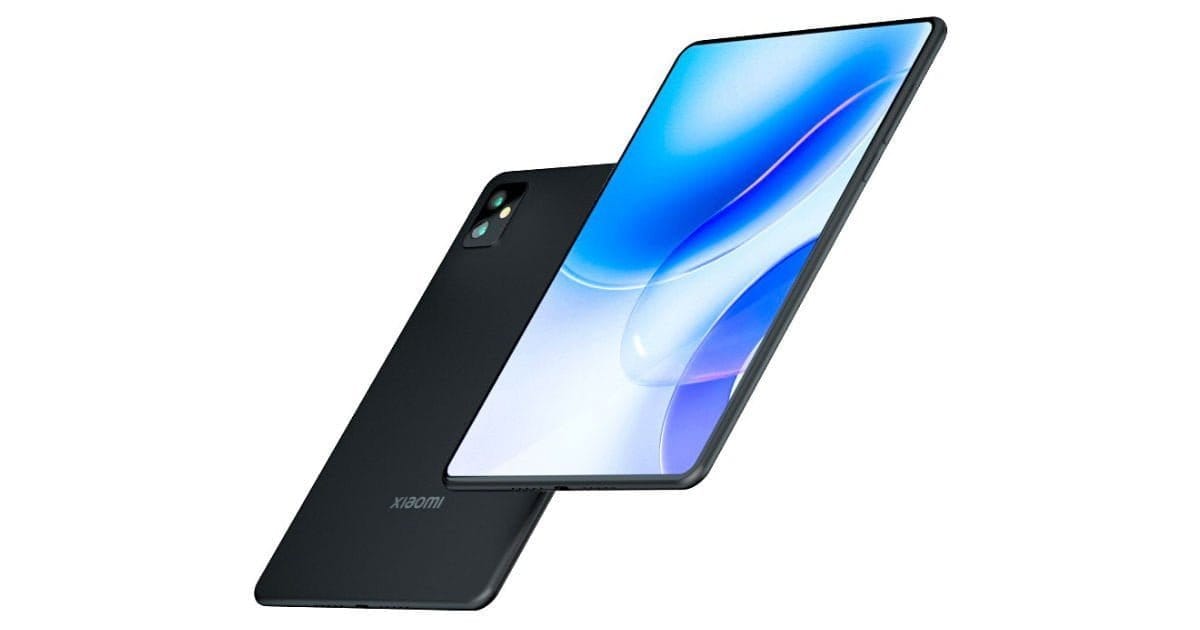
    On August 10th, Xiaomi plans to launch the Mi Pad 5 tablet series in China. The Xiaomi Mi Pad 5 will be released alongside the Mi Mix 4 in China on August 10th, according to the company’s official Weibo account.

    Last month, renders and details for the Xiaomi Mi Pad 5 were leaked. The renders revealed the tablet’s design ahead of time. The Mi Pad 5 has now debuted on Geekbench, which is a recent development. The hardware characteristics of the Mi Pad 5 are revealed in the benchmark listing ahead of its introduction tomorrow.

    Further Details

    The Xiaomi Mi Pad 5’s model number is M2105K81AC, according to rumors. The Mi Pad 5 will be powered by an octa-core Snapdragon 870 chipset with Adreno 650 GPU, according to the Geekbench listing. The Mi Pad 5 will have 6GB of RAM and come pre-installed with Android 11. In the Geekbench test, the tablet scored 997 points in the single-core and 3181 points in the multi-core tests, respectively. The Mi Pad 5 is expected to include a 10.95-inch IPS LCD 120Hz display, according to earlier leaks. The Mi Pad 5 is believed to have a side-mounted fingerprint sensor for added security.

    Mi Pad 5

    A dual-camera arrangement could handle the optics department of the Mi Pad 5. A 20MP primary camera and a 13MP secondary camera may be found on the back of the phone. An 8720mAh battery might be used to power the entire package. The Mi Pad 5 is expected to feature 65W fast charging. Last month, the Mi Pad 5 with model number M2105K81AC was certified by 3C. The Mi Pad 5’s 65W fast charging support was revealed through the 3C certification. In related news, the Smart Pen that will be included with the tablet has received FCC approval. The Smart Pen’s schematics were revealed via the FCC listing before its release. The device is capable of carrying out functions such as iOS transfers.

    Apart from the Keyboard case, Weibo users have seen renders of the forthcoming tablet. The Mi Pad 5 will include a dual-camera configuration, according to the renders. In addition, the Mi Pad 5 will be available in three color variants, according to the image released on Weibo: Black, White, and Green.

    Details such as pricing will be known upon release.

    Summing Up

    Xiaomi has raised expectations for the Mi Pad 5 ever since surpassing Samsung. It has become a worthy contender as a smartphone manufacturer and other tech devices. Users cannot wait for its latest venture. The Chinese-based company has been appealing to the masses with a budget-friendly phone with premium features. We can’t wait to see what else is in store for the tech giant.

  • Week 25’s top ten trending phones

    Week 25’s top ten trending phones

    The Redmi Note 10 Pro is back on top of our trending chart at the conclusion of week 25, but the second-placed phone is sure to raise a few eyebrows.

    The newly released Tecno Phantom X has reached levels of popularity that the company has never seen before, indicating that it could be a big winner. The Redmi Note 10 is still in third place, ahead of the Poco X3 Pro, while the Mi 11 Lite has climbed four spots to fifth place.

    We have listed down the top 10 devices trending and provided a brief review of each. Read on to find out more.

    1. Xiaomi Redmi Note 10 Pro (Max)

     Xiaomi Redmi Note 10 Pro trending phone

    The Redmi Note 10 Pro is the first of the next generation of inexpensive mid-rangers, and it includes one of the most popular features among fans: a 120Hz OLED display. It has a superior HRR OLED screen but is powered by the less powerful Snapdragon 732G CPU rather than the more expensive Snapdragon 750G 5G. The rest of the phone is almost unchanged from its predecessors: camera, speakers, battery, and rapid charging.

    2. Tecno Phantom X

      Tecno Phantom X

    To be reviewed.

    3. Xiaomi Redmi Note 10

    Xiaomi Redmi Note 10

    The Super AMOLED screen with high peak brightness, the decent camera system, the large, fast-charging battery, and the dual loudspeakers are the key attractions of the non-5G version of the Redmi Note 10. The Redmi Note 10 5G, on the other hand, makes do with an IPS display and foregoes quick charging and stereo speakers.

    4. Xiaomi Poco X3 Pro

    poco x3

    The Poco X3 Pro is based on the Poco X3 NFC, and they both have the same design. The Pro version, on the other hand, has far superior hardware: it’s the first phone to operate on the Snapdragon 860 SoC, which is a repackaged version of Qualcomm’s once-flagship Snapdragon 855+ CPU.

    5. Xiaomi Mi 11 Lite

     Xiaomi Mi 11 Lite

    The Mi 11 Lite, like the Mi 11 Lite 5G, is based on the Mi 11 flagship and emphasizes similar features such as an HRR OLED screen, good camera quality, extended battery life, quick charging, and a smooth UI experience.

    6. Samsung Galaxy S21 Ultra 5G

    Samsung Galaxy S21 Ultra 5G

    It has a big 1440p screen with 120Hz native support, which is adaptive. It also includes two dedicated telephoto cameras, one with a 3x optical zoom and the other with a 10x optical zoom. It does include focusing on its ultrawide camera, which is useful for macro photographs. The new Ultra also includes compatibility for ultrawide-band and, surprise, surprise, S-Pen.

    7. Samsung Galaxy A52

     Samsung Galaxy A52

    The Galaxy A32, as well as the recently released Galaxy A72 and A52 duo, all provide excellent value, they are able to carry put complex tasks such as SMS backup. This year, though, it’s the plain Galaxy A52 model that shines the brightest and goes above and above.

    8. Poco F3

    Poco F3

    Starting with its stunning glass shell with a robust plastic frame, the Poco F3 is jam-packed with top-notch features. The F3 features a 6.67-inch AMOLED screen with 120Hz refresh, one of today’s fastest platforms – the Snapdragon 870 5G chip, loud stereo speakers with Dolby Atmos, a configurable triple-camera configuration, and a huge battery with quick charging.

    9. OnePlus Nord CE 5G

    OnePlus Nord CE 5G

    The OnePlus Nord CE 5G is the next mid-range killer, at least according to OnePlus’ marketing. And it’s probably quite close to the truth. The Nord CE isn’t a replacement for the original Nord, but rather a toned-down version of it, hence the CE moniker. The phone retains elements of the original Nord’s fundamental specifications, notably the design.

    10. Samsung Galaxy A32

    Samsung Galaxy A32

    For starters, the displays are completely different between the variants, and the 4G’s is far superior – a 90Hz 1080p AMOLED vs. the 5G’s 60Hz 720p LCD. With high-resolution main and selfie cameras, the LTE variant also takes a couple of points in the camera category. The A32 5G counters with a chipset that is capable of 5G but also more powerful because to its latest cores.