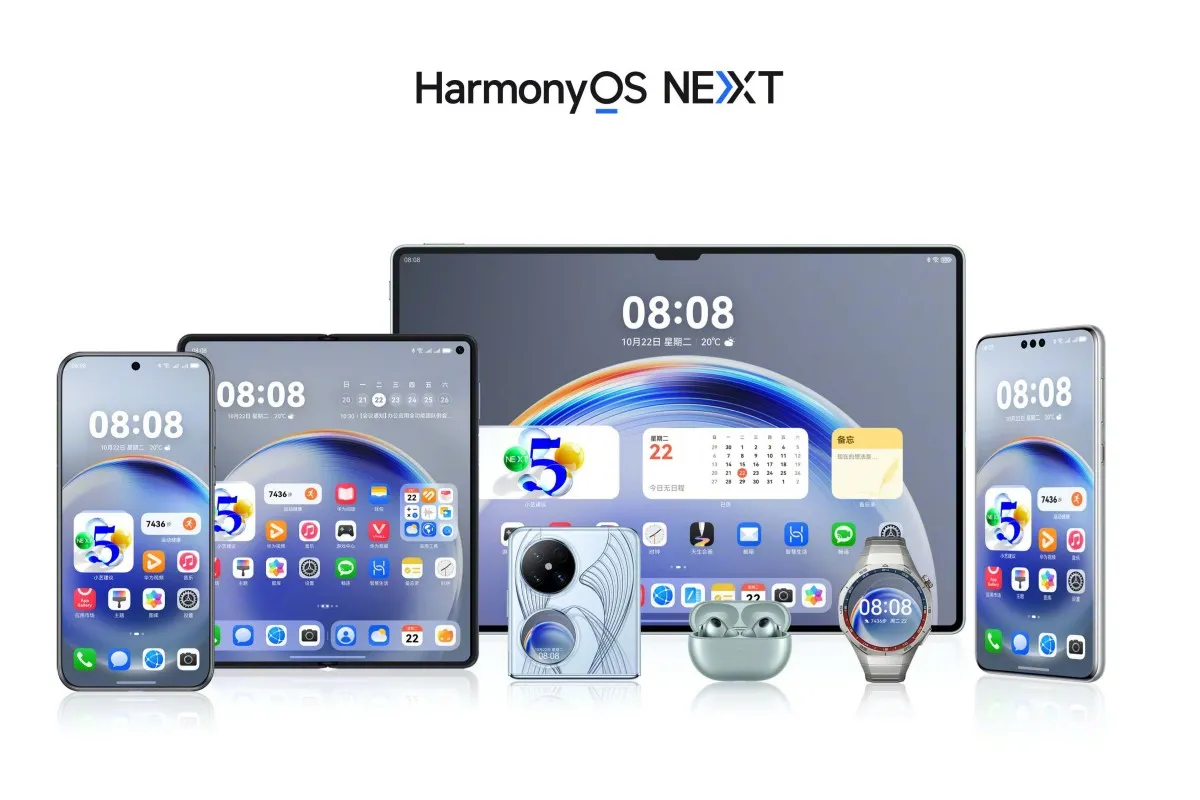
With its proprietary HarmonyOS, Huawei is gaining ground in the mobile operating system market and has overtaken iOS in China for the sixth consecutive quarter. It now seeks to displace Android as the market leader for mobile operating systems.
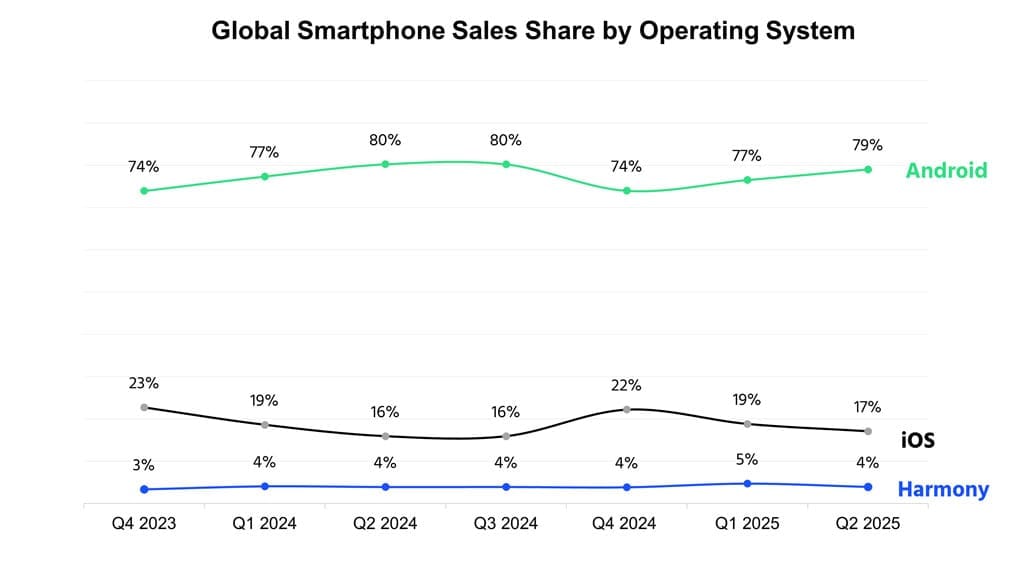
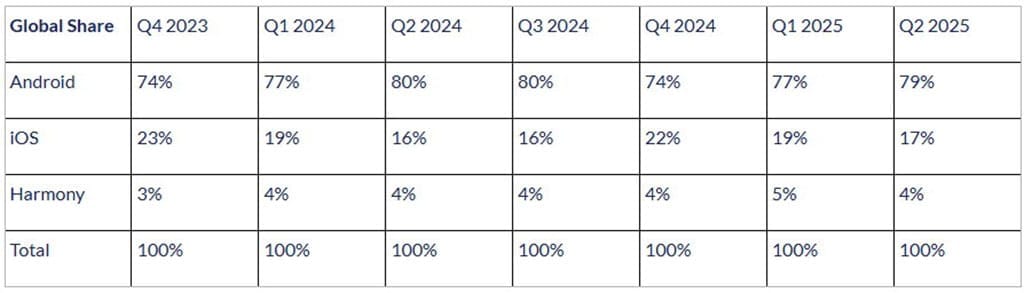
At the moment, Android dominates the worldwide smartphone operating system market. Globally, it holds 79% of the shares. Huawei, however, intends to outperform this US-based competitor with its “NEXT” offering.
According to the operating system report for Q2 2025, Counterpoint holds a share of the worldwide smartphone sales market. Despite gaining a sizable portion of the market, Android is losing ground in China as a result of HarmonyOS‘s quick ascent there.
According to the research organization, Android is mostly restricted in China because of the escalating rivalry, and in India because of premiumization. However, the OS has been supported by companies like Vivo, Samsung, Motorola, and Honor during the quarter.
For the 6th quarter, Huawei HarmonyOS stays ahead
However, iOS also saw a 1% growth in its market share worldwide. It has performed admirably in a number of markets, including Brazil, the Middle East, and India.
Because of the affordable iPhones and the recently released iOS 26 build version, iOS has also had the highest upgrade rate in the second quarter of this year.
However, for the sixth straight quarter, Huawei’s HarmonyOS has pushed iOS further back in China. The legendary Pura X foldable and the latest Nova 14 versions deserve a lot of praise. Both models have attracted a lot of interest.
The first device to release the stable HarmonyOS NEXT was the Pura X. Eye-tracking and a super Celia AI assistant were among the intriguing technologies it brought in.
In order to provide a more dependable user experience, the Nova 14 series was the first conventional phone device to be pre-installed with the stable HarmonyOS 5.0.
“HarmonyOS continues to grow in China and remains the second largest smartphone OS in the country for the sixth consecutive quarter. Huawei’s Nova series smartphones contributed heavily, and the foldable Pura X was also received well, keeping the brand competitive.” – said Counterpoint.
Following this, Huawei plans to provide HarmonyOS 5.0 to the global market, initially with wearables and then with tablets. It would be interesting to observe when the operating system would overtake Android as the dominant player in the global smartphone market.
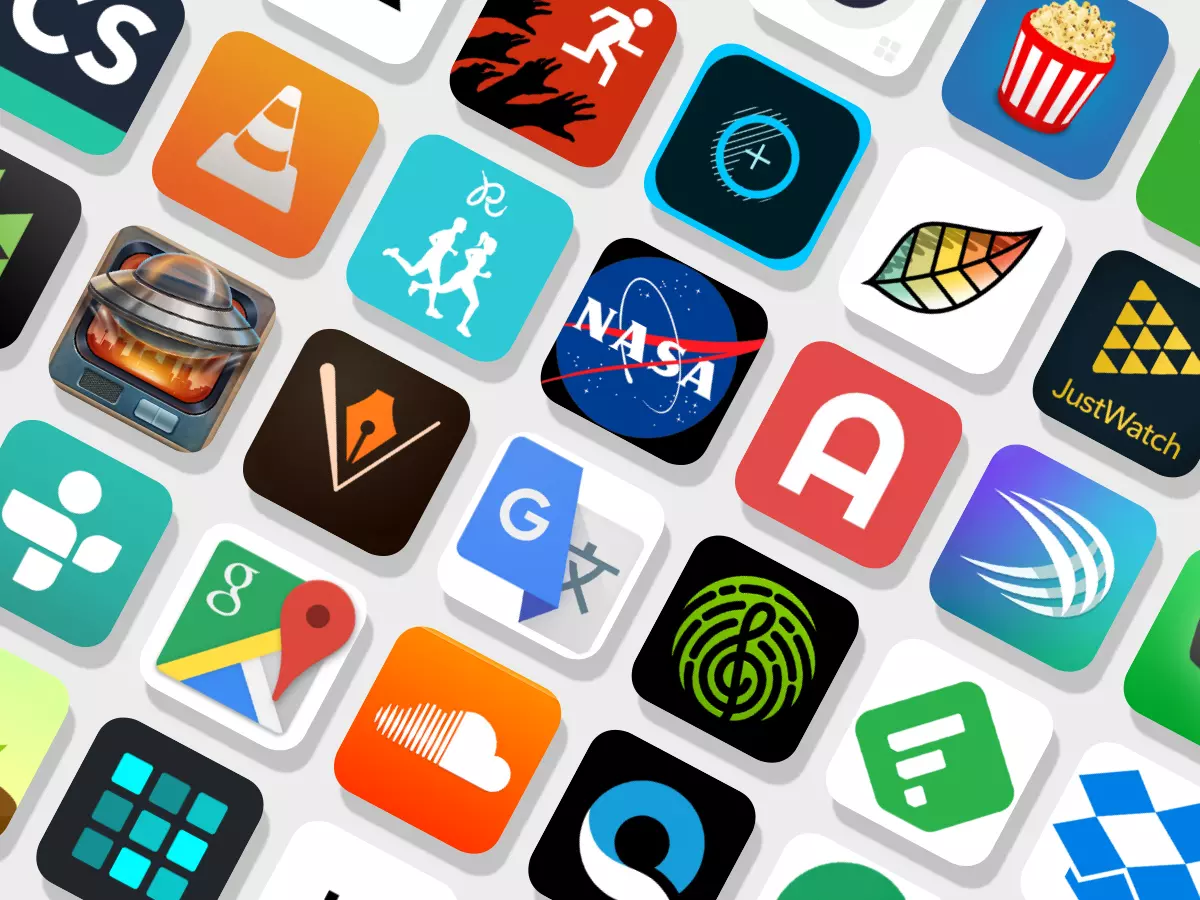
We offer you a variety of iPhone and Android apps that are typically paid for but are temporarily free. Take advantage of these savings on games and apps to add some diversity to your phone’s app store, but don’t wait!
We only chose these applications since they are free right now! We are unable to guarantee that these limited-time offers will remain available on the Google Play Store or Apple App Store for very long, though. As a result, downloading them as soon as possible is advised. Just watch out for any possible subscription traps, in-app purchases, and advertisements.
Even if you don’t require an app right away, install it if it piques your curiosity. It will be added to your app library and marked as “bought” as a result. After that, you may uninstall the app straight from your phone and get it back for free anytime you need it.
Android
Free apps
Sound Meter & Noise Detector ($3.29): The name says it all. Register sound levels wherever you are, with recordings, graphs, and statistics.
Bubble Level Pro ($2.79): Planning on hanging a new frame on the wall? Check if it is properly leveled.
Passport Photo: ID Photo Print ($5.99): Make photos appropriate for documents, remove backgrounds, choose the right dimensions, and more!
Fake Call Screen ($0.69): Create realistic call screens on your phone to get out of awkward situations.
Free games
Grow Heroes VIP ($1.79): Evolve your fighters in this Idle RPG with charming retro graphics.
Epic Heroes War ($0.19): Hack and slash your way through the enemy hordes in this strategy-action-RPG.
Sudoku Master 2023 ($2.29): Challenge your brain in more than 5000 levels of puzzles.
ExtremeJobsKnight’sManager VIP ($0.79): Another Idle RPG. This time, collect and craft equipment in over-the-top battles.
iOS
Free apps
Videdit ($0.99): Edit your videos, apply effects, mix and match recordings for your next social media post.
Fotospot Road Trip ($3.99): Planning a road trip in the USA? Check this curated list of over 11,000 places across the country.
Medieval Madness Stickers ($0.99): Wanna try a different set of stickers? How about this collection of zany illustrations inspired by the Middle Ages.
Free games
Pro Wrestling Manager ($3.99): Create and manage your professional wrestling association, with storylines, rivalries, and everything that made the “sport” popular in the past.
Kid Tarzan Bubble POP Shooter ($0.99): Save the baby animals in the jungle by popping balloons in this classic puzzle game.
ABC Star ($4.99): Instead of feeding your kid endless videos on YouTube, teach them the alphabet!
As of the date of publication, the deals were active. Please share any expired deals you come across in the comments section below.
We advise you to review the app’s details in the Play Store or App Store before downloading any of the aforementioned apps. This is crucial as some of these free apps can offer unique features or drawbacks of their own.
Both free and paid apps should be avoided since they could have unnoticed in-app purchases and adverts. This is especially important while downloading kid-friendly games.
In the rapidly evolving world of mobile apps, numerous companies use cunning tactics to obtain your personal information. But tech buffs, don’t worry! We’ve compiled some crucial advice to help you safeguard your important data. Being selective about the permissions you grant the apps you decide to install is an essential first step.
Discover the wide range of free apps that are accessible on the iOS and Android operating systems, all while protecting your data.
Text communications between iOS and Android users has historically proven more often than not problematic. However, new modifications are facilitating communication between the two platforms. After years of Google trying to convince Apple to adopt the new communications standard, RCS, the company is finally doing so.
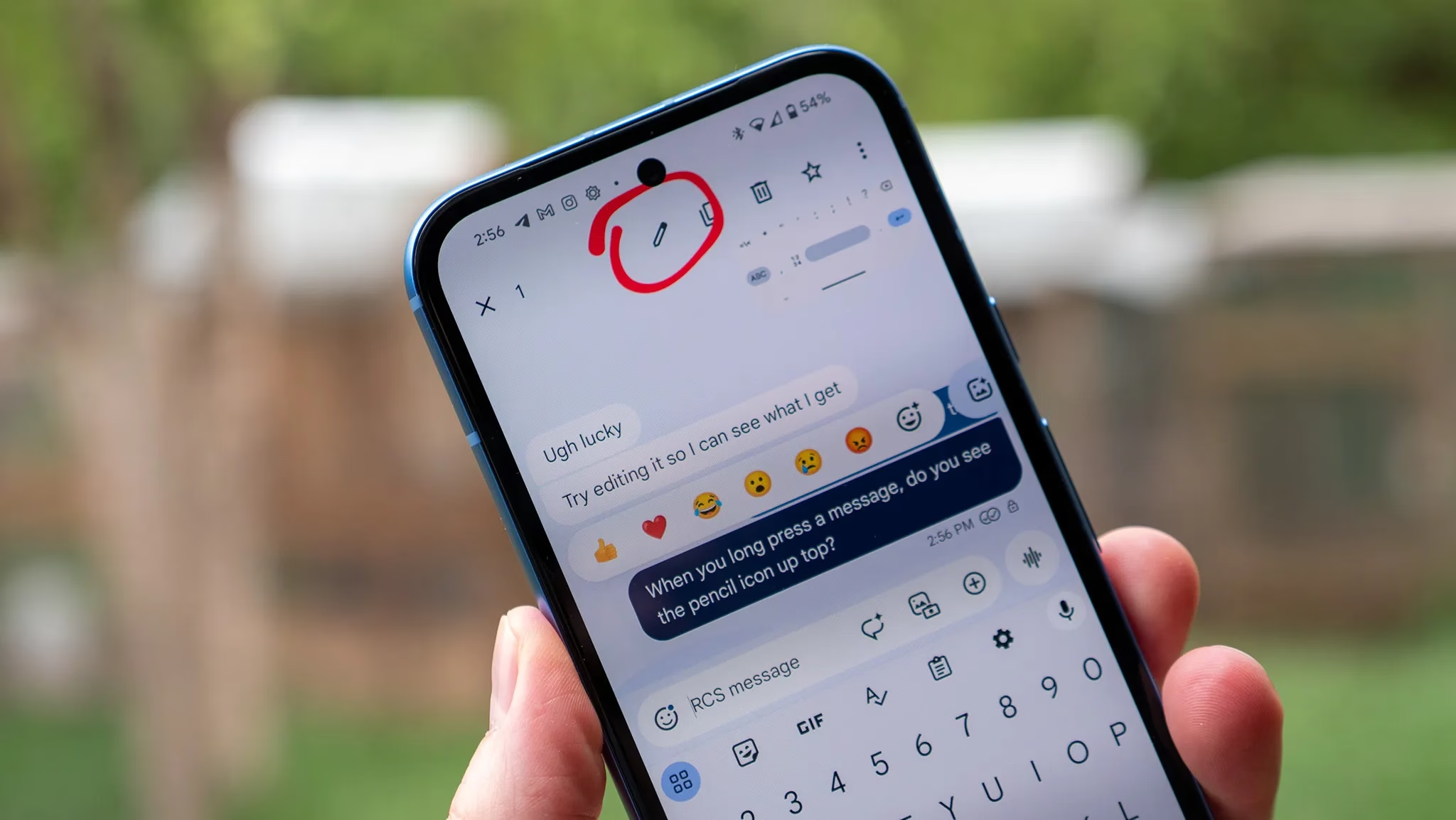
Users on both systems can share high-quality media, be “seen” when messages are read, and detect typing activity thanks to RCS. However, up until now, there hasn’t been a way to alter messages sent from an Android device to an iPhone. According to Android Authority, some Android users are now starting to notice it.
Apple recently added RCS support
For over a year, editing messages has been possible for Android-to-Android chats using RCS and iPhone-to-iPhone chats using iMessage. Because message editing was not included in the official RCS standard, Universal Profile 2.4, this feature was not available between iOS and Android. The standard was embraced by Apple, but this resulted in cross-platform conversations lacking the edit option.
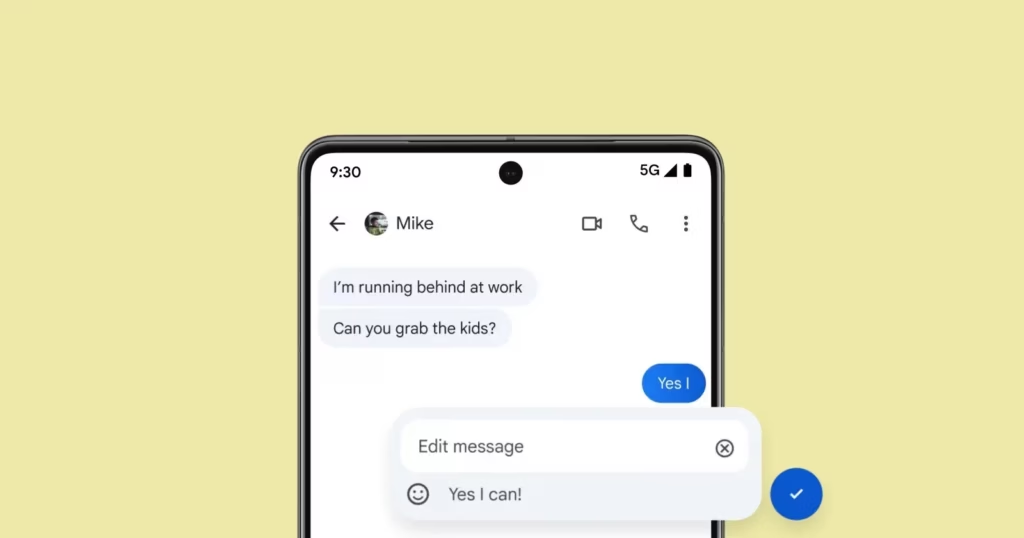
The GSM Association published Universal Profile 3.0 earlier this year, which includes end-to-end encryption and message editing. As a result, if the iPhones are running iOS 18.5 or later, including the iOS 26 beta, some Android users can now edit messages sent to iPhone users.
It operates by requiring modifications to be performed within a 15-minute interval. Since Apple’s Messages app does not yet fully support this feature, the updated message appears on iPhones as a new message with an asterisk.
Stay connected with the latest from Droid Tools—follow us on X @droid_tools, like our page on Facebook, check out our updates on Instagram, and follow us on Google News for real-time news, device tips, and mobile tech insights.
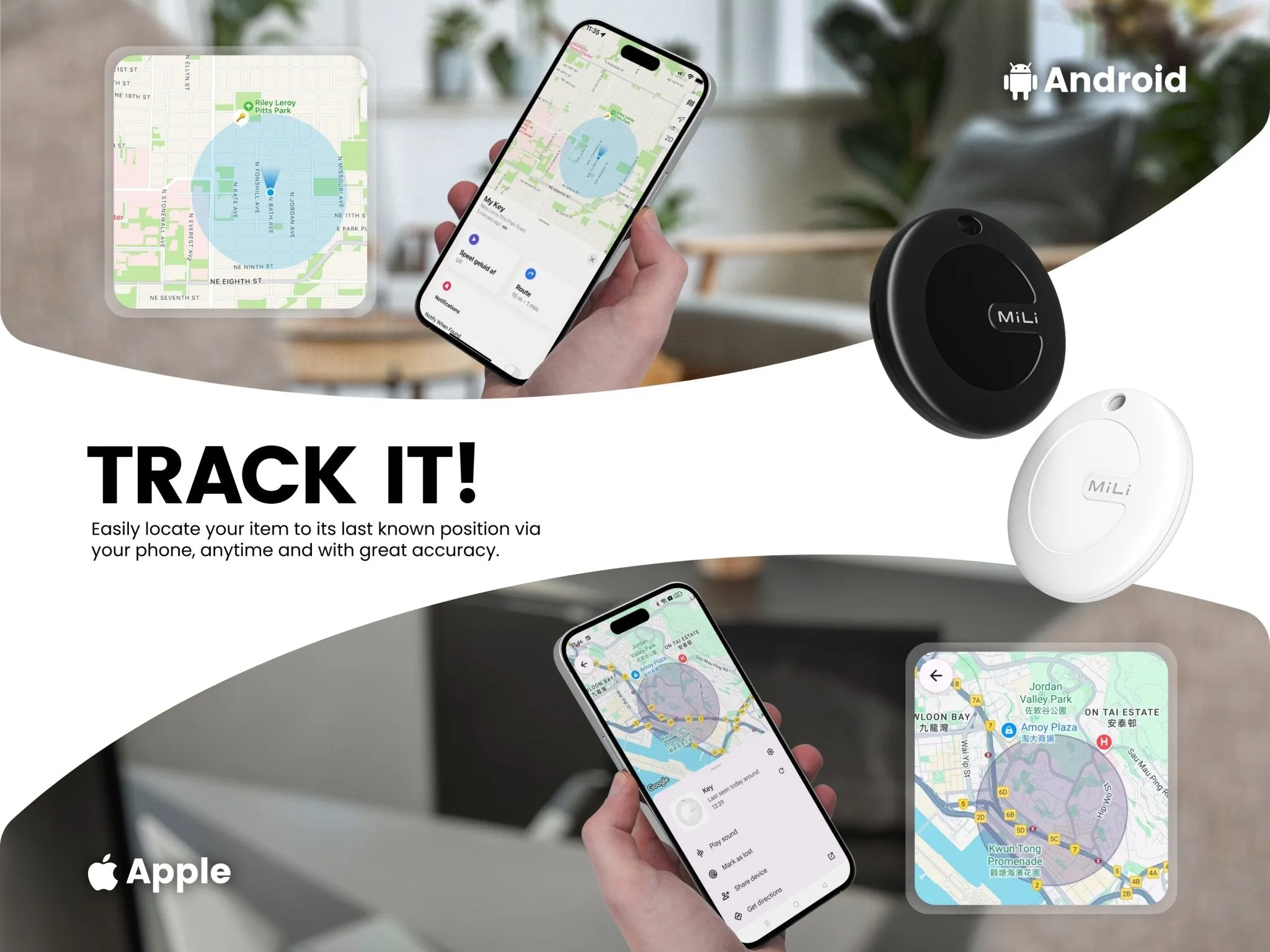
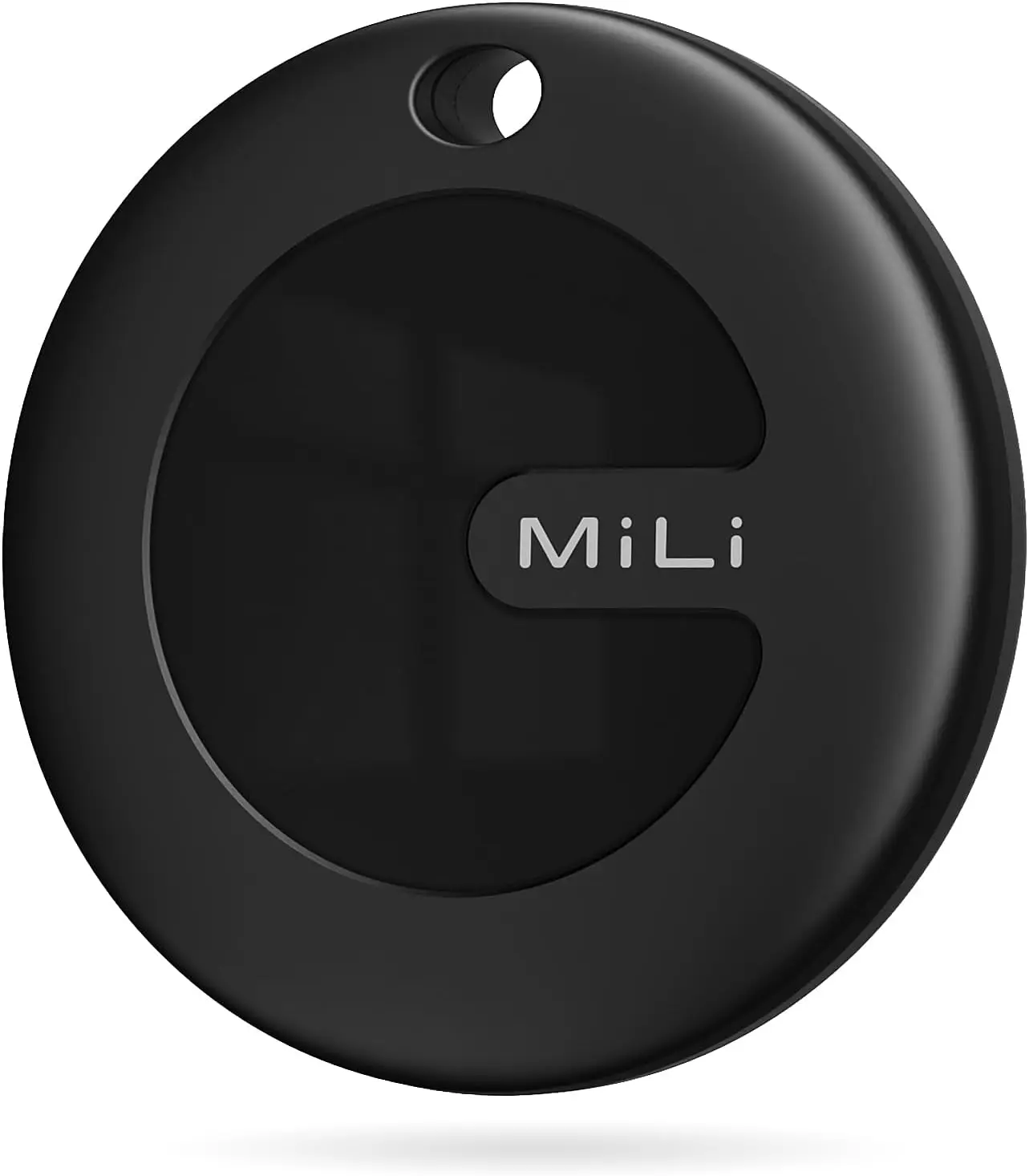
Like the Chipolo Pop and Pebblebee’s universal trackers, MiLi’s MiTag Duo is a Bluetooth tracker that works with both Apple Find My and Google Find My devices. The new Bluetooth tracker is currently on sale and far less expensive than its competitors.
The Chipolo Pop was released last month as a Bluetooth tracker that connects to Google’s Find My Device and Apple’s Find My networks. A comparable Bluetooth tracker that was compatible with both networks was announced by another company about a month before Chipolo’s. The device is known as the MiTag Duo, but sadly, the announcement was not widely publicized.
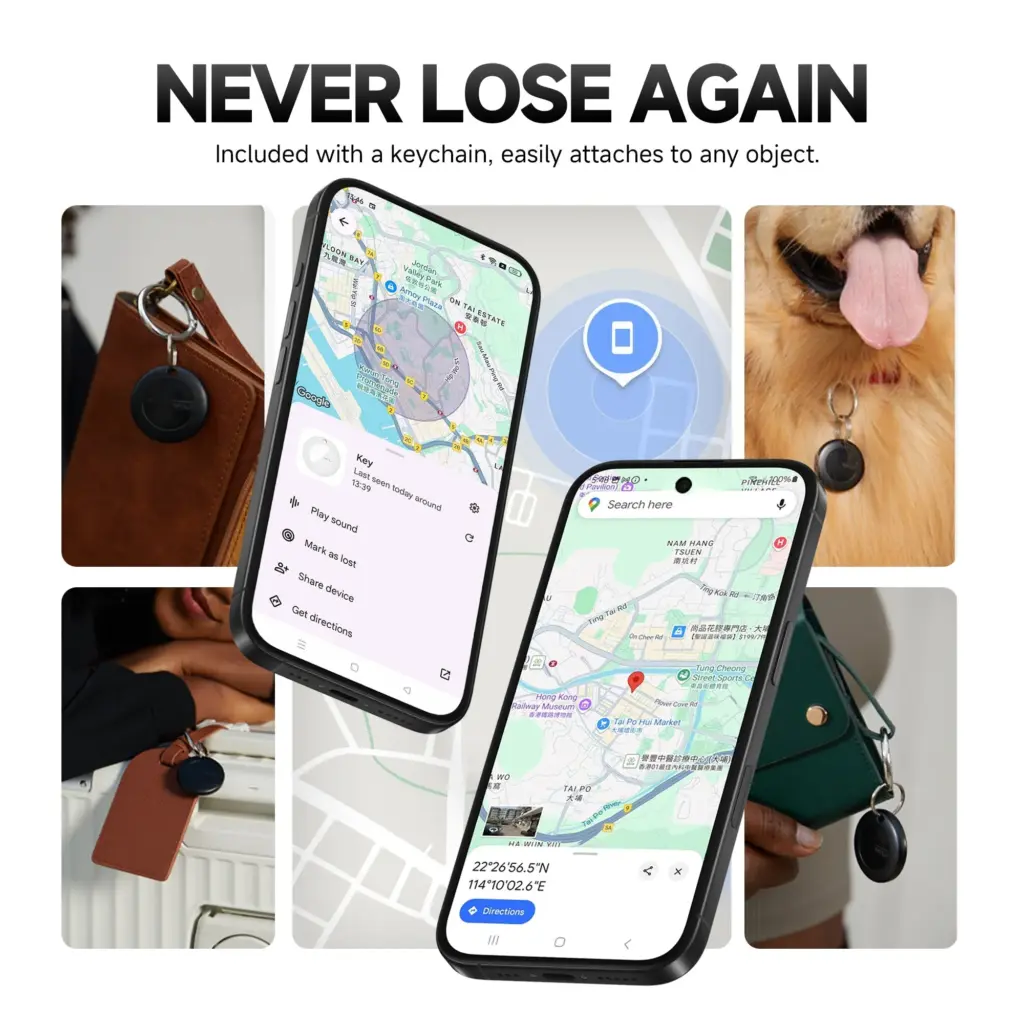
The MiTag Duo, which is made by MiLi, is circular like the MiTag Go (which is now available on Amazon for $13.99) and only works with Google Find My. The tracker is easy to attach to possessions because it features a key ring hole and comes in black and white color variants. It can operate in temperatures ranging from -20°C to 60°C and has an IP67 dust and water resistance rating.
MiLi MiTag Bluetooth Tracker for Android and iOS
The Android version MiTag is a Google Certified location tracker that works with “Find My” app on Android phones (Android 9 or higher, NOT for iOS devices). Attach this android tracker to the items you usually misplace and let it help you find your keys, bag, suitcase, toy, etc.
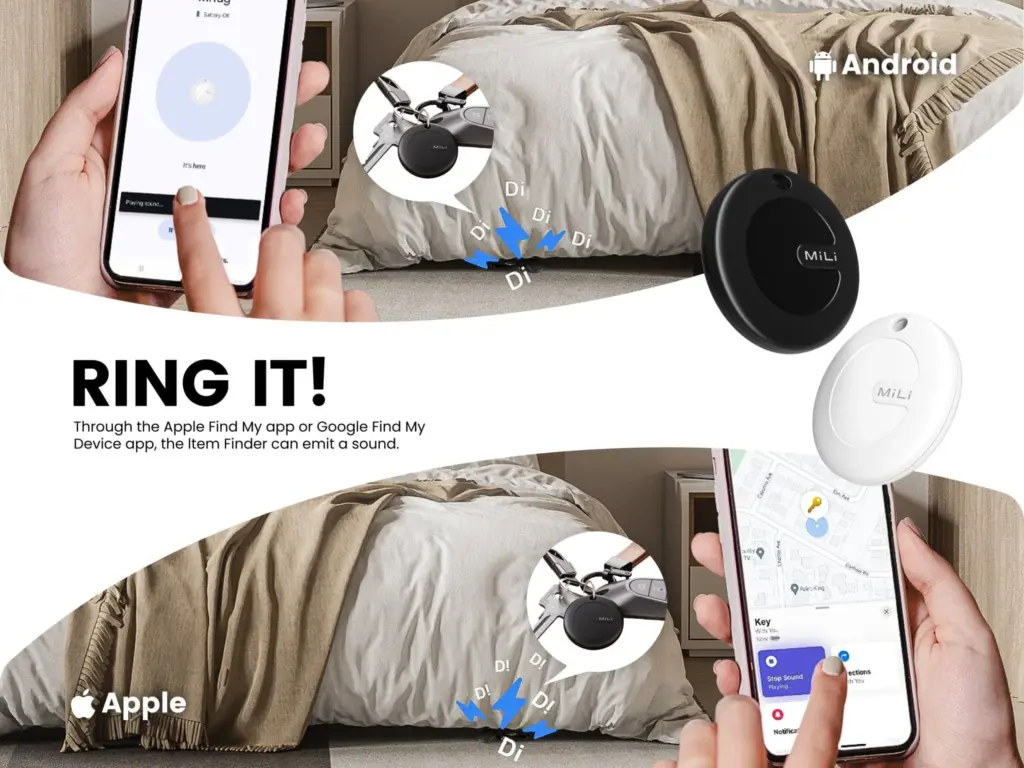
Both Google and Apple have granted the tracker legal licenses, and it works flawlessly with Android and iPhone cellphones. It also supports sharing with other users and doesn’t require a partner app. You can track your possessions in real time with the MiTag Duo. When you ring it, you can hear it because it includes an integrated speaker. The CR2032 battery that powers the tracker should last for up to eight months before needing to be changed.
The MiTag Duo is still available for pre-order even though it was only introduced in March, and shipping is set to start on May 19. The tracker has a price tag of $19.99 from MiLi, however the company’s web store claims that this is a discounted price because the original price was $39.29.
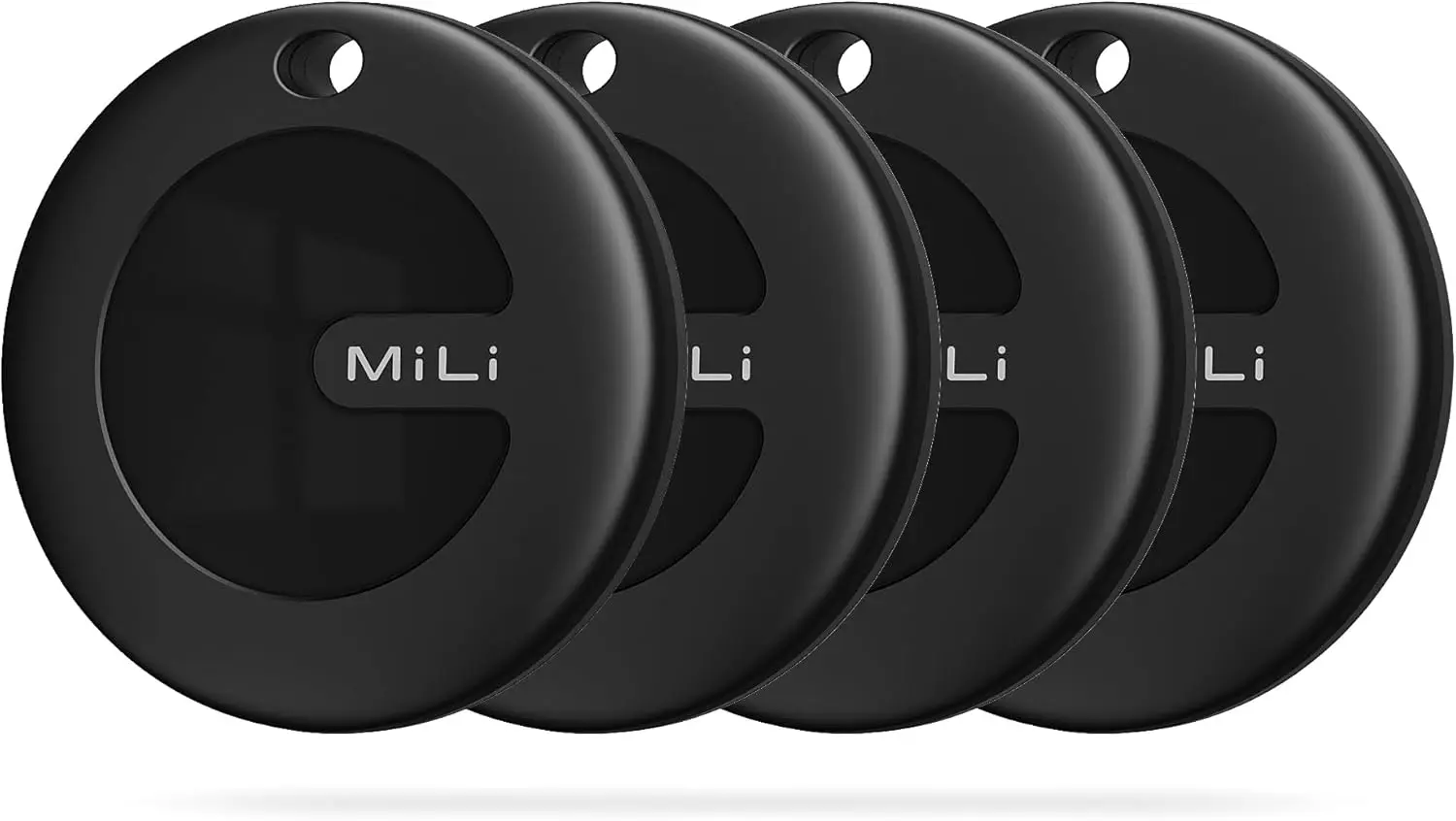
MiLi MiTag bundle
Within Bluetooth range (150 m/500ft), you can check the current location and easily find your item by activating sound via Google Find My app or voice commands. The tracking tag will ring loud enough to help you locate it.
Additionally, you can save additional money by buying in bulk. For example, a pack of two pieces costs $35.99 instead of $78.58, a pack of four units costs $47.99 instead of $157.16, and a box of eight costs $127.94 instead of $314.32. When compared to the Chipolo Pop, which costs $29 per unit, $89 for a pack of four trackers, and $121 for a box of six, the MiTag Duo is now less expensive.
In 2025, the budget smartphone market is more competitive than ever, offering impressive features, solid performance, and sleek designs at wallet-friendly prices. Whether you’re a student, a casual user, or just someone who loves getting the best value for money, there’s a perfect device out there for you. In this guide, we’ve rounded up the best budget smartphones you can buy in 2025 — all under $400 — that deliver big on performance without the premium price tag.
This is a thorough guide to the top smartphones under $400, which include features like outstanding cameras, slick 120 Hz screens, and potent gaming-ready SoCs with 5G.
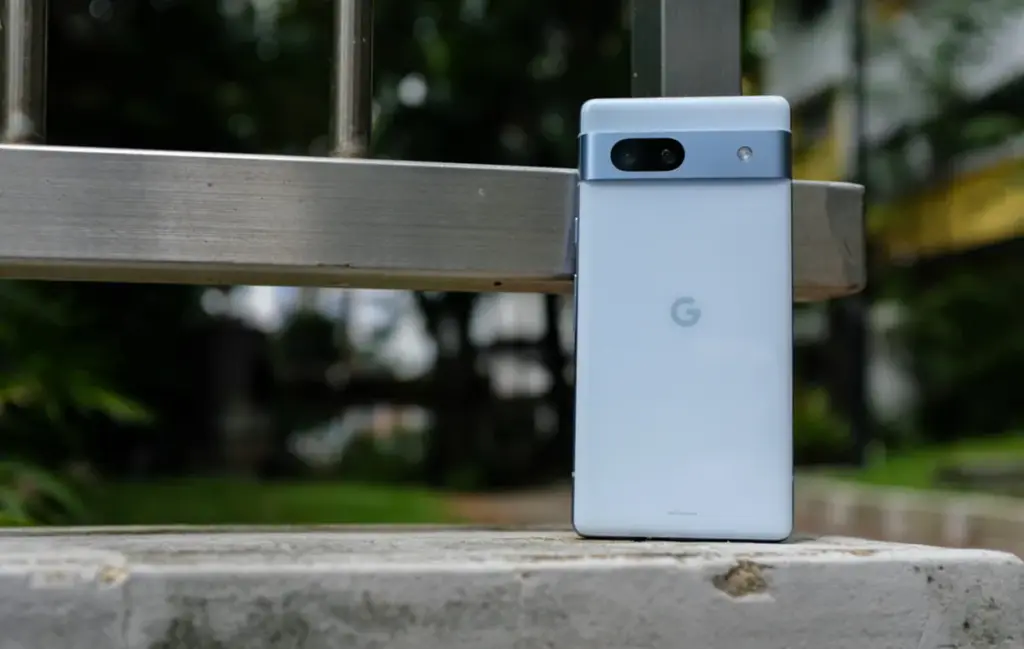
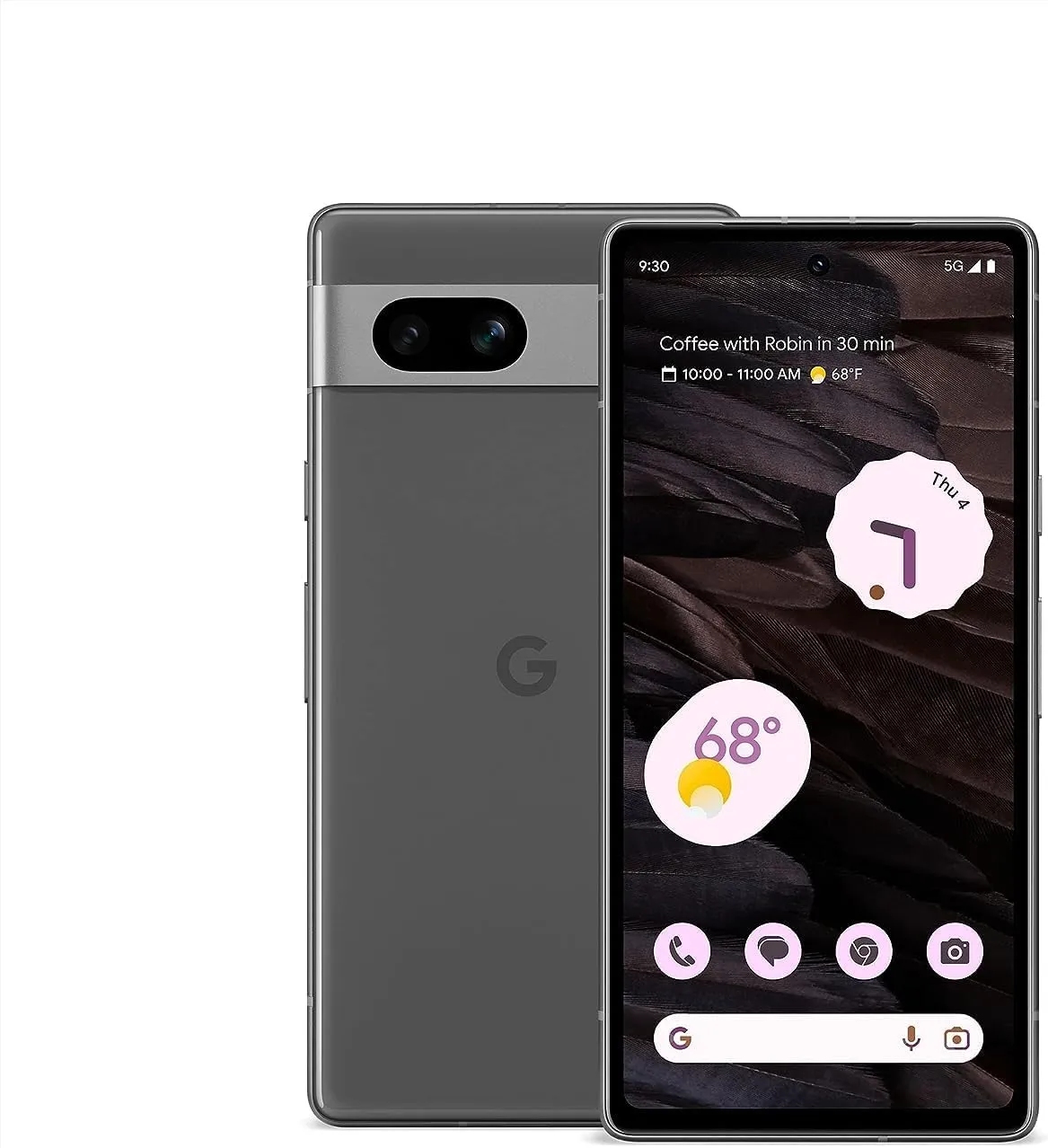
Google Pixel 7a – great camera, good battery life and updates
With 128 GB of storage, the Google Pixel 7a, which was released on May 10, 2023, costs less than $400 on Amazon. Its Tensor G2 processor, which Google has included, improves the performance of machine learning-based features, making it a great option for anyone looking for a small Google phone in 2025.
Among smartphones under $400, the Pixel 7a stood out with a 5-star rating in our assessment. It is the most affordable model in the Pixel 7 series, with features including wireless charging, 8 GB of RAM, and a refresh rate of 90 Hz.
With a 64 MP primary camera, a 13 MP ultra-wide lens, and a 13 MP selfie camera, the camera system has been much improved over its predecessor. Google’s sophisticated camera software guarantees that images captured with the Pixel 7a uphold the Pixel series’ excellent quality standards.
Google Pixel 7a
Pixel 7a has a 24-hour battery life and supports fast charging up to 72 hours with Extreme Battery Saver turned on.
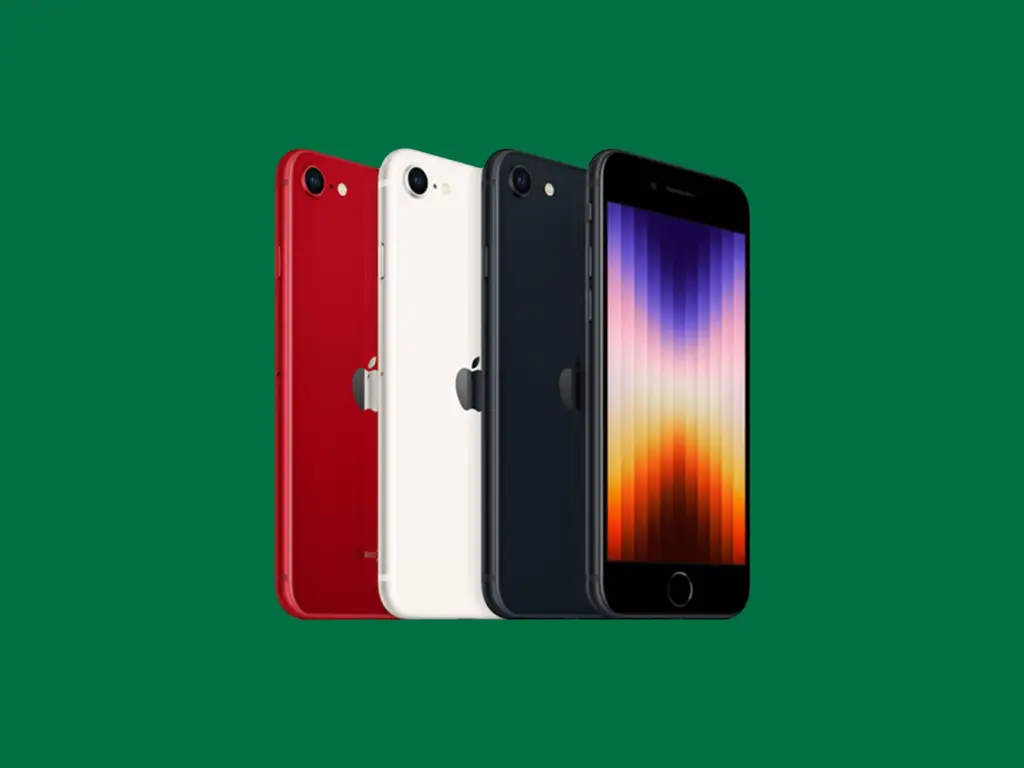
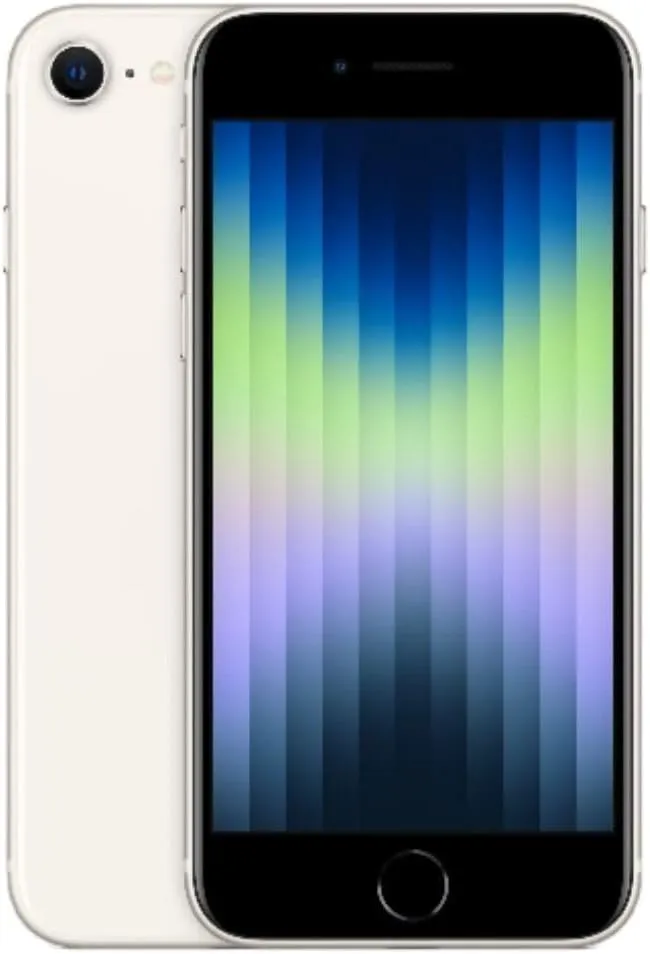
Apple iPhone SE (2022) – if you are in the Apple ecosystem
It is difficult to choose an Apple product under $400, but we firmly believe that the iPhone SE (2022) is the best option. Apple essentially discontinued the SE range in 2025 with the release of the iPhone 16e (review). Apple’s entry-level model is now the 16e, the company’s first new name since the 2020 “mini.”
Currently, the iPhone SE (2022) is only available through online retailers like Amazon. This budget iPhone features the powerful A15 Bionic chip, although it brings minimal upgrades compared to its predecessor. It offers a 12MP camera within a casing nearly identical to the iPhone SE (2020)—which itself resembles older models like the iPhone 8, 7, and 6s—and includes IP67 water resistance.
The most notable enhancement is 5G connectivity, which puts the iPhone SE (2022) on par with other smartphones under $400 on this list, aside from the improved SoC and more RAM (4 GB). After testing, we discovered that, despite certain issues, the gadget is still a great option for iPhone purchasers on a tight price.
Software support for the iPhone SE (2022), including complete iOS updates and security fixes, should last until roughly 2027 or 2028, according to Apple’s past trends. However, based on Apple’s future choices, precise timetables might change.
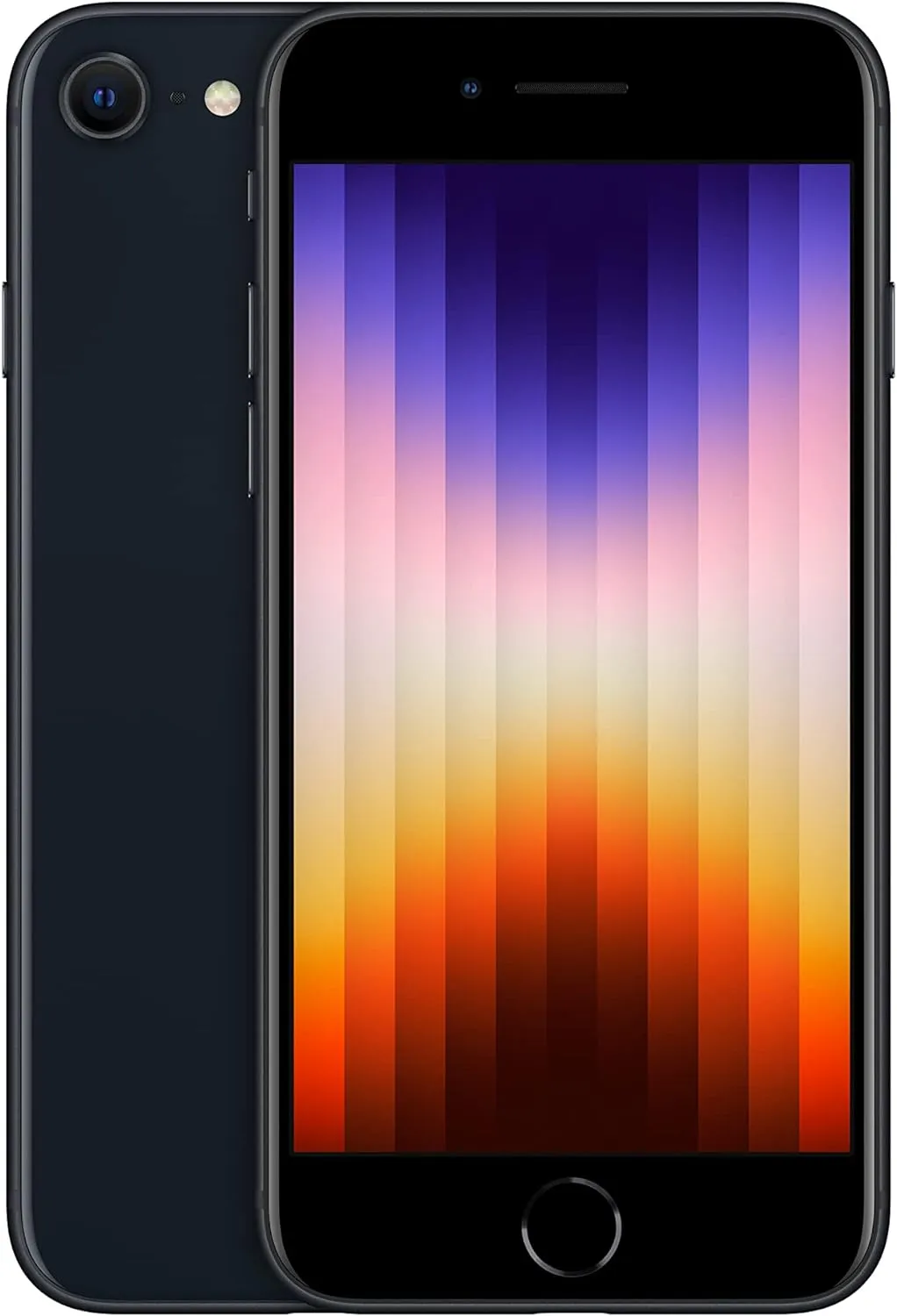
2022 Apple iPhone SE
Advanced single-camera system with 12MP Wide camera; Smart HDR 4, Photographic Styles, Portrait mode, and 4K video up to 60 fps
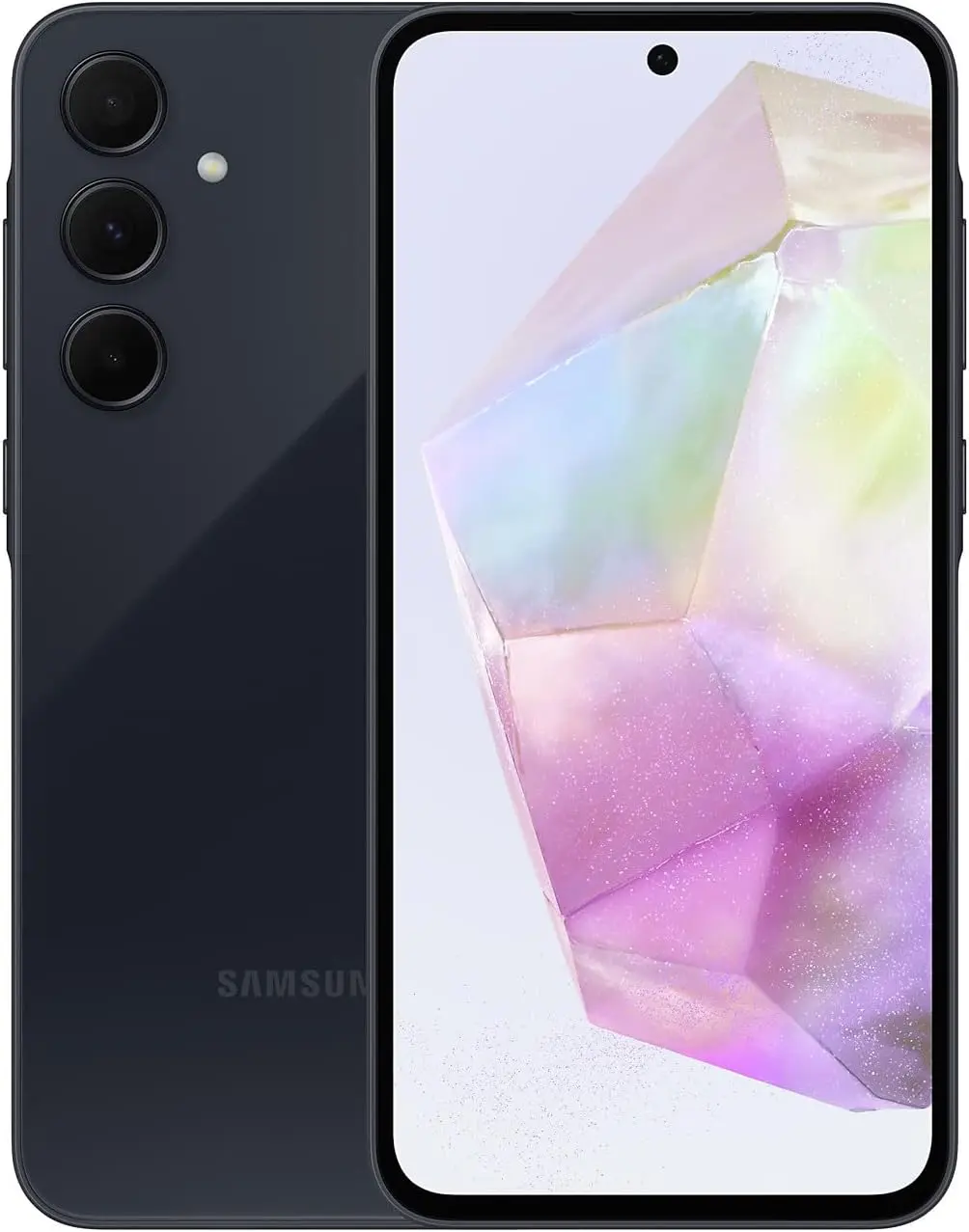
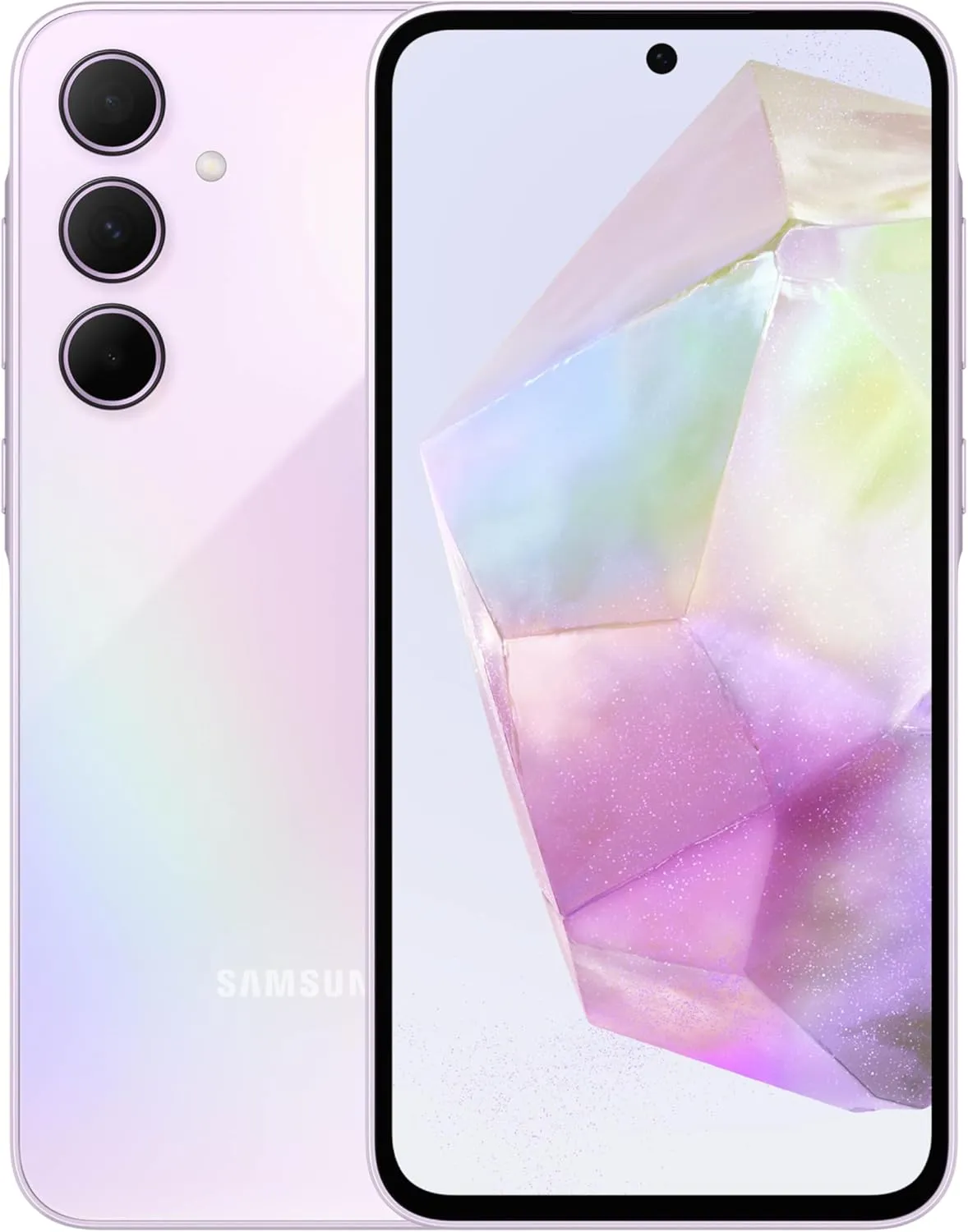
Surprisingly, Samsung chose not to distribute its well-liked Galaxy A55 in the US in 2024. As a mid-range substitute, the company instead unveiled the less expensive Galaxy A35.
In actuality, both models offer balanced camera capabilities, dependable battery life, and comprehensive software support, making them very comparable in terms of performance and specifications. The Exynos 1380 processor, which was used in the previous Galaxy A54 model, ensures seamless performance for daily use and light gaming on the A35.
Samsung has committed to providing software upgrades for the Galaxy A35 through 2029, making it the phone with the longest security support on this list. Although some more recent models provide even longer support, none of them now live up to this promise at this price point.
Samsung Galaxy A35 5G
6.6” FHD+ Super AMOLED w/Corning Gorilla Glass Victus+ – Resolution 1080 x 2340 pixels 256GB 8GB RAM – MicroSD up to 1TB
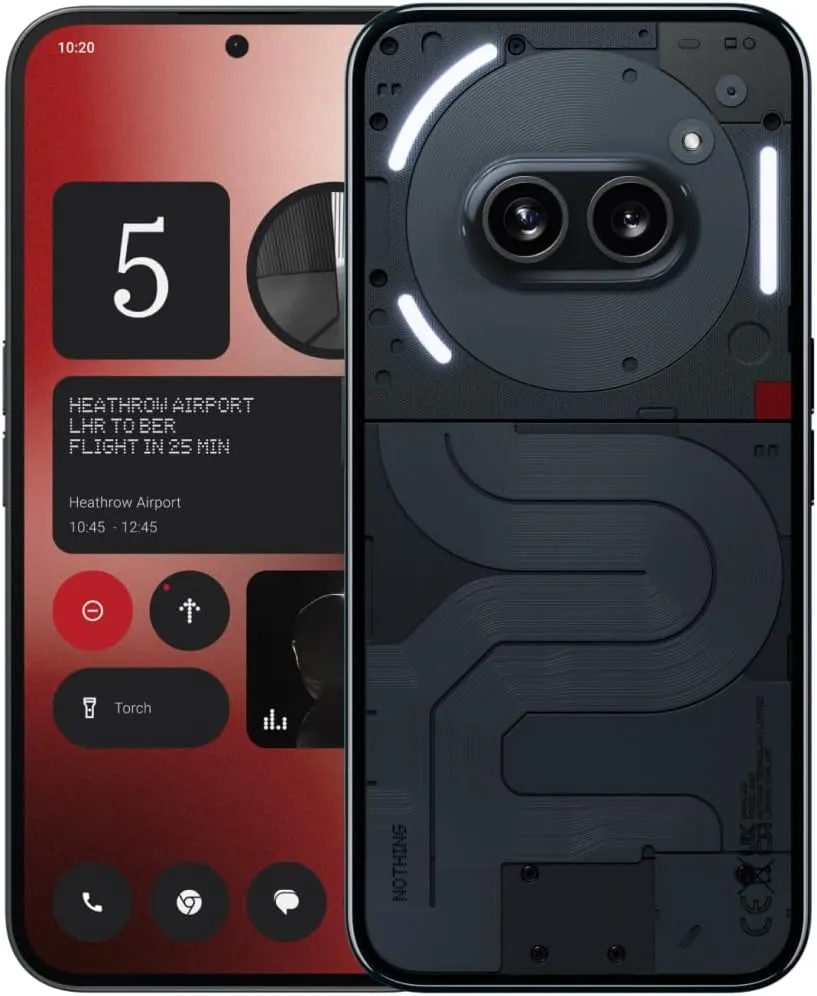
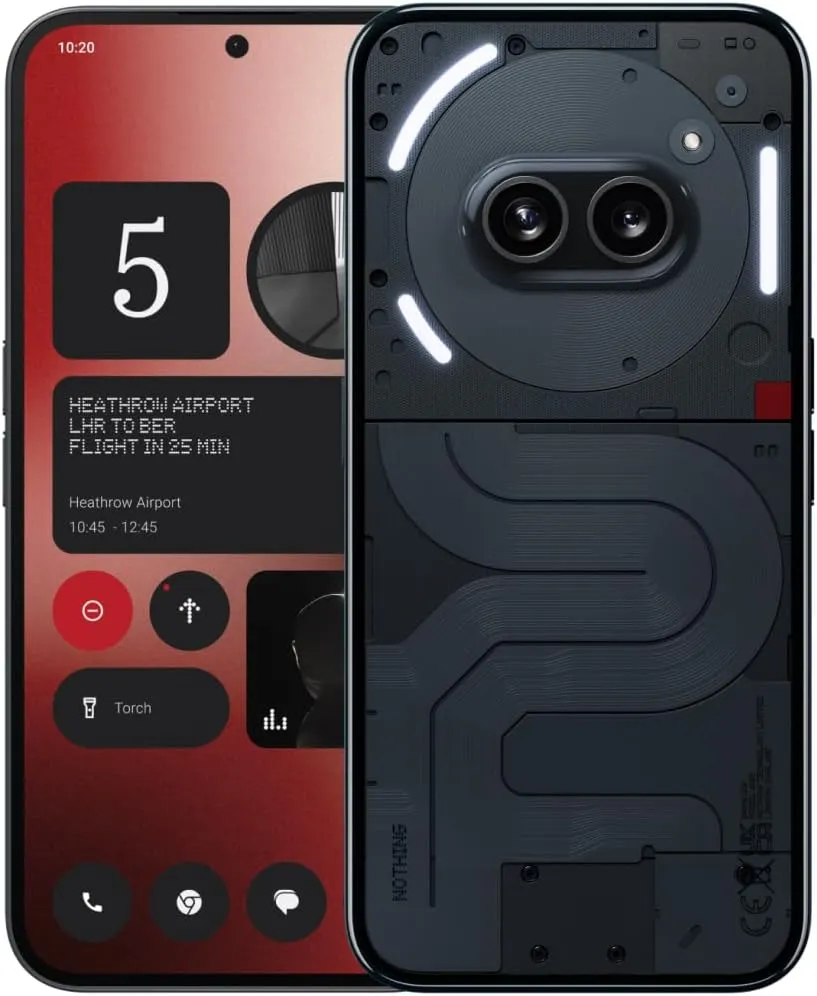
Nothing’s newest low-cost smartphone, the Phone (2a), has a great design and well-balanced specs, making it one of the most attractive mid-range phones.
It delivers endurance with four years of security patches and three guaranteed Android updates, together with a positive user experience with Nothing OS. Although the most recent Snapdragon chipset is not included, performance remains dependable.
The Phone (2a) has the longest battery life in its pricing range thanks to its large 5000 mAh battery that supports 45W rapid charging. The remarkable 17 hours and 2 minutes of runtime that our battery testing revealed allowed for comfortable two days of use between charges and comparatively quick recharging.
The primary compromise is the camera’s poor quality, especially in dimly lit areas. With its appealing screen, reliable performance, and very long battery life, the Nothing Phone (2a) is a well-rounded mid-range choice.
Nothing Phone (2a)
Nothing phone (2a) boasts Co-engineered with MediaTek,the custom Dimensity 7200 Pro processor delivers the best performance with optimal power consumption. NOTE:Only these carriers’ 5G network bands are supported,please check the bands before buying: T-Mobile n41,n66; AT&T n5,n66; Google Fi n41; Verizon Wireless n5,n38,n66; Cricket Wireless n5.
Our crew has carefully tested the top picks for our list of the best smartphones under $400, and we have added extra mentions to help you make an informed choice. Although this guide focuses on key aspects, I strongly advise reading our in-depth reviews before making a purchase.
We mainly took into account regular consumers looking for a balance between cost and usefulness while making this budget-friendly choice. To make sure you are selecting the greatest smartphone, I advise you to look over our larger list of top smartphones if flagship-level features or cutting-edge performance are important to you.
User Experience (UX). Smartphones priced around $400 often provide reliable performance for daily work, multimedia consumption, and casual gaming. Expect CPUs from the Qualcomm Snapdragon 7 series or MediaTek Dimensity range, which offer outstanding value even though they are not the most recent generation.
Battery life and display quality are also important. We selected smartphones with batteries ranging from 4,500 to 5,000 mAh, which can last a full day. While charging speeds in this price range are moderate, often between 10W and 15W in the United States, these devices provide adequate endurance. Display technology is constantly advancing, with many devices offering Full HD+ resolutions and refresh rates of up to 120 Hz, including the increasingly popular OLED screens.
Although the camera’s performance is suitable for most daily uses, there are certain limits to consider. Higher-megapixel sensors are common, although their quality differs greatly from flagship models. We suggest care when using multi-camera systems, as extra lenses such as macro or depth sensors may have limited practical applications.
Software and carrier compatibility are other important issues. Smartphones in this category often receive fewer software updates—one to two major Android versions after launch—so double-check the device’s update policy before purchase. Additionally, check compatibility with your carrier, especially if purchasing unlocked smartphones.
Google and Apple’s app marketplaces, the Play Store and the App Store, include an almost limitless amount of apps. Some of these apps are free, while others cost money. However, many users are unaware that many paid programs are briefly offered for free as part of a special deal. We have compiled a list of the most fascinating apps now accessible for free.
For Android
Netzsignal Pro: Wi-Fi & 5G ($0.49): If you want to find out more about your network signal, you can’t go past this app. Not only does it offer outstanding and numerous ratings, but also a clear user interface with many practical functions.
Illuminance -Lux Pro ($0.49): This light intensity meter is almost as popular. The app uses your smartphone’s sensors to display the illuminance in the Si unit lux. Users can create separate rooms and analyze the respective lighting conditions.
Voice Calculator Pro ($9.99): Calculator apps are a dime a dozen. However, this application stands out from the crowd because it allows you to open several calculation windows at the same time. This means you can start a new calculation without having to delete the old one.
Who Uses My Wi-Fi Pro ($0.49): If you don’t know exactly which devices are connected to your Wi-Fi, you should definitely download this app. Not only can you analyze your connected devices, but you can also find devices that have connected to your Wi-Fi.
For iOS
1Contacts Pro ($0.99): This app gives you full control and, above all, a complete overview of your contacts. Duplicate contacts can also be tracked down and merged if necessary. But beware: If you use this app, you give an additional third-party provider access to your contact data.
Queen Rules ($2.99): If you don’t like tower defense games, you can pass the time with this puzzle game. To win, you have to place your soldiers in such a way that they defeat the enemy troops. The app also offers interesting level designs and clay figures.
No Wi-Fi Mini Games ($0.99): The name says it all. Downloading the application provides you with access to over 50 exciting and nostalgic mini-games. An Internet connection is not required. The developers have also dispensed with advertising.
Aqueduct 101 ($2.99): A creative puzzle game in which you build aqueducts and make water flow. Real fun for puzzle fans and a great way to pass the time.
Some businesses use innovative techniques to capitalize on your personal information in the rapidly evolving mobile application landscape. But do not worry, computer lovers; we have gathered crucial recommendations to help you protect your valuable data. It is critical that you exercise caution when granting rights to the apps you select to install.
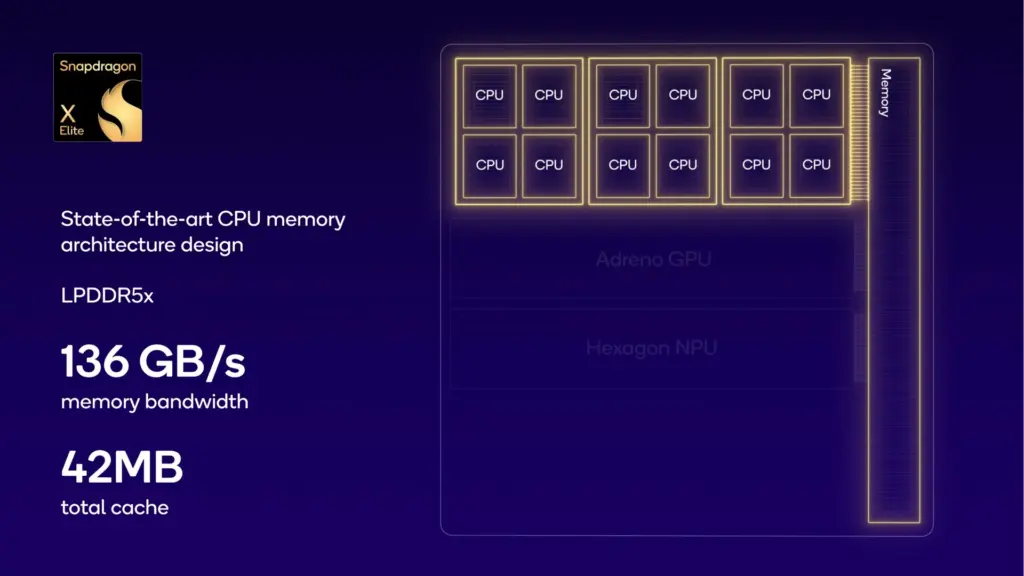
With the next-generation Snapdragon flagship CPU around the corner, the OnePlus 13 is anticipated to come soon. According to a OnePlus employee, the modified version of the SoC can outperform the Apple A18 Pro in terms of efficiency, even though the chipset’s name is still unknown.
At the Snapdragon Summit, Qualcomm will formally unveil its next-generation flagship smartphone SoC. The OnePlus 13 is anticipated to be one of the first smartphones to use the technology, though it is still unknown if it will be called Snapdragon 8 Gen 4, Snapdragon 8 Extreme Edition, or something else.
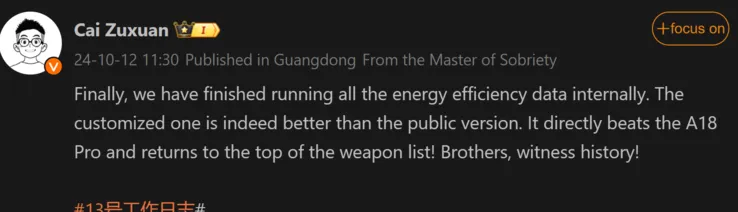
Although OnePlus has not given away many details regarding its next flagship phone, Cai Zuxuan, an employee, hinted on Weibo that it will use a modified Snapdragon chip. The employee’s assertion that the customized SoC will provide better energy efficiency is more intriguing.
More precisely, the employee asserts that the custom Snapdragon SoC can outperform the Apple A18 Pro in terms of power efficiency, citing internal statistics from OnePlus. According to Cai Zuxuan, this would force Qualcomm to take the top slot once again.
Additionally, a “public version,” which is allegedly inferior than the custom SoC, is mentioned in Cai Zuxuan’s Weibo post. There have been previous mentions of two distinct iterations of what is allegedly the Snapdragon 8 Extreme Edition. In August, a SoC datasheet that appeared legitimate was released, mentioning the SM8750 and SM8750P versions.
The SM8750P was thought to be a more expensive model among them; the letter “P” was presumably an acronym for “Performance.” Qualcomm has been using its previous flagship SoCs in a similar manner. Consider the Snapdragon 8 Gen 3 for the Galaxy. The normal SoC is significantly overclocked in this version. Later, Nubia smartphones came with the same overclocked processor, which now leads the AnTuTu benchmark.
Cai Zuxuan, however, indicates that this time, efficiency will be given a lot of weight in addition to performance. The good news is that October 21, which is not too far away, is when Qualcomm’s Snapdragon Summit will begin. In order to find out how Qualcomm’s 3 nm smartphone chip stacks up against the competition, you do not have to wait.
Uncertain about which budget smartphone to buy with $400 to spend? With features like 120 Hz screens, top-notch cameras, and gaming-ready SoCs with 5G, we have compiled a list of the best smartphones available for $400 or less. Here are our best choices for cellphones under $400 without further ado.
Take a look at the table below if you are pressed for time and just want our best pick for a $400 smartphone. Before choosing, read the descriptions below or look through the available reviews for a more thorough understanding of our best choices.
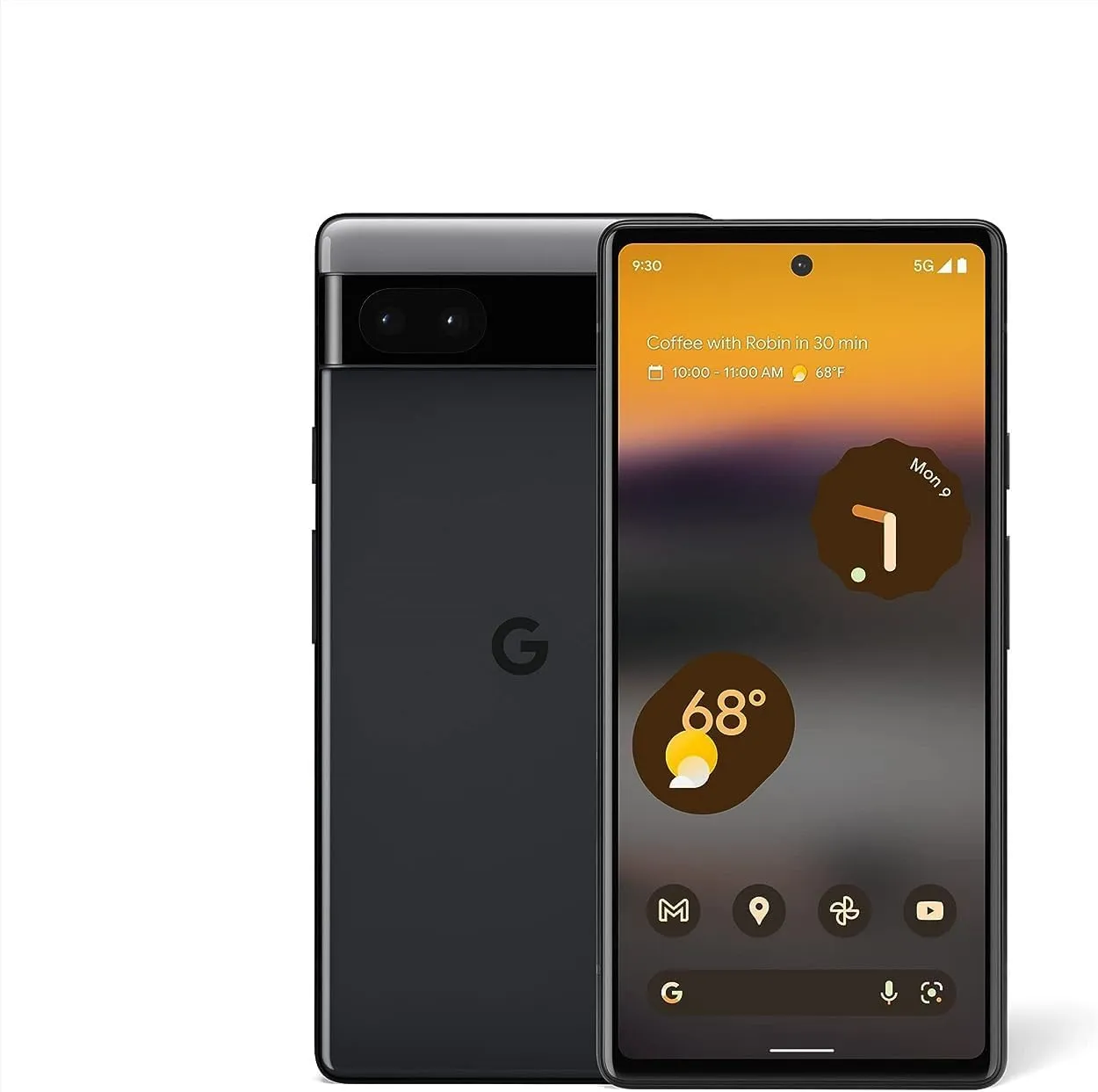
Google Pixel 6a
Although the Google Pixel 6a has been on sale since July 21, 2022, it is strangely still available on Amazon for $399 with 128 GB. The Pixel 6a appears to be the greatest choice for people looking for a smaller Google phone in 2024 since it is loaded with Google’s proprietary Tensor processor, which improves the performance of machine learning-based functions.
Even though the phone only has one internal storage choice and a 60 Hz refresh rate, it was already quite obvious from my assessment that it was the best smartphone under $400. Furthermore, among all the smartphones in the Pixel 6 series, the 6a is the most affordable.
The Pixel 6a has a very basic camera suite module, but considering that Google’s main strength is its camera software, it does not truly fall behind the competition. Thus, you can be certain that the images captured with the 6a will have the quality seal of the Pixel series.
Google Pixel 6a
The Google Pixel 6a has been available for purchase since July 21, 2022, but surprisingly the device can be found on Amazon for less than $399 with 128 GB.
Consider checking the Google Pixel 7a prices before making a purchase. The device might be available at a similar price on your preferred e-commerce platform.
Apple iPhone SE (2022)
Without hesitation, we suggest the iPhone SE (2022) as an Apple substitute. The new low-cost iPhone, which comes two years after the iPhone SE (2020), has a potent A15-bionic but is not much better than the original. A 12MP camera and IP67 resistance are included in a chassis that is quite similar to that of the iPhone SE 2020 (and iPhone 8/7/6s).
Aside from the SoC (and the additional 4GB of RAM), the true change is 5G connectivity, which enables the device to finally take use of the newest connectivity technologies, just like the other sub-$400 handsets on this list. The iPhone SE (2022), which we have already examined, is undoubtedly a fantastic option for anyone searching for a reasonably priced iPhone.
Apple iPhone SE (2022)
We suggest the iPhone SE (2022) as an Apple substitute. A 12MP camera and IP67 resistance are included.
Strangely, Samsung decided not to release its top-selling Galaxy A55 model in the US in 2024. The South Korean company replaced it with the less expensive A35 model as a mid-range market substitute.
In actuality, the two phones are rather comparable in terms of features and performance, offering a comprehensive package that includes cameras, software support, and battery life. Smooth performance for everyday work and even some games is promised by the A35, which inherits the Exynos 1380 CPU from our last suggestion, the Galaxy A54.
With Samsung guaranteeing patches through 2029, the Galaxy A35 is the phone on this list that will continue to receive security upgrades for a longer period of time. Even longer support is beginning to be promised by more recent phones, but none at this price point.
Samsung Galaxy A35
128GB Unlocked Android Smartphone, AMOLED Display, Advanced Triple Camera System, Expandable Storage, Rugged Design, US Version, 2024
Nothing’s newest low-cost smartphone is called the Phone (2a). Although its technological specifications are well-balanced, its appearance is what really makes it stand out; according to my colleague Antoine Engels, it is the most attractive mid-range smartphone of 2024.
The Phone (2a) is the autonomy champion in its price range thanks to its 5000 mAh battery that supports 45 W rapid charging. The smartphone lasted an amazing 17 hours and 2 minutes on our battery assessment. Without recharging your phone, you can easily go two days (2a). Additionally, it has the benefit of charging at a moderate pace.
The photo quality is not very realistic, especially at night, so I think that is the only major compromise you will have to make. The Nothing Phone (2a) is a well-balanced mid-range smartphone that boasts a stunning screen, respectable performance, and, most importantly, an impressive battery life.
Expectations for mobile devices costing up to $400
In the US, mid-range phones fall somewhere between affordable models and high-end mid-range phones, albeit offering a respectable price-performance ratio. You may discover older or lower-specified devices at this pricing. They may lag in terms of camera, performance, and design even though the majority feature 5G.
Power and performance: Investing in a sub-$400 device will at least guarantee that the SoC can tackle the most recent games. Here, you should expect SoC’s that are at least one to two years old and offer good performance for daily tasks.
Cameras: In the mid-range, models like the Samsung Galaxy A35 have 50-megapixel main cameras, but don’t match the Galaxy Ultra’s photo quality. The primary issue in this range is with the cameras, especially “Quad cameras” that use low-quality macro and depth sensors. Unfortunately, the telephoto camera often gets compromised.
Battery & charging: Batteries in this price range are typically between 4,500 and 5,000 mAh, but charging speeds are subpar. Devices from Honor and Xiaomi offer over 60W fast-charging, but they aren’t available in the US. Here, 10W to 15W is decent. Wireless charging is rare at this price point.
Display: In terms of display, we can expect FullHD+ screens with high refresh rates (except for Apple), and OLED displays are getting increasingly popular, with nice color reproduction and impressive contrast levels.
Age and support: At this price, be wary of devices older than two years due to limited software updates. Most will receive only one or two updates beyond their initial OS. Hence, Android 10 devices will become outdated after the launch of Android 14 in 2023, for example.
Carrier compatibility: In this price range, not all devices are compatible with every carrier. Many are designed for GSM networks, common outside the US. If you’re on a CDMA network like Verizon, ensure compatibility. However, with 4G LTE and 5G, this issue is diminishing.
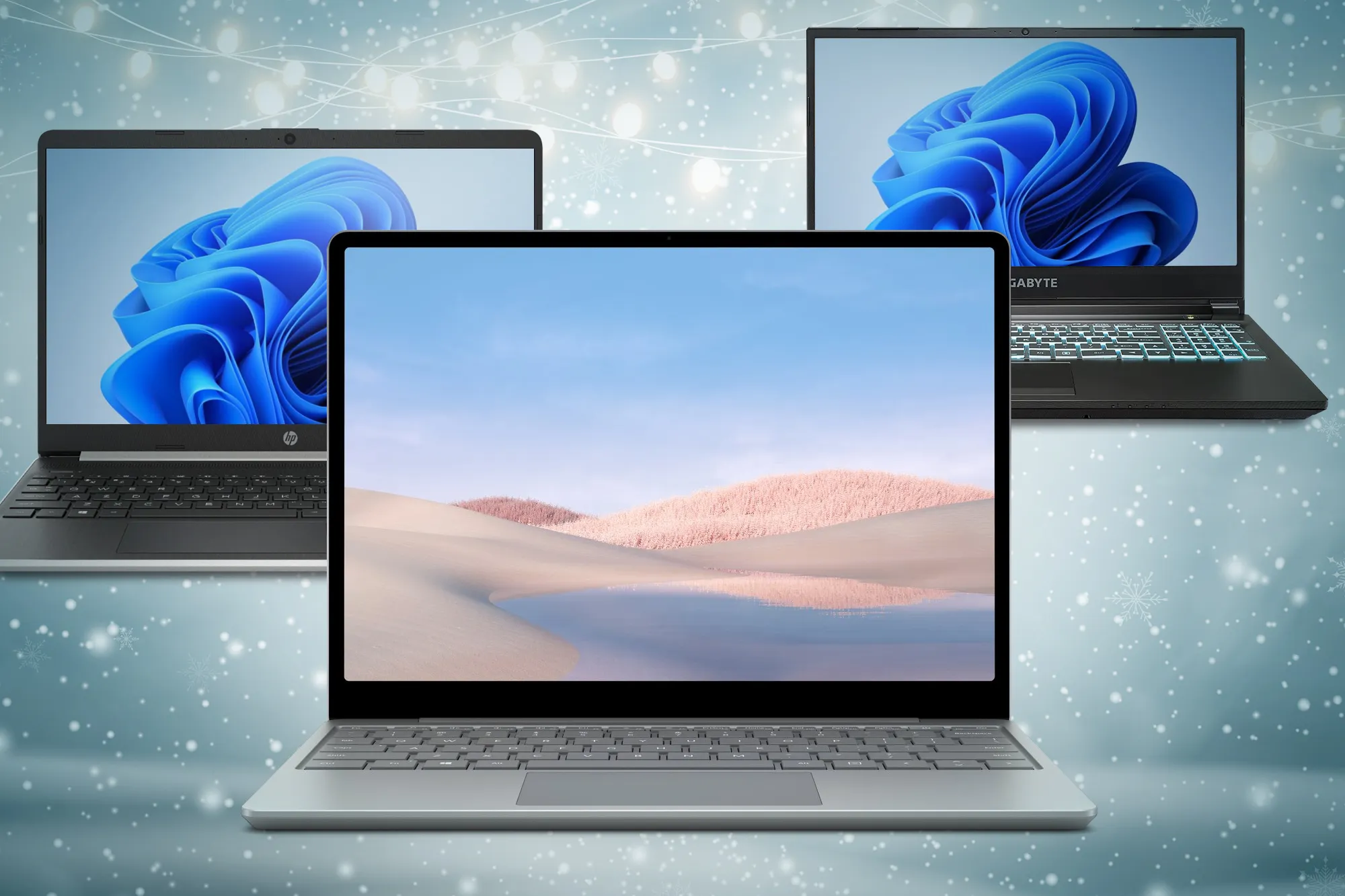
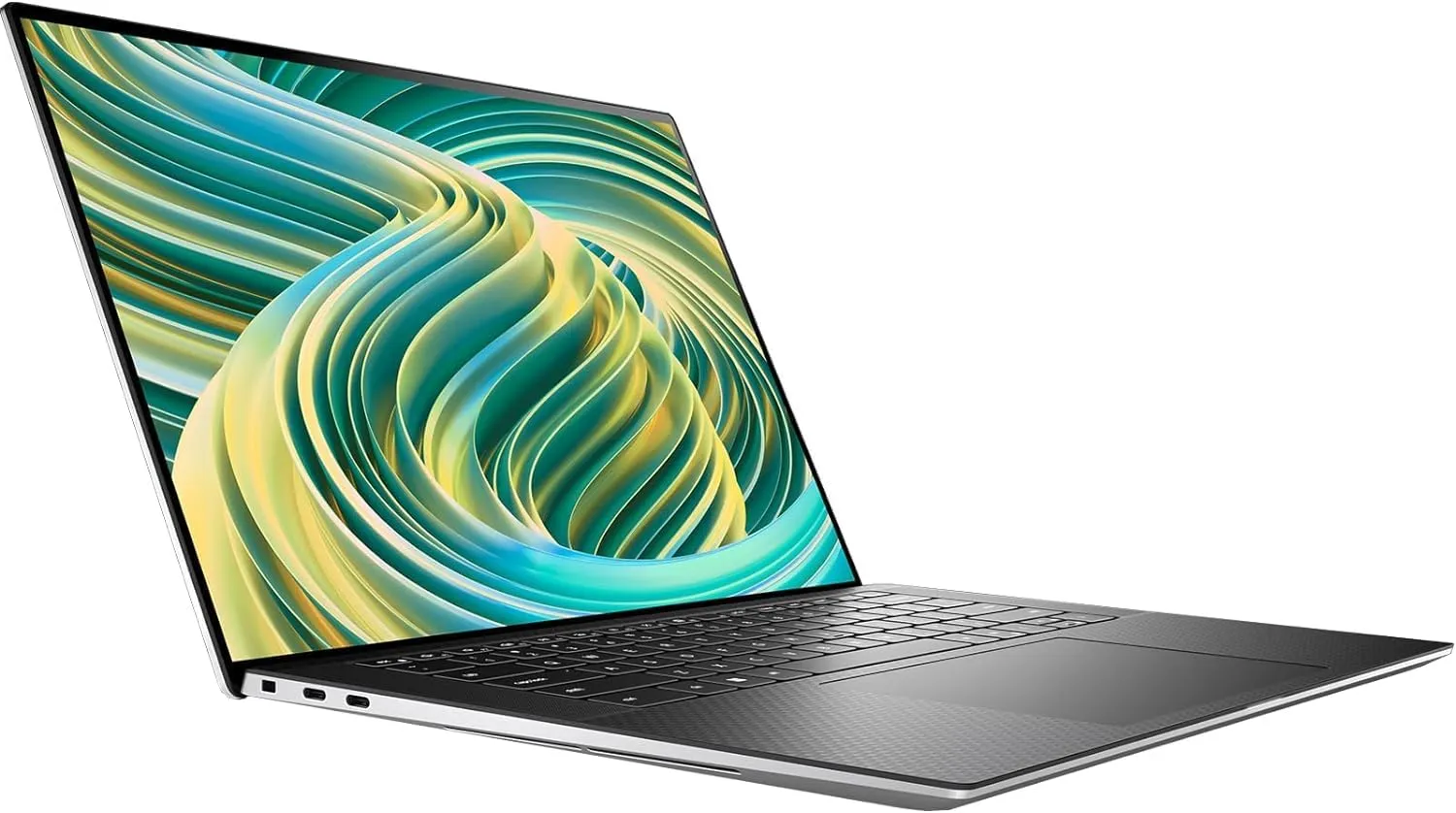
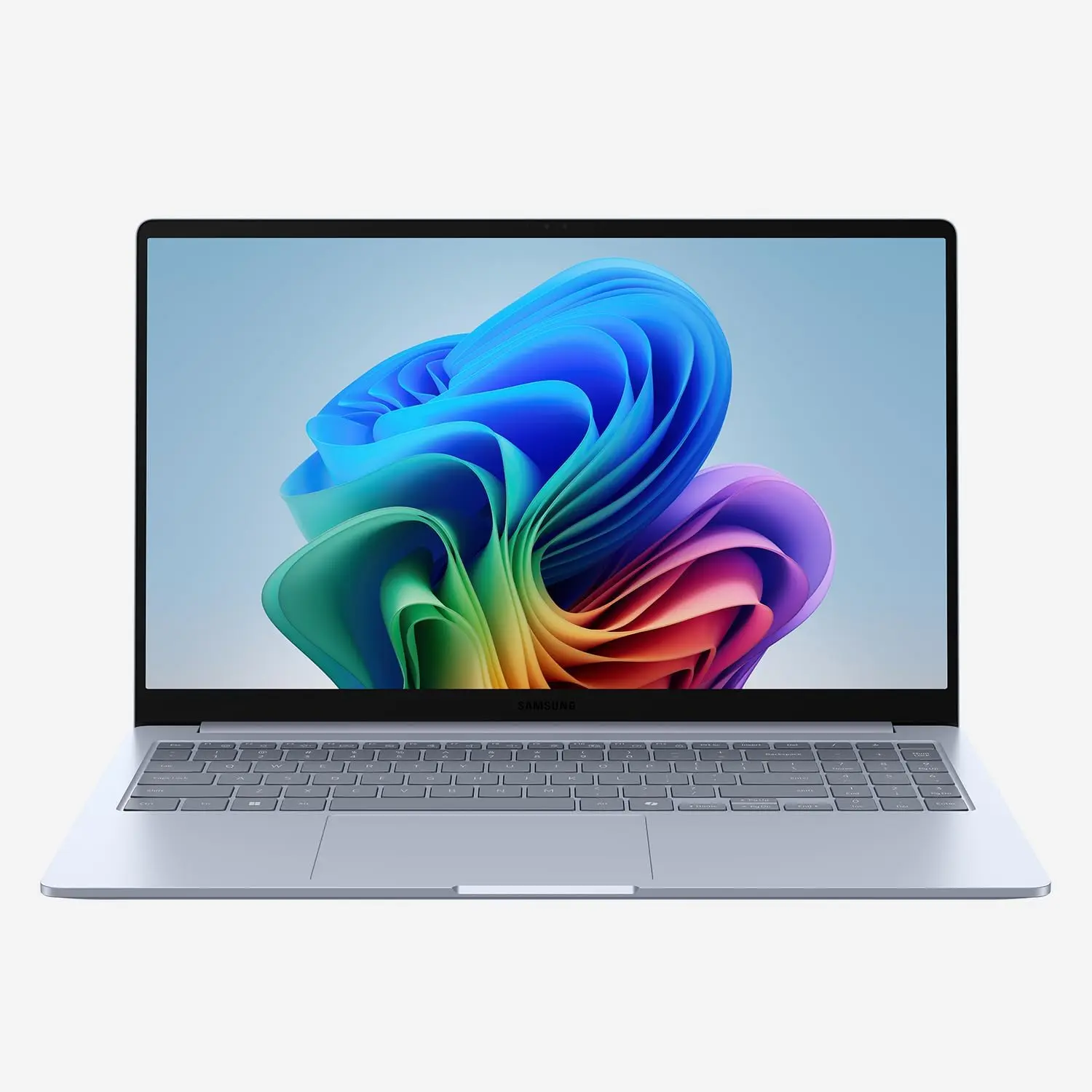
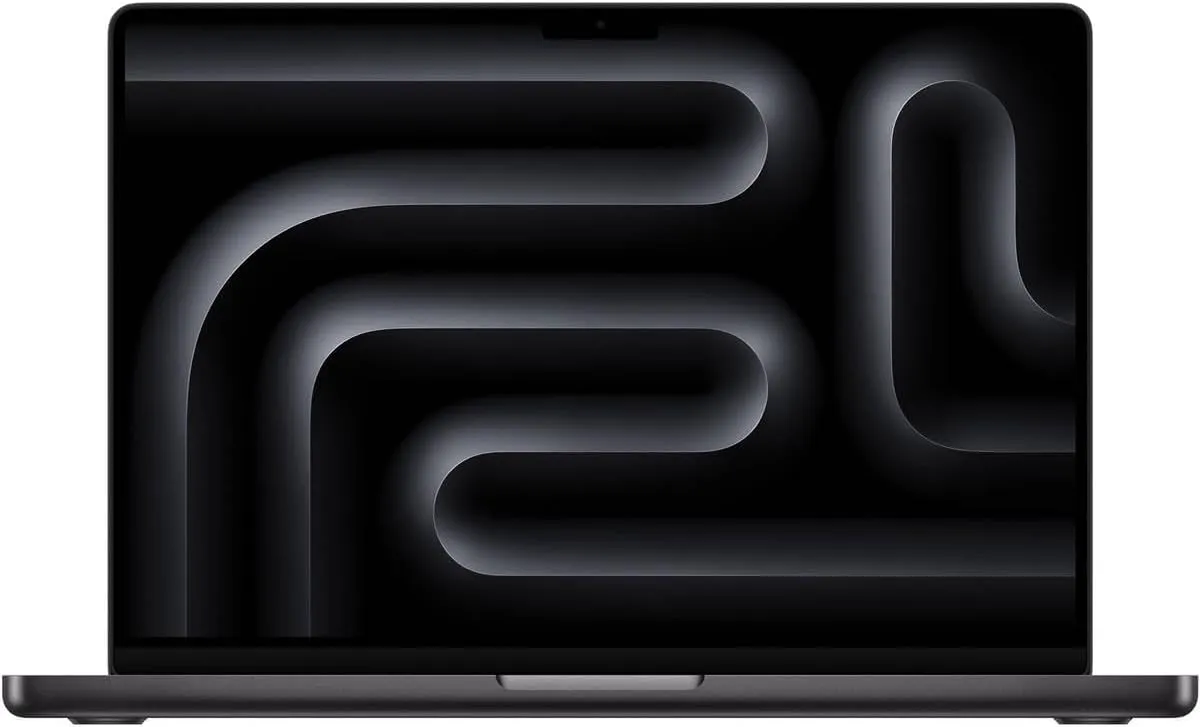
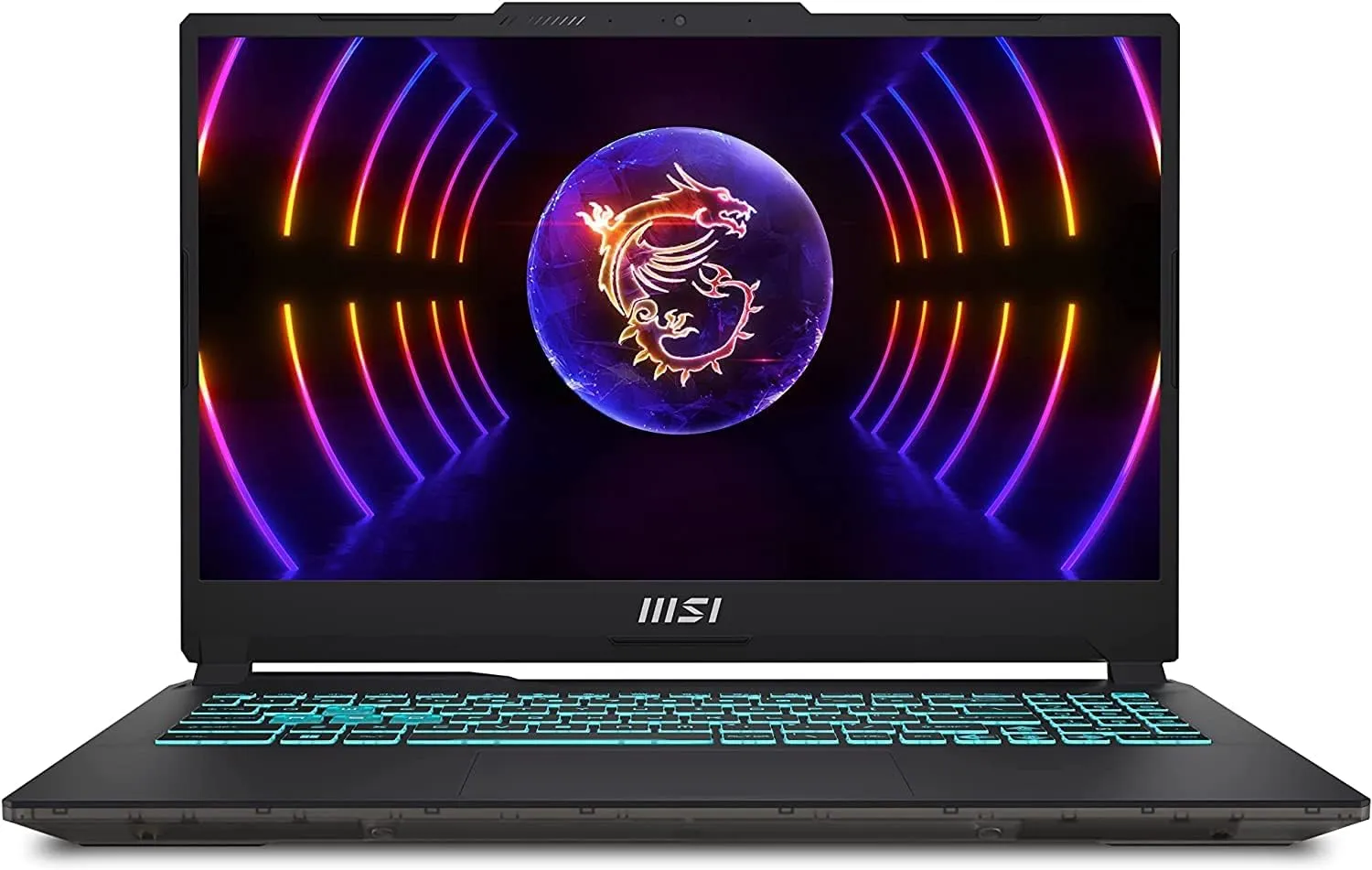
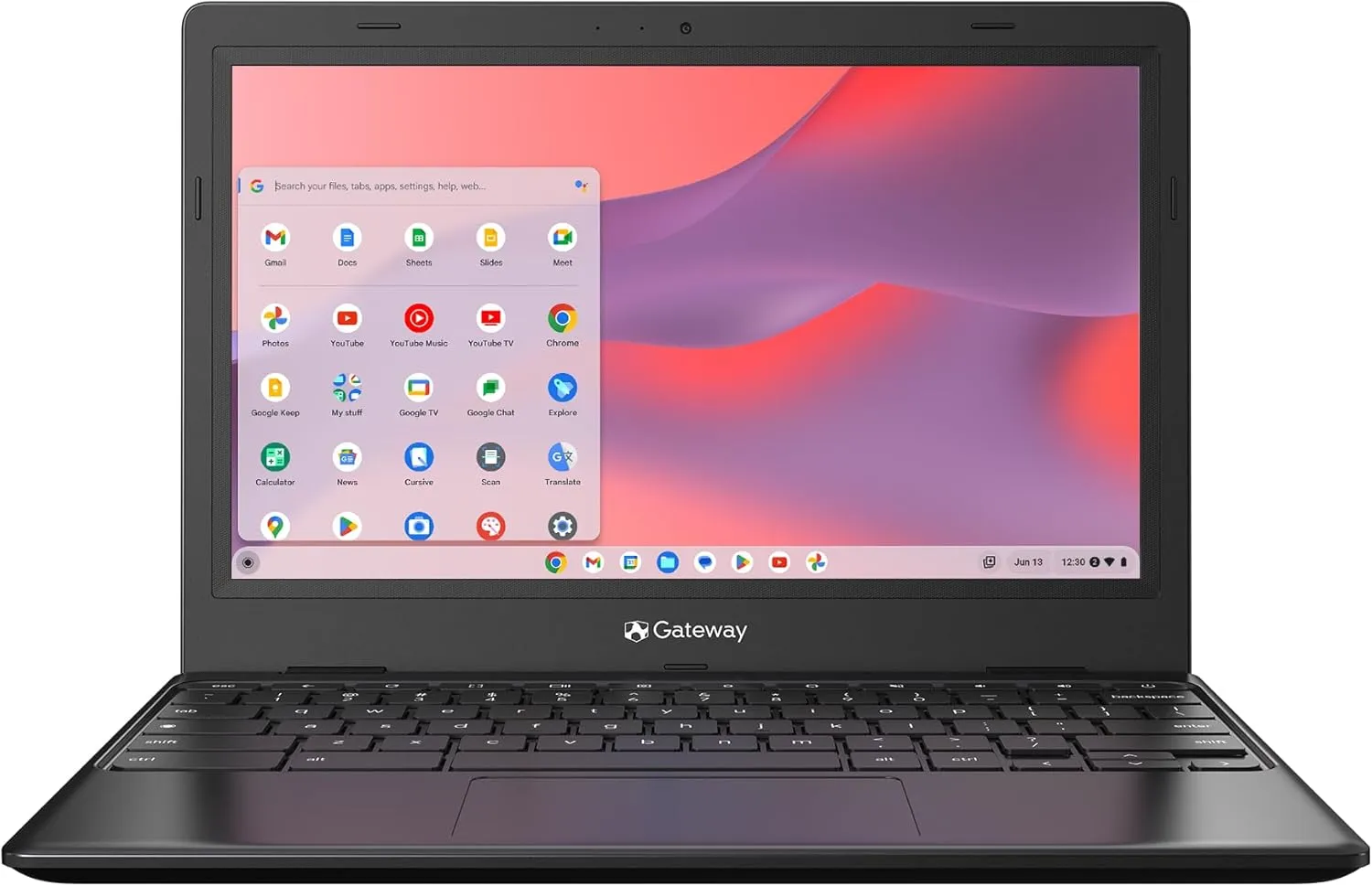
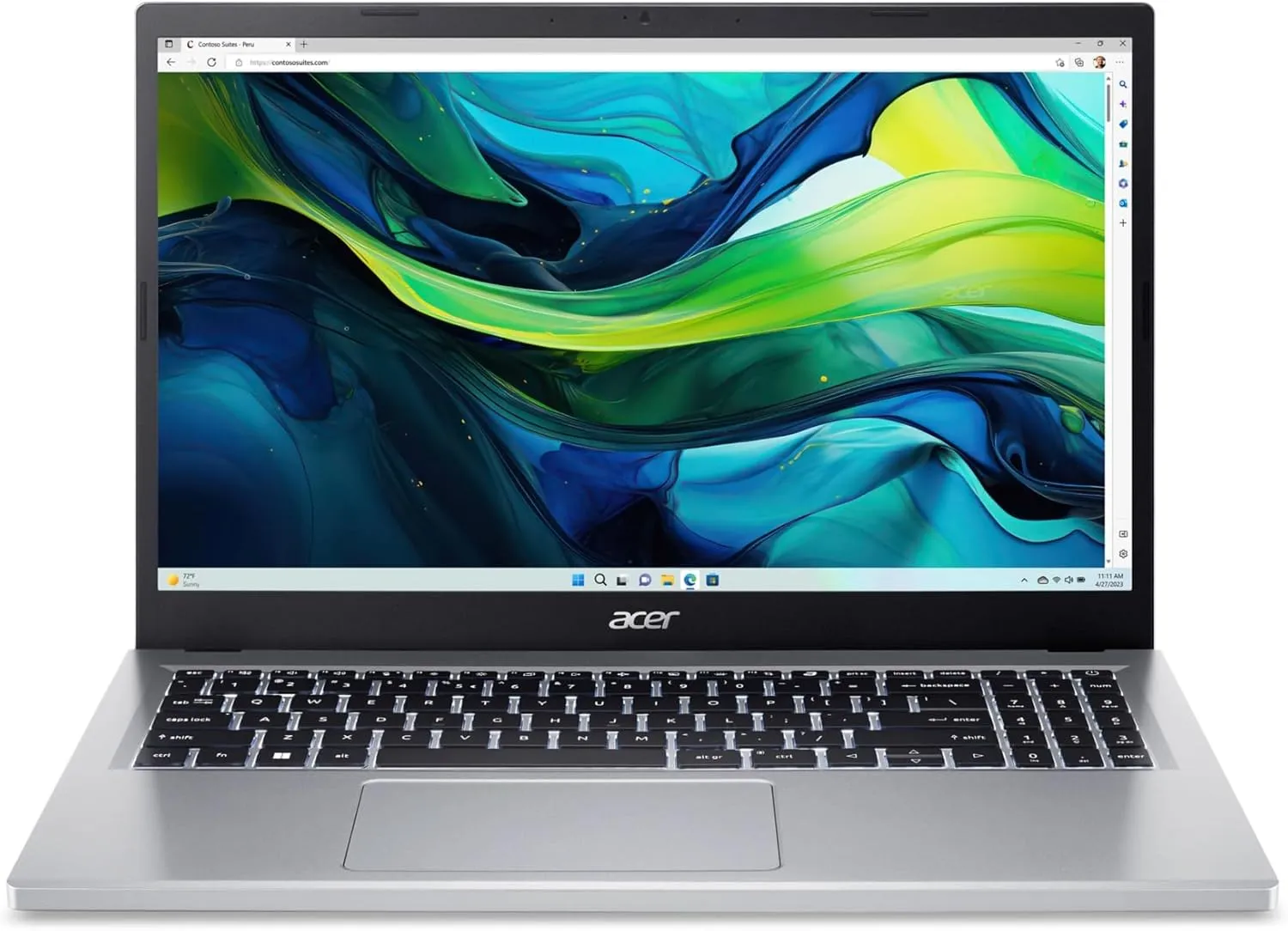
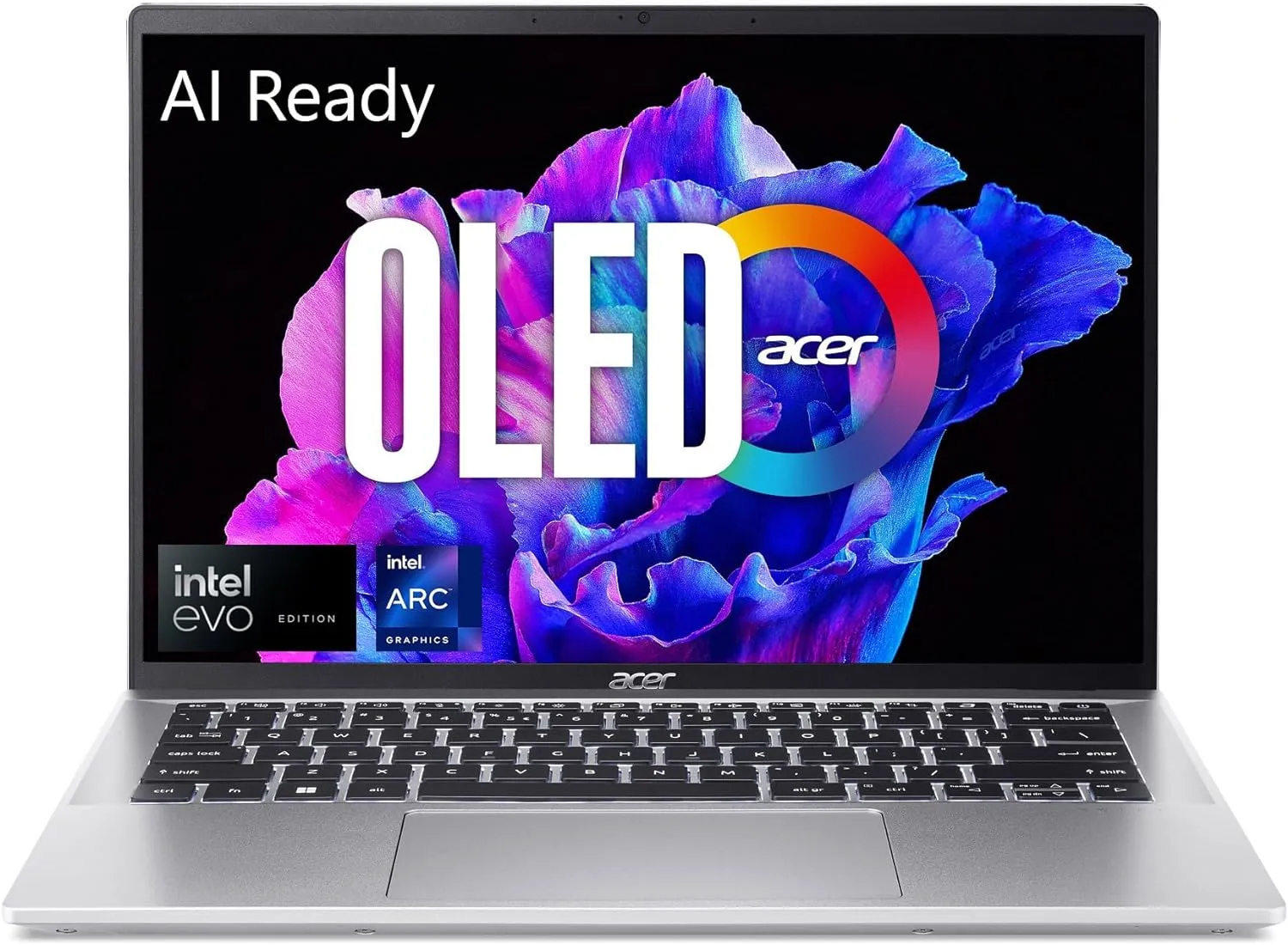
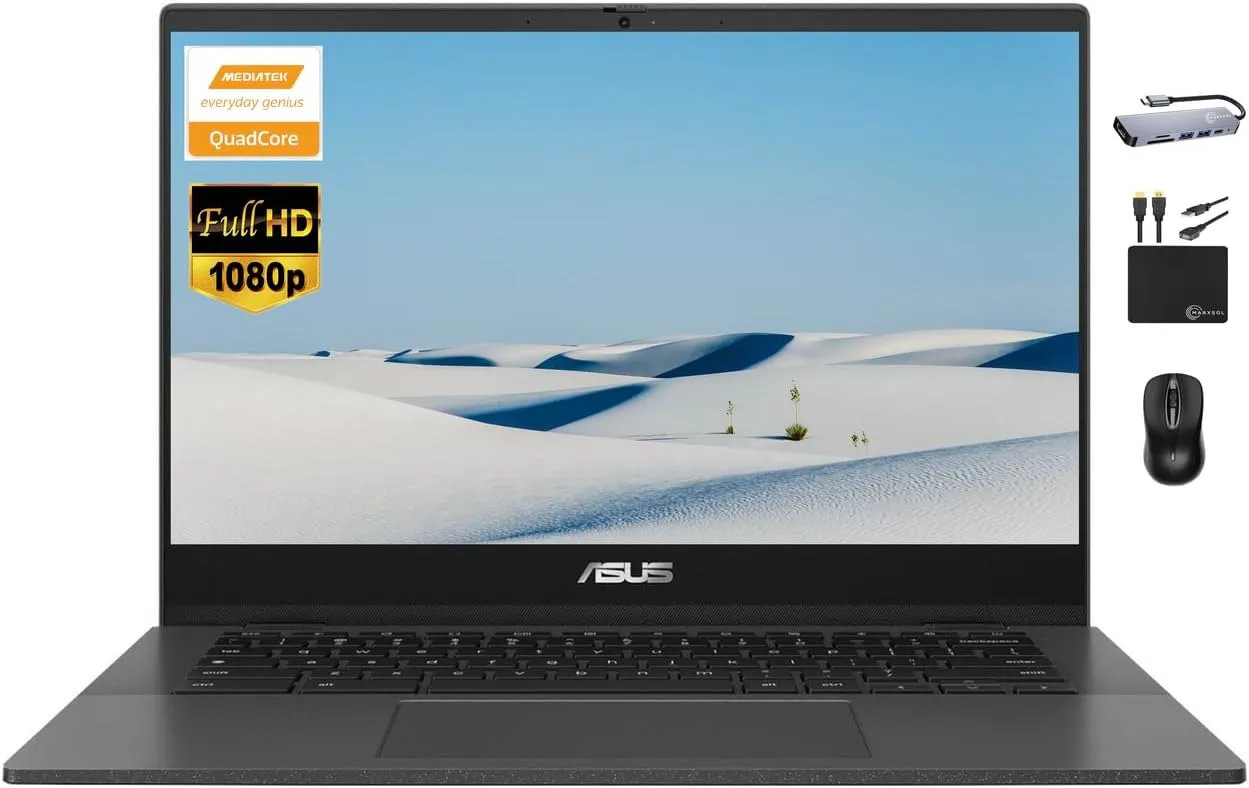
Even though Black Friday is not until later this year, companies like Dell, Asus, and Apple are still offering fantastic discounts on the greatest laptops available right now! It seems like there are more days than just one right now.
However, you were already aware of that. Companies will begin to subtly lower their pricing starting on October Prime Day, merely to see how things work. Fortunately, I can discover them for you thanks to my seven years of experience covering this most delightful time of the year.
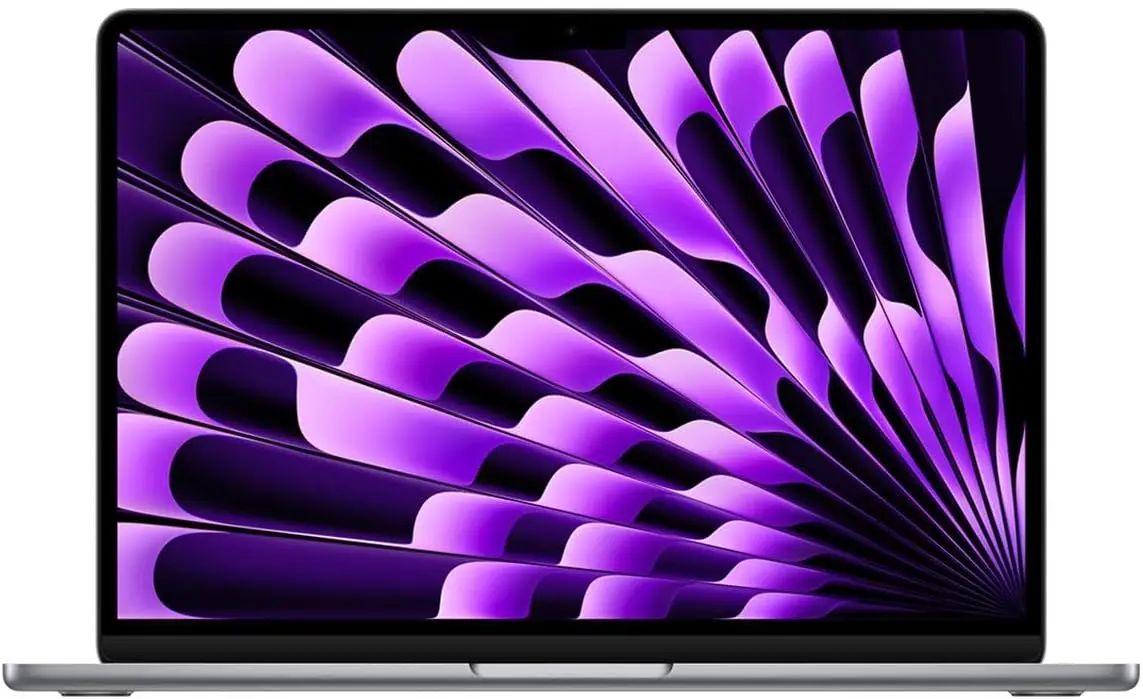
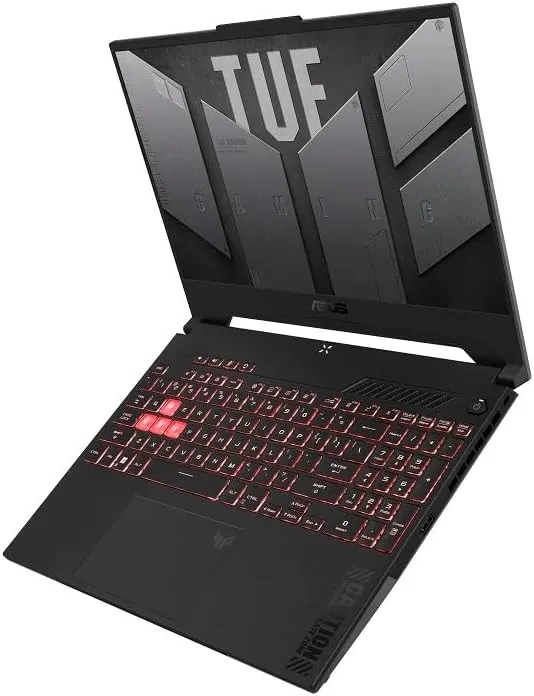
Furthermore, rest certain that we are not directing you toward any out-of-date models. Actually, every one of these offers is on the newest and best hardware. These range from a whopping $200 off the M3 MacBook Air to a great $150 off my favorite gaming laptop, the Asus TUF Gaming A14!
So if you are in the market for a Chromebook, a powerful gaming PC, or even an incredibly affordable Copilot+ PC (looking at you, $849 Galaxy Book4 Edge), and you do not want to wait until November, these bargains are definitely worth checking out.
Over the course of the holiday sales period, Huawei and Xiaomi handsets outsold Apple’s iPhones in the Chinese market. Local firms appear to have benefited the most from China’s Singles Day sale, which is held on November 11.
Huawei and Xiaomi register outperform Apple in China
The latest iPhone 15 lineup from the Cupertino-based company was surpassed in sales by the Chinese tech giants, according to a Counterpoint Research report. The report also noted that domestic brands’ smartphones saw higher sales during the 11.11 shopping period, while iPhone sales fell by 4 percent in the two weeks from October 30 to November 12.
However, Xiaomi also saw a notable 28 percent increase during this same period. Notably, the two domestic companies’ jump in sales also boosted the local market’s smartphone sales overall by 5 percent year on year during the Singles’ Day sales period. Huawei, on the other hand, saw a sizeable 66 percent year on year increase in its Singles’ Day sales, driven primarily by its latest flagship 5G series (the Mate 60 lineup).
In terms of pricing, the Huawei Mate 60 series is priced at 5,499 Yuan, or approximately 775 US dollars, starting at 3,999 Yuan, or roughly 563 US dollars, while the Xiaomi 14 lineup is priced at 5,999 Yuan, or approximately 845 US dollars. Xiaomi even revealed sales figures from the shopping festival, stating that sales totaled over 22 billion Yuan, or approximately 3 billion US dollars.