Tag: xiaomi

  • HyperOS 2.3 with Android 16 expected soon

    HyperOS 2.3 with Android 16 expected soon

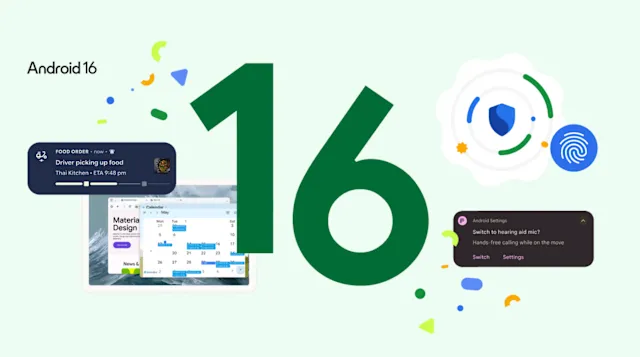
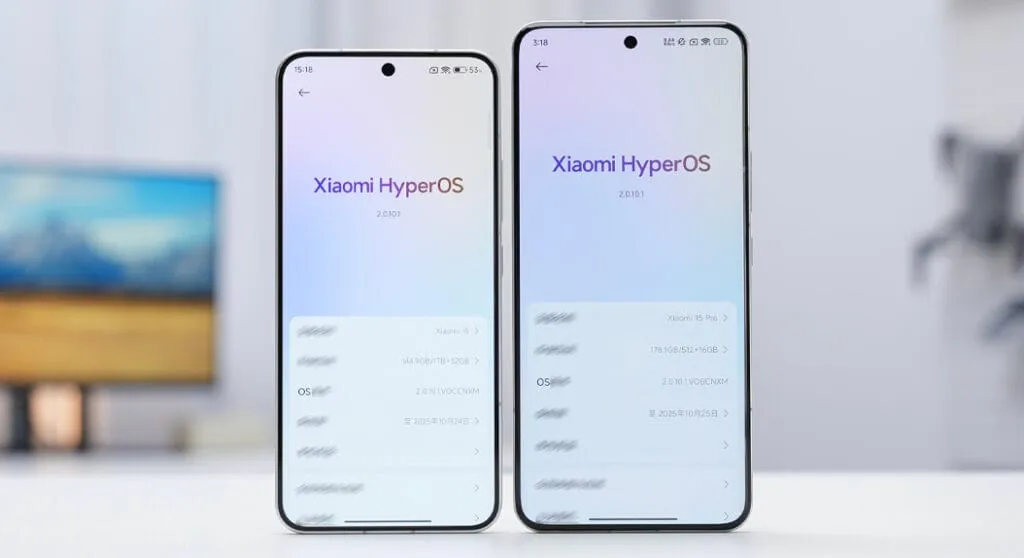
    Xiaomi has further cemented its status as a leader in software innovation by formally releasing its HyperOS 2 developer preview, which is based on Android 16 Beta 2. Xiaomi is among the first manufacturers to use Google’s most recent operating system, and the beta program started in April 2025. Xiaomi is at the forefront of Android development thanks to this 2000-person limited beta program, which gives developers and tech enthusiasts early access to new HyperOS 2 features and Android 16 advancements.

    Xiaomi 15 to be the first

    The first build of the HyperOS 2 (version 2.0.230.6), which is based on Android 16, was sent to the Xiaomi 15, the flagship device leading this update. While providing updated system apps and performance enhancements, this version concentrates on building a solid Android 16 foundation. More releases are presently undergoing testing, demonstrating Xiaomi’s continued dedication to improving its user interface and software platform.

    REDMI K70 Ultra to follow

    Following the Xiaomi 15, the REDMI K70 Ultra is next in line for the Android 16-based HyperOS 2 update. This move demonstrates Xiaomi’s strategic approach to expanding the latest Android experience across multiple product segments, not just its flagship lineup.

    Next in line for the Android 16-based HyperOS 2 update after the Xiaomi 15 is the REDMI K70 Ultra. This action reflects Xiaomi’s calculated strategy to bring the newest Android experience to more product categories than simply its flagship line.
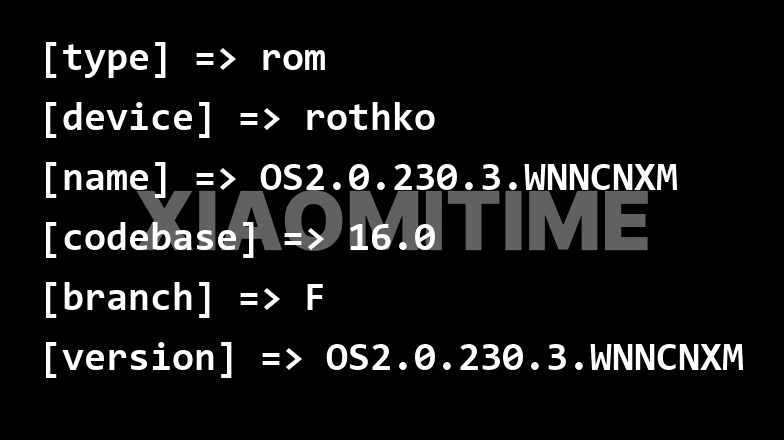
    redmi k70 hyperos update android 16

    Key Features and Improvements

    Highlights of the HyperOS 2 Android 16 beta include:

    • Upgraded system applications with enhanced performance
    • The latest Android 16 security patches
    • Improved HyperConnect integration for seamless device interaction
    • Expanded developer tools and debugging functionality
    • Added a shortcut to invoke the custom accessibility function by swiping up with two fingers
    • Optimized some scene animation strategies to improve system fluenc

    Both the final Android 16 release and the stable HyperOS 2 update are expected to be available by June 2025, underlining Xiaomi’s dedication to rapid adoption of the latest Android advancements.

    HyperOSUpdates.com provides developers and early adopters with the most recent HyperOS updates and information. Furthermore, the MemeOS Enhancer software, which can be found on the Play Store, has sophisticated features like the ability to upgrade system apps, access secret Xiaomi features, and facilitate update management straight from the device.
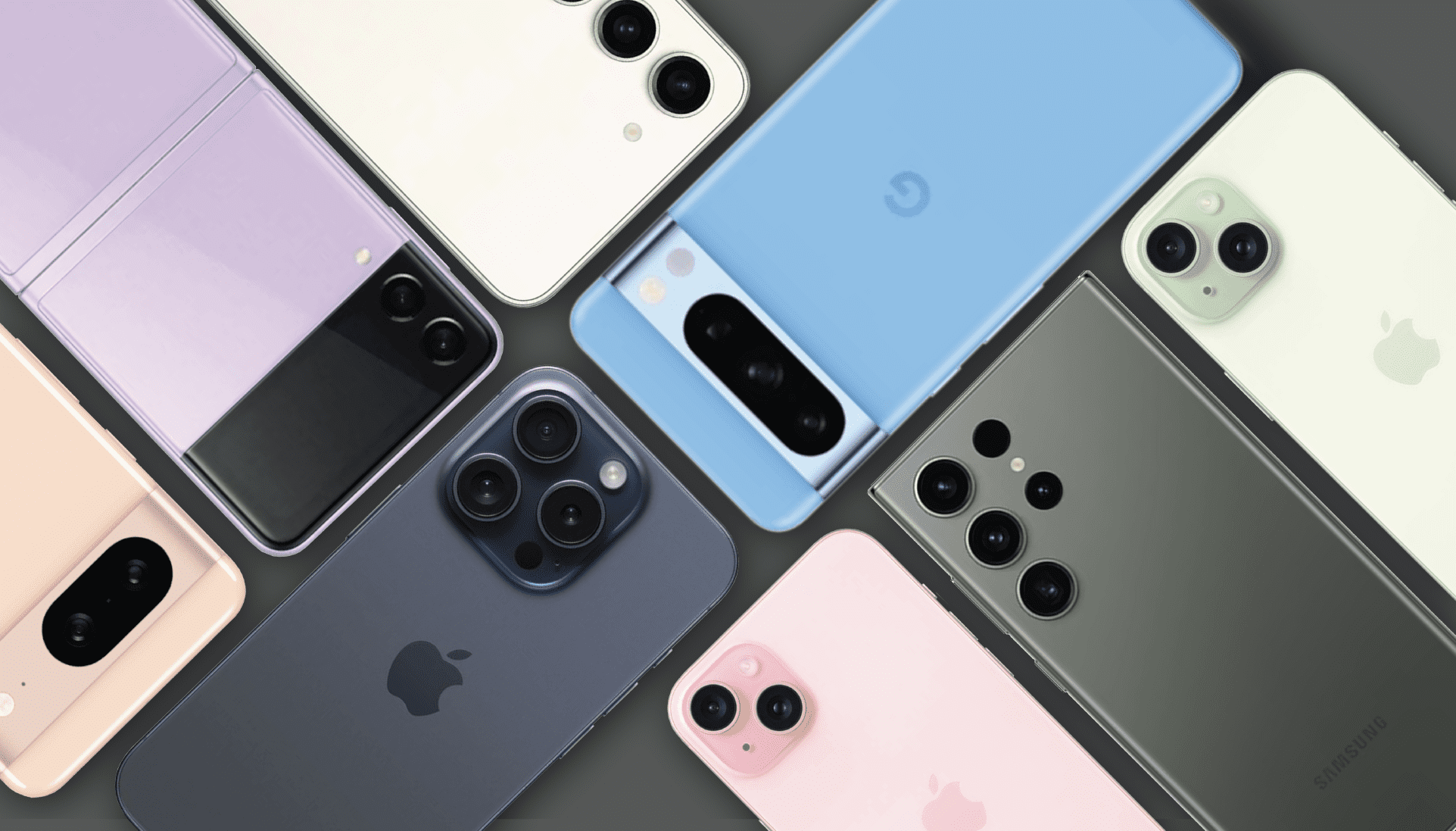
  • According to EU data, Samsung phones support twice as many charges as the Pixel and iPhone.

    According to EU data, Samsung phones support twice as many charges as the Pixel and iPhone.

    We are especially concerned about battery health because Google recently announced that its Battery Performance Program for the Pixel 6a will begin next week. Although it may seem strange to consider your smartphone a consumable, that is essentially what it is, and each time we put one of our gadgets through a complete charge cycle, the batteries get a little worse for wear. You’ll start to notice those losses if you repeat that process hundreds and hundreds of times.

    Not all batteries are made equal, which is something that the whole controversy surrounding the Pixel 4a and now Pixel 6a has really brought home to us. The issue is that we typically only hear about battery-operated devices that cause issues years later. When you first buy a phone, isn’t there a good way to set your expectations for battery life? We recently received one, as expected.

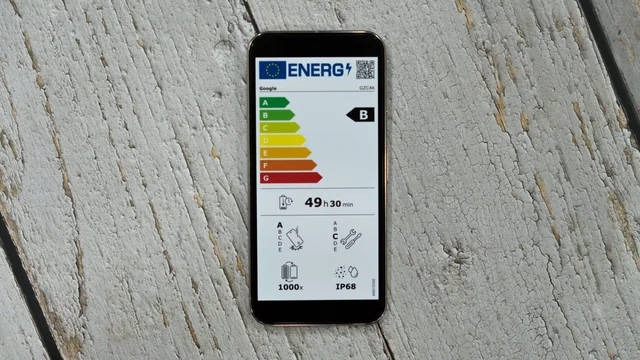
    The European Union, and more especially its new energy label program, is to thank for this regulation, as it is for many other recent consumer-benefitting smartphone laws. These marks help convey power efficiency, hardware durability, and—most importantly for today’s discussion—a rating for the number of charge cycles the phone should be able to withstand, just like you might see an Energy Star rating on a new appliance.

    Are you curious about how the battery life of your phone stacks up against the competition? We created this graphic to illustrate how many charge cycles these labels promote for a few well-known products because we have been curious ourselves.

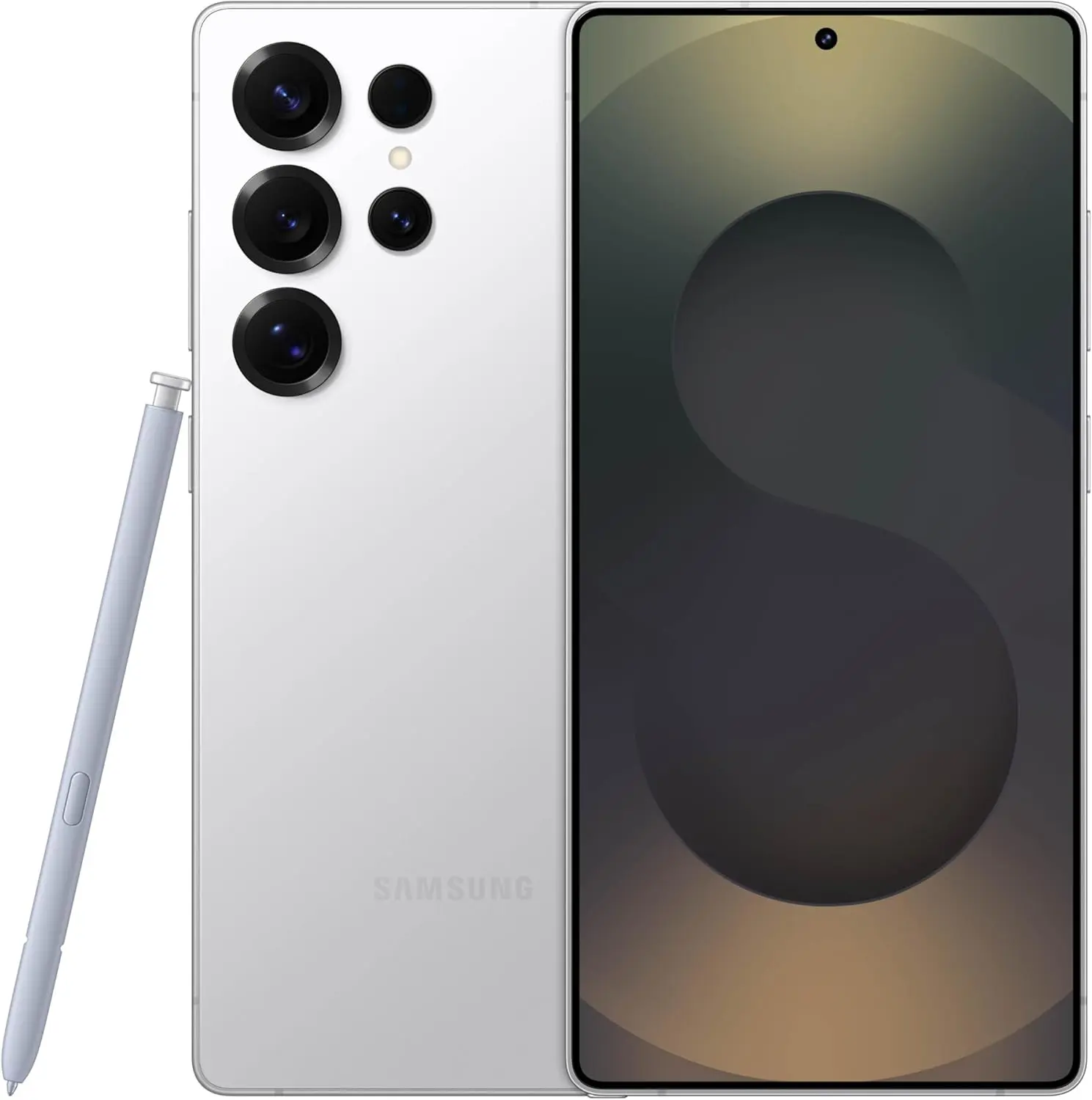
    samsung galaxy s25 ultra

    Samsung Galaxy S25 Ultra

    Streamline your day with an assistant that gets you. Ask it to Google search for a pet-friendly vegan restaurant nearby and text it to your friend— your Galaxy S25 Ultra handles multiple tasks with a single ask.

    $1,419.99$1,219.99Amazon
    samsung energy label

    Google

    • 1,000 charge cycles: Pixel 9, Pixel 9 Pro, Pixel 9 Pro XL, Pixel 9a, Pixel 8a

    Samsung

    • 2,000 charge cycles: Galaxy S25, Galaxy S25 Plus, Galaxy S25 Ultra, Galaxy S25 Edge, Galaxy S24, Galaxy S24 FE, Galaxy A56, Galaxy A36, Galaxy XCover7, Galaxy XCover7 Pro, Galaxy Tab Active5, Galaxy Tab Active5 Pro, Galaxy Tab S10 Plus, Galaxy Tab S10 Ultra, Galaxy Tab S10 FE, Galaxy Tab S10 FE Plus
    • 1,200 charge cycles: Galaxy A26, Galaxy A16

    Fairphone

    • 1,300 charge cycles: Fairphone 5
    • 1,000 charge cycles: Fairphone (Gen. 6)

    Motorola

    • 1,200 charge cycles: Edge 50, Edge 50 Neo
    • 1,000 charge cycles: Razr 60, Razr 60, Ultra, Edge, 60, Edge 60 Pro, Moto G86, Moto G75, Moto G56, Moto G35, Moto G15, Moto G15 Power, Moto G05, Moto E15
    • 800 charge cycles: Moto G55

    Nothing

    • 1,400 charge cycles: Phone 3, Phone 3a, Phone 3a Pro, CMF Phone 2 Pro,

    OnePlus

    • 1,200 charge cycles: OnePlus 13R
    • 1,000 charge cycles: OnePlus 13

    Sony

    • 1,400 charge cycles: Xperia 1 VII

    All of these numbers have been confirmed by the European Product Registry for Energy Labeling of the EU. We’ve gone through the entire database and included even more gadgets you might find useful, thanks to Reddit user FragmentedChicken for compiling an early version of this list.

    Wondering how things stand with the batteries on the other side of the platform fence? We also looked up the ratings for Apple products, and every device in the EU system, including the iPad Air M3 and iPhone 16 Pro Max, has a 1,000 charge cycle rating.

    Right now, the vast majority of devices fall in the 1,000–1,400 cycle range. So how did Samsung manage to push so many of its phones and tablets up to 2,000 cycles? That is a very, very good question, and we would love to see a more technical analysis into how these numbers are put together, and just how accurately they may reflect real-world conditions. And what impact does different battery chemistry, like the silicon-carbon battery in the OnePlus 13, have on the cycle count?

    This database offers a great jumping-off point, but we would sure love to see a whole lot more battery information provided by the manufacturers behind these devices.

    samsung galaxy s25 ultra

    Samsung Galaxy S25 Ultra

    Streamline your day with an assistant that gets you. Ask it to Google search for a pet-friendly vegan restaurant nearby and text it to your friend— your Galaxy S25 Ultra handles multiple tasks with a single ask.

    $1,419.99$1,219.99Amazon

    Stay connected with the latest from Droid Tools—follow us on X @droid_tools, like our page on Facebook, check out our updates on Instagram, and follow us on Google News for real-time news, device tips, and mobile tech insights.

  • Smoother performance along with HyperOS 2.2 Launcher update

    Smoother performance along with HyperOS 2.2 Launcher update

    A new version of the HyperOS 2.2 launcher, RELEASE-5.39.40.11322-06202031, has been released by Xiaomi. Although this version doesn’t have any noteworthy improvements, it’s nonetheless crucial because its main goals are system speed optimization and stability enhancement. These maintenance releases are essential to Xiaomi’s continuous dedication to user pleasure and a smooth experience throughout their ecosystem, as the firm has millions of users depending on its platform every day.

    his update is all about improving the fundamentals. The HyperOS launcher, which serves as the main interface for all Xiaomi devices running the latest firmware, is now running smoother thanks to:

    • Greater system stability and fewer crashes
    • Improved memory management for enhanced multitasking
    • Smoother animations due to optimized resource allocation
    • Several bug fixes targeting launcher-related issues
    • Better compatibility with third-party apps

    These adjustments help ensure the user interface remains responsive and reliable, especially for those using older Xiaomi devices.

    hyperos 2.2 launcher 1

    It’s easy to update. Users can update via the built-in system updater or by downloading the APK if they would rather install it manually. The MemeOS Enhancer app on the Play Store offers extra tools for system app administration and update access for professionals who are in charge of several devices or who are searching for more sophisticated features.

    Performance benefits for HyperOS 2.2 Launcher

    Several performance snags noted in earlier releases have been fixed in this upgrade. Users should anticipate a discernible improvement in system responsiveness overall, as well as quicker home screen loading and seamless app transitions. In commercial settings, where device efficiency and dependability are non-negotiable, these enhancements are especially beneficial.

  • REDMI K80 Ultra brings a huge battery with new tech

    REDMI K80 Ultra brings a huge battery with new tech

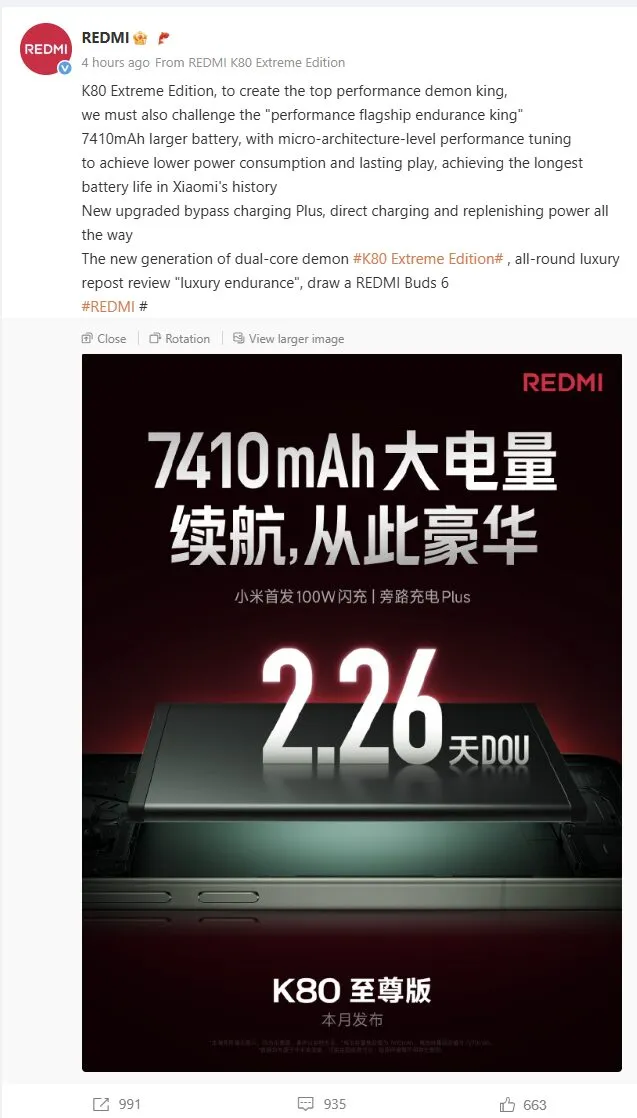
    The REDMI K80 Ultra has been formally revealed by Xiaomi, and its record-breaking 7410mAh battery—currently the largest in a Xiaomi flagship—is generating headlines. According to the business, this new capacity allows for up to 2.26 days of normal use, which is a major improvement in the battery life of high-end smartphones. In addition to the raw size, the most recent Dimensity 9400+ processor and sophisticated system-level power optimization enable this longer battery life, guaranteeing excellent performance without sacrificing endurance.

    New breakthrough tech for the battery

    The Redmi K80 Ultra raises the bar for flagship smartphones with its 7410mAh battery. Users may anticipate reduced energy usage across all components thanks to Xiaomi’s integration of sophisticated micro-architecture tuning and power management. Direct charging and continued operation during battery replenishment are made possible by the new Bypass Charging Plus technology, which reduces device downtime and supports a wider range of usage scenarios for mobile business professionals.

    redmi k80 ultra battery tech

    With Xiaomi’s first 100W flash charging mechanism, the Redmi K80 Ultra offers quick charging in a flagship device. This potent combination of ultra-fast charging and a large capacity battery balances productivity and ease of use.

    Key charging features include:

    • 100W flash charging for rapid power top-ups
    • Bypass Charging Plus for uninterrupted productivity
    • Direct charging support for extended work or gaming sessions
    • Optimized power management for all-day performance
    • Industry-leading 2.26 days of typical usage
    redmi k80 ultra announcement

    Redmi K80 Ultra – performance, design and advanced features

    The K80 Ultra offers a high-end multimedia experience in addition to battery performance. It has aviation-grade lightweight domes, two symmetrical speakers with cutting-edge coaxial high and low frequency units, and freshly created diaphragm materials. With almost 100 programmable effects, an enhanced ultra-wideband cyber motor on the haptic side offers quicker and more reliable vibration feedback, making it perfect for immersive applications and warnings.

    The Dimensity 9400+ flagship chipset, which is backed by the first independent D2 display chip in a Redmi device, offers performance at the forefront. Redmi’s largest 3D ice-sealed cooling system is incorporated into the K80 Ultra to ensure consistent high performance.

    The device’s premium positioning is highlighted by design features such a metallic camera module, flagship-grade fiberglass back, a 6.83-inch flat display, and a four-curved metal middle frame. The end product is a premium smartphone that leads the way in battery innovation while also providing business users looking for sophistication and dependability with performance and design.

    Stay connected with the latest from Droid Tools—follow us on X @droid_tools, like our page on Facebook, check out our updates on Instagram, and follow us on Google News for real-time news, device tips, and mobile tech insights.

  • Devices in the third batch of HyperOS 2.2 will shortly receive the update.

    Devices in the third batch of HyperOS 2.2 will shortly receive the update.

    With the HyperOS 2.2 update, Xiaomi is advancing rapidly and aims to reach a sizable portion of its user base in this third deployment wave. This is a noteworthy release for enterprises and power users who depend on Xiaomi hardware, especially since it includes important models from the Xiaomi 12 series, the Redmi Note 13 lineup, and a wide range of flagship and mid-tier models. The update is a significant system upgrade that should lead to increased operating stability and productivity.

    xiaomi hyperos update

    A select group of devices will be prioritized for the initial rollout. These include:

    • Xiaomi 12 Pro: OS2.0.202.0.VLBCNXM
    • Xiaomi 12: OS2.0.201.0.VLCCNXM
    • Redmi Note 13 5G: OS2.0.202.0.VNQCNXM
    • Redmi Note 13 Pro 5G: OS2.0.202.0.VNRCNXM
    • Redmi Note 12T Pro: OS2.0.203.0.VLHCNXM
    • Redmi Note 12 Turbo: OS2.0.201.0.VMRCNXM
    • Xiaomi CIVI 3: OS2.0.202.0.VMICNXM

    Xiaomi is working on upgrades for HyperOS 2.2 for a wider range of devices, such as:

    Flagship Segment

    • Xiaomi 12S Ultra
    • Xiaomi 12S Pro
    • Xiaomi 12S
    • Xiaomi MIX FOLD 2

    Mid-Range & Entry Models

    • Xiaomi CIVI 2
    • Redmi K50 Ultra
    • Redmi Note 13R
    • Redmi Note 12R
    • Redmi 12, 13, and 14 series

    Tablet Portfolio

    • Redmi Pad Pro
    • Redmi Pad Pro 5G
    • Redmi Pad SE

    According to Xiaomi, the Redmi Note 13 5G series would be prioritized when the third batch deployments start in late June. The firm places a strong emphasis on providing reliable, well-tested upgrades that promote end-user satisfaction and business continuity.

  • HyperOS 3 will come with a new design according to the new leaked screenshots

    HyperOS 3 will come with a new design according to the new leaked screenshots

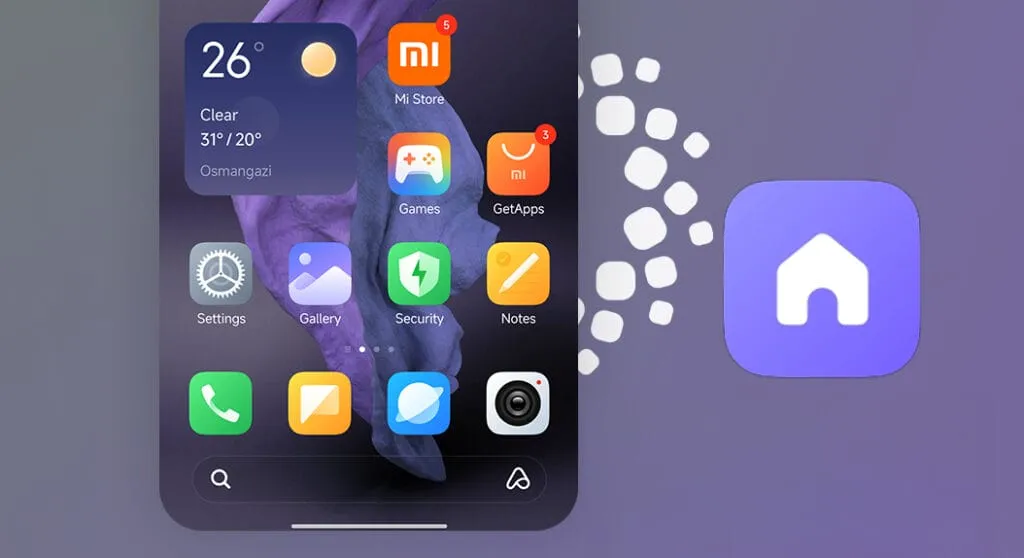
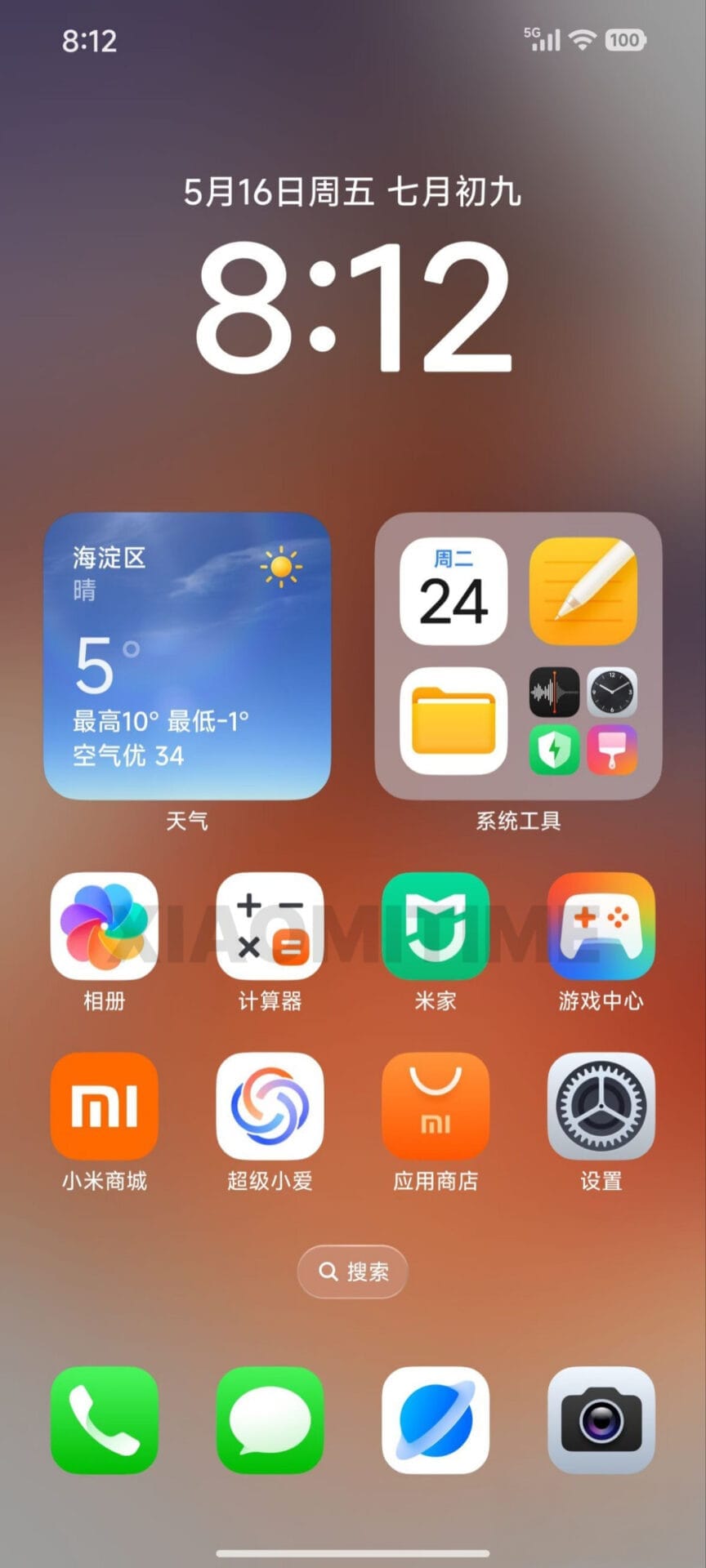
    Through a newly published user survey, Xiaomi has given users an early glimpse at HyperOS 3, and the changes are remarkable. Xiaomi intends to establish HyperOS as a high-end, competitive platform, as evidenced by the recent screenshot’s significant UI redesign. With significant updates to key system components, especially icons and layouts, the design language is obviously influenced by iOS. This version demonstrates Xiaomi’s continued commitment to improving its unique Android skin in order to better cater to a worldwide users.

    The updated icon set is the most noticeable change. The unified, elegant look of these new icons, which closely resemble those in iOS 18, improves the user experience as a whole. This change reflects Xiaomi’s emphasis on improving brand perception among high-end users and conforming to industry-leading design standards.

    The removal of the search bar on the home screen is another significant change. Xiaomi achieves a more simplified and clean home screen by removing this component, giving app icons and widgets more attention. This minimalist style should appeal to people who value clarity and simplicity and is consistent with larger trends in mobile user interface design.

    hyperos 3 leak design

    New battery indicator and glass user interface

    Additionally, a revised battery indication that now closely resembles the iPhone’s approach is included in HyperOS 3. In addition to updating the battery status visual representation, this update advances Xiaomi’s overarching objective of providing a recognizable, intuitive user experience that appeals to iOS customers thinking about switching.

    Furthermore, Glass UI-inspired effects are incorporated into the redesigned interface, giving the system more visual refinement and depth. Together, these improvements give all supported devices a more upscale and sophisticated appearance.

    Wide device compatibility

    Xiaomi is extending HyperOS 3 to an extensive range of devices, reinforcing its commitment to software support:

    • 33 Xiaomi models
    • 44 Redmi devices
    • 19 POCO devices

    This broad compatibility—spanning 96 devices in total—demonstrates Xiaomi’s dedication to serving a diverse customer base, from flagship owners to budget users.

    Analysts predict that Xiaomi will formally unveil HyperOS 3 in October 2025. Depending on rollout timelines and device capabilities, the update will be developed for both Android 15 and Android 16.

    Stay connected with the latest from Droid Tools—follow us on X @droid_tools, like our page on Facebook, check out our updates on Instagram, and follow us on Google News for real-time news, device tips, and mobile tech insights.

  • Performance trick on Xiaomi devices – RAM expansion

    Performance trick on Xiaomi devices – RAM expansion

    One of the most frequent complaints from smartphone users is slowdowns brought on by insufficient RAM, which Xiaomi has subtly added. By designating a piece of internal storage as virtual RAM, the Dynamic RAM Expansion function allows Xiaomi, Redmi, and POCO handsets running MIUI or HyperOS to augment their physical RAM. This method is especially cost-effective for both premium and budget-conscious customers since it enables users to improve device performance without spending money on expert services or hardware changes.

    About RAM expansion

    RAM serves as every smartphone’s working memory, facilitating seamless multitasking and quick access to open apps. The increasing sophistication of mobile operating systems and applications puts even more strain on limited memory. Users encounter slowness, slower app transitions, and occasionally even unplanned system restarts when a device’s RAM is low—all of which are unacceptable in a fast-paced work setting.

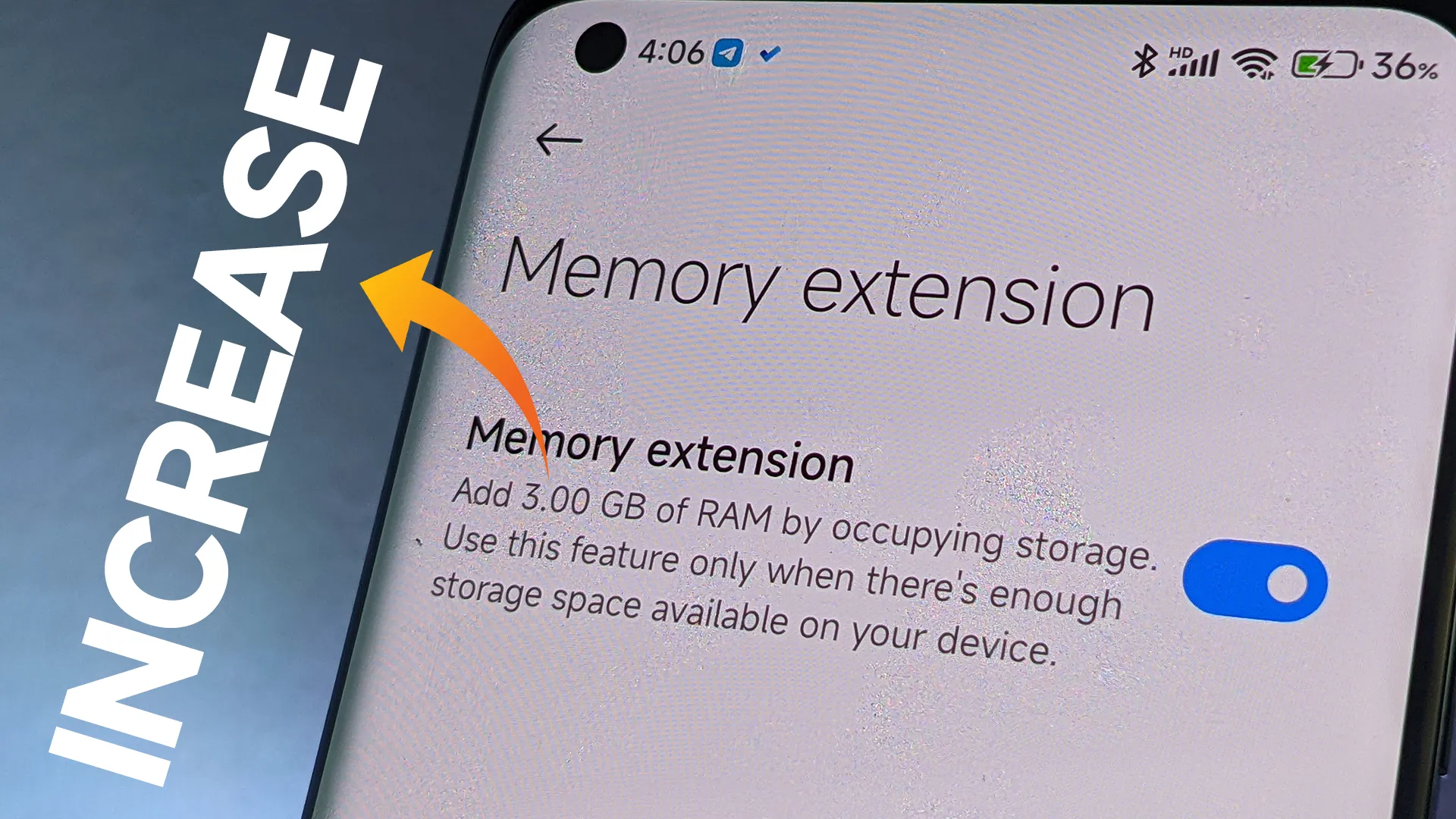
    By setting aside a piece of internal storage and using it as virtual RAM, dynamic RAM expansion helps to overcome these limitations. For instance, a device having 8GB of physical RAM can be set up to add an additional 4GB from storage, giving users “8+4GB” as shown by system settings. This approach is especially beneficial for companies wishing to prolong the lives of their hardware assets because it doesn’t need any physical intervention or additional costs.

    Throughout the Xiaomi ecosystem, this capability is generally accessible. Dynamic RAM Expansion is available to a wide spectrum of customers, from the top POCO models to affordable Redmi handsets, including mid-tier choices like the Redmi Note 13 Pro 5G. The individual device and available storage determine how much expandable RAM (4GB, 6GB, or 8GB) is needed, providing flexibility for a range of business requirements.

    How to enable Ram expansion

    Enabling the feature is designed to be user-friendly:

    • Open the Settings application
    • Navigate to “Additional Settings”
    • Locate and select “Memory Extension” (or “Memory Expansion”)
    • Choose the desired amount of expansion (4GB, 6GB, or 8GB)
    • Confirm and restart the device to activate
    xiaomi RAM expansion

    Users can experience quantifiable increases in device responsiveness in a matter of steps, which is advantageous in settings where productivity is a top priority.

    Even though dynamic RAM expansion has several advantages, it needs enough free storage to work properly. To activate the feature, users might need to make room. It’s also crucial to remember that virtual RAM functions more slowly than real RAM, but for everyday business applications like email, productivity suites, and communication, the difference is usually noticeable.

    Stay connected with the latest from Droid Tools—follow us on X @droid_tools, like our page on Facebook, check out our updates on Instagram, and follow us on Google News for real-time news, device tips, and mobile tech insights.

  • Android 16: complete list of Samsung, Xiaomi, and other eligible devices

    Android 16: complete list of Samsung, Xiaomi, and other eligible devices

    The formal rollout of Android 16’s stable version has started, with Google’s Pixel smartphones leading the way. Other significant Android manufacturers are getting ready to release their own unique skins and upgrade schedules in tandem with the latest OS version. The most important question for users anxiously anticipating the update is: will my device get the update? This is the list of devices that are compatible with Android 16.

    We have put up a thorough list of smartphones and tablets from well-known manufacturers, like Samsung, Xiaomi, Motorola, and Oppo, that should be compatible with the Android 16 update in order to assist in answering this question.

    Google Pixel Android 16 Eligible devices

    As always, Pixel devices are first in line and the rollout is already underway for these models.

    Device SeriesEligible Models
    Pixel 9 Series9, 9 Pro, 9 Pro XL, 9 Pro Fold, 9a
    Pixel 8 Series8, 8 Pro, 8a
    Pixel 7 Series7, 7 Pro, 7a
    Pixel 6 Series6, 6 Pro, 6a
    Pixel FoldablesPixel Fold
    Pixel TabletPixel Tablet

    Samsung Galaxy Android 16 Eligible devices

    Samsung offers one of the most extensive portfolios, and a large number of its devices are expected to receive the update.

    SeriesEligible Devices
    Galaxy SS25, S24, S23, S22 series & S21 FE
    Galaxy ZZ Fold/Flip 6, Z Fold/Flip 5, Z Fold/Flip 4, Z Fold SE
    Galaxy TabTab S10, S9, S8 series, Tab S6 Lite (2024)
    Galaxy AA73, A5x, A3x, A2x, A1x, A0x series (from A_3 to A_6 generations)
    Galaxy MM5x, M3x, M1x, M0x series (from M_3 to M_6 generations)
    Galaxy FF5x, F34, F1x, F0x series (from F_4 to F_6 generations)
    OtherGalaxy C55, XCover 7, Tab Active 5

    Xiaomi, Redmi, and Poco Android 16 Eligible devices

    Xiaomi’s multi-brand strategy means a wide array of devices are in line for the HyperOS skin based on Android 16.

    Brand / SeriesEligible Devices
    Xiaomi15, 14, 13 series (including T, Pro, Ultra models)
    Xiaomi CiviCivi 5 Pro, Civi 4 Pro, Civi 3
    Xiaomi PadPad 7 series, Pad 6 series (Pro, Max, S Pro)
    Redmi NoteNote 14 series, Note 13 series
    Redmi KK80 series, K70 series, K60 series
    Redmi14 series, 13 series, A4 series
    Redmi PadPad 2, Pad Pro, Pad SE
    PocoF7, F6, X7, X6, M7, M6, C7x series

    Motorola

    Motorola is expected to update its recent flagship and mid-range devices.

    SeriesEligible Devices
    RazrRazr 2025 series, Razr+ 2024, Razr 60/50 series
    EdgeEdge 2025, Edge 60/50 series, Edge 40 Pro
    Moto GG Power/Stylus 2025, G86/85, G75, G56/55
    ThinkPhoneThinkPhone 25

    Oppo

    Oppo will likely bring Android 16 to its premium Find series and popular Reno line.

    SeriesEligible Devices
    Find NFind N5, N3, N2 series
    Find XFind X8, X7, X6 series
    RenoReno 14, 13, 12, 11 series
    F SeriesF29, F27, F25 Pro
    K SeriesK13, K12 series
    Pad SeriesPad 4 Pro, Pad 3 series, Pad SE

    Other Major Brands (Expected)

    BrandEligible Devices (Summary)
    OnePlus13, 12, 11 series, Nord 4/3, Nord CE 4, Open, Pad series
    VivoX200, X100, X90 series, V50/40/30 series, T4/3 series, recent Y series, Pad 5/3
    iQOO13, 12, 11 series, Z10/9 series, Neo 10/9 series, Pad series
    NothingPhone (2), (2a), (2a)+, Phone (3a) series, CMF Phone 1/2 Pro

    Other manufacturers may need a few weeks to incorporate Android 16 with their own user interfaces, such as One UI, HyperOS, and ColorOS, while Google Pixel phones are currently getting the upgrade. The majority of brands are anticipated to start releasing stable versions in July 2025, with widespread beta testing set to commence shortly.

    Stay connected with the latest from Droid Tools—follow us on X @droid_tools, like our page on Facebook, check out our updates on Instagram, and follow us on Google News for real-time news, device tips, and mobile tech insights.

  • Poco F7 has been announced by Xiaomi

    Poco F7 has been announced by Xiaomi

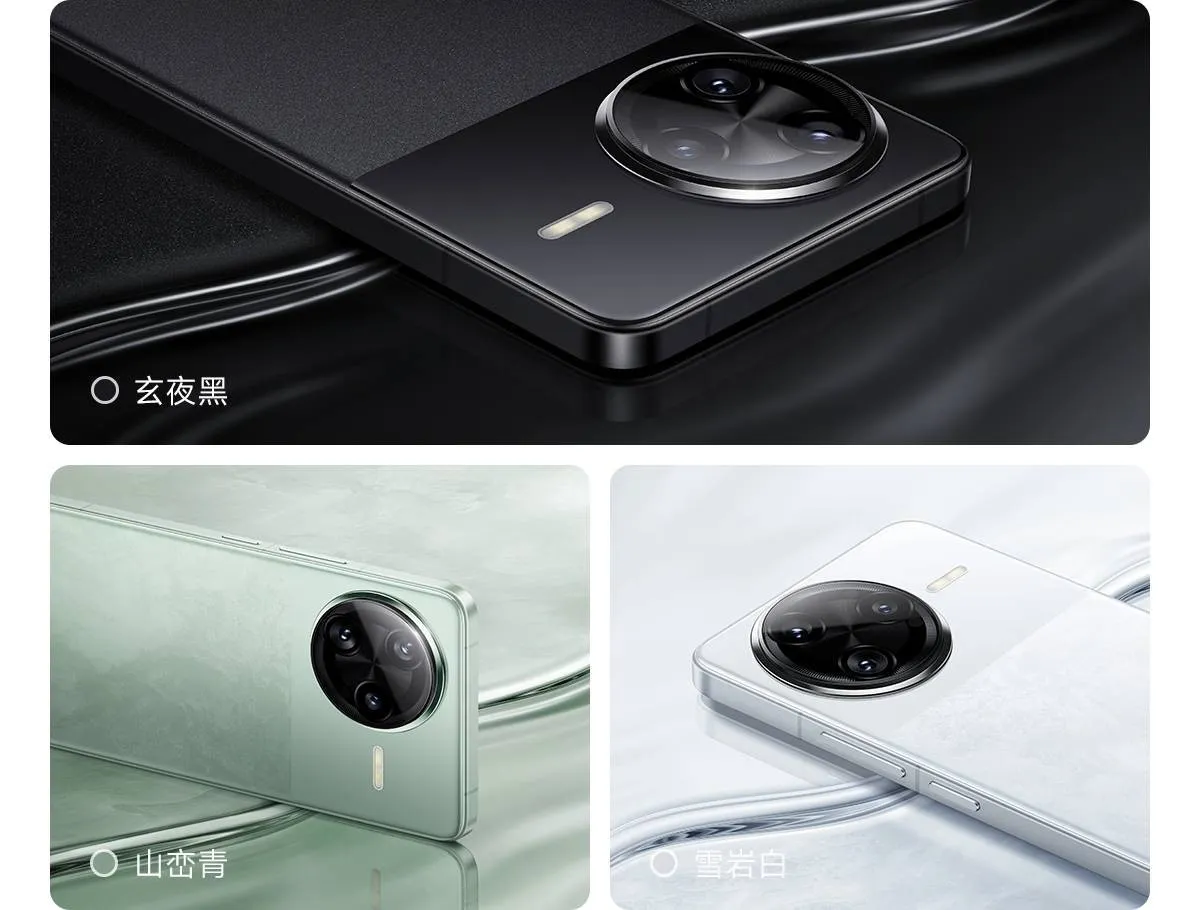
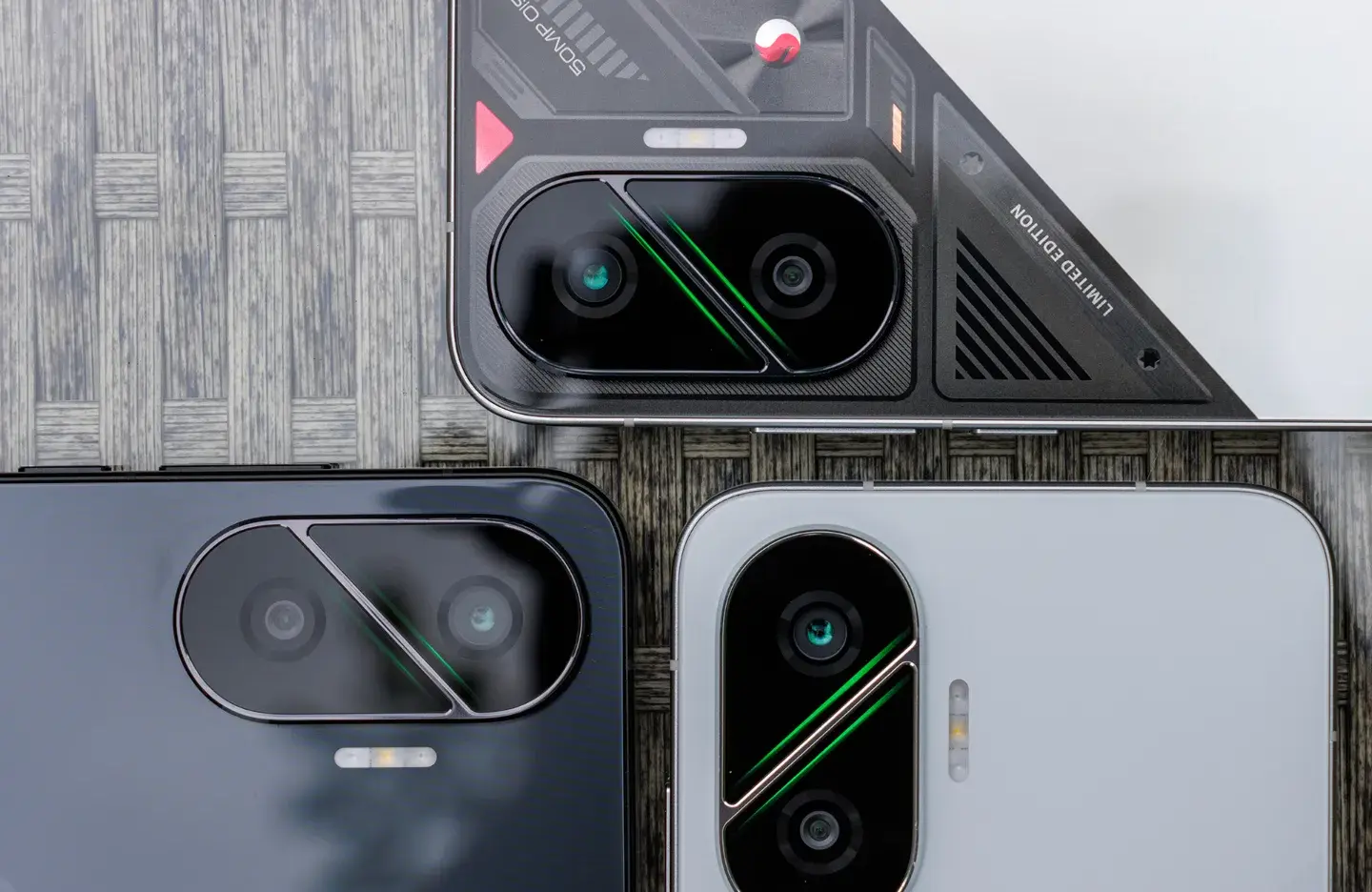
    Three launch color options for the Poco F7 have now been announced by Xiaomi. The Poco F7 Limited Edition has provided a preview of what to expect from the third and probably least expensive edition in the Poco F7 series, even if the firm has not yet disclosed any specifications.

    The Poco F7 has been revealed by Xiaomi in advance of its June 24 full release. The corporation has pledged to sell the device both in India and internationally, as we have discussed separately. By the way, Geekbench has now shown proof of the former.

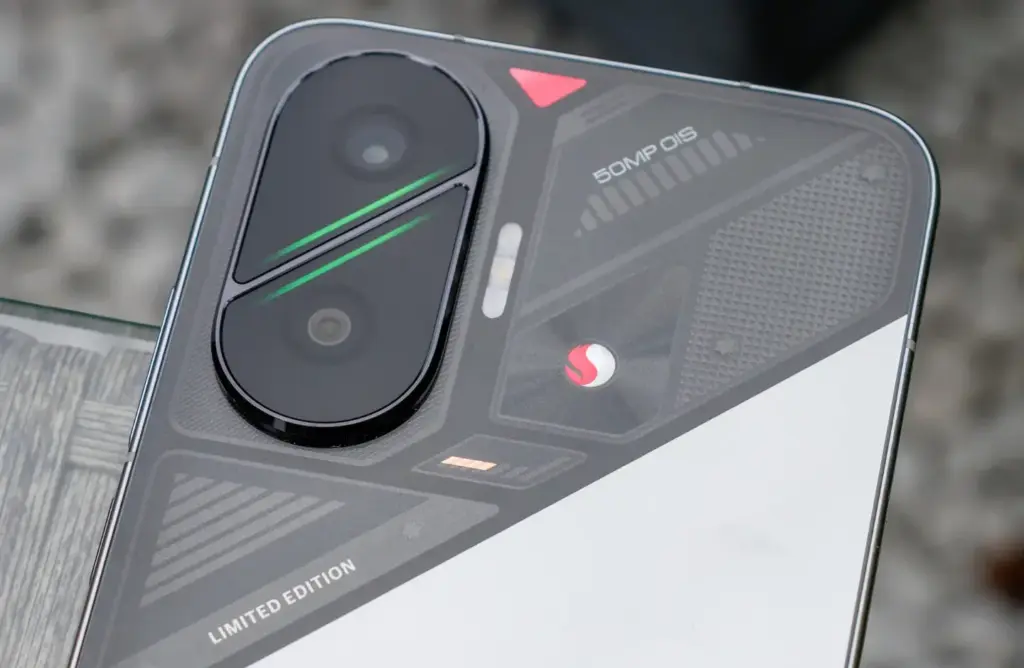
    Xiaomi has given us permission to release images of the Poco F7 in all three launch colors before next week. These allow us to verify that the gadget has a visually appealing camera housing and a metal frame with matching buttons. The green flashes on each lens are just cosmetic and not active LEDs, despite appearances.

    xiaomi poco f7

    Even the Limited Edition edition appears to be scheduled for a worldwide distribution in the interim. With a quasi-translucent finish, the Limited Edition model also shows that, like the Poco F7 Pro before it, the Poco F7 will come with a Qualcomm Snapdragon processor and a 50 MP primary camera with OIS. Unfortunately, at this time, we are unable to disclose any additional specifications. For additional information prior to the launch event on Tuesday, please watch the TechTablets video below.

    Youtube video

  • HyperOS second batch rollout complete, Global release imminent

    HyperOS second batch rollout complete, Global release imminent

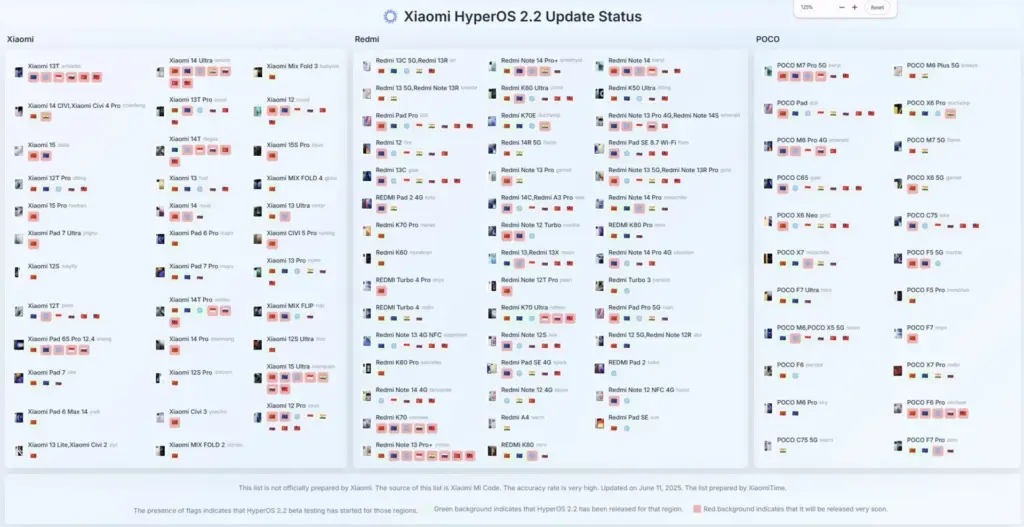
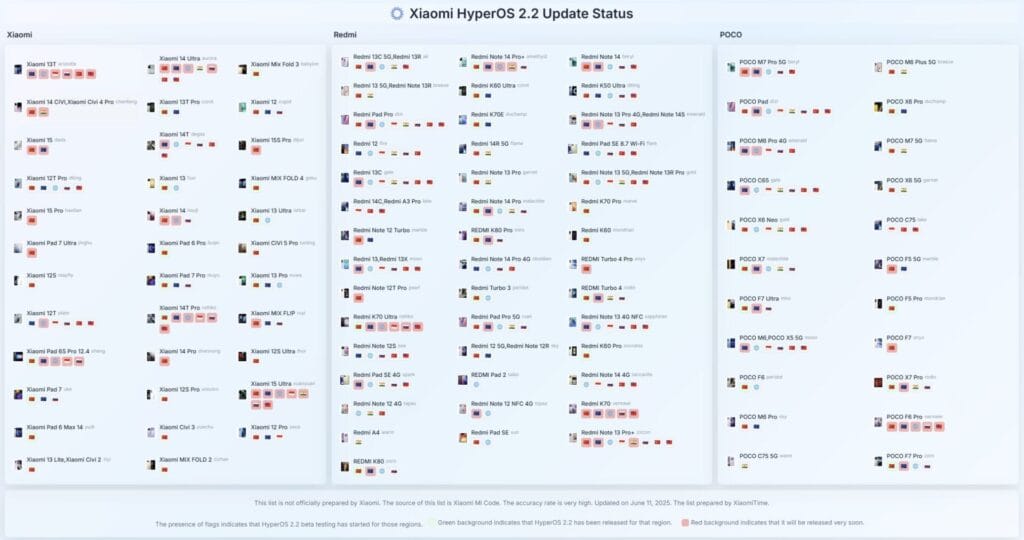
    The second round of internal testing for HyperOS 2.2 has officially ended, and it now covers more than 130 devices from the Xiaomi, Redmi, and POCO portfolios. This upgrade is quite extensive, encompassing both premium smartphones and tablets as well as entry-level products. Many users will get the update at the same time when the worldwide public release starts. It is evident that Xiaomi is giving top priority to a seamless, well-organized updating procedure for all of its products.

    While waiting for the official HyperOS 2.2 release, users can access the MemeOS Enhancer app through the Play Store to unlock more Xiaomi features and system improvements.

    More than 130 items are currently included in Xiaomi’s internal testing program, guaranteeing extensive coverage across all significant price points and markets. Included are gadgets from Taiwan, Indonesia, Russia, China, Europe, India, and more. The update is appropriately customized for every user base thanks to this geographical attention.

    hyperos global release

    Flagship and Premium Device Readiness

    Xiaomi’s Flagship Lineup

    All leading Xiaomi models have completed internal testing, including:

    • Xiaomi 15 series (15, 15 Pro, 15S Pro, 15 Ultra)
    • Xiaomi 14 series (14, 14 Pro, 14 Ultra, 14T, 14T Pro)
    • Xiaomi 13 series (13, 13 Pro, 13 Ultra, 13T, 13T Pro)
    • Xiaomi 12 series (12, 12 Pro, 12S, 12S Pro, 12S Ultra, 12T, 12T Pro)

    Foldables and Innovative Models

    Xiaomi’s MIX Fold series (Fold 2, Fold 3, Fold 4) and MIX Flip have also been fully tested, underscoring HyperOS 2.2’s optimization for foldable devices.

    Redmi and POCO

    From the K series (K50 Ultra through K80 Pro) and Note series (Note 12 through Note 14 and all variations) to the Turbo lineup and more reasonably priced models like the Redmi 12–14R 5G, Redmi’s full spectrum is covered.

    POCO’s gaming and performance-focused models are included as well. The F series (F5, F6, F7, including Pro and Ultra variants), X series (X6, X7, Pro, Neo), and the M and C series for budget users are all part of the rollout.

    The HyperOS 2.2 internal rollout also covers:

    • Xiaomi Pad 6 and 7 series (including Pro, Ultra, Max, and S Pro models)
    • Redmi Pad Pro, Pad 2, and SE variants
    • POCO Pad

    In conclusion, one of the biggest coordinated Android update rollouts in Xiaomi’s history is about to happen. With the launch of every major product line, millions of customers worldwide can anticipate improved performance and new features.