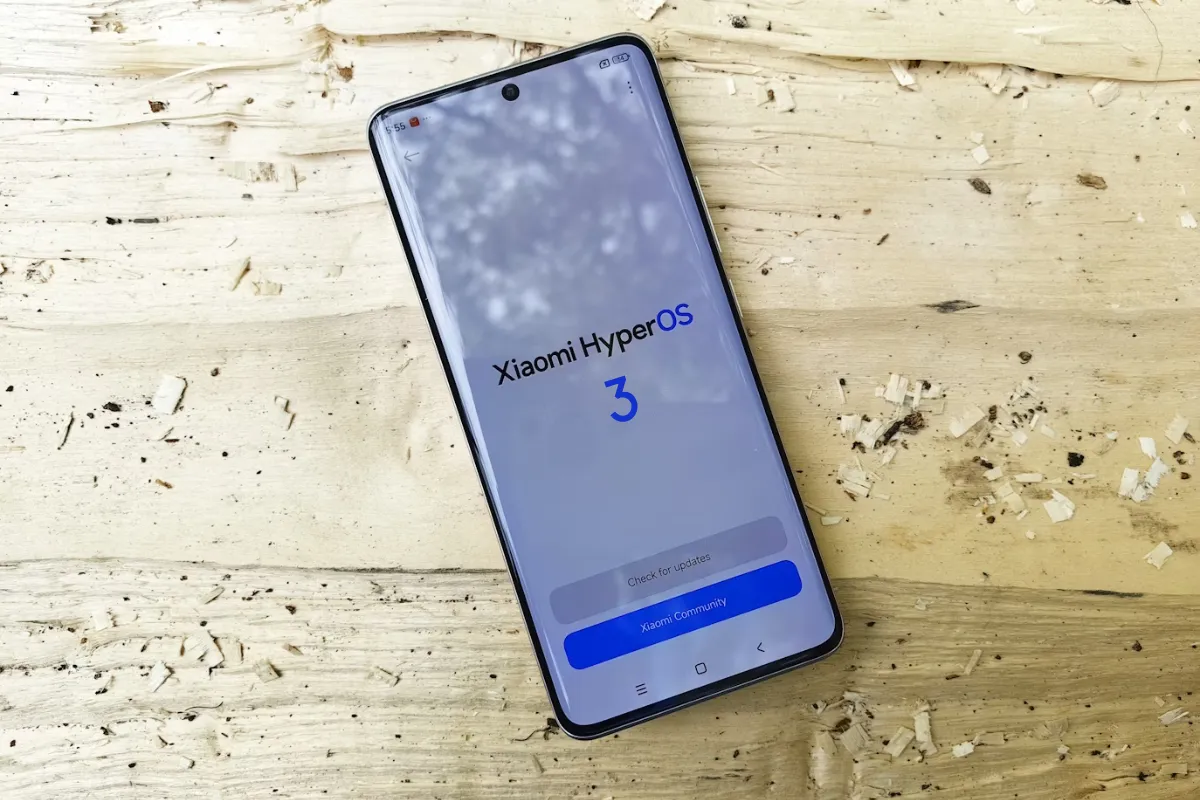
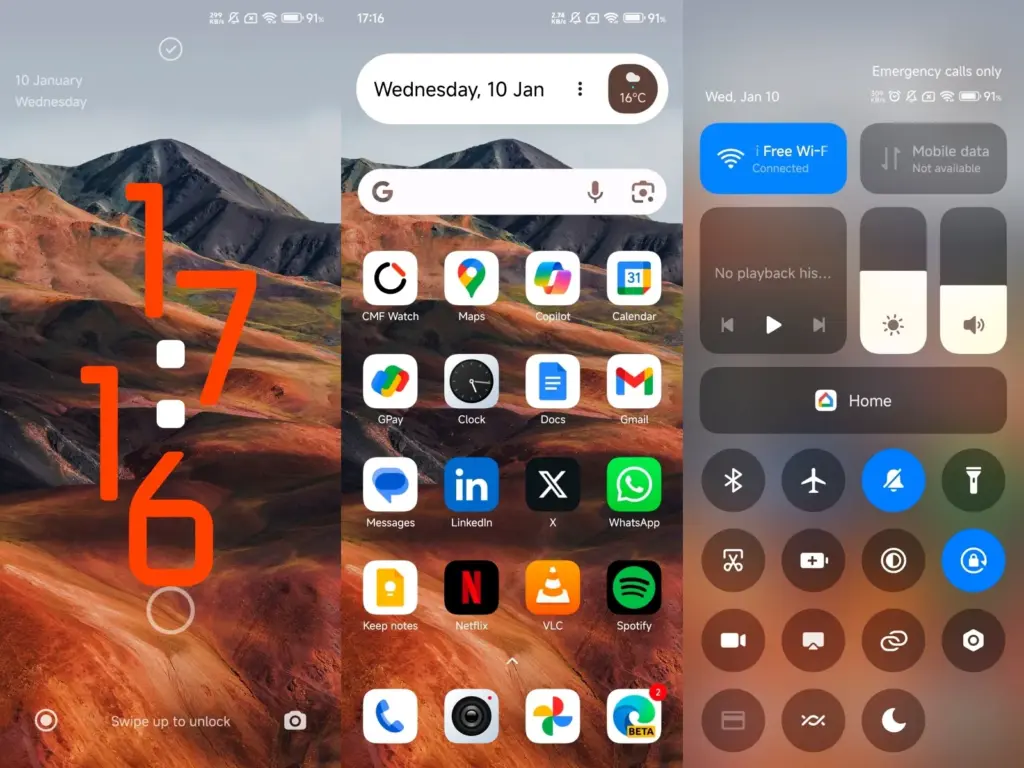
Xiaomi’s impending HyperOS 3 could challenge Apple’s decade-long interface dominance, following extraordinary stability improvements in HyperOS 2 and subsequent updates. After addressing stability issues in MIUI and HyperOS 1, Xiaomi improved the user experience with HyperOS 2.1 and 2.2, paving the way for a significant competitive advantage with its next-generation interface.
Android 16 foundation and release calendar
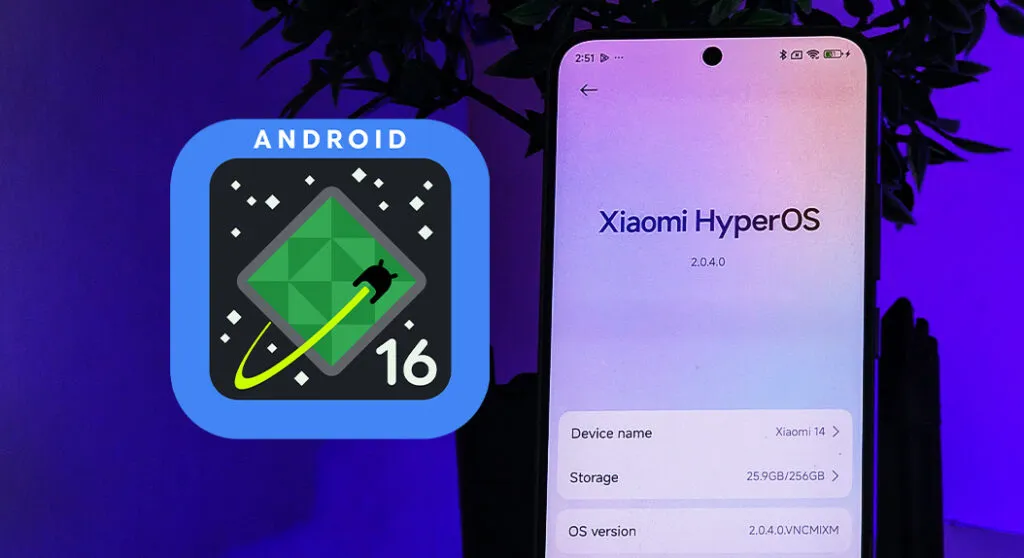
HyperOS 3 will primarily be based on Android 16, with select devices receiving an Android 15 version. By doing so, Xiaomi hopes to standardize the software experience across its wide portfolio of devices while ensuring that everyone receives the most recent UI innovations.
According to industry sources, Android 16 is scheduled to be released in the second quarter of 2025, which coincides nicely with Xiaomi’s usual October software release timetable. The schedule would allow Xiaomi’s development team plenty of time to implement Android 16’s core features while also adding their own tweaks and improvements.
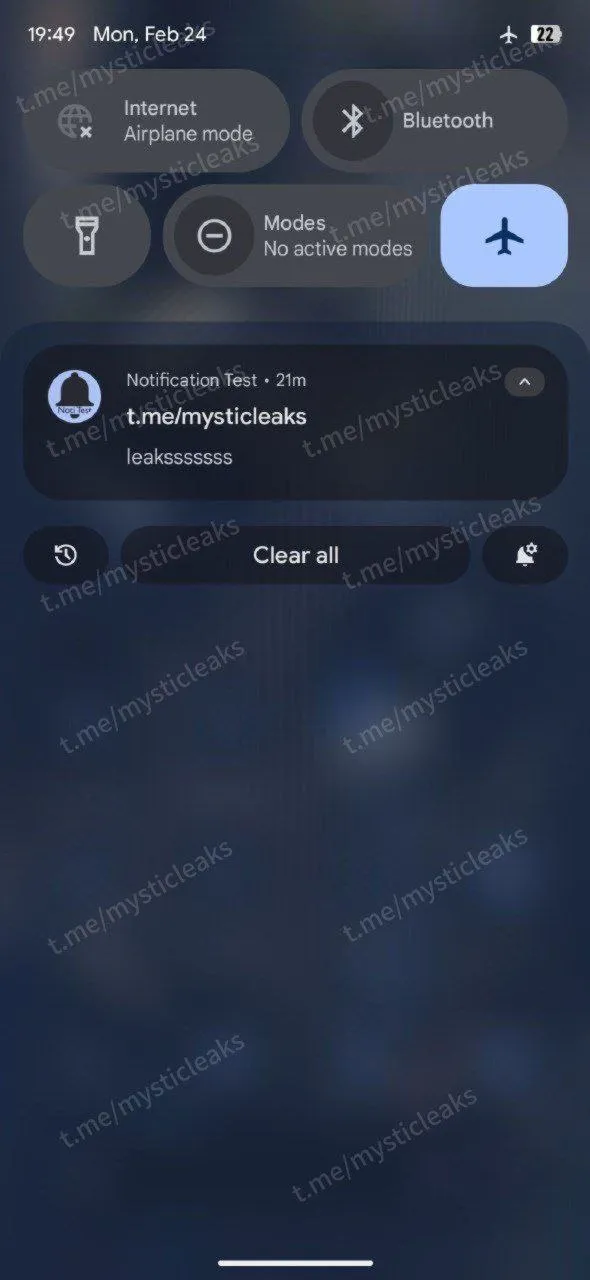
What is particularly noteworthy about HyperOS 3 is how Google’s proposed design philosophy for Android 16 corresponds to visual signals traditionally associated with Apple’s iOS. Google is apparently working on a major interface makeover that will make extensive use of blur effects throughout the system UI – a visual approach that has been a hallmark of Apple’s design language for many generations.
This convergence offers a unique opportunity for Xiaomi since HyperOS 3 can potentially offer:
Greater visual depth with sophisticated blur effects
Intuitive layering of interface elements more
Improved visual hierarchy that aids usability
Smoother animations that are more natural and responsive
Greater visual consistency across the entire system
The fact that HyperOS 3 is being released at a time when the iOS interface is quite stable presents a chance for Xiaomi to overcome the perception gap between Android-based devices and Apple’s ecosystem. By combining Google’s core interface enhancements with Xiaomi’s performance optimizations and design sensibilities, HyperOS 3 has the potential to become the new benchmark for Android interfaces.
To Xiaomi users, this evolution represents the continuation of a favorable trend that began with HyperOS 2’s emphasis on stability and performance. The progressive modifications in successive releases have laid a firm foundation for HyperOS 3, allowing it to give both aesthetic polish and functionality advancements without sacrificing the stability to which customers have grown used.
Millions of customers who depend on weekly beta upgrades have been impacted by Xiaomi’s unexpected break from their usual update schedule. The majority of tech businesses, including Xiaomi headquarters, take a short break around the Qingming Festival, a significant traditional Chinese holiday, to give their employees time to spend with their families. Users have been reassured by the corporation that all recent comments and recommendations would be taken into consideration and released as soon as the break is ended.
Instead of keeping people waiting for upgrades that will not be accessible during the holiday season, Xiaomi’s development team decided to make the announcement ahead of time. Xiaomi’s continuous efforts to inform users are shown in the transparency.
What Does this Imply for Xiaomi Users
To those of you installing beta updates on a regular basis, here is the lowdown:
There will be no beta this week
Regular update schedule will resume after the Qingming Festival
All of the user feedback is currently being processed
No user action is required during this period
Tomb Sweeping Day, also known as the Qingming Festival, is a Chinese custom that usually takes place in the first part of April. In order to respect the cultural significance of the day, the majority of Chinese businesses operate with little to no workers at this period.
Some beta testers may find the pause disappointing, but the development team has promised that it is being used to improve and incorporate user feedback. The upcoming update may provide even greater improvements as a result of the strategic pause.
As a testament to the company’s cultural heritage and respect for tradition despite its status as a global technological behemoth, the Xiaomi team concluded their statement with Christmas pleasantries.
After the Qingming Festival concludes, Xiaomi will restart regular updates with new enhancements based on community feedback. Stay tuned for that opportunity.
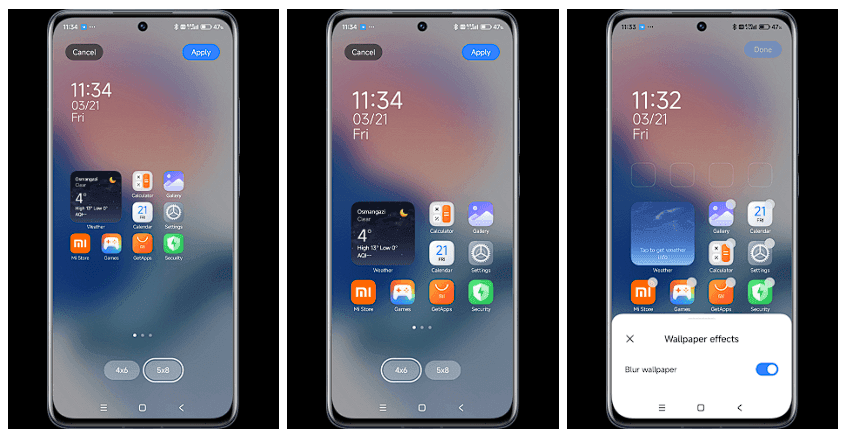
The Xiaomi community is ecstatic with the latest HyperOS update, which offers users’ devices an abundance of customization options and AI-powered capabilities. With a number of notable enhancements that demonstrate Xiaomi’s focus on user experience and creative design, tech enthusiasts and fans are busy testing out the March update version RELEASE-5.39.40.10843-03212137. The upgrade demonstrates the company’s continuous attempts to combine the newest technology with functionality.
Key updated:
The March update brings with it some noteworthy enhancements that will delight Xiaomi users:
Desktop Grid Options Resurrection
Grid layout options have been restored, offering greater personalization to the users:
4×6 grid pattern
4×7 grid layout
5×9 grid pattern
AI-Powered App Search
A groundbreaking feature that elevates the search experience:
Smart responses right in search results
Interpreting search queries contextually
Enhanced app discovery (Note: May not be available globally)
Wallpaper Customization
A new level of aesthetics has been added to device personalization:
New blur effect for wallpapers has been added
Enhanced visual customization options
These updates give users more power and customization, which is consistent with Xiaomi‘s user-centric philosophy. While the AI-powered search is intended to make app discovery more straightforward and intuitive, the reinstated grid layouts allow for greater freedom in app arrangement.
We can never have enough battery life. The older generation still longs for the days when a single charge was sufficient to power your feature phone through a hectic week, even if the majority of smartphones from the last few years will easily last you a day or perhaps even two.
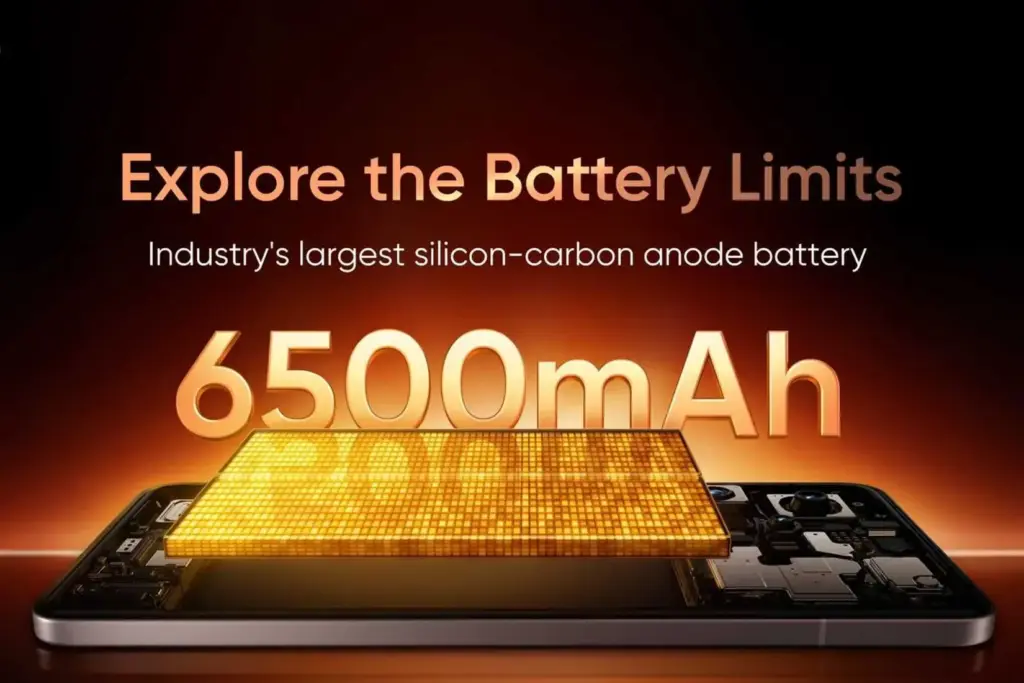
Many of the top flagship smartphones of today come with innovative silicon-carbon batteries thanks to the efforts of battery engineers. Because of this, they may promise even greater battery capacities without having a larger or thicker chassis. What a huge victory.
For instance, the OnePlus 13 has a 6,000mAh silicon-carbon battery, which is more than the 5,400mAh cell from the previous year. In China, the Xiaomi 15 Ultra has a massive 6,000mAh battery capacity, up from 5,400mAh the year before (and a still respectable 5,400mAh for worldwide markets, up from 5,000mAh). The smaller variants also enjoy comparable improvements. The vivo X200 series, OPPO Find X8, and Honor Magic 7 Pro are all brand-new flagship devices with silicon power cells. The technology has here in full force already.
Unfortunately, silicon-carbon battery technology has not yet been included into the newest devices from Apple, Google, or Samsung. Maybe by 2026, we will see these brands go on board. However, is it better to remain with the more recognizable Lithium-ion models or to jump right in and purchase a phone with a silicon carbon battery?
The difference between silicon-carbon and Li-ion batteries
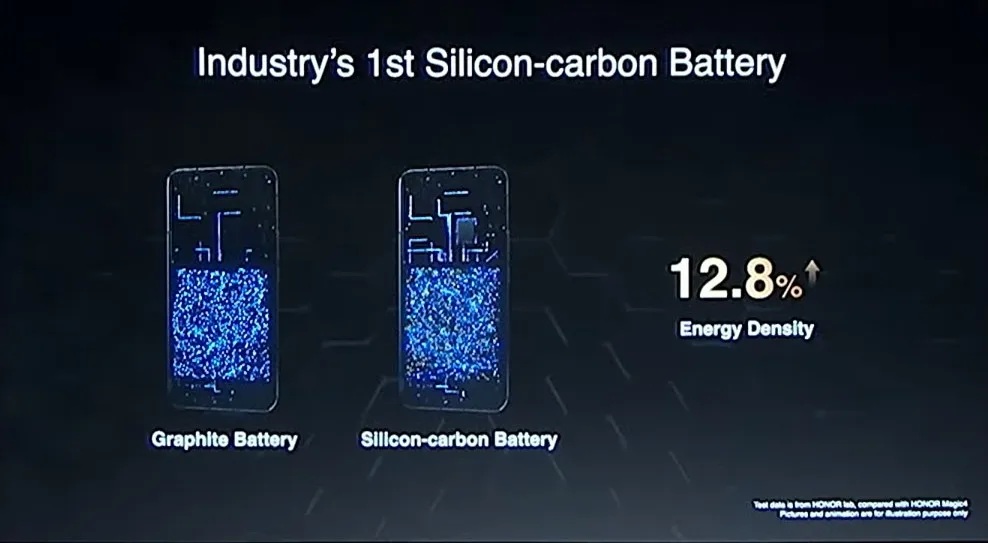
Rather of being a completely novel idea, today’s silicon-carbon (Si/C) Li-Ion batteries are essentially an advancement of conventional lithium-ion technology. By adding silicon, which has a substantially higher energy storage capacity than graphite (372 mAh/g compared to about 4200 mAh/g for pure silicon), they alter the traditional graphite anode. Because of this, silicon has long been a promising material for increasing battery capacity.
Pure silicon anodes, however, face many difficulties. Extreme expansion is the most troublesome; when fully charged, the structure can inflate by up to 300%. The battery experiences extreme mechanical stress as a result, shortening its lifespan and leading to structural breakdown.
Over time, lithium loss and decreased capacity result from silicon’s strong reaction with the electrolyte, which breaks and reforms the Solid Electrolyte Interphase (SEI) layer with each cycle. The aggressive expansion exacerbates this. Another drawback for battery longevity is that silicon has lesser electrical conductivity than graphite, which can reduce charge and discharge rates and increase losses from internal resistance. This can lead to increased heat.
To address these problems, a silicon-carbon (Si/C) composite is utilized rather than pure silicon. The SEI layer is stabilized and its expansion is lessened by the structural support that carbon offers. Depending on its silicon concentration, a well-designed Si/C battery may restrict swelling to just 10–20% during charge cycles, whereas conventional graphite anodes only increase by about 10%. Additionally, carbon increases electrical conductivity, which guarantees better lithium-ion flow and higher efficiency.
The trade-off is that Si/C anodes are unable to fully realize the 10x capacity improvement of pure silicon. Rather, depending on the silicon percentage, they provide a very modest energy density increase of 10–20%. Si/C batteries are an engineering problem since higher Si content enhances capacity but also causes swelling and complicates manufacture. There are restrictions and trade-offs associated with Si/C batteries, but there is no such thing as a free lunch.
The pros and cons for silicon carbon batteries
Any increase in smartphone battery capacity is obviously beneficial, and Si/C batteries are a godsend for power users who want devices that can endure much longer than a single day of intensive usage. It should come as no surprise that so many of the most potent flagship phones available this year have the technology.
After more than a month of everyday use, I can vouch for the OPPO Find X8 Pro’s 5,910mAh Si/C Li-ion battery’s exceptional longevity. I frequently get two days of moderate use out of a single charge, have enough of fuel left over after a day of chasing the kids, and in lighter weeks, I have occasionally gone well into 48 hours without needing a charger.
On the other hand, Si/C is advantageous for thinner gadgets, such lightweight and foldable phones. Thin or small smartphones could surely benefit from this new battery type to maintain decent capacities in more constrained form factors, even though the Galaxy S25 Edge might not be Samsung’s first Si/C smartphone.
The technology has already been used to fit a sizable 5,700mAh battery into a 5.2mm folding design in the Vivo X Fold 3 Pro. Despite being 5.6 mm thick, Samsung’s Z Fold 6 only contains a standard 4,400mA battery. This trend toward higher capacities has also been embraced by the latest Chinese clamshell phones.
Whether silicon-carbon batteries will outlast their more conventional lithium equivalents is the main question that remains. It is evident from the foregoing trade-offs that Si/C will not outlast the most robust graphite-based Li-ion cells now available on the market. Lower silicon concentration can nonetheless provide batteries with a marginally larger capacity that have a comparable lifespan to conventional Li-ion cells. With only a slight but welcome increase in capacity to control the silicon content, this appears to be what we are seeing in today’s most advanced smartphones.
Because Si/C batteries are pushing the limits of energy density and charge rates, smartphone manufacturers may also be becoming more cautious when it comes to fast-charging temperatures in an effort to prolong battery lifespans. In other words, manufacturers are merely attempting to make sure their phones can withstand the promised updates for the next five or more years. But because of its increased capacity, stronger diffusivity of lithium, and decreased chance of plating the anode, Si/C is actually a godsend for faster charging. Additionally, bigger capacities make it easier to follow the 80% charge guideline without worrying about running out of juice in the middle of the day. If you want to keep your phone for many years to come, silicon need not be a negative thing.
Why a silicon-carbon battery device is a good choice?
The newest smartphones will undoubtedly benefit from Si/C Li-ion batteries, which will also likely extend the battery life of your wearables, tablets, laptops, and even electric cars. The most cutting-edge phones of today already heavily rely on silicon cells, which allow for even greater capacities or slimmer form factors without sacrificing battery life.
But at the moment, you will need to look around at Chinese companies to find one, like the OnePlus 13, which is very amazing. Apple, Google, and Samsung, three US giants, have not yet embraced this new battery technology. We may have to wait until their 2026 flagships or even later before they join the celebration, as they might not even get around to it this year.
However, if you intend to retain your smartphone for more than five years, it might be wise to wait and see how the longevity issue develops. Any long-term purchase will eventually require battery replacements, but Si/C Li-ion cells may require more frequent replacements, particularly when fast charging is used. This can turn out to be an unwanted extra expense for early adopters because they are more costly to make. We will need to wait and find out.
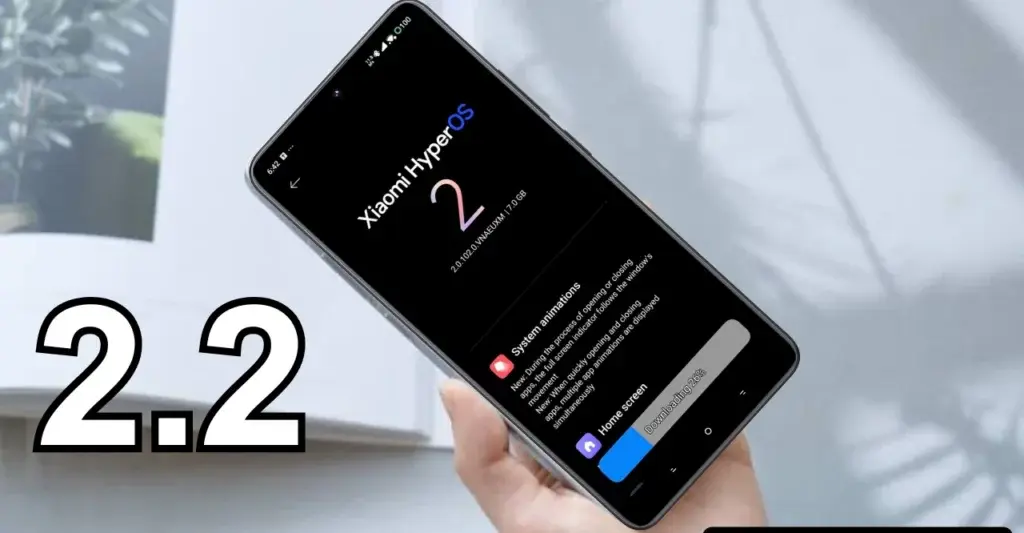
Internal testing of the HyperOS 2.2 software version for Xiaomi’s smartphones has begun. The company is working on another big update that could provide some more intriguing features to phone holders once the 2.1 build was released.
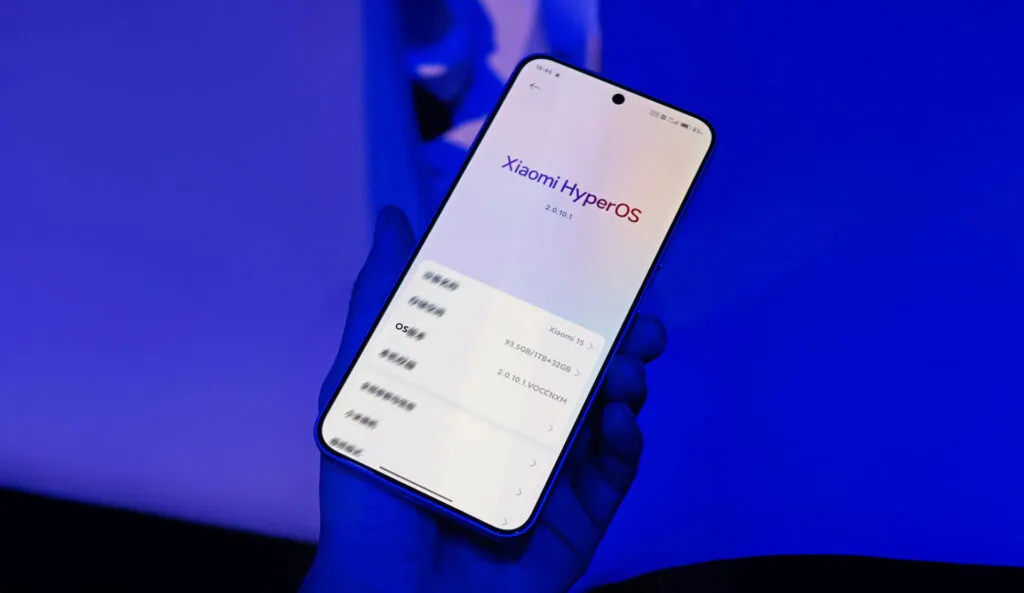
November 2024 saw the launch of HyperOS 2.0. Numerous UI adjustments, new security features, enhanced privacy, and greater device performance are all provided by the AI-powered software.
Later, the company released the HyperOS 2.1 os package, which included yet more unexpected capabilities. Its primary focus was on the user experience and camera section. Xiaomi launched to the flagship devices in international market.
The Xiaomi HyperOS 2.2 software update is currently being developed by the tech giant, and these devices may be the first to receive it. The list includes flagship models that were just introduced in China and are already becoming well-known worldwide.
HyperOS 2.2 is currently in the testing phase but may roll out in late March or early April. The version will be based on Android 15, but will likely bring only a few enhancements as the company has already released two major builds.
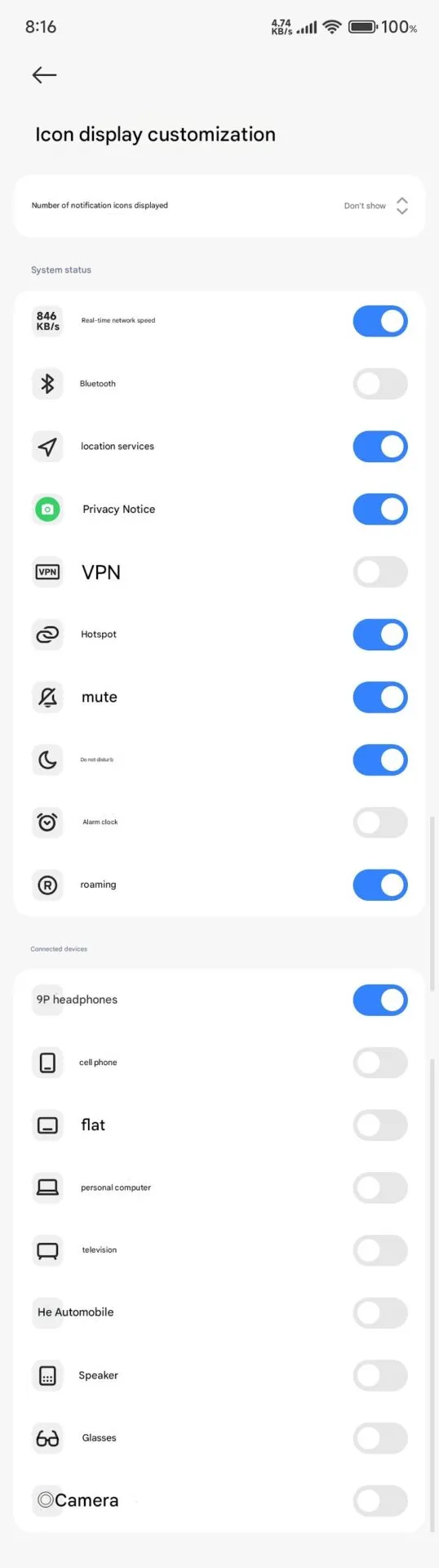
Full status bar customisation is a groundbreaking feature that has been on wish lists for years, and Xiaomi has finally released the eagerly anticipated HyperOS 2.2. As demonstrated by our previous coverage of HyperOS features, customers now have total control over their notification system thanks to this much anticipated upgrade that was released overnight.
The new “Status Bar Icon Display Customization” is a tip of the hat to customization options that debuted with AOSP Android 6, but with Xiaomi polish and attention to detail that we’ve come to expect with their software updates and UI improvements.
Customization of status bar: what is new
The latest update brings unprecedented freedom to personalize your status bar on your device:
Control of Notification Icons: Select precisely how many notification icons are displayed
System Status Toggles: Toggle system status indicators on and off individually
Cleaner Interface: Keep it clean by hiding unnecessary icons
The downside is that it can’t be personalized and will be shown each time that you activate NFC.
Additional improvements
The customization of the status bar is not isolated in this update. HyperOS 2.2 OS2.0.200 Beta release includes a series of other enhancements:
Enhanced System Animations: Smooth transition through the interface
Blurred Wallpaper Enhancements: Improved visual quality for background objects
Signal HD Icon Fix: HD icon no longer remains in the status bar
Currently, Xiaomi 15 series phones running HyperOS 2.2 OS2.0.200 Beta support the feature. Although there are no set dates, more phones in their lineup will gain this feature in the upcoming weeks. Xiaomi’s ongoing dedication to enabling customers to customize their devices is reflected in this much-anticipated feature.
The formal rollout of HyperOS 2.2 has begun, with the Xiaomi 15 and Xiaomi 15 Pro receiving beta releases first. This update improves and adds new capabilities to Xiaomi’s top-of-the-range mobiles, highlighting the company’s commitment to software quality. As China-region variations lead the way with this initial beta release, we have compiled a comprehensive list of what is new, what is modified, and how to securely update your device to this release.
Official build information
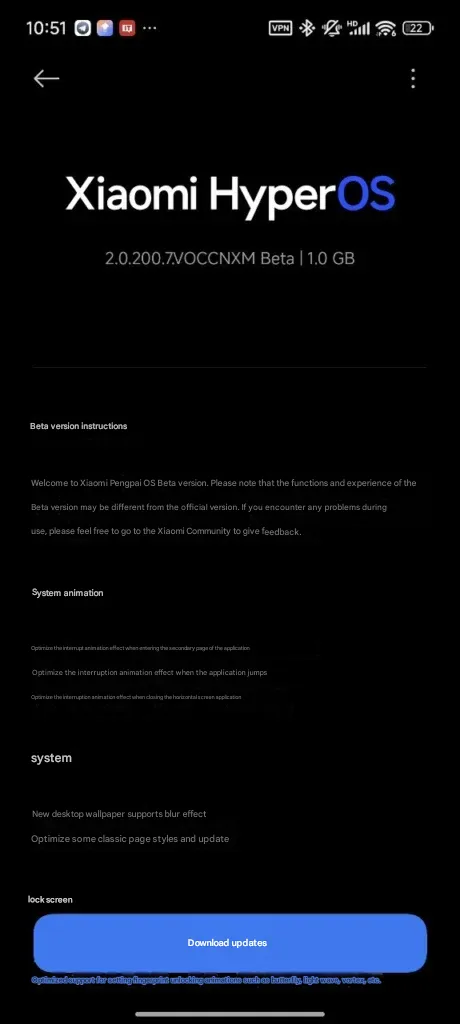
The beta of HyperOS 2.2 is now available on the Xiaomi 15 series with build numbers as follows:
Xiaomi 15: OS2.0.200.7.VOCCNXM
Xiaomi 15 Pro: OS2.0.200.1.VOBCNXM
These early beta releases are Xiaomi’s first move in rolling out the upgraded HyperOS 2.2 to users, building on the enhancements previously present in HyperOS 2.1 on China ROM versions.
Improvements in HyperOS 2.2
The update introduces a number of important enhancements to many areas of the system:
System Animations
Xiaomi has taken special care to make the user interface more streamlined through optimized animations:
Enhanced interrupt animation while browsing application subpages
Improved transition animations while switching between apps
Enhanced animations while closing landscape-oriented apps
System Configuration
The personalisation options have been expanded with:
Desktop wallpaper now supports blur effect
Streamlined traditional page layouts throughout the system
Lock Screen
The lock screen is updated meaningfully:
New oriental lock screen templates, enhanced fingerprint unlock animations like:
Butterfly effect
Patterns of Light Waves
Vortex animations
Status Bar and Notifications
Numerous functional enhancements make daily application more convenient:
Additional status bar icon support through customized display
Expandable custom notifications
Enhanced icon behavior of optimized signals (now no longer permanently visible)
Improved shortcut capability in system navigation mode in desktop settings
Xiaomi keeps making incremental improvements to HyperOS with every release that reflect the company’s intent to refine user experience through thoughtful software tuning.
The release of the HyperOS 2.2 beta on Xiaomi’s 15 series is only the beginning, with other devices scheduled to be updated in the following days and weeks.
Xiaomi keeps updating more of its devices to HyperOS 2.1 in an effort to reach a larger audience with the newest features and enhancements. The Chinese company just released an update for seven Xiaomi devices.
The latest recipients of HyperOS 2.1 include some high-end Xiaomi phones, a Xiaomi tablet, and affordable Poco phones. Here’s the list:
You may be able to install the HyperOS 2.1 upgrade if you own any of these Xiaomi devices. Open the Settings app, select About Phone, and then hit the HyperOS logo to see whether there is a new update available. To find out if your device has an update available, click Check for updates.
A number of internal improvements have been made in the latest HyperOS 2.1 software to enhance the user experience and animations. Voice chats without an internet connection are also possible with the new Networkless mode. In places with inadequate connectivity, this function enables users to converse efficiently.
Xiaomi’s device connect prompts have been improved. Additionally, the file transfer function has been enhanced to provide a smooth experience. Better night vision is one of the camera enhancements brought about by the HyperOS 2.1 software. Additionally, the update enhances imaging performance in a range of lighting settings and snapshot capabilities.
The update also brings a redesigned album layout and new album display columns. The search functions have also been improved. Xiaomi has also made improvements to the image recognition capabilities for the circle to search feature. The Gaming Toolbox now has a performance dashboard and offers an enhanced gaming experience.
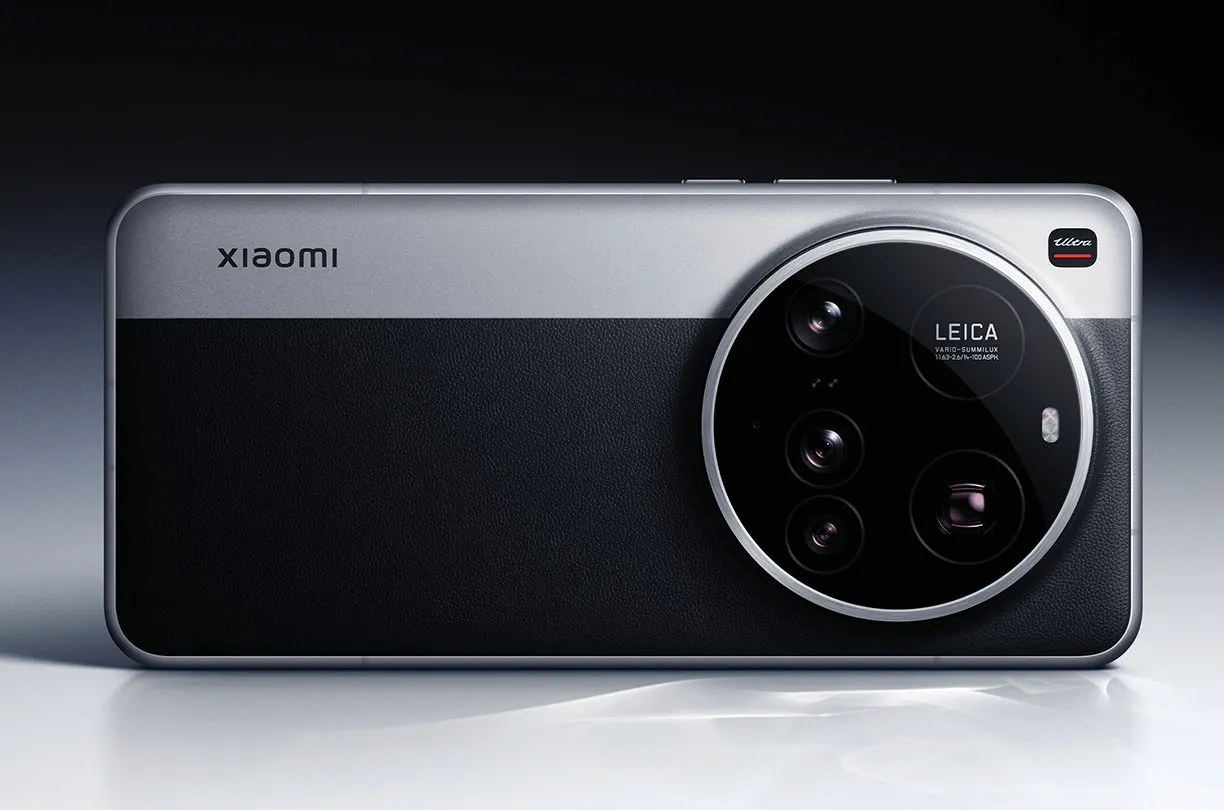
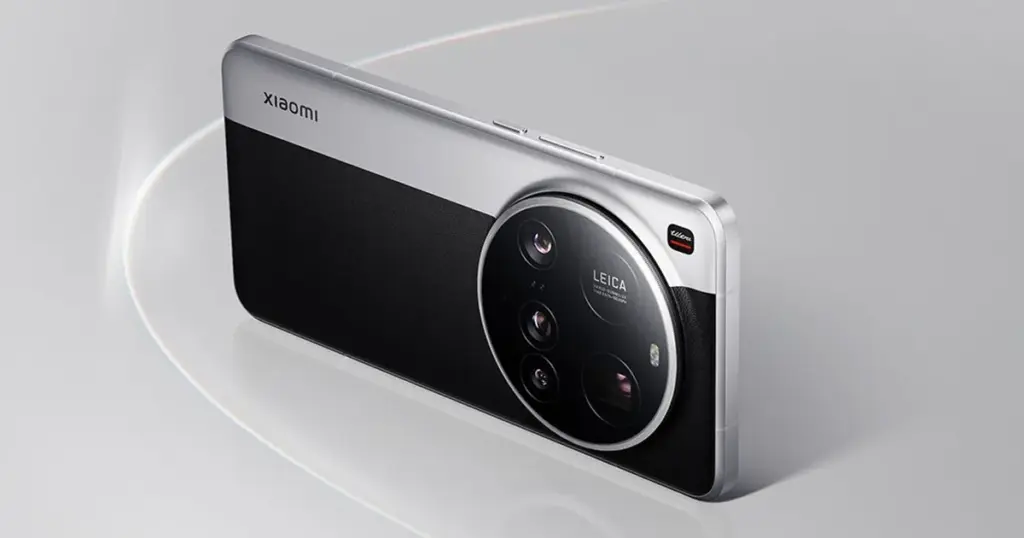
The 15 Ultra, Xiaomi’s most recent flagship, is currently offered for sale worldwide. At €1,500, it has a huge 200MP periscope telephoto lens and a 1-inch primary sensor, which are both really amazing pieces of kit.
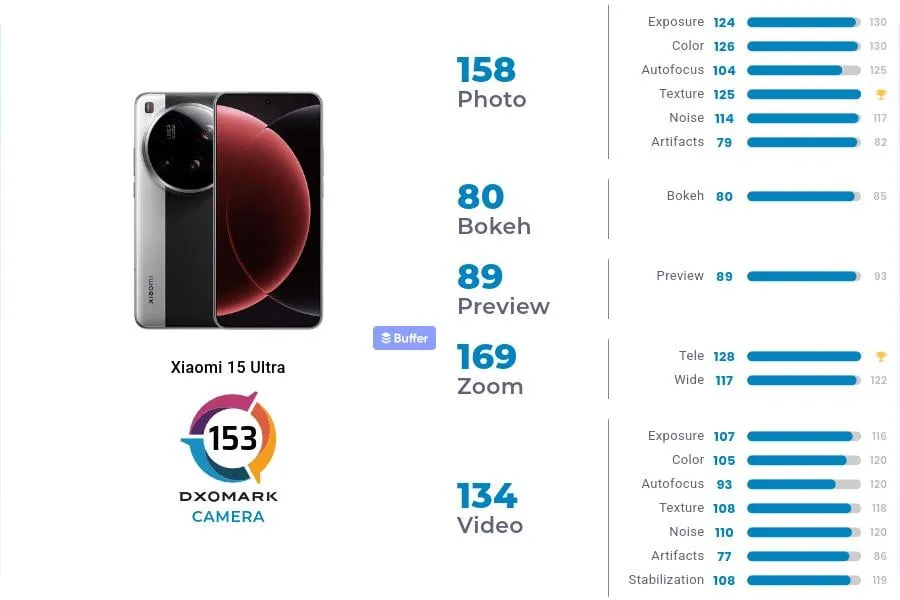
In DXOMark’s camera testing, the 15 Ultra received 153 points, ranking 13th in the world. With 149 points, Xiaomi’s 14 Ultra from the previous year is in 19th place, which is their highest performance to date.In DXOMark’s camera testing, the 15 Ultra received 153 points, ranking 13th in the world. With 149 points, Xiaomi’s 14 Ultra from the previous year is in 19th place, which is their highest performance to date.
However, both in China and the West, it continues to lag behind its most formidable competitors. The Honor Magic 6 Pro and Pixel 9 Pro XL are currently behind Huawei’s Pura 70 Ultra in the DXOMark rankings.
To be clear, this doesn’t mean the 15 Ultra has a lousy camera—far from it. At number 24, even Samsung’s Galaxy S25 Ultra is ranked lower. The 15 Ultra was commended by DXOMark for its outstanding color rendering, broad dynamic range, precise exposure, low noise, and great texture detail.
Why Xiaomi 15 Ultra missed the top?
DXOMark reports that the phone has trouble with visible abnormalities that affect image quality, contrast irregularities, and sporadic warm color casts in both images and videos. Additionally, there are problems with autofocus stepping and texture degradation under some circumstances, which can make focusing less fluid.
Its limited depth of field, which causes blurry background faces in group photos, is another significant flaw. Keep in mind that its primary camera is the source of this limitation.
These flaws could be disappointing for a phone that strives to be the finest of the best. Despite these figures, the 15 Ultra still has some of the best mobile camera hardware on the market.
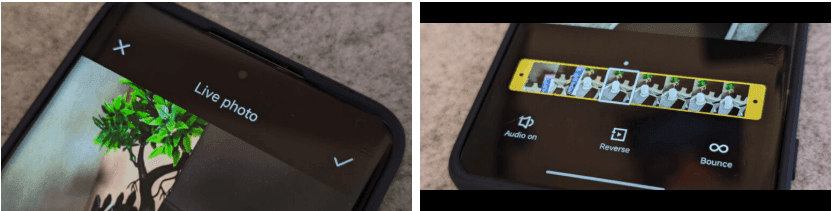
The cross-ecosystem LivePhoto transmission compatibility of HyperOS 2 was formally revealed by Xiaomi, enabling smooth live photo sharing between Xiaomi phones, Xiaomi Pads, iPhones, and iPads. Grayscale mode is supported, and the feature is progressively being made available in batches.
The enhancement is one of the actions Xiaomi is taking to create a comprehensive ecosystem that will provide a more seamless experience across devices. For optimal compatibility, users who are interested in the functionality should update their smartphones to the most recent versions of Xiaomi Photo Album and Xiaomi Share.Xiaomi HyperOS is always evolving, providing consumers with fresh and creative features to enhance their convenience.
LivePhoto Cross-Ecosystem Support Details
Sharing dynamic pics in the LivePhoto format while maintaining their motion effects is now possible with Xiaomi HyperOS 2. Users can now share and enjoy LivePhotos on both Xiaomi and Apple devices with ease thanks to the latest update, which was revealed in the official Q&A (Episode 8) for Xiaomi HyperOS on March 7.
How to use live photo transfer
For successful transmission of LivePhotos, users must meet the following requirements:
Both devices must be on the same wireless LAN – The sending and receiving devices need to be on the same wireless local area network.
The applications must be upgraded to certain versions – Apple and Xiaomi devices must have the latest software upgrades to be able to support this.
The Xiaomi ecosystem is greatly improved by this function, which allows users to find and share LivePhotos on several platforms without compromising motion effects. It is easier than ever to switch between devices and share memories with pals via an iPhone. In the days ahead, customers may anticipate even more cross-platform interoperability capabilities as Xiaomi develops HyperOS 2. Keep an eye out for additional information regarding Xiaomi HyperOS 2 and its ongoing feature additions.