Tag: android

  • Android 16: complete list of Samsung, Xiaomi, and other eligible devices

    Android 16: complete list of Samsung, Xiaomi, and other eligible devices

    The formal rollout of Android 16’s stable version has started, with Google’s Pixel smartphones leading the way. Other significant Android manufacturers are getting ready to release their own unique skins and upgrade schedules in tandem with the latest OS version. The most important question for users anxiously anticipating the update is: will my device get the update? This is the list of devices that are compatible with Android 16.

    We have put up a thorough list of smartphones and tablets from well-known manufacturers, like Samsung, Xiaomi, Motorola, and Oppo, that should be compatible with the Android 16 update in order to assist in answering this question.

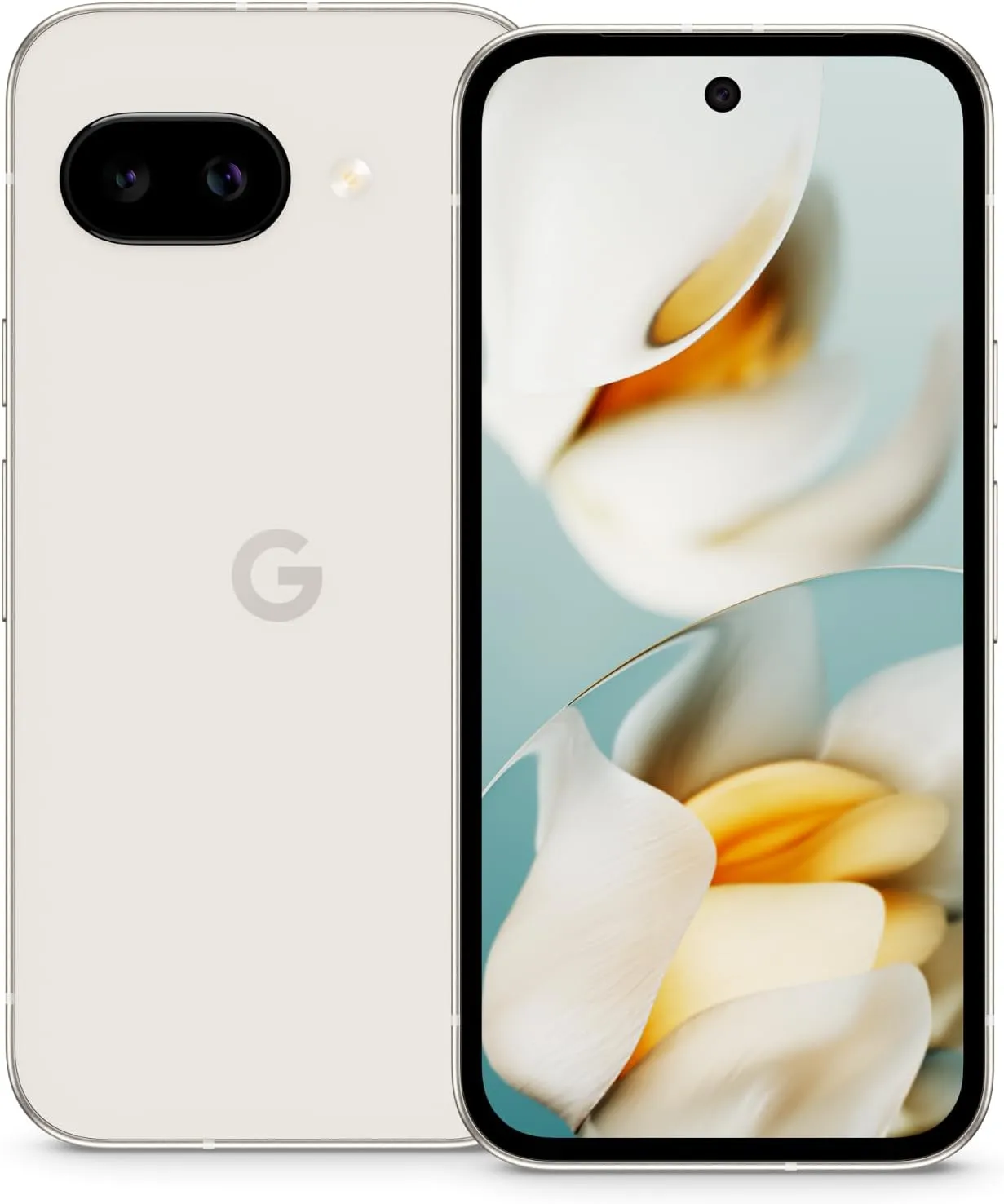
    Google Pixel Android 16 Eligible devices

    As always, Pixel devices are first in line and the rollout is already underway for these models.

    Device SeriesEligible Models
    Pixel 9 Series9, 9 Pro, 9 Pro XL, 9 Pro Fold, 9a
    Pixel 8 Series8, 8 Pro, 8a
    Pixel 7 Series7, 7 Pro, 7a
    Pixel 6 Series6, 6 Pro, 6a
    Pixel FoldablesPixel Fold
    Pixel TabletPixel Tablet

    Samsung Galaxy Android 16 Eligible devices

    Samsung offers one of the most extensive portfolios, and a large number of its devices are expected to receive the update.

    SeriesEligible Devices
    Galaxy SS25, S24, S23, S22 series & S21 FE
    Galaxy ZZ Fold/Flip 6, Z Fold/Flip 5, Z Fold/Flip 4, Z Fold SE
    Galaxy TabTab S10, S9, S8 series, Tab S6 Lite (2024)
    Galaxy AA73, A5x, A3x, A2x, A1x, A0x series (from A_3 to A_6 generations)
    Galaxy MM5x, M3x, M1x, M0x series (from M_3 to M_6 generations)
    Galaxy FF5x, F34, F1x, F0x series (from F_4 to F_6 generations)
    OtherGalaxy C55, XCover 7, Tab Active 5

    Xiaomi, Redmi, and Poco Android 16 Eligible devices

    Xiaomi’s multi-brand strategy means a wide array of devices are in line for the HyperOS skin based on Android 16.

    Brand / SeriesEligible Devices
    Xiaomi15, 14, 13 series (including T, Pro, Ultra models)
    Xiaomi CiviCivi 5 Pro, Civi 4 Pro, Civi 3
    Xiaomi PadPad 7 series, Pad 6 series (Pro, Max, S Pro)
    Redmi NoteNote 14 series, Note 13 series
    Redmi KK80 series, K70 series, K60 series
    Redmi14 series, 13 series, A4 series
    Redmi PadPad 2, Pad Pro, Pad SE
    PocoF7, F6, X7, X6, M7, M6, C7x series

    Motorola

    Motorola is expected to update its recent flagship and mid-range devices.

    SeriesEligible Devices
    RazrRazr 2025 series, Razr+ 2024, Razr 60/50 series
    EdgeEdge 2025, Edge 60/50 series, Edge 40 Pro
    Moto GG Power/Stylus 2025, G86/85, G75, G56/55
    ThinkPhoneThinkPhone 25

    Oppo

    Oppo will likely bring Android 16 to its premium Find series and popular Reno line.

    SeriesEligible Devices
    Find NFind N5, N3, N2 series
    Find XFind X8, X7, X6 series
    RenoReno 14, 13, 12, 11 series
    F SeriesF29, F27, F25 Pro
    K SeriesK13, K12 series
    Pad SeriesPad 4 Pro, Pad 3 series, Pad SE

    Other Major Brands (Expected)

    BrandEligible Devices (Summary)
    OnePlus13, 12, 11 series, Nord 4/3, Nord CE 4, Open, Pad series
    VivoX200, X100, X90 series, V50/40/30 series, T4/3 series, recent Y series, Pad 5/3
    iQOO13, 12, 11 series, Z10/9 series, Neo 10/9 series, Pad series
    NothingPhone (2), (2a), (2a)+, Phone (3a) series, CMF Phone 1/2 Pro

    Other manufacturers may need a few weeks to incorporate Android 16 with their own user interfaces, such as One UI, HyperOS, and ColorOS, while Google Pixel phones are currently getting the upgrade. The majority of brands are anticipated to start releasing stable versions in July 2025, with widespread beta testing set to commence shortly.

    Stay connected with the latest from Droid Tools—follow us on X @droid_tools, like our page on Facebook, check out our updates on Instagram, and follow us on Google News for real-time news, device tips, and mobile tech insights.
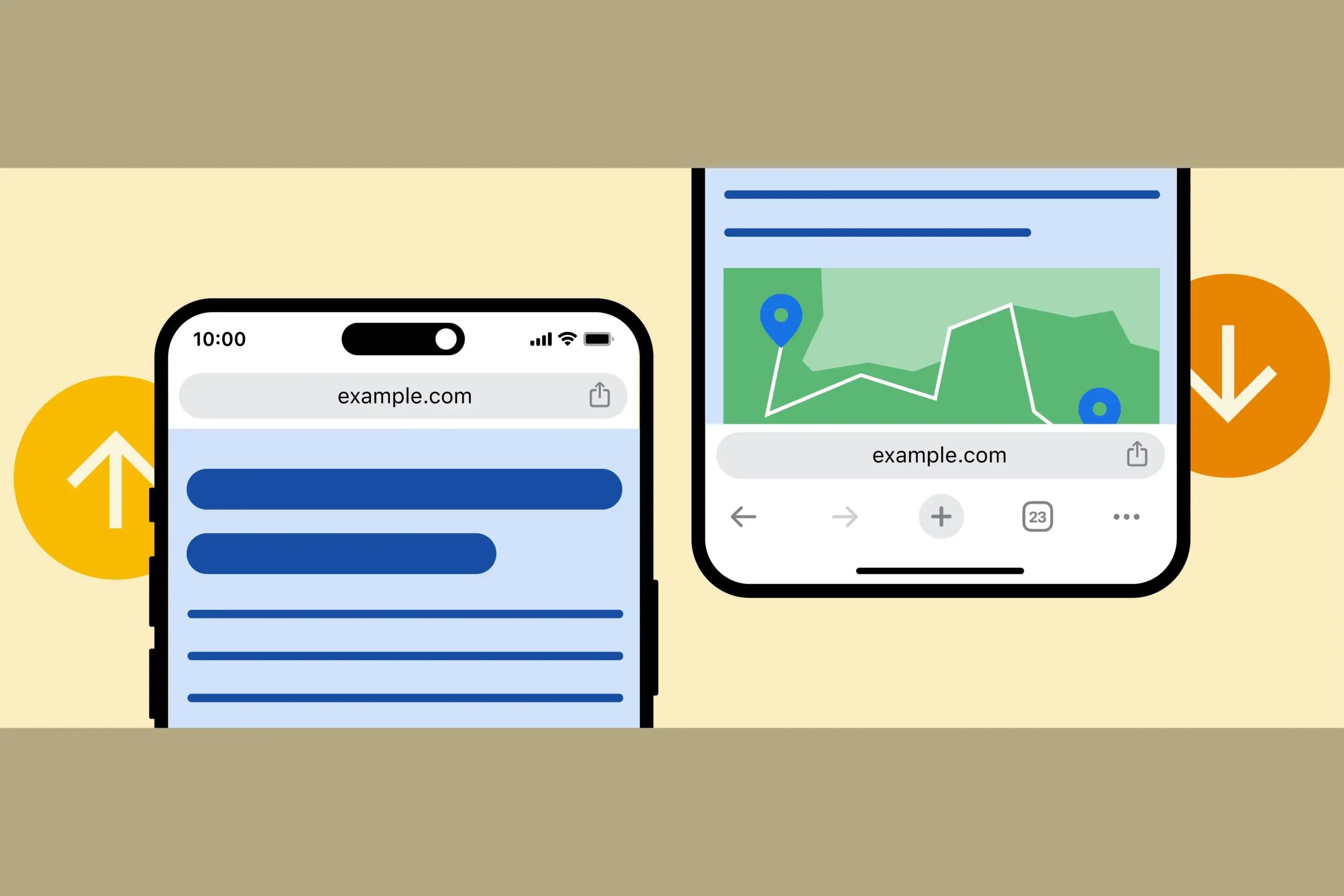
  • You can move the address bar to the bottom in Chrome on Android.

    You can move the address bar to the bottom in Chrome on Android.

    One feature that users of iOS have enjoyed for a while—a moveable address bar—has been absent from an Android user’s customized Chrome experience. With Google’s statement that you would be able to move the Chrome address bar from top to bottom and back up again, that will alter as of right now.

    Android’s Chrome address bar can be moved to the bottom. This may seem like a dumb little feature, but I can’t wait for it to arrive on my device. It can be challenging to reach the top of our phones without a second hand or having to do a risky shimmy because they are huge. An address bar at the bottom is always accessible.

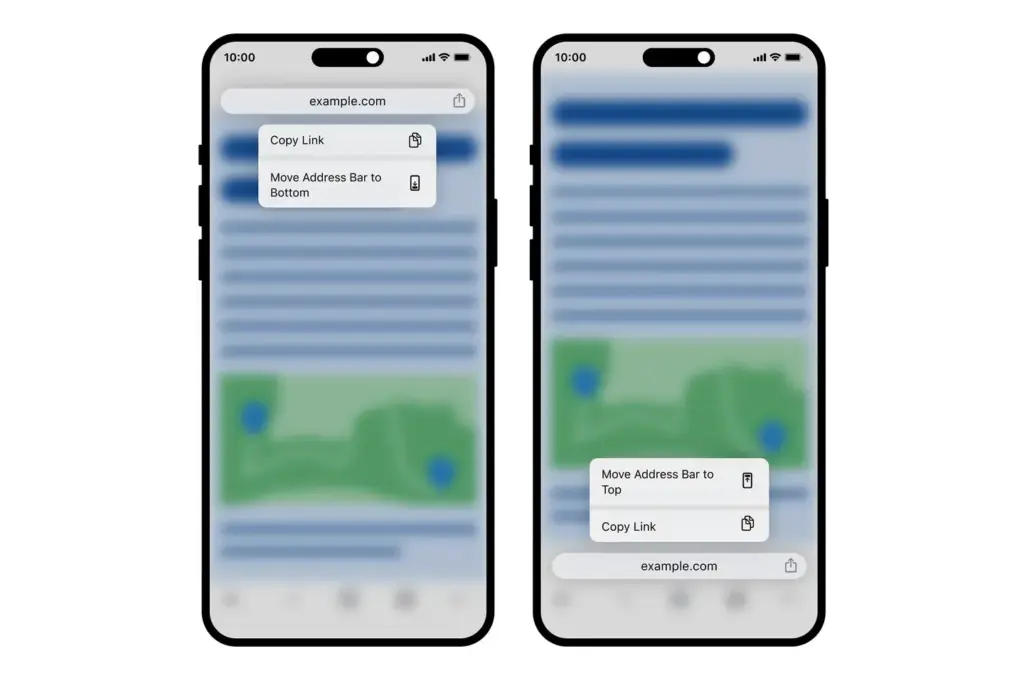
    Move Chrome address bar to botto

    Google is allowing you to manually relocate the Chrome address bar by long-pressing on it (such as the actual URL space) and then selecting “relocate address bar to bottom” for those who enjoy the concept (which you can see above). You can see how it appears on iOS below.

    According to Google, the update may take “weeks” to reach everyone, but it will “begin to emerge” on devices as early as today.

    Stay connected with the latest from Droid Tools—follow us on X @droid_tools, like our page on Facebook, check out our updates on Instagram, and follow us on Google News for real-time news, device tips, and mobile tech insights.
  • Pixel 10 comes with better finger print tech and upgraded wireless charging

    Pixel 10 comes with better finger print tech and upgraded wireless charging

    According to a recent leak, the Pixel 10 is expected to come with two major upgrades this year: a better ultrasonic fingerprint sensor and support for Qi2 wireless charging.

    Faster fingerprint recognition

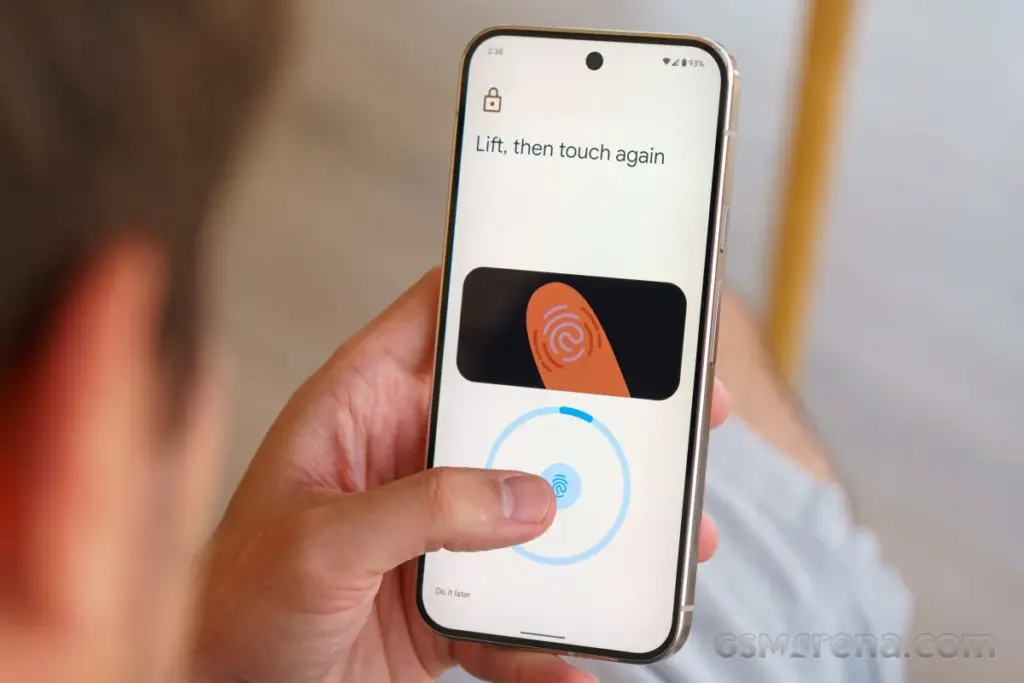
    When Google eventually abandoned the sluggish and unreliable optical fingerprint sensors of earlier generations in favor of ultrasonic ones with the Pixel, it made a significant shift. However, it appears that the fingerprint experience will be much better with the incoming Pixel.

    Pixel 10 fingerprint tech

    According to the research, when working with damp or dirty fingers, the ultrasonic fingerprint sensor will provide superior speed and responsiveness.

    It’s good to note that Google isn’t discontinuing the fingerprint sensor even though their face unlock system has supported Class 3 biometric verification since the Pixel 8, which makes it safe enough for delicate operations like digital payments and banking.

    Pixel devices provide consumers with more flexibility and convenience based on their requirements and surroundings by providing both fingerprint and face unlock. Google frequently teases Apple with humorous advertisements, and I anticipate one involving these biometric technologies after the release of the Pixel 10 and Pixel 10 Pro.

    Qi2 wireless charging

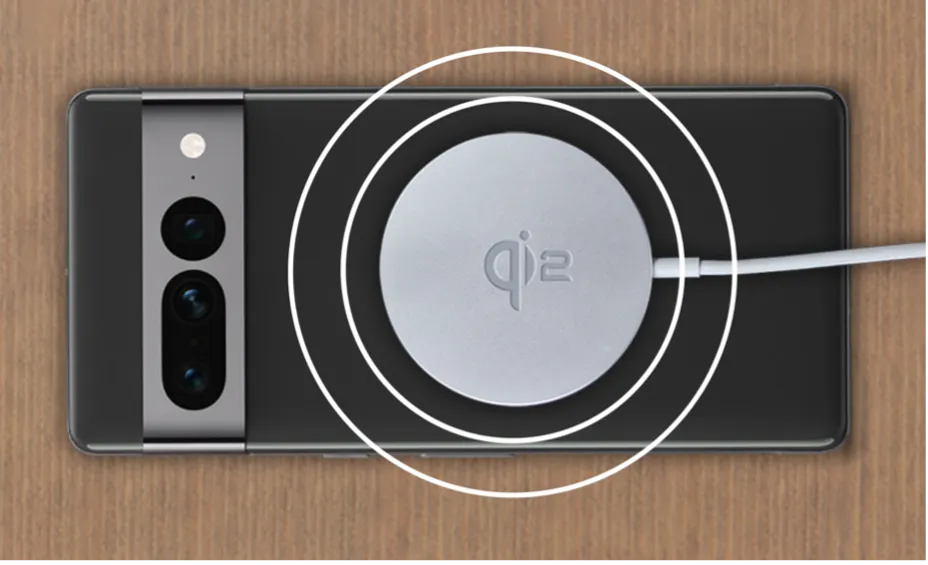
    The Pixel 10’s support for Qi2 is another noteworthy improvement. Sadly, even though the Pixel 10 will be Qi2-ready, customers will still require a magnetic case that works with it in order to fully benefit from it.

    qi article 2 image 1

    Companies like Samsung and OnePlus, who have also introduced Qi2 support this year, have used a similar strategy. Fun fact: Although the Apple iPhone 16e does not fully support Qi2 fast charging, it is technically compatible with MagSafe.

    A new look is also being applied to the Pixel 10 series. The Pro models will, as usual, keep to more subdued colors like Sterling Gray and Smoky Green, while the base Pixel 10 will be offered in Ultra Blue, Limoncello, Iris, and Midnight. The colors of the foldable Pixel 10 Pro Fold will match those of the standard Pro variants.

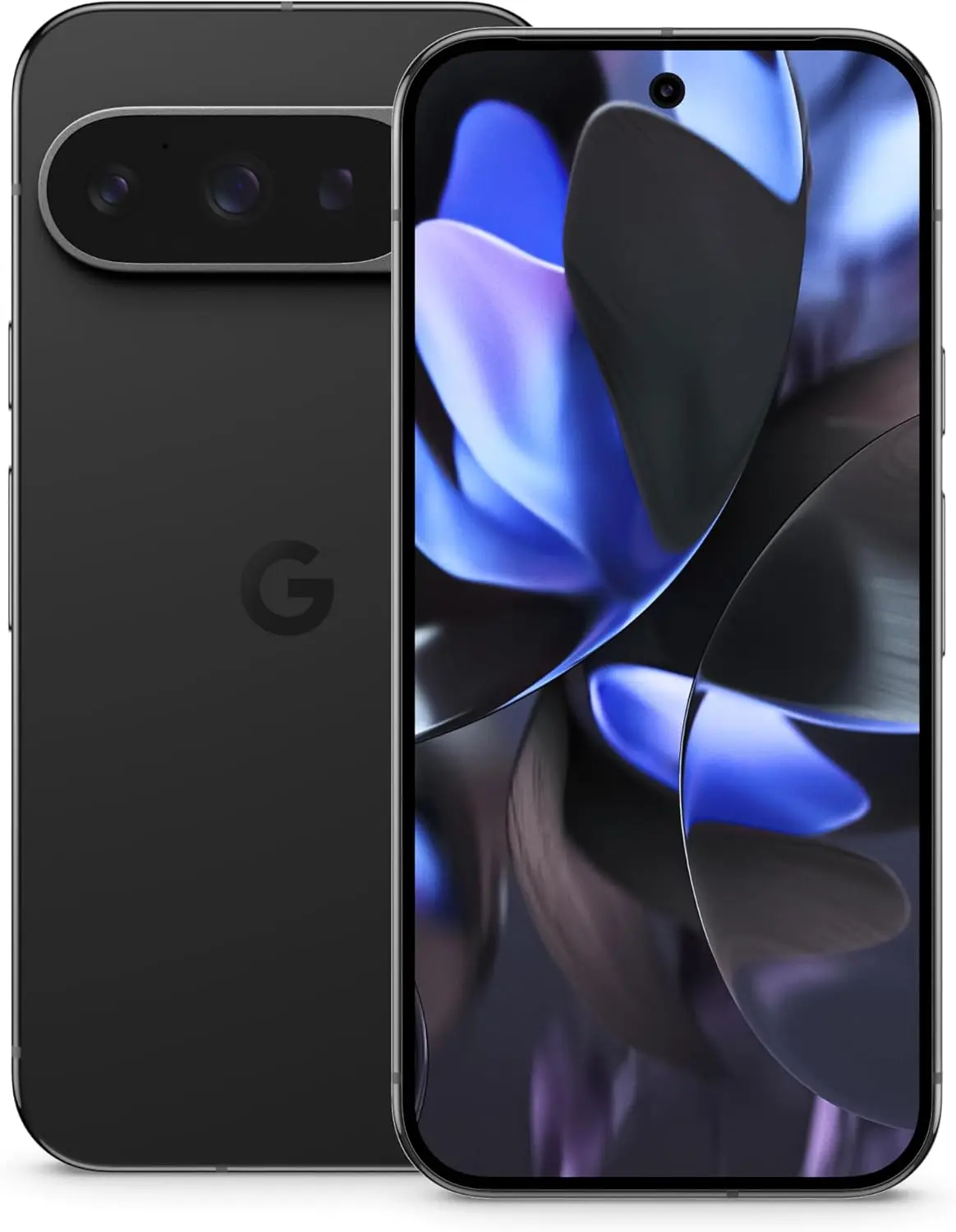
    google pixel 9 pro amazon deal

    Google Pixel 9 Pro

    Pixel 9 Pro with Gemini is the most powerful Pixel yet, and now comes in two sizes; it has a pro-level camera and it’s engineered by Google, so it gets the best of Google AI first

    $998.23Amazon

    The Pixel 10 series will reportedly be unveiled by Google on August 20. Pre-orders will begin that same day. Beginning on August 28, the phones will be on sale.

    In addition to Qi2 and an improved fingerprint sensor, the Pixel 10 series is anticipated to use Google’s first entirely proprietary processor (Tensor G5), which offers significant improvements in terms of performance, faster biometric systems, and next-generation charging technology.

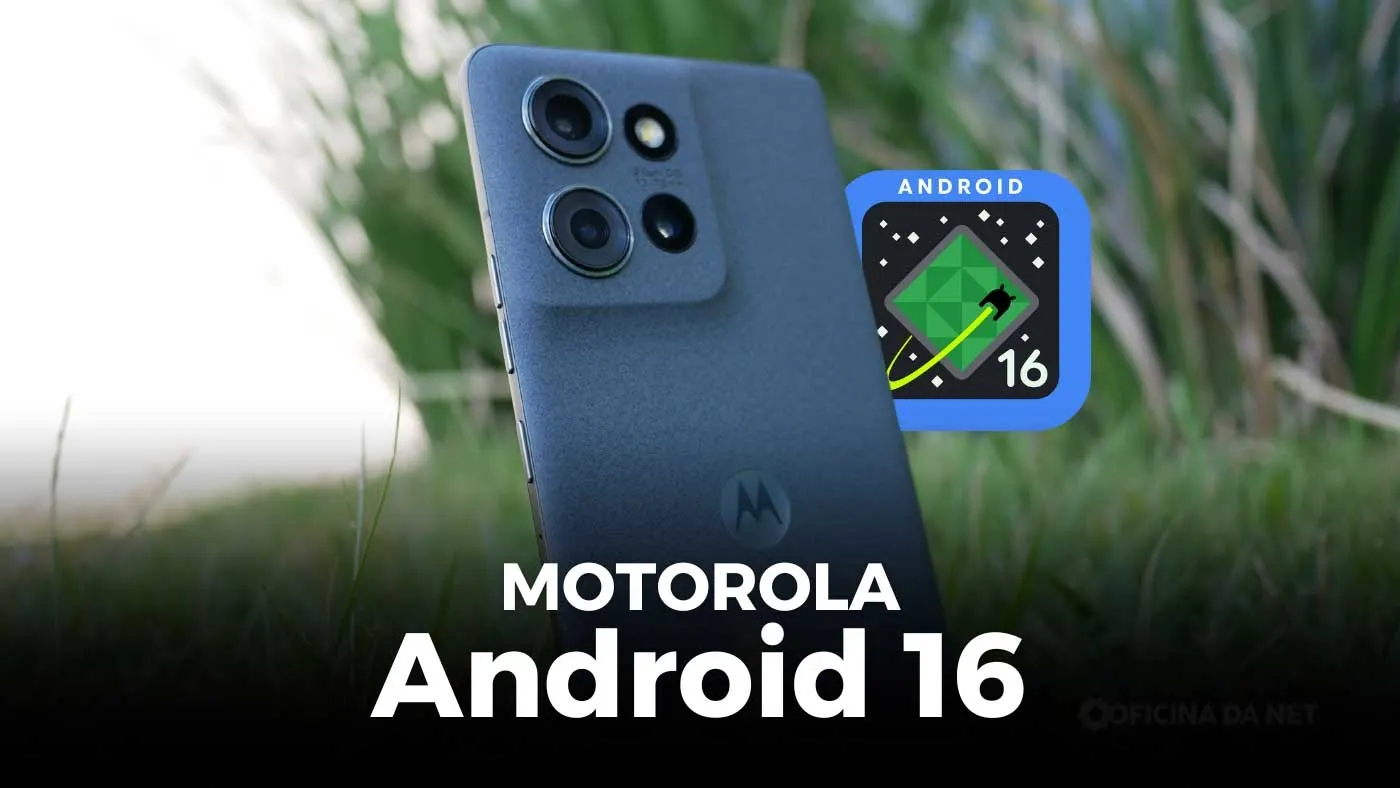
  • Which Motorola phones will get Android 16 update until the end of the year?

    Which Motorola phones will get Android 16 update until the end of the year?

    Owners of Motorola phones, take note! For you, this monsoon has a unique timeline of occurrences. In addition to the recent Motorola phone releases and the strong market demand for these phones, current patterns indicate that you should expect an Android update soon. Indeed, it is correct. Numerous Moto phones will soon be running Android 16, so you should update to the newest OS version as soon as you can. To learn which devices will get the Android 16 upgrade, let’s read this article.

    Android 16 Update: Key Insights That You Should Know

    With the latest updates and improvements that your Android devices undoubtedly require Android 16.

    For example, Android 16 mimics iOS Live updates by introducing dynamic features like real-time status bar apps updates.

    Additionally, by removing forced screen points on large devices, it improves tablet usage. Additionally, it offers adjustable refresh rate, which helps to improve battery smoothness and efficiency.

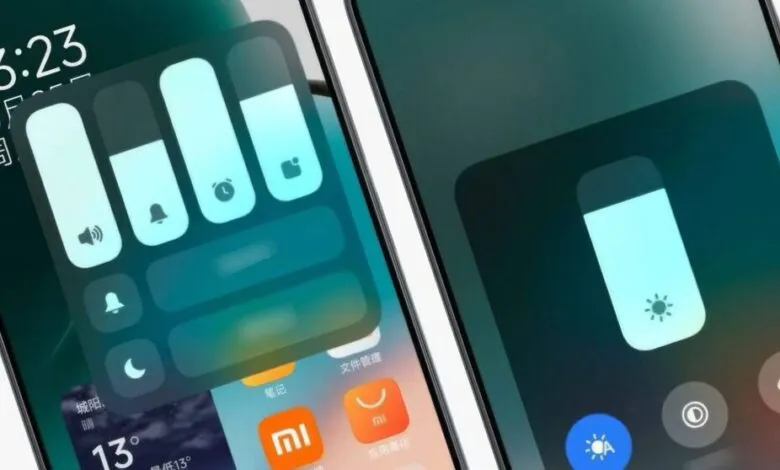
    The most recent version of Android 16 has it all: bundled notifications, cooldown choices, streamlined alerts, a new volume slider, divided quick settings, and small heads-up displays. The floating bubbles, which previously only supported notifications, now support entire apps, giving you some unique UI elements.

    Speaking of widgets, Android 16 brings back the lock screen widgets along with Gemini access and clearer notification icons. iOS Dynamic Island is mirrored in Rich Ongoing Notifications.

    Last but not least, this OS update offers amazing camera support. HDR10+ and 8K are supported by its Advanced Professional Video (APV) Codec. Gemini extensions, vertical text support, Privacy Sandbox, cloud compilation, and improved tablet desktop mode are some of the other standout improvements of the most recent Android 16 version.

    Motorola devices that will get Android 16 in 2025

    In June 2025, the Android 16 version will be released, and all of the most recent updates will be available on popular Motorola devices. The Android 16 Update may be available for phones that were just released, those that are now available, and those that will be released between July 2025 and September 2025. Let’s view the entire list right here.

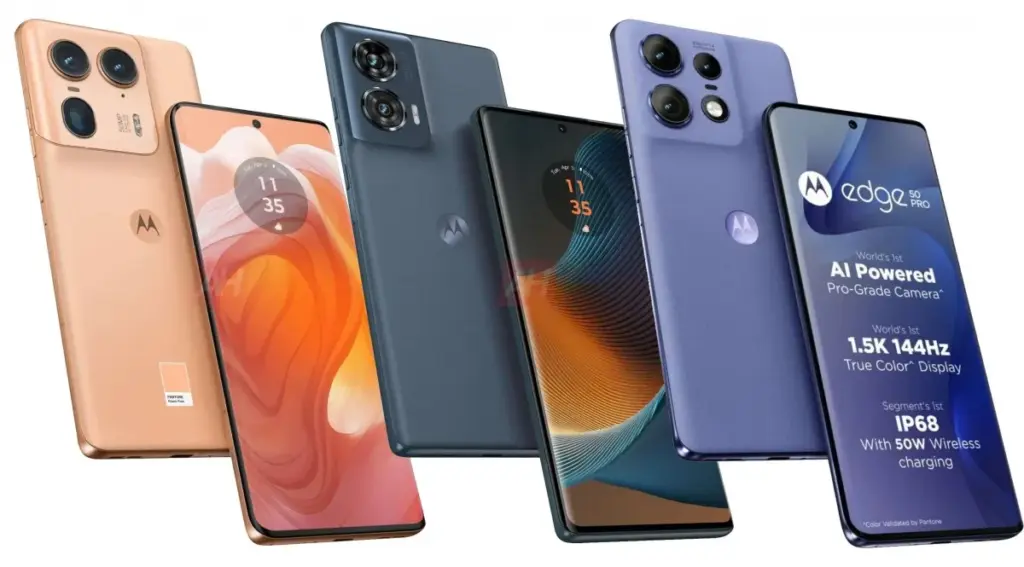
    The Edge series phones are an amazing flagship line in the phone industry, with curved edges, a bright display, a sleek design, and never-before-seen capabilities with every new version. The Edge series phones’ price range and “value for money” label have been their main selling points.

    gsmarena 001

    Motorola Edge Series

    Here is the list of all the Motorola Edge series phones which will receive the Android 16 update:

    • Edge 50 
    • Edge 50 Fusion
    • Edge 50 Neo
    • Edge 50 Ultra
    • Edge 50 Pro 
    • Edge 60
    • Edge 60 Stylus
    • Edge 60 Fusion
    • Edge 60 Pro
    • Edge 40 Pro 
    motorola razr 40 ultra 230526340

    Motorola Razr Series

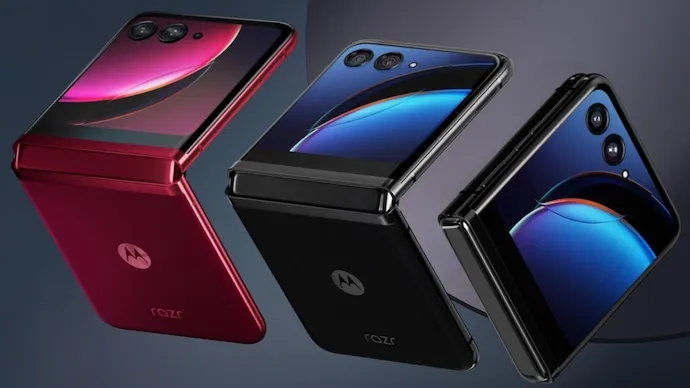
    Motorola produced the most inventive foldable phones. In the market, Motorola’s Razr series phones have enjoyed an incredible run of popularity. For instance, the Motorola Moto Razr 40 boasts a sizable 6.9-inch full-HD+ pOLED display with an inventive foldable design. It also boasts a high refresh rate of 144 Hz, which makes for a fluid and engaging viewing experience. The robust Snapdragon 7 Gen 1 SoC and 12GB of RAM enhance the performance features for smooth and quick operation.

    Motorola produced the most inventive foldable phones. In the market, Motorola’s Razr series phones have enjoyed an incredible run of popularity. For instance, the Motorola Moto Razr 40 boasts a sizable 6.9-inch full-HD+ pOLED display with an inventive foldable design. It also boasts a high refresh rate of 144 Hz, which makes for a fluid and engaging viewing experience. The robust Snapdragon 7 Gen 1 SoC and 12GB of RAM enhance the performance features for smooth and quick operation.

    Here is the list of all the Motorola Razr series phones which will receive the Android 16 Update.

    • Moto Razr 50
    • Moto Razr 50 Ultra
    • Moto Razr 60
    • Moto Razr 60 Ultra
    • Moto Razr 40
    • Moto Razr 40 Ultra
    motorola g series 1

    Moto G Series

    The Motorola G series phones are the market’s favorite among consumers on a tight budget. The Motorola G series phones are very impressive, catering to lower budget categories while offering some of the newest features.

    Here are the Motorola G series phones which will get the Android 16 Update:

    • G85
    • G56
    • G75
    • G64
    • G54

    In conclusion, the Android 16 update will be available for all of the most recent Motorola phones from the Edge, Razr, and G series. These Moto phones will get cutting-edge features with the QPR beta version, the most recent release of Android 16.

    As a result, all Moto users can anticipate improved performance, more intelligent features, and a more streamlined user interface. The capabilities of your phone will be enhanced by this upgrade, regardless of whether you’re using a stylish Edge, a folding Razr, or an affordable G series!

    Stay connected with the latest from Droid Tools—follow us on X @droid_tools, like our page on Facebook, check out our updates on Instagram, and follow us on Google News for real-time news, device tips, and mobile tech insights.
  • Google says AOSP not being ‘discontinued’ even if Pixel change impacting custom ROMs

    Google says AOSP not being ‘discontinued’ even if Pixel change impacting custom ROMs

    Google withheld the release of the Pixel device trees and hardware repositories, which are crucial for makers of custom ROMs, when Android 16 was released earlier this week. Some began to speculate that “AOSP is being discontinued” as a result of this. Despite Google’s denials, the Pixel modification appears to be deliberate.

    Google made the source code for Android 16 available to the Android Open Source Project on Tuesday. In a significant departure from previous releases, the Pixel device trees and other code that were utilized to modify the AOSP release to fit particular (made by) Google hardware were not made available.

    Custom Android ROMs will struggle to produce their OS updates without the Pixel hardware repos, which contain the device trees, driver binaries, and other components. Security (vulnerability) researchers may also be affected by this.

    aosp arhitecture

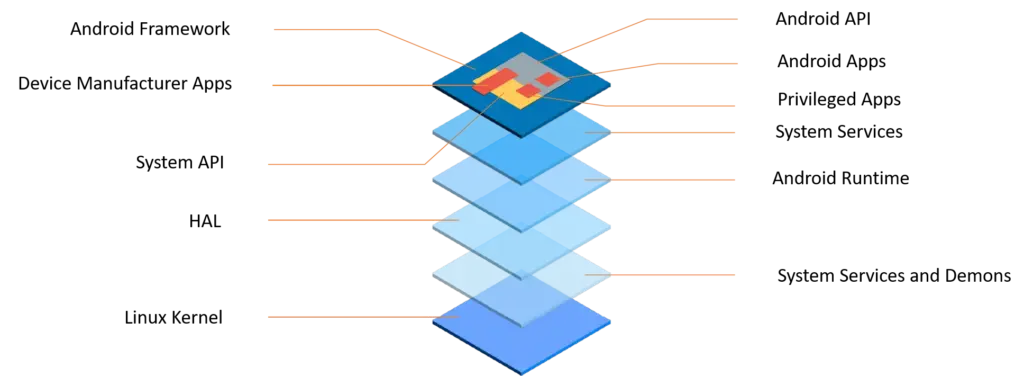
    As a result, some community members conjectured that AOSP was being phased out. Seang Chau, the vice president and general manager of Android, said on Wednesday night that “AOSP is NOT going away” in general. Google has stated that it will continue to be “dedicated to AOSP updates,” speaking directly to developers.

    The Android team’s statement does appear to indicate that Pixel device trees will no longer be available. A “reference target” that is “independent of any particular hardware, even those from Google” is what AOSP hopes to provide in the future.

    AOSP needs a reference target that is flexible, configurable, and affordable – independent of any particular hardware, including those from Google. For years, developers have been building Cuttlefish (available on GitHub as the reference device for the project) and GSI targets from source. We continue to make those available for testing and development purposes.

    Once more, Google is “dedicated to AOSP,” but the future will be more difficult for people who run custom ROMs.

    Stay connected with the latest from Droid Tools—follow us on X @droid_tools, like our page on Facebook, check out our updates on Instagram, and follow us on Google News for real-time news, device tips, and mobile tech insights.
  • Battery Health Assistance coming to all Pixel devices

    Battery Health Assistance coming to all Pixel devices

    As seen by the Android 16 QPR1 Beta 2 update, the company is getting ready to expand the Battery Health Assistance function, which made its debut with the Pixel 9a, to additional Pixel devices. Serious problems including battery overheating and even melting during charging have recently been reported with certain Pixel phones. The tech giant is working hard to stop this, though.

    Android 16 beta update brings ‘Battery Health Assistance’ feature

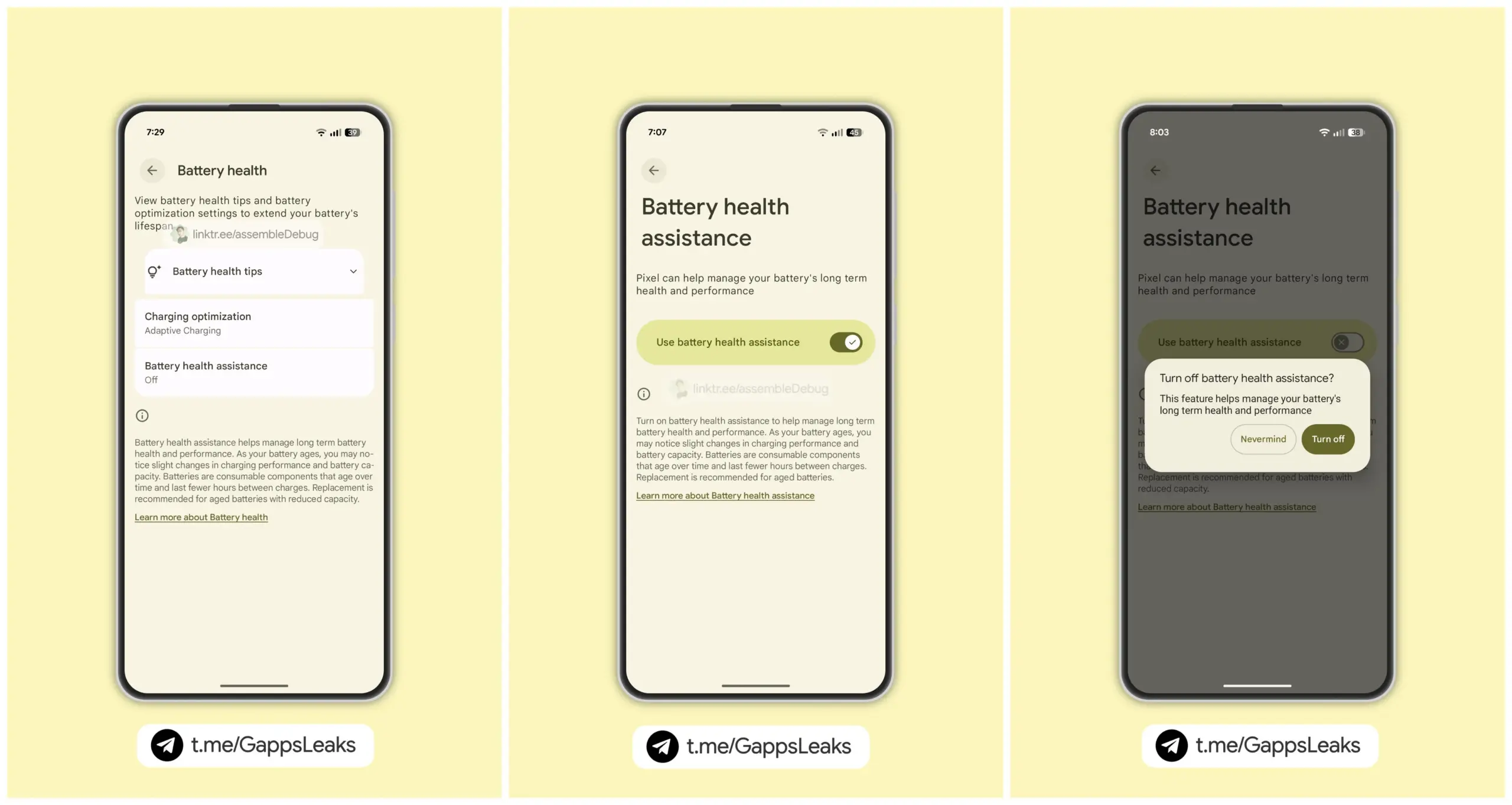
    For those who are unaware, early this year, Google released the Pixel 9a with Battery Health Assistance, a charge management tool. This feature cannot be manually disabled because it is enabled by default.

    Google’s support page states that Battery Health Assistance aids in controlling the long-term performance and health of a phone’s battery. Serious problems like battery deterioration, overheating, and even melting when charging can be avoided with its assistance.

    Battery Health Assistance pixel devices

    After applying the Android 16 QPR1 Beta 2 update on their phones, a few users became aware of the new feature. To put it briefly, Google intends to eventually extend this feature to older Pixel models.

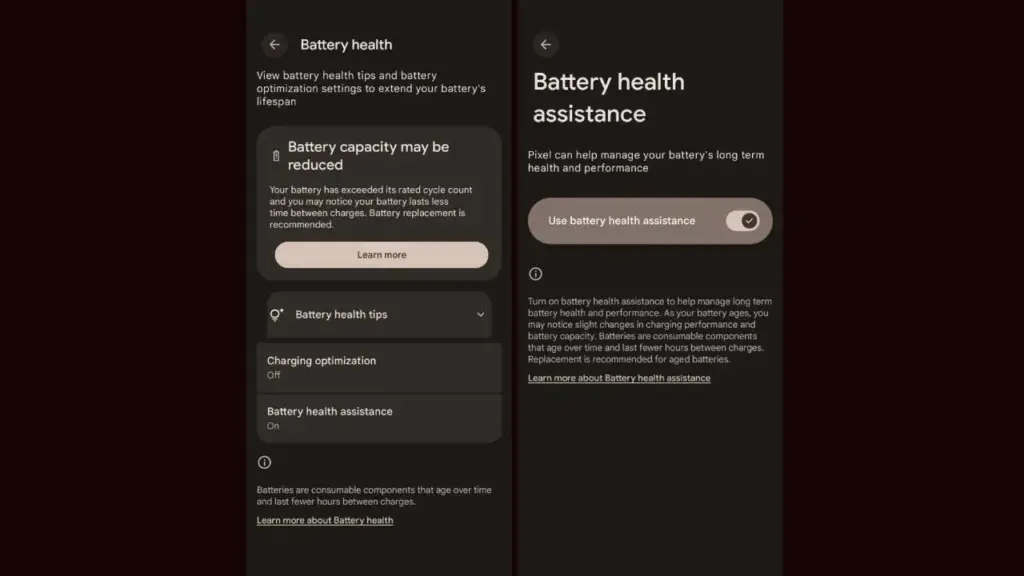
    Google defines the feature as follows; ”Lithium-ion batteries are consumable components that eventually require replacement. As your battery ages, Battery health assistance helps manage its long-term health and performance. This software adjusts the battery’s maximum voltage in stages. It starts at 200 charge cycles and continues gradually until 1000 charge cycles. This helps stabilize battery performance and aging.

    Images posted by customers who have tested Battery Health Assistance indicate that, unlike the Pixel 9a, the feature won’t be required. In other words, if you want to, you can turn it off. Google advises, however, that you keep it enabled at all times to preserve the functionality and health of your battery.

    It’s crucial to have this feature to keep your battery from dying too soon.

    On Pixel phones, the Battery Health Assistance feature may somewhat shorten battery life and charging speed. In the long run, nevertheless, it is really useful and protects the battery. This might stop the recent battery problems that some Pixel variants have been having.

    Many stories of earlier Pixel models burning and even melting their batteries after charging have surfaced in recent months. Arielle, a user, even complained last week that her Google Pixel 6a melted and caught fire while charging. It is noteworthy that she was utilizing a third-party, non-OEM charger.

    Pixel 9a

    Google Pixel 9a with Gemini

    Google Pixel 9a is engineered by Google with more than you expect, for less than you think; like Gemini, your built-in AI assistant, the incredible Pixel Camera, and an all-day battery and durable design

    $499.00$449.00Amazon

    Stay connected with the latest from Droid Tools—follow us on X @droid_tools, like our page on Facebook, check out our updates on Instagram, and follow us on Google News for real-time news, device tips, and mobile tech insights.
  • Desktop Mode preview spotted in Android 16 QPR1 Beta 2

    Desktop Mode preview spotted in Android 16 QPR1 Beta 2

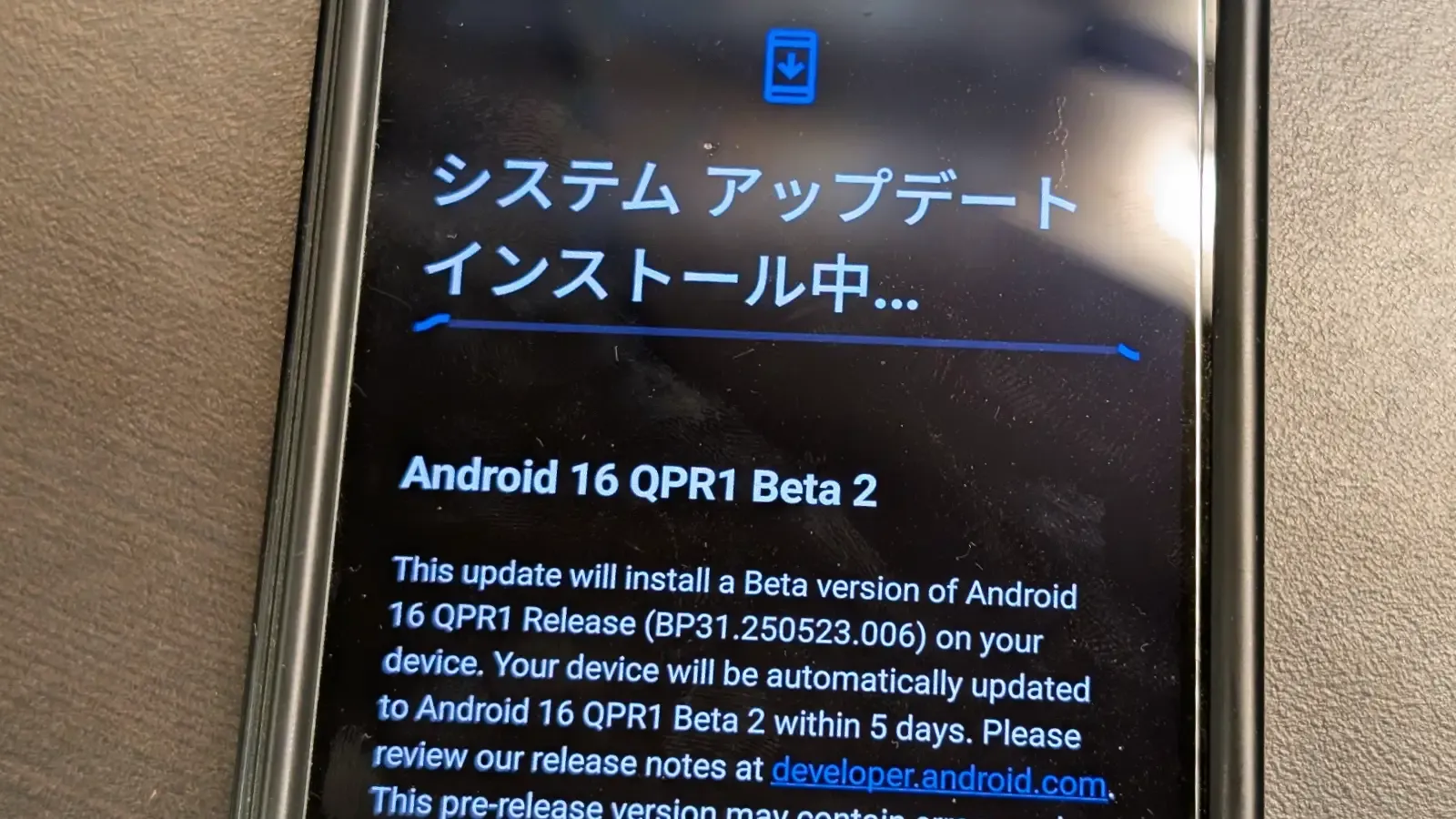
    Android 16 has finally been made available to the general public by Google. The June Pixel Drop and Android 16 QPR1 Beta 2 are also available today, so this isn’t the only update. Here, we’ll concentrate on Android 16 QPR1’s second beta, which will be made available to the general public as Pixel Drop the next quarter.

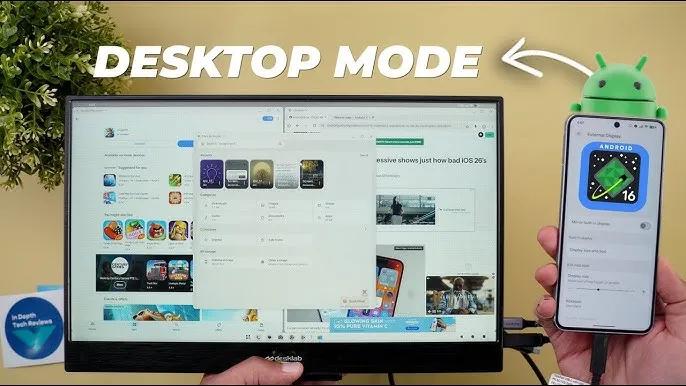
    In late May, Google started testing the Android 16 QPR1. Some of the Material 3 Expressive changes were first made available in the first beta. In addition to bug improvements, the second beta offers developers a sneak peek into Dex-like desktop mode.

    android 16 qpr1 beta 2 desktop mode

    Desktop mode is inevitable in Android 16

    Pixel devices using build number BP31.250523.006 can access the Android 16 QPR1 Beta 2, which is still based on the May security patch. The second beta, as previously said, is more akin to a bug-fix update that fixes a number of known problems. The known bug fixes are listed here.

    • Auto dark theme is not working
    • Now playing is crashing when selecting a track
    • Camera frequently fails to launch
    • Shortcuts for newly-downloaded apps aren’t automatically added
    • Home button not working on app list UI
    • “More wallpapers” button misaligned in wallpaper settings
    • Gemini fails to work on the lockscreen

    The second beta of Android 16 QPR1 will be accessible via an over-the-air update if you have already installed the first beta on your Pixel phone. To test the new QPR beta and the next beta builds, you can simply sign up for the beta program if you’re on a public build.

    Make care to backup crucial data and charge your smartphone to at least 50% before applying the update.

    Stay connected with the latest from Droid Tools—follow us on X @droid_tools, like our page on Facebook, check out our updates on Instagram, and follow us on Google News for real-time news, device tips, and mobile tech insights.
  • HyperOS 2.2 update started to roll out for another batch

    HyperOS 2.2 update started to roll out for another batch

    Xiaomi has started the release of the HyperOS 2.2 stable upgrade for its second batch of devices sooner than originally planned. Some devices have already received the update, rather than the previously announced June 20th start date. Camera 6.0 improvements, improved system animations, sophisticated lock screen customization choices, and system-level efficiency optimizations that take user feedback and changing usage patterns into account are all included in this update. The update strengthens the brand’s user experience across product lines and marks a significant leap in Xiaomi’s software architecture.

    hyperos 2.2

    Devices that already received HyperOS 2.2

    The following devices have successfully received the HyperOS 2.2 stable update:

    • REDMI Turbo 4 Pro
    • REDMI Turbo 4
    • REDMI Note 14 5G
    • REDMI Note 14 Pro 5G
    • REDMI Note 14 Pro+ 5G

    These models now operate with the full HyperOS 2.2 feature set, including all integrated improvements and interface updates.

    In the upcoming weeks, the update is planned for further high-end models:

    Flagship Smartphones:

    • Xiaomi 13 Ultra
    • Xiaomi 13 Pro
    • Xiaomi 13
    • Xiaomi MIX FOLD 3
    • Xiaomi CIVI 4 Pro

    Tablet Devices:

    • Xiaomi Pad 6 Max 14
    • Xiaomi Pad 6 Pro

    Performance Series:

    • REDMI K60 Ultra
    • REDMI K60 Pro
    • REDMI K60
    • REDMI Turbo 3

    Key features we found in HyperOS 2.2

    Camera 6.0, which offers better computational photography and increased image capabilities, is introduced in HyperOS 2.2. Updated lock screen customization options offer a more adaptable user interface, and system animations have been further improved for greater fluidity. Additional system-wide improvements help to boost battery efficiency and overall performance.

    Stay connected with the latest from Droid Tools—follow us on X @droid_tools, like our page on Facebook, check out our updates on Instagram, and follow us on Google News for real-time news, device tips, and mobile tech insights.
  • HyperOS 2.3 development is speeding up along with Android 16

    HyperOS 2.3 development is speeding up along with Android 16

    With the current rapid pace of HyperOS 2.3 development, Xiaomi has taken a major step forward in the development of its software ecosystem. The company’s strategic commitment to integrating its next-generation operating system with the upcoming release of Android 16 was demonstrated on May 27th when internal testing got underway. With Android 16 as its fundamental core, HyperOS 2.3 is positioned as a significant update that improves user experience and performance.

    HyperOS 2.3 is coming fast

    Development teams have initiated a comprehensive internal testing phase, deploying multiple build variants tailored for different regional markets. This strategy ensures broad compatibility across Xiaomi’s international user base.

    The initial test builds include:

    • OS2.0.300.1.WOCCNXM (China variant)
    • OS2.0.300.1.WOCMIXM (Global variant)
    • OS2.0.300.1.WOCEUXM (EEA Global variant)
    hyperos 2.3 development

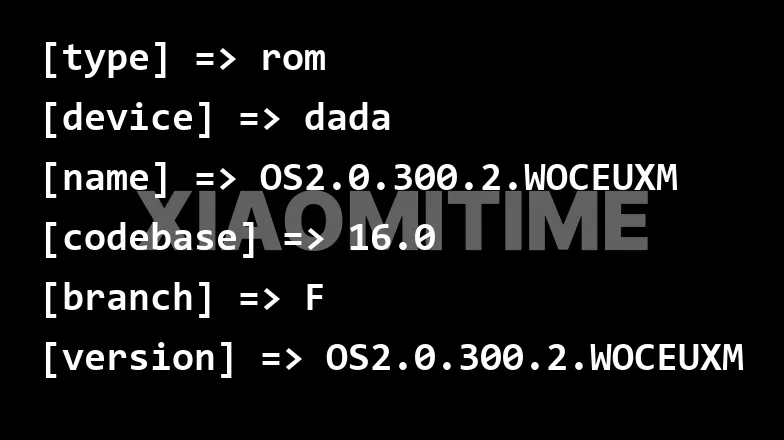
    Updated builds have been produced in recent development cycles; the most recent version for the EEA Global market is OS2.0.300.2.WOCEUXM. These small changes are the result of ongoing optimization and improvement initiatives inside Xiaomi’s development process.

    Currently, the Xiaomi 15 flagship device—internally dubbed “dada”—is given priority in testing methods. The goal of this focused strategy is to guarantee the best possible compatibility between the new hardware and HyperOS 2.3’s sophisticated capabilities.

    HyperOS 2.3 release

    Xiaomi has a shorter development timetable for HyperOS 2.3 because Android 16 is expected to launch in June. Although attaining the late-June objective is still uncertain, the enhanced pace indicates a strong organizational commitment to providing a stable release.

    Stay connected with the latest from Droid Tools—follow us on X @droid_tools, like our page on Facebook, check out our updates on Instagram, and follow us on Google News for real-time news, device tips, and mobile tech insights.
  • Samsung pushes an new update for the latest Galaxy watches models

    Samsung pushes an new update for the latest Galaxy watches models

    A new software update is coming out for some Galaxy Watch models, so you might want to check your settings if you use one.

    Samsung usually only releases a few upgrades for the Galaxy Watch annually, but at least one significant one. One of the company’s less significant updates is currently being released for a few Galaxy Watch models.

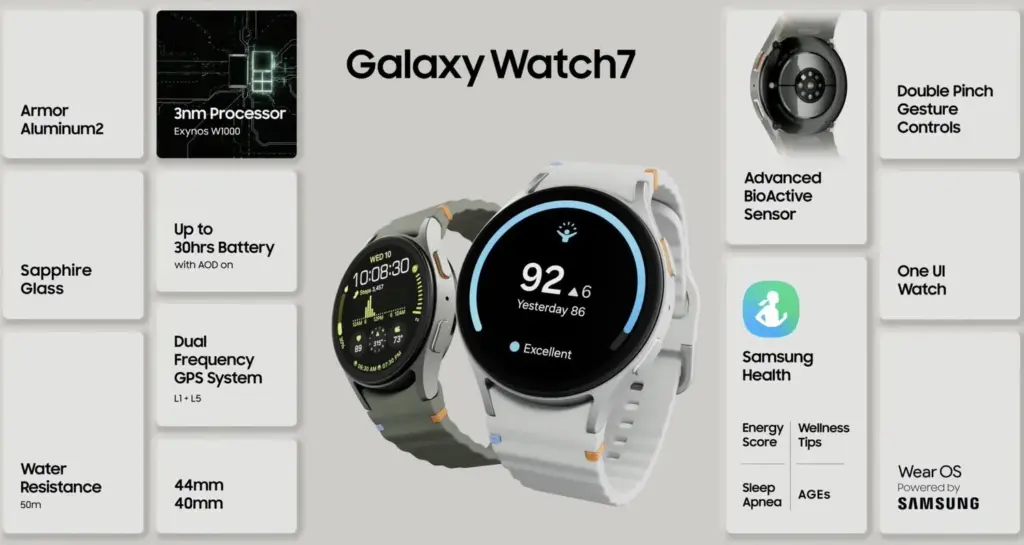
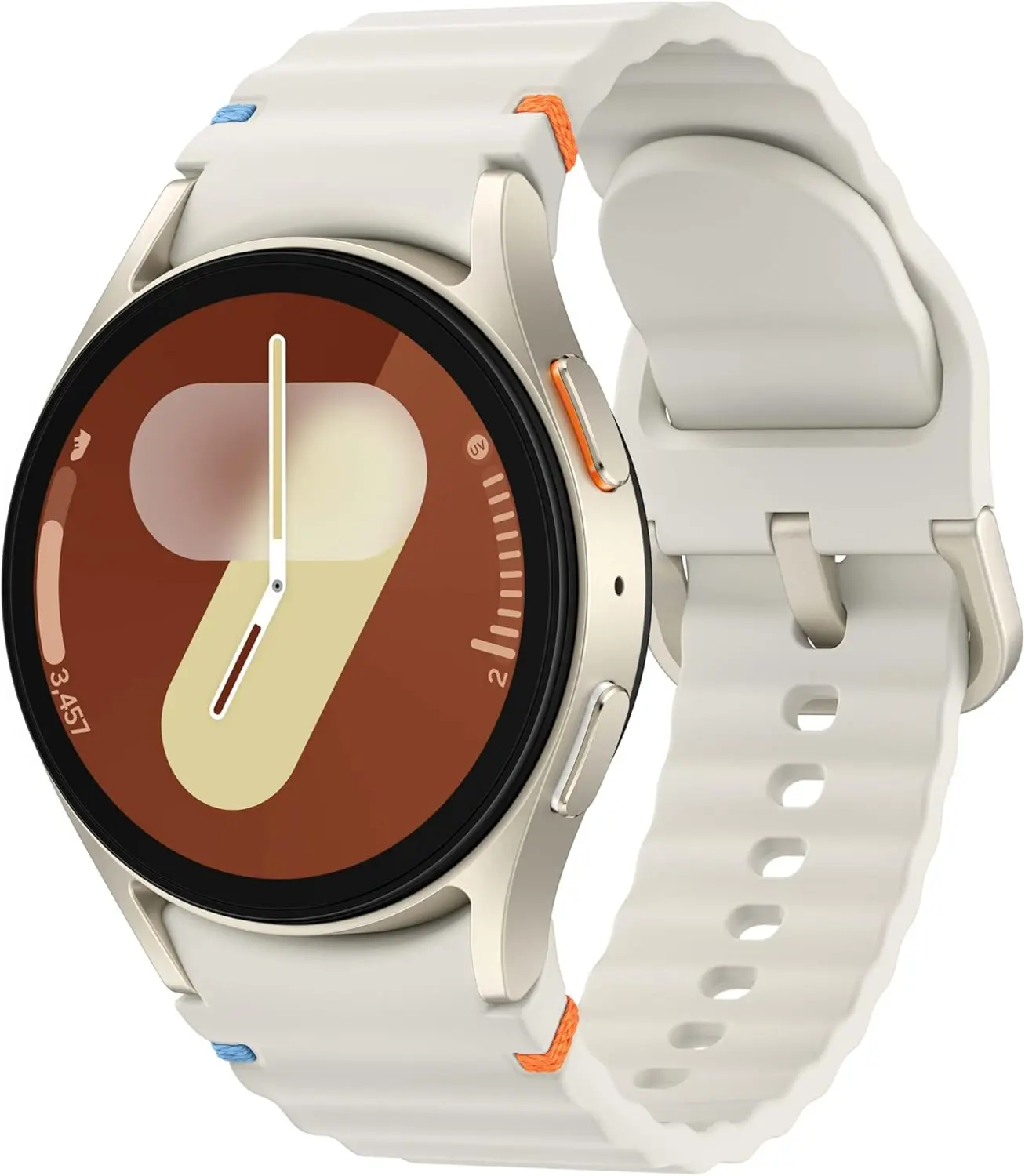
    galaxy watch 7

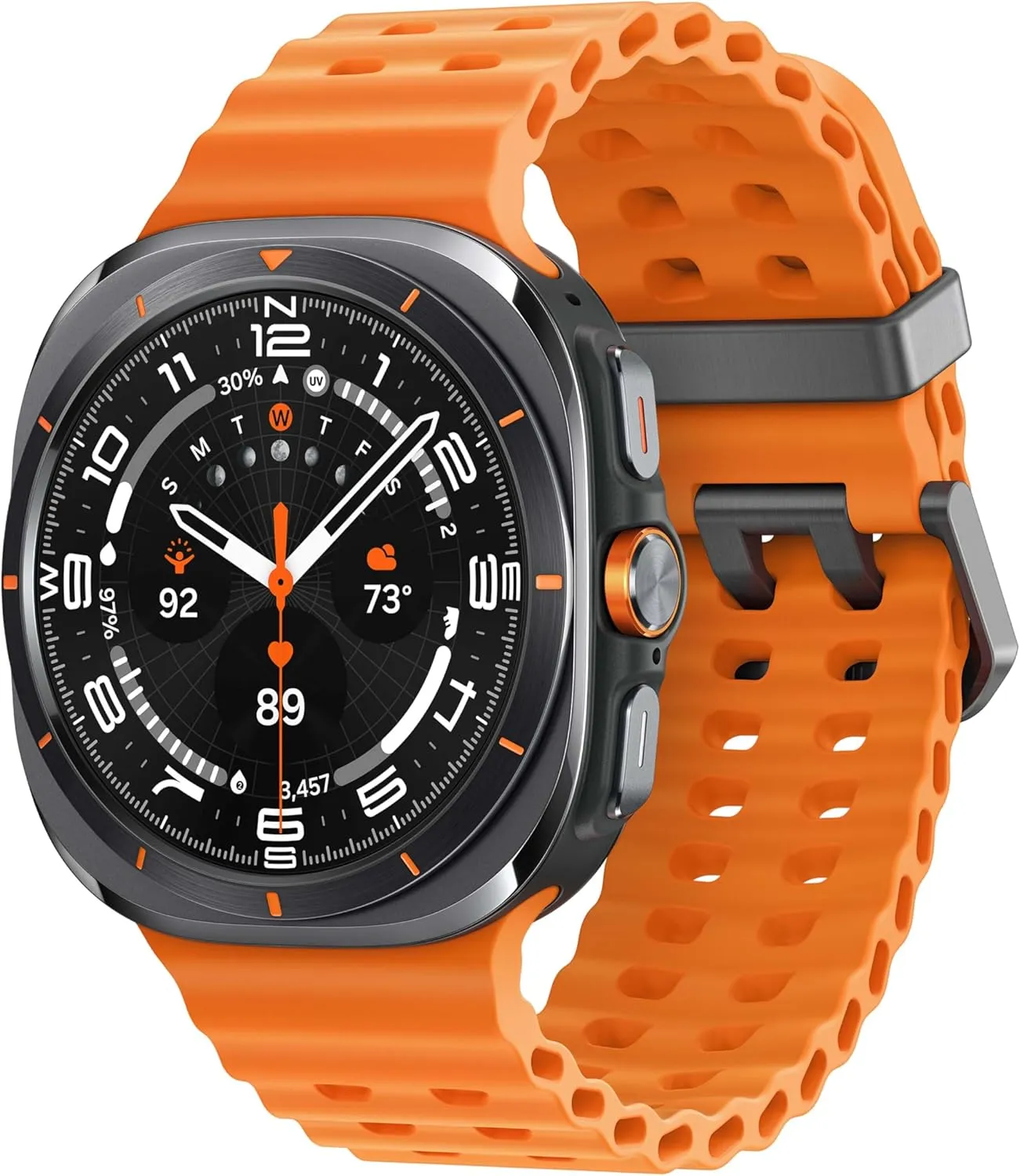
    The May 2025 security update is being released by the firm for the most recent models of the Galaxy Watch 7 and Galaxy Watch Ultra. This covers Verizon variants as well, although we’re seeing a very short changelog for basic phones that displays the March 2025 security patch:

    • The usability of device operations has been improved.

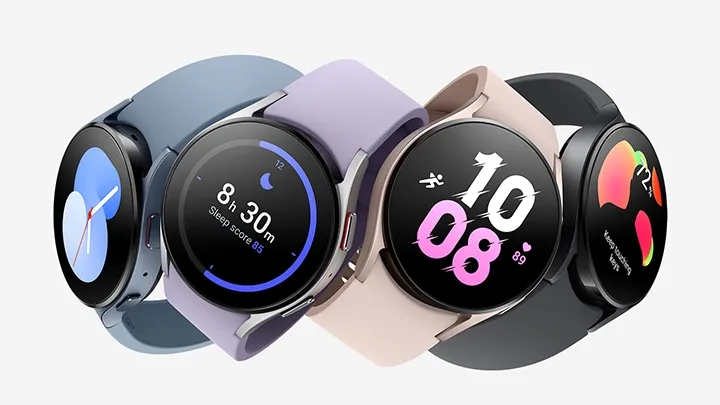
    In the meantime, the March 2025 security patch is being applied to the Galaxy Watch 5 and Galaxy Watch 5 Pro. However, this most recent upgrade is the first one for these devices to be made generally available in 2025. A few weeks ago, some customers received an April update, but it omitted many regions and variants.

    Samsung Galaxy Watch 7 40mm
    $299.99$199.99Amazon
    Samsung Galaxy Watch Ultra
    $399.00$346.99Amazon

    Stay connected with the latest from Droid Tools—follow us on X @droid_tools, like our page on Facebook, check out our updates on Instagram, and follow us on Google News for real-time news, device tips, and mobile tech insights.