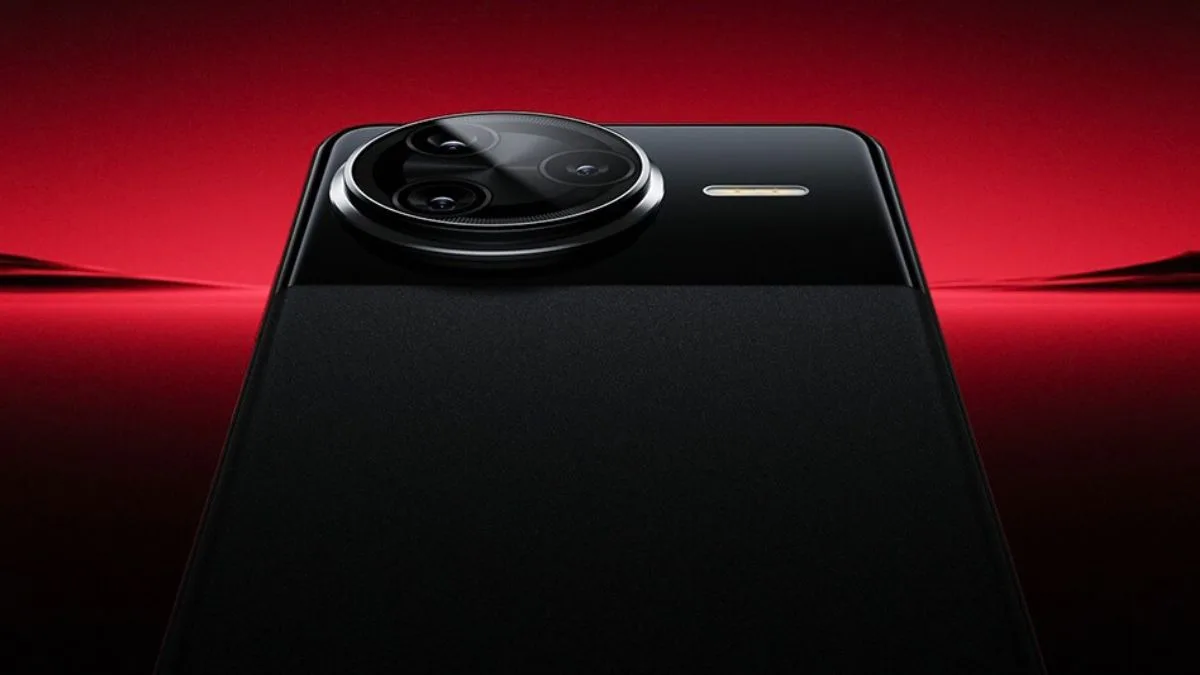
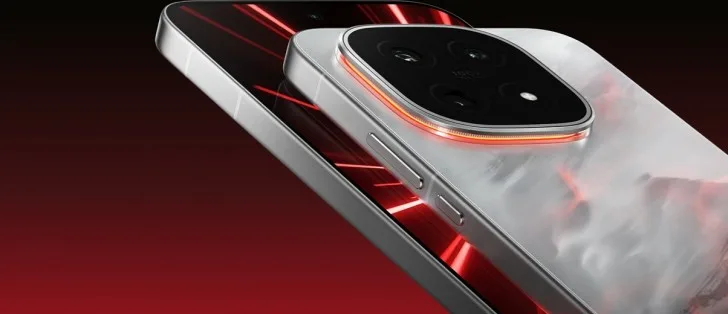
The Redmi K90 Ultra, which will probably arrive in China in a few months, is already being discussed in the rumor mill after Redmi unveiled the K90 and K90 Pro Max in October. Digital Chat Station‘s early information suggests significant improvements over the current models, providing a first glimpse of Xiaomi’s potential lineup expansion. The information provides a first look, and as launch draws near, more clarity is probably in store.
Redmi K90 Ultra key specs
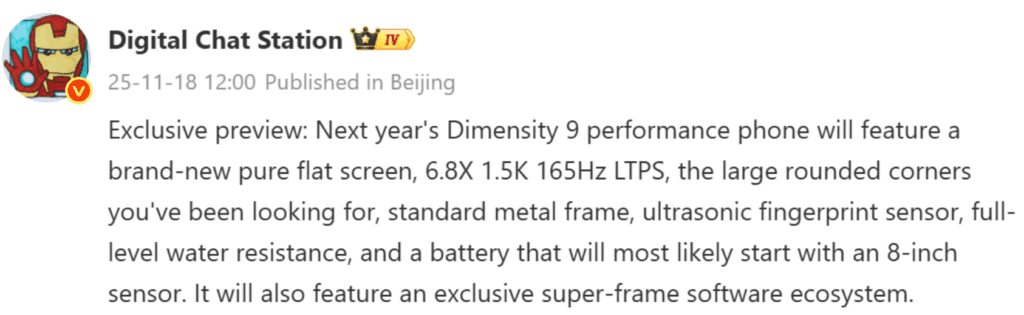
The Redmi K90 Ultra is anticipated to include a 6.8-inch LTPS OLED display with a 1.5K resolution and a quick refresh rate of 165 Hz, according to the leak. The device may include a metal central frame for increased durability, and the screen is rumored to feature rounded corners.
Strong water protection is also anticipated, which is consistent with the stronger resistance ratings of more recent high-end models. An improved audio system and an ultrasonic in-display fingerprint scanner are two more anticipated enhancements.
Battery capacity appears to be one of the most notable features. According to rumors, the phone would have a battery of about 8,000 mAh, which is a significant improvement over the K90 Pro Max and earlier Ultra models. Additionally, a specialized high frame rate software layer that could improve the overall performance profile—particularly for gaming—is hinted at by the tipster.
According to reports, the MediaTek Dimensity 9 series chipset powers the Redmi K90 Ultra. This might be the Dimensity 9500 Plus, which is expected to be released in 2026. The leak characterizes the Ultra as a performance-focused model, implying that photography may continue to be at a respectable but not flagship-leading level, even though camera details have not been disclosed.
The K80 Ultra’s June 2025 release cycle is anticipated to be followed by the K90 Ultra. The K90 Ultra might make its Chinese debut around the middle of 2026 if Xiaomi sticks to this schedule. It’s possible that a modified K90 Ultra may go on sale as a Xiaomi flagship worldwide.
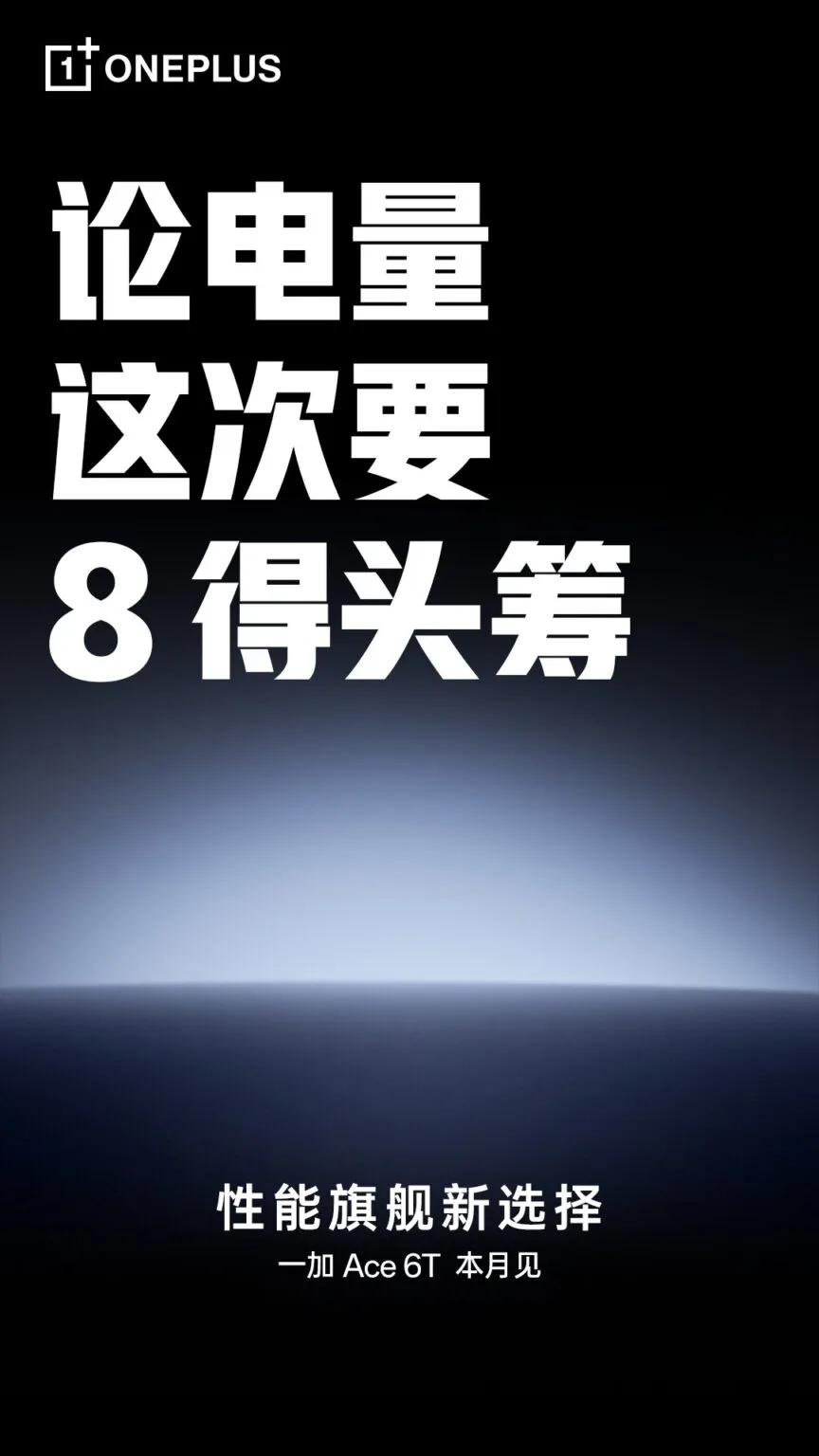
Pre-orders for the OnePlus Ace 6T are already open as the company prepares to introduce it in China. It is anticipated to make its debut later this month as the first phone to use the upcoming Snapdragon 8 Gen 5 CPU. The device has surfaced on Geekbench ahead of the anticipated debut, disclosing the chipset’s specs. The device’s battery size has also been hinted to by the business.
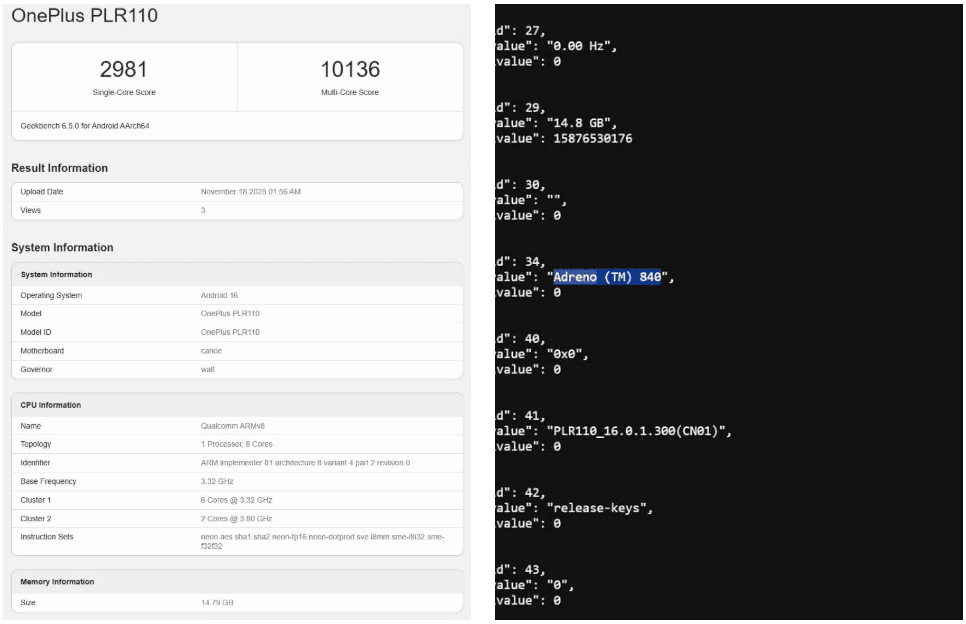
OnePlus Ace 6T Geekbench score
According to the listing above, a new Qualcomm CPU powers the next OnePlus PLR110 phone, which looks to be the OnePlus Ace 6T. The SoC has two 3.2GHz cores and six 3.38GHz cores. Additionally, it has an Adreno 840 GPU for graphics. The Snapdragon 8 Gen 5, which is anticipated to make its debut in the coming days, is the subject of these details.
It also boasts 16GB of RAM and Android 16, according to the OnePlus Ace 6T Geekbench listing. It received 10,136 points in the multi-core test and 2,981 points in the single-core test.
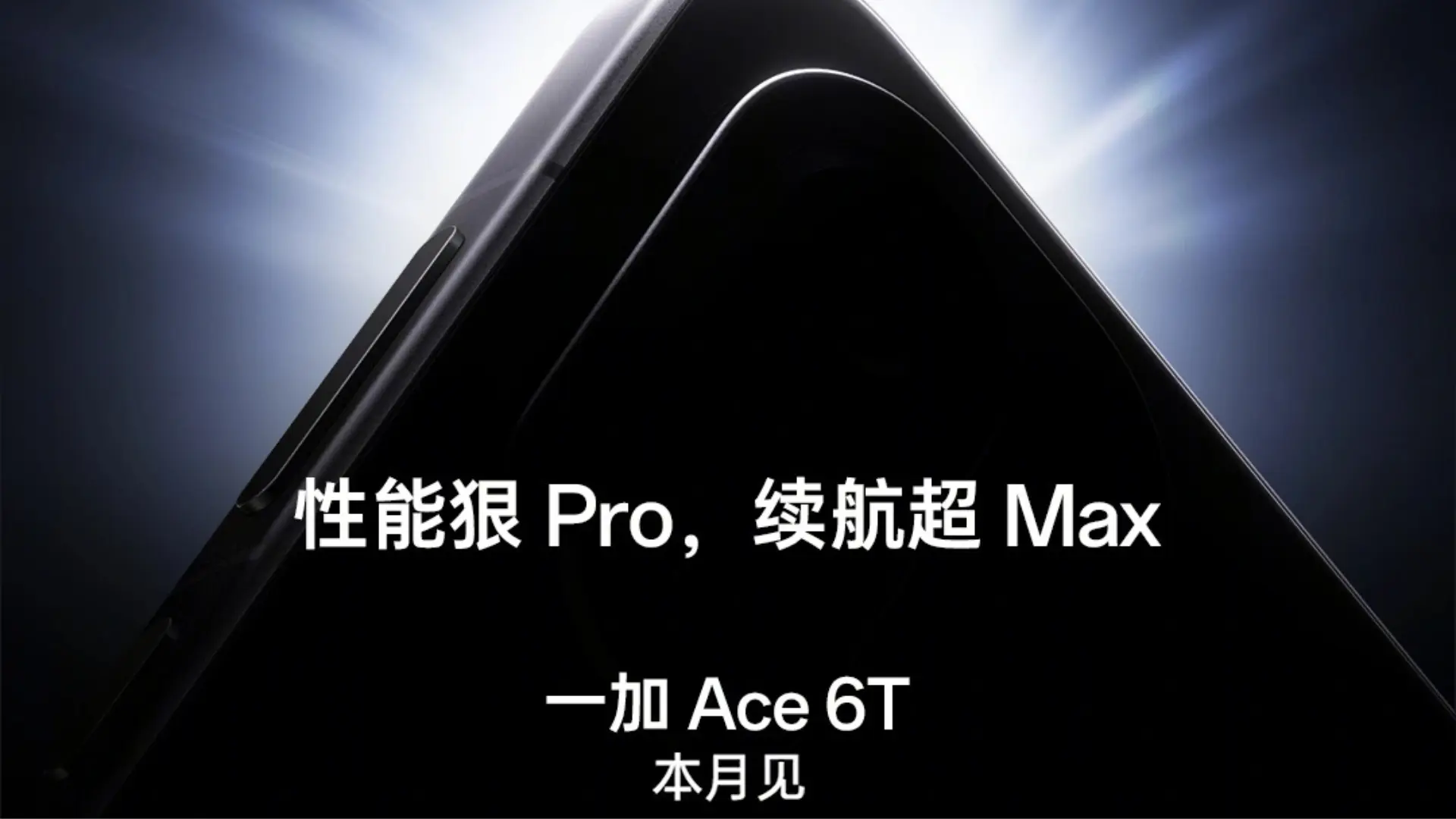
OnePlus Ace 6T’s battery size teased
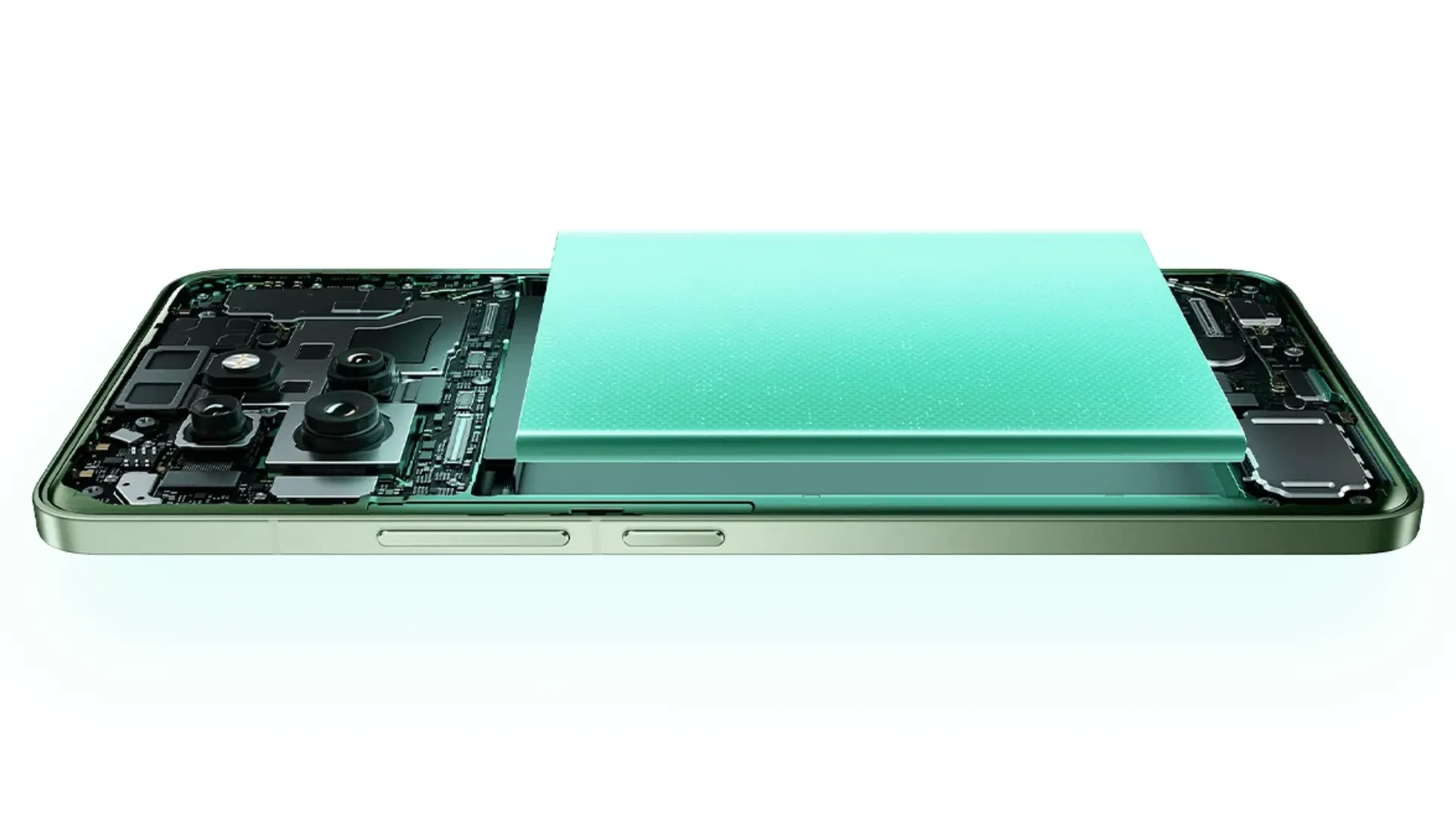
According to the ad above, the OnePlus Ace 6T can support 100W fast charging and has a battery capacity of about 8,000mAh. The gadget includes a 6.8-inch OLED 1.5K 165Hz screen with an ultrasonic in-screen fingerprint sensor, according to some reports. It is anticipated to come with up to 1TB of UFS 4.1 storage and up to 16GB of LPDDR5x Ultra RAM.
An 8-megapixel ultra-wide lens and a 50-megapixel primary camera with OIS assistance will make up its rear camera arrangement. It will sport a 32-megapixel camera on the front for taking selfies. It will come in a variety of colors, including purple, green, black, and a unique variant inspired by Genshin Impact.
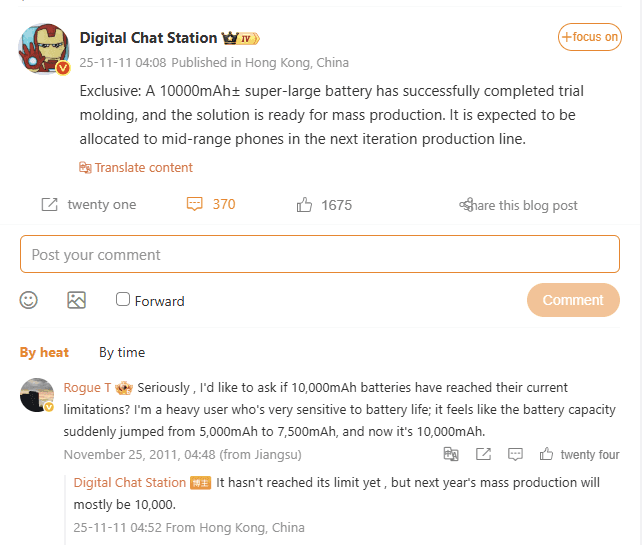
Xiaomi May Rethink Mid-Range Battery RegulationsChinese manufacturers are working to overcome the barrier beyond 7,000mAh and 8,000mAh batteries as smartphone battery technology continues to advance. According to reputable industry sources and well-known leakster @DigitalChatStation, the trial molding process has been completed, and the new 10,000mAh± battery is about to go into mass production. Xiaomi and Redmi are probably going to include this innovative battery into one of their upcoming mid-range phones.
In its products, Xiaomi has always placed a strong emphasis on battery life and energy efficiency. Therefore, the creation of a 10,000mAh-class battery is a significant step toward the realization of smartphones with longer battery lives, which is one feature that consumers are very excited to see improved in smartphones. It is expected that a Redmi device will use the technology.
Since fitting a battery with a 10,000mAh capacity is technically difficult in terms of weight and thermals, this development demonstrates Xiaomi’s determination to balance capacity and design usability.
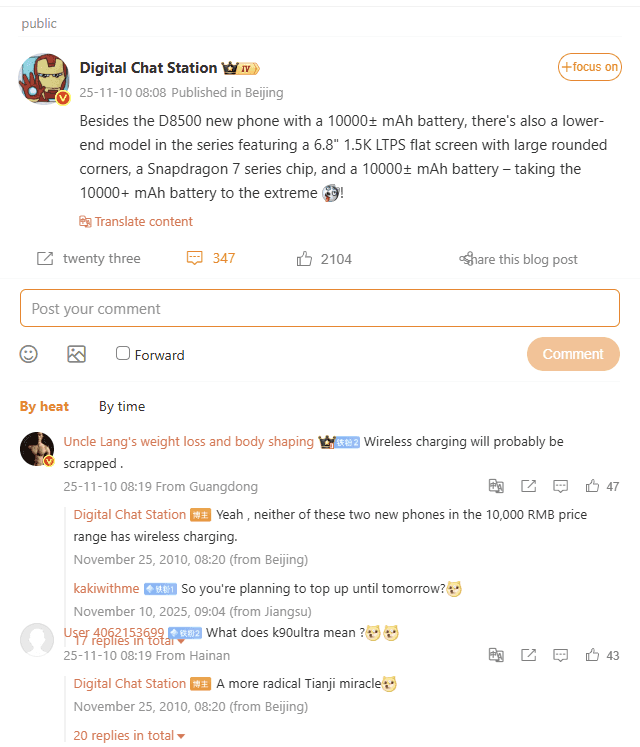
Two smartphones will have 10,000mAh± batteries, according to DigitalChatStation. One of the devices has a Dimensity 8500 processor, while another has a 6.8-inch 1.5K LTPS flat display with a Snapdragon 7 series processor. Although these models have not yet been confirmed, it has been speculated that one may be from Xiaomi’s Redmi series because it may be intended to be a “Ultra Battery” variant.
A significant shift in the industry began with the release of smartphones with five-digit battery capacities. In the past, only rugged cellphones and power banks have such capabilities. With Xiaomi’s arrival into this market, battery capacity with such proportions may become more common, providing the business with yet another reason to rank among the top in terms of battery life. Xiaomi will undoubtedly have a significant advantage over its rivals because to this technology.
Additionally, users would be able to benefit from unparalleled standby times and all-day intensive use without recharging because to HyperOS’s optimization of background operations and hardware resources.
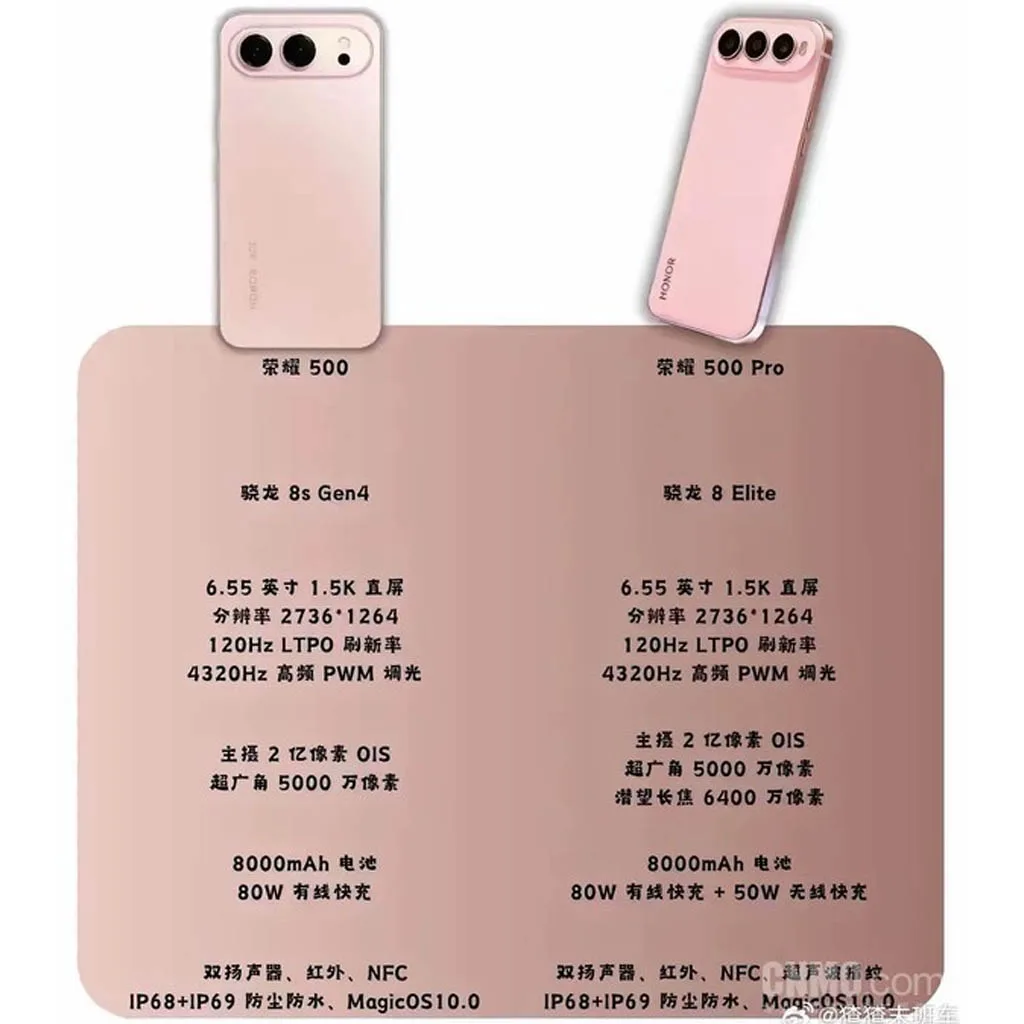
The majority of the important features of the Honor 500 series have been made public by numerous leaks and rumors, but the most recent unofficial specs sheet provides additional insight into the future handsets. The startling details of the new-generation digital lineup are also hinted at.
The new document provides further information about the display panel, chipset, and battery metrics, even if we already know most of the specifications of the Honor 500 series.
First of all, it notes that the Snapdragon 8 Elite chip rather than the Gen 5 version may be installed in the Honor 500 Pro. Conversely, the Snapdragon 8s Gen 4 SoC will be used in the regular model. The two chips’ core configurations are shown below.
Snapdragon 8s Gen 4: 1 core x Cortex-X4 + 7 cores x Cortex-A720
Snapdragon 8 Elite: 2 cores x Oryon (Phoenix L) + 6 cores x Oryon (Phoenix M)
Regarding the display, a 6.55-inch LTPO OLED flat screen with a resolution of 2736 x 1264 pixels and a refresh rate of 120 Hz is anticipated for both Honor 500 versions. It might also enable high-frequency PWM dimming at 4320 Hz.
The Honor 500 vanilla model is probably going to have two cameras: a 200MP primary camera and a 50MP ultrawide-angle lens. Three imaging sensors—a 200MP primary, a 50MP ultrawide-angle, and a 64MP periscope lens—will be included in the Pro One.
An 8000mAh battery with 80W wired fast charging may be compatible with both devices. The Pro model may have 50W wireless charging capability, which the regular Honor 500 may not have.
Dual speakers, infrared, NFC, IP68+IP69 dust and water resistant ratings, and the Android 16-based MagicOS 10.0 operating system are possible additional features of the Honor 500 series.
The Honor 500 series is expected to make its debut in December or before the end of current month. The debut date has not yet been disclosed by the corporation. However, we might soon get into specifics on this topic. Keep an eye out.
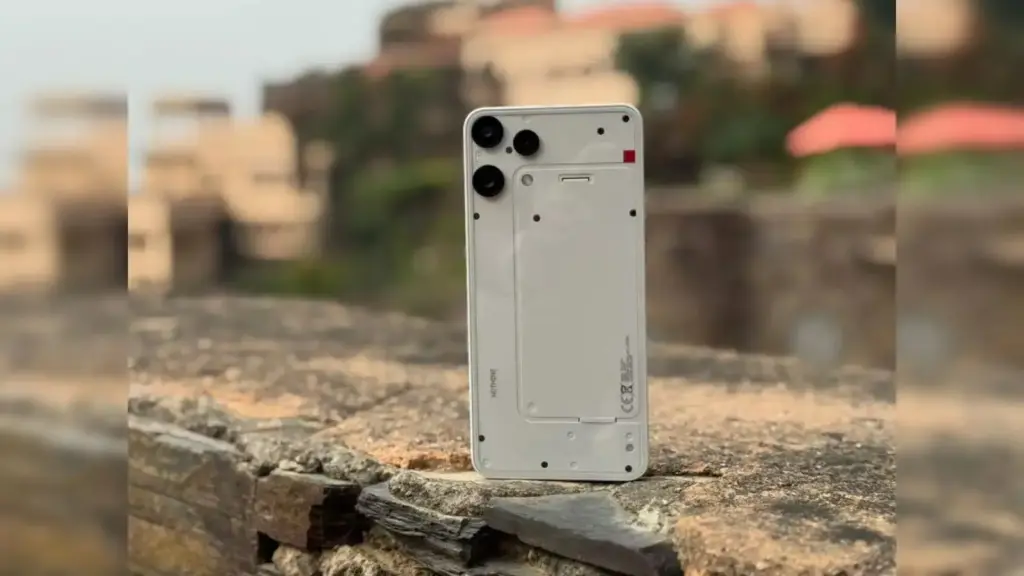
If you were a fan of Nothing, you would know that the release of the Nothing Phone (3a) Lite wasn’t news, yet it was. On the one hand, you are ready for the surprises these gadgets deliver. Conversely, the Nothing Phone (3a) Lite is unique. The brand’s sole entry-level phone will go on sale in October.
You adore phones with translucent designs and glowing glyph lights, and the Nothing Phone series perfectly captures that feel. This phone is unique! Prepare for the Nothing Phone (3a) Lite, the most daring low-cost option to yet. We will discuss the launch, the cost, what to anticipate, and everything in between.
Nothing Phone (3a) Lite announced
Nothing recently revealed that the Phone (3a) Lite would go on sale worldwide on October 29, 2025. That is 1:00 pm GMT, or 6:30 pm IST if you’re in India. YouTube and Nothing’s website both provide live streaming of the event. The launch schedule as a whole aligns perfectly with the Phone 3 lineup. It comes after the March 2025 Nothing Phone (3a).
It’s their first real entry-level phone. It is also intended to be less expensive than their CMF lineup. This launch calls out to you if you prefer daring over basic. With its useful pro features, this phone might be your next reasonably priced upgrade. We now go on to the following part.
Features and design
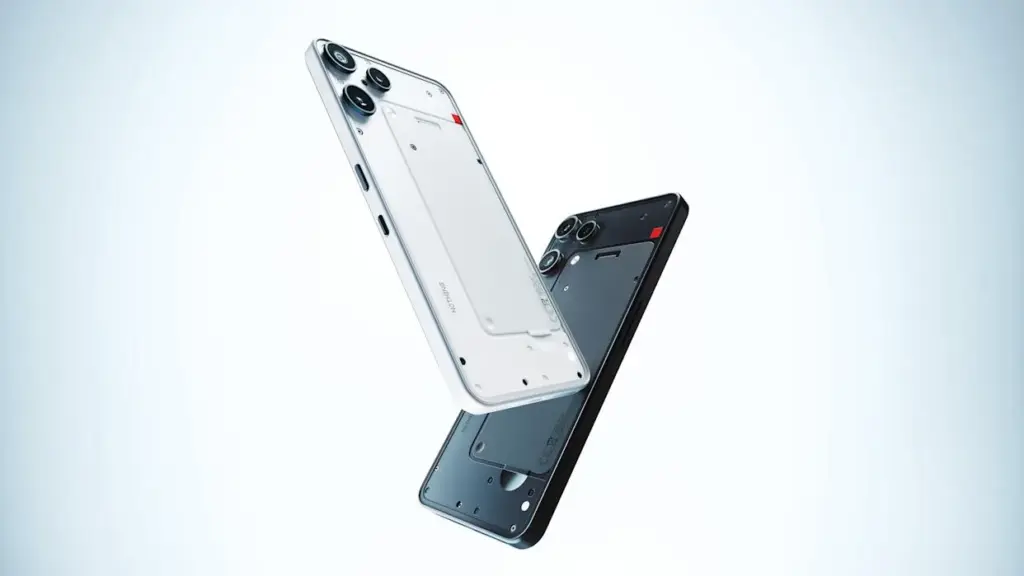
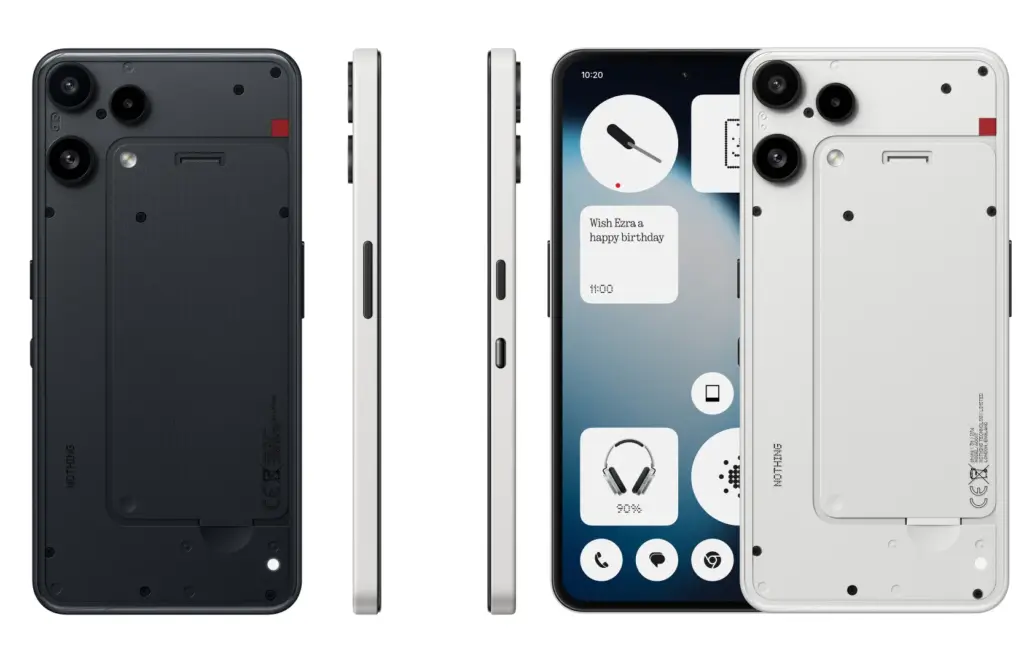
Nothing perfectly captures the eccentric style, yet it doesn’t even appear strange. The Nothing Phone (3a) Lite, which comes in black and white, has a sleek design. A rear LED flashlight is shown in teasers. It also serves as a ping for notifications. However, it now appears lot simpler. This is not a full light show. It lights just enough to draw attention, though.
It comes pre-installed with Android 15. Nothing about OS remains tidy. Widgets look stunning. The gestures are fluid. You get that feeling of transparency without the clutter.
We are aware that the Nothing Phone (3a) Lite will have a 6.77-inch full-HD+ AMOLED screen before it is released. All flagship and respectable 30k-range phones on the market have it at 120 Hz. There are 1.07 billion shades of color. ideal for playing games, watching movies, and other media.
Budget phones typically use the MediaTek Dimensity 7300 processor. Another item on the list is the Nothing Phone 3a Lite. This phone’s apps seamlessly multitask because to its 8GB RAM. 128GB of storage. Extend if necessary.
Regarding the battery, it happily keeps the large 5000mAh cell that lasts all day. At 33W wired, charging is quick. 5W reverse charging. It’s sufficient to sustain earbuds.
One of Nothing Phones’ best features is its cameras, which are not being downsized either. We have an 8-megapixel ultrawide, a 50-megapixel telephoto for zoom, and a 50-megapixel primary camera on the back. An incredible 16-megapixel selfie lens is located on the front. Rear camera daylight photos are particularly striking. The performance in low light is the sole drawback. It’s good, but not at the pro level.
Nothing Phone (3a) Lite price
As far as we are aware, this version was released to compete with more reasonably priced phones. With the lite edition, nothing keeps entry-level real. At the very least, we should anticipate a 5–6k price reduction from the original model. With 8GB RAM and 128GB storage, the Phone (3a) Lite is priced at Rs. 17,990. A great deal for fans of Glyph. Sales begin shortly after introduction, most likely on the website of Nothing or Flipkart.
How does it compare, though? This is a brief table of competitors priced between Rs. 15,000 and Rs. 20,000. The software, features, and performance of these packs are comparable.
Phone Model
Price (Rs.)
Key Highlights
Nothing Phone (3a) Lite
17,990
Dimensity 7300, Glyph LED, 120Hz AMOLED
Moto G85 5G
17,999
Snapdragon 6s Gen3, 50MP OIS cam, 5500mAh
Realme Narzo 70 Pro
18,999
Dimensity 7050, 50MP main, 67W charge
Samsung Galaxy A16 5G
18,499
Exynos 1330, 50MP triple cam, 5000mAh
Poco X6 5G
19,999
Snapdragon 7s Gen2, 64MP OIS, 5100mAh
Nothing Phone (3a) Lite vs Nothing Phone (3a)
We are tempted by the Lite because it is reasonably priced. However, if you can afford to spend a little extra, the complete Phone (3a) entices you more. Since the 3a isn’t too old, the most recent software upgrades are comparable to those of the light. The price is Rs. 22,500. This table may help you make a decision if you are unsure about how the Lite version differs from 3a. Let’s do a table comparison.
Feature
Nothing Phone (3a) Lite
Nothing Phone (3a)
Price (Rs.)
17,990
22,500
Processor
Dimensity 7300
Snapdragon 7s Gen3
Display
6.77″ FHD+ AMOLED, 120Hz, 1.07B colors
6.7″ FHD+ AMOLED, 120Hz, 1B colors
Rear Camera
50MP + 50MP tele + 8MP UW (no OIS)
50MP OIS + 50MP tele + 8MP UW
Front Camera
16MP
32MP
Battery & Charging
5000mAh, 33W wired, 5W reverse
5000mAh, 50W wired, 7.5W reverse
In terms of speed and shots, the 3a prevails. In games, Snapdragon outperforms Dimensity. OIS stabilizes videos. 32-megapixel selfies are crisper. At 50W, charging is incredibly quick. In twenty minutes, that will be half full.
But Lite is resilient. identical battery life. The screen pop is similar. Hold on to Lite if the budget is tight and you can do without a few slightly less expensive features. Eighty percent of the magic is delivered by it. Only if you are using a previous series should you upgrade after the Nothing Phone (3a) Lite launch.
The Nothing Phone (3a) Lite demonstrates a bold look that isn’t appropriate for everyone. However, many people can afford it. This phone is especially suitable for young people who are in college, are students, or are starting their first job. Additionally, the Nothing phone 3a lite can be your calling if you swap phones every two to three years in search of the newest features.
How do you feel about the release of the Nothing Phone (3a) Lite? Would you purchase it? Leave a comment with your ideas!
iQOO fans have been anticipating this for weeks, and it’s understandable why. Numerous rumors, teasers, and leaks have been made about the company’s next flagship, the iQOO 15. With rumors of a fresh look and the promise of cutting-edge gaming performance, this gadget appears poised to challenge the Android industry’s titans. Now that the Chinese launch date is quickly approaching, it seems like we’re finally getting a glimpse of what iQOO has been working on.
In terms of appearance and power, the iQOO 15 is anticipated to represent a significant improvement over its predecessor, the iQOO 13. Leaked images and teasers suggest a revised rear design, replete with a sleek circular camera module that feels more in keeping with today’s flagship design language, even though the company hasn’t made all the details public.
A huge 6.85-inch 2K 8T LTPO Samsung “Everest” display with a refresh rate of 144 Hz and a maximum brightness of 6,000 nits is rumored to be on the front; if accurate, this would make it one of the brightest smartphone screens available. Its overall flagship appeal is reportedly increased by the addition of wireless charging, an IP69 grade for water and dust protection, and a 3D ultrasonic fingerprint sensor.
The Snapdragon 8 Elite Gen 5 CPU, Qualcomm’s newest and most potent chipset to yet, is anticipated to be the engine behind the hood. This would place the iQOO 15 on par with OnePlus, Xiaomi, and Samsung’s future flagships and make it one of the first phones in the world to arrive with the new chipset.
It’s interesting to note that iQOO is reportedly combining this processor with its own Q3 gaming chip, which may maximize frame rates and regulate heat for extended gaming sessions.
Speaking of heat, the company’s new 8K vapour chamber (VC) Dome cooling system is said to deliver up to 47% greater cooling than the iQOO 13 thanks to a second layer of high-conductivity graphite. That’s significant for gamers and heavy users, particularly when using the phone to its full potential.
Regarding the camera, the rumors still present an intriguing picture. A dual 50-megapixel camera combination, comprising a huge 1/1.5-inch primary sensor and a periscope telephoto lens for sharp zoom images, may be included in the iQOO 15. If verified, this would represent a significant improvement in the brand’s photography, bringing it closer to the level of high-end Android rivals like the Xiaomi 15 Pro and Galaxy S24 Ultra, but perhaps at a more affordable price.
Another area that may use better is battery life. Although the iQOO 13’s 6,000 mAh battery and 120 W fast charging has made an impression, the upcoming model is rumored to surpass 7,000 mAh and allow wireless charging, a long-desired feature. For even greater defense against water and dust, it is anticipated to have IP69 certification, which is uncommon for non-ultra-rugged electronics.
Regarding the exact release date, the iQOO 15 and iQOO Pad 5e are scheduled to debut in China on October 20. After that, it appears that India will make its debut somewhere between November 15 and 25. Although a precise date has not yet been established, Nipun Marya, the CEO of iQOO India, has previously alluded to a November timeline on X.
Introducing the all-new #iQOO15, crafted for those who don’t wait for the future – they race towards it. Experience performance that keeps you in the lead. Save the date for November 26th. What are you most hyped to experience? Tell us below! #iQOO15#BeTheGOATpic.twitter.com/KbNNZECaE0
According to price leaks, the iQOO 15 may launch for ₹59,999 ($683), which is little more than the base iQOO 13’s launch price of ₹54,999 ($626). A minor uptick like that seems to be expected given the significant hardware changes, improved cooling, and new display technology. However, until the official announcement, it is best to use these details with caution as they are yet unconfirmed.
All things considered, the iQOO 15 appears to be one of the most potent Android smartphones of the year—a flagship that prioritizes performance without sacrificing high-end features.
And if these preliminary leaks are any guide, iQOO may be in possession of its most alluring smartphone to date. To find out how much of this excitement is real, all that’s left to do is wait for the formal launch.
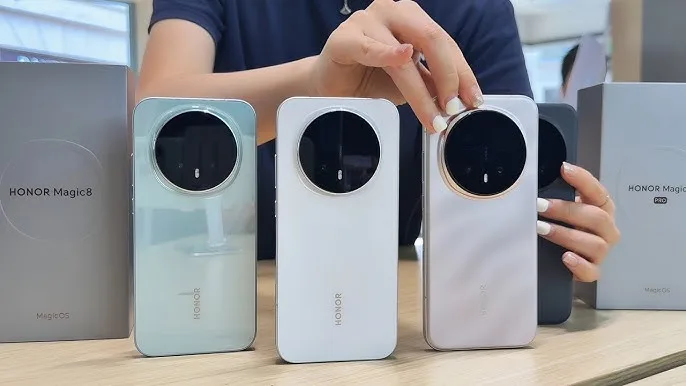
Honor isn’t spending any time getting its new Magic 8 Pro ready for its domestic China launch this month, even if it’s hard to believe that new flagship phone season has already begun again. My firsthand impressions are based on the pre-production unit that Honor supplied me prior to the launch.
Honor’s Magic OS 10 software, which is based on Android 16, is installed on this China model. It has Qualcomm’s latest Snapdragon 8 Elite Gen 5 hardware, a state-of-the-art camera system, a beautiful, elegant design that is lighter than before, and the largest battery I’ve ever seen in a flagship phone – despite the weight decrease.
Specs and availability
Before making its way to other regions, such as Europe, later this year in Sunrise Gold, Sky Cyan, and Black hues, the Honor Magic 8 Pro will make its debut in China in October 2025.
At launch, the phone comes with a 7,200mAh battery and a single SKU with 12GB RAM and 512GB storage. Because of European battery size constraints, the European model will come with a 6,270mAh battery.
Honor comes with a clear TPU case, a USB cable, a 100W charger, and a film screen protector already fitted on the phone. Very good deal when compared to other flagships!
Ultrasonic in-display fingerprint scanner, 3D depth front camera for face recognition
Battery
7100mAh (China) or 6270mAh (Europe) Silicon-carbon battery
Charging
100W wired, 80W wireless
Durability
IP68, IP69, IP69k
Processor
Qualcomm Snapdragon 8 Elite Gen 5
RAM
12GB
Storage
512GB
Dimensions
161.15mm x 75mm x 8.4mm
Weight
213g
Colors
Sunrise Gold, Sky Cyan, Black
New designa and a huge battery
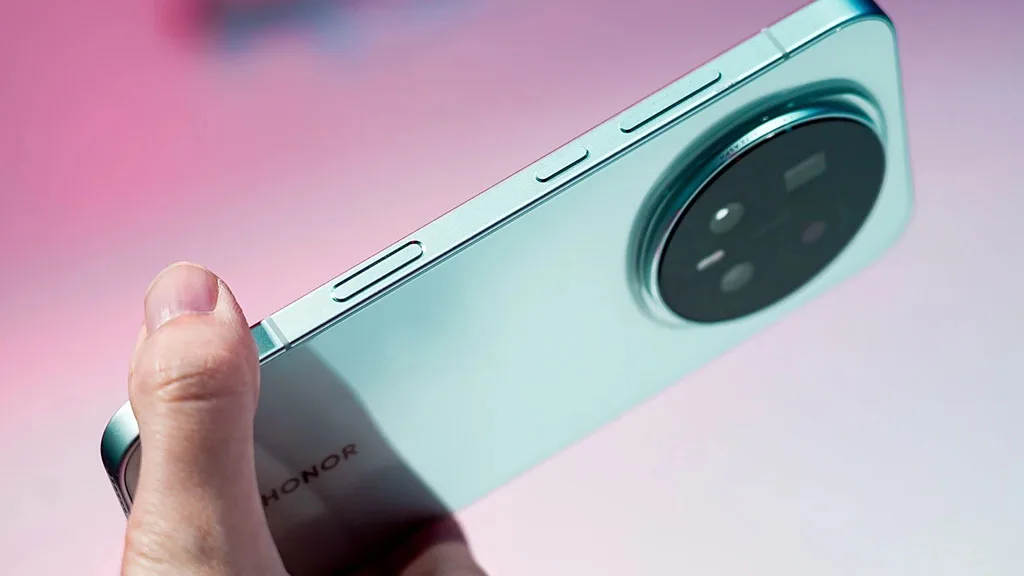
I could sense the difference from the previous year as soon as I took the Honor Magic 8 Pro out of the package. In addition to being smoother than before (in a non-slippery fashion, strange as that sounds), the phone’s soft, brushed metal sides also organically curve into the front and rear of the chassis, offering remarkable weight alleviation over the previous model.
Honor appears to have found a good mix between the flat side trend and a more pleasant set of curves, which is something I dislike about most phones with flat edges. Only the extreme margins of the corners are pushed into a curve, making the display flatter than before.
The new design’s touted feature is a new AI button, which is situated around two-thirds of the way down the phone’s right side. Although it may also be used as a camera control button with swipe-to-zoom capabilities, this long button, which is flush with the frame, is primarily used as an AI button right out of the box.
In China, YOYO video AI can be accessed by long-pressing the button; this capability at least somewhat resembles Gemini Live. Honor hasn’t officially disclosed their plans, but it’s probable that international versions will include this feature with Gemini rather than YOYO.
Additionally, you can personalize a single or double press of this button to take a screenshot for AI memories, start the camera, or open the AI memories center.
I really enjoyed this final feature since it made it simple for me to keep track of facts throughout the day. For instance, I came across a local post about a Harry Potter event that was taking place at the end of the month while perusing Instagram. The screenshot of this incident was saved in my AI memories when I tapped the AI button, and I can locate it by searching for “Harry Potter” in the AI memories app.
These days, my preferred method of finding information is this kind of context-sensitive information searching, which is comparable to the Pixel Screenshots app. You can even request that YOYO “find all my screenshots and eliminate the fuzzy ones” for the Chinese models. If you choose not to utilize it, the implementation is totally ignorable and doesn’t feel intrusive at all.
You will care about the improved battery even if you don’t give a damn about the new AI button. With Honor’s latest silicon-carbon battery technology, which has an incredible 7,100mAh capacity, the Magic 8 Pro has the largest battery I’ve ever seen in a typical flagship phone. Despite this, the phone weighs less than the one from the previous year.
The Honor Magic V5 also featured a comparable capacity increase and this battery technology. This isn’t “empty capacity” or anything because, at the beginning of the third day of my testing, I had barely less than 20% remaining after going two full days without charging. It’s authentic.
About the camera
Every shot I took with the Honor Magic 8 Pro impressed me on a pleasant fall day. As I’ve come to anticipate from Honor phones, this one performs especially well in motion capture, portrait mode, and with the telephoto camera. It’s not surprising to see that upgraded here with even better sensors because even Honor’s more reasonably priced phones capture beautiful portrait mode photos.
Images captured using the viewfinder’s 2x, 3.7x, or 10x presets are outstanding. The camera performed well in every situation I tested it in, and I doubt I could ask for more from any camera with a zoom of less than 10x.
Honor also emphasizes the phone’s capacity to capture images in difficult lighting conditions, an area where other phones frequently falter. One such moment is The Blue Hour, which occurs immediately before the sun sets.
In addition to the fact that color is typically difficult to capture at this time, longer exposure times are frequently required to obtain sharp images. Comparing the Magic 8 Pro to the Pixel 10 Pro XL, the former passed this test with flying colors.
Furthermore, all of the exciting new toys are buried in the AI processing, even though the telephoto camera has some amazing new stability and low-light characteristics as well as improved dynamic range.
Viewing your images in context is no longer the only use for motion photos. With only two taps, you can add motion trails, turn any motion snapshot into a slow-motion video, or make an amazing stop-motion animation with the Magic 8 Pro’s new AI editing features.
Additionally, Honor is introducing some cool new AI-based recoloring modes, including as Warm Sunset, Golden Autumn, and Romantic Blue, to give your old photographs a fresh look.
Honor Magic 8 Pro – raw power, AI and photography
As the international debut draws nearer, we’ll be discussing the many interesting and fresh announcements regarding this phone. As of right now, Honor’s most recent products are receiving great reviews, and the business is consistently improving both the hardware and software designs, such as the new MagicOS 10 that runs on Android 16.
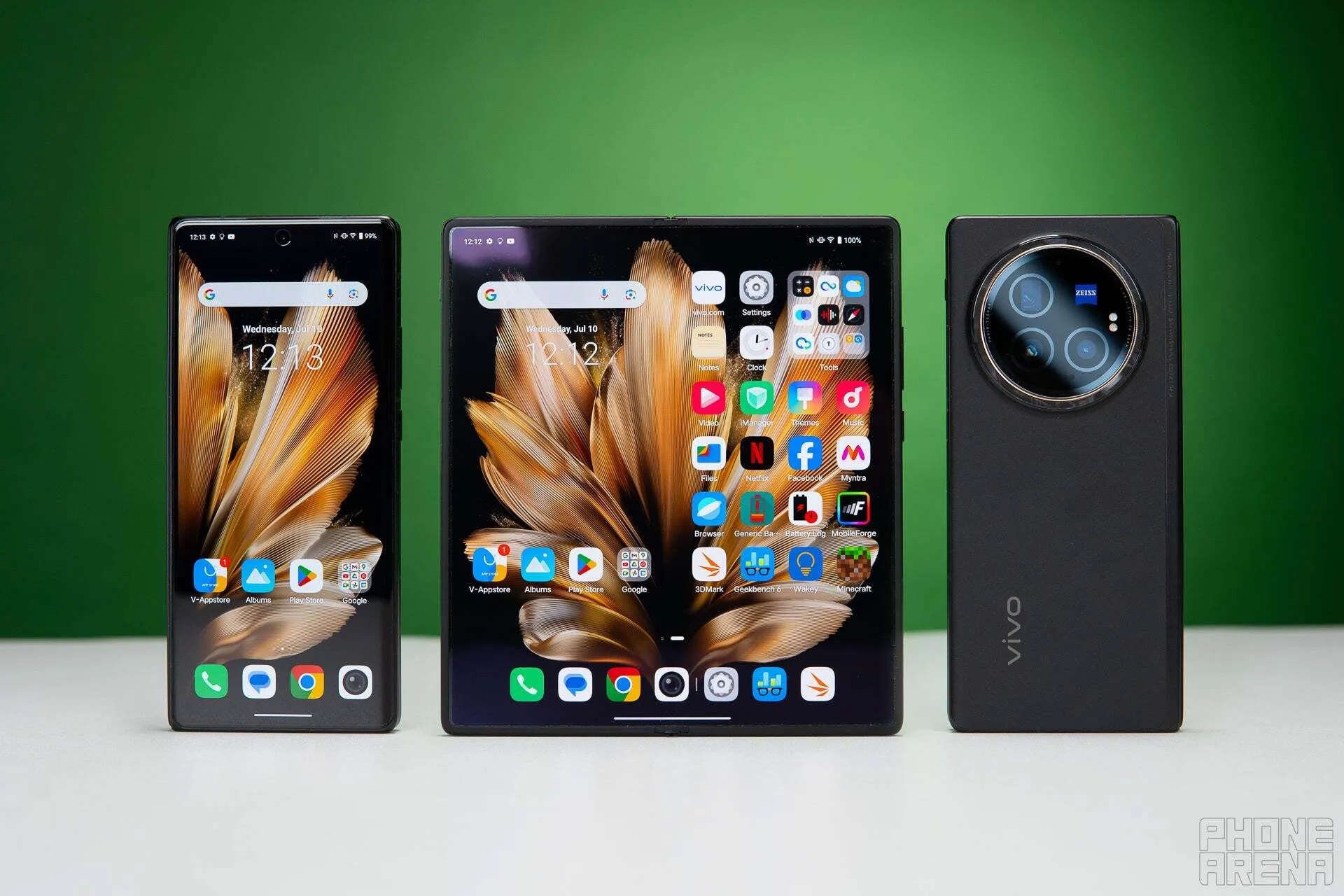
The Vivo X Fold5 sets a new standard for folding smartphones by fusing cutting-edge technology, stylish design, and potent performance. This phone, which combines the greatest features of regular and foldable phones, is perfect for tech-savvy users, professionals, and entertainment aficionados who value both design and productivity.
Exclusive Discount
Get the Vivo X Fold5 at GeekWills for a special $50 discount for a short period of time by using the coupon code XFD5. Don’t pass up this fantastic deal on Vivo’s high-end foldable smartphone; it’s only available till July 30.
The Vivo X Fold5 has a high-end construction and a seamless, stylish, and long-lasting folding mechanism. A huge 8.03-inch OLED LTPO 8T display with a high resolution of 2480 x 2200 pixels is revealed as it opens up, offering a clear and colorful visual experience. Because of this, it’s ideal for multitasking on a wide canvas, reading, and watching videos. The 6.53-inch outside AMOLED display, which has a resolution of 2748 x 1172, guarantees easy access for daily use without opening the device when folded. Both displays have outstanding clarity and vibrant colors, and the fold is made to last through frequent use without breaking.
The Snapdragon 8 Gen 3 chipset, which powers the Vivo X Fold5, provides quick and effective performance. The processor and up to 16GB LPDDR5X RAM guarantee seamless performance whether you’re multitasking between windows, playing demanding apps, or playing intensive games. With 256GB to 1TB of onboard storage, there is more than enough room for apps, pictures, and videos. Additionally, it has a strong dual-cell 6000mAh battery that can be charged at 80W wired and 40W wireless rates. It can be charged to 50% capacity in just 15 minutes, making it ideal for those who are constantly on the go.
Versatile Camera Setup for All Scenarios
The Vivo X Fold5 has three 50MP cameras on the back, making it a strong camera system. It has an ultra-wide-angle lens with a 120° field of view, a primary ultra-sensitive camera, and a professional portrait camera with up to 100x digital and 3x optical zoom. This phone offers amazing clarity and detail whether you’re taking close-ups, landscapes, or portraits. Whether the phone is open or folded, the two 20MP front cameras (one on each side) guarantee excellent results for selfies and video calls.
The Vivo X Fold5 provides a clear and snappy user experience because to its Funtouch OS, which is based on Android 15. Both work and play are improved by features like sophisticated facial recognition, stylus support, and split-screen multitasking. The smartphone is future-ready for worldwide connectivity since it also supports 5G, dual SIM, and eSIM. An additional degree of convenience and security is provided by the side fingerprint unlock feature.
With its high-end hardware and well-considered features, the Vivo X Fold5 offers a premium folding experience. Depending on your demands, this multipurpose gadget can be used as a dependable daily driver, a little tablet, or a strong camera tool.
Vivo X Fold5 specs:
Main Display: 8.03-inch OLED LTPO 8T, 2480 × 2200 resolution
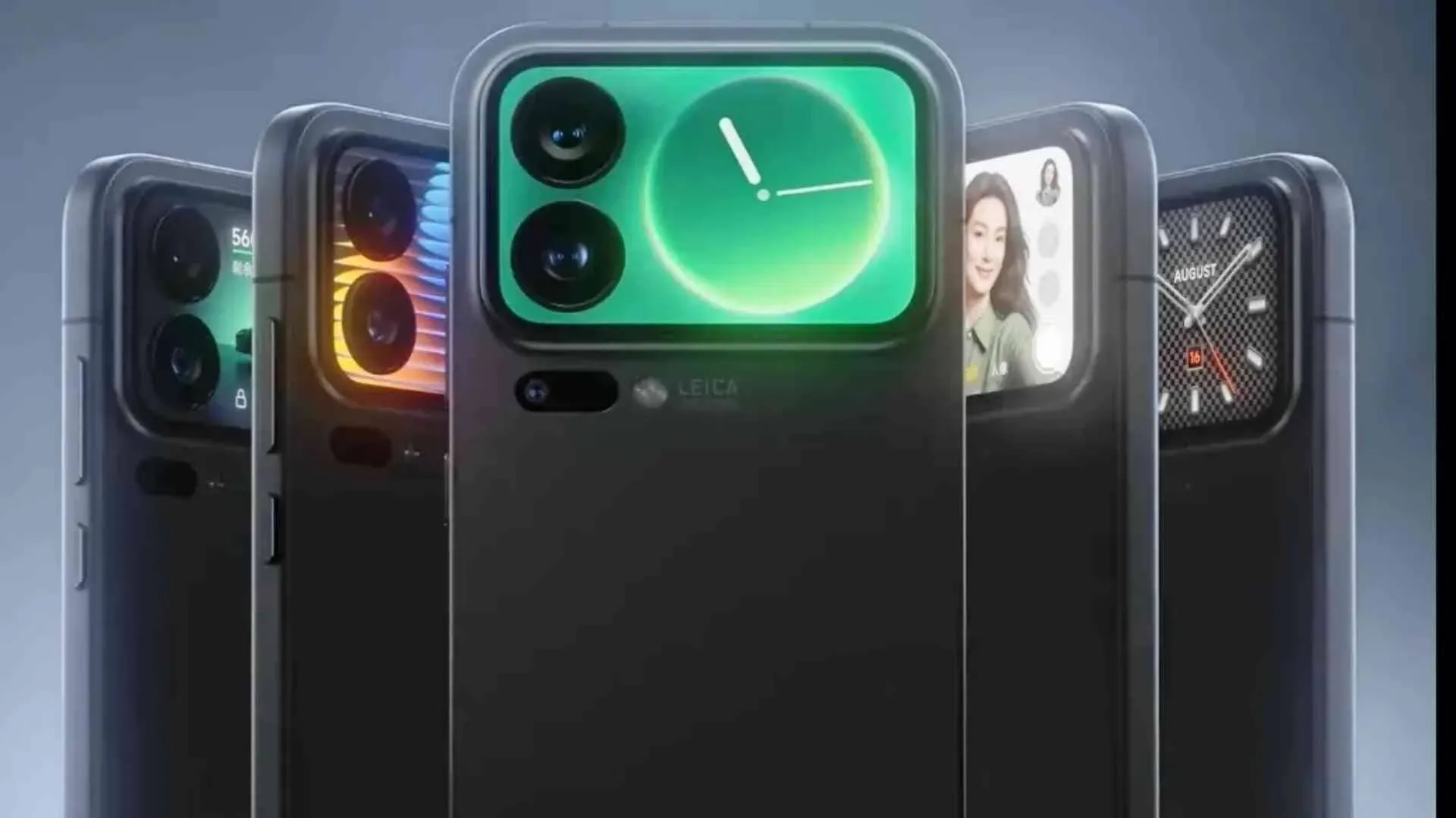
It’s difficult to release a genuinely unique smartphone in 2025, but Xiaomi succeeded. The Xiaomi 17 Pro and 17 Pro Max, which have extra screens on the back, were released by the firm, and it seems that this decision was successful.
Lu Weibing, the president of Xiaomi, stated during a livestream (source in Chinese) on Weibo that the business will keep using Dynamic Back Displays in its upcoming flagship devices. According to him, the business already has plans to boost its R&D expenditures in order to guarantee higher-quality displays for Xiaomi’s upcoming smartphones.
The choice was made in light of the Xiaomi 17 series’ success, which the company says was enormous and witnessed a 20% rise in sales over the previous year. The Xiaomi 17 Pro Max, which broke the first-day domestic sales record, is the biggest hit.
What is the secondary display used for?
The Xiaomi 17 Pro and Xiaomi 17 Pro Max, in contrast to Apple’s iPhone 17 and 17 Pro Max, make use of the so-called camera plateau and have secondary displays atop it. It is a 2.66-inch OLED screen with a resolution of 904 x 572 pixels, a refresh rate of up to 120 Hz, and a brightness of up to 3,500 nits. It has a selfie viewfinder, a few widgets, customizable wallpapers, and other features like the cover screen of contemporary flip phones.
It wouldn’t be shocking to see a larger screen with more features on what might be the Xiaomi 18 series, especially in light of Xiaomi’s most recent announcement. According to Lu Weibing, the business is updating the displays from the current generation. One of them ought to equip the gadget with a real-time translating function.
Similar to its predecessors, the MediaTek Dimensity 9500 maintains its competitiveness and occasionally even surpasses Qualcomm’s Snapdragon 8 Elite Gen 5. At least if the Xiaomi 17 Pro Max and Vivo X300 Pro’s recent benchmarks are any indication.
Earlier this week, Vivo introduced the Vivo X300 series, the company’s first phones to use MediaTek‘s top Dimensity 9500 processor. Early benchmarks of the SoC on MediaTek’s test device revealed a modest inferiority to Qualcomm’s, but more recent ones suggest the situation is more nuanced.
Vivo X300 Pro vs Xiaomi 17 Pro Max AnTuTu benchmark
The Vivo X300 Pro and the Snapdragon 8 Elite Gen 5-powered Xiaomi 17 Pro Max have now been tested side by side under nearly comparable settings, and their AnTuTu benchmark results have appeared online. Unexpectedly, the Vivo gadget outperforms the Xiaomi, scoring 3,956,885 overall compared to 3,731,077 for the Xiaomi. In actuality, the latter score is higher than what that phone achieves on the current AnTuTu list.
Though not significantly, the Vivo X300 Pro also performed better on the CPU, GPU, and memory tests. Additionally, even though the Vivo’s battery is much smaller, both phones’ battery life decreased by 5%. But the Xiaomi 17 Pro Max remained colder.