Author: Robert Haba

  • Honor Magic 7 Gets Powerful New YOYO AI Tools — Here’s What’s New

    Honor Magic 7 Gets Powerful New YOYO AI Tools — Here’s What’s New

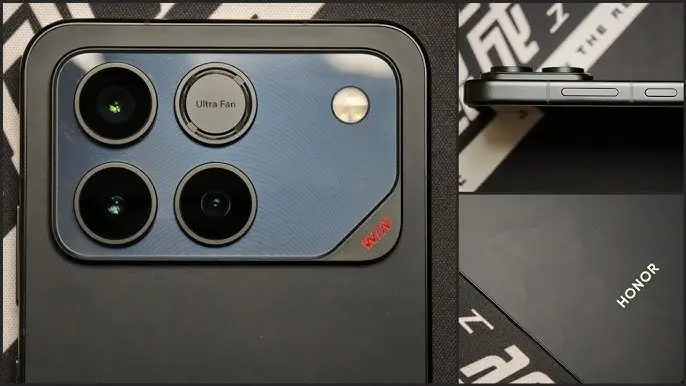
    Honor is rolling out a new MagicOS 10 update to the Magic 7 series, introducing a range of YOYO AI features alongside broader system improvements. The April 2026 update is now being pushed to devices, with the Magic 7 lineup among the first to receive the firmware.

    This release focuses heavily on AI enhancements while also refining the Honor Connect app. Honor has made changes across multiple parts of the system, including the Magic Capsule, home screen, and lock screen. The update also improves overall system stability and strengthens device security.

    A key highlight is the expanded YOYO AI functionality. In the Magic Capsule, Honor has added a new “meal pickup code” tool that notifies users when it’s time to collect an order and displays the associated delivery code.

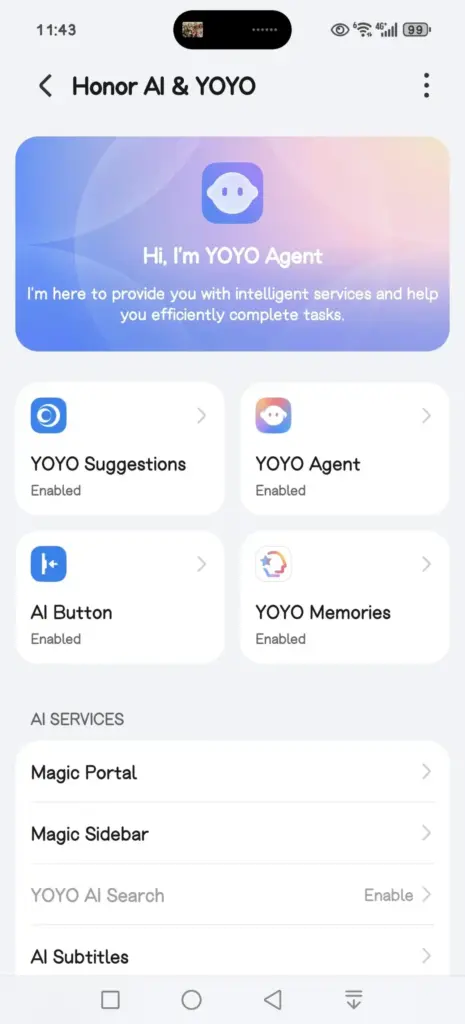
    The update also introduces an “Ask YOYO” option within the screenshot interface. Users can upload a screenshot and ask questions about its content, making it easier to extract information directly from images.
    honor yoyo ai

    Another addition allows users to convert images into documents in just a few steps, further extending the assistant’s practical capabilities.

    The update is arriving as MagicOS version 10.0.0.150 for the Honor Magic 7 series.

    YOYO AI Features

    • YOYO Suggestions & Smart Capsule now support meal pickup code reminders, providing users with a smart and convenient meal pickup experience.
    • Turn on Meal Pickup Code Reminder and Automatic Meal Pickup Code Recognition.
    • YOYO now features a new wake-up screen with a Q&A feature, supporting fingertip selection of screen content for Q&A, text selection for copying and translation, and AI image recognition and interpretation, enhancing your ease of use and usability.
    • The screenshot feature now includes an “Ask YOYO” feature, allowing users to wake up YOYO with a single click and upload a screenshot for easy content recognition, Q&A, and other operations.
    • Added YOYO’s photo-to-document feature, allowing users to convert images into editable Word, Excel, and PPT documents with a single click. It highly preserves the accuracy and structural integrity of the original text, achieving a “what you see is what you get” experience, making mobile office work more convenient and efficient.
    • Added YOYO Helper, supporting simultaneous audio and text recording during online/offline meetings. It can assist with Q&A and provide intelligent reminders during the meeting, and intelligently generate meeting minutes afterward.

    System smooth

    • Added a customizable app transition animation feature, offering three levels of smoothness: gentle, stable, and efficient, allowing you to customize the smooth experience to your liking.
    • Optimized the real-time blur effect when launching and exiting desktop applications, making your user experience smoother and more fluid.

    Home Screen

    • Added an auto-align icon feature for a neater layout. Access it via: Settings > Desktop & Personalization > Desktop Settings > Auto-align Icons
    • Added support for one-click folder creation across multiple applications; long-pressing a folder on the desktop allows for one-click unpacking, making folder organization more convenient.
    • Added support for batch removal and uninstallation of applications, making desktop management more efficient.

    Theme

    • Added a new status bar skinning feature, allowing you to freely change the status bar icon style and personalize your phone’s interface.

    Lock screen

    • Added support for customizable lock screen widgets, providing one-click access to frequently used functions for both convenience and personalization.
    • Added support for custom fingerprint styles, allowing you to freely combine the lock screen fingerprint icon and fingerprint animation to create your own personalized unlocking experience.
    • Several new AI services have been added, supporting features such as song recognition, AI subtitles, Honor Any Door, and YOYO Notes, making your daily operations more convenient and efficient.

    Honor Connect

    • Added cross-device file management for Mac, allowing you to easily browse, download, and manage pictures, videos, and other files from your phone on your Mac. Say goodbye to cumbersome transfers and enjoy efficiency and convenience.
    • Added a new iPhone hotspot feature. After connecting your Honor phone and iPhone, you can easily connect to your phone’s personal hotspot from your iPhone, eliminating cumbersome setup and making internet access more convenient.

    Enjoy the bass

    • Added support for multiple apps, including 29 apps such as Red Fruit Free Short Drama, CCTV News, and Valorant.

    Honor Smart Space

    • Added support for creating and managing multiple pet health records, and supports 24-hour AI-powered pet consultation, providing pet health reports and treatment suggestions to protect your pet’s health.

    Power consumption

    • Optimize power consumption in certain scenarios.

    Stability

    • Improved system stability and optimized some third-party app crashes and unresponsiveness issues, making your phone run more stably.

    Security Patch

    • Includes the Android March 2026 security patch to enhance system security.
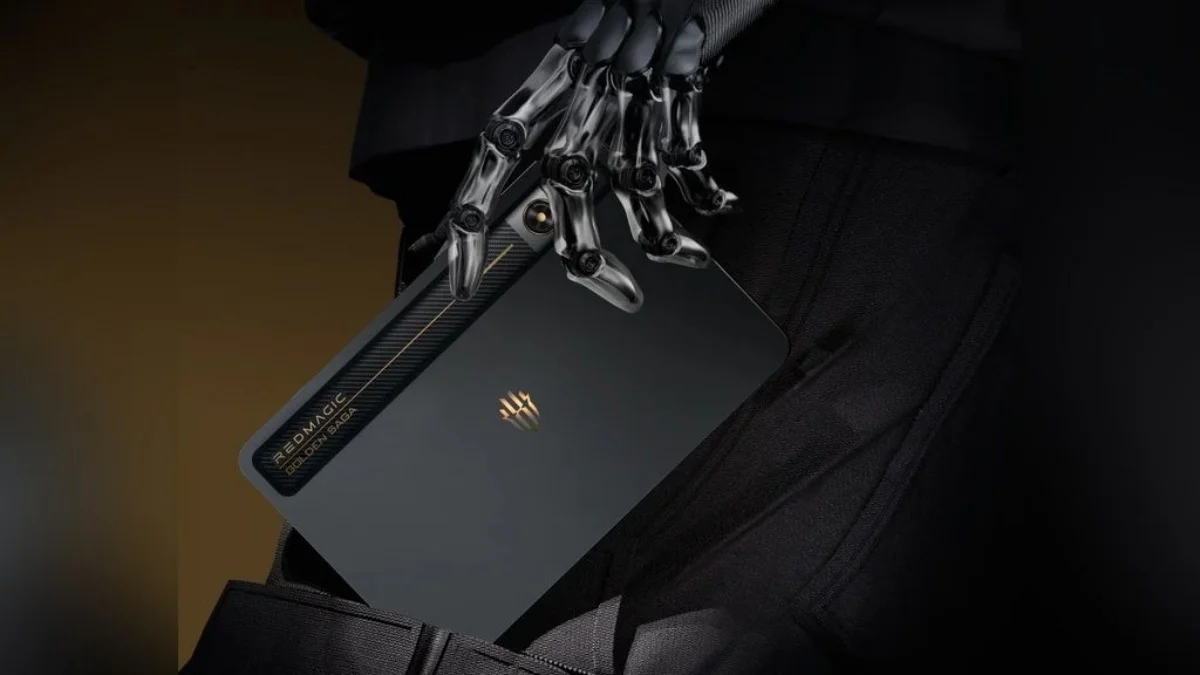
  • RedMagic Gaming Tablet 5 Pro Leak Reveals 185Hz OLED and Massive 24GB RAM

    RedMagic Gaming Tablet 5 Pro Leak Reveals 185Hz OLED and Massive 24GB RAM

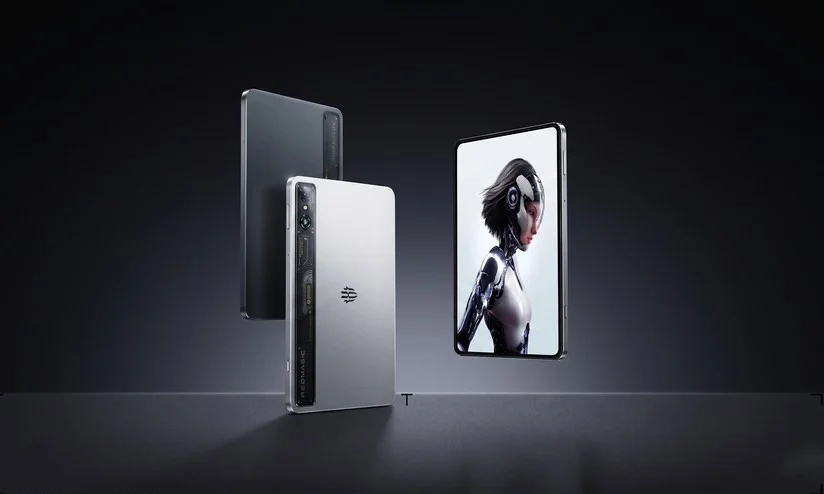
    A new contender is emerging in portable gaming, as high-performance tablets begin to draw attention away from traditional handheld consoles. Devices like the Game Boy, PSP, Nintendo Switch, and Steam Deck have long defined the category, but a new esports-focused tablet from Red Magic could push things in a different direction.

    A Shifting Portable Gaming Market

    The broader market is expanding quickly. Industry forecasts estimate the global mobile and tablet gaming segment will reach $119.9 billion in 2026, up from $101.25 billion in 2025—an 18.4% increase. At the same time, newer hardware like the Nintendo Switch 2 and Steam Deck OLED reflects growing demand for portable systems that can handle more demanding games.

    RedMagic Gaming Tablet 5 Pro

    Each of those devices still comes with trade-offs. The Switch 2 reportedly offers around 3–6 hours of battery life, while the 640g Steam Deck can be cumbersome for extended use. Smartphones, on the other hand, are easier to carry but limited by smaller screens and less comfortable controls. Red Magic appears to be targeting this gap with what it calls a “9-inch golden size.”

    Leaked Specs and Design Details

    Based on leaked engineering unit specifications, the Red Magic Gaming Tablet 5 Pro focuses on pushing performance and usability across several areas.

    The display is a 9-inch OLED panel with a 2400×1504 resolution, paired with a 185Hz refresh rate and a 1200Hz touch sampling rate. That puts it ahead of the Switch 2’s 120Hz and the Steam Deck OLED’s 90Hz, at least on paper—particularly for fast-paced games. The design is fully flat, with the camera module integrated into the body to avoid protrusions that can interfere with gameplay in landscape mode.

    Under the hood, the tablet is said to run on Qualcomm’s Snapdragon 8 Elite Gen5 chip, built on a third-generation Oryon CPU architecture with improved NPU performance. Cooling is handled by what’s described as the first tablet liquid-cooling circulation system, combining a liquid-metal vapor chamber with an 18,000 RPM fan. The company claims this setup can lower temperatures by 5–8°C during heavy gaming, helping reduce thermal throttling.

    Memory and storage configurations are expected to go up to 24GB of RAM and 1TB of storage. The device will also integrate ByteDance’s Doubao large language model, marking its first deep integration into a gaming tablet. While details are still unclear, possible uses include real-time gameplay assistance, voice controls, and post-match analysis.

    redmagic gaming tablet 5 pro 1

    Design, Battery, and Charging

    The tablet is expected in three finishes: Tritium Transparent Silver Wing, Tritium Transparent Dark Night, and Zenith Gold Legend. It also features a customizable RGB light strip on the back.

    Battery capacity is listed at around 8,300mAh, with support for 80W fast charging. It also includes bypass charging, which powers the motherboard directly instead of the battery during gameplay, helping manage heat when plugged in.

    Pricing and Positioning

    The previous Red Magic Esports Tablet 3 Pro launched at 3,999 RMB. Despite rising component costs, industry estimates suggest the 12GB + 256GB version of the Gaming Tablet 5 Pro could start at the same price, with potential subsidies bringing it closer to 3,500 RMB.

    That would place it between the Lenovo Y700 (around 3,000 RMB) and the iPad Pro (around 6,000 RMB), positioning it as a performance-focused option aimed at mobile esports players.

    Three Paths for Portable Gaming

    Portable gaming hardware is increasingly splitting into distinct categories. Nintendo’s Switch line emphasizes exclusive titles and hybrid home use. Valve’s Steam Deck focuses on bringing PC game libraries into a portable format. Red Magic, meanwhile, appears to be targeting maximum performance within the mobile gaming ecosystem.

    Red Magic Gaming Phone Product General Manager Jiang Chao has indicated the tablet could launch in China between April and May 2026. Final details, including pricing and availability, are expected to be confirmed closer to release.

    For players focused on titles like Genshin Impact, Honkai: Star Rail, and Peacekeeper Elite, this device is shaping up as one to watch.

  • TSMC Breaks 5GHz Barrier on Mobile Chips

    TSMC Breaks 5GHz Barrier on Mobile Chips

    With its advanced nodes enabling smartphone chipsets to achieve clock speeds of up to 5GHz, TSMC would achieve yet another significant milestone this year. TSMC’s cutting-edge technology have already tremendously benefited companies like Qualcomm, MediaTek, and Apple. Later this year, new chips will achieve peak clock rates of up to 5GHz for the first time in history, which will make it harder for Huawei to compete.

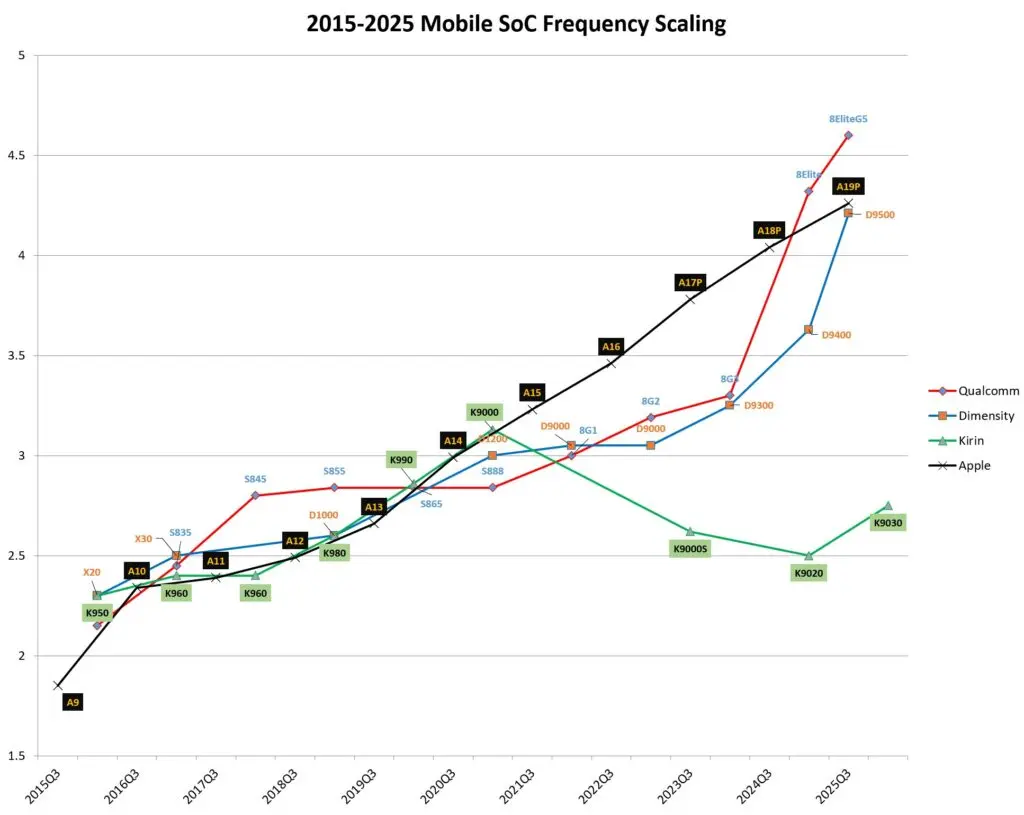
    TSMC has been at the core of Qualcomm, MediaTek, and Apple’s rapid growth over the years to provide potent chips with outstanding performance and economy. The graph below, which was provided by Kurnal, illustrates how these businesses have progressively raised peak clock speeds and are currently aiming for 5.0GHz.

    TSMC Breaks 5GHz Barrier on Mobile Chips

    The coming Snapdragon 8 Elite Gen 6 Pro is expected to hit 5.0GHz, whereas Qualcomm’s most recent flagship, the Snapdragon 8 Elite Gen 5, can already reach a peak speed of 4.61GHz. Following the 4.21GHz peak clock speed of the Dimensity 9500, MediaTek’s Dimensity 9600 Pro is expected to accomplish a similar accomplishment. This boost enables SoCs to offer considerable benefits in both single-threaded and multi-threaded workloads.

    However, the performance and efficiency provided by Qualcomm, MediaTek, and Apple are far superior to those of Huawei’s Kirin chipsets. The U.S. trade sanctions that prohibited the company from doing business with TSMC are the reason for its decline on the graph above. China’s SMIC factory, which is still decades behind TSMC, was Huawei’s only choice. Because it cannot use the most sophisticated EUV (Extreme Ultraviolet) lithography machines, SMIC is still bound to the 5nm process.

    The Kirin 9030 Pro, Huawei’s most recent chip, is still operating at 3.0GHz. As of right now, Qualcomm, MediaTek, and Apple are still too far ahead of Huawei to even compete with them; the difference is a foundry partner.

  • First Look at Huawei Watch Fit 5 Pro – Sleeker Design and Larger Display Spotted

    First Look at Huawei Watch Fit 5 Pro – Sleeker Design and Larger Display Spotted

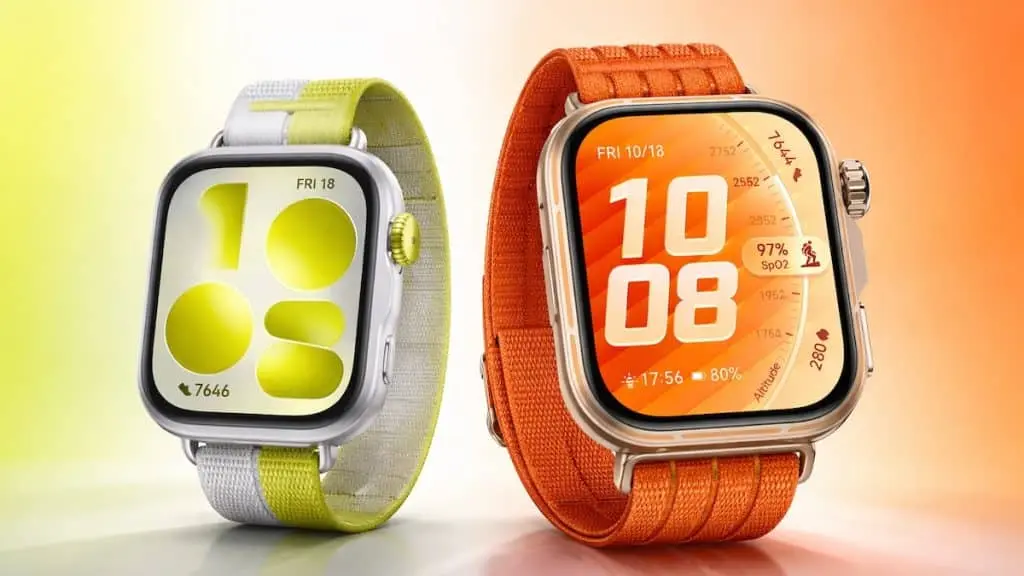
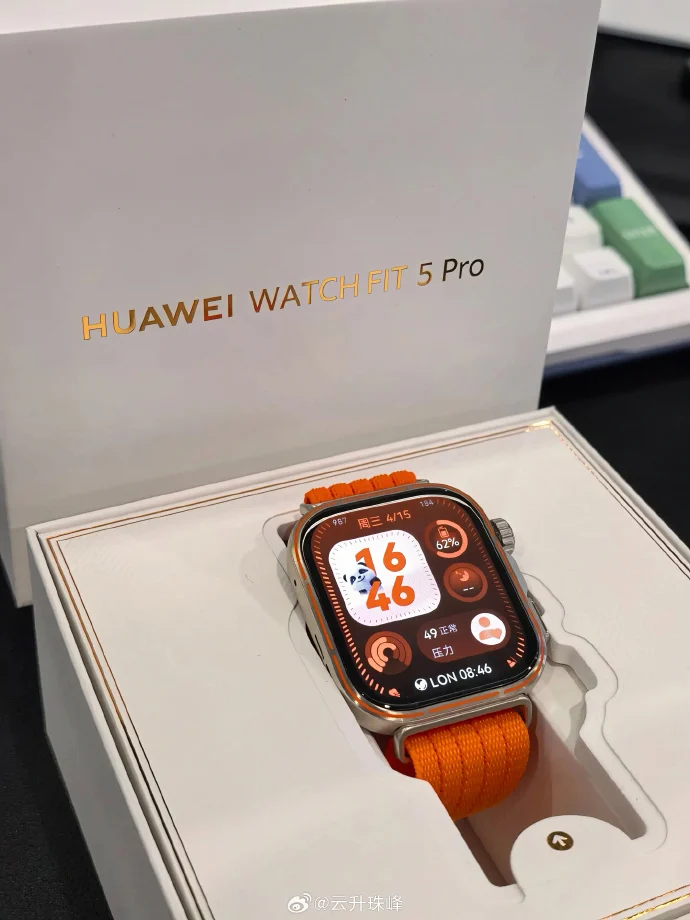
    Huawei appears to be planning a revamp of its Watch Fit series shortly, and a new round of leaks has already provided us with an early glimpse at what to expect. The Huawei Watch Fit 5 Pro has appeared in real-world pictures, indicating a design that is familiar yet refined this time around.

    The leaked pictures, which were posted on Chinese social media platform Weibo, show the watch within its retail box. At first sight, it appears to follow the same square design language, yet there are a few significant differences. The model pictured has vivid orange highlights around the frame and a matching woven strap, which is consistent with Huawei’s recent stylistic choices. The metal body appears to have been maintained, along with the crown on the right and a secondary button just below it.

    First Look at Huawei Watch Fit 5 Pro - Sleeker Design and Larger Display Spotted

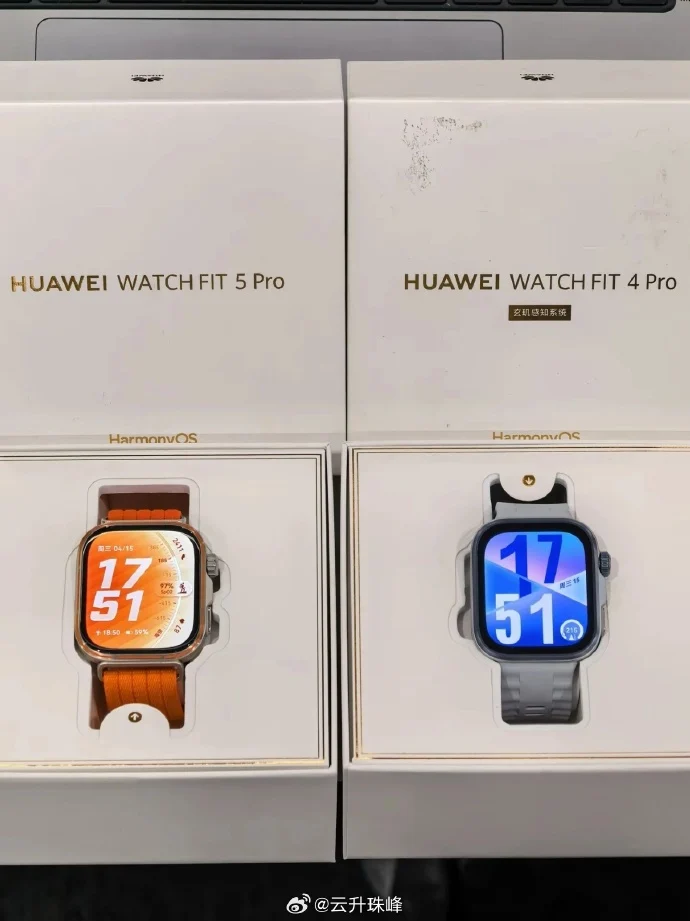
    Where things become interesting is with the display. Side-by-side photographs with the Watch Fit 4 Pro indicate that Huawei has significantly reduced the bezels. The difference is significant enough to make the newer model appear cleaner and more modern. There’s also a switch to 2.5D curved glass, removing the previous generation’s flat panel, which should make swipes feel smoother and the watch seem more premium in hand.

    First Look at Huawei Watch Fit 5 Pro compared to huawei fit 4 pro

    Some early Weibo discussion suggests a 1.92-inch AMOLED panel, up from the 1.82-inch screen on the Fit 4 Pro. However, there is still much we do not know. The leaks don’t go into detail about internals yet, thus battery life, sensors, and new health features are all still unknown for the time being.

    However, the date is consistent with Huawei’s regular pattern. The Watch Fit 4 series debuted in May of last year, so a similar release timeframe for the Watch Fit 5 lineup would not be odd.

    The Watch Fit series has generally performed well by remaining lightweight and reasonably priced while also providing reliable fitness tracking. So far, the Fit 5 Pro appears to have a more “premium look” to it.

  • TSMC’s 2nm Shortage Hits Hard – Flagship Phones Get Priority as DRAM Crisis Grows

    TSMC’s 2nm Shortage Hits Hard – Flagship Phones Get Priority as DRAM Crisis Grows

    The industry’s most advanced and cutting-edge node is the 2nm process node, and TSMC leads the next generation of powerful chips. The Taiwanese chip giant has succeeded in achieving yields that are advantageous for mass-producing 2nm wafers, but sadly, this is insufficient to fulfill the demand for mobile SoCs and AI processors, forcing smartphone manufacturers to choose silicon downgrades later this year.

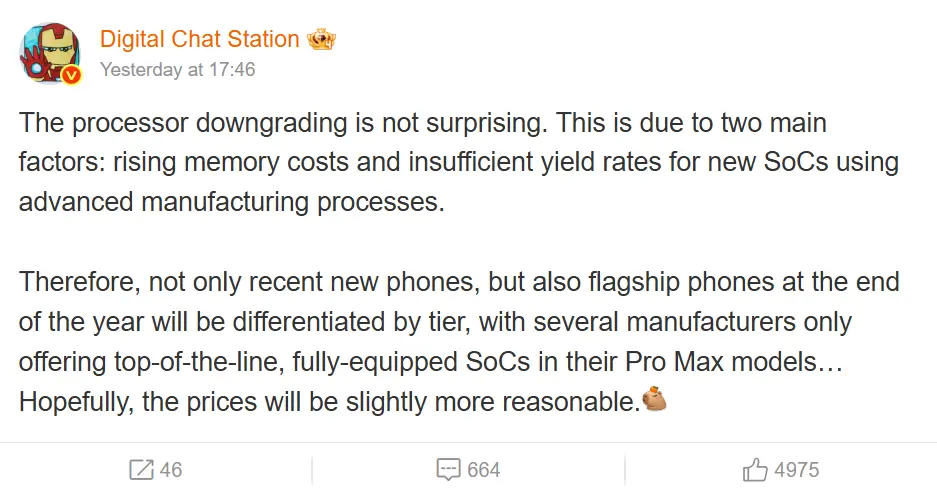
    A trustworthy Chinese tipster, Digital Chat Station, claims that due to the chip crisis and growing memory costs, several smartphone manufacturers would only provide fully equipped SoCs in their premium “Ultra” or “Pro Max” versions. It doesn’t take long to figure out where the fingers are pointing, even though the tipster doesn’t specifically state “TSMC.”

    Digital Chat Station announce TSMC’s 2nm Shortage

    AI and mobile are vying for the same advanced nodes, making the supply shortage even worse, even though the Taiwanese chip maker faces significant challenges in mass-producing advanced wafers on a wider scale. Industry reports state that Apple, Qualcomm, Nvidia, and AMD have locked up significant allocations, effectively selling out most of the N2 capacity through 2026. According to reports, Apple alone has more than half of the original N2 capacity.

    The most well-known substitute for TSMC is Samsung, but it is having even more difficulty increasing its 2nm GAA yields. As a result, smartphone manufacturers have a limited supply, therefore it wouldn’t be shocking if premium processors were only used in high-end devices. This explains why Qualcomm’s dual-chip launch strategy is said to include the Snapdragon 8 Elite Gen 6 and Snapdragon 8 Elite Gen 6 Pro. With the A20 and A20 Pro, Apple is reportedly using a similar strategy.

    According to reports, MediaTek, which offers the Dimensity 9600 and Dimensity 9600 Pro, is also using the same approach. The more expensive silicon will be saved for high-end phones, while the less expensive SoC will be available for less expensive phones. The DRAM problem is one of the primary causes of the anticipated increase in smartphone prices.

  • Google May Bring Back One of Android’s Most Missed Features With the Pixel 11 – Pixel Glow

    Google May Bring Back One of Android’s Most Missed Features With the Pixel 11 – Pixel Glow

    Pixel Glow Is a Real Thing, and It’s Coming

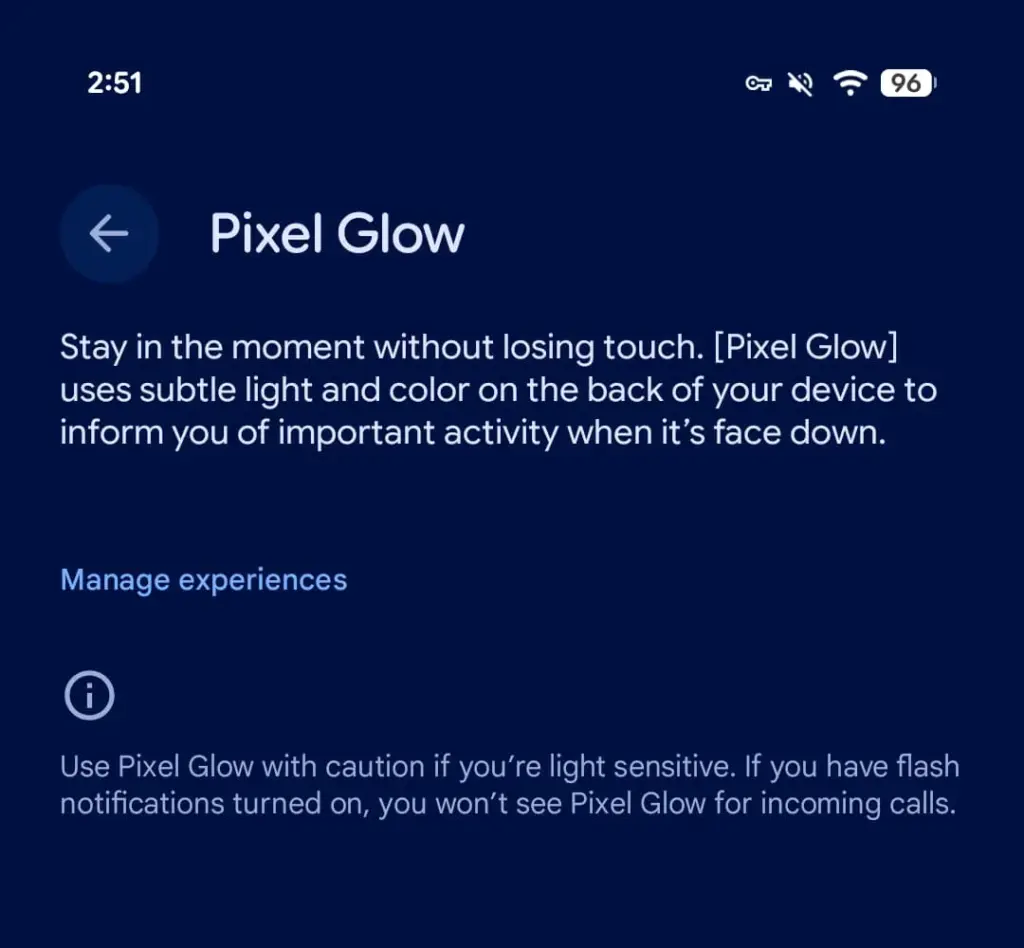
    Android 17 Beta 4, released today, contains explicit references to a new hardware feature called Pixel Glow. The description is straightforward: subtle light and color on the back panel of the device, designed to notify users of important activity when the phone is face down.

    This isn’t a software animation or an always-on display trick. Pixel Glow appears to be dedicated hardware — which strongly suggests it’s headed to at least some Pixel 11 models later this year.

    pixel glow feature

    More Than Just a Notification Light

    Google isn’t positioning this as a simple LED revival. According to a description spotted by 9to5Google, Pixel Glow is being developed as part of the Digital Wellbeing suite, with a specific goal: helping users “stay in the moment without losing touch.”

    In practice, that means:

    • Incoming calls from favorite contacts will trigger the light — but only if flash notifications are turned off
    • Gemini integration — the lights will activate during AI interactions and may enable hands-free, visual-feedback-driven conversations
    • Individual controls — each use case can be enabled or disabled separately from Settings

    Where Would the Light Actually Go?

    Here’s the interesting part: the leaked renders of the Pixel 11 lineup don’t show any obvious cutout or housing for Pixel Glow. That leaves two realistic options.

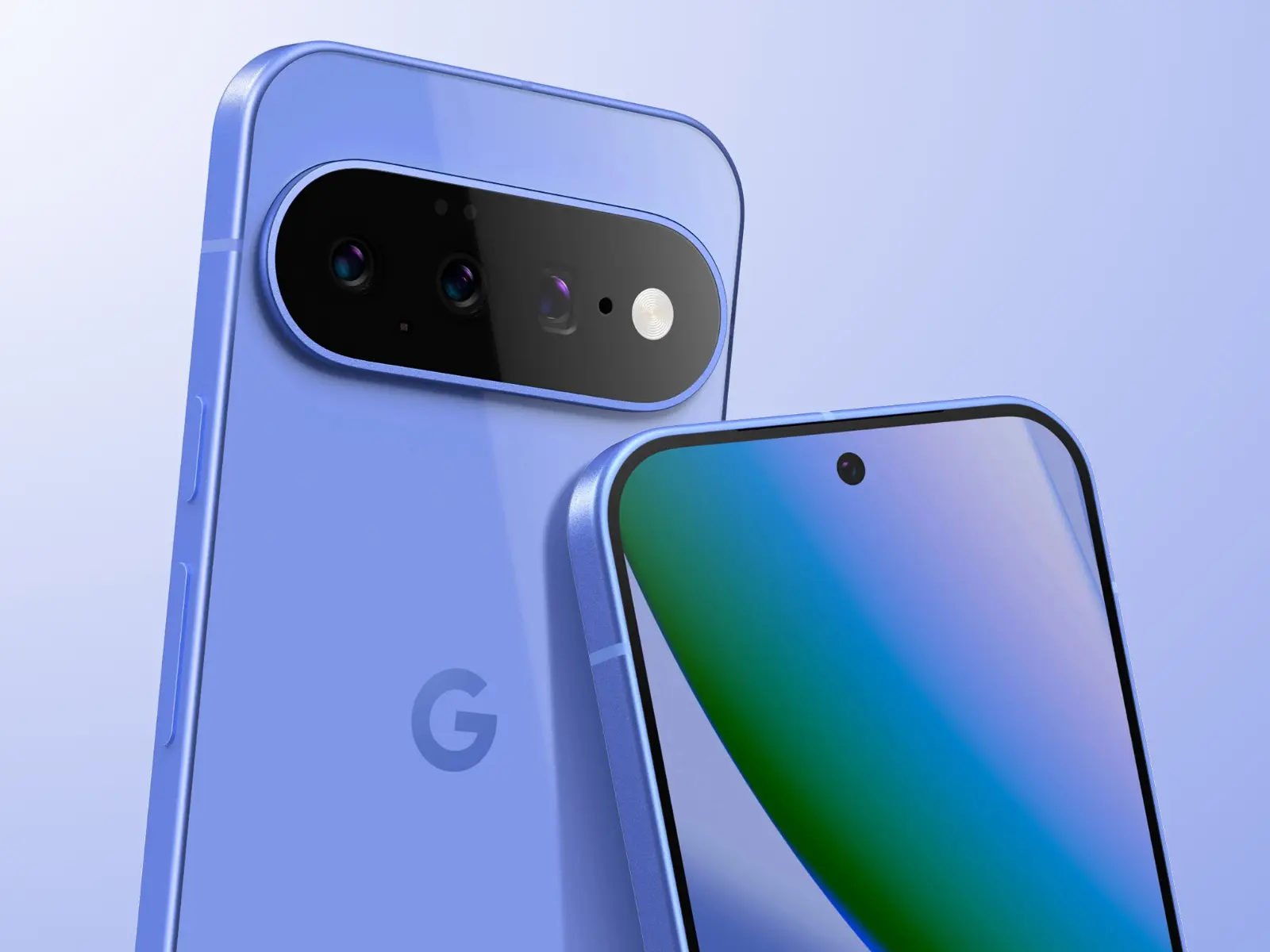
    The first is the Camera Bar — the redesigned horizontal strip on the back. A Pixel 11 Camera Bar with built-in ambient lighting would make Google’s signature design element genuinely functional, not just aesthetic.

    The second option is the Google logo on the back panel. A glowing “G” would immediately draw comparisons to the iconic backlit Apple logo on older MacBooks — which, depending on who you ask, is either a great or a terrible thing.

    The Notification LED Is Back — Sort Of

    Let’s call this what it is. Around 2019, the industry-wide race to ultra-thin bezels killed off the notification LED — a small, power-efficient light that millions of Android users relied on daily to check notifications without touching their phones. Manufacturers quietly dropped it, and nobody really asked for that.

    Pixel Glow looks like Google’s answer to the void that’s been there ever since. It’s smarter, more context-aware, and integrated with AI — but the core idea is the same: a light on your phone that tells you something important is happening, without demanding your full attention.

    Always-on displays have never fully replaced that. For many users, Pixel Glow could.

  • Honor Sees Huge 25% Growth in Q1 2026 — What’s Driving the Surge?

    Honor Sees Huge 25% Growth in Q1 2026 — What’s Driving the Surge?

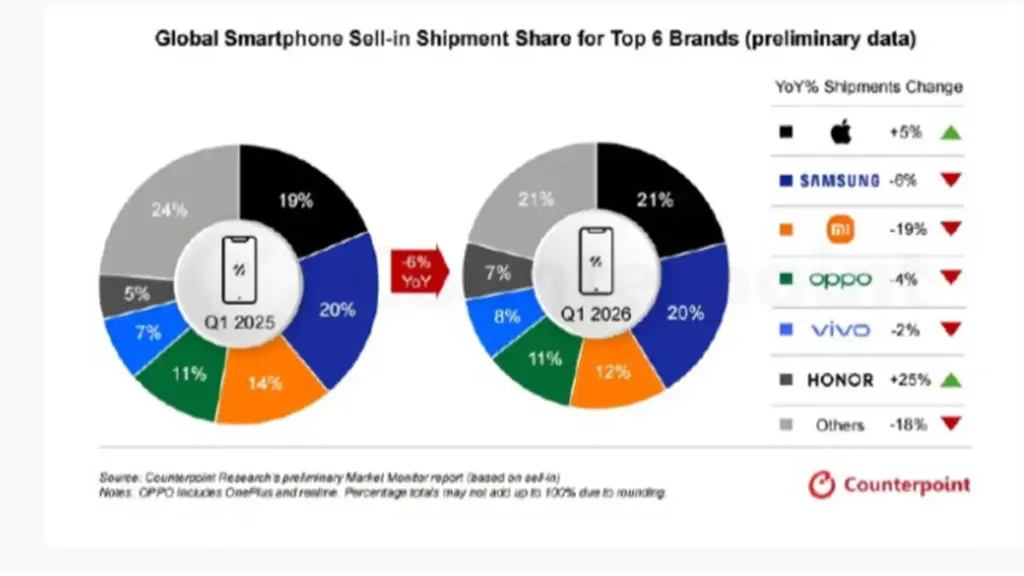
    The global smartphone market had a rough start to 2026 – but Honor didn’t get the memo. New data from Counterpoint Research shows Honor shipments grew 25% year-over-year in Q1 2026, making it the only smartphone brand besides Apple to post positive growth in a quarter where the overall market contracted 6%.

    Apple led all brands with a 5% YoY increase, buoyed by strong iPhone 17 series demand and the budget-friendly iPhone 17e. Honor followed close behind — a remarkable result for a brand still expanding its global footprint.

    honor growth

    What’s driving Honor’s momentum?

    The Magic 8 series has been a key growth engine, but Honor’s boldest move came at MWC 2026: the debut of its ROBOT PHONE, which generated significant buzz and positioned the brand at the cutting edge of smartphone innovation.

    “Q1 2026 was a big win for Honor,” said Guan Haitao Thomas, Global CMO at Honor. The numbers back him up.

    The rest of the field

    Samsung holds 20% market share but saw shipments fall 6%. Xiaomi dropped from 14% to 12% market share — a 19% year-over-year decline. OPPO and Vivo round out the top five.
    Counterpoint flagged ongoing pressure from DRAM and NAND memory chip shortages, combined with weak consumer demand, as headwinds the entire industry must navigate in the months ahead.

    What’s next for Honor?

    The company isn’t slowing down. Honor is preparing to launch its 600 series and will unveil its “N Series Elevated” lineup next week, promising several flagship-tier upgrades.
    In a market defined by consolidation and decline, Honor is moving in the opposite direction.

  • Google Messages Prepares a Feature Samsung Users Have Been Waiting For

    Google Messages Prepares a Feature Samsung Users Have Been Waiting For

    Samsung recently established a clear schedule for discontinuing Samsung Messages, establishing Google Messages as the default messaging software on Galaxy phones.

    While this is ultimately a welcome shift, the fact that Samsung Messages no longer supports RCS has left some longstanding users wanting the customisation tools they were accustomed to.

    It appears that Google has taken note and is working on adding some fun features that Samsung Messages users will recognize.

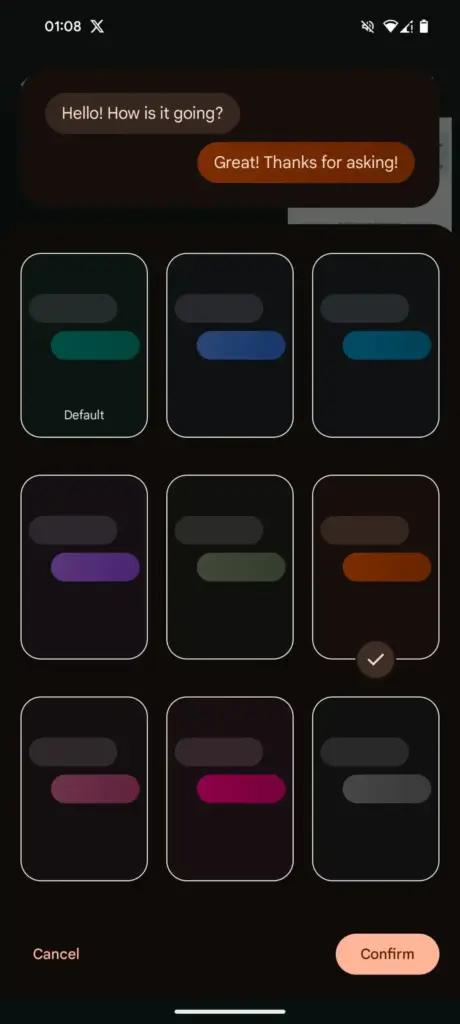
    Currently, the only way to modify RCS chats in Google Messages is to use the “Change colors” option from the three-dot menu. This option allows you to alter the backdrop and chat bubble colors simultaneously, but that’s all the personalization you can do in individual or group chats.

    In comparison, Samsung Messages supports more advanced customization, such as the option to color and decorate chat rooms using photographs from your phone’s gallery. Using Theme Park (via Samsung’s Good Lock module) provides even more customization options, such as altering bubble colors, modifying contrast, applying wallpaper-based themes, and more.

    Google Messages Prepares a Feature Samsung Users Have Been Waiting For

    As Samsung app is being phased out, customers who rely on custom theme packs have begun to express dissatisfaction with Google Messages‘ lack of customisation choices. Google appears to have been paying heed, since a new customisation option for its messaging app is now under development.

    More customization coming for Google Messages

    In the most recent beta release of Google (messages.android_20260410_02_RC00.phone.openbeta_dynamic), we discovered many additional lines pointing to extended theme controls within the app.

    <string name="custom_theme_add_photos">Upload photo</string>
    <string name="custom_theme_your_photos">Your photos</string>
    <string name="custom_theme_preview">Theme Preview</string>
    <string name="custom_theme_title">Theme UI</string>
    <string name="custom_theme_custom">Custom</string>
    <string name="custom_theme_backgrounds">Backgrounds</string>
    <string name="custom_theme_bubble_color">Bubble Color</string>
    <string name="custom_theme_apply">Apply</string>

    The new strings indicate that Google is planning a full “Custom” theme section, where users may be able to change backdrop patterns, bubble colors, and, most importantly, upload their own photographs to use as chat wallpapers. References to “Upload photo” and “Your photographs” definitely suggest a Google photographs integration, although options such as “Theme Preview” and “Apply” indicate a more involved customization experience.

    There are also talks of separate areas for backgrounds and bubble colors, implying that users could mix and match aspects rather than relying on pre-set themes.

    If this option becomes available, it would be a significant step toward allowing users greater choice over how their chats appear, which has been glaringly absent from the app thus far.

  • Oppo Prepares Major ColorOS 16.1 Release – Surprising Features Leaked

    Oppo Prepares Major ColorOS 16.1 Release – Surprising Features Leaked

    Oppo is getting set to release a little update based on Android 16 that offers intriguing visual enhancements and quality-of-life changes, even though it has already started its Android 17 beta program. It is officially announced that ColorOS 16.1 will be released this month.

    You might be wondering if the ColorOS 16.1 update is compatible with your Oppo device and what new features or improvements to anticipate. Here is what we currently know.

    ColorOS 16.1 release date

    ColorOS 16.1 will be available on April 16, 2026, according to Oppo. For the Chinese market, this is the release date. For international markets, the corporation has not made the same announcement.

    The first phones to come pre-installed with the new ColorOS 16.1 software will be the Oppo Find X9s Pro and Find X9 Ultra, which will debut in China on April 21.

    The company may start releasing the ColorOS 16.1 update to older handsets in late April if previous rollouts are any guide, and the global rollout may start in May 2026.

    Oppo ColorOS 16.1 Release

    Which devices will get the update?

    The Find X9s Pro and Find X9 Ultra will launch with ColorOS, according to Oppo. It hasn’t said which older devices will get the upgrade, though.

    It’s safe to assume that the most recent Find X-series phones will be the first to receive the update. When the software is published next week, we’ll have more information about the devic

    What’s new?

    Oppo has released a video ahead of the release date that highlights ColorOS 16.1’s exciting enhancements and new features. It displays a redesigned stacked notification center and updated Live Activities.

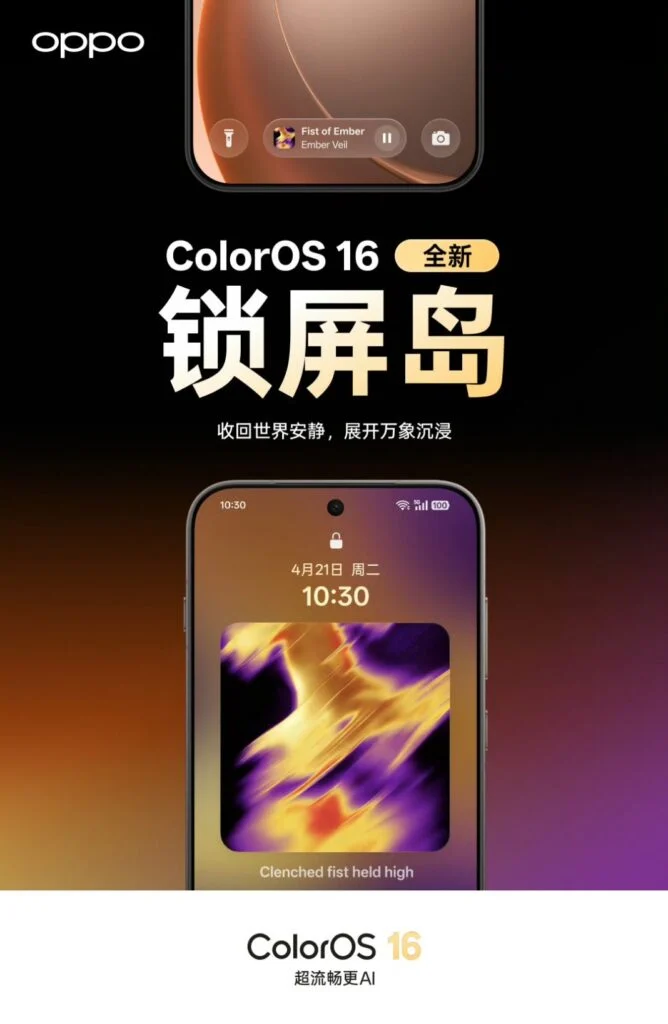
    Additionally, the video verifies that the recorder, timer, flashlight, maps, and ongoing calls will all be supported by the new Live Activities. Additionally, the new software adds a media player for the lock screen that is similar to iOS.

    Additionally, ColorOS 16.1 has a pill-shaped user interface piece at the bottom of the lock screen that resembles Samsung’s Now Bar in both appearance and functionality. The software will also have a redesigned camera user interface and new AI functions.

  • Samsung Unlocks Long-Awaited Blood Pressure Feature for Galaxy Watch in the US

    Samsung Unlocks Long-Awaited Blood Pressure Feature for Galaxy Watch in the US

    After being regionally limited for years, blood pressure tracking will now be available to Galaxy Watch users in the United States. Users in the US will be able to get blood pressure monitoring, but it requires a Galaxy phone to function.

    As with ECG readings, customers in the US will have access to blood pressure monitoring via the Samsung Health Monitor app. This is a gain for the Galaxy Watch 4 and later, all the way up to the Galaxy Watch 8, as the rollout won’t be restricted to any particular Galaxy Watch model.

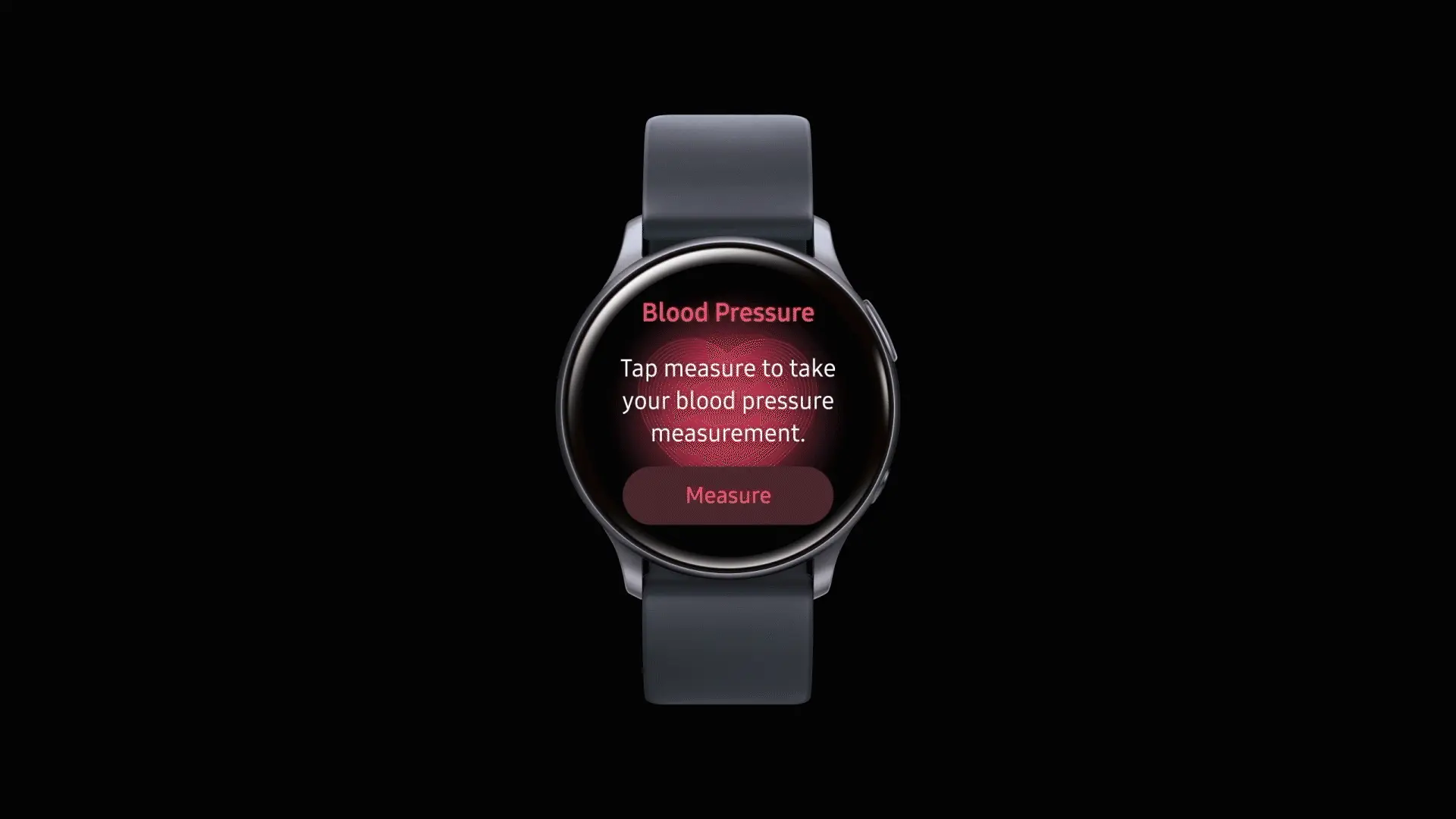
    According to Samsung, blood pressure data should be used to supplement general health metrics rather than to prevent or diagnose excessive blood pressure. Similar to an ECG exam, wearers of Galaxy Watches must start a reading. Once finished, the watch will display blood pressure and heart rate readings, which will be saved in the companion app.

    samsung galaxy watch Blood Pressure Feature in US

    Official use will be restricted to watches coupled with Galaxy phones due to the tool’s reliance on the Samsung Health Monitor app. Additionally, it appears that the feature requires calibration with a conventional upper arm cuff. Calibration will be required every 28 days, according to the press release.

    To ensure accuracy, users are required to calibrate their Galaxy watch using an upper arm cuff (sold separately) every 28 days. Compatible Galaxy Watches measure systolic and diastolic blood pressure along with your heart rate using the internal heart rate monitoring sensors.

    Since its debut on the Galaxy Watch Active 2 in 2020, blood pressure monitoring has notably been excluded from the Galaxy Watch’s feature set in the United States, whereas other regions have benefited from both the feature and a more comprehensive set of health monitoring capabilities. With this information, it appears that US restrictions have changed, allowing Samsung to start releasing previously restricted tools.

    Galaxy Watch users should start seeing availability with the linked Samsung Health Monitor app as an update starts to roll out today.