Tag: update

  • September 2025 Android update changelog

    September 2025 Android update changelog

    This week, Google is distributing the September security patch to all Pixel devices that support it, starting with the Pixel 6 series. Numerous updates are included, and fortunately, Google offers a comprehensive list of all the new features.

    The most recent Pixel 10 devices will have BD3A.250721.001.B7, the Pixel Tablet will have BP3A.250905.014.A1, and most Pixel owners will want to see build version BP3A.250905.014 to make sure they’re running the most recent version.

    Among the highlights are fixes for Pixel Launcher crashes, call audio quality issues, camera stability issues, “overall improvements for network connection stability,” and enhanced Bluetooth stability for a variety of phones. The whole list and the devices it applies to are shown below. However, we’re pleased with the list overall.

    android 16 september update

    Changelog:

    The September 2025 update includes bug fixes and improvements for Pixel users – see below for details

    Audio

    • Fix for issue Call Audio quality in certain conditions*[2]
    • Fix for issue causing occasional system instability and performance slowdowns in certain conditions*[2]
    • General improvements for system stability and performance in certain conditions*[1]

    Battery & Charging

    • Fix for: Battery Health display issues in certain conditions*[4]

    Biometrics

    • General improvements for fingerprint recognition and response in certain conditions*[2]

    Bluetooth

    • Fix for improvements in stability or performance for Bluetooth in certain conditions*[2]

    Camera

    • General improvements for camera stability and performance in certain conditions*[3]

    Display & Graphics

    • Fix for issue with screen turning black during transitions from a webpage in the in-app browser under certain conditions*[5]

    Framework

    • Fix for an issue where users are unable to type and keyboard stops responding in certain conditions*[2]
    • Fix for issue with the power button stops working, in certain instances when connected to Android Auto and charging via USB-C*[1]
    • Fix for secondary language showing up in quick settings in certain conditions*[2]
    • General improvements for performance and stability in certain UI transitions*[2]

    Kernel

    • Fix for a stability and performance in certain conditions*[2]

    System

    • Fix for a system stability and performance issues in certain conditions*[2]
    • Fix for issue causing Pixel launcher crash in certain conditions*[2]
    • Fix for issue occasionally causing system instability in certain conditions*[1]

    Telephony

    • General improvements for network connection stability and performance in certain conditions*[2]

    User Interface

    • Fix for a crash impacting Android stability metrics*[2]
    • Fix for a Java crash in System UI related to the Quick Tap gesture*[2]
    • Fix for devices becoming unresponsive to touch across multiple screens or apps in certain conditions*[2]
    • Fix for issue where long screenshots would sometimes duplicate content in certain conditions*[2]
    • Fix for issues with navigation gestures in certain conditions*[2]
    • Fix for issues with Quick Settings (QS) shade in certain conditions*[2]
    • Fix for: Home button not responding reliably, leading to a frustrating user experience and difficulty navigating applications*[2]

    Device Applicability

    Unless otherwise noted below, fixes are available for all Pixel devices that are supported. Certain fixes can be region/carrier specific.

    • *[1] Pixel 6, Pixel 6 Pro, Pixel 6a, Pixel 7, Pixel 7 Pro, Pixel 7a, Pixel 8, Pixel 8 Pro, Pixel 8a, Pixel Fold, Pixel Tablet, Pixel 9, Pixel 9 Pro, Pixel 9 Pro XL, Pixel 9 Pro Fold, Pixel 9a, Pixel 10, Pixel 10 Pro, Pixel 10 Pro XL
    • *[2] Pixel 6, Pixel 6 Pro, Pixel 6a, Pixel 7, Pixel 7 Pro, Pixel 7a, Pixel 8, Pixel 8 Pro, Pixel 8a, Pixel Fold, Pixel Tablet, Pixel 9, Pixel 9 Pro, Pixel 9 Pro XL, Pixel 9 Pro Fold, Pixel 9a
    • *[3 ] Pixel 8, Pixel 8 Pro, Pixel 8a, Pixel Fold, Pixel Tablet, Pixel 9, Pixel 9 Pro, Pixel 9 Pro XL, Pixel 9 Pro Fold, Pixel 9a
    • *[4]  Pixel 9, Pixel 9 Pro, Pixel 9 Pro XL, Pixel 9 Pro Fold, Pixel 9a
    • *[5]  Pixel 10, Pixel 10 Pro, Pixel 10 Pro XL
  • Xiaomi HyperOS 3.0 new features and improvements

    Xiaomi HyperOS 3.0 new features and improvements

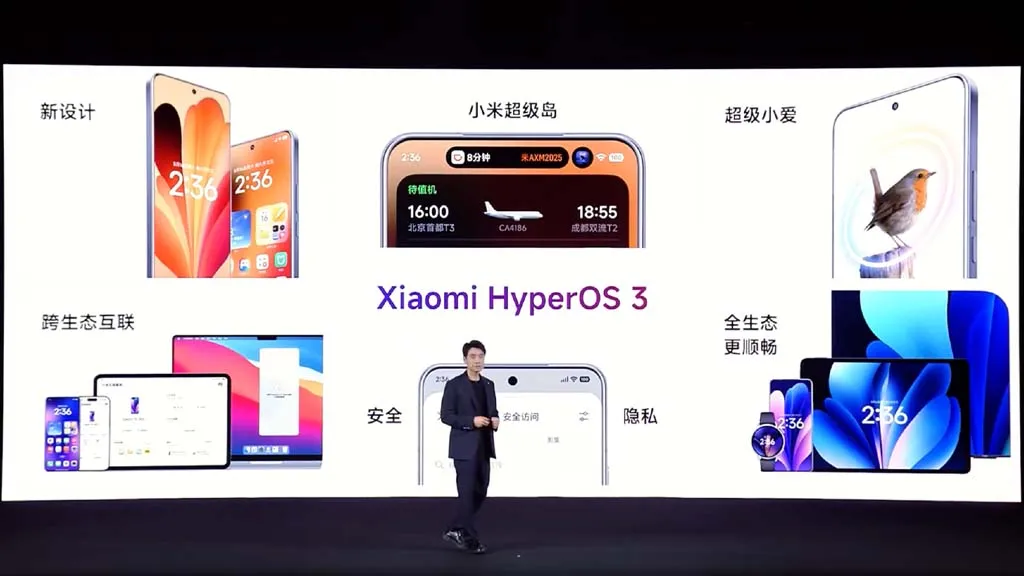
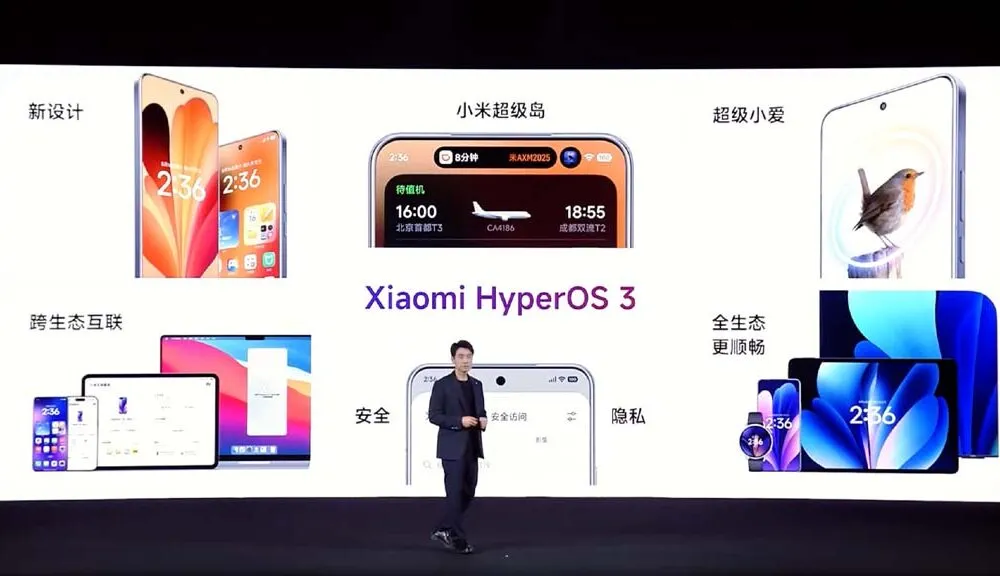
    Based on Android 16, Xiaomi has shown HyperOS 3, its upcoming significant software update. Along with a list of compatible devices, the brand has revealed new features and enhancements, and the rollout is soon to start. All of the HyperOS 3 features that will be available for Xiaomi, Redmi, and Poco devices are listed here.

    Design update

    hyperos 3.0 desgin update

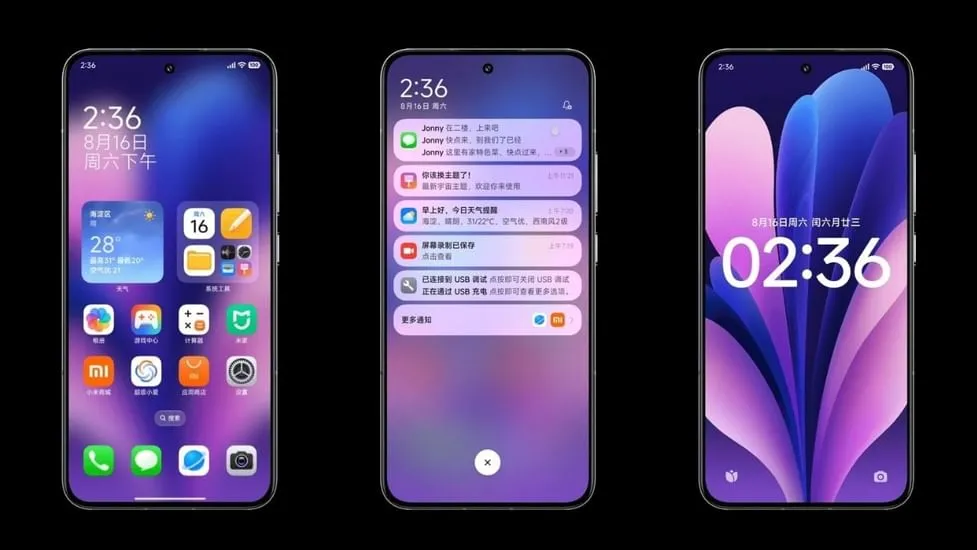
    Starting with the home screen, HyperOS 3 icons have a slightly increased contrast and a more 3D appearance. Clearer and more readable icons have also been added to the bottom bar. The improvement won’t be that noticeable to regular users.

    Additionally, Xiaomi finally changed the HyperOS 3 status bar icons. With slightly more dispersed pieces and the battery % inside the battery indicator, the company’s strategy is comparable to Material 3 Expressive in stock Android.

    In order to provide HyperOS 3 a more unified and professional appearance, the home screen layout has been somewhat altered to be more uniform with tighter gaps between the widgets.

    Lockscreen customisations

    hyperos 3.0 lockscreen customization

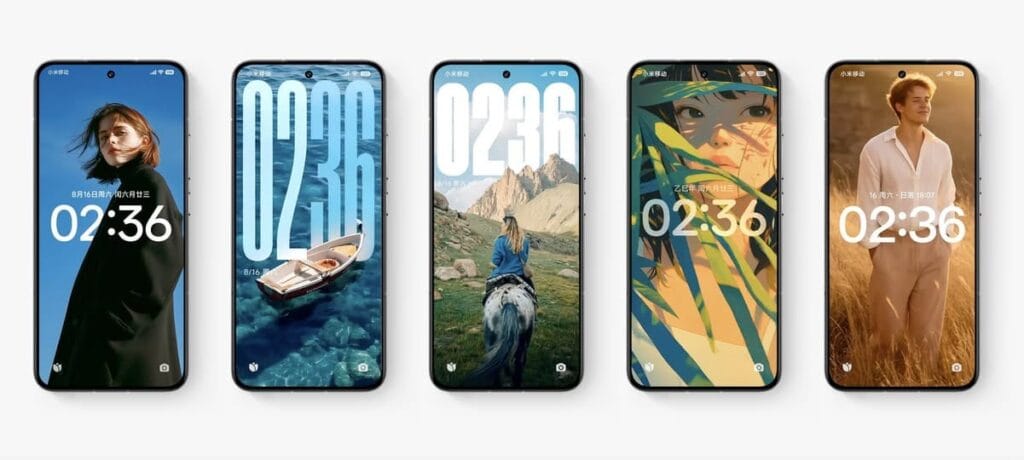
    HyperOS 3 introduces new lockscreen customizations and effects, as well as smoother unlock animations, in keeping with the immersive lockscreen user interface trend. Motion can be added to still images, and then the lock screen clock can be given Cinematic Depth. This is comparable to iOS 26’s new Spatial Scene feature, which gives lock screen backgrounds a 3D appearance.

    This feature is known by Xiaomi as “Movie lock screen,” according to our translation from Chinese to English. This function will assist in applying AI styles to images, enabling you to Ghibli-fy, dreamscape-fy, or Disney-fy your photos. Additionally, there is a library of community-made and shared custom lock screens available if you don’t want to invest the time in such artistic endeavors.

    Finally, users can now relocate the lock screen to the center in HyperOS 3. This is on top of the plethora of clock typefaces that can all be customized to fit the themes of your wallpapers. Users will find these settings in a single menu under the Wallpaper customization section, similar to OxygenOS or iOS.

    Super Island

    super island

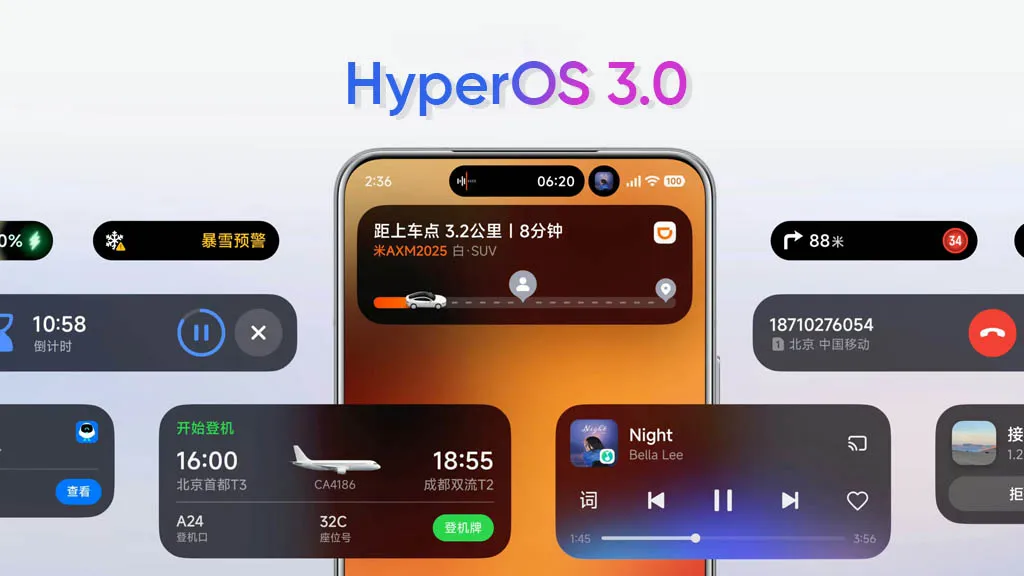
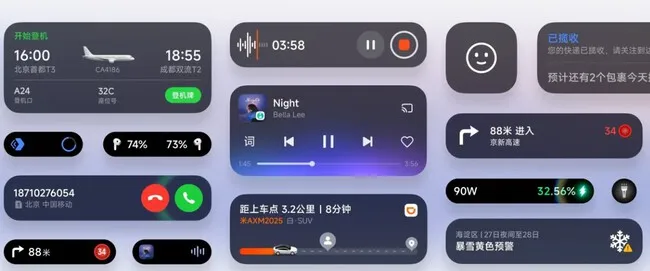
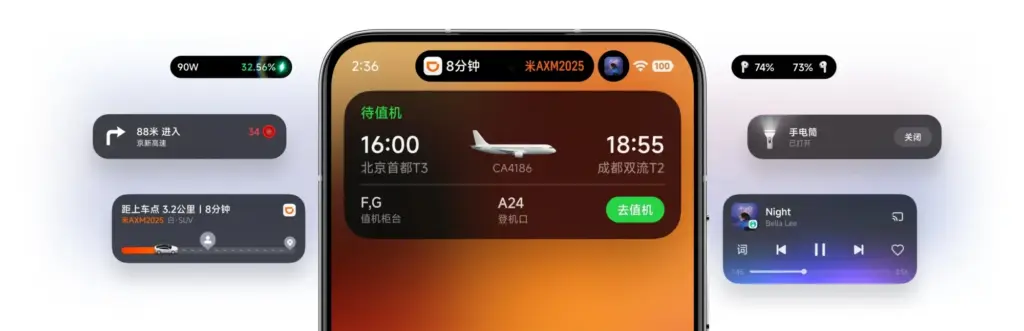
    Xiaomi is utilizing Xiaomi Super Island in HyperOS 3 to leverage live upgrades, one of the greatest aspects of Android 16. The functionality can display up to three live events simultaneously, and its implementation is eerily similar to Dynamic Island on iPhones.

    Around the selfie camera, you’ll notice a Super Island. After that, you can open a floating window for the current activity by swiping down on the pill to activate the feature. Two additional activities are displayed beside the floating window, one as a pill and the other as a circular icon. You can easily switch between these, and you may open the app by dragging them to the center of the screen.

    By dragging and dropping material straight from the Super Island to an app, HyperOS 3 will also make sharing simple. More than 70 apps are presently supported, according to Xiaomi, and support for more well-known apps will be added soon.

    hyperos 3 superisland

    NameDrop

    Similar to NameDrop, HyperOS 3 allows for the easy exchange of Wi-Fi passwords as well as images and videos. According to the firm, media may be moved quickly and without loss. It bridges the ecosystem divide by supporting both iPhones and Xiaomi devices.

    It’s important to note that the feature was briefly shown on stage and using HyperOS 3’s default Gallery app, which receives a number of enhancements of its own (more on that later). Even though Xiaomi didn’t go into detail, we can guess that it connects using NFC.

    Updated system apps and features

    hyperos 3.0 system apps update and design

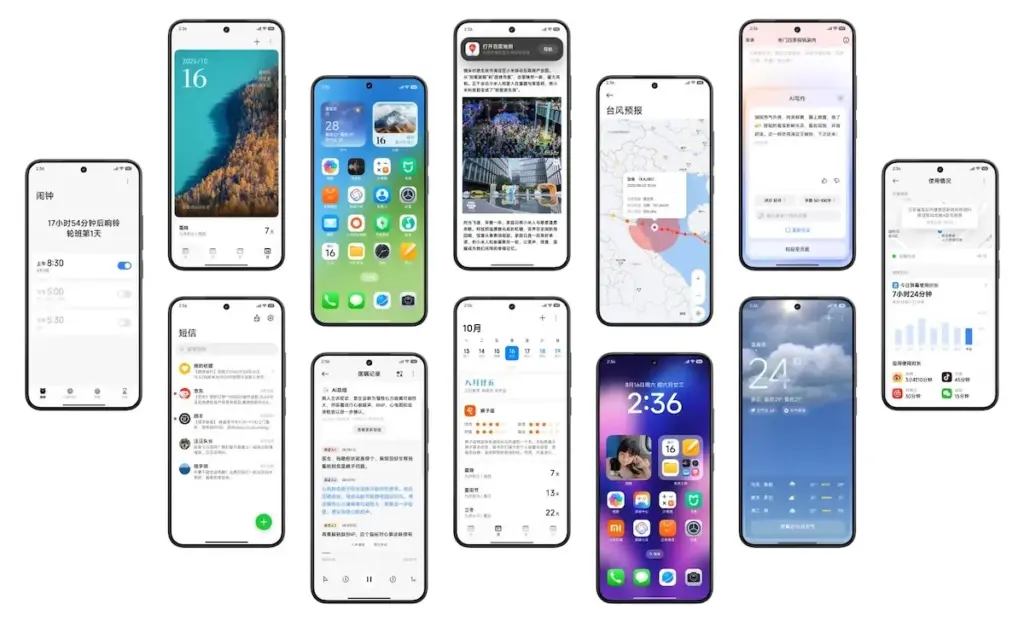
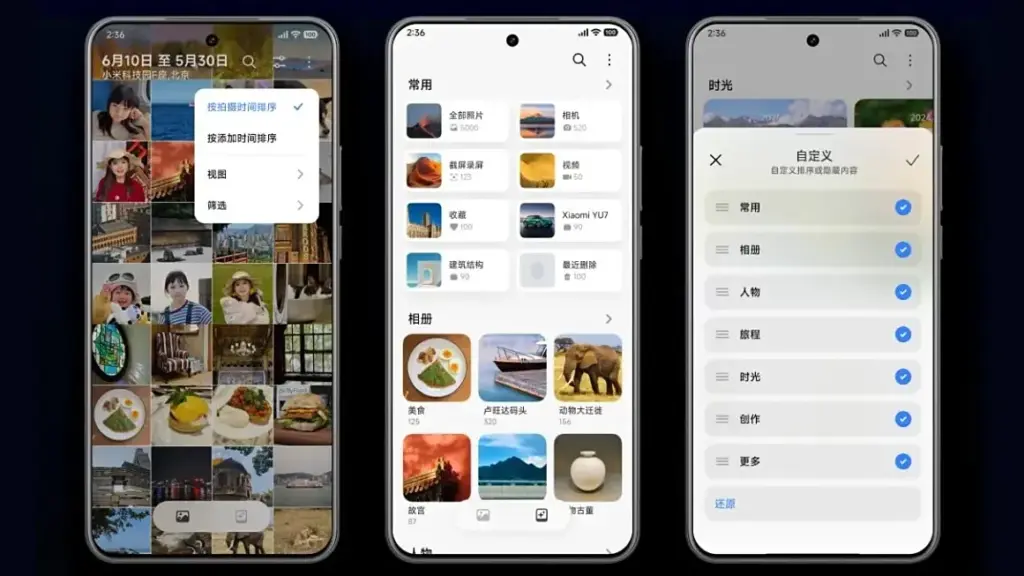
    Xiaomi is enhancing the HyperOS 3 app experience for a number of system programs, but its Gallery app is getting the most love. To begin with, users will now be able to quickly locate photographs according to their search preferences. In order to transition between layouts organized by date and continuous tiling, it offers photo view and photo sorting.

    AI advancements are enhancing the image search capabilities. For faster search results, the app’s image search has been optimized for over 30,000 keywords and 10 categories.

    Additionally, Xiaomi has included an algorithm that facilitates pet photo searches. The brand aggregates its photographs using pet body traits, just like it does with facial recognition.

    In addition, HyperOS 3 offers design enhancements for a number of its China-only apps, including the calendar, Xiaomi Shelf, voice recorder, weather, clock, and others.

    More AI features

    hyperos 3.0 ai improvements

    Xiaomi is also improving its in-house Xiaoai with HyperOS 3 to provide suggestions more quickly and effectively. Google’s Circle to Search is comparable to the new Circle Screen functionality, which is driven by Xiao AI. This function allows you to circle a portion of the screen to obtain information about it.

    The agentic AI integration in HyperOS 3, which employs LLMs to carry out a number of activities for users, is by far the most fascinating innovation. For instance, it can initiate navigation to a location you wish to visit or place food orders from restaurants. By the end of September 2025, Xiaomi says its new AI agent-like capability will work with more than 80 apps.

    Xiaomi Watches will also get a number of new features with HyperOS 3. Similar to the Smart Boost option that shows your heart rate on a HyperOS-powered automobile, supported watches will allow you to transmit real-time workout data to your phone. Along with syncing music to smart speakers while working out, the watch and automobile will also sync navigation instructions.

    HyperOS 3 enhances split-screen multitasking, latency, and other aspects of tablets. Additionally, it has an enhanced PC-like browser and better app layouts for wide screens.

    HyperOS 3 supported devices and rollout calendar

    hyperos 3 relase calendar

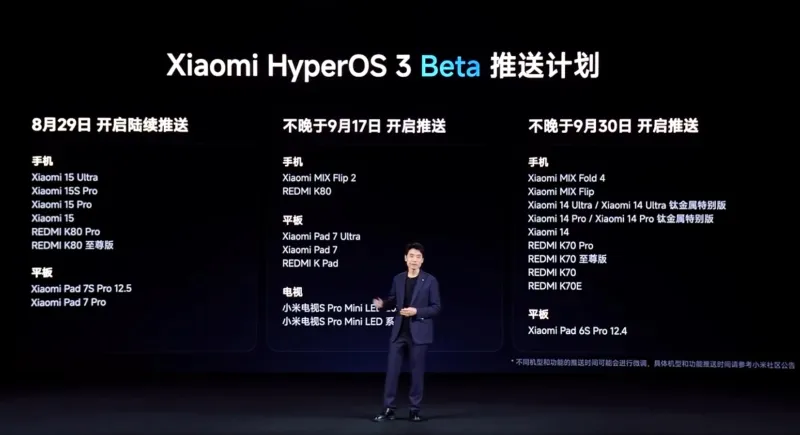
    Xiaomi has confirmed that a limited number of devices in China will begin receiving the HyperOS 3 Beta on August 29, 2025. Although the distribution is now limited to China, we have compiled a lengthy list of HyperOS 3 devices that are eligible for the upgrade in India and around the world.

    When Xiaomi releases a comprehensive list of devices that will receive the HyperOS 3 stable update, we will update the list and timeline of rollouts. By the end of 2025, we anticipate the stable update.

    The Xiaomi 15 and Redmi K80 series will be the first to receive the HyperOS 3 Beta. On September 17, 2025, the Mi Mix Flip 2 will take its place. On September 30, 2025, the Redmi K70 series, Xiaomi 14 series, and Mi Mix Fold 4 will be available for beta testing.

    All of those are the new HyperOS 3 features that Xiaomi has disclosed. The layout of the home screen and lock screen in particular has been optimized in this release. Xiaomi adds that games should benefit from 1% lower frame rates and lower battery usage, and that latency has been lowered by 21%.

    For Indian lovers of Xiaomi, Redmi, and Poco, this is an all-around great update. To find out more about the HyperOS 3 upgrade rollout in India and around the world, keep checking back and bookmarking this site.

  • Update Now! the fix for critical WhatsApp bug that allows hackers to spy on iPhones is live

    Update Now! the fix for critical WhatsApp bug that allows hackers to spy on iPhones is live

    You should be aware that not everyone using WhatsApp is safe. Meta has alerted users to a significant security vulnerability that hackers used to launch a sophisticated, focused malware campaign that compromised dozens of WhatsApp accounts. This is why it’s important and why you should upgrade the app right now.

    In order to fix a vulnerability that was exploited in conjunction with another weakness in Apple devices, WhatsApp declared on Friday that it has released an emergency patch for its messaging program on iOS and Mac. According to reports, a week before WhatsApp’s upgrade, Apple resolved the security flaw in its devices.

    whatsapp bug fix

    Why is this so dangerous?

    Hackers reportedly used a well-known zero-click attack—a technique that compromises a device without requiring user interaction—to successfully exploit both vulnerabilities. In certain situations, a victim might get a link or image from an attacker, who might then take control of the device and run malicious code to spy on or steal private data without the victim having to click.

    Meta acknowledged notifying dozens of people it thought were the campaign’s target. A copy of the alert message, which detailed the reason for the warning and the next steps, was posted on X by the head of the security company Amnesty Tech. The notification suggested that victims reset their device to factory defaults.

    We’ve made changes to prevent this specific attack from occurring through WhatsApp. However, your device’s operating system could remain compromised by the malware or targeted in other ways.
    To best protect yourself, we recommend a full device factory reset. We also strongly urge you to keep your devices updated to the latest version of the operating system, and ensure that your WhatsApp app is up to date.

    Meta

    These kinds of advertisements have already targeted WhatsApp users. Similar zero-day exploits have been connected in the past to monitoring operations targeting prominent people, such as journalists and politicians.

    What should you do to be safe?

    Even though only a small percentage of WhatsApp users were impacted, others should still be concerned about this attack. Installing the most recent security update for your Apple device and updating WhatsApp on your Mac and iPhone are highly advised.

    Even while Android users aren’t being targeted by this operation, they could still be at risk due to the same WhatsApp flaws. They should also install the most recent Android security patch and update to the most recent version of WhatsApp. Users who believe they may be in danger can manually activate new features like Advanced Device Protection, which provide an additional layer of security.

  • HyperOS 3.0 brings new performance improvements and new visual styles

    HyperOS 3.0 brings new performance improvements and new visual styles

    Xiaomi disproved our assumption that the Android announcements for the month were over. With the release of HyperOS 3.0, the company’s most recent version based on Android 16, its mobile devices now include notable functional and visual improvements. The selected models will soon start beta testing, and in Q4, a broader public rollout is anticipated.

    What’s New in HyperOS 3.0

    hyperos 3.0 new icons and gallery

    HyperOS 3.0 is based on Android 16 and incorporates key enhancements from Google’s most recent Android release. Xiaomi, however, is doing more than just skinning Android; it is also incorporating its own significant features and design modifications into smartphones and tablets.

    New icons, super island, and a cleaner layout

    Simplified app icons that mirror iOS and have square shapes with rounded sides give the UI a new look. A flatter, simpler look is also used for the quick settings and status bar. The dialer app is completely redesigned in China. Whether this will eventually be shipped to the global ROM is unknown.

    hyperos 3.0 super island

    Super Island, Xiaomi’s version of Google’s Live Updates and Apple’s Dynamic Island, is one notable feature. It displays dynamic overlays for media, notifications, and app activity on the front-facing punch-hole region. For more interaction, Super Island allows dragging and expanding, unlike its competitors.

    New lockscreen designs, like as animated effects that give still images movement, are powered by AI advancements. Additionally, there are more customizable choices for the home screen.

    New Gallery app and upgrades for tables

    hyperos 3.0 gallery app

    All content, including albums and folders, now have a cleaner look and better search capabilities in the gallery app. Your furry pals’ pictures and videos are automatically arranged with a new pet album feature.

    Xiaomi adds adaptive window scaling and improved split-screen management to tablets. Enhancements in ultra-low latency and pressure sensitivity will be advantageous to stylus users.

    Significant performance and battery improvements

    HyperOS 3.0 offers significant performance improvements in addition to aesthetics. With over 100 new and improved animation effects, Xiaomi promises up to 21% less app latency and smoother system animations.

    According to reports, in-game frame rendering uses 9% less energy, video playback requires 10% less power, and gaming performance is 15% faster.

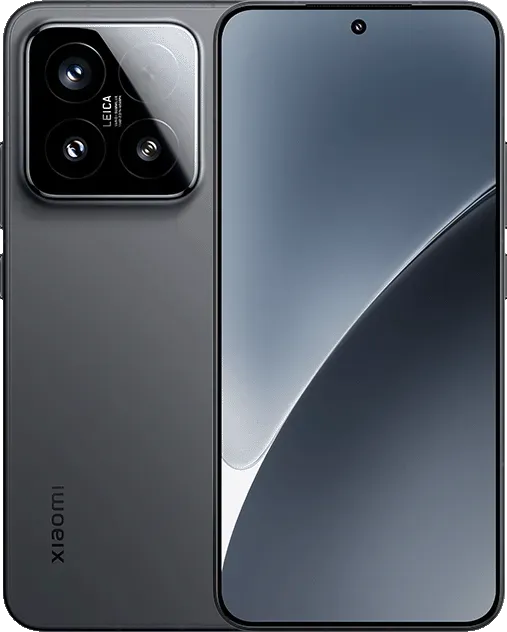
    xiaomi 15 with hyperos 3.0

    Xiaomi 15 5G

    The Xiaomi 15 features a 6.36-inch OLED display with a 1.5K resolution, a 120 Hz refresh rate, and a peak brightness of 3200 nits. The phone is built with an aviation-grade aluminum frame and has a compact design measuring 152.3 × 71.2 × 8.08 mm, weighing 181 g.

    Which Devices Get HyperOS 3.0 Beta?

    Xiaomi has stated that a few smartphones, tablets, and TVs will be available for the public beta, though it hasn’t yet disclosed the complete list of compatible devices. Please be aware that the gadgets on the list are Chinese versions; a different rollout timetable for models that are available worldwide will be revealed later.

    From August 29From September 17From September 30
    Xiaomi 15Xiaomi Mix Flip 2Xiaomi 14
    Xiaomi 15 ProRedmi K80Xiaomi 14 Pro
    Xiaomi 15 UltraRedmi K PadXiaomi 14 Ultra
    Xiaomi 15S ProXiaomi Pad 7Xiaomi Mix Flip
    Redmi K80 ExtremeXiaomi Pad 7 UltraXiaomi Mix Fold 4
    Redmi K80 ProXiaomi TV S Pro Mini-LEDRedmi K70
    Xiaomi Pad 7 ProXiaomi TV S Pro Mini-LED 2025Redmi K70 Pro
    Xiaomi Pad 7S Pro 12.5 Redmi K70E
      Xiaomi Pad 6S Pro 12.4
  • HyperOS 3 launching tomorrow

    HyperOS 3 launching tomorrow

    On August 28, 2025, Xiaomi formally announced the release of its eagerly awaited HyperOS 3 update. The global Xiaomi community is very interested in the countdown that the business has started on its social media platforms. An August reveal was originally predicted by industry insiders, and Xiaomi’s most recent Weibo posts have confirmed those predictions.

    Xiaomi is aggressively interacting with its user base and building anticipation for this significant software milestone as the countdown to the event begins on Weibo and other sites. The formal launch date dispels earlier rumors and gives partners and users who are getting ready for the update unambiguous guidance.

    hyperos 3 launch

    HyperOS 3 visual and UX improvements

    HyperOS 3 is positioned as a substantial visual and functional upgrade. Key improvements include:

    • Enhanced system animations for a smoother user experience
    • Updated iconography reflecting current design standards
    • Consistent visual language across the entire interface
    • Refined feedback and interaction systems to improve usability

    These changes are designed to ensure a more cohesive and modern user experience across Xiaomi’s device portfolio.

    A thorough rundown of HyperOS 3‘s feature set, compatibility roadmap, and rollout schedule will be given during the next session. Users should anticipate notable improvements in system performance, interface design, and overall device operation because of Xiaomi’s well-established reputation for providing strong software support.

    In conclusion, the release of HyperOS 3 represents a turning point in Xiaomi’s software development. Users and stakeholders alike should get ready for what seems to be a historic update to the company’s product plan for 2025.

  • Android 16 will be the final major upgrade for these Realme devices

    Android 16 will be the final major upgrade for these Realme devices

    Google launched Android 16 more than two months ago, yet no Realme phone has received the upgrade as of yet. However, the company claims to be one of the first to roll out Android 16 on premium phones. The deployment of mid-range and low-cost phones should also happen sooner than normal as a result.

    Realme plans to update a number of phones in various pricing ranges to Android 16. However, it will mark the end of significant upgrades for several of them. In other words, no significant updates beyond Android 16 will be available for those devices, which will continue to run the same OS for the remainder of their lifetimes. We’ve put together a list of these gadgets. Check it out below to see if you’ll soon need to upgrade your smartphone.

    Android 16 – the final major upgrade

    • Realme GT 5
    • Realme GT 5 240W
    • Realme GT 3
    • Realme 14x
    • Realme 14 Pro Lite
    • Realme 13 (LTE/5G)
    • Realme 13+
    • Realme 13 Pro
    • Realme 13 Pro+
    • Realme 12 (LTE/5G)
    • Realme 12+
    • Realme 12 Pro
    • Realme 12 Pro+
    • Realme 12x
    • Realme 12 Lite
    • Realme Narzo 70
    • Realme Narzo 70 Pro
    • Realme Narzo 70x
    • Realme Narzo 70 Turbo
    • Realme Narzo N65
    • Realme C75 4G
    • Realme C67 4G
    • Realme C65
    • Realme C65 4G
    • Realme C63 5G
    • Realme C63
    • Realme C61
    • Realme P2 Pro
    • Realme P1
    • Realme P1 Pro
    • Realme P1 Speed
    • Realme Note 60
    • Realme Note 60x

    The list was created using the update policy and previous rollouts as a guide. Even while it ought to be largely correct, I still advise verifying with the official announcement for the last word.

    realme devices

    When will the Android 16 update be released by Realme?

    A release date for Android 16 has not yet been disclosed by Realme. But the company has previously stated that the Realme GT 7 Pro will be the phone running Android 16’s Realme UI 7.0 update. Soon after, the GT 7 and GT 7T will join the celebration.

    Starting with the GT 6 and GT 6T, the company will introduce the stable Realme UI 7.0 to the GT 6 series after the Realme GT 7 series. Other Realme devices that qualify will thereafter progressively receive the update.

    The company has not commented on the Android 16 release, but given that competitors like Oppo, OnePlus, and Samsung are also doing so for their own Android skins, it must be getting ready for a Realme UI 7.0 beta release shortly. Realme is anticipated to begin hiring beta testers for Realme UI 7.0 in a few days, with the stable rollout probably starting in September.

  • Motorola starts Android 16 beta testing for two more devices

    Motorola starts Android 16 beta testing for two more devices

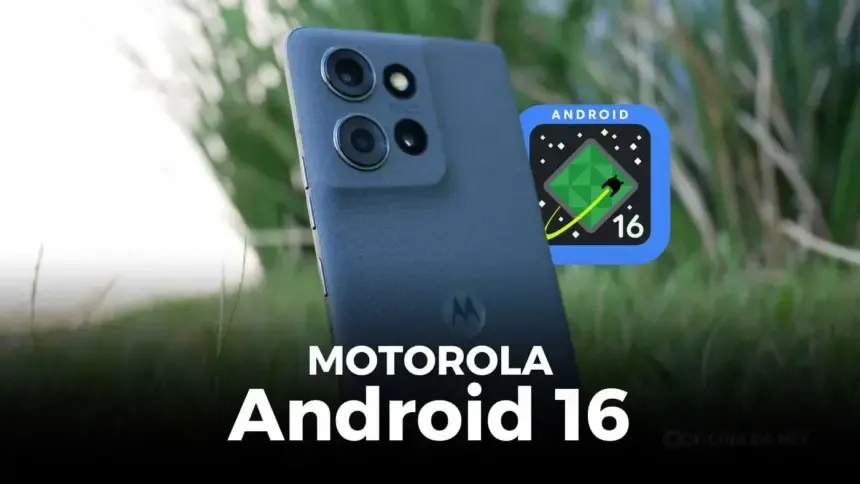
    Motorola is adding more and more phones to the Android 16 beta testing program over time. The Moto G Stylus 5G (2025) and the Moto Edge 50 Ultra are the latest additions to the company’s beta program, after the addition of five additional phones to its MFN program.

    To test out the new software update before anybody else does, you may sign up for the Motorola Feedback Network if you possess one of these two phones. In case you are not aware, Motorola Feedback Network, or MFN, is the name of the beta program for Motorola handsets. Speaking of availability, the Moto G Stylus 2025 beta is currently available in the USA, while the Edge 50 Ultra beta program is presently active in Brazil and India.

    Speaking of the features that the Android 16 update will include, these include: HDR screenshots, Advanced Protection Mode, APV codec support, Material 3 Expressive redesign, New Emojis, Embedded Photo Picker, Live updates, Desktop Window, Group notifications, and more.

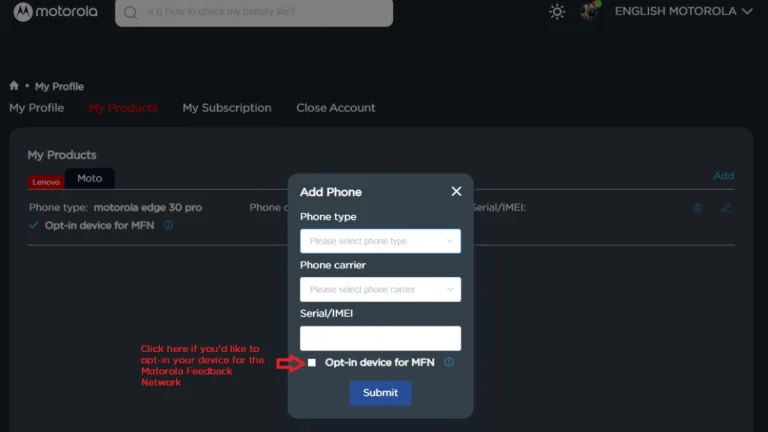
    Join Motorola MFN beta testing

    1. At first, you need to register on the Motorola community website.
    2. Make sure your profile page is updated with your current IMEI or SN of your device.
    3. Opt-in your device for the MFN on your Motorola community profile.
    4. Keep your phone updated to the latest version.
    5. Now, visit the registration link that you will find on the current testing opportunity page. Make sure to visit the page for your device and region.
    6. Fill required details and submit the form.
    motorola join mfn beta testing android 16

    Participants will receive additional information from Motorola via email, so be sure to check your inbox, including the spam folder. You can also frequently check settings for new software upgrades.

  • Xiaomi releases HyperOS 3 in September 2025 – first devices to receive it

    Xiaomi releases HyperOS 3 in September 2025 – first devices to receive it

    Based on Android 16, Xiaomi is getting ready to release HyperOS 3, a new firmware update that promises enhanced performance and a revamped look for the company’s whole ecosystem. Although the release date is set for September 2025, the smartphone models that will get this upgrade first are already known.

    • Xiaomi 15;
    • Xiaomi 15 Pro;
    • Xiaomi 15 Ultra;
    • Xiaomi 15T Pro;
    • Xiaomi 14T Pro;
    • Redmi K70 Ultra;
    • Redmi K80 Ultra;
    • Xiaomi 16;
    • Xiaomi 16 Pro.
    hyperos 3.0 update from Xiaomi with Android 16

    HyperOS 3 brings Android 16

    To guarantee quick and easy device use, the update will integrate Xiaomi’s exclusive innovations with the new capabilities of Android 16. In the fall of 2025, HyperOS 3.0 is anticipated to be released, first for flagship models and then for other devices. Compatibility checks will be possible via the MemeOS Enhancer app in the Play Store or the website HyperOSUpdates.com.

    It’s also important to remember that Android 16 has already been formally unveiled, and updates for compatible models will be released shortly. Convenience, security, and user privacy are the areas where the new version is improved. In September, Samsung also intends to release a stable version of One UI 8, which is based on Android 16 and will include significant updates for Galaxy customers.

  • Honor MagicOS 10 eligible devices

    Honor MagicOS 10 eligible devices

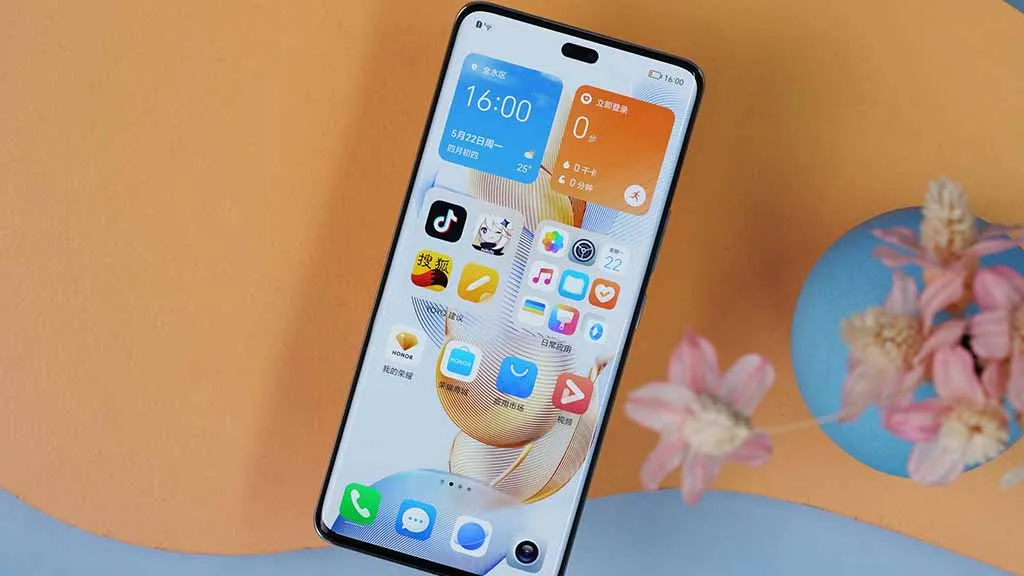
    It appears like Honor has begun working on the MagicOS 10 software update for its compatible devices. In order to determine what features and technological capabilities customers actually desire in their Honor phone, it has also started to gather input from its consumers.

    Like the previous iteration, MagicOS 10 is probably going to launch alongside the Honor Magic 8 series. Rumors and leaks suggest that the flagship lineup may be officially unveiled in October. At such moment, the corporation might introduce the updated version.

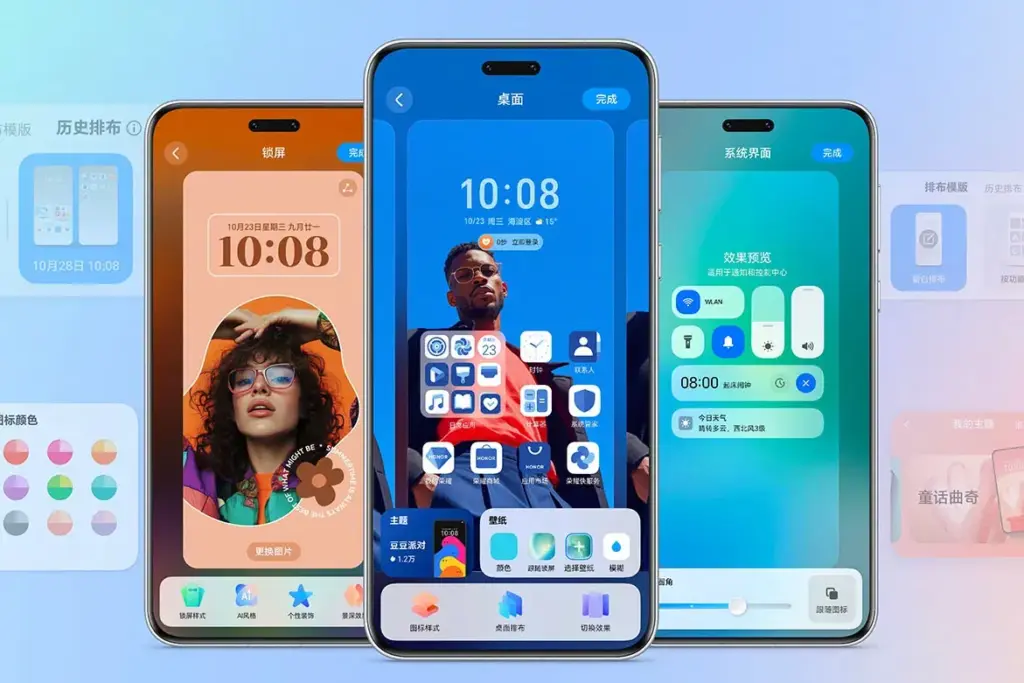
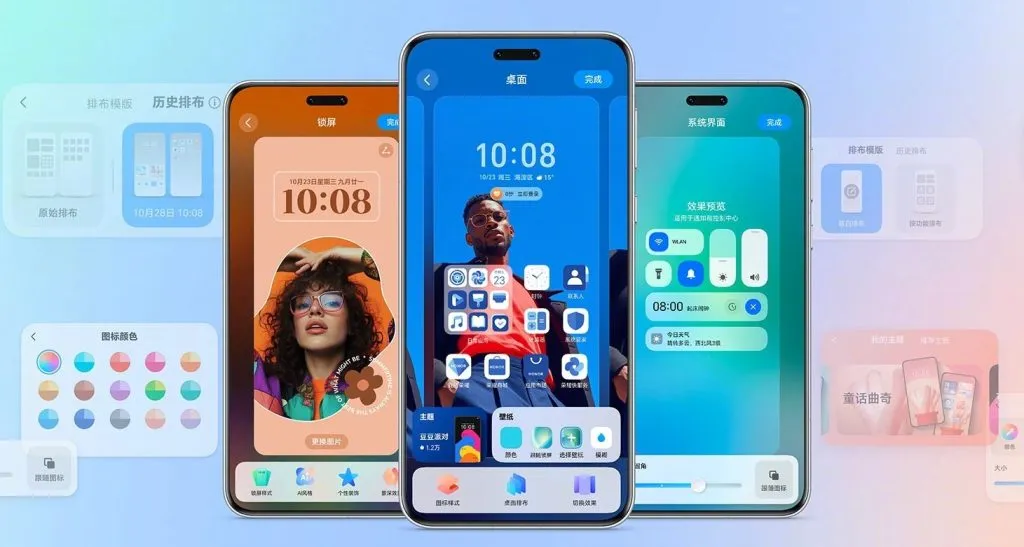
    The business plans to make some intriguing adjustments to the user experience. In order to make the device’s user interface (UI) more realistic while maintaining its minimalism and dynamic nature, it might also introduce more AI functions and customization tools.

    honor magicos 10 preview

    According to an early leak, Honor is looking into adding new capabilities to the Smart Capsule. The Magic Capsule will get additional services, increasing its usefulness in all areas.

    Here is a list of anticipated Honor devices that may receive the upcoming MagicOS 10 update, which is based on Android 16. These compatible models are listed below.

    Flagship Magic Series

    • Honor Magic 7
    • Honor Magic 7 Pro
    • Honor Magic 7 Lite
    • Honor Magic 7 RSR Porsche Edition
    • Honor Magic 6
    • Honor Magic 6 Pro
    • Honor Magic 6 Lite
    • Honor Magic 6 Ultimate
    • Honor Magic 6 RSR Porsche Edition
    • Honor Magic 5 Pro
    • Honor Magic 5
    • Honor Magic V5
    • Honor Magic V3
    • Honor Magic Vs3
    • Honor Magic V2 RSR Porsche Edition
    • Honor Magic V2
    • Honor Magic Vs2
    • Honor Magic V Flip

    Digital Series

    • Honor 400
    • Honor 400 Pro
    • Honor 400 Lite
    • Honor 300
    • Honor 300 Pro
    • Honor 300 Ultra
    • Honor 200
    • Honor 200 Pro
    • Honor 200 Smart
    • Honor 200 Lite
    • Honor 100
    • Honor 100 Pro

    X and GT Series

    • Honor GT
    • Honor GT Pro
    • Honor X70
    • Honor X70i
    • Honor X60GT
    • Honor X60 Pro
    • Honor X60
    • Honor X50 Pro
    • Honor Power
    • Honor X8c
    • Honor X9c Smart
    • Honor X9c

    Tablets

    • Honor Pad GT 2 Pro
    • Honor Pad GT
    • Honor MagicPad 3
    • Honor Pad 10
    • Honor Pad V9
  • Honor rumored to start MagicOS 10 beta testing with Android 16

    Honor rumored to start MagicOS 10 beta testing with Android 16

    Honor gives major software updates for its handsets first priority, and with MagicOS 10 beta testing, it appears the company may soon advance this strategy. According to a leak, the Chinese OEM may take this action in the days ahead.

    According to DigitalChatStation, two well-known companies, Honor MagicOS 10 and OPPO ColorOS 16, will begin beta testing their Android 16 skins this month. The precise timeframe for this operation was not disclosed by the tipster, but it might start before the end of August.

    In addition to OPPO/Honor, Xiaomi and Vivo can begin testing their Android 16 software version for qualified devices and search for new features.

    honor magic 7 pro magic os 10

    Honor MagicOS 10 already seen

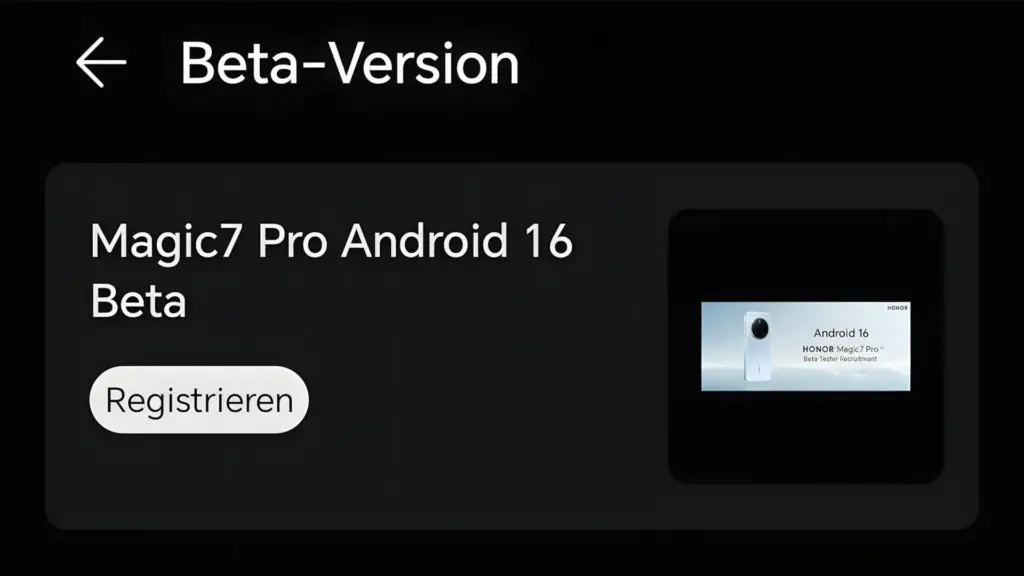
    In April, Honor revealed the Magic 7 Pro’s initial Android 16 developer preview. Only developers with certain features and enhancements have access to it.

    The MagicOS version test for the Magic 7 Pro phone, which is based on the Android 16 Beta, was introduced by the firm in May. Again, this beta activity was limited to developers.

    However, Honor may expand this software exploration pool with additional devices through the MagicOS 10 beta testing. Users may be able to preview the new features and improvements of the next MagicOS version thanks to this procedure.

    Additionally, users of Honor smartphones will have the opportunity to comment on the software experience, report bugs and problems, and recommend any additional features or adjustments for the MagicOS 10 operating system, which is based on Android 16.

    It’s unknown what gadgets will be included in this process and how the company will begin. However, as the month draws to a close, we might learn more information on this topic. Keep an eye out.