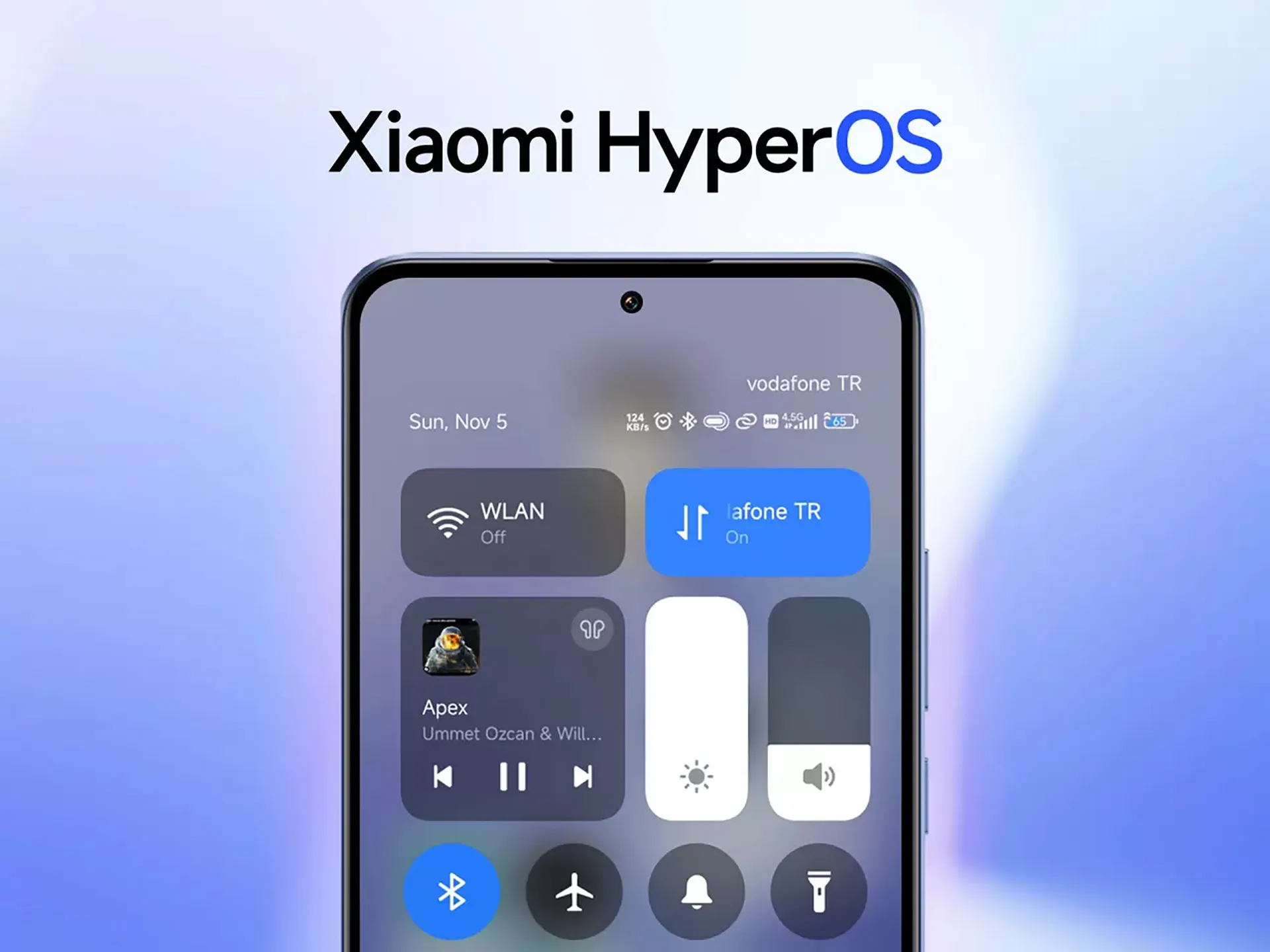
Following last week’s successful launch in China, Xiaomi is continuing its aggressive worldwide rollout strategy for HyperOS 2.2, with four major products now ready for immediate release. The server-side preparations indicate an immediate deployment timeframe for the planned updates, which include builds for the Xiaomi 14T, Xiaomi 14 CIVI, Xiaomi 13T, and Redmi Note 14S.
Xiaomi’s dedication to providing cutting-edge software experiences in multiple international regions at the same time is demonstrated by their well-coordinated worldwide expansion. An important turning point in Xiaomi’s software development has been reached with the HyperOS 2.2 update, which brings cutting-edge features and improved performance improvements that were previously only available in China. Users across the world can anticipate that these updates will start to trickle out a few days after server verification is finished, in keeping with the custom of China-first releases.
Prepared Device Updates
In order to guarantee thorough worldwide coverage for the HyperOS 2.2 experience, Xiaomi has finished developing four essential device variations for several regional markets. The ready-made builds show how Xiaomi deploys software globally in a logical manner.
Updates that are ready for:
Xiaomi 14T: OS2.0.201.0.VNEEUXM (EEA region)
Xiaomi 14 CIVI: OS2.0.201.0.VNJINXM (India)
Xiaomi 13T: OS2.0.201.0.VMFMIXM (Global)
Redmi Note 14S: OS2.0.202.0.VFOMIXM (Global)
Better camera functionalities
Building on versions 2.0 and 2.1, HyperOS 2.2 offers enhanced camera functionality, AI, and system performance. One of the most notable features is the Xiaomi Camera 6.0, which revolutionizes photography with its entirely new interface and smooth animations.
The Camera 6.0 upgrade improves workflows for both novice and professional photographers by introducing contemporary user interface features with simple controls and seamless switching between shooting modes.
HyperOS 2.2 will deliver more performance
Better navigation, enhanced customisation, and smoother animations are all features of the upgrade. A more responsive user interface that feels elegant and high-end throughout all device interactions is produced by these improvements.
In order to ensure optimal performance across various hardware configurations, system-level optimizations concentrate on lowering resource usage while preserving advanced functionality.
The MemeOS Enhancer software, which offers screen-based update management, system app updates, and access to secret Xiaomi features, may be downloaded from the Play Store to improve users’ HyperOS 2.2 experience.
Stay connected with the latest from Droid Tools—follow us on X @droid_tools, like our page on Facebook, check out our updates on Instagram, and follow us on Google News for real-time news, device tips, and mobile tech insights.
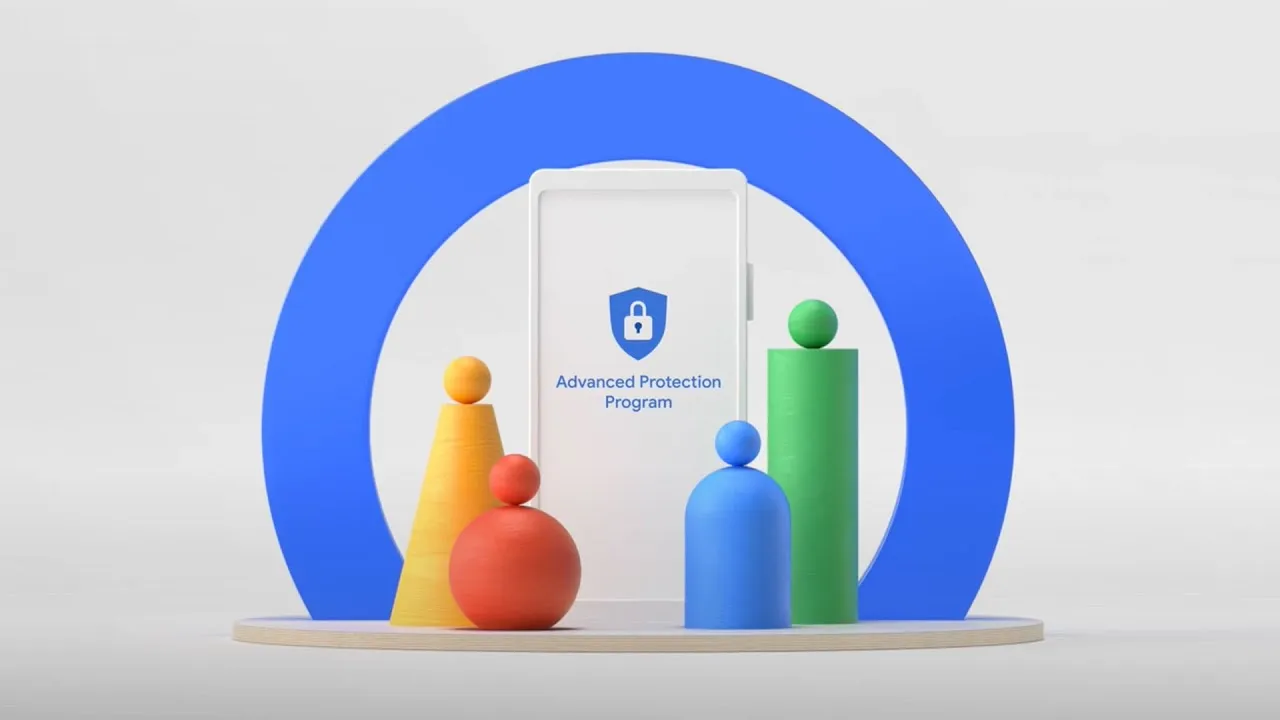
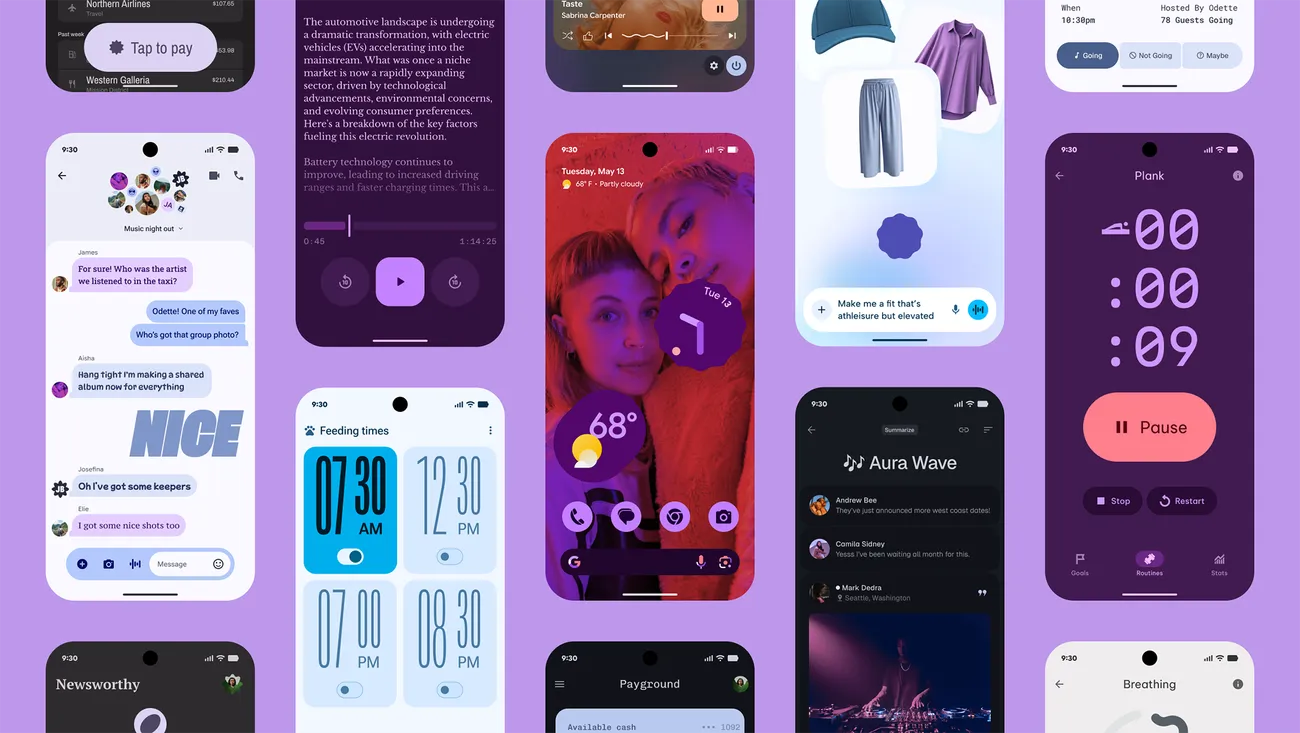
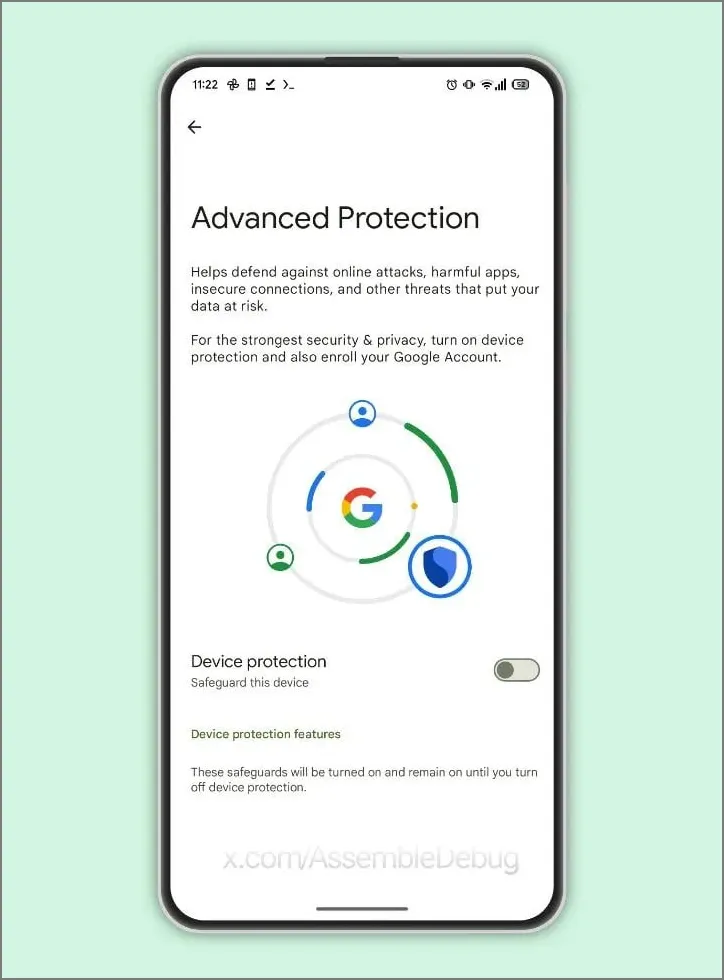
Google has released the Material 3 Expressive design language for Android 16 QPR1 Beta. In addition to the new UI changes, it comes with a new Advanced Protection feature, which is a collection of security measures intended to keep Android users safe. Here’s how to activate it and when you should think about activating it.
The Advanced Protection feature was included in the Android 16 QPR1 update for Pixel devices, but it is anticipated that the final stable update will make it available on further devices in the future.
What is Advanced Protection?
Advanced Protection, as the name implies, is a new mode that gives your Android device and linked Google account overall increased security. When you believe there are security risks or breaches, you can activate it.
It combines and activates a number of current and future Android features, despite sounding like a brand-new security feature. Put differently, it’s a feature that combines multiple protections in one location and activates them all at once when required. This is especially helpful when you just want to make sure your device and account are as safe as possible but are unable to pinpoint a threat or assault.
This features enable different security tools
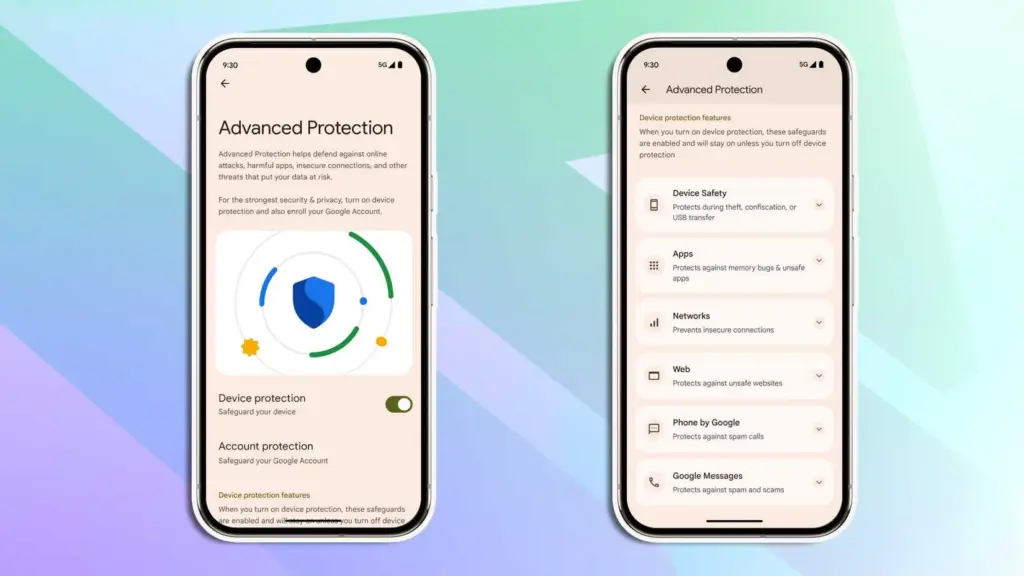
Device theft, app, network, browser, and phone protections are among the options available in Pixels’ Advanced Protection mode.
In order to further prevent access to stored data, device theft prevention, an anti-theft feature for stolen phones that is already commonly present on the majority of contemporary Android smartphones, will immediately lock the device and compel a restart if it stays locked for three days. Additionally, it will prevent unwanted USB access.
App protection, meanwhile, checks for memory problems in apps, screens for malware and dangerous apps, and prevents installations from unreliable developers and sources. At the same time, the network tool prevents the device from using 2G, which is based on a less secure protocol, and requires it to utilize 3G and newer networks.
These protections apply to browsing as well as making and receiving calls and messages. While the Phone by Google and Messages applications check numbers during calls and chats to determine whether they are spam or real businesses using Google’s scam detection, the web blocker prevents non-HTTPS and malicious websites.
How to Enable Advanced Protection
Once enabled, the feature is located in the Security & Privacy section of the settings on your Google Pixel or compatible Android smartphone. To turn it on, follow these steps:
Go to Settings > Security & Privacy.
Scroll down and look for Other security settings.
Tap on Advanced Protection.
Toggle on Device protection.
Confirm the step.
Restart your device.
To disable it again after it has been enabled, you must authenticate using biometrics or your password and PIN.
Stay connected with the latest from Droid Tools—follow us on X @droid_tools, like our page on Facebook, check out our updates on Instagram, and follow us on Google News for real-time news, device tips, and mobile tech insights.
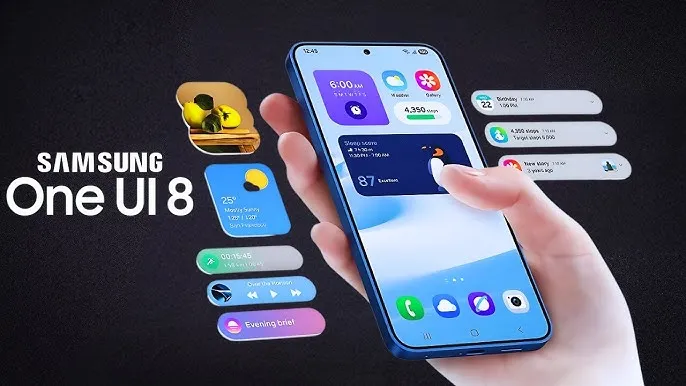
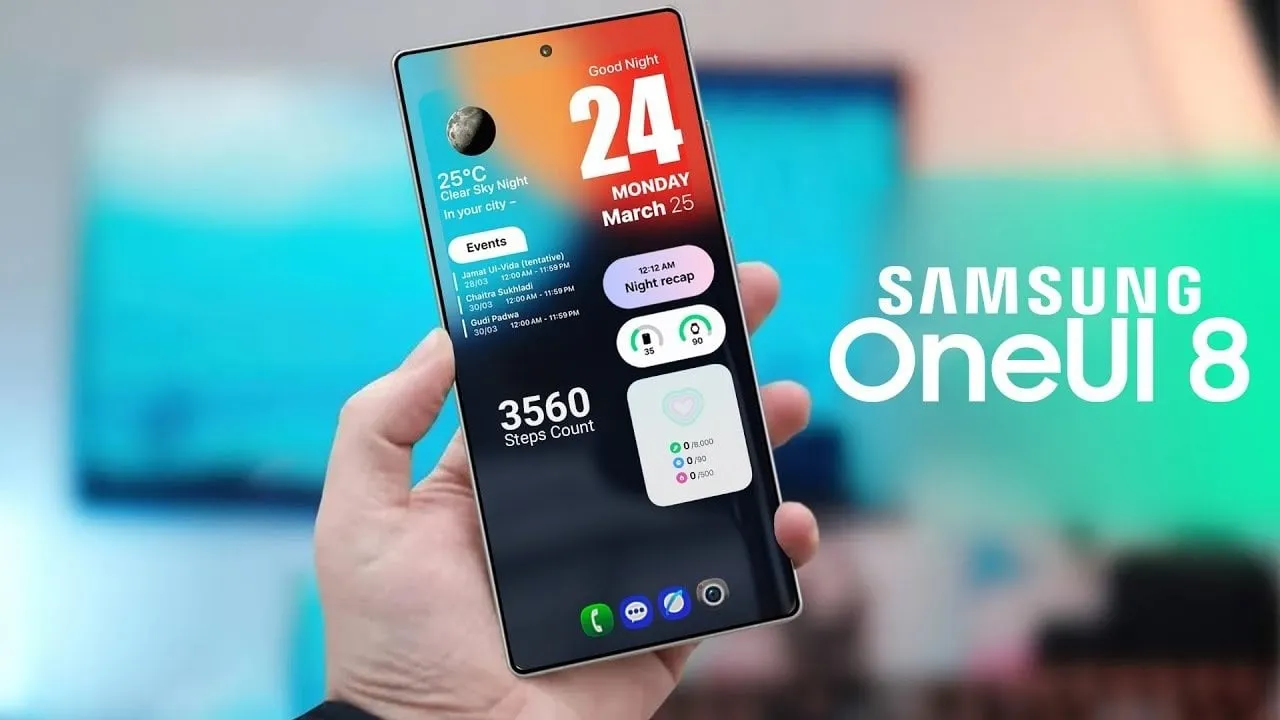
Owners of the Galaxy S25 series had already been testing the initial beta build in a few chosen regions when Samsung shocked its Galaxy audience by launching the most recent One UI 8 beta program. At the moment, the beta is accessible in four nations, with additional countries to follow afterwards.
Regarding previous deployments, Samsung has set aside seven nations—China, the US, the UK, South Korea, Germany, India, and Poland—to test the most recent One UI beta version for years.
Samsung eventually separated the beta distribution into two stages with One UI 7. The first batch of One UI beta was released in four regions—South Korea, Germany, the US, and the UK—with the exception of China. The two remaining regions—India and Poland—will be saved for the second phase of the One UI beta deployment.
Samsung is following the same approach for theOne UI 8 beta rollout.
Phase 1: Initial beta release is limited to:
Devices:
Galaxy S25
Galaxy S25+
Galaxy S25 Ultra
Countries:
South Korea
Germany
The United States (US)
The United Kingdom (UK)
Phase 1 is exclusively reserved for the listed countries.
Only owners of the Galaxy S25 series in these regions currently qualify.
Interested Galaxy S25 owners can now register and test the most recent beta release thanks to Samsung’s recent improvements to the One UI 8 beta enrollment and participation process. The beta program is now available for the S25 family, but it will eventually expand to include more qualified devices.
Stay connected with the latest from Droid Tools—follow us on X @droid_tools, like our page on Facebook, check out our updates on Instagram, and follow us on Google News for real-time news, device tips, and mobile tech insights.
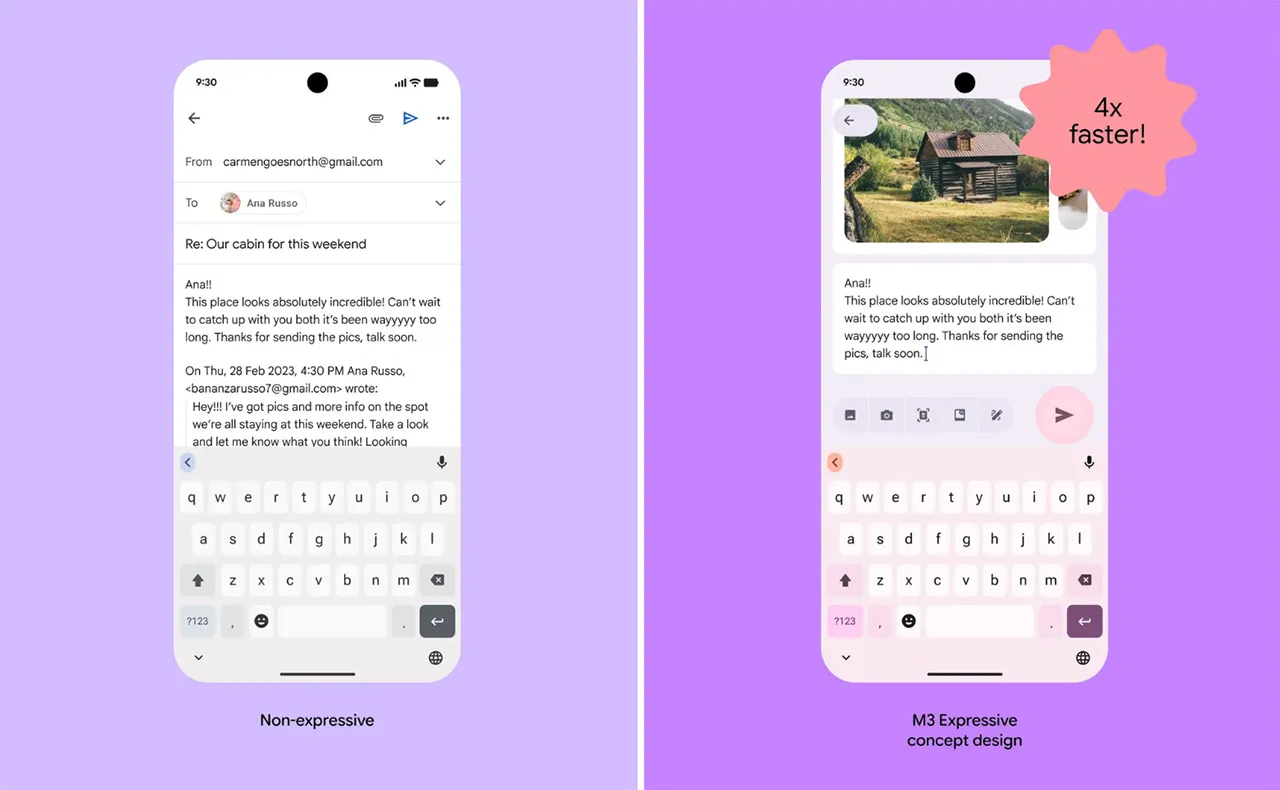
One of the main topics of discussion with Android 16 is the release of Material 3 Expressive, which not only improves the user experience of the system but also guarantees that Google apps use the same design language, improving consistency. Later in the year, those system-level design modifications are anticipated, but it appears Google is eager to begin implementing Android 16’s app designs.
Over the past few weeks, the Mountain View tech behemoth has been seen previewing Material 3 Expressive in the Phone app and, more lately, in Calendar, Photos, Files, and Meet. If Gmail is your main email app on your Android phone, it’s time to see if you have the Material 3 Expressive design upgrade installed. However, there is no information regarding when Android 16’s design will be available for these apps.
How Material 3 Expressive design is changing Gmail?
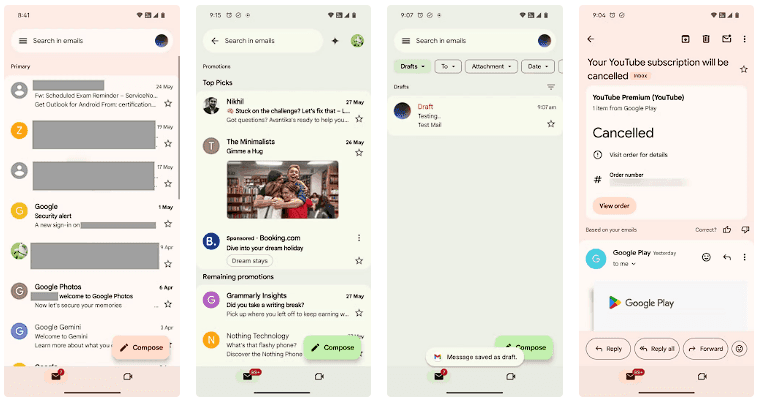
The Gmail app version 2025.05.11 is implementing Android 16’s design language, which was initially noticed by SparkRadar on Telegram. This brings significant modifications to the program’s general look (via Android Authority). The new card-based user interface for the email list is the first significant change you’ll notice when you launch the app.
Emails and the landing page’s search box were previously shown in a single-sheet format. With the Material 3 Expressive redesign, the email screens also had the same card-based user interface as the landing page.
On the landing page, the “Compose” FAB is still located on the right, but now has a thicker typeface and a solid-filled pencil image. The search bar has seen a minor alteration as well. The profile symbol in the search bar is no longer present in the updated user interface. As an alternative, the search bar’s size has been lowered to create space for the profile symbol next to it.
Additionally, we can see that the Meet and Email symbols have grown in size, and the bottom bar has slightly expanded. Additionally, Gmail now has a pill-shaped button animation for its swipe motions, which gives the interface a lively personality.
Although the Material 3 Expressive design update is visually appealing, not all Gmail users can currently access it. The reason for this is that a server-side update is being used to roll it out. Additionally, it may take a few more days to make this adjustment available to everyone, as Gmail is one of the Google apps with over 10 billion installations on the Google Play Store.
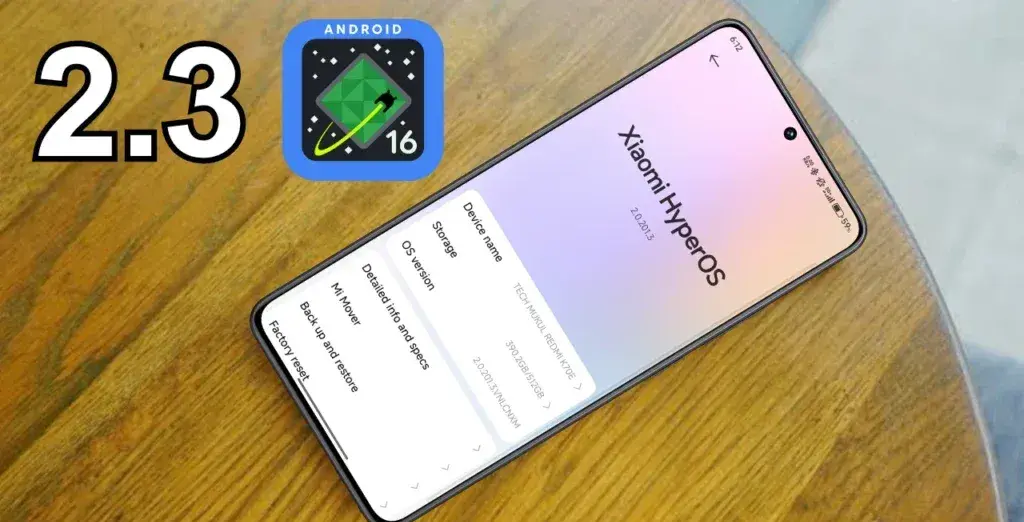
With Android 16 serving as its foundation, Xiaomi’s next HyperOS 2.3 update is expected to bring about the biggest leap in the company’s own Android experience. This significant system update introduces improved security measures and improved user experience components while expanding on the foundation of the current HyperOS 2.2 framework.
Although the major emphasis is still on security improvements rather than ground-breaking new features, the update demonstrates Xiaomi’s dedication to offering state-of-the-art software experiences that capitalize on Google’s most recent Android advances. Through official channels and specialized monitoring tools, users can monitor their device compatibility and eligibility for updates.
New features in HyperOS 2.3
The Android 16 foundation, which offers better system stability, more performance optimization, and—above all—advanced security features that safeguard user data and privacy, is the main improvement in HyperOS 2.3.
Enhanced Security Framework
HyperOS 2.3’s security improvements include:
Advanced encryption protocols for sensitive data protection
Improved app permission management system
Enhanced biometric authentication security
Strengthened system-level protection against malicious applications
Device compatibility and release
Only those devices that qualify for the Android 16 upgrade will be able to get the HyperOS 2.3 update. While preserving system stability, this phased deployment guarantees the best possible performance and compatibility throughout Xiaomi’s device ecosystem.
Eligible Device Categories
Flagship smartphones from recent generations
Select mid-range devices with adequate hardware specifications
Compatible tablets and other smart devices in Xiaomi’s ecosystem
All of Google’s normal services and security upgrades are available on the Android 16 base, even though Google hasn’t added any new Android features specifically for Xiaomi’s HyperOS version. Preserving system security and guaranteeing compatibility with Google’s ecosystem services are the major goals of the integration.
Update eligibility
With the MemeOS Enhancer app on the Play Store, users may find out if their device is compatible with Android 16 and eligible for HyperOS 2.3. In addition to system app updates, access to secret Xiaomi features, and direct update access from the device screen, the app offers instant visibility into update status upon activation.
Stay connected with the latest from Droid Tools—follow us on X @droid_tools, like our page on Facebook, check out our updates on Instagram, and follow us on Google News for real-time news, device tips, and mobile tech insights.
Android 16 offers a lot of innovations that I’m eager to test out on my Android phone, including Material 3 Expressive, a redesigned Quick Settings menu, and Live Updates. It seems like one of the biggest Android updates in a long time.
There weren’t many obvious adjustments that would have excited me. Prior to Google revealing new features at The Android Show: I/O Edition on May 13, Android 16 was looking like a really dull update.
New Quick Settings panel
With each significant Android update, Google alters the Quick Settings panel almost like a ritual. That tendency will continue with Android 16, and I’m looking forward to the modifications Google has planned. Resizable toggles are being added. Additionally, one-click Bluetooth and Wi-Fi toggles are returning.
The tiles have a new appearance and take considerably less room than they did previously, which is another obvious alteration. Extending the Quick Settings panel will provide a depth effect by blurring the background, similar to what is seen on some Chinese Android skins.
Google appears to have drawn inspiration from the updated Control Center for Android 16 Quick Settings panel in iOS 18. It seems to be a significant improvement in usability.
The June release of Android 16 will not have the updated Quick Settings panel. It will come later in the year instead.
Material 3 Expressive
Google’s latest phone and tablet design language, Material 3 Expressive, makes its debut with Android 16. It is also among the OS’s most significant user-facing modifications. It doesn’t significantly alter the appearance. Rather, it expands upon Material Design 3 by including bolder fonts, larger buttons, slick and lively animations, and more.
The timing of Material 3 Expressive is perfect. The current look felt outdated because Google introduced Material look 3 with Android 13 four years ago. Additionally, it maintains familiarity while bringing about the appropriate enhancements. Rather than droning on about Material 3 Expressive, I’ll let this Google GIF speak by itself:
This polish is present throughout Android 16, particularly when switching the system volume or closing apps from the recent apps menu. It also features smooth animations and haptic feedback. Android 16 will upgrade the dynamic color themes in addition to Material 3 Expressive, allowing apps to use additional colors from your wallpaper.
One of the main Android 16 improvements that I am most looking forward to is Material 3 Expressive, which looks good based on what Google has demonstrated. The one sour note? When Android 16 is first made available to the public in June, Material 3 Expressive will not be included. It will come later in the year instead.
Live Updates
Apps for food delivery have permeated our daily lives. Uber, Grubhub, and other food delivery apps provide real-time, urgent notifications, unlike other apps. The same is true of sports apps. Instead of launching the app, you would prefer to get real-time information in the notification shade on your phone.
Even while Android’s notification panel is more capable than iOS’s, it has trouble efficiently delivering real-time updates. With Live Activities, Apple nailed this, making it simple to monitor real-time food delivery status and sports scores.
Google’s Android 16 will have a feature called Live Updates, which is modeled after iOS. It will show the status of your meal delivery in real time on the notification shade or the lock screen of your phone. When you use Always-On Display, the status is displayed. Additionally, Google’s approach enhances the Live Update notification with helpful Call, Message, and Tip buttons.
It’s time-consuming and annoying because I have to open the meal delivery app all the time to see how it’s doing. A feature akin to the iPhone’s Live Activities was added to the skins of Android manufacturers such as OnePlus and Oppo, although the execution is unreliable and glitchy. Google should address these problems with an official solution.
Ultra HDR support for HEIC images
I use my phone to shoot a lot of photos. I have my phone’s camera app set to save JPEGs in the space-efficient HEIC format because they take up a lot of storage. The catch is that images saved in the HEIC format are not compatible with Ultra HDR on Android. I therefore use JPEG for my photos, which uses up all of my 2TB of Google One storage.
This will be altered with Android 16’s addition of Ultra HDR capability for HEIC photos. Additionally, Google is developing UltraHDR support for AVIF files, which should be available soon.
With Android 14, Google debuted Ultra HDR. It enables images to have improved color and a wider dynamic range. These enhancements are provided without any compatibility problems. On devices with SDR screens, Ultra HDR JPEG images immediately revert to the SDR gain map. Google mandated Ultra HDR support for phones with performance class 15 starting with Android 15.
Let’s hope Google upgrades the Pixel Camera app to enable saving shots in HEIC by default rather than JPEG, because Android 16 now supports Ultra HDR for HEIC files.
Advanced Protection mode
Google has strengthened Android’s security over the past few years by adding a number of features. However, there is still opportunity for improvement. In addition, I believe that Android’s security features fall short of those of the iPhone.
Google is making a significant effort to address issue with Android 16. Major security-related settings will be consolidated under a new Advanced Protection mode. To activate offline device locating or Theft Detection, you won’t need to go far into your phone’s settings menu.
With a single Advanced Protection toggle, you can enable all available security measures in Android across several categories. The list is as follows:
Intrusion Logging
Theft Detection Lock
Offline Device Lock
Inactivity Reboot
USB Protection
Google Play Protect
Unknown App Protection
Memory Tagging Extension
Android Safe Browsing
Chrome Safe Browsing
Javascript Protection
Unsafe Link Protection
Spam and Scam Protection (Google Messages)
Spam and Scam Protection (Phone by Google)
Called ID & Spam
Automatic Call Screening
2G Network Protection
Disable Auto-Reconnect to Insecure Networks
Numerous security mechanisms are dispersed across the operating system. For instance, the Google Play Protection option is located under Security & Privacy, whereas the Caller ID & Spam protection settings are located in the Phone app settings.
With Android 16, a new security feature called Intrusion Logging generates and preserves a device activity record for study after a compromise. It is safe but easily accessible because it is kept in the cloud and is end-to-end encrypted.
Another new security feature in Android 16 is Inactivity Reboot, which will restart your phone automatically after 72 hours of inactivity and lock-up. This will guarantee that no user data may be viewed until the device is opened by entering the password or PIN.
I won’t gain much from Android 16’s Advanced Protection Mode. I only activate these functions when I’m on the road. Nevertheless, it’s a useful innovation that will make Android more secure.
Despite being a feature-rich version, Android 16 will not ship with all the new goodies in June and still lacks several long-awaited additions. Rather, Google will make more significant improvements later in the year, most likely in conjunction with a quarterly platform release and the Pixel 10 family. Additionally, some improvements may not be available for non-Pixel phones because the manufacturer may choose not to incorporate them into their skin.If you want the latest Droid Tools news, follow us on X @droid_tools and like our page on Facebook to stay updated.
With Samsung now enabling Galaxy S25 series owners to test the most recent One UI 8 beta program, starting in its home country of South Korea, One UI 8 will soon be available on your Galaxy phone. You must be wondering how to join the beta phase as soon as it arrives on your device, but here are a few easy actions you can take.
Before the official or stable release, the One UI 8 Beta program is now available for the Galaxy S25, Galaxy S25+, and Galaxy S25 Ultra to test out all the newest features and capabilities.
The beta build for the Galaxy S25 family is designated with build number ZYER, while the upgrade may eventually reach additional eligible regions outside of South Korea. Simultaneously, this most recent version improves accessibility, efficiency, and security while also adding some of the main features of Android 16.
Beyond this, this update further includes the ongoing May 2025 security patch that significantly improves the device’s overall security and core functionality.
How to join One UI 8 beta program?
Also, Samsung made some minor changes to its beta registration procedure this time around to make it more convenient. Here’s how to sign up for the most recent One UI 8 beta program using the Samsung Members app!
Open the Samsung Members app.
Tap on the One UI 8 Beta program banner.
Once tapped, follow all the on-screen prompts while also accepting the beta terms and conditions. You are enrolled now!
This takes you closer to installing the latest beta build; just head to Settings >> Software Update >> and finally, Download and Install.
Once installed, your device will automatically reboot to the latest build; thus, you are now ready to rock One UI 8 beta.
If you want the latest Droid Tools news, follow us on X @droid_tools and like our page on Facebook to stay updated.
With Gemini mostly overshadowing the two-day developer conference, Google I/O 2025 is now gone. On the other hand, the release of Android 16 QPR1 Beta, which incorporates the previously introduced Material 3 Expressive design language, is a more noteworthy advancement for certain aficionados. What’s new in this version and how to access the beta are explained here.
After the stable Android 16 Beta program, the first Quarterly Platform Release is the Android 16 QPR1. Despite being more stable than previous betas, it is still intended for developers and testers because of flaws and other problems. Similarly, this release represents a sneak peek at the upcoming Pixel Feature Drop, which is anticipated to happen next month.
Google’s new design language, Material 3 Expressive design, or M3E, which incorporates bolder and more playful elements, is now available in the Android 16 QPR1 Beta. Wear OS 6 for wearables will also use the M3 Expressive design.
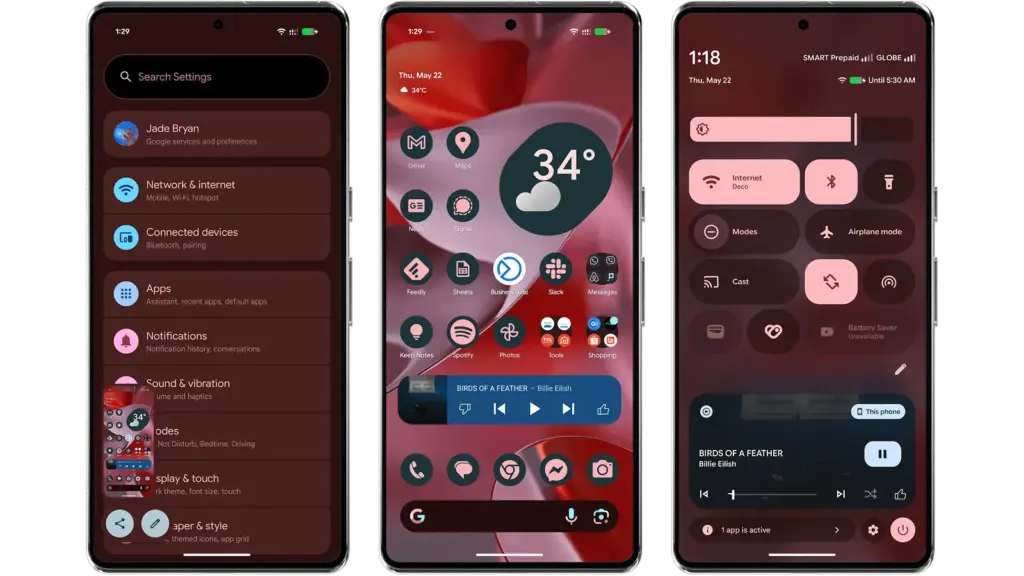
To experience M3 Expressive, I set up the Android 16 QPR1 Beta on my Pixel 9 Pro XL (review). The wallpaper and quick settings are two examples of UI elements and sections where the modifications are instantly apparent. Additionally, some features, including personalized icons on the Pixel Launcher, are not yet enabled.
Material 3 Expressive design landed in Android 16 QPR
A notable modification to the home screen is the addition of a complete row of additional space for widgets and apps. This is because the “At a Glance” widget, which was formerly located at the top of the home screen, has decreased.
The battery, cellular, and Wi-Fi system icons have also been added to the status bar. In the meantime, each component of the system settings has more themed glyph icons.
The most significant changes are in the fast settings panel, which now uses shortcuts and widgets in a more vibrant and effervescent manner, along with new animations that Google calls “springy.” Additionally, there are additional customization options for scaling and positioning toggles and icons, which enables users to employ 1×1 icons to fit more elements.
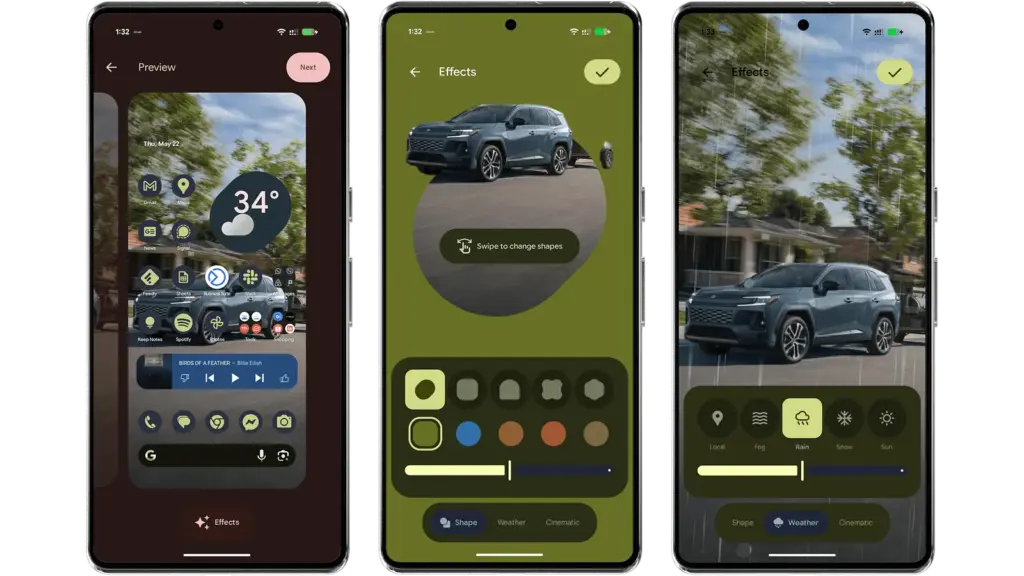
Android 16 provides additional settings and effects for custom images, which will appeal to those who like personalizing their home screen and lock screen. AI-powered weather effects and the ability to overlay colors with shapes are now available. A cinematic effect is an additional choice, but my device was still unable to use it after trying.
More apps will come with Material 3 Expressive
It is anticipated that Google would add more M3 Expressive elements to its services and applications, such as Google Photos and Keep.
Manufacturers of skinned Android versions, like Samsung’s One UI, are now primarily responsible for implementing the Material 3 Expressive design. Many of these changes and new features should be maintained for those that provide stock and near-stock Android experiences.
All of these updates, along with perhaps other improvements and optimizations not included in the first Android 16 QPR version, will be included in the June Pixel Feature Drop if you’re patient enough.
The Android 16 QPR1 Beta update is available via the beta program for Pixel 6 all the way to Pixel 9 series.
Pixel 6, Pixel 6 Pro, and Pixel 6a
Pixel 7, Pixel 7 Pro, and Pixel 7a
Pixel 8, Pixel 8 Pro, and Pixel 8a
Pixel 9, Pixel 9 Pro, Pixel 9 Pro XL, Pixel 9 Pro Fold, and Pixel 9a
Under Google’s Advanced Protection Program, Samsung’s One UI 8, which is based on Android 16, will offer strong privacy and security protections to protect users of Galaxy phones and tablets from theft, fraud, and scams.
The security improvements of Android 16 will be sent out to Samsung Galaxy devices via One UI 8.0, anticipated in the summer of 2025, as announced on May 14 at Google’s The Android Show. Strong protection against unwanted access is ensured by the Advanced Protection Program (APP), which combines features like Remote Lock and Theft Detection Lock and requires user credentials to disable. These were first created for Google apps, but they will eventually be extended to third-party apps.
Uneditable secure device records that allow users to verify for tampering are among the key characteristics. One UI 8 thwarts fraudster tactics by blocking dangerous actions during talks, such as installing untrusted apps or changing important settings. With UK banks like Monzo and NatWest on board, banking apps are also made more secure by requiring screen-sharing talks to terminate before access.
AI is a major factor in this, in case you haven’t guessed it already. It detects apps that conceal icons, filters fraudulent messages, and does virus checks.
Remote Lock adds a security question and conceals one-time passwords from alerts, while enhanced factory reset safeguards make stolen phones inoperable without the owner’s consent. These are compatible with One UI 6.1.1’s Samsung Auto Blocker.
With a beta in June and a July release alongside the Galaxy Z Fold 7 and Flip 7, One UI 8 may make Galaxy smartphones safer than before. Are flaws like delayed third-party app support a concern, or will these features outsmart scammers? More will be revealed during the summer launch.
Samsung’s One UI is a significant element of what distinguishes Galaxy phones and tablets. With One UI 7 finally available to consumers on April 7, 2025, attention has shifted to the next chapter: One UI 8. This future software upgrade, which is likely to be based on Android 16, should add some intriguing new features to Samsung devices.
There is speculation that it will be released sooner than usual, altering Samsung’s standard software update release schedule. In this post, we’ll go over the release date, the beta testing program, which devices will receive One UI 8 based on Samsung’s update policy, and what this may mean for Galaxy customers.
One UI 8 release
Historically, Samsung’s big One UI releases have coincided with the annual Android upgrade cycle, arriving in the fourth quarter, around October or November, following Google’s stable Android release. For example, One UI 6 debuted on October 30, 2023, whereas One UI 7, which was severely delayed, launched on April 7, 2025. However, reports in the IT world claim that One UI 8 may break this pattern.
One UI 8, which is based on Android 16, will be released in the summer of 2025. This update, confirmed by Google, represents a considerable increase in Samsung’s update cycle, with the goal of closely aligning with Google’s roadmap.
One UI 8 beta program
Samsung’s One UI beta programs allowed fans to try out new features early on, and One UI 8 should continue to do so. Considering how things generally proceed and the predicted July 2025 release, the One UI 8 beta should begin in late May or early June 2025.
The beta normally begins with Samsung’s top phones, such as the Galaxy S series, and then progresses to foldables and lower-cost devices. One UI 7 testing began on December 5, 2024, with the Galaxy S24, and was expanded to include the S23, Z Fold 6, Z Flip 6, and others by March 2025.
If Samsung follows this step-by-step plan, the One UI 8 beta would most likely debut with the Galaxy S25, followed by foldables such as the Z Fold6 and Z Flip6. You’ll most likely join up through the Samsung Members app in countries such as the United States, United Kingdom, India, Germany, and South Korea, allowing users to test out new features before they become official.
One UI 8 eligible devices
While Samsung has not officially confirmed the One UI 8 device list, we can use its official software update policy to determine which devices are assured to receive the upgrade. Samsung now provides up to seven years of OS upgrades for select flagship handsets (beginning with the Galaxy S24 series), four years for others, and five years of security updates for numerous models. According to this policy and the confirmed One UI 7 rollout, the following devices are sure to be qualified for One UI 8:
Mid-range devices, such as the Galaxy A55 and A35, may also qualify for the four-year program. Older smartphones, like as the Galaxy S21 series, may miss out since their four-year support period may expire before One UI 8 is released.
The Summer 2025 debut of One UI 8 suggests a significant change for Samsung, potentially providing a substantial update much sooner than fans think. If this happens on time, Galaxy owners may receive Android 16 features with the next round of foldable phones, demonstrating how Samsung can change things up and keep improving.
While we wait for Samsung to make an official announcement, the prospect of a quicker One UI 8 release thrills Galaxy fans—could this be Samsung’s biggest software step yet?