Category: News

Up‑to‑date Android news, smartphone launches, software updates and industry trends, written in a clean, editorial style for informed readers.

  • Top 5 Android smartphones with the best display

    Top 5 Android smartphones with the best display

    Over the last fifteen years, smartphones display have grown in size exponentially. It is funny how, while six inches was once considered the definition of a phablet, these days we can call a six-inch device compact. Along with larger screens come improvements in color fidelity, resolution, refresh rate, and other technical marvels that enhance the smartphone experience.

    Over the last fifteen years, smartphones have grown in size exponentially. It is funny how, while six inches was once considered the definition of a phablet, these days we can call a six-inch device compact. Along with larger screens come improvements in color fidelity, resolution, refresh rate, and other technical marvels that enhance the smartphone experience.

    When buying a new smartphone, it is important to consider the display specifications because people are consuming more and more content on their phones, whether it is through watching HDR movies and shows or binge-watching your favorite TikToks. Innovations have made it possible for displays to take on new forms, such as edge-to-edge, curved, and OLED, and competition has made these phones more affordable than ever.

    Here are five Android phones with some of the best screens in the market, ranging from incredibly clear 4K panels to the really fluid displays found in foldable smartphones. However, there are always a select handful at the top with the most advanced display technologies.

    Samsung Galaxy S23 Ultra
    s23ultra brightness 3 1280x853 8

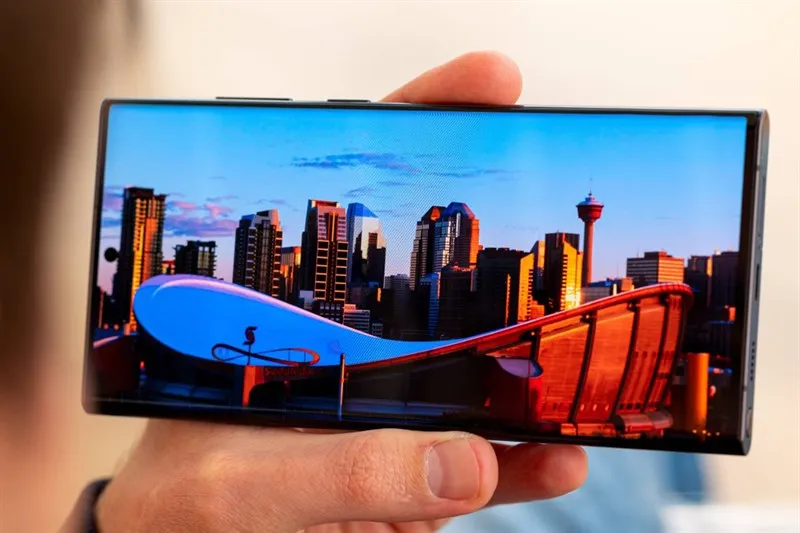
    With its Ultra-series of phones, Samsung has polished the recipe with its many design advancements, such as folding panels or the overflowing edge displays in its previous flagships. Samsung has been the undisputed ruler in display technologies, and not just in its smartphones.

    With its tried-and-true build and design, the Galaxy S23 Ultra certainly plays it safe, but that does not mean it shys away from what may be the best all-around smartphone display: a massive 6.8-inch 2K AMOLED display that refreshes at 120 Hz and boasts great outdoor visibility thanks to its 1,750 nits of peak brightness. The nearly bezel-less, edge-to-edge panel with a centrally aligned hole-punch camera is just one of the many features that combine to create an immersive experience.

    With its robust specifications and S Pen, the S23 Ultra is an incredible phone—especially considering how well users have rated its battery life. It also boasts one of the best camera setups, with a 200-megapixel camera that can record 8K video and a dedicated periscope lens that can zoom up to 100 times.

    Samsung’s good track record with quick software updates and long-term support further make this phone a solid recommendation. As expected, all of this comes at a hefty price of $1,200, but there really isn’t anything like the Galaxy S23 Ultra in the market.

    Sony Xperia 1 V
    sony 1 v display

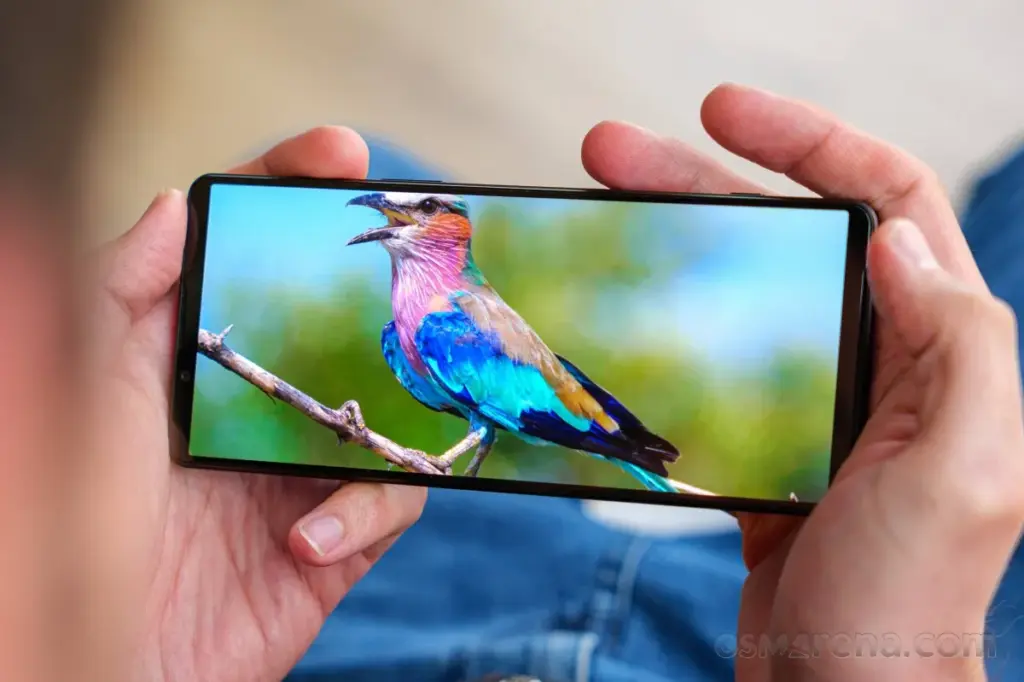
    The Sony Xperia 1 V boasts a 6.5-inch 4K OLED display with a 120 Hz refresh rate and a 21:9 refresh rate, making it one of the only smartphones available with such an absurdly crisp resolution of 643 ppi. The display is typically slimmer and taller than most phones, making it perfect for scrolling through vertical videos or watching widescreen HDR content. Yes, Sony is still making smartphones in 2024, even though it is marketed towards a niche audience of display and camera enthusiasts.

    With a triple camera setup that uses Zeiss optics and Sony’s proprietary S-Cinetone video look, the Xperia 1 V runs on the Snapdragon 8 Gen 2 chipset and has 12GB of RAM and 256GB of storage that can be expanded further using the microSD card slot. All three cameras can record in 4K HDR at 120 frames per second and have the same autofocus technology as Sony’s professional cameras.

    The Xperia 1 V, touted as the ideal media powerhouse, boasts front-facing stereo speakers, a 3.5mm headphone jack that supports Dolby Atmos and LDAC for wireless earphones, and a sleek yet robust in-hand feel thanks to Corning’s Gorilla Glass Victus protection up front. However, the phone’s steep $1,200 price tag must be justified by its impressive display and camera features.

    Google Pixel 8 Pro
    pixel 8 pro display

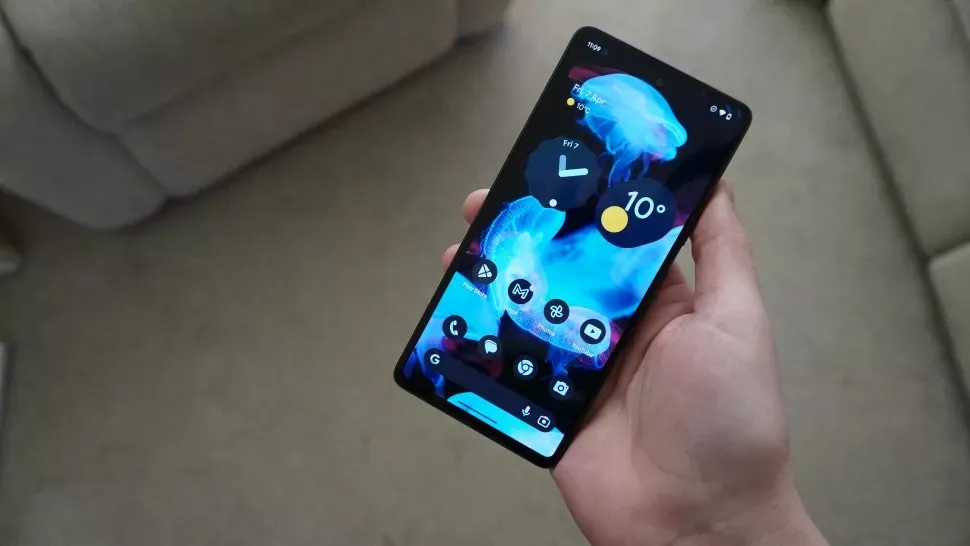
    The improved display is one of the Google Pixel 8 Pro’s main selling points this time around, as the device still manages to be a great value for $1,000 even after a price increase from last year’s model. The Pixel 8 Pro boasts one of the brightest smartphone displays ever, peaking at 2,400 nits at maximum output thanks to the adoption of an OLED panel. When you combine that with its flat 6.7-inch 120 Hz display, you have yourself a winner.

    The Pixel 8 Pro offers a respectable movie-watching experience even without Dolby Vision thanks to its LTPO technology, which enables the phone to lower its refresh rate to as low as 1 Hz. This helps greatly preserve battery life, especially when using the always-on display. Android 14’s Material You design loves splashing colors throughout the user interface, and they do reflect really well on the HDR10+ certified panel.

    Though not the most powerful, the Tensor G3 chipset powering the phone is efficient and offers a seamless user experience because it has been designed specifically for Pixel devices. Pixels have always been known for their cameras and software, and the 8 Pro takes both of these aspects to new heights. Google’s computational photography has seen even more improvements thanks to the addition of software features. Exclusive Pixel-only goodies include AI-generated wallpapers, background noise remover, and a one-tap magic editor.

    OnePlus Open
    OnePlus Open 1

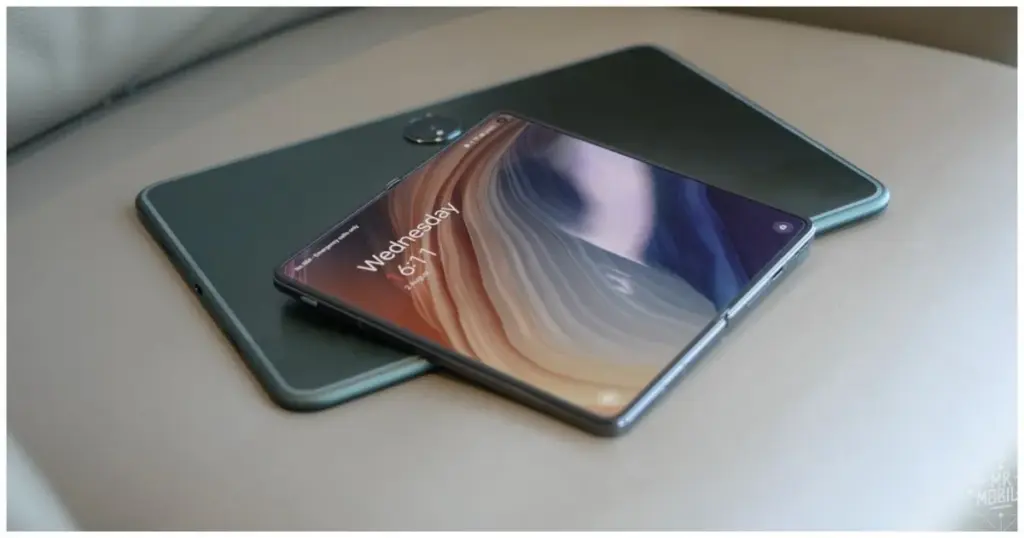
    Although OnePlus is primarily recognized for its flagship smartphones that offer a good balance between price and performance, its debut in the foldable smartphone market shows just how high-end the brand can go. The $1,500 OnePlus Open, the company’s most expensive phone to date, is still fairly competitive when measured against other phones in the same market.

    Both the 2K displays refresh at 120 Hz and have a ridiculously bright peak brightness of 2,800 nits. The cover display is a 6.31-inch 20:9 panel that can go as low as 10 Hz to save battery. When unfolded, the massive 7.82-inch nearly square display is immersive and surprisingly has the least visible crease in any foldable smartphone. Both panels are Dolby Vision compatible and provide a fantastic HDR viewing experience.

    The OnePlus Open’s fluid display, combined with OxygenOS’s smooth and fluid experience, makes for an unparalleled experience. The phone, in typical OnePlus fashion, is powered by flagship-grade internals, including the Snapdragon 8 Gen 2, 16GB of RAM, and 512GB of UFS 4.0 storage.

    The triple camera setup, optimized in collaboration with Hasselblad, makes the Open an excellent shooter as well. Being foldable unlocks unconventional use cases, such as multitasking with split-screen apps and floating windows.

    Asus ROG Phone 7
    asus rog phone 7 ultimate gaming

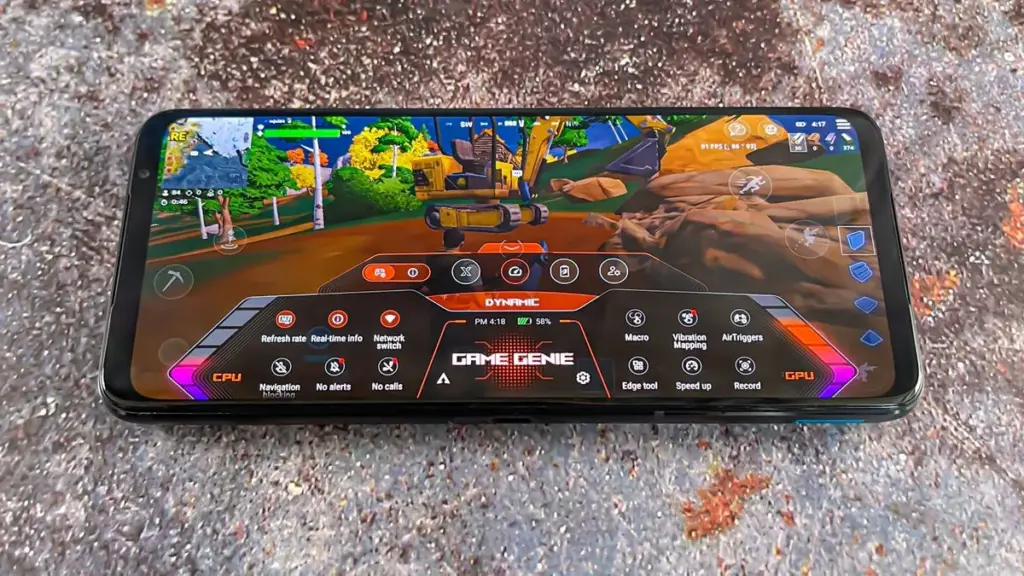
    With its ROG series of phones pushing the limits in terms of raw performance, Asus has been at the forefront of the smartphone gaming space. The ROG Phone 7 is no different, sporting one of the fastest displays on any smartphone along with a powerful Snapdragon 8 Gen 2 chip and up to 16GB of RAM. The phone’s robust internals are expected considering its gaming-focused design.

    You can set specific refresh rates for individual games, bypassing any default capped limits. The 6.78-inch 165 Hz AMOLED panel with support for HDR10+ and an impressive peak brightness of up to 1,500 nits provides an experience like no other handset when gaming. Pairing a touch sampling rate of 720 Hz with Asus’ rather bloat-free and stock Android user interface, this phone has perhaps the most fluid experience.

    Unlike most modern slabs of glass and metal, the ROG Phone 7 has a noticeable forehead and chin, preventing mistouches while gaming. This also leaves space for a dual front-facing stereo speaker configuration, allowing for an immersive multimedia experience. The ROG Phone 7’s cooler accessory not only promises better thermal performance but also has a subwoofer, a 3.5mm audio jack, another type-C port, and four tactile remappable buttons. 

    Asus has always placed a high priority on long battery life, and the ROG Phone 7’s 6,000 mAh battery offers remarkable endurance. Passthrough charging is supported, which allows the battery to power the phone without the need for additional charge.
  • Huawei & Xiaomi surpass iPhone sales in China

    Huawei & Xiaomi surpass iPhone sales in China

    Over the course of the holiday sales period, Huawei and Xiaomi handsets outsold Apple’s iPhones in the Chinese market. Local firms appear to have benefited the most from China’s Singles Day sale, which is held on November 11.

    Huawei Xiaomi phones beat out th

    Huawei and Xiaomi register outperform Apple in China

    The latest iPhone 15 lineup from the Cupertino-based company was surpassed in sales by the Chinese tech giants, according to a Counterpoint Research report. The report also noted that domestic brands’ smartphones saw higher sales during the 11.11 shopping period, while iPhone sales fell by 4 percent in the two weeks from October 30 to November 12.

    However, Xiaomi also saw a notable 28 percent increase during this same period. Notably, the two domestic companies’ jump in sales also boosted the local market’s smartphone sales overall by 5 percent year on year during the Singles’ Day sales period. Huawei, on the other hand, saw a sizeable 66 percent year on year increase in its Singles’ Day sales, driven primarily by its latest flagship 5G series (the Mate 60 lineup).

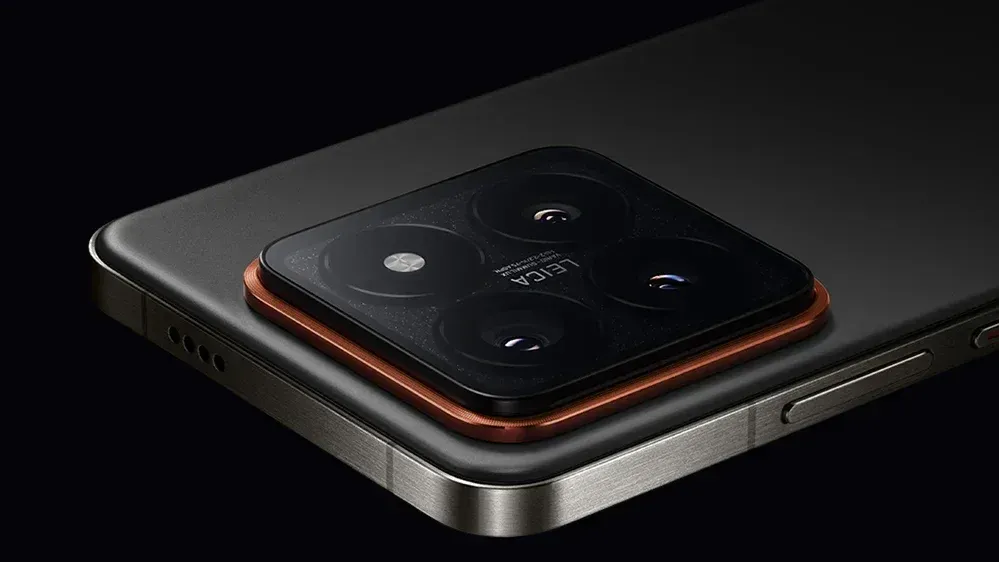
    In terms of pricing, the Huawei Mate 60 series is priced at 5,499 Yuan, or approximately 775 US dollars, starting at 3,999 Yuan, or roughly 563 US dollars, while the Xiaomi 14 lineup is priced at 5,999 Yuan, or approximately 845 US dollars. Xiaomi even revealed sales figures from the shopping festival, stating that sales totaled over 22 billion Yuan, or approximately 3 billion US dollars.

  • The Cortex-X4, 4nm, generative AI, 240 frames per second, Snapdragon 8 Gen 3 is now available.

    The Cortex-X4, 4nm, generative AI, 240 frames per second, Snapdragon 8 Gen 3 is now available.

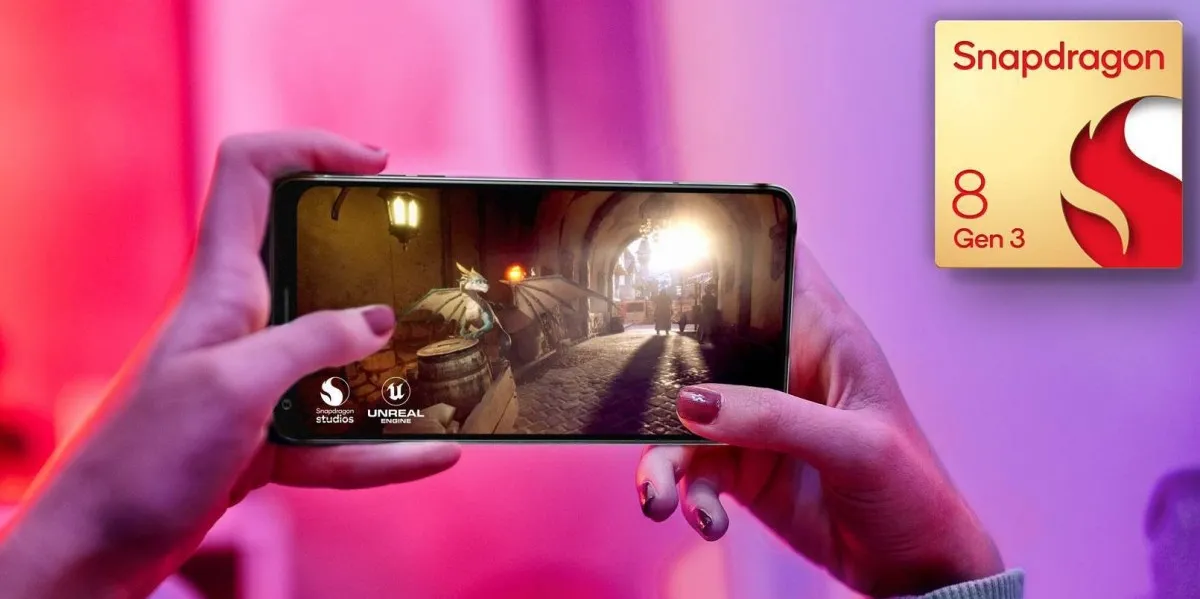
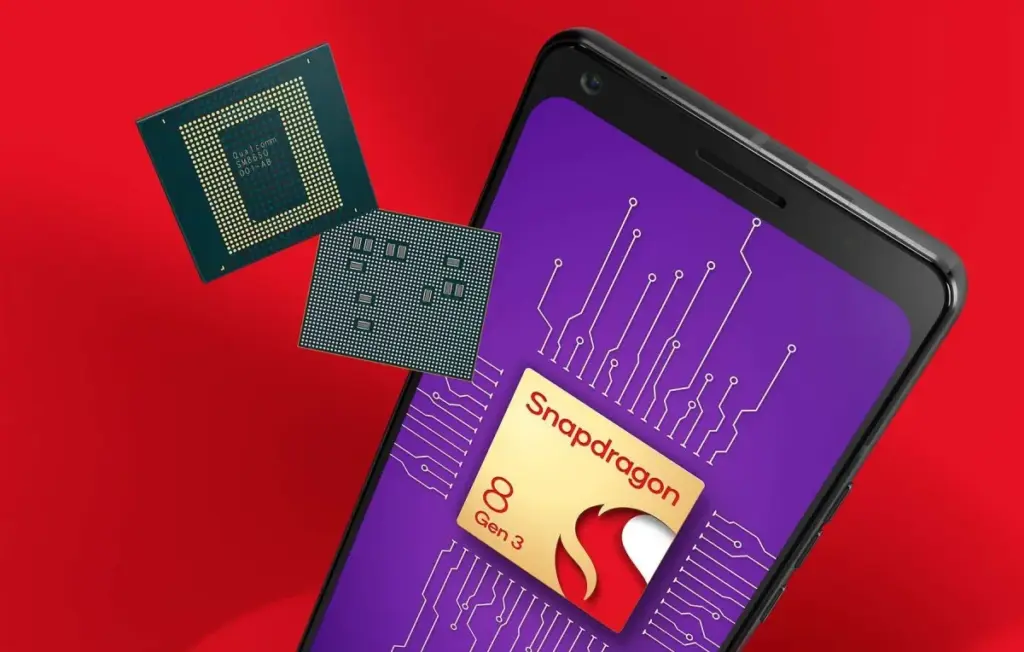
    Recently, Qualcomm unveiled the Snapdragon 8 Gen chipset. The flagship platform, which uses the 4nm process, is primarily focused on advances in AI, gaming, audio, and cameras.

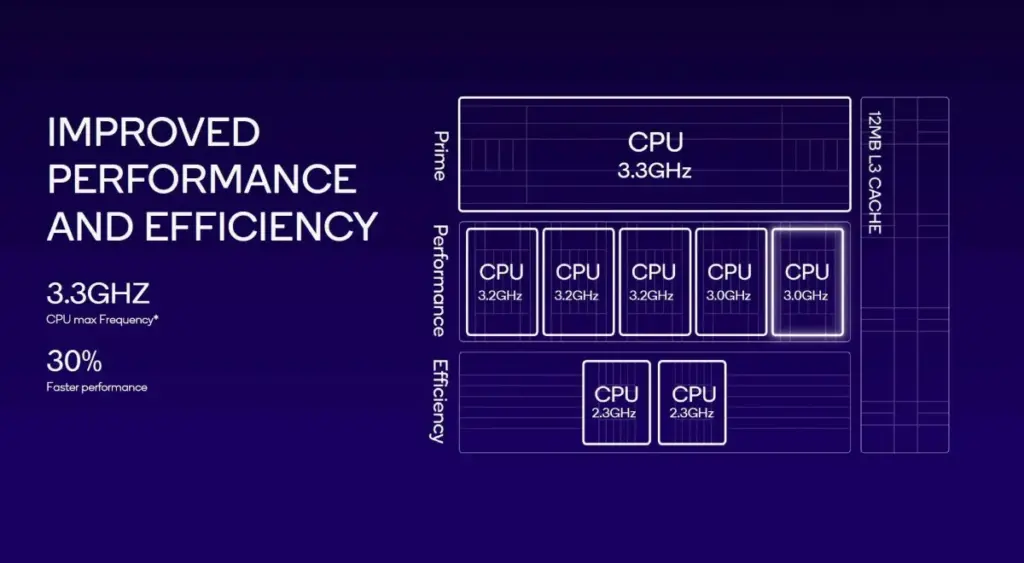
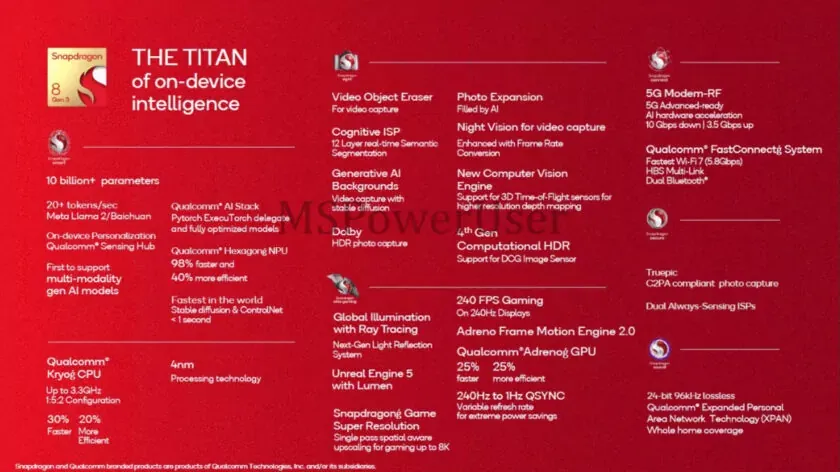
    In terms of crucial percentages, Gen 3 outperforms Gen 2 by 20% and by 30% in terms of speed. One Cortex-X4 prime core with a maximum frequency of 3.3 GHz, five performance cores with a maximum frequency of 3.2 GHz, and two efficiency cores with a maximum frequency of 2.3 GHz highlight the eight-core CPU inside. Up to 24 GB of LPDDR5x memory can be supported at 4800 MHz. Supported Wi-Fi 7 frequencies up to 6 GHz are 802.11be, 802.11ax, 80211ac, and 80211a/bg/n. The chip has an X75 5G modem with mmWave and sub-6 GHz antennae.

    Snapdragon 8 Gen 3 architecture

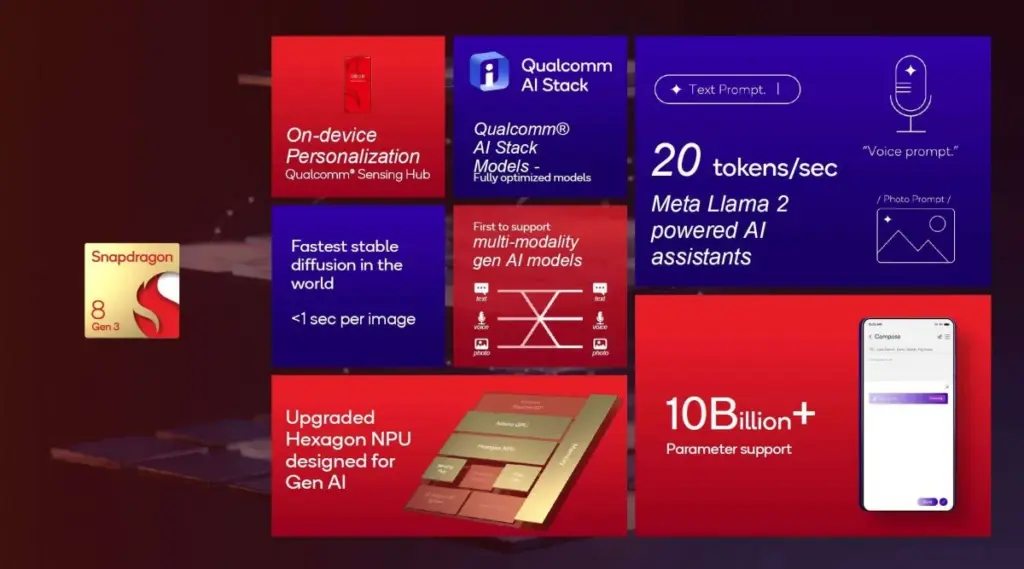
    With the Snapdragon 8 Gen3, AI is the main feature. The AI Engine is the first component in the process; it can process up to 20 tokens per second to provide immediate AI assistant replies. It supports both popular big language models for speech recognition and multi-modal generative AI models. According to Qualcomm, the Snapdragon 8 Gen 3 has the quickest steady diffusion in the world, producing an image in a split second.

    To improve AI assistant replies, Qualcomm’s Sensing Hug securely accesses personal data such as location, fitness state, and preferred activities.

    AI also improves the capabilities of the camera. Real-time Semantic Segmentation can improve an image’s brightness and detail, while Night Vision video can light up a dimly lit area. Vlogger’s View, which records video from both your back and selfie cameras, has an object eraser for films that may be used to remove unpleasant individuals or things. In addition to automatically improving HDR, Picture Expansion can employ generative AI to stretch an image beyond the original acquired data.

    Snapdragon 8 Gen3

    On 240 Hz monitors, the Snapdragon 8 Gen 3 can produce “console-defying” gaming performance at 240 frames per second. Adreno Frame Motion Engine 2.0 supports Unreal Engine 5.2 and may produce frames for better playback.

    The Snapdragon 8 Gen 3’s GPU offers 40% improved Ray Tracing along with 25% faster and 25% higher power efficiency.

    The fact that the new chip can stream 24-bit, 96-kHz lossless music via Bluetooth will please audiophiles.

    snapgradon 8 gen 3 devices

    Qualcomm says devices powered by the new Snapdragon 8 Gen 3 will be available in the coming weeks. The chipmaker has partnered with Asus, Honor, iQOO, Meizu, Nio, Nubia, OnePlus, Oppo, realme, Redmi, RedMagic, Sony, vivo, Xiaomi, and ZTE.

  • Qualcomm’s Snapdragon 8 Gen 3 leans into AI according to new leaks

    Qualcomm’s Snapdragon 8 Gen 3 leans into AI according to new leaks

    Tomorrow is Qualcomm’s annual Snapdragon Summit, during which the company is anticipated to reveal its upcoming Snapdragon 8 Gen 3 chip. Nevertheless, it appears that a recent leak, which discloses the complete specifications of the chip, may have wrecked tomorrow’s surprise. It also appears that the Snapdragon 8 Gen 3 will include a plethora of AI functions.

    Leaked marketing materials for the Snapdragon 8 Gen 3 have been obtained by the MSPoweruser team. The processor will reportedly feature a number of AI tools that will enable actions like expanding images, removing objects from films, creating AI backgrounds, and more, according to the leak.

    qualcomm 8 gen 3 chip

    Significantly, the report also discusses being able to use AI models like Meta’s Llama 2 and Stable Diffusion. In light of the tech industry’s adoption of AI this year, including all of these AI capabilities makes sense.

    Qualcomm equipped the CPU with an updated Hexagon neural processor to enable all of this (NPU). According to the marketing brochures, the new NPU is 40% more effective and 98% faster. The comparison is allegedly between the Gen 3 and the Gen 2, however the paper is vague.

    But it’s not only about AI; there also seem to be some potent gaming-related elements. This features the ability to game at 240 frames per second and upscaling for up to 8K resolution using a next-generation light reflection system that supports global lighting with ray tracing.

    One of the first products that the Snapdragon 8 Gen 3 is likely to be found in is Samsung’s Galaxy S24, which is scheduled to debut in Q1 2024. Since this is Qualcomm’s flagship chip, it should also be found in many of the high-end phones that debut the following year.

  • Samsung Galaxy Z Flip 4 best screen protectors

    Samsung Galaxy Z Flip 4 best screen protectors

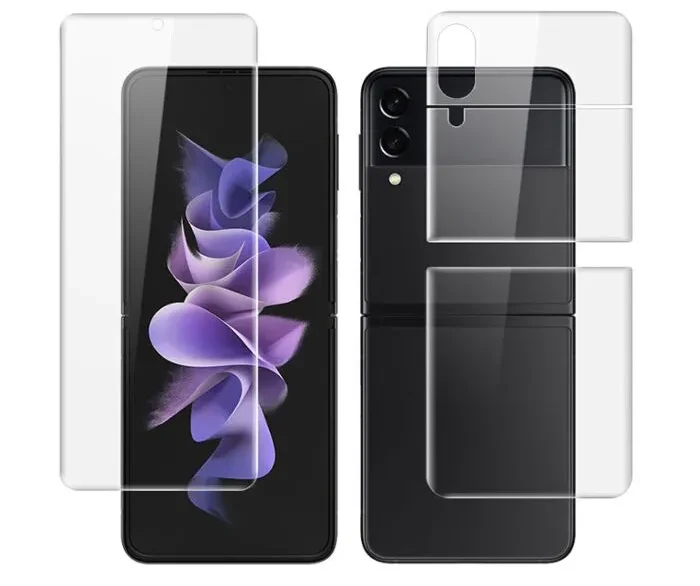
    Samsung is the best option available when it comes to high-end flip phones. These Android-powered gadgets, famous for its Galaxy Z Flip series, come with all the necessary smartphone capabilities plus a modern design that places a strong focus on dual-screen technology. Naturally, dealing with many screens necessitates guarding against scuffs and cracks on multiple panels.

    Thankfully, many of the most well-known screen protector manufacturers have invested heavily in creating premium covers to protect our Galaxy Z Flip. This list of the top screen protectors for your top-tier Samsung accessory was created if you are the happy owner of a Samsung Galaxy Z Flip 4.

    Whitestone Dome Premium GEN Film For Galaxy Z Flip 4

    71 n8wnhryL. AC SL1500

    $17 at Amazon

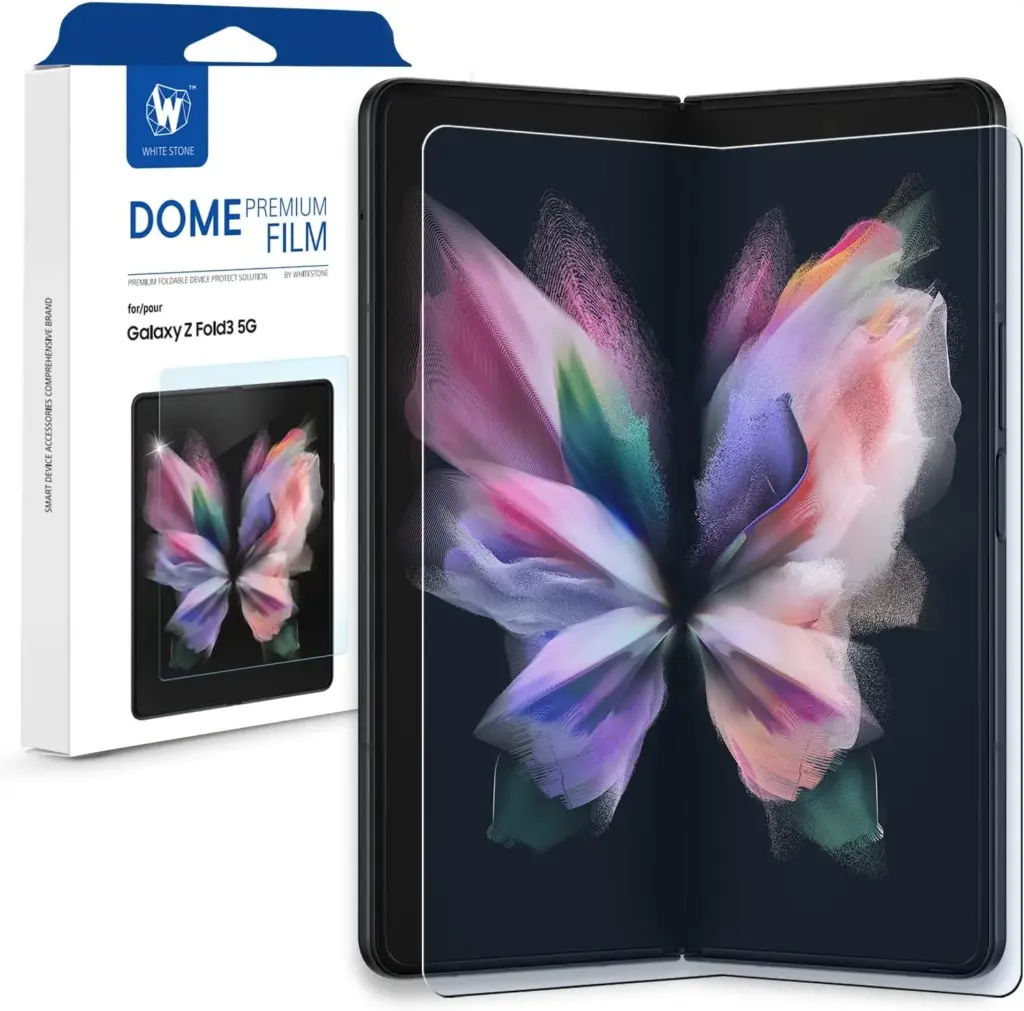
    To better accommodate the foldable feature of the Z Flip 4, this screen protector employs polyethylene terephthalate (PET) material as opposed to Whitestone’s well-liked glass-based screen protectors for other phones. It therefore functions effectively and shields your priceless folding phone from dings and other flaws. If you properly follow the instructions, installing the Whitestone GEN Film is very simple thanks to the provided tools and an excellent tutorial on YouTube.

    ZAGG InvisibleShield Fusion Eco For Galaxy Z Flip 4

    51UiEodec1L. AC SL1200

    $40 at ZAGG

    ZAGG InvisibleShield’s Fusion Eco is a brand-new cover screen protector made of flexible bioplastic. Although it isn’t glass, it has a glass-like smoothness and clarity. It can absorb and distribute the power of an impact and is excellent at protecting the screen from scuffs. In order to prevent the growth of germs that could damage the screen protector, the business has also applied an anti-microbial solution on the protector.

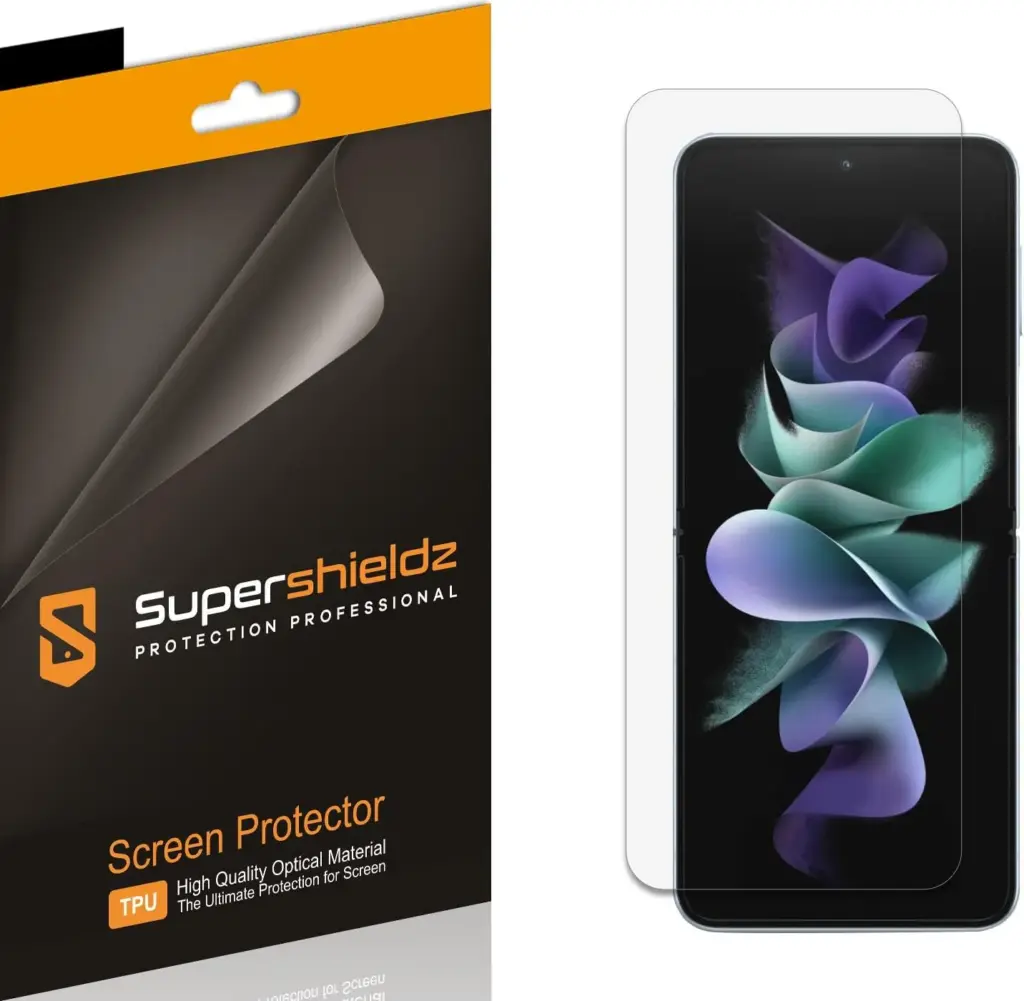
    Supershieldz Screen Protector For Galaxy Z Flip 4

    screen protectors


    $8 at Amazon

    ZAGG InvisibleShield’s Fusion Eco is a brand-new cover screen protector made of flexible bioplastic. Although it isn’t glass, it has a glass-like smoothness and clarity. It can absorb and distribute the power of an impact and is excellent at protecting the screen from scuffs. In order to prevent the growth of germs that could damage the screen protector, the business has also applied an anti-microbial solution on the protector.

    Ringke Cover Display Glass For Galaxy Z Flip 4

    71qOFVV75jL. AC SL1500

    $14 at Amazon

    ZAGG InvisibleShield’s Fusion Eco is a brand-new cover screen protector made of flexible bioplastic. Although it isn’t glass, it has a glass-like smoothness and clarity. It can absorb and distribute the power of an impact and is excellent at protecting the screen from scuffs. In order to prevent the growth of germs that could damage the screen protector, the business has also applied an anti-microbial solution on the protector.

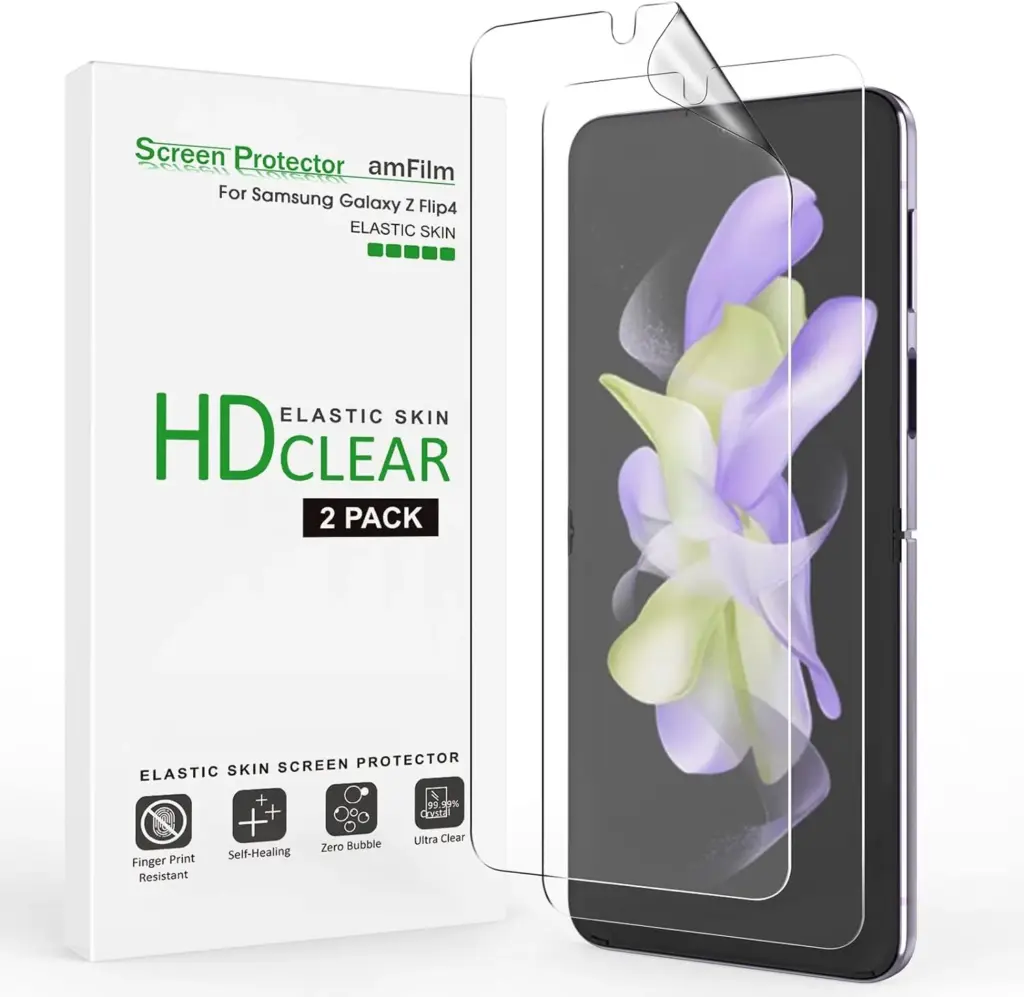
    amFilm Elastic Skin For Galaxy Z Flip 4

    61qoBf7CxiL. AC SL1500

    $9 at Amazon

    amFilm’s Elastic Skin is one of the most affordable TPU screen protectors for your clamshell foldable. It’s meant for the primary screen of the phone and keeps it protected from scratches and dents. With fingernails able to leave marks on the Z Flip 4’s main display, extra protection is undoubtedly necessary. Plus, the Elastic Skin is self-healing, which means it will recover from minor abrasions over time.

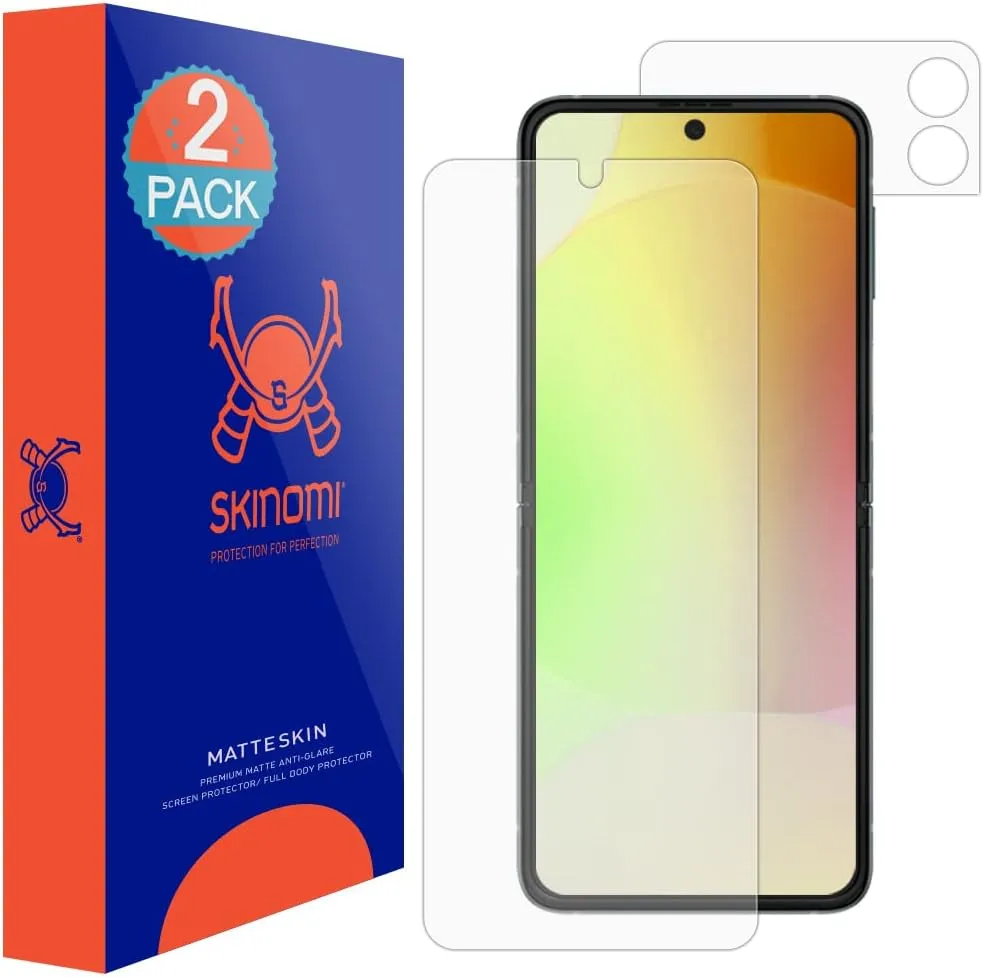
    Skinomi MatteSkin For Galaxy Z Flip 4

    51t9SgJjQIL. AC SL1000

    $10 at Amazon

    This made-in-the-USA screen protector from Skinomi is an excellent option for anyone who prefers a matte finish over glossy. Made using TPU material, it reduces glare and makes it easy to see the screen in high-brightness environments. Besides, it’ll keep the screen safe from everyday mishaps, including scratches and punctures. The wet-install method of the MatteSkin can feel slightly tricky; however, it allows you to fix your mistakes and set the protector perfectly on the phone.

    RinoGear Shield Screen Protector For Galaxy Z Flip 4

    61mXSMLuZhL. AC SL1200

    $8 at Amazon

    The RinoGear Shield Screen Protector is made to fit the cover screen of your Galaxy Z Flip 4. It’s constructed of flexible and durable TPU material that’s self-healing and can fix tiny scratches and scuffs over time. The RinoGear product also comes in a two-pack, so you’ll have a spare in case you need it. Furthermore, it has no effect on the screen’s clarity or touch sensitivity. Unfortunately, it employs the wet installation approach, which can be difficult for some users.

  • Prime Day – to buy or not to buy

    Prime Day – to buy or not to buy

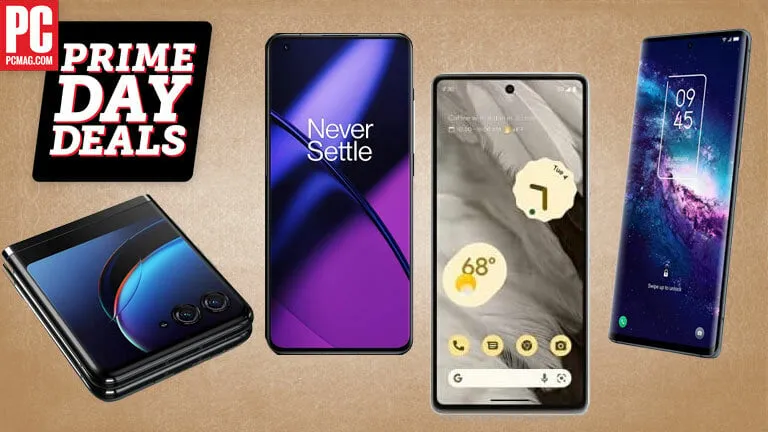
    Even though there are virtually always phone sales throughout the year, they are nothing compared to the doorbuster discounts we get around Amazon Prime Day and Black Friday. Before we drown in Android phone discounts of every brand, price, and style on October Prime Day, we need to address a straightforward but painfully complex question: should you purchase a phone during Prime Day Part 2? Should you wait until Black Friday and Cyber Monday, the holidays when the best deals are to be had?

    On practically all of the top Android phones as well as the greatest budget phones, both sales will offer quite steep discounts. Prime Day is the ideal time to upgrade if your phone is completely unusable or if you’re looking for a phone at a specific price range if your current model is on its final legs.

    amazon prime day

    Black Friday will provide cheaper prices on select phones, such as the brand-new Google Pixel 8 Pro. Although the free Pixel Watch 2 with preorder is a super-sweet Pixel 8 Pro 8 offer, the 8 Pro doesn’t even technically ship until October 12, the day after Prime Big offer Days ends, meaning the phone won’t be discounted until Black Friday. The new Samsung Galaxy S23 FE will cost $600 when it launches later this month, but it’s not clear if this will increase or decrease the likelihood that the infant Galaxy S23 will be available for less than Prime in November.

    Most other phones, such as the Galaxy S23 Ultra and OnePlus 11, have been on the market for at least six months, so they are well-positioned (ha!) for their greatest discounts yet. This is especially true for last year’s models, such as the Galaxy S22, Pixel 7, and Galaxy A53, which should ideally dip below $300 this time around now that the Google Pixel 6a is completely sold out and there is no longer any possibility of its $250 offer from July being reinstated.

    The Google Pixel 7a hasn’t received many discounts up to this point, and none have brought the price below $440, so Prime Day should mark the device’s first sizable markdown. These two are the best budget/mid-range Android phones currently available, and the Samsung Galaxy A54 has just somewhat outperformed them. They should be available for Prime at truly affordable pricing.

    And Prime Day is unquestionably the time to buy if you want to spend less than $300 on a phone. For phones like the OnePlus Nord N30 or N300, the Galaxy A14, and the Moto G line, now is the time to read the reviews and start choosing the case you’ll buy with your Prime Day savings because phones under $300 rarely see any significant deals outside carrier stores or Best Buy’s Activate Today carrier-reliant promotions.

    Why would you wait after Prime Day?

    amazon prime android discount

    Due to the fact that most Android phones will be $50 to $100 cheaper on Black Friday and that the Pixel 8 series will be two months older than the rest of the market, these devices will be more competitively priced. This is particularly true for the Galaxy S23 series, which is often updated at the end of January or the beginning of February.

    Additionally, the Galaxy S24 series is expected to gain new, lighter titanium frames, and the S24 Ultra will finally switch back to a flat screen (but still have curved edges). Therefore, Prime Day and Black Friday are your last best opportunities to purchase an Ultra with curved glass at a fair price.

    But if you opt to wait another six weeks for Black Friday, you’ll be playing a game of chicken with your currently damaged old phone. If you can wait until Thanksgiving, you might be able to save a few more dollars, but if your phone breaks in the interim, you’ll have to buy a new one at full price. Last year, this happened to a friend, and it was not pleasant to see them incur a $300 overage.

    So if your screen is held together by film and prayers, if your USB-C port is getting harder and harder to jiggle the cable into that magic spot to charge your phone, don’t let the hope of a few extra bucks keep you from getting a new phone while the getting is good.

  • Harnessing the Power of Digital Evolution: HEIC Conversion

    Harnessing the Power of Digital Evolution: HEIC Conversion

    The proliferation of images in the digital realm is undeniable. We’re constantly snapping photos, whether they’re professional shots or casual memories captured on our smartphones. And as technology continues to evolve, so do the file formats we use to store these images. Enter HEIC – a relatively new and efficient format that’s making waves, yet presents certain challenges that prompt the need for conversion tools.

    heic conversion

    Understanding HEIC’s Rise

    When Apple introduced HEIC (High-Efficiency Image File Format) as its default format for photos, it marked a shift in the digital imaging landscape. HEIC offers high-resolution image storage with almost half the size of its JPG counterpart. It’s the future, blending quality and efficiency. But like all advancements, it’s not without its teething issues.

    The HEIC Hurdle

    The brilliance of HEIC lies in its space-saving capacity without compromising on image quality. But this comes with the cost of compatibility. Most non-Apple devices, and even some popular software and platforms, have yet to adopt this format.

    So, what do you do when you have a top-quality HEIC image that needs to be viewed, edited, or shared on a platform that doesn’t support it? You resort to conversion.

    The Conversion Solution

    • JPG: The Universal Language of Images – The need to convert heic to jpg stems from the universal acceptance of the JPG format. Almost all devices and platforms recognize it. Converting HEIC to JPG allows users to maintain a balance between quality and compatibility. It ensures that your photos can be easily accessed, edited, and shared across various platforms.
    • PNG: Preserving Quality – For those who prioritize image integrity, especially when dealing with graphics or images with transparency, PNG is a preferred choice. Thus, the option to convert heic to png offers a lossless compression solution. This means every pixel of the original image is preserved, ensuring no degradation in quality.

    Why Convert?

    • Compatibility: While HEIC might be efficient, it’s not universally accepted. Converting ensures your images are accessible everywhere.
    • Flexibility: Different projects require different formats. Whether you’re designing a website or editing a photograph for print, having your image in the right format is crucial.
    • Storage Management: Although HEIC is efficient, there might be instances where you’d need to convert to JPG to reduce file size further or to PNG to maintain quality.

    Embracing the Future

    There’s no denying that HEIC is a testament to the ever-evolving digital world. As we move forward, it’s crucial to have the right tools to navigate these changes. Conversion tools serve as a bridge, ensuring that while we embrace the future, we remain rooted in the present’s practicalities. In the end, it’s all about ensuring our memories and professional works are not confined by formats but are free to be shared, appreciated, and utilized in the vast digital universe.

  • Magic Eraser tool will receive audio support on Pixel 8

    Magic Eraser tool will receive audio support on Pixel 8

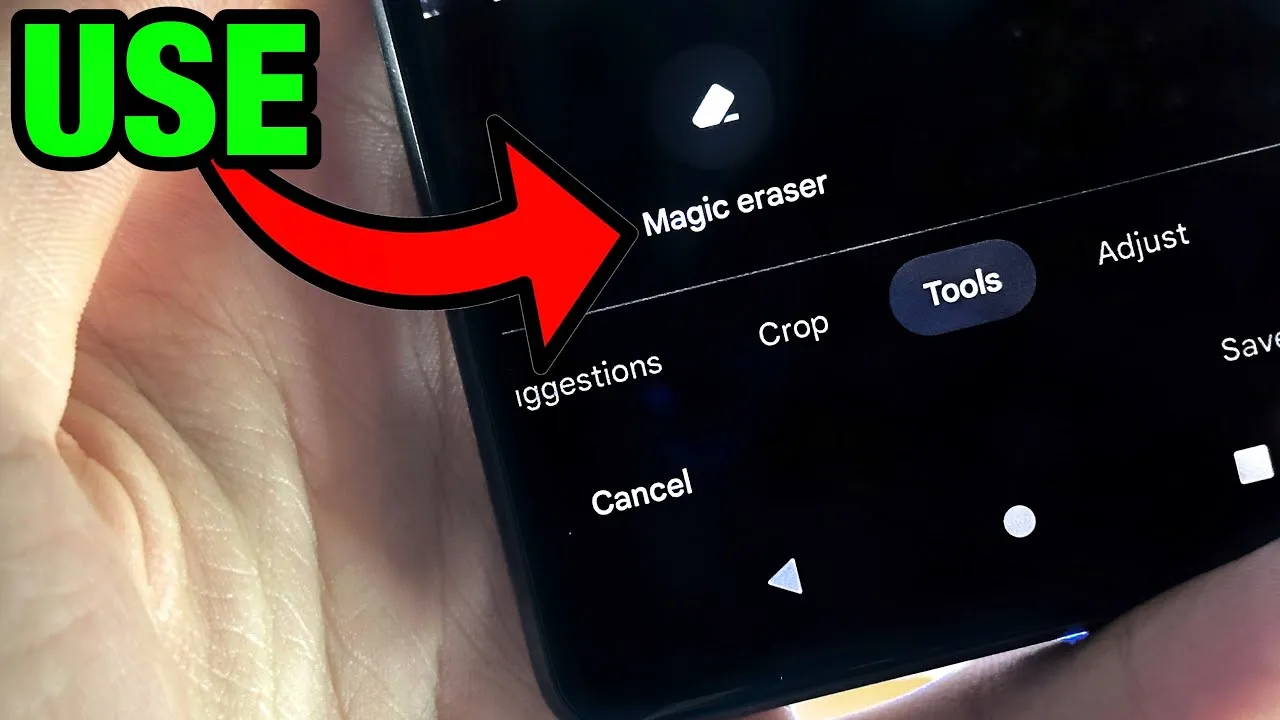
    Google’s artificial intelligence (AI)-powered Magic Eraser tool debuted on the Pixel 6 smartphone. Later, it was expanded to accommodate additional iPhones and Android phones. A new version that removes various forms of audio from video recordings looks to be in development by Google; it will probably launch on the Google Pixel 8 and Pixel 8 Pro.

    Google hasn’t yet acknowledged anything regarding the Pixel 8 smartphones, however over the weekend, an unidentified person purportedly uploaded some promotional content on X (formerly known as Twitter).

    Magic Eraser tool

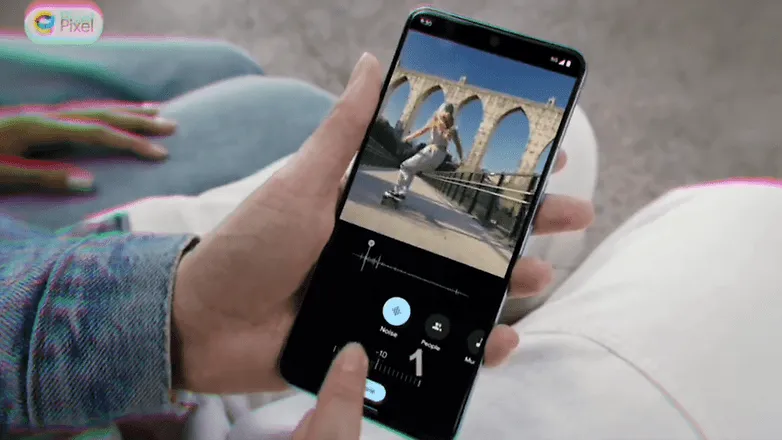
    The unreleased Pixel 8 Pro was seen in the video clip sporting a brand-new feature called Audio Magic Eraser. The editing tool was identified as a video-specific version of Magic Eraser. It appears that the tool is able to recognize the important noises in videos and then gives the user the choice to decrease or delete the audio signature.

    As for the many kinds of noises in videos, it can distinguish between background noise, people, and music. We would not, however, rule out the potential of the presence of more categories in addition to the aforementioned three.

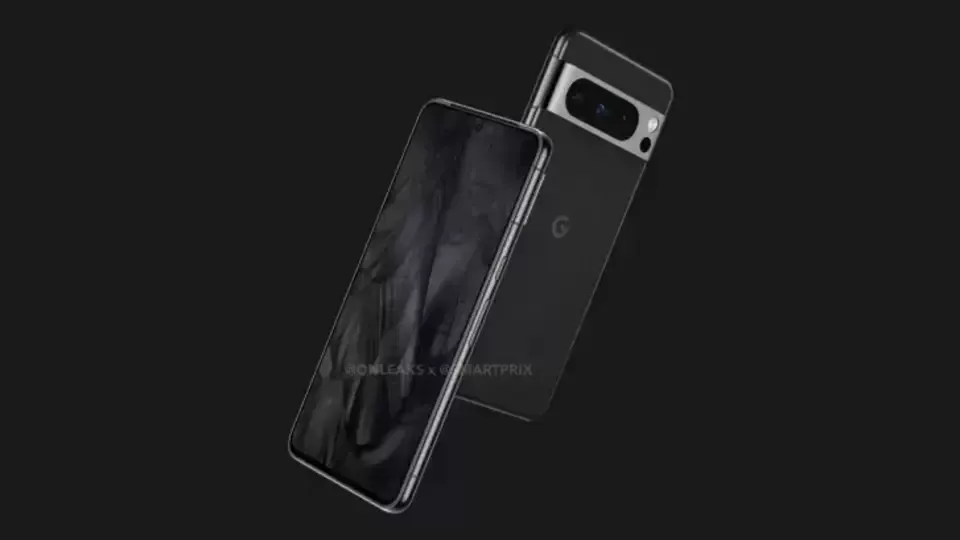
    The Pixel 8 Pro has a similar appearance to the early renders that were published, but it has a new temperature sensor under the camera bump. It would seem appropriate for the low-cost Google flagship Android device to be unveiled in a fresh shade of blue, as is most likely the case with the smaller Pixel 8.

    The Pixel 8 line will be powered by Android 14 and may ship in October, based on Google’s prior Pixel launches. At the same time, it’s anticipated that the speculated Pixel Watch 2 with its metal body and ultra-wideband connection would be unveiled.

    Source: X/u/ez8622647227573

  • Google describes a 0-click modem problem in the Pixel 6: encourages people to turn off 2G

    Google describes a 0-click modem problem in the Pixel 6: encourages people to turn off 2G

    A significant 0-click vulnerability in the Pixel 6 modem stack was identified by Google’s Android Red Team and has since been patched. This vulnerability allows a skilled attacker to take control of a target’s Android device by making a call to the victim.

    Four members of Google’s Android Red Team demonstrated how two Pixel modem vulnerabilities (CVE-2022-20170, CVE-2022-20405) could be combined to first hijack a targeted Pixel’s cellular modem communication to the second-generation (2G) wireless standard with the aid of a cheap $1,000 home-made cellphone base station during the Wednesday Black Hat session.

    The aforementioned bugs were first found in 2021 by Android Red Team members. With a CVSS score of 9.8, both modem flaws are now classified as critical. The over-the-air remote code execution bug, designated CVE-2022-20170, was addressed in June 2022. An elevation of privilege (EoP) weakness was discovered in the second vulnerability, tracked as CVE-2022-20405, and it was fixed in August 2022. The EoP bug was deemed to be of moderate severity when it was initially discovered in an Android security bulletin.

    If the attack is successful, the enemy will be able to wirelessly execute remote code that is running in the Pixel modem’s privileged context. According to experts, an attacker would then be able to conduct out assaults against the handset, such as launching a DoS attack, performing SMS/RSC (text message) sniffing and spoofing, MFA compromise, and enabling a hacker to switch to the device’s main operating system kernel.

    Google claimed that it was not aware of the issues being used in the wild and that internal Alphabet procedures were to blame for the delay in disclosing the technical CVE information.

    2G is obsolete

    The Android Red Team at Black Hat includes Xuan Xing, Eugene Rodionov, Xiling Gong, and Farzan Karimi to demonstrate the assault (see image). Exploiting flaws in the Android Pixel’s cellular data connection to 2G networks is the initial attack vector.

    The goal of this attack, according to Karimi, is to downgrade mobile devices to 2G.

    The majority of modern cellular modems operate on 4G or 5G frequency bands. Yet, the majority of cellular data modem chipsets continue to support 2G and other dated wireless frequencies. For uncommon use scenarios including outdated wireless network geography, devices cycling down to save handset power consumption, and phones going to international markets where legacy 2G cellular networks are more prevalent, legacy support is required.

    Weak encryption between towers and devices is one of the security vulnerabilities with 2G, which attackers may (and have) easily hacked in order to intercept conversations or text messages. Even current phones, according to researchers, occasionally transition to 2G to handle signal congestion, roaming, and network switching better.

    The Android Red Team went above and beyond the examples of hackers and government enforcement utilizing fake base stations dubbed ISMI catchers (international mobile subscriber identity) or surveillance tools like Stingray to collect phone ID data, geolocation data, and content. They demonstrated how a vulnerable Pixel phone could be controlled remotely via a $1,000 home-built base station in addition to being used to collect data.

    Breaking down the attack

    The Android Red Team went above and beyond the examples of hackers and government enforcement utilizing fake base stations dubbed ISMI catchers (international mobile subscriber identity) or surveillance tools like Stingray to collect phone ID data, geolocation data, and content. They demonstrated how a vulnerable Pixel phone could be controlled remotely via a $1,000 home-built base station in addition to being used to collect data.

    “When a victim comes in proximity (a range of less than 5 miles) of the malicious base station it will connect to it,” said Karimi. “That allows the adversary to send the exploit payload and establish a foothold on the victim’s modem.”

    In more precise terms, the RCE issue is an out-of-band (OOB) write error that happens during the decoding of OTA packets from 2G GSM connection. According to researchers, the EoP fault is caused by an error in the Pixel 6’s modem code, which renders memory space RWX (also known as the read (r), write (w), and execute (x) permissions) and available via signal processing instructions.

     “The attacker fully controls up to 255 bytes written into 1-byte buffer in the heap,” researchers said. “CVE-2022-20170 enables us to overwrite heap header of the next adjacent chunk with fully controlled data.”

    According to Google, the exploit technique allowed them to “corrupt nearby heap items and put a small amount of controlled bytes in the heap.” Uncertainty surrounds whether any of those items had an effect on the memory management unit (MMU) of the modem, which is essential to the next phase of the attack.

    Researchers were able to execute 80 bytes of malicious shellcode via the modem’s (MMU) misconfiguration vulnerability (CVE-2022-20405), giving the attacker access to the affected device.

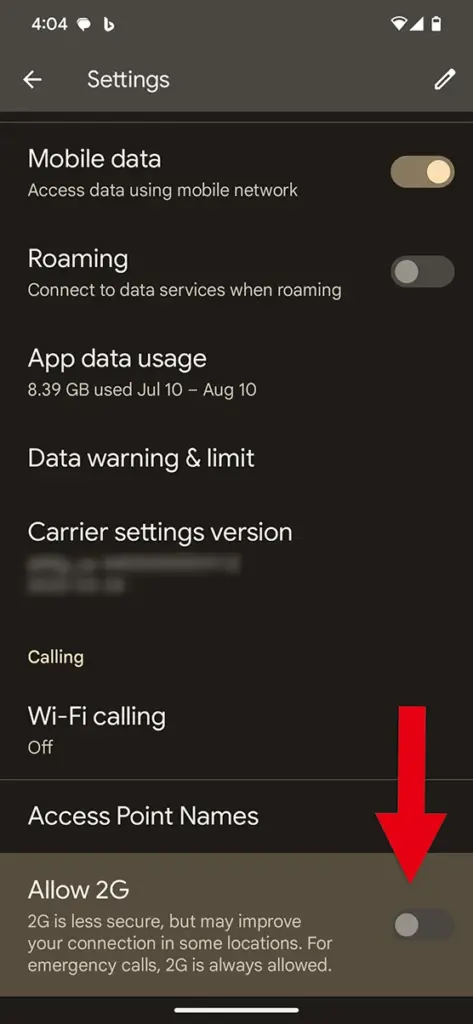
    Google tip: Disable 2G

    disable 2g

    The 2G-attack method actually poses a threat. There have been reports of temporary 2G base stations popping up close to the hotels Paris Las Vegas and Caesars Palace during what is known as Hacker Summer Camp in Las Vegas, which features three security conferences: BSides, Black Hat, and DEF CON. Participants in DEF CON are renowned for having a habit of exposing cybersecurity experts who expose their digital equipment to a cyberattack.

    Researchers strongly advised Black Hat attendees to turn off 2G support on their phones. To turn off 2G capability, simply search for 2G in Settings on an Android device.

    In related news, Google announced Tuesday a suite of Android 14 advanced cellular security mitigations for enterprises.

    “Android 14 introduces support for IT administrators to disable 2G support in their managed device fleet. Android 14 also introduces a feature that disables support for null-ciphered cellular connectivity,” according to a Google Security Blog writeup.

  • #leak camera specs for the Google Pixel 8 series

    #leak camera specs for the Google Pixel 8 series

    Because to early investments in computational photography, Google Pixels have earned a reputation for being top-notch camera phones. The hardware of subsequent Pixel generations plateaued after Google continued to use the same primary camera sensor for four years in a row, but this was a great decision that kept them competitive. Even the Pixel 6a from a year ago, which used the same Sony IMX363 image sensor, was praised by us and other experts in the field of cameras.

    After the Pixel 3, Google’s first significant camera hardware advancements debuted in the Pixel 6 series. The entire camera system was improved, but most notably the old primary sensor was changed for a Samsung ISOCELL GN1. The Google Pixel 7 series added a few more small upgrades to this setup, such as a new selfie camera, an improved telephoto lens, and macro capability on the Pro model. We have a lot of information on the camera specifications and features of the upcoming Google Pixel 8 series thanks to a source inside Google. So let’s get into the specifics.

    pixel 8 and pixel 8 pro camera l 1

    Pixel 8 and Pixel 8 Pro camera specs – a big upgrade

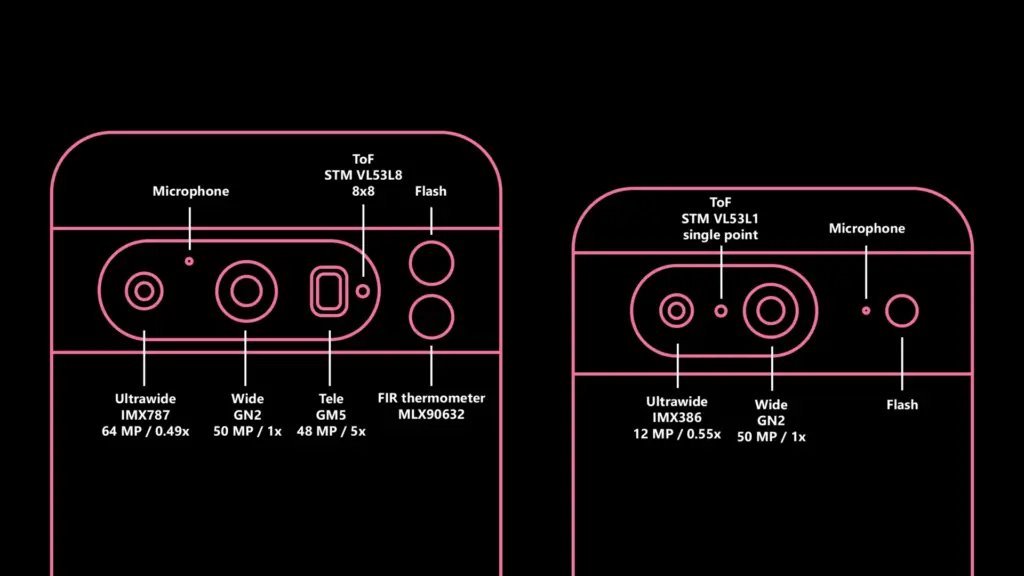
    Both Pixel 8 versions will receive the ISOCELL GN2 sensor as the primary update to the camera hardware this year, replacing the Samsung ISOCELL GN1 sensor. The sensor is bigger and should capture roughly 35% more light than its predecessor for brighter low-light shots and faster shutter speeds to lessen blur. These are the first enhancements.

    The Tensor G3 CPU and the sensor both support the capture of 8K/30fps video. This might not reach users, though, as the Pixel 8’s GCam does not presently enable it, and older Pixel models already run quite warm at 4K/60 frames per second. The final improvement is the previously revealed Staggered HDR support. This shortens the time between HDR capture frames, which lessens ghosting and expedites the capture process. The innovation might enable quicker, more dependable photos by enhancing Google’s HDR+ capabilities.

    The ultrawide camera on the Google Pixel 8 Pro is also getting a much-needed boost. The 64MP Sony IMX787, which is the same sensor as the main camera featured on the Pixel 7a, has replaced the outdated 12MP Sony IMX386. The sensor is almost two times larger, which is a significant improvement for the ultrawide camera. The lens has also been slightly widened by Google. The field of vision (FoV) has been increased from a 0.56x zoom ratio to 0.49x, but I am unsure of the precise value. Unexpectedly, there’s a possibility that the macro mode introduced with the Pixel 7 series won’t be present this year. At now, the Pixel 8 Pro doesn’t have the capability enabled. Afterwards, the feature might be activated again.

    The vanilla Google Pixel 8’s ultrawide camera is also upgraded, although more modestly. While the camera sensor is the same Sony IMX386 found in the Pixel 6 series, Google has made it slightly wider this year. Pixel 7 had a 0.67x zoom ratio, which is now 0.55x in the Pixel 8.

    The telephoto camera on Pixel 8 Pro appears to remain the same 5x module as the Pixel 7 Pro. The same goes for the 11MP selfie camera from the Pixel 7 series. Here’s the full rundown:

    Pixel 7Pixel 8Pixel 7 ProPixel 8 Pro
    WideSamsung GN1 (50 MP)Samsung GN2 (50 MP)Samsung GN2 (50 MP)Samsung GN1 (50 MP)
    UltrawideSony IMX386 (12MP) – 0.67x zoom ratioSony IMX386 (12MP) – 0.55x zoom ratioSony IMX787 (64 MP) – 0.49x zoom ratioSony IMX386 (12MP) – 0.56x zoom ratio
    TelephotoSamsung GM5 (48 MP) – 5x zoom ratioSamsung GM5 (48 MP) – 5x zoom ratio
    SelfieSamsung 3J1 (11 MP)Samsung 3J1 (11 MP)Samsung 3J1 (11 MP)Samsung 3J1 (11 MP)

    It’s intriguing to see Google further distinguish between the normal Pixels and their Pro counterparts. Although each generation’s previous Pixels had distinct distinctions (such as the addition of telephoto cameras on the Pro versions), it never felt as though the standard devices were a significant downgrade; rather, they just featured less features. This is altering with this generation. Now, purchasing the normal Pixel 8 over the Pixel 8 Pro will result in a lower-quality ultrawide experience and a lesser zoom.

    Improved time-of-flight is coming to the Pixel 8

    The STMicroelectronics VL53L1 single-point time-of-flight (ToF) sensor has been used in all Pixel phones since the Pixel 6 (apart from the Pixel A series), which is a little-known fact. This sensor helps the autofocus. It is depicted in the picture up top.

    Finally, the Pixel 8 Pro get something more practical. It has a brand-new 88 ToF VL53L8 sensor. The new sensor in the Pixel 8 Pro is still a huge improvement, and it should, at the very least, make the autofocus much more dependable. Having a true LiDAR camera sensor, like the 0.3MP IMX590 in the iPhone 14 Pro, is obviously far more adaptable.

    The ToF sensor upgrade isn’t coming to the regular Pixel 8; it retains the old VL53L1.

    The Pixel 8 thermometer is just a thermometer

    An FIR temperature sensor is yet another Pixel 8 Pro feature that has already surfaced online. Let me set the record straight: it is not a full thermal camera that can also be used for photography as some have suggested.

    It is a Melexis MLX90632 sensor, which is primarily suggested for highly accurate non-contact temperature measurements, such as measuring body temperature. It is just capable of sensing temperature; it is neither a camera nor anything else. Simply said, and not for the first time, Google decided to incorporate a very pricey gimmick in its product (hello, Motion Sense).

    google pixel camera

    Software updates for the Pixel 8 camera are coming

    While the camera software on Pixel 8 is obviously in fairly early stages of development and mainly focuses on making the new hardware work, we have spotted some new low-level feature enhancements.

    “Adaptive torch” is a new feature that dynamically adjusts the flash intensity based on the scene and other inputs (e.g. which capture mode is used). This should prevent overexposed shots and make low-light photography even better if you use the flash.

    “Segmentation AWB” is another new feature. As the name implies, the scene will be divided into many segments using AI, and then certain portions of the image will be processed differently. This idea is not new; Qualcomm previously unveiled a feature of a similar nature for the Snapdragon 8 Gen 2. How Google integrates this into its current processing processes will be interesting to observe.

    Google might also add a video bokeh blur level selection for the phone’s cinematic mode, which was first introduced on the Google Pixel 7 series.