Tag: chip

  • TSMC’s 2nm Shortage Hits Hard – Flagship Phones Get Priority as DRAM Crisis Grows

    TSMC’s 2nm Shortage Hits Hard – Flagship Phones Get Priority as DRAM Crisis Grows

    The industry’s most advanced and cutting-edge node is the 2nm process node, and TSMC leads the next generation of powerful chips. The Taiwanese chip giant has succeeded in achieving yields that are advantageous for mass-producing 2nm wafers, but sadly, this is insufficient to fulfill the demand for mobile SoCs and AI processors, forcing smartphone manufacturers to choose silicon downgrades later this year.

    A trustworthy Chinese tipster, Digital Chat Station, claims that due to the chip crisis and growing memory costs, several smartphone manufacturers would only provide fully equipped SoCs in their premium “Ultra” or “Pro Max” versions. It doesn’t take long to figure out where the fingers are pointing, even though the tipster doesn’t specifically state “TSMC.”
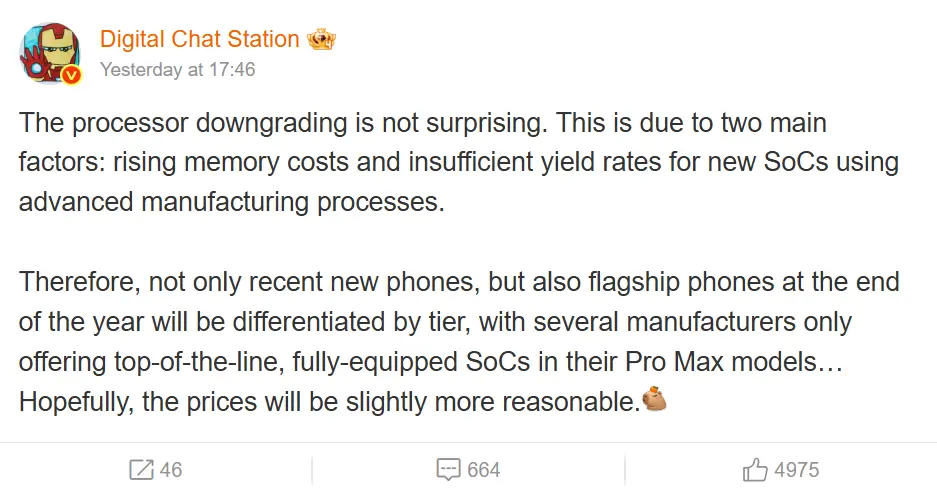
    Digital Chat Station announce TSMC’s 2nm Shortage

    AI and mobile are vying for the same advanced nodes, making the supply shortage even worse, even though the Taiwanese chip maker faces significant challenges in mass-producing advanced wafers on a wider scale. Industry reports state that Apple, Qualcomm, Nvidia, and AMD have locked up significant allocations, effectively selling out most of the N2 capacity through 2026. According to reports, Apple alone has more than half of the original N2 capacity.

    The most well-known substitute for TSMC is Samsung, but it is having even more difficulty increasing its 2nm GAA yields. As a result, smartphone manufacturers have a limited supply, therefore it wouldn’t be shocking if premium processors were only used in high-end devices. This explains why Qualcomm’s dual-chip launch strategy is said to include the Snapdragon 8 Elite Gen 6 and Snapdragon 8 Elite Gen 6 Pro. With the A20 and A20 Pro, Apple is reportedly using a similar strategy.

    According to reports, MediaTek, which offers the Dimensity 9600 and Dimensity 9600 Pro, is also using the same approach. The more expensive silicon will be saved for high-end phones, while the less expensive SoC will be available for less expensive phones. The DRAM problem is one of the primary causes of the anticipated increase in smartphone prices.

  • Unisoc T9300 5G chipset launched with major camera and gaming boosts

    Unisoc T9300 5G chipset launched with major camera and gaming boosts

    The new Unisoc T9300 5G mobile chipset for smartphones has been discreetly introduced. According to the business, the chip is a high-performance 5G SoC intended to provide improved gaming and video experiences. To find out more specific information about the new chipset, keep reading.

    Unisoc T9300 specs

    The high-performance 5G SoC Unisoc T9300 is intended to improve gaming and photography. It has an octa-core CPU with two Cortex A78 cores operating at 2.4GHz and six Cortex A55 cores operating at 2.2GHz, all built on a 6nm technology.

    According to Unisoc, efficiency has increased by about 38% over the preceding generation. The Mali G57 dual-core GPU handles graphics, and UFS 2.2 flash and LPDDR4X RAM are supported for storage. According to reports, benchmark scores on AnTuTu V10 approach 550,000.

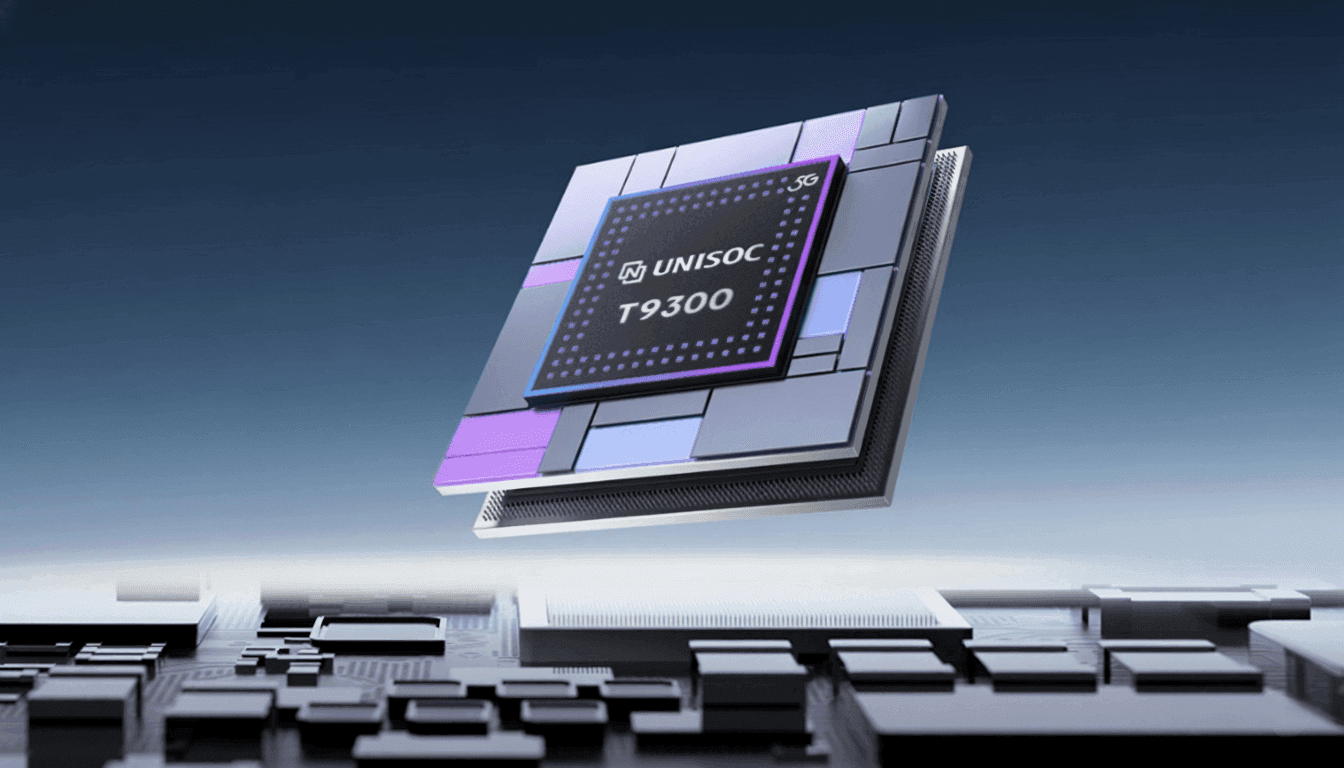
    Unisoc T9300 5G chipset

    3GPP Release 17 support, the integration of 5G NR NTN satellite communication, and 5G MBS broadcast significantly improve connectivity. In typical 5G scenarios, the chipset has enhanced power efficiency and AI-driven network management. Dual VoNR, VoWiFi, SA and NSA modes, and full multi-band compatibility from 2G to 5G are all supported.

    With a quad-core ISP, support for up to 200-megapixel sensors, 32-megapixel at 25 frames per second ZSL output, and 20-megapixel dual camera combinations, the T9300 unveils the seventh-generation Vivimagic imaging engine. Along with enhanced portrait segmentation and HDR photography, it also features enhanced multi-frame and time domain noise reduction, improved 3A algorithms, and AI-backed night mode.

    Advanced noise reduction, improved echo control, improved stereo playback, and HiFi-grade output driven by a dedicated DSP are among the audio features. In addition to VRR and other eye protection settings, display support includes FHD+ at 144Hz, 1.5K at 90Hz, HDR10+, and Netflix certification.

    The Unisoc Miracle Gaming engine, which emphasizes frame stability, network optimization, and improved visual processing with AI codec support for increased voice clarity in bad network conditions, enhances the gaming experience.

  • The Huawei Mate 80 RS might come with a proprietary cooling chip.

    The Huawei Mate 80 RS might come with a proprietary cooling chip.

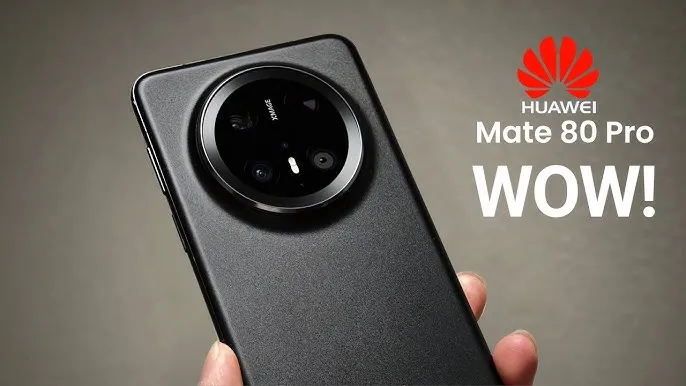
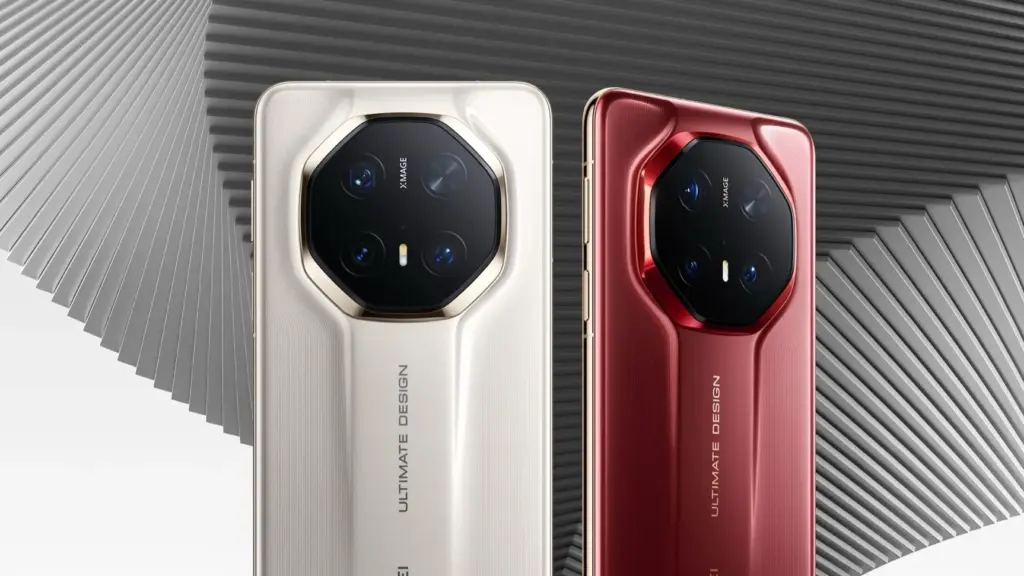
    In the next Mate 80 RS Ultimate Design, Huawei is introducing a new cooling chip in an effort to address overheating issues. To improve the performance of the next-generation Mate, the business is investigating novel heat dissipation methods.

    Huawei may employ a tech-pack cooling chip for its high-end Mate 80 series smartphones (RS Ultimate and Pro+), according to news from a reliable source.

    The Mate 80 RS Ultimate may be the only device with this connection, according to the leak. Nonetheless, some internet users think that the Pro+ version of this chipset might also make its appearance.

    It will be a micro pump driver chip, the informant said. It is claimed that a cooling system based on a micro pump uses one-tenth of the piezo drivers. It has the ability to aggressively disperse heat from the hot spots of the phone, which could cause freezing, latency, or shutdown.

    huawei kirin 9030 teaser

    An integrated circuit is used by these micropump drivers to precisely control signals and facilitate pump operation. It even provides haptic feedback and aids in cooling. The driver assures dependable and effective performance in the interim.

    A tipster previously disclosed the new cooling enhancements that the Mate 80 Pro+ and RS Ultimate models will include. In addition to the novel fan technology, the devices might make use of a micro pump housing and an improved graphene + copper foil sheet.

    However, the business might also use a specialized chip in this market to prevent overheating in every way. Only the RS Ultimate received Huawei’s dual-layer OLED screen last year; other models used a different display technology.

    As a result, it is likely that this chip technology will only be available in the Mate 80 RS Ultimate Design.

    It appears that Huawei is incorporating cutting-edge technology into its expensive Mate 80 phones. However, it hasn’t yet verified these details or disclosed any important information on the next flagship. Therefore, we must wait to verify the accuracy of these inputs.

  • Samsung started manufacturing 2nm Exynos 2600 CPUs

    Samsung started manufacturing 2nm Exynos 2600 CPUs

    The in-house Exynos 2600 chipset is expected to be manufactured by Samsung, which is apparently nearing mass production readiness, according to a recent Korean article.

    In terms of competition, Samsung Foundry has not yet reached the desired milestone, whereas TSMC has already exceeded 60% yield on their 2nm class N2 node. However, a recent report indicates that the nascent chip manufacturer is rather close, with yields currently falling between 4 and 50 percent. It is far higher than the predicted 30% figure that was released in February.

    exynos 2600

    Samsung may be forced to forgo the Snapdragon 8 Elite 2 chip for the upcoming Galaxy S26 series in some areas next year due to the Exynos 2600 chipset’s promising results from the efficient 2nm technology.

    The Snapdragon 8 Elite 2 for Galaxy will be developed using the same 2nm technology, the report also reveals. It is expected to appear in the second half of 2026, maybe alongside the Galaxy Z Fold 8 and Galaxy Z Flip 8.

    According to a post published by a tipster on X, the Korean tech giant apparently had to sacrifice performance in order to obtain functional chips, meaning that SF2 will once again lag behind TSMC’s N2 node in terms of raw performance. There might be a significant performance difference between the standard Snapdragon 8 Elite 2 and the tipster’s claim if it turns out to be accurate.

  • Pixel smartphones with Google Tensor chips are receiving a unique kernel update.

    Pixel smartphones with Google Tensor chips are receiving a unique kernel update.

    As noted by Mishaal Rahman on Twitter/X, Google appears to be working on updating the Linux kernel on all Tensor-powered Pixels. Specifically, the evidence presented suggests an update to version 6.1, which was released in December 2022 and is the second-to-newest version of the kernel, with 6.6 having been released in October 2023.

    Release of new software updates on a regular basis is one of the biggest selling points of a Pixel device, and it appears that Tensor-powered Pixels are about to receive a rare software update that updates the kernel used in the background.

    While there’s no word on what a kernel upgrade might change, this is notable for a couple of reasons.

    Google Tensor Image

    One of the comments mentions that “some Pixel devices” will be released with version 5.15 on “Android V,” which is Android 15. That also suggests that the timeline at play here is not in the immediate future but rather sometime after Android 15’s release. The 5.10 kernel version will see its end-of-life date in December 2026, so it most likely will not be too long after. For starters, this update would put all Tensor-powered Pixels on the same kernel. Pixel 6 and forward all ran on version 5.10 until the launch of Pixel 8, with 8 and 8 Pro running version 5.15.

    Updates to the kernel typically do not affect the user experience much, but they can have a significant impact on how your device functions. This includes performance and battery life. Custom kernels were a fairly common feature back when Android modding was more common.

  • The Cortex-X4, 4nm, generative AI, 240 frames per second, Snapdragon 8 Gen 3 is now available.

    The Cortex-X4, 4nm, generative AI, 240 frames per second, Snapdragon 8 Gen 3 is now available.

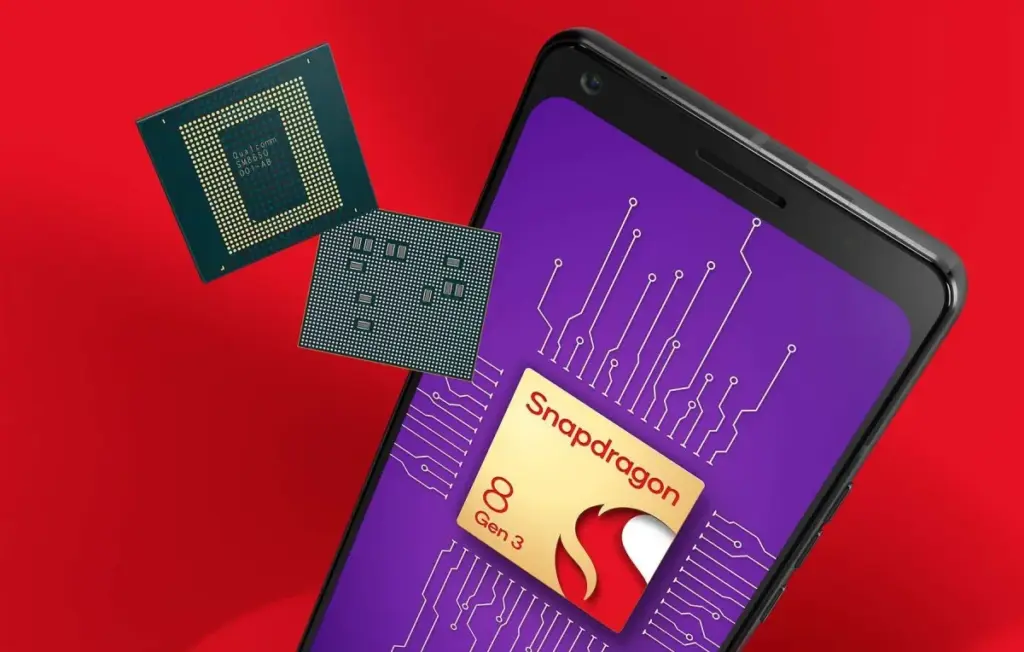
    Recently, Qualcomm unveiled the Snapdragon 8 Gen chipset. The flagship platform, which uses the 4nm process, is primarily focused on advances in AI, gaming, audio, and cameras.

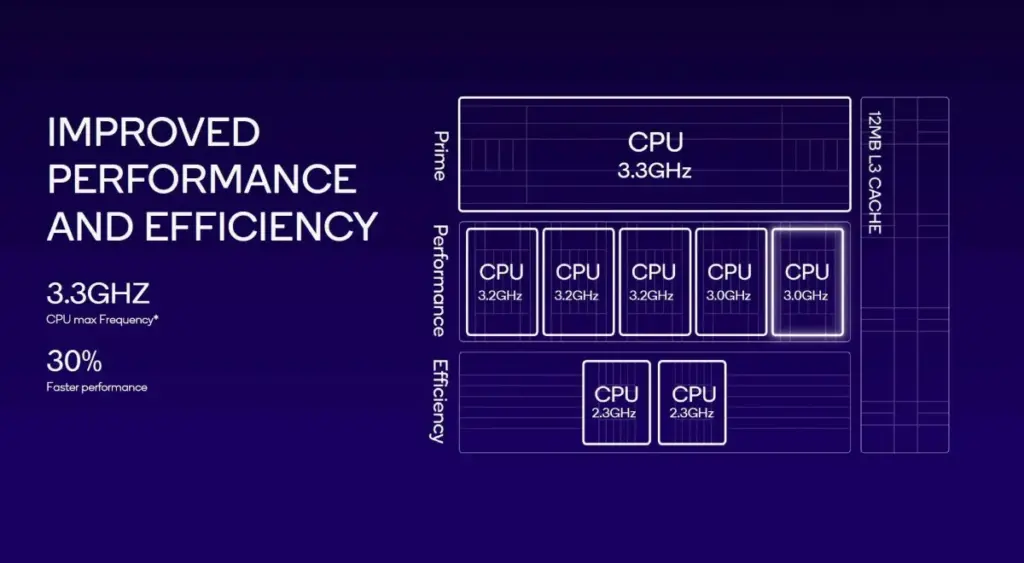
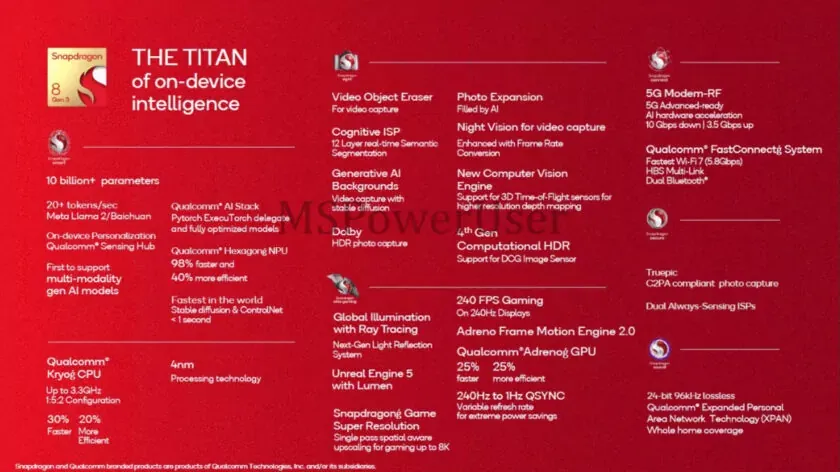
    In terms of crucial percentages, Gen 3 outperforms Gen 2 by 20% and by 30% in terms of speed. One Cortex-X4 prime core with a maximum frequency of 3.3 GHz, five performance cores with a maximum frequency of 3.2 GHz, and two efficiency cores with a maximum frequency of 2.3 GHz highlight the eight-core CPU inside. Up to 24 GB of LPDDR5x memory can be supported at 4800 MHz. Supported Wi-Fi 7 frequencies up to 6 GHz are 802.11be, 802.11ax, 80211ac, and 80211a/bg/n. The chip has an X75 5G modem with mmWave and sub-6 GHz antennae.

    Snapdragon 8 Gen 3 architecture

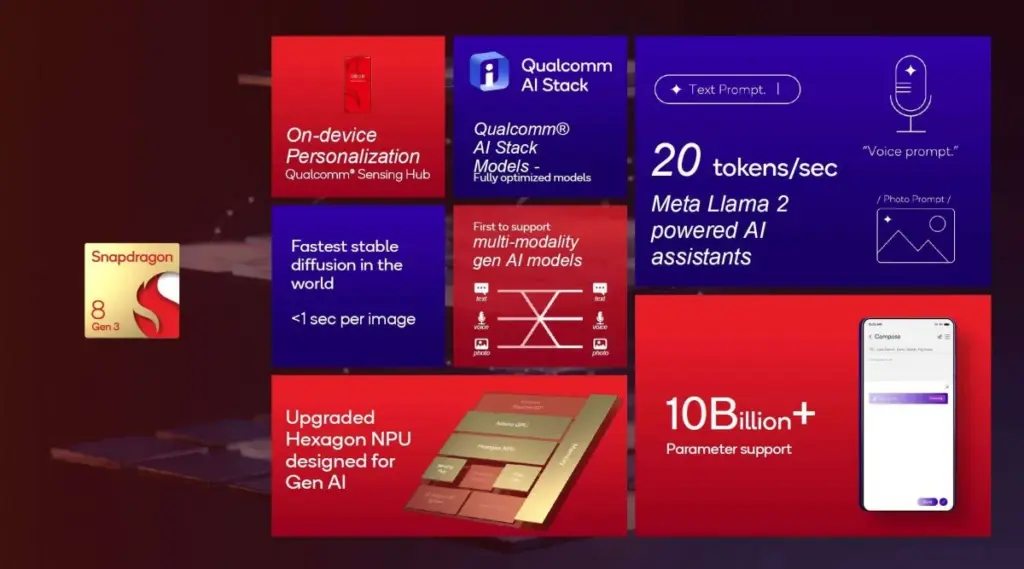
    With the Snapdragon 8 Gen3, AI is the main feature. The AI Engine is the first component in the process; it can process up to 20 tokens per second to provide immediate AI assistant replies. It supports both popular big language models for speech recognition and multi-modal generative AI models. According to Qualcomm, the Snapdragon 8 Gen 3 has the quickest steady diffusion in the world, producing an image in a split second.

    To improve AI assistant replies, Qualcomm’s Sensing Hug securely accesses personal data such as location, fitness state, and preferred activities.

    AI also improves the capabilities of the camera. Real-time Semantic Segmentation can improve an image’s brightness and detail, while Night Vision video can light up a dimly lit area. Vlogger’s View, which records video from both your back and selfie cameras, has an object eraser for films that may be used to remove unpleasant individuals or things. In addition to automatically improving HDR, Picture Expansion can employ generative AI to stretch an image beyond the original acquired data.

    Snapdragon 8 Gen3

    On 240 Hz monitors, the Snapdragon 8 Gen 3 can produce “console-defying” gaming performance at 240 frames per second. Adreno Frame Motion Engine 2.0 supports Unreal Engine 5.2 and may produce frames for better playback.

    The Snapdragon 8 Gen 3’s GPU offers 40% improved Ray Tracing along with 25% faster and 25% higher power efficiency.

    The fact that the new chip can stream 24-bit, 96-kHz lossless music via Bluetooth will please audiophiles.

    snapgradon 8 gen 3 devices

    Qualcomm says devices powered by the new Snapdragon 8 Gen 3 will be available in the coming weeks. The chipmaker has partnered with Asus, Honor, iQOO, Meizu, Nio, Nubia, OnePlus, Oppo, realme, Redmi, RedMagic, Sony, vivo, Xiaomi, and ZTE.

  • Qualcomm’s Snapdragon 8 Gen 3 leans into AI according to new leaks

    Qualcomm’s Snapdragon 8 Gen 3 leans into AI according to new leaks

    Tomorrow is Qualcomm’s annual Snapdragon Summit, during which the company is anticipated to reveal its upcoming Snapdragon 8 Gen 3 chip. Nevertheless, it appears that a recent leak, which discloses the complete specifications of the chip, may have wrecked tomorrow’s surprise. It also appears that the Snapdragon 8 Gen 3 will include a plethora of AI functions.

    Leaked marketing materials for the Snapdragon 8 Gen 3 have been obtained by the MSPoweruser team. The processor will reportedly feature a number of AI tools that will enable actions like expanding images, removing objects from films, creating AI backgrounds, and more, according to the leak.

    qualcomm 8 gen 3 chip

    Significantly, the report also discusses being able to use AI models like Meta’s Llama 2 and Stable Diffusion. In light of the tech industry’s adoption of AI this year, including all of these AI capabilities makes sense.

    Qualcomm equipped the CPU with an updated Hexagon neural processor to enable all of this (NPU). According to the marketing brochures, the new NPU is 40% more effective and 98% faster. The comparison is allegedly between the Gen 3 and the Gen 2, however the paper is vague.

    But it’s not only about AI; there also seem to be some potent gaming-related elements. This features the ability to game at 240 frames per second and upscaling for up to 8K resolution using a next-generation light reflection system that supports global lighting with ray tracing.

    One of the first products that the Snapdragon 8 Gen 3 is likely to be found in is Samsung’s Galaxy S24, which is scheduled to debut in Q1 2024. Since this is Qualcomm’s flagship chip, it should also be found in many of the high-end phones that debut the following year.

  • Dimensity 9200+ breaks record! Geekbench V6 multi-core score reaches 5655 points

    Dimensity 9200+ breaks record! Geekbench V6 multi-core score reaches 5655 points

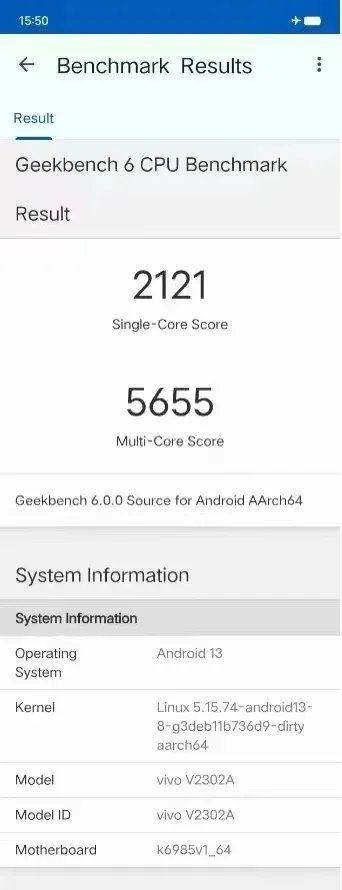
    Recently, the much awaited Dimensity 9200+ processor has been in the news for its ground-breaking performance on Geekbench V6. The Dimensity 9200+ reportedly broke all existing Android CPU performance records with a single-core score of 2121 points and a multi-core score of 5655 points.

    Rumored specifications

    The Dimensity 9200+ has cemented its reputation as a potent chipset thanks to this amazing result and the Dimensity 9200+’s superb AnTuTu performance. The Dimensity 9200+ has an octa-core architecture with four A510 small cores, three 3.0GHz A175 big cores, and a 3.35GHz Cortex-X3 super large core. Additionally, it has a GPU with an immortalis-G715MC11 core. One of the factors contributing to the processor’s potent performance is the big core’s 3.0GHz clock speed.

    Dimensity 9200+ geekbench

    The official release from MediaTek states that the Dimensity 9200+ will go on sale on May 10. The “strength depends on flagship+” poster indicates that the Dimensity 9200+ has performed admirably. Furthermore, the flagship smartphone market is about to heat up again given MediaTek’s trend of releasing “Plus” versions of its flagship processors every six months. The iQOO Neo 8 Pro is anticipated to be the first smartphone to use the Dimensity 9200+ chipset, according to benchmark listings.

    New CPUs are being developed by Qualcomm and other significant industry players. The next Snapdragon Gen 3 from Qualcomm is anticipated to have a new architecture and a potent 3.7GHz prime core, which could potentially perform better than the Dimensity 9200+.

    How these two processors compare and which one wins out will be interesting to observe. Nevertheless, the Dimensity 9200+ is positioned to compete fiercely in the high-end smartphone market thanks to its impressive benchmark results and promised performance capabilities.

  • Snapdragon 4 Gen 1, 6 Gen 1 – premium features

    Snapdragon 4 Gen 1, 6 Gen 1 – premium features

    Late last year, Qualcomm launched a new naming scheme for its chipsets, which it continued with the upper mid-range Snapdragon 7 Gen 1 earlier this year. The SD 4 Gen 1 and SD 6 Gen 1 are now being revealed by the US chip creator, who is going downstream.

    The new chipsets, which take the place of the SD 400 and SD 600 naming conventions, also add a few useful features to their respective price ranges. What you need know about them is as follows:

    Snapdragon 6 4 gen 1

    Snapdragon 6 Gen 1

    The 4nm Snapdragon 6 Gen 1 is undoubtedly the best chipset out of the bunch, with an octa-core CPU (4x Cortex-A78 and 4x Cortex-A55) with a claimed 40% performance improvement over the Snapdragon 695, which is, admittedly, a weaker chip. A 35%-better performing Adreno GPU is also included with the SoC, along with gaming-specific features like variable rate shading and jank minimization.

    Qualcomm’s new SoC also brings an improved AI engine with a Hexagon Tensor Accelerator and a claimed 3x increase to AI performance, as well as a Snapdragon X62 5G modem.

    Snapdragon 4 Gen 1Snapdragon 6 Gen 1
    CPU2x Cortex-A78
    6x Cortex-A55
    4x Cortex-A78
    4x Cortex-A55
    GPUAdrenoAdreno
    ModemSnapdragon X51 5G
    2.9Gbps down
    Snapdragon X62 5G
    2.5Gbps down
    Camera108MP snapshot
    32MP single
    25MP+13MP dual
    13MP triple
    48MP single
    25MP+16MP dual
    13MP triple
    108MP snapshot
    4K HDR
    ConnectivityBluetooth 5.2
    Wi-Fi 5
    Bluetooth 5.2
    Wi-Fi 6E
    Manufacturing process6nm4nm

    The Snapdragon 6 Gen 1 also offers a respectable selection of photographic features, including up to 200 MP for a single camera (likely for a snapshot), 25 MP and 16 MP for a dual camera, and 13 MP for a triple camera. Additionally, 4K HDR video recording is something you can anticipate, which is an upgrade over the Snapdragon 695’s complete lack of 4K video recording.

    Other noteworthy features include 120Hz at FHD+ display resolutions, Bluetooth 5.2, Wi-Fi 6E, and support for Quick Charge 4+.

    You’re in for a bit of a wait if you want a phone with this chipset, as Qualcomm says devices with the SD 6 Gen 1 are set to launch in Q1 2023. Motorola has also confirmed that it will offer a phone with the new SoC.

    Snapdragon 4 Gen 1

    Additionally, Qualcomm unveiled the 6nm SD 4 Gen 1, which replaces the SD 6 Gen 1. With a claimed 15% boost over the SD 480, the new lower mid-range SoC offers an octa-core CPU (2x Cortex-A78 and 6x Cortex-A55). The GPU reportedly experiences a 10% performance increase.

    Otherwise, it appears that the SD 4 Gen 1 and the SD 695 have a lot in common. Similar camera features (including support for 108MP snapshots but no 4K video recording), 120Hz support at FHD+ resolutions, Quick Charge 4+ support, Bluetooth 5.2, and Wi-Fi 5 are all present. Additionally, the Snapdragon X51 5G modem can reach downlink rates of 2.5Gbps.

    You won’t have to wait long to see the first phones with the SD 4 Gen 1, as Qualcomm confirmed that the first devices will land this quarter (Q3 2022). Vivo’s Iqoo brand has revealed that the Iqoo Z6 Lite will be one of the first globally available phones with the new chipset.

  • In the Pixel 6, Exynos replaces the Qualcomm modem chip

    In the Pixel 6, Exynos replaces the Qualcomm modem chip

    Pixel 6 comes with Exynos modem

    Google has a similar ecosystem to Apple. Its users can choose from a large choice of items to meet their various tech needs. The IT behemoth has kept evolving, producing new product after inventive product. It started as a search engine and has now moved into the smartphone market with its mid-range models.

    Details about the Google Pixel 6 are scattered all over the web. According to the latest reports, for the upcoming Pixel 6, Google is ditching Snapdragon.

    exynos

    Exynos replaces Qualcomm’s modem chip

    Google has used Qualcomm as the sole producer of not only its Snapdragon CPUs but also its modem chips, for all previous iterations of the Pixel series. The Qualcomm Snapdragon 765G SoC and the Snapdragon Qualcomm X52 modem enable 5G connectivity on the Pixel 5.

    The reliance on Qualcomm chips is unsurprising, given that the United States is one of Google’s largest client bases, and Qualcomm has had a rigid monopoly on wireless chip technology in the country for the past 20 years. Qualcomm modem chips have been used solely in all smartphones sold in the United States, a reality that has become even more apparent with the introduction of 5G.

    Qualcomm has the greatest 5G networking technology out of the only three 5G modem chipmakers in the world, adopting a variation called Millimeter Wave (MMW), which can now harness the fastest speeds on 5G networks even carry out processes such as SMS Share swiftly.

    After Qualcomm, MediaTek, a Taiwanese fabless semiconductor business, and Samsung are the other two 5G-capable chip makers. One of Samsung’s newer Exynos 5G modems, the Exynos 5123, appears to have progressed far enough to interest Google’s attention.

    With Samsung’s Exynos 5123, the Pixel 6 will be the first smartphone in the US to use a non-Qualcomm wireless modem, shattering Qualcomm’s stranglehold across the country. Additionally, this will be a new kind of triumph for Samsung, as it will be the first time its Exynos modem processor will be seen in a non-Samsung phone.

    Collaboration between Google & Samsung

    On the Pixel 6, the modem chip isn’t the only Samsung component we’ll see. On the contrary, the lengths to which Google has gone to incorporate Samsung’s technology into its current Pixel flagship has led some to speculate that the two tech titans are working together, though neither has confirmed this.

    Apart from the modem, the Pixel 6’s display, camera, and processor will all be Samsung-made. Samsung’s main camera was confirmed to be either the GN1 or the more current GN2 ISOCELL sensor in some previously released code. The display is believed to have a 6.4-inch 90Hz AMOLED screen manufactured by Samsung. And the SoC, which will power the upcoming smartphone, will be the 5-nanometer Tensor chipset, which was built by Google but will be manufactured entirely by Samsung.

    It seems that the two tech companies have joined forces for the Google Pixel 6. If that is indeed the case, we have high expectations for the device. We’ll have to wait for official statements from both companies to acknowledge these rumors.