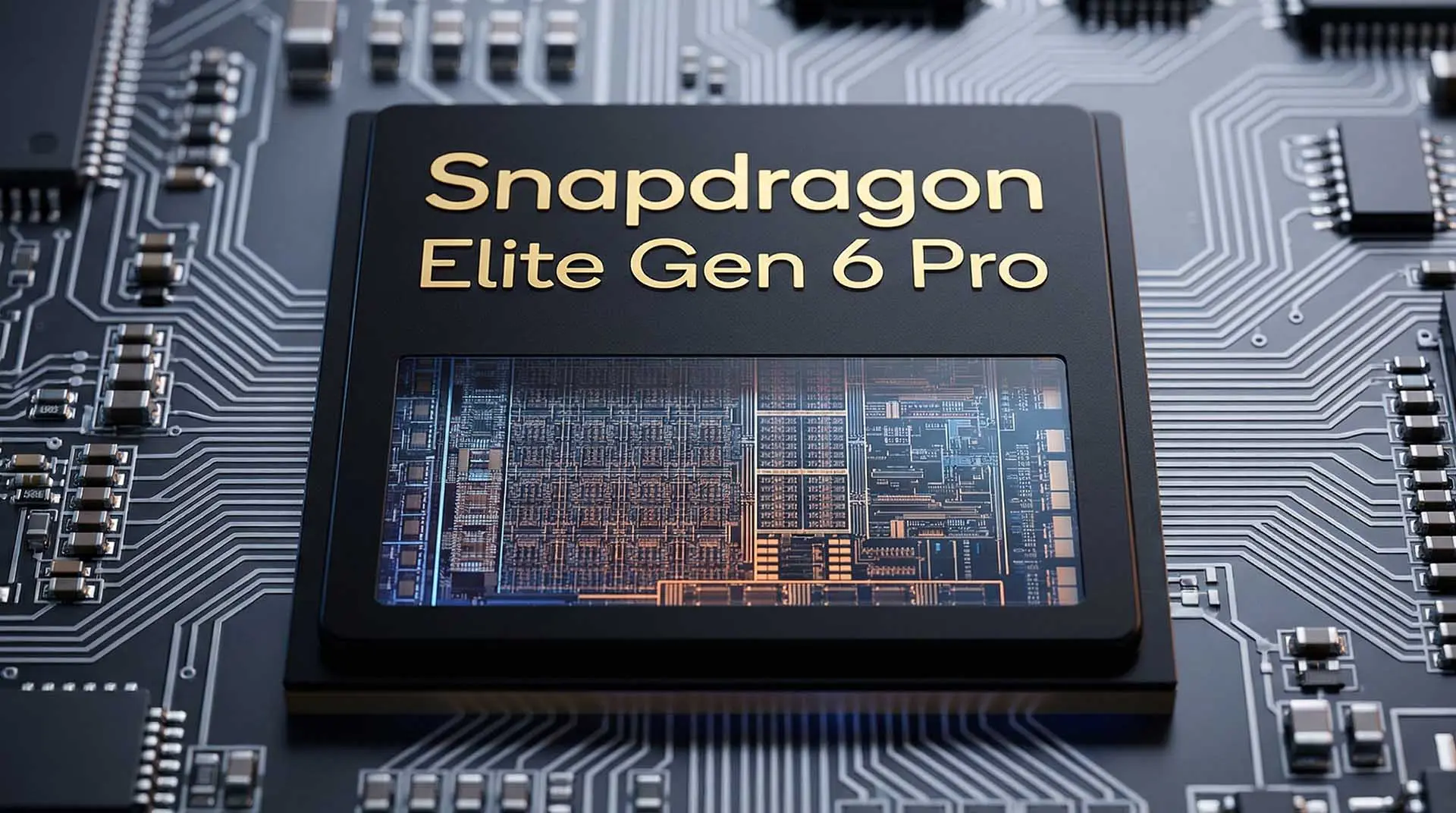
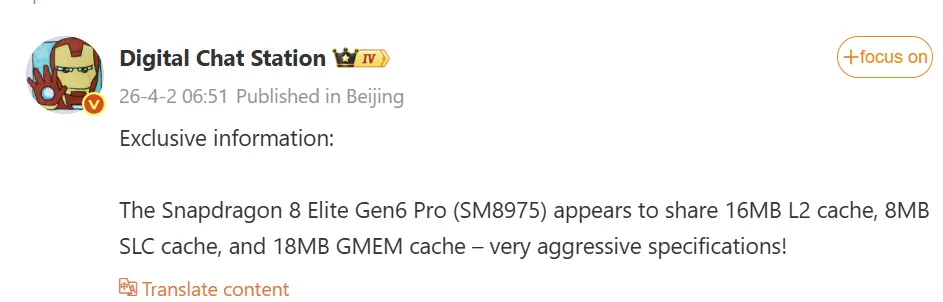
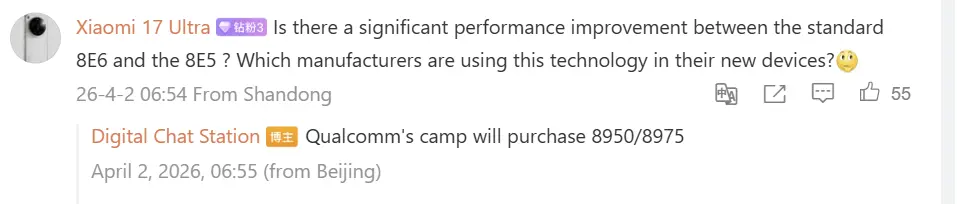
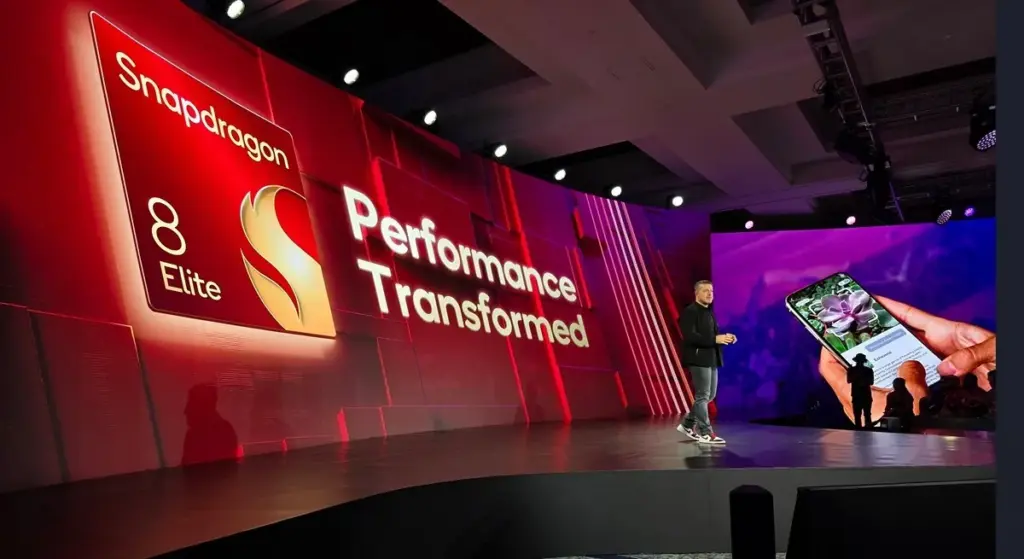
Before September 2026, the mobile tech scene is getting hotter. The aggressive specs of Qualcomm’s upcoming flagship CPU, the Snapdragon 8 Elite Gen6 Pro (SM8975), have been revealed by reputable source @DigitalChatStation. As expected, Xiaomi is set to unveil this powerhouse with the eagerly awaited Xiaomi 18 series, making it the first company to do so. Additionally, the future REDMI K90 Pro Max in the domestic market will be built around this silicon beast. Please take note that this device will be released worldwide under the POCO brand as the POCO F9 Ultra.
Inside the architecture redefining modern silicon
Now let’s explore the technological specifics. It appears that the Snapdragon 8 Elite Gen6 Pro will be an architectural monster. An enormous shared 16MB L2 cache, 8MB of SLC (System Level Cache), and an amazing 18MB of GMEM (Graphics Memory) are confirmed by leaked customs manifests and insider accounts. This configuration, when paired with an improved Adreno 850 GPU, is built to handle demanding workloads and intense gaming sessions.
Two super cores, three performance cores, and three efficiency cores make up the CPU’s unusual 2+3+3 cluster architecture. The SM8975 efficiently breaks existing memory bandwidth limitations by supporting next-generation LPDDR6 memory up to 16GB to fuel this demanding processor.
The system changes that are moving markets right now
Hardware doesn’t tell the whole story. Xiaomi HyperOS 4 will launch on these new flagship devices. HyperOS 4, which was designed from the ground up to be a very effective Android skin, will make full use of the new Snapdragon chip’s optimized 2+3+3 architecture and enormous L2 cache. Unprecedented battery life and excellent thermal control are anticipated as a result of this combination. HyperOS 4’s background task handlers will be able to maintain your most popular apps in memory without depleting the battery thanks to the aggressive cache architecture, guaranteeing that the user interface will stay instantly responsive even under high loads.
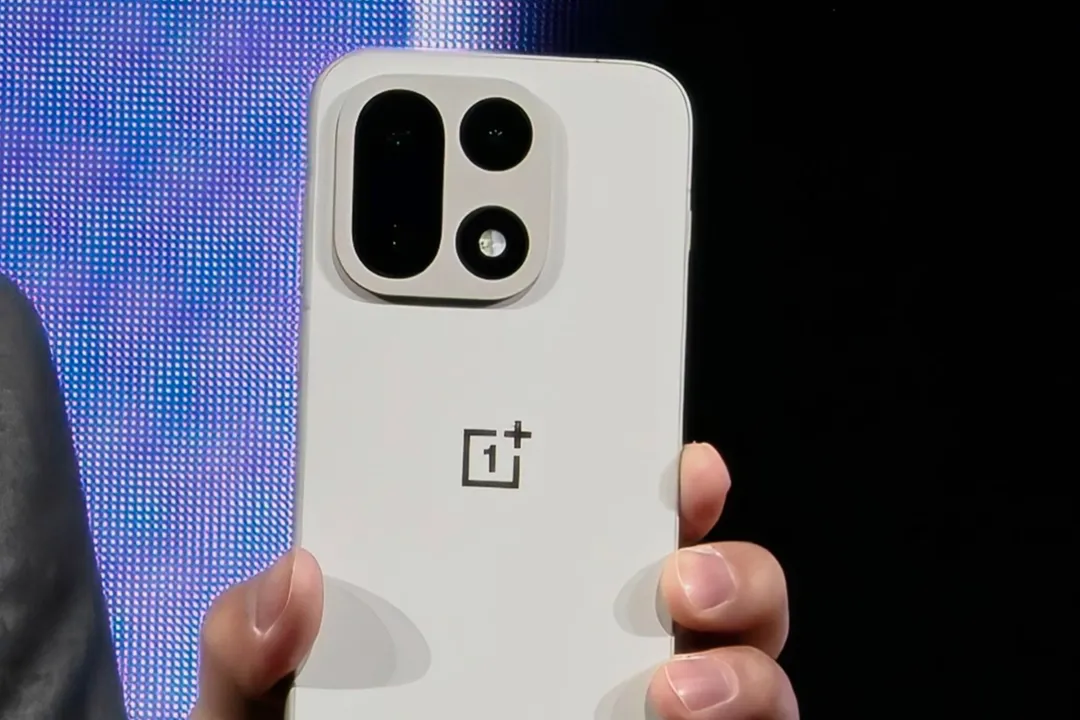
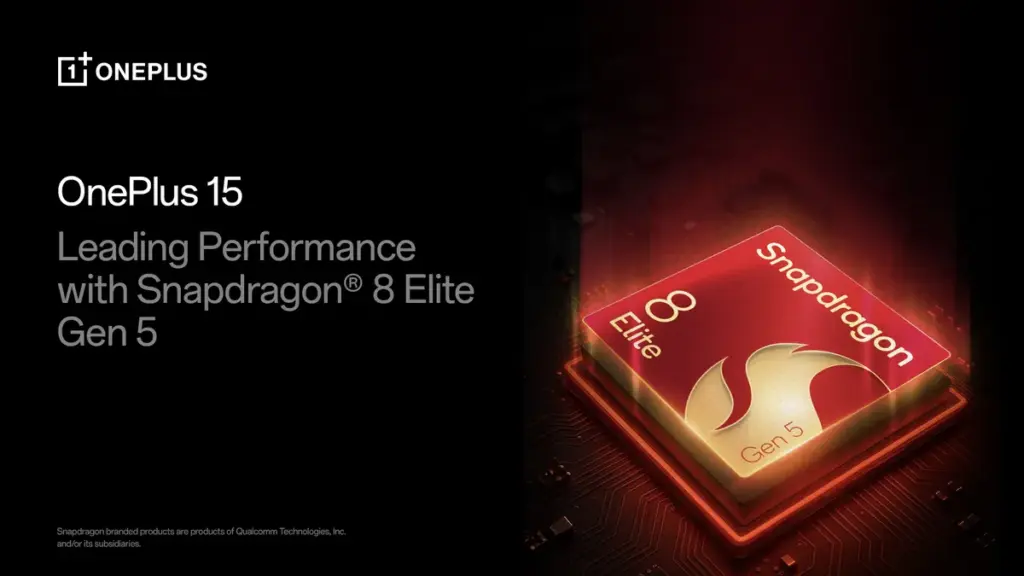
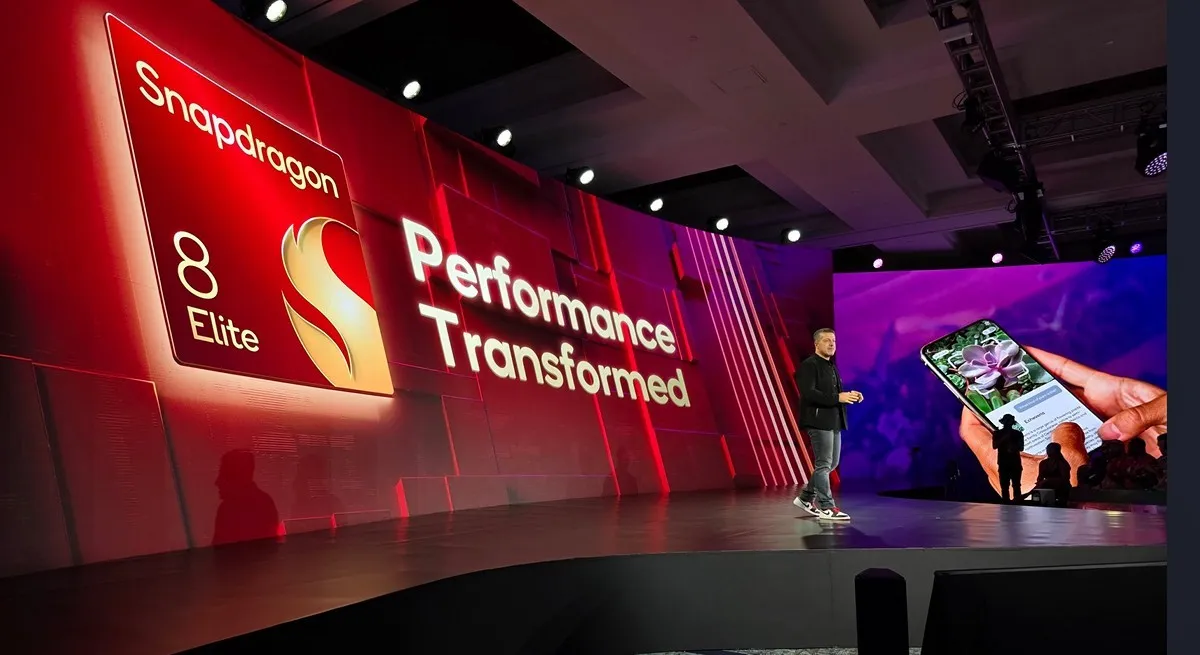
Android OEMs aren’t holding back from teasing their respective next-generation hardware now that Qualcomm’s newest processor is officially open. Although we were already aware that the OnePlus 15 was imminent, today’s early revelation has allowed us to begin assembling the appearance of this upcoming flagship.
There are no official images or specs sheets available, indicating that OnePlus is keeping this one under wraps. Instead, the company is teasing the release of the OnePlus 15, beginning with the official (but not very surprising) announcement that it will be powered by the Snapdragon 8 Elite Gen 5. Although OnePlus has almost always used flagship processors for its mainstream entry, it’s encouraging to know that one component is staying true to the norm given the many changes that will be coming for this next generation.
OnePlus 15 preview highlights Snapdragon 8 Elite Gen 5 and upgraded image engine
Speaking of changes, today’s announcement serves as yet another reminder that OnePlus and Hasselblad have dissolved their cooperation. The business claims that their “self-developed DetailMax image engine” uses “sophisticated algorithms and powerful processors” to take pictures, but we’ll have to wait and see what any actual or hypothetical outcomes look like.
With game-specific software, the OnePlus 15 will also offer a “unrivaled gaming experience”; it’s unclear if this differs from OxygenOS’s built-in gaming mode.
Sadly, battery capacity, RAM and storage capacities, and display details will all have to wait until later. OnePlus claims that “in the coming weeks,” company will have a lot more to say about its upcoming flagship. We’re a little ahead of schedule with this launch compared to this time last year, so don’t be shocked if this item is on store shelves before you know it.
In certain markets, Samsung could use the Exynos 2600, a new flagship processor for mobile devices, in its upcoming non-foldable flagship smartphone range, the Galaxy S26 series. The performance of the CPU and GPU has previously been revealed by SoC leaks.
But because the chipset was still being developed, the CPU benchmark that we previously saw wasn’t particularly outstanding. We now have the Exynos 2600 as a new CPU benchmark. This one demonstrates its far better performance, surpassing even the Snapdragon 8 Elite from Qualcomm.
Samsung’s forthcoming Exynos chip has been seen on Geekbench with a new benchmark listing (via @Jukanlosreve). As you can see in the screenshot below, the chipset received 3,309 points in the single-core CPU test and 11,256 points in the multi-core CPU test.
Samsung Exynos 2600 Geekbech
In contrast, the Snapdragon 8 Elite in the Galaxy S25 received 2,900 points for its single core and 9,300 points for its multi-core. On the other hand, the Exynos 2500 in the Galaxy Z Flip 7 received about 8,100 points in the multi-core test and 2,500 points in the single-core trial.
To put it another way, the CPU of the Exynos 2600 is 13% to 17% quicker than the Snapdragon 8 Elite and 32% to 38% faster than the Exynos 2500.
After a while, we discovered that the Snapdragon 8 Elite Gen 2 from Qualcomm might actually be the Snapdragon 8 Elite Gen 5. After a short lull, a new rumor has surfaced that offers some data about the specifications, allowing us to examine the advancements between the two generations more closely—at least on paper—because there is more. We should start investigating this report right away because the whistleblower who supplied these details also stated that the AnTuTu score is purportedly 50% higher what the Snapdragon 8 Elite achieved.
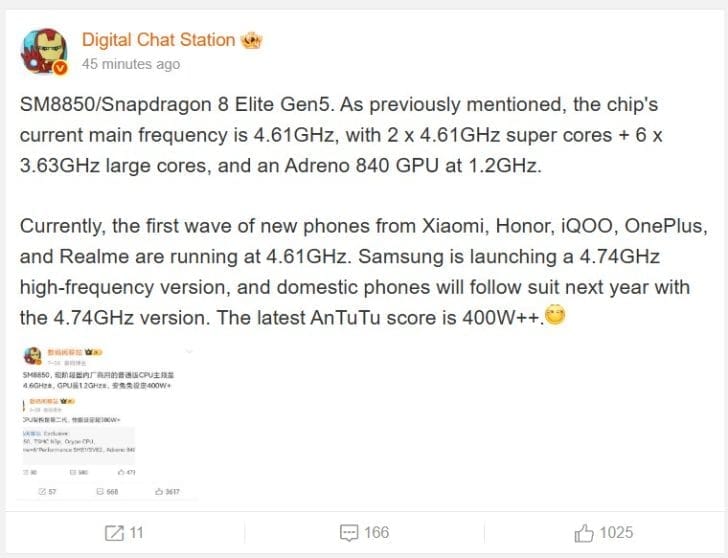
The Digital Chat Station, a Weibo tipster, has returned with some important information on the Snapdragon 8 Elite Gen 5. As its performance cores recorded on Geekbench 6 were 4.74GHz rather than the normal 4.61GHz mentioned in the most recent rumor, it appears that the version tested on the Galaxy S26 Edge was a higher-binned part. According to reports, the efficiency cores are capped at 3.63GHz, and the Snapdragon 8 Elite Gen 5 has a “2 + 6” CPU cluster, just like the Snapdragon 8 Elite.
As for the GPU, Qualcomm will couple its forthcoming flagship SoC with the Adreno 840, with the source adding that its default clock speed is 1.20GHz, making it slightly faster than the Adreno 830’s 1.10GHz speeds. The San Diego company seems to have some latitude in raising those frequencies thanks to TSMC’s third-generation 3nm technology, but how much of a difference will that translate into benchmarks? The Snapdragon 8 Elite Gen 5 allegedly scored over 4 million points in AnTuTu, according to the rumor.
The REDMAGIC 10 Pro, which has a Snapdragon 8 Elite processor, is the quickest Android smartphone according to benchmark leaderboards. The final score for this device was 2,662,615. These numbers will be 50% greater than those of its straight predecessor, assuming the Snapdragon 8 Elite Gen 5’s AnTuTu findings are genuine. Due to an exclusive arrangement with Qualcomm, Samsung will be the only company able to debut the Galaxy S26 series with the quickest flagship out of all the companies anticipated to do so. Stay tuned for additional developments as the chipset maker’s Snapdragon Summit gets underway on September 23. Any elusive specifics will be revealed throughout the event.
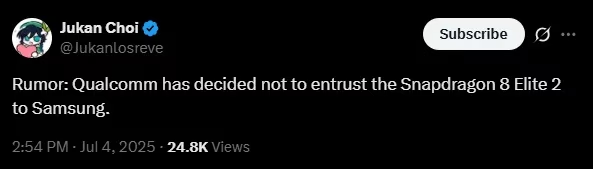
Previous rumors claimed that Qualcomm and Samsung were working together to produce a 2nm Snapdragon 8 Elite 2 chip that would power next-generation flagships. But it looks like the project has been canceled. Rather, a new chip is being developed.
The competition for the fastest and most efficient processor is constantly getting more intense in the very competitive smartphone market. And for a split second, it appeared as though Samsung might be ready to take the lead. According to rumors, Qualcomm and Samsung were making headway in producing a 2nm version of the Snapdragon 8 Elite 2, the company’s next-generation powerhouse. It was anticipated that this generation will be even more sophisticated than the 3nm CPUs seen in the majority of Android flagships. certain even thought it will power certain of the Galaxy S26 lineup’s models. However, those preparations seem to have ended abruptly.
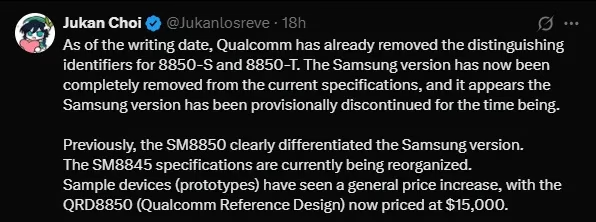
Qualcomm has now canceled the 2nm version of the Snapdragon 8 Elite 2 chip that was made by Samsung, according to a leaker on X, now known as Twitter (@Jukanlosreve). The chip, known internally as SM8850-S, is no longer listed on Qualcomm’s website. Two distinct versions were previously included in Qualcomm’s documentation: the now-missing 2nm Samsung version and the SM8850-T, a 3nm chip manufactured by TSMC.
The fact that just the base model SM8850 is left suggests that the 3nm chip manufactured by TSMC is the only one that has survived. The leak makes it abundantly evident that Qualcomm has quietly removed Samsung from the manufacturing equation, at least for this flagship chip, even if the firm has not provided an explanation for the move.
According to the move, the TSMC version of the Snapdragon 8 Elite 2 will be included in all major Android phones that arrive in late 2025 and after. It’s a setback for Samsung, which was hoping to show off its 2nm prowess and catch up in the semiconductor industry. For now, we can only surmise as to whether the decision was made due to basic strategy realignment, performance issues, or production constraints.
The Snapdragon 8 Elite 2 prototype, which developers and OEMs utilize for early testing, has witnessed a significant price increase, according to related news from the same source. Its current price of $15,000 indicates both great demand and limited supply. That’s a big jump, and it might be Qualcomm’s strategy to limit the chip to exclusive partners in the early stages.
It’s also important to note that Qualcomm is currently changing the specifications for its SM8845 chip, which is probably going to be marketed as the Snapdragon 8s Gen 5. Although specifics are still unknown, this chip is anticipated to function as a more affordable flagship choice, potentially aiming for upper-mid-range phones with performance that falls just short of the Elite series.
A 2nm Snapdragon manufactured by Samsung would have made headlines, but it appears that the story has changed. For Qualcomm’s flagship goals, TSMC’s 3nm technology is currently the preferred platform. Although this leak implies it won’t be with the Snapdragon 8 Elite 2, Samsung may still have a 2nm moment in the future.
Stay connected with the latest from Droid Tools—follow us on X @droid_tools, like our page on Facebook, check out our updates on Instagram, and follow us on Google News for real-time news, device tips, and mobile tech insights.
A mid-range gaming PC used to boast about having sixteen gigabytes, but a common sale slip now attributes that amount to a rectangular glass slab that fits in your pocket. A pre-Independence Day fireworks show for spec hunters, Walmart’s business section quickly revealed details about Nothing’s next Phone 3, including 16 GB of LPDDR5X, 512 GB of UFS 4.0, and a July first street date. This is also the first time Nothing is formally bringing its phone to the US borders.
Nothing Phone 3 price and specs
The price of that top-tier configuration is anticipated to be $899, whereas a 12 GB/256 GB device costs about $799. Finally, AT&T and T-Mobile 5G capability is available to North American customers, removing the import-phone issues that plagued previous versions. This high pricing betrays Nothing’s confidence that, if the focus switches from camera count to brain horsepower, hardware alone may overtake established titans.
According to reports, Qualcomm’s next Snapdragon 8 Elite has 60 TOPS of on-chip AI grunt, but if Android continues to remove tensor weights, the hungry silicon will still lag. While you doom-scroll, translate, and sketch-to-image simultaneously, a seven-billion-parameter language model is residing in sixteen terabytes. When the Gemini Nano failed to load on 8 GB Pixels, Google realized the limit; it would be better to go overboard than to subsequently apologize.
AI is coming to Nothing
AI-generated wallpapers, offline transcription, and a ChatGPT-lite that never spills a byte outside of your SIM are all features you can expect to see at the keynote. The true magic will be subtle: frame buffers, tensor cues, and next-step suggestions finally coexisting in memory, resulting in perceptual haptics that feel instantaneous and predictive caching. RAM will be the new battery in 2025; consumers won’t feel any pain until it runs out.
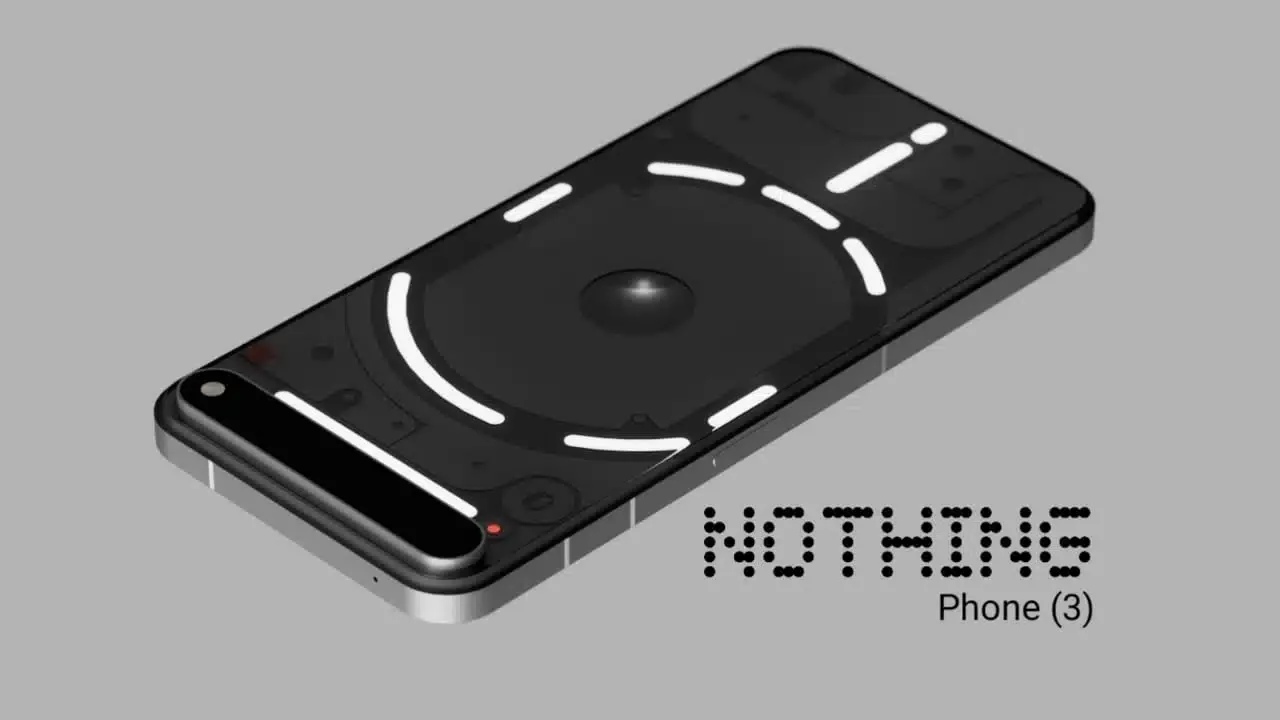
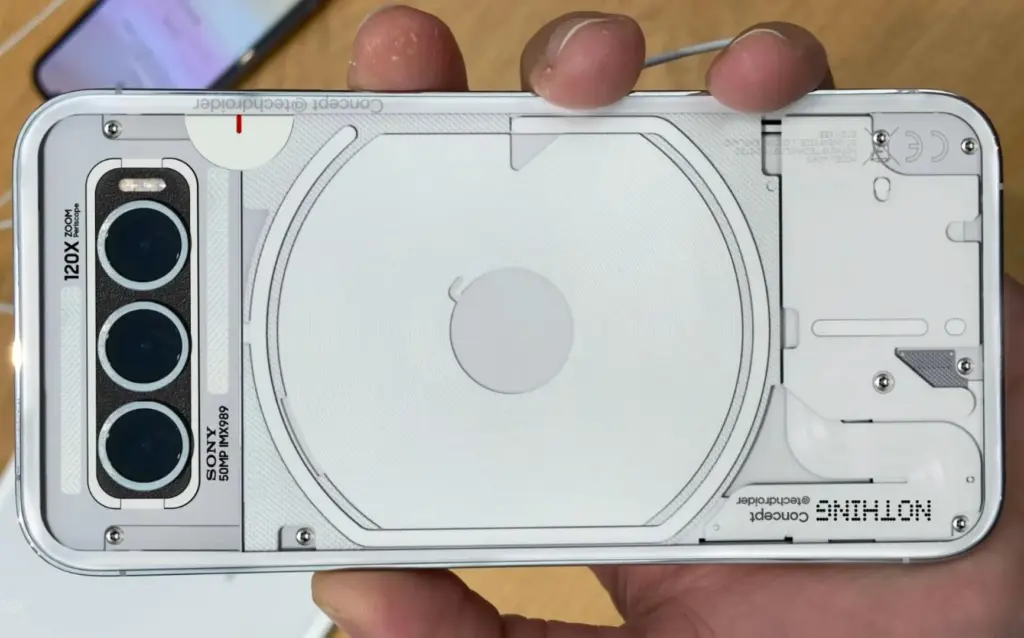
However, realistic theater and performance theater must share the focus. Its recognizable Glyph light bars have not been given a death certificate. In dim subway trains, two generations of Morse-code strips became cult favorites, but improvement necessitates development. The Glyph Matrix is a transparent rear plate with a dotted halo of individually programmable LEDs that can scroll text and trace icons and emoticons.
We don’t know for sure, but it appears that the wireless charging coil has also been removed in the ultimate bear hug due to the Glyph Interface’s demise. Rumor has it that the new Glyph Matrix occupies the space that was previously occupied by the wireless charging coil, which essentially became a crucial component of the flagship phone’s iconic design. The matrix seems to be the ideal location for the circular light grid, but there is no reliable way to tell if it actually replaces the Qi2 coil.
Mischief ensues when that canvas is combined with on-device AI inference. The LEDs may turn into a silent progress bar as diffusion models create an illustration, pulse in harmonic waves that reflect the mood of your playlist, or remain inactive until a predictive engine determines the alert is actually worth looking at. At last, hardware transforms from a ringtone to ambient UX.
Ambition rarely moves by itself. Whatever watt-hour benefits come with the anticipated 5,000 mAh battery could be erased by more than two hundred LEDs using power in addition to a more demanding NPU. Moving the coil could result in reduced wireless charging speed or the complete elimination of reverse charging. While you wait for an AI recipe recommendation, your pocket might serve as a hand warmer if the temperature calculations are incorrect.
The arc is still pointing ahead. Smartphones used to compete on the basis of megapixels, then refresh rates; in 2025, neural FLOPS and programmable lumens will choose the winners. Phone 3 outlines a future in which the interface and hardware literally light up one another by fusing 16 GB of breathing room with a light-spewing, AI-aware rear panel. The concept pushes the industry toward gadgets that think more deeply, glow more intelligently, and feel distinctly alive, even if the first Matrix flickers.
Stay connected with the latest from Droid Tools—follow us on X @droid_tools, like our page on Facebook, check out our updates on Instagram, and follow us on Google News for real-time news, device tips, and mobile tech insights.
The 2025 Snapdragon Summit is scheduled by Qualcomm for September 23–26, 2025. The US-based chipmaker is probably going to reveal the Snapdragon 8 Elite 2, which will power the premium phones of the future. According to a recent Weibo post by trustworthy tipster Digital Chat Station, this next SoC will have significant improvements in processing and graphics capabilities.
According to the leak, Qualcomm’s second-generation Oryon CPU architecture would be available in the Snapdragon 8 Elite 2. According to reports, the chipset is aiming for single-core test scores of over 4,000 points and multi-core scores of up to 11,000 points on Geekbench 6. The new chip promises a considerable performance boost over the first-generation Snapdragon 8 Elite, which scored about 3,100 and 9,800, respectively.
Snapdragon 8 Elite 2: big upgrade in CPU and GPU performance
A 16MB GMEM cache and an updated Adreno 840 GPU are also anticipated to be included in the platform, which will enable it to easily handle demanding visuals and graphics-intensive applications. These improvements imply that future flagship smartphones will prioritize improved thermal management and performance efficiency.
Snapdragon 8 Elite 2 known specs
According to rumors, the Snapdragon 8 Elite 2 will offer notable upgrades over its predecessor with a 2+6 CPU structure and a potential clock speed of up to 5GHz. With a base frequency of 4.4GHz, which is marginally higher than the 4.32GHz of the previous iteration, the CPU is anticipated to be constructed using TSMC’s third-generation 3nm process.
Xiaomi is probably going to be the first company to release phones with this chipset, specifically the Xiaomi 16 and Xiaomi 16 Pro, based on past trends. The OnePlus 15, iQOO 15, 15 Pro, Honor Magic 8 series, Realme GT 8 Pro, Nubia Red Magic 11 series, and Redmi K90 series are possible more early adopters.
The new processor is anticipated to be included in the Vivo X300 Ultra and Oppo Find X9 Ultra, which are scheduled to launch next year. It’s unclear, meanwhile, if the Xiaomi 16 Ultra will use the company’s proprietary Xring SoC or the Snapdragon processor.
Ever since they upended the industry by releasing flagship phones that reduced the market share of the iPhone, I have been evaluating OnePlus smartphones. Somewhere, that crispness was lost as OnePlus grew over the years.
However, the OnePlus 13s seems like a relaunch, a return to the original OnePlus: community-driven, focused, and straightforward. With its sleek, small design, the 13s makes a far bigger statement than the OnePlus 13 and 13R, which suggested a return.
Design
The OnePlus 13s is elegant, solid and small, and it hits the mark right away when you hold it. Yes, the clean symmetry and flat frame make it resemble an iPhone, but it never comes across as a cheesy knockoff. In fact, it feels just as good in the hand as phones like the Galaxy S25 and iPhone 16 Pro.
In a time when smartphones weigh 220g, the 13s is surprisingly light at 8.15mm thin and 185g. A textured glass finish that feels smooth without being flashy or slick is used on the back. On flat surfaces, the flush camera module makes sure there is no wobbling. The Green Silk version, which feels as high-end as it looks, is a lovely addition that is exclusive to India.
Also, OnePlus’s well-known Alert Slider has been transformed into the Plus Key, a configurable button that can be mapped to start apps and even initiate AI activities. It can be long-pressed to switch between quiet, vibrating, and ringing modes. Sensible and realistic without being overly dramatic.
An added plus is the phone’s IP65 designation, which allows it to withstand dust, rain, and unintentional splashes but falls short of complete waterproofing like the flagship models. That’s a victory for a little Android flagship.
Display
On paper, the 6.32-inch LTPO AMOLED may appear small, yet it excels in key areas. It is bright, sharp, and able to withstand the intense sunlight of Delhi thanks to its FHD+ or 1.5K resolution, 120Hz adaptive refresh rate, and maximum brightness of 1600 nits.
The color calibration by OnePlus is also flawless; it’s rich without being overpowering. The viewing experience is visually pleasing whether you’re watching Instagram Reels or IPL highlights, and I didn’t miss the 4K that was missing from my Netflix series. To be honest, I don’t see why anyone would be upset about losing out on the extra nuances of 4K on a screen this small.
Even wet hands—or sweaty ones during hot summers—won’t impair touch response thanks to Aqua Touch 2.0.
For individuals who find the large 6.7-inch slabs of today awkward, the Oneplus 13s provide a wonderfully portable option without feeling claustrophobic.
Performance
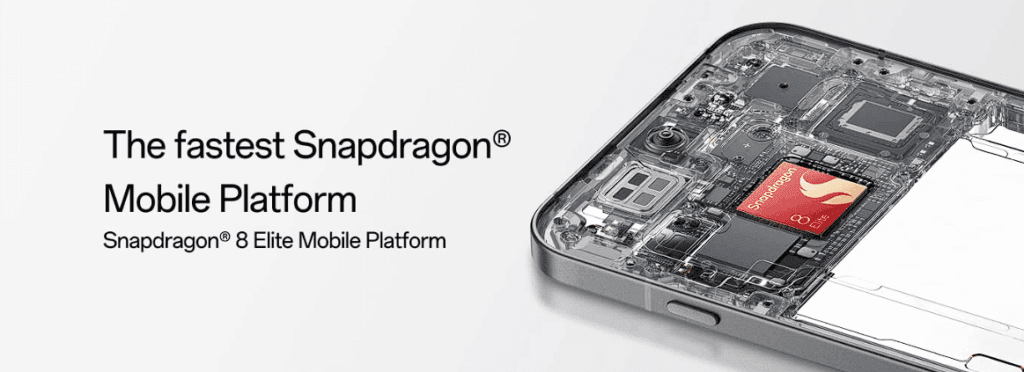
The Snapdragon 8 Elite processor, 12GB LPDDR5X RAM, and UFS 4.0 storage are installed under the hood. In summary, its performance is on par with flagship models.
The Oneplus 13s doesn’t blink whether you’re balancing multiple tabs on Chrome, Instagram, WhatsApp, and BGMI. Because of the vapor chamber cooling mechanism, it maintains frame rates steadily even throughout extended gaming sessions. Even in hot 40°C summers, OnePlus has managed to keep thermals under control thanks to some serious engineering.
You can easily reach a steady 120 frames per second on BGMI, and even after an hour of gaming, the phone remains warm – not hot. The 13s provides consistently regardless of whether you’re a casual user, gamer, or multitasker. Importantly, there are no sporadic lags or harsh throttling, even while multitasking for extended periods of time—something that even larger phones can have trouble with.
Camera
Here’s where things get interesting. The OnePlus 13s skips the trendy ultrawide lens and instead goes for a more focused setup: 50MP Sony LYT-700 primary sensor (f/1.8, OIS) 50MP 2x telephoto lens 32MP front camera with autofocus
50MP Sony LYT-700 primary sensor (f/1.8, OIS)
50MP 2x telephoto lens
32MP front camera with autofocus
Photos appear natural in daylight because of the great dynamic range and well-balanced colors. The 13s captures realistic images without the highly saturated processing we frequently see in typical Indian settings, such as bustling marketplaces, bright outdoor spaces, or verdant landscapes.
It also performs well in low light. Though not nearly as good as Google’s Pixel Night Sight or Xiaomi’s Leica-tuned cameras, nighttime street images are detailed with controlled noise. The 2x telephoto is excellent for portraits and tighter framing, but the absence of an ultrawide will be a pain if you enjoy taking landscapes or group shots.
The 32MP selfie camera is a delight – crisp, sharp, and excellent for video calls even under average indoor lighting.
With minimal tweaking, Oneplus 13s will produce Instagram-worthy photos for the majority of users. You might want to look elsewhere if you’re a purist photographer who longs for zoom versatility or ultrawide enchantment. However, the 13s is equally good for everyday recollections and social networking.
Battery
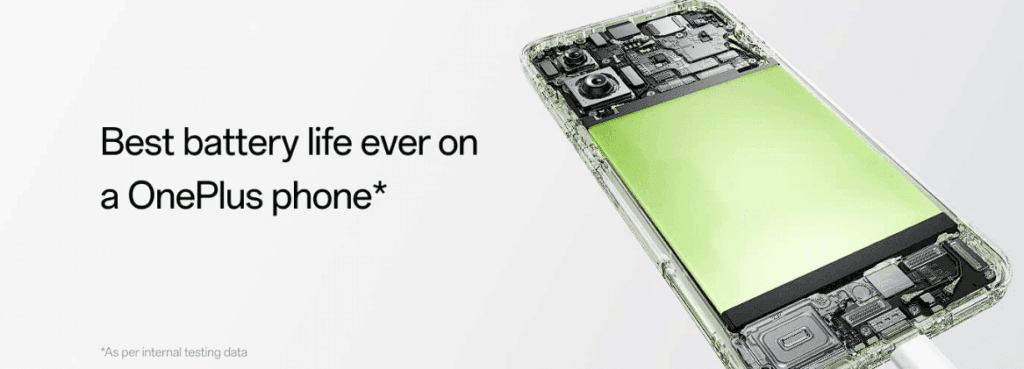
OnePlus somehow managed to fit a 5,850mAh battery into this slim body – and it pays off massively. In daily use – think 5G on, social media, camera, gaming, video calls – the 13s comfortably lasts a full day and often stretches into the next morning. In fact, it’s easily one of the longest-lasting compact flagships around right now.
Heavy BGMI gamers can pull around 7 hours of continuous play. Normal users will easily see 6-7 screen-on hours on a typical day, which is remarkable for a phone this size.
Additionally, charging is quick—80W SuperVOOC will charge you from 0% to 100% in about 50 to 60 minutes. Although wireless charging isn’t included, it’s hardly a deal breaker at this price point in India, where conventional charging is still common.
Another noteworthy feature is bypass charging, which minimizes battery wear and lowers heat by powering the phone directly during games rather than using the battery. Excellent for extended battery life and for gamers.
Conectivity
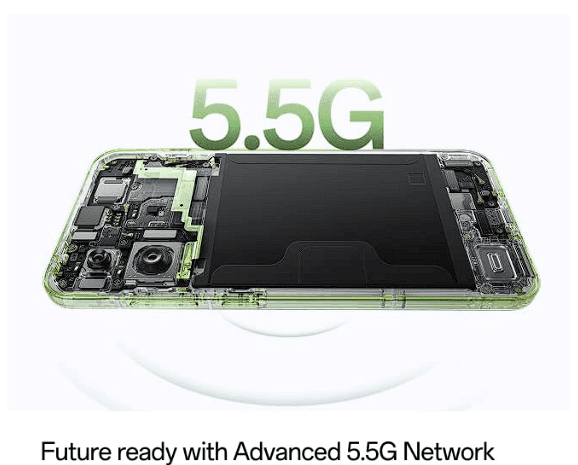
All of the well-known bands are supported by the OnePlus 13s’ extensive 5G band coverage. Even in challenging locations like metro stations and basements, it maintained robust 5G connectivity in real-world usage.
Even in spotty locations, there are very few dropouts during voice and video calls, indicating great call quality. During commutes, the stereo speakers are ideal for streaming YouTube or Netflix because they are clear and loud.
There’s dual SIM 5G standby, Wi-Fi 7 readiness for future-proofing, and even an IR blaster – a small but underrated feature for controlling your ACs, TVs and more. My personal favorite.
OnePlus 13s OS
On the Oneplus 13s, OxygenOS seems quick, clean, and bloat-free. Just like OnePlus enthusiasts would have hoped. With four years of Android OS upgrades and six years of security fixes, this phone is long-lasting and free of spam and advertisements.
Additionally, OxygenOS 15 has been polished with small features that improve everyday usability, such as Open Canvas for multitasking and smooth Mac/Windows file transfers.
Additionally, OnePlus guarantees Private Computing Cloud security for its AI capabilities, which means that your private information won’t be taken to the cloud without your permission.
All specs
Category
OnePlus 13s
Display
6.32 -inch 120Hz LTPO AMOLED, 2640×1216, 1600 nits max
OS
OxygenOS 15 based on Android 15
Chipset
Qualcomm Snapdragon 8 Elite, Adreno 830, 3nm
RAM
12GB LPDDR5X
Storage
256GB/512GB UFS 4.0
Rear camera 1
50MP Sony Lytia LYT-700, PDAF, OIS
Rear camera 2
50MP Samsung JN5 tele, 2x optical zoom
Front camera
32MP GalaxyCore GC32, autofocus, 4K video
Ingress protection
IP65 dust and water resistance
Connectivity
Wi-Fi 7, Bluetooth 6.0, limited 5G bands, NFC, dual-band GPS
Security
Optical in-screen sensor
Audio
USB-C, stereo sound, AptX HD, LDAC, LHDC 5.0
Battery
5,850mAh battery, 80W charging
Dimensions
150.8 x 71.7 x 8.2mm, 185g
Colors
Green, Pink, Black
Overall
The OnePlus 13s distinguishes itself in a crowded market for large slab phones by subtly delivering the necessities. It’s smart without being overbearing, strong without draining your battery, and high-end without breaking the bank.
The OnePlus 13s is difficult to overlook for anyone desiring a small flagship experience without sacrificing quality, be it professionals seeking power in a portable device, ardent Android users, or previous iPhone enthusiasts wishing to transfer. It’s not the most affordable flagship available.
It isn’t the most dazzling. However, for mosts’s tech-savvy users that prioritizes functionality over flash, it might be the best option.
Stay connected with the latest from Droid Tools—follow us on X @droid_tools, like our page on Facebook, check out our updates on Instagram, and follow us on Google News for real-time news, device tips, and mobile tech insights.
The Snapdragon 8 Elite and Snapdragon 8s Gen 4 share a name but target completely distinct segments of the mobile industry. On paper, the 8 Elite is a standout. It is Qualcomm’s most sophisticated SoC, delivering maximum raw performance, AI intelligence, and multimedia capability.
The 8s Gen 4 is a leaner, more economical processor that inherits features from its more powerful sister while making a few smart compromises.
Whether you are attempting to decide whether the 8s Gen 4 will be “good enough” or whether you should stick with the full-fat 8 Elite, it is useful to consider how these two chipsets compare beyond the marketing headlines.
Performance
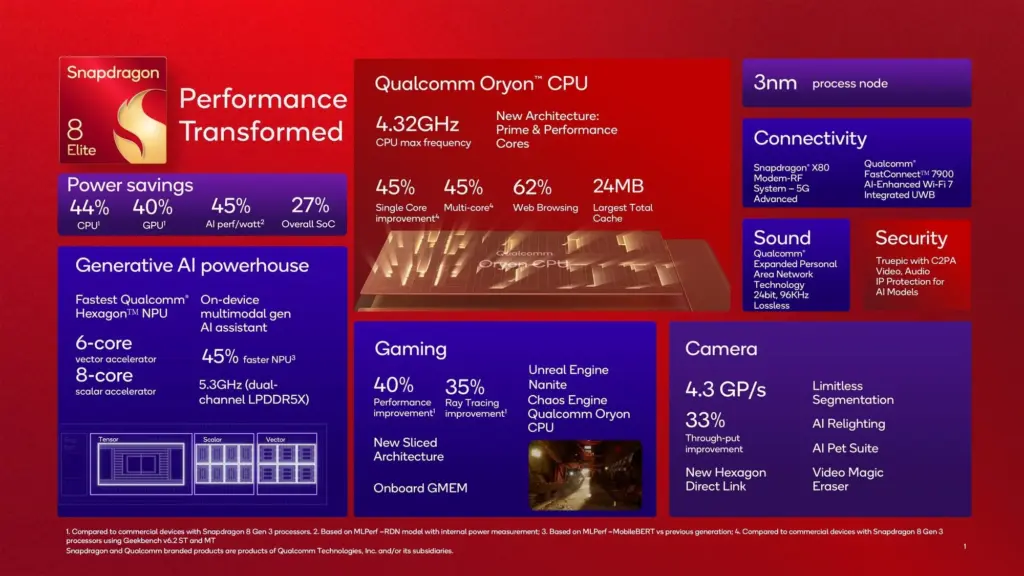
Custom silicon is at the center of this comparison, and the 8 Elite outperforms the competition. Qualcomm’s decision to use its own Oryon CPU cores in the 8 Elite is a significant move. These are not merely modifications to off-the-shelf ARM architectures; they are purpose-built, high-frequency (up to 4.47 GHz) powerhouses that provide up to 45% higher CPU performance and 44% better efficiency than the previous generation.
The 8s Gen 4, on the other hand, employs the well-known Kryo cores, which are effectively optimized ARM cores. It has a Cortex-X4 prime core clocked at 3.2GHz and seven Cortex-A720 cores—three at 3.0GHz, two at 2.80GHz, and two at 2.02GHz.
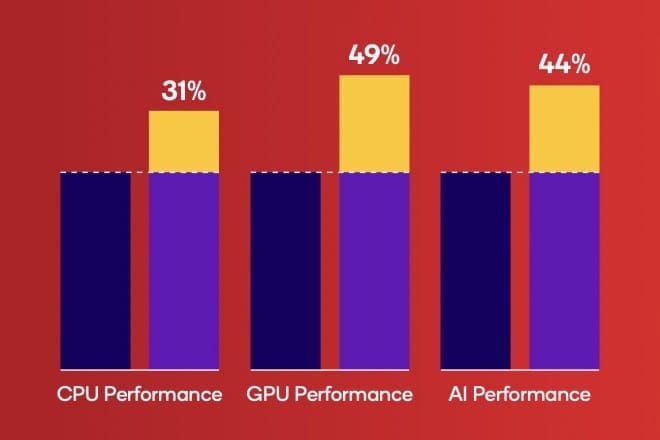
Qualcomm claims that this arrangement performs 31% better than its predecessor while consuming 39% less power. However, it should come as no surprise that it is not in the same category as the 8 Elite.
AI and on chip capatibilities
Both systems are designed with AI in mind, but there is a difference in scale. The Snapdragon 8 Elite employs a Hexagon NPU that provides higher performance per watt and supports a broader range of functions (INT4 to FP16). It also offers on-device personalization, multimodal AI processing, and the Sensing Hub, which provides improved context-aware features.
The 8s Gen 4 also features a Hexagon NPU, which is no slouch. It gets a 2x memory boost, which improves memory bandwidth and efficiency. However, it lacks some of the Elite’s more advanced AI processing functions, such as higher-precision data support and Gen AI connectors for on-device assistants and real-time personalization.
Graphics and gaming performance
The 8 Elite is designed for high-performance mobile gaming. Its Adreno GPU boasts up to 40% faster performance and 40% greater power efficiency, according to a new “sliced architecture” that balances heat and battery depletion.
Many of these capabilities, including as ray tracing, Game Super Resolution, and the Adaptive Performance Engine, are also supported by the 8s Gen 4. However, it does not include complete support for Unreal 5.3 or the Frame Motion Engine.
The GPU in the 8s Gen 4 shares the same sliced architecture as the 8 Elite. It is merely that the former has two slices whereas the Elite chip has three, which creates a difference in performance.
Connectivity
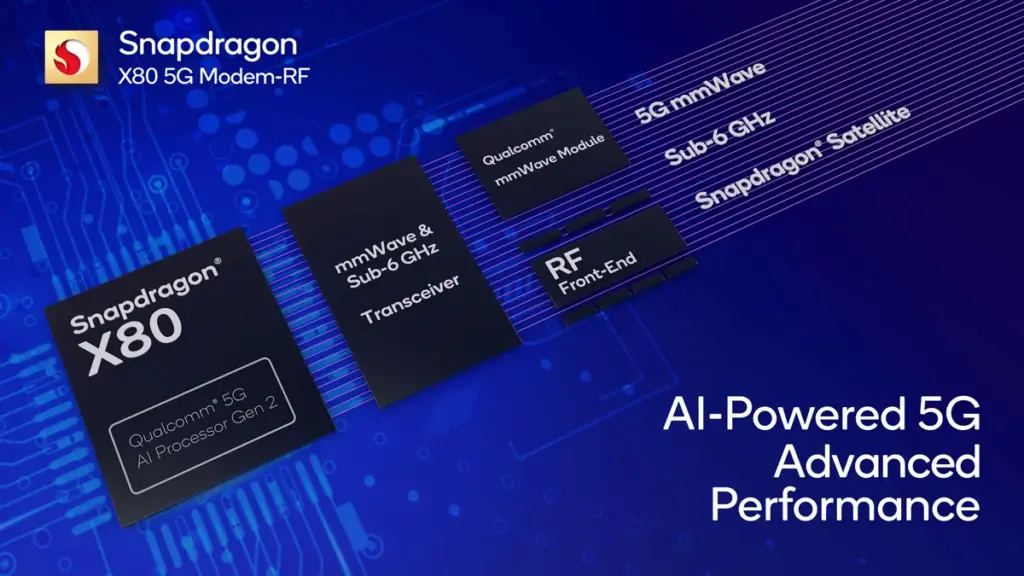
The 8 Elite includes Qualcomm’s top-tier Snapdragon X80 modem, which has peak download rates of 10Gbps and supports 6x carrier aggregation, dual SIM, and even UWB and Wi-Fi 7 with FastConnect 7900. It is also powered by Qualcomm’s 5G AI Suite Gen 3, which dynamically modifies connection parameters to save power and reduce latency.
The 8s Gen 4 makes do with a lower-end Snapdragon 5G Modem-RF System. The top download speed is 4.2 Gbps, with a restricted 4×4 MIMO arrangement. Nonetheless, it offers Wi-Fi 7 and Bluetooth 6.0 via Qualcomm FastConnect, as well as support for Snapdragon Seamless for cross-device networking.
Media and power
The 8 Elite supports QHD+ screens at 240Hz, 8K external monitors, and the HDR10+, Dolby Vision, and HDR Vivid formats. It also has Snapdragon Sound, aptX Lossless, and Quick Charge 5 for faster charging.
The 8s Gen 4 supports the majority of these features, including Snapdragon Sound, HDR video formats, Wi-Fi audio (XPAN), and Quick Charge 5, but does not support external 8K screens.
Specs comparison
Spec
Snapdragon 8 Elite
Snapdragon 8s Gen 4
Architecture
3nm
4nm
CPU Core Configuration
– Custom Oryon CPU @ up to 4.47GHz – 64-bit architecture
– Kryo CPU – 64-bit architecture– Clock speed up to 3.2GHz
– Up to 320MP single camera – 48+48+48 MP triple (ZSL) – 8K video capture @ 30fps – Video Super Resolution
– Up to 320MP single camera – 36 MP triple (ZSL) – 4K video capture @ 60fps – Motion Compensated Temporal Filtering
Charging
Quick Charge 5
Quick Charge 5
Security
– Qualcomm SPU – 3D Sonic Sensor Max – Face, Fingerprint, Iris, Voice – Type-1 Hypervisor
– Qualcomm TEE – 3D Sonic Sensor Max – Face & Fingerprint – Type-1 Hypervisor
Storage
UFS 4.0
UFS 4.0
USB
USB 3.1 Gen2 (USB-C)
USB 3.1 Gen2 (USB-C)
At the end of the day, the Snapdragon 8 Elite is a no-compromise SoC designed for devices that want to be the best in everything. Whether it is gaming, camera, connection, or AI functionality.
In contrast, the 8s Gen 4 streamlines many of those premium experiences. It will power more cheap high-end devices (such as $500-$800 phones) while maintaining competitive gaming, AI, and photography capabilities for the majority of customers.
In short, the 8 Elite is the chip for those who want it all. The 8s Gen 4 is the model to choose if you want just enough.
Qualcomm recently unveiled the Snapdragon 8s Gen 4, their newest high-end smartphone chipset. Internally referred to as the SM8735, it is built on TSMC’s N4P 4nm production node and uses the older Kryo CPU rather than the Oryon core that is present in the top Snapdragon 8 Elite chip.
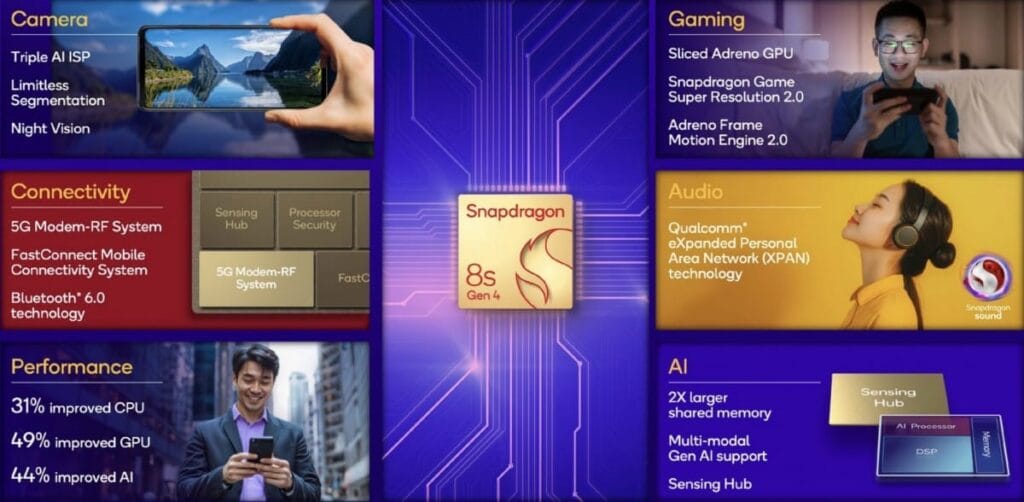
Three Cortex-A720 cores at 3.0GHz, two at 2.8GHz, two at 2.0GHz, and one Cortex-X4 prime core clocked at up to 3.2GHz make up the CPU layer. Qualcomm claims that the new chip uses 39% less power and is 31% faster than the Snapdragon 8s Gen 3 from the previous year.
Additionally, the chip has a new Adreno 825 GPU, which Qualcomm claims will increase graphics by 49% over the Snapdragon 8s Gen 3. Additionally, Snapdragon Elite Gaming capabilities including Snapdragon Game Super Resolution 2.0 and Adreno Image Motion Engine 2.0 are included, along with support for on-device ray tracing.
On-device AI operations are performed 44% better with the upgraded Qualcomm Hexagon NPU. Additionally, Qualcomm included an 18-bit triple image signal processor (ISP) that can record HDR video at 4K60 frames per second and accommodate up to 320MP camera sensors.
The integrated Snapdragon X75 5G modem in the new chip can download files at up to 4.2Gbps, however it only supports sub-6GHz spectrum rather than the speedier mmWave frequency ranges. Additionally, the chip has Bluetooth 6.0 and Wi-Fi 7.
LPDDR5X RAM, USB 3.1 Gen 2 connection, and UFS 4.0 storage are all supported by the 8s Gen 4. Additionally, it has Qualcomm’s Extended Personal Area Network (XPAN) connectivity, which is currently available on certain new wireless earbuds like the Xiaomi Buds 5 Pro and uses Wi-Fi to send music.
Later this month, the iQOO Z10 Turbo is anticipated to be the first gadget to use the Snapdragon 8s Gen 4, with other Xiaomi, Oppo, Meizu, and other products to follow shortly.
Main Snapdragon 8s Gen 4 Features
Our Qualcomm® AI Engine includes:
Qualcomm® Hexagon™ NPU
2x larger shared memory for improved memory bandwidth
Qualcomm® Sensing Hub
Support for INT4 and INT8 precisions
Snapdragon Elite Gaming™ Features
Real-time Hardware Accelerated Ray Tracing with Global Illumination for improved lighting, shadows, and reflections
Qualcomm Adaptive Performance Engine provides ultra-fast and super-smooth performance while providing longer gameplay sessions
Snapdragon Game Super Resolution 2.0 intelligently upscales low-res game scenes in up to 4K
Our Qualcomm Spectra™ AI ISP features:
Real-time Semantic Segmentation for photo/video with up to 250 layers
Real-time skin and sky tone correction intelligently captures natural color tones even in challenging environments
Night Vision 2.0 captures detailed videos in low light at 4K30 FPS
An always-sensing camera enables features like hand gestures, face unlock, and QR code scanning
Featuring our integrated AI-accelerated Snapdragon® 5G Modem-RF System
Qualcomm® FastConnect™ Mobile Connectivity System offers leading Wi-Fi 7 with speeds up to 5.8 Gbps and Bluetooth® 6.0 technology
Supports Snapdragon Sound™ Technology Suite
Qualcomm® Expanded Personal Area Network Technology (XPAN) keeps earbuds and headphones connected via Wi-Fi for untethered, whole-building audio coverage
Snapdragon Seamless experience connects all your compatible devices so you can switch between them intuitively and quickly