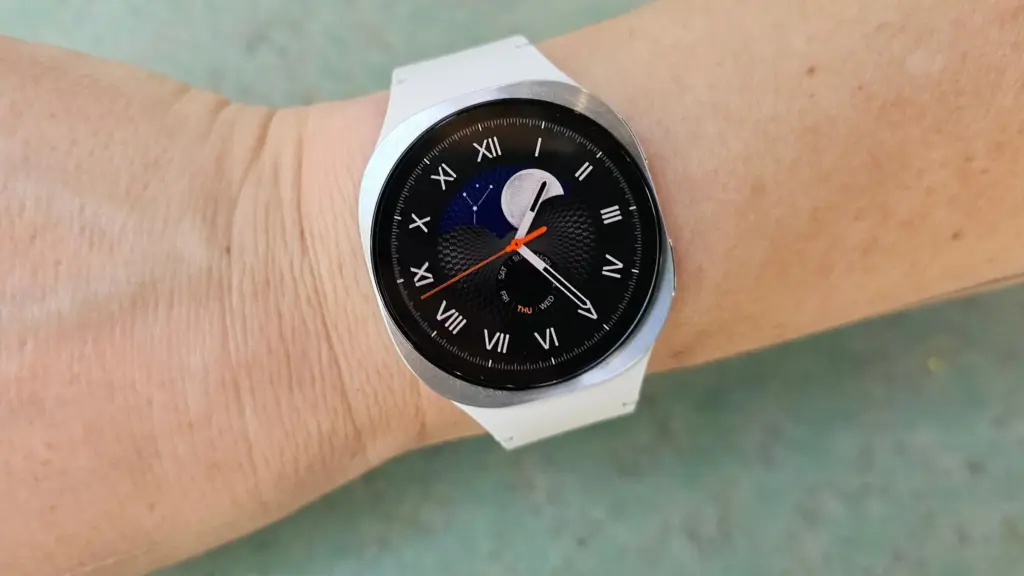
Your Galaxy Watch has a lot in common with a cluttered desk. The longer you use it – jumping between apps, running things in the background, switching modes – the more it accumulates invisible junk that slows everything down. Frozen screens, laggy responses, battery that drains faster than it should. Sound familiar?
The good news: you almost certainly don’t need a new watch. Nine times out of ten, the culprit is a bloated cache, and clearing it is one of the easiest things you can do.
What’s a cache, and why does it matter?
Your watch stores temporary data – bits of information from apps and processes – to help things run faster in the moment. Over time, that pile grows. What was meant to speed things up starts doing the opposite, and your watch starts feeling like it’s running through mud.
Samsung says the Galaxy Watch handles memory optimization automatically in the background, but that doesn’t mean you can’t give it a nudge yourself. Sometimes it needs one.
How to clear your Galaxy Watch cache
Clear your recent apps
Swipe up from the watch face and tap the Recent apps icon. Hit Close all to shut everything down at once.
If you want to be more selective, open Recent apps again and tap Active in background. You’ll see which apps are running silently and can close whichever ones you don’t need.
Clean up the watch’s memory
Go to Settings > Device Care > Memory, then tap Clean Now. That’s it – your watch will free up whatever space it can.
Do both of these and you’ll likely notice a difference right away. Faster app launches, smoother navigation, better battery life. If your watch has been frustrating you lately, start here before assuming it’s time to upgrade. It usually isn’t.
Your device may slow down as a result of cached data that builds up, corrupts, or just becomes out of date over time. Although a targeted cache clear is a quick fix that doesn’t require updating hardware, restarting your phone frequently helps.
In June, Google introduced Android 16 to Pixel devices and a few OEMs, bringing with it new Material You updates, performance enhancements, and other improvements. Clearing the cache on your Android phone or tablet can give it a new boost and free up some storage space if you want to attempt this update but are concerned since you’ve observed it already feels too sluggish.
How to clear cached data from Android apps
Although each manufacturer may have somewhat different processes, the overall procedure is the same.
1. See all the apps installed on your Android device
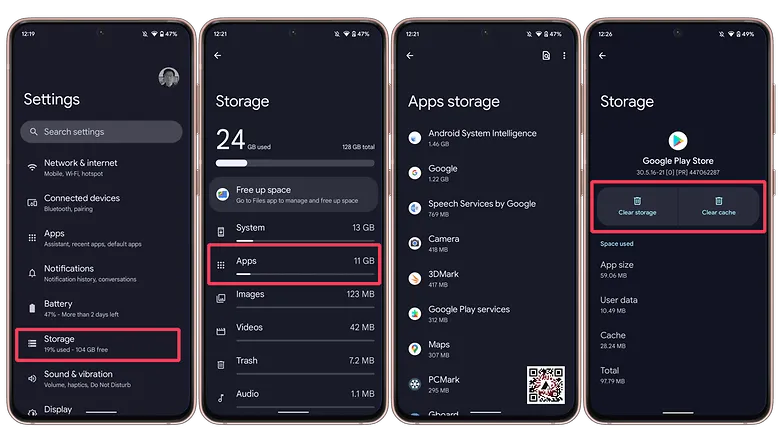
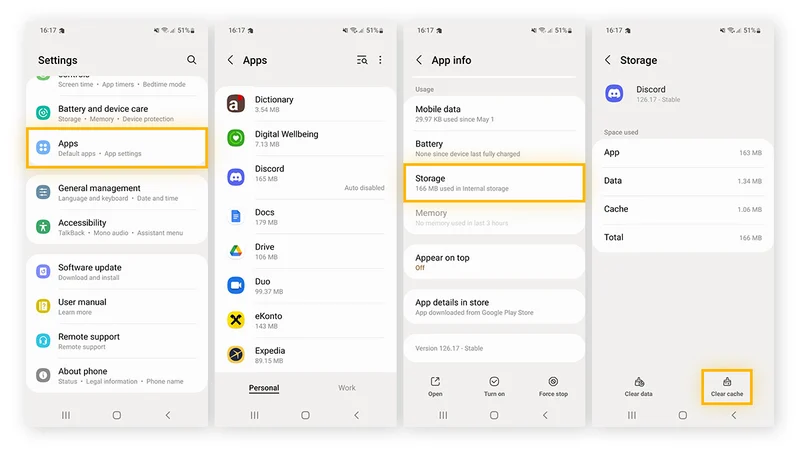
Navigate to Storage in Settings, then select Apps. If there isn’t a specific Apps entry, you may easily locate it in Settings by using the search bar.
Some Android devices now offer a “Free up space” option through the Google Files app in the Storage menu as well. This can be used by opening Files, selecting Clean from the three-line menu in the top-left. Examine each recommendation (such as duplicates, huge files, and useless apps), then follow the instructions to remove any files you no longer require.
2. Clear cache for individual apps
(Avoid system services) press an installed app, choose “Storage and cache,” and then press “Clear cache.” Tap “Clear storage” only if you wish to fully reset the application.
3. Do the same for all apps you want
Do the same with any programs that consume a lot of storage. Data-hungry hogs like social apps and streaming services are a good place to start.
Additionally, some Android versions make it simple to view which apps are using the most space when you’re in the Apps menu. Just choose Sort by Size from the three-dot menu that appears in the upper-right corner.
Note: There may be an integrated clear-all-cache feature on some Android phones. There should be a ‘Select All’ button at the top under Settings > Storage > and App Cache.
How to clear cache from Chrome
1. Go to History settings in Chrome
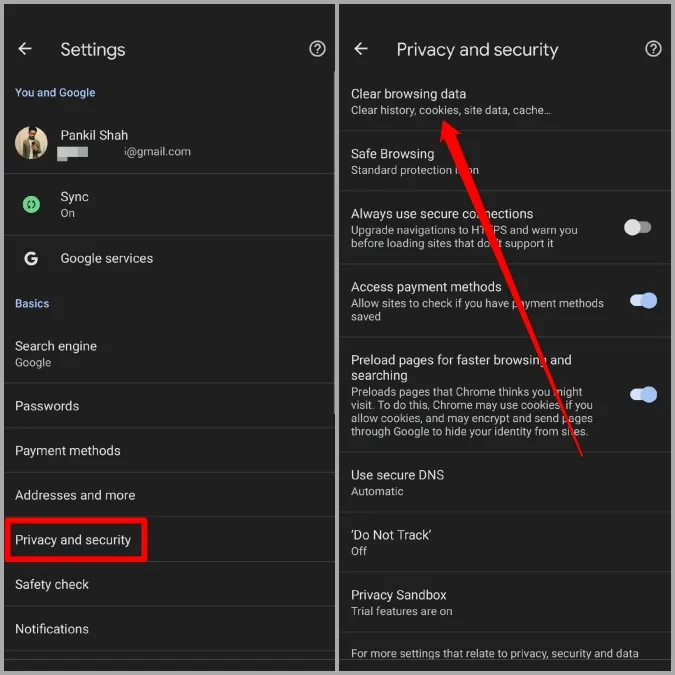
Open Chrome, tap the three-dot menu Settings > History > Clear browsing data.
2. Choose the data you want to delete
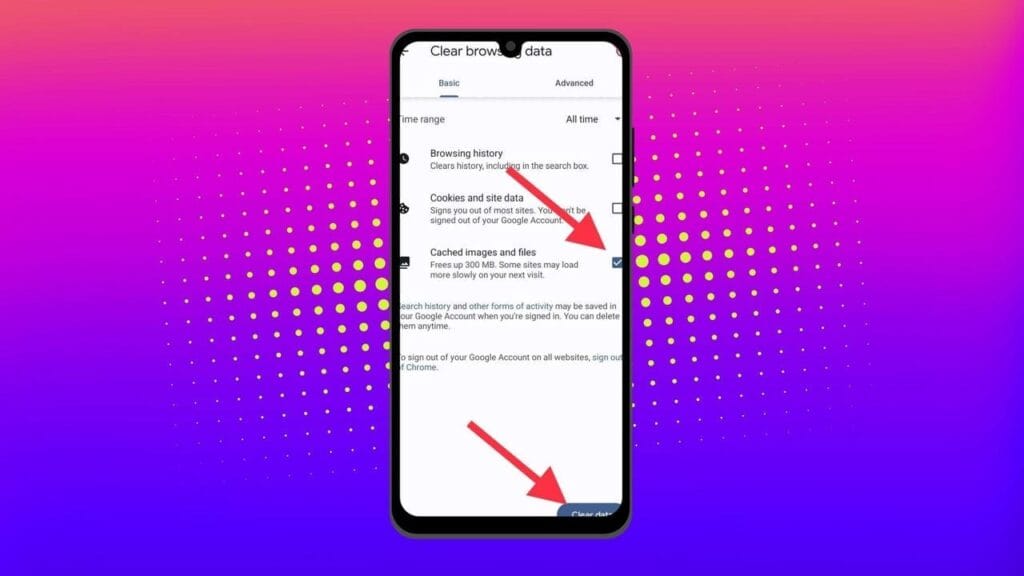
Check “Cached pictures and files” (as well as anything else you want to delete) after choosing the time frame. Next, select “Clear data.”
Every choice describes its function and how it impacts your experience. removing cached files and pictures may result in Chrome loading images more slowly the next time you visit a website, while removing cookies and site data will log you out of many or all websites.
3. Optional: A simpler shortcut
In recent versions of Chrome for Android, hitting the menu button brings up the Clear Browsing Data option. When you choose this, a pop-up window requesting that you delete your browsing history from a certain time frame will show up. Selecting More Options will bring up the Browsing Data screen, where you can pick which data to remove and what time period to use.
You are not dreaming if your Android phone used to be blazing fast but suddenly feels slow. Android devices naturally slow down over time for a number of reasons, the majority of which are entirely resolvable without the need for third-party apps or technical know-how.
Why Android is getting slower?
📦 1. App Cache Buildup
An application, such as Instagram, YouTube, or your web browser, saves small amounts of temporary data (called cache) each time you use it so that it loads more quickly the following time. Although useful when used sparingly, this cache accumulates over time, depleting storage and occasionally making the program (or even your phone) slow.
Example: Chrome can build up hundreds of MBs in cache after a few weeks of browsing. Clearing it can noticeably improve speed.
⚙️ 2. Background Processes Piling Up
Applications do not simply launch when you use them. Multiple apps keep running in the background, syncing data, giving notifications, and even tracking position. This depletes the battery and RAM (your phone’s memory), which can affect speed.
Tip: Social media and messaging apps are the biggest offenders. If you’ve got 10+ apps running in the background, expect a performance dip.
📲 3. Unused or Pre-installed Apps
Bloatware is the term for the numerous apps that are pre-installed on your phone and frequently continue to run in the background even if you have never used them. You end up with a cluttered, overloaded system when you include the apps you downloaded, used once, and then forgot about.
You don’t have to delete everything, but disabling or uninstalling apps you don’t use makes a big difference.
🔁 4. Software Updates and Feature Overload
Software updates can be bulky, yet they are necessary for security and new functionality. Updates for apps and newer Android versions are gradually tailored for more modern hardware. This implies that all of the new features and animations may be too much for your outdated device to handle.
Ever noticed how a major Android update seems to slow your phone a bit? That’s usually why.
🗄️ 5. Low Internal Storage
For Android to function properly, it requires a buffer of free space. Your phone may begin to crawl if it is overloaded with pictures, movies, downloads, and residual program data for background processing.
Rule of thumb: Keep at least 4 GB free at all times. If you’re below that, expect slowdowns.
✅ The Good News?
You don’t need root access, expensive cleaner apps, or a trip to the repair shop. Most speed issues can be solved in just a few minutes using built-in settings.
📍 In the next section, we’ll walk through the exact steps you can take right now to get your Android device running like new again.
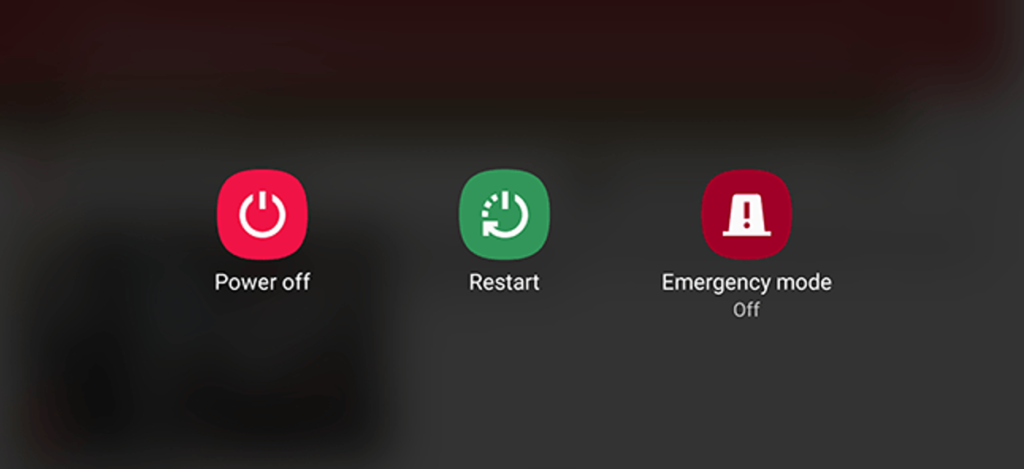
✅ 1. Restart Your Phone
Why it matters: Restarting your phone clears temporary files, ends frozen background processes, and resets system performance. It’s like giving your phone a fresh breath of air.
What to do:
Hold the Power button until the menu appears
Select Restart (or Power Off, then turn it back on)
📌 Do this at least once a week — it can fix lag, crashes, and battery issues instantly.
🧹 2. Clear App Cache (Not Data!)
Apps store cache to improve loading times, but too much of it can cause lag, glitches, or even crashes.
Here’s how to clear cache:
Go to Settings > Apps
Tap on an app like Chrome, TikTok, or Instagram
Tap Storage & Cache
Tap Clear Cache
⚠️ Important: Don’t tap Clear Storage/Data unless you want to log out or reset the app.
🧠 Pro Tip: Clear cache for your most-used apps once every 2–3 weeks.
📦 3. Uninstall or Disable Unused Apps
Apps you never use can:
Take up precious storage
Run silently in the background
Slow down boot times
To remove them:
Long-press the app icon > tap Uninstall
OR go to Settings > Apps > [App Name] > Uninstall
If an app can’t be uninstalled:
Tap Disable — it won’t run or consume resources anymore.
🔇 Example: Carrier apps, pre-installed games, or assistant tools you never asked for.
🛠️ 4. Reduce Animations (Developer Options)
Android’s transitions and animations may look sleek — but they can delay actions on older or budget phones.
Here’s how to disable or reduce animations:
Go to Settings > About Phone
Tap Build Number 7 times to unlock Developer Options
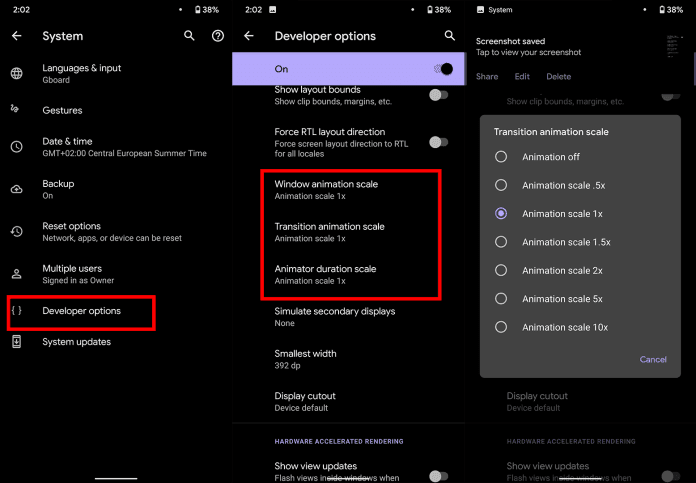
Go back to Settings > System > Developer Options
Scroll down to:
Window Animation Scale
Transition Animation Scale
Animator Duration Scale
Change all three to 0.5x or Animation Off
📈 Expect a noticeable speed boost — especially on devices with less RAM.
🗃️ 5. Free Up Storage Space
Storage nearing full = a major performance killer. Your phone needs free space to install updates, load files, and run background tasks.
Quick ways to free up space:
Open Files by Google > Clean to remove junk, large files, and duplicates
Go to Gallery > Albums > Downloads and delete old files
Offload videos/photos to Google Photos or an SD card
💾 Aim to keep 15–20% of your total storage free (e.g. at least 4–6 GB on a 32 GB phone).
🔋 6. Disable Background Sync & Battery Hogs
Many apps sync data constantly — even when you’re not using them.
To limit background activity:
Go to Settings > Battery > App usage
Tap on heavy apps (Facebook, Gmail, etc.)
Restrict background use or set to “Battery Optimized”
For syncing:
Go to Settings > Accounts > Auto-sync Data
Turn it off for accounts you rarely use
💡 This saves RAM and battery life — a win-win.
🔄 7. Update Android & Your Apps
Updates contain bug fixes and performance improvements. If you’re behind, you could be missing important optimizations.
Update system:
Settings > System > System Update > Check for updates
Update apps:
Open Google Play Store
Tap your profile icon > Manage apps & device
Tap Update All
🔄 Do this monthly, especially if you notice app crashes or slowness.
🧩 8. Use Lite Versions of Apps
Heavy apps = more RAM, more battery, more lag.
Try these alternatives:
Facebook Lite instead of Facebook (saves over 500 MB!)
Messenger Lite instead of Messenger
YouTube Go (lighter on data and resources)
Twitter Web via browser instead of the app
You’ll free up space and speed up daily use.
🖼️ 9. Use Static Wallpapers
Live wallpapers constantly run behind the scenes, draining battery and processing power.
Change it:
Long press on the home screen > Wallpaper & Style
Choose a static image from your gallery or system wallpapers
🌓 Tip: Dark wallpapers also save battery on AMOLED/OLED screens.
🧠 10. Try a Lightweight Launcher
Your phone’s default launcher (like Samsung’s One UI or Xiaomi’s MIUI) can be bloated and animation-heavy.
Better options:
Nova Launcher (fast, customizable)
Niagara Launcher (minimalist & smooth)
Smart Launcher 6 (lightweight & sleek)
Switching to one of these can reduce memory use and simplify your experience.
You are not alone if your Android device has started to lag. Many gadgets have the potential to slow down over time, but there are easy solutions to boost performance. Restarting the device is a quick fix that can resolve a lot of frequent problems. Clearing up cached data from websites and apps is another efficient way to increase speed and free up storage.
With the use of simple steps, you will go through the process of clearing your Android device’s cache. Depending on the manufacturer and software customisation of your Android device, the steps described may differ, but the overall procedure is the same, and this guide should help you get started.
View every application that is installed on your Android smartphone.
To easily view all of the apps on your Android phone or tablet, launch the Settings app. Scroll until you see Storage, then tap on it. Next, check for the Apps option. On some Android devices, Storage may not appear, and you can navigate directly to Apps from the Settings menu.
If you’re having trouble finding the Apps section, you can always use the search bar at the top of the Settings app to help.
When you are in the Apps area, some Android versions make it simple to view which apps use the most space. Simply hit the three-dot menu in the upper right corner and select Sort by Size.
Clear the cache of of the installed apps
Select an app from the list to remove its cache. Just a heads up: I prefer using an app you installed over a system service like Android System Intelligence. I have had inconsistent outcomes with emptying the cache of system apps, thus it is recommended to only delete the cache for apps you added yourself.
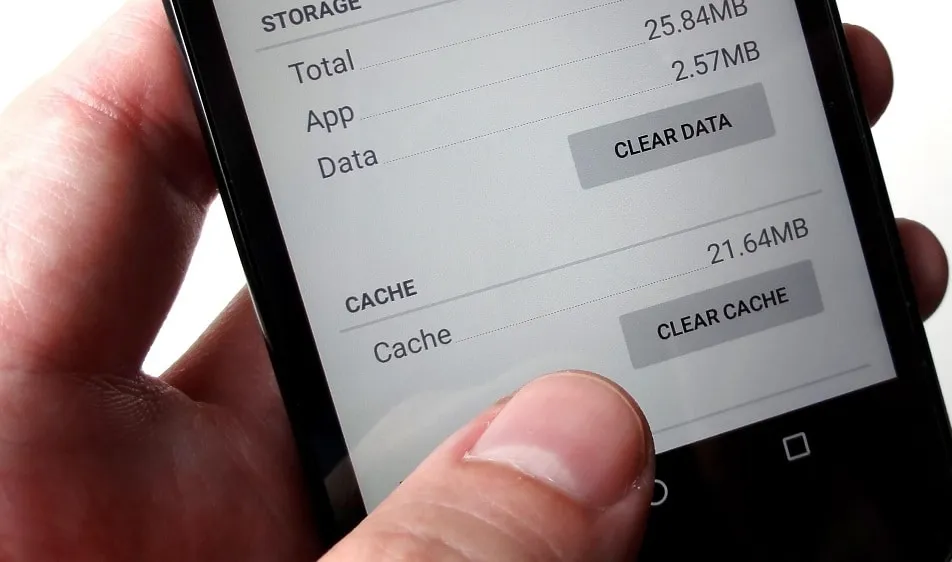
When you open an app, you will see facts such as its size, user data, cache size, and total storage usage. At the top of the page, you will find two options: Clear storage and Clear cache.
Tap Clear cache to clear the cache for that app. However, avoid tapping Clear storage because it will reset the app, requiring you to set it up again. Clearing the cache will not cause any problems.
Continue to browse your list of installed apps, checking for any programs that take up a lot of space and removing their cache.
If you are feeling particularly thorough, you might erase the cache for each app on your phone. However, it is a good idea to start with the biggest offenders, such as the Facebook app.
Clear the cache from Chrome
If Chrome is your primary browser, it may have accumulated a large amount of data, which can slow down your device. Here’s how to clear the cache.
Go to History settings in Chrome – Open the Chrome app on your Android device, press the three-dot menu in the top-right corner, click History, and then Clear browsing data.
Choose the data you want to delete – The following screen will display a selection of alternatives, allowing you to select whatever data you want to erase from Chrome.
You can also provide a timeframe for when you want the data cleared. Each option gives a brief explanation of what it does and how it may affect your browsing experience. For example, deleting cookies and site data will log you out of most (if not all) websites. Clearing cached images and files may cause Chrome to load images more slowly the next time you visit a website.
In later versions of Chrome for Android, hitting the menu button displays the option “Clear Browsing Data”. When you select this option, a popup will display, allowing you to erase browsing data for a defined time period.
If you choose More Options, you’ll be taken to the Browsing Data screen, where you can select the data to delete and choose the time range.
What does cached data mean?
Cache is temporary storage that stores data like as photos, files, and scripts from websites or apps you have visited in order to speed up their loading time. Clearing cached data, whether for Chrome or any other app, removes the files that have been kept on your device. For example, on Facebook, cached data could contain profile pictures, photos, and videos.
Deleting cached data from the Facebook app removes these temporary files from your smartphone, which may cause the program to take longer to load content the next time you use it. However, this strategy will have no effect on the accounts you visit, the postings you make, or your personal information.
Will deleting the cache remove all app data?
No, emptying an app’s cache does not destroy crucial data such as login credentials or saved settings. It merely deletes temporary files that help the app load faster, so you do not lose any important data.
Will deleting the cache make your Android device faster?
Yes, clearing the cache can free up storage and remove corrupted or outdated files that may slow down your device, leading to smoother performance.
How often should you clear your cached data?
It depends on how well your equipment performs. If you are experiencing slowdowns or other problems, emptying the cache can be part of the solution. Otherwise, you may only need to perform it once every three to six months.
Is the purpose of clearing the cache only to increase storage space?
No. Clearing the cache is one of the first steps you should take when dealing with bugs or difficulties in an app. Cached files frequently get corrupted or outdated, and removing them causes the app to reload the cache, which can resolve the issue. As a result, deleting the cache can assist solve problems rather than simply free up space.
Can you clear the cache for all Android apps simultaneously?
There is no built-in method to remove the cache for all Android apps at once, but you can browse through the list and clear each app’s cache separately.
Regularly clearing the cache and cookies in your web browser will help you get rid of unnecessary garbage files.
Much of the information that your Android phone’s web browser gathers from the websites you visit is unnecessary for it to be on your phone.
The information kept in your cookies and cache, regardless of whether you are using Samsung Internet, Mozilla Firefox, or Google Chrome, may come in handy occasionally. It is what keeps you signed into your accounts and enables you to swiftly access websites that you visit often. That is great, but your browser’s cookies and cache include a lot of unnecessary data that may even pose a privacy concern.
The reasons behind periodicaly clearing your cache and cookies
A large portion of the content that accumulates in your cookies and cache is just useless garbage. A portion of it might have come from single-visited websites. Some appear to be actively monitoring your browser history in order to provide you with adverts that are relevant to what you purchase or watch online. For example, after looking at a few stores, I keep getting advertising for buying glasses online, or I get ads from Amazon that just so happen to reflect what was last in my shopping basket.
It is a good idea to periodically clean your cache because of this. It enables you to delete data from your phone that you no longer require, particularly if one of the cookies on your phone has an unknown data tracker. You will have to log back into some of your favorite websites after clearing your cache, but it is a tiny annoyance to ensure that your phone is not accumulating unnecessary data.
The steps differ slightly depending on the type of phone and web browser app you’re using. Below, we’ll go over how to clear this data for Google’s Chrome browser (often the default for many Android phones, like the Google Pixel line), Samsung’s internet browser (often the default on the Galaxy phone series) and Mozilla’s Firefox browser.
Google Chrome
In the Google Chrome app for Android, you can clear your cache and cookies by first clicking the More button (shown by a column of three dots) in the top right corner of the browser, then selecting History, and then selecting Clear browsing data. Alternatively, you may access this by selecting Privacy and Security from the Chrome Settings menu, followed by Clear browsing data.
Additionally, Chrome has Basic and Advanced settings for deleting cookies, site data, cached files and pictures, and browsing history. You can choose to erase all of your information or just a portion of it, ranging from the recent 24 hours to the previous four weeks, using the Time range drop-down menu. You can also delete Saved passwords, Autofill form data, and Site settings by tapping Advanced.
Once you have decided what to remove, hit the blue “Clear data” button. If Chrome considers any websites to be “essential” to you, you may receive an additional prompt, and you will be able to accept before clearing. In the event that you do not receive the prompt, Chrome will clear as soon as you tell it to.
Samsung Internet
You can delete the cache and cookie data from your Samsung Internet browser in two distinct methods. You have two options for clearing: using the Settings app on your phone, or directly from within the browser.
To clear while in the Samsung Internet browser app, first tap the Options button in the bottom right corner represented by three horizontal lines, then Settings; scroll down to and tap Personal Data, then tap Delete browsing data to get a menu of options to delete. You can clear your Browsing history, Cookies and site data, Cached images and files, Passwords and Autofill forms in any combination. After tapping Delete data, you’ll then receive a prompt asking for you to confirm your choices before deleting.
You can customize what you want to erase the most by going through the browser app itself. Nevertheless, you may launch the Settings app, touch on Apps, scroll down to Samsung Internet, and then tap Storage if you want to access comparable choices from your phone’s settings menu.
There are distinct options to clear data and clear cache at the bottom of Storage. Choosing Clear data triggers a warning that all of the application’s data, including files, settings, accounts, and databases, will be permanently erased. Tapping Clear cache will instantly remove the cache. This “going nuclear” method should erase all leftover data, even though it does not mention cookies, allowing you to restart the Samsung Internet browser as if it were a fresh install.
Mozilla Firefox
You may empty the cache from within the Mozilla Firefox Android app, just like you can with Google Chrome. Once more represented by three vertically aligned dots, the More button is located to the right of the address bar. Tap it to access this function. Next, select Settings and proceed to the Delete browsing data section.
Of the three browsers we’re discussing here, Firefox gives you the most options under the Delete browsing data menu, allowing you to also delete any existing Open tabs, your Browsing historyand site data, Site permissions and even your Downloads folder alongside Cookies and Cached images and files.
You can be more precise about the kind of data you want to erase, even though you are unable to select a time frame like you can with Chrome.
Additionally, Firefox offers a second option for users who want not to store their browser history once they close the program. There is a Delete browsing data on stop option in Settings that tells Firefox to remove any combination of these same settings each time the program is closed. This is a helpful function if you want to maintain your browser clean and, for example, not unintentionally give your browsing history to someone who could have stolen or otherwise obtained access to your phone.
Most people just consider cleaning up their phone when something goes wrong. While Android devices are intelligent enough that routine maintenance isn’t needed, it’s still a good idea to perform a digital tune-up every now and then. Don’t underestimate the power of keeping digitally organized—-it might just keep your phone running longer.
The trick is to find phone cleaner applications that deliver on their promises. A bad cleaner app, at best, wastes storage space; at worst, it can infect you with malware and flood you with ads. However, not all Android cleaner apps are worthless, so we’ll help you find the ones that are.
1. Files by Google
Google’s official Android file manager includes simple tools, making it the first Android junk cleaner someone can try. To access these options, launch the app and navigate to the Clean tab at the bottom.
Here you’ll see several areas that the app identifies as wasting space. These include Junk files, Duplicates, Backed up photos, and Unused apps. Select an option to look at what’s taking up the most space, check what you want to remove, and confirm to have the app take care of the rest.
While you can also use the Browse tab to explore your phone’s storage manually, letting the app weed out the biggest space hogs is more efficient.
As we’ll see, many of the apps on this list have useful cleaning features but also have RAM optimizers and other nonsense you don’t need. Files is a nice solution to these problems; it’s one of the easiest ways to clean up Android with an easy, free app that isn’t bloated with unnecessary extras.
Droid Optimizer is one of the best-known Android cleaner tools, with over a million downloads on the Google Play Store. It’s simple to use, especially for newbies, with an introduction screen that walks you through permissions and features.
It includes a “rating scale” to encourage you to keep your device in good working order. Droid Optimizer is the perfect Android cleaner for you if you don’t mind making your own smartphone shame you into better habits.
One tap is all you need to begin a phone cleanup. You’ll see your stats at the top of the screen; free space and RAM show next to your “rank” score, where you receive points for your cleanup actions.
If you’d rather set it and forget it, Droid Optimizer lets you schedule routine, automatic cleaning. This auto-cleanup will clear your cache, disable background apps, and remove any unused files. It also includes a “good night scheduler” to save energy by automatically disabling features like Wi-Fi while not in use.
Droid Optimizer can also mass-delete apps—useful if you’re looking to quickly make some space.
It’s not the most attractive app, but it works. If you’re looking for the best Android phone cleaner app and don’t want to do much of the work yourself, Droid Optimizer should be on your shortlist.
The same well-known desktop app for reclaiming disk space is also available on Android. We’ve discussed why CCleaner isn’t an essential app for Windows anymore, as it’s gone downhill somewhat since Avast acquired the service. And while the Android app isn’t perfect either, it’s better than a lot of the other spammy cleaner apps for Android.
Indeed, CCleaner on Android is a multifunctional app that does its best to analyze and clean up stray files taking up your precious space. The main function is the cleaner feature that can wipe cache data from apps, purge empty folders, and delete various histories.
It also has an App Manager, which offers a simple interface that lets you pick multiple apps for uninstallation. Lastly, the System Info page monitors your phone’s resources (CPU, RAM, device details) so you can see what’s going on at a quick glance.
There is no need for root, and it is completely free, but you can upgrade to the Pro subscription for a few extras. It may be lacking in functionality, but it does the job if all you need is a fast way to reclaim storage space on your devices.
Cleaning your phone of unwanted files is just one step in the process. What about keeping track of your battery, CPU temperature, or those annoying mobile ads? The All-In-One Toolbox, as the name suggests, will do it all.
It will clean your Android device’s temporary files, wipe your cache, and delete empty folders and orphaned files. It only takes one tap to examine your system, followed by another to uninstall, and you’re done. It’s the same mechanism in other parts of the app.
The Boost function cleans your system cache and closes background apps, again with two taps. You can set this automatically with the Boost+ function if you’d prefer, but doing so requires an in-app purchase. If you’re running out of juice, the Battery Saver section is another background task killer (see below for a warning on this), but it also provides your current battery statistics.
If that wasn’t enough, there’s also a mass app deleter, advanced file cleaning tools, and Wi-Fi analysis. As its name promises, All-In-One Toolbox tries to do it all. Like Droid Optimizer, there’s also a ranking system to encourage regular use.
SD Maid claims to be “at your service” as the digital cleaner for your Android phone. It keeps the experience simple—opening up the app gives you four quick action features you can use to “tidy up” your device.
The first, CorpseFinder, searches for and erases any orphaned files or folders left over from deleting an app. SystemCleaner is another search-and-delete tool, this time looking for common files and folders that SD Maid believes it can safely delete.
If this sounds appealing, AppCleaner does the same thing with your games. To use this feature, you must first upgrade SD Maid Pro. There’s even a Databases section to further simplify any app databases in use—-in our test, this cleared 40MB from Spotify.
There are also tools for storage analysis (to help you find and delete big files) and mass app removal if you’re looking at a bigger phone tune-up.
Aside from CCleaner (owned by Avast), none of these cleaner apps come from top-tier security firms. The search for the best cleaning app for Android can’t conclude without mentioning Norton Clean, the Android little brother of the famous Norton Antivirus from Symantec.
Norton says that it will “clear the clutter” from your Android computer. It will scan for and wipe your cache, delete any junk files, and assist you in quickly removing any unused applications you have installed, just like the other entries. The Manage Apps section lists all of your apps and allows you to group them by last use, installation date, or storage use.
The software takes a straightforward approach. Norton Clean has one of the cleanest, strongest, and most modern-looking user interfaces as compared to the other entries. Anything you need is just a few taps away, so you don’t need to be an Android expert to find it out.
It’s lacking in functionality, consisting only of a file cleaner and app remover, with popular advertisements for other Norton applications. If you’re concerned about space, Norton Clean is simple enough to use to help you reclaim it. There are no in-app purchases or subscriptions to think about.
Regular maintenance isn’t vital for most Android users, but it can help to keep your device running smoothly. Yes, it’s true—your device should keep running even if you don’t spend time clearing out junk. Most modern Android devices have plenty of RAM and device storage to cope with anything you have installed or saved. You shouldn’t need to spend your days clearing app cache, either.
That said, if you notice there’s a problem with your Android device, an Android cleaner could perk it up a little. If that doesn’t work, you might need to try manual cleaning next.
What are the most commonly asked questions from Android users? Like, how is Android getting faster? How can I make my Android phone faster? Well, it is the hope of every Android user that their phone defies all the boundaries of fluidity and rapidity.
But do you believe this is true? Can you make your Android phone faster than it can? At most, what we want is to make the Android system function as if it’s new, because our smartphone is slowed down by downloading apps and using them everyday. These apps run in real-time and consume the device’s memory, energy , and other resources.
So, what could be the many ways to use our Android devices efficiently, in such a way that we could reduce the lags and freezes as much as possible if not completely?
Keep the apps you use
Nearly every guide to Android tips and tricks you could read will suggest that you keep only those apps you use on a daily basis. Doesn’t that sound apparent? Will you store your house with unnecessary items only because they are free? Yeah, our homes are always loaded with items like that, but do we have to do the same with our smartphones?
In order to keep running, numerous apps that live inside our smartphones run all the time and need to connect to the Internet. Even if we don’t benefit from these applications, they will just place a burden on the hardware even raise our data bills. It would be a smart step in the direction of speeding up Android to get rid of such software.
Clear the cache
On a daily basis, there are some applications that you don’t need, but they are relevant enough to have a place on your computer. Like, you book flights, hotels, and order food with the apps you use. Try to delete the cached data for such apps in the Settings to make Android quicker, to ensure that they do not take much space when they are not in use. Often learning the cached data helps to make the app faster as it eliminates old data that might make it slow and cause freezes and crashes. The application will maintain newer versions of the same stuff when the data is removed.
Clear the memory several times during the day
Android has exceptional abilities for task management. It can, whenever needed, close unwanted processes on its own. But I can tell you this old-school thing would be of great help if your system had a RAM shortage.
Nearly every launcher nowadays provides the option of freeing up system memory. If there is no memory cleaning application, you should consider downloading any. And I am not talking about the apps here that claim to make your Android phone faster by running cleaning operations in real-time. And all they do is make it even slower on the computer.
Check if there are lighter versions of apps
Many of the popular apps like Facebook, Twitter, Messenger, and Opera also have versions of their ‘lite’. These lightweight applications are also designed for smartphones at the entry-level and for consumers needing to keep things simple.
The efficiency of your Android phone can be enhanced by using Lite versions for applications. And they also decrease your data bills, and it’s one of the reasons that there are such games.
Update your device
Each newer version of Android comes with different performance enhancements. So, updating your computer will do wonders and accelerate Android if your vendor is good enough to release one.
Alternatively, you can head over towards custom ROMs for your Android device if you think the device maker built the phone and just forgot the fact that it exists anymore. That is the case of the Mi Pad my friend brought more than a year ago. Even though the device has capable hardware, it still runs Android KitKat. Please note that using customs ROMs usually comes in the category of Android performance tips for experienced users.
Before you install an app
It’s almost a decade since Android came into existence and the number of apps for the platform has now grown into millions. But out of these uncountable number of apps and games, not all of them are designed by developers with good intentions.
Many Android apps are fake and want to take control of your device, steal valuable data and send it to their masters. For instance, the System Update malware lived in the Play Store for three years, undetected.
Google has recently rolled out Play Protect tool for scanning such apps. Indirectly, you can make your Android device faster by this option. However, you should check the authenticity of an unknown app before you install it, even if you’re downloading it from the Play Store.
Format your SD Card to improve Android performance
If you experience frequent crashes on your Android phones, one of the explanations might be a corrupt SD. Formatting the SD card would not only delete the unnecessary junk of files generated by the Android framework and various apps, but could ultimately lead to a boost in performance.
Update only over WiFi
In order to keep the information fresh all the time or do other things such as uploading files, images , videos, several apps need to update themselves in the background. Disabling background data can thus render an Android computer, to an extent, faster.
That’s because it bars apps from linking to the internet and from using device tools. Turning off background data for mobile networks will also be helpful in saving your internet bills.
Alternatively, you can turn off auto-sync on your Android device if you want to keep your device from being synced by Google.
And turn-off auto update in Google Play by visiting Settings > Auto-update apps > Select Auto-update apps over WiFi only.
Restart is what your Android phone needs sometimes
For our computers, this applies; restarting the machines will help them find their way through tough times. Similarly, Android devices may be the case too. It deletes temporary files to speed up Android when you reboot your computer and also cleans up the memory of the device.
Use the cloud, free your storage
Files are being transferred to the cloud in the latest 2017 storage fashion. Not only does this make our data available across devices, it also frees up precious internal storage on the Android phone that applications installed on the device can use. Keep in mind that internal storage plays a significant role in your Android phone’s output.
Keep your home screen clean
It sounds good to fill your Android home screen with live wallpapers and loads of widgets. However, all these things put additional load on the hardware under the hood and affect the output of the system.
Often, when you use a heavy app or play games, you may see your Android device struggling to load the contents of the home screen.
One of the many ways you can make your Android phone quicker is to keep your home screen as clean as possible. Every time you return to the home screen or wake the computer from sleep, it doesn’t have to load all the content.
Try other launchers made for Android
android launchers
Custom launcher is a perfect way to turn your Android computer into a whole new version of itself. It might not be feasible for a custom launcher to have a major performance boost related to hardware, but some of them suck much less memory and Processor than others. Installing a lightweight custom launcher will thus make your Android phone functionally faster.
In addition, the variety of shortcuts, customizations, and other options will help to make your Android device run faster, if not faster. These applications will reduce the time that people would possibly spend in searching different apps and settings on their devices.
What to do when your Android phone freezes?
It’s hard to digest, but some evil apps and processes make our device experience the temperatures of hell. But repeatedly tapping the screen or pressing buttons would only make things worse when your Android freezes due to an app crash or when all RAM gets consumed.
Under such cases, strive to show some calmness and maturity. Most of the time, it’s just the app, and pressing the home button will take you to home screen. After that you can destroy the affected app from the Recent apps section to make Android faster.
When you press the home button, if nothing happens, press the power button gently and try to ‘reboot’ or ‘turn off’ the system. If the system is stubborn enough to resist a restart you may remove the battery. If your mobile has a non-removable battery, you can have all the time, but you may have to wait until the battery is discharged.
Developer options
There is a much popular way to make an Android device faster by tweaking some settings in the Developer Options. However, I personally don’t like this suggestion as it leaves the device without any special effects.
You can enable Developer Options on Android by going to the About section and tapping the build number five times consecutively. Then, you’ll be able to see Developer Options in the Settings. You can disable animations on the device. Set Window animation scale, Transition animation scale, and Animator duration scale to off.
This change reduces the time wasted on rendering various visual effects on the screen when you operate, making it work quicker in some sense. Go ahead if you’re fine that your device appears to be running a decade old software when it’s not.
Reset your device
Last and but not least, the ultimate option to make your Android phone faster is to perform a factory reset. You can consider it if your device has slowed down to the level that can’t do basic things.
There are two ways to reset on your Android device. First is to visit Settings and use the factory reset option present there. This would perform a soft reset of your device which involves resetting device settings and wiping all the data like your photos, videos, apps, cache, etc.
For deeper cleaning, you’ll have to boot into recovery mode and hard reset the device. After you turn off the phone, on most Android devices, recovery mode can be accessed by pressing Power and Volume Down button for around 5 to 10 seconds.
You will need to boot into recovery mode for deeper cleaning, and hard reset the computer. On most Android devices, after you turn off the handset, you can access the recovery mode by pressing the Power and Volume Down buttons for around 5 to 10 seconds.
In most situations, though, you should stick with the first process, as it will fix problems for you. And, try to back up the data before you do something.
So, these were some of the Android tips and tricks for your phone with a hope that you’d be able to give it some adrenaline rush.