The Honor Magic 8 smartphone with the best performance rating has been seen on AnTuTu. Thanks to the latest Qualcomm Snapdragon 8 Elite Gen 5 chipset, which is said to have increased efficiency in addition to improving the device’s functionality.
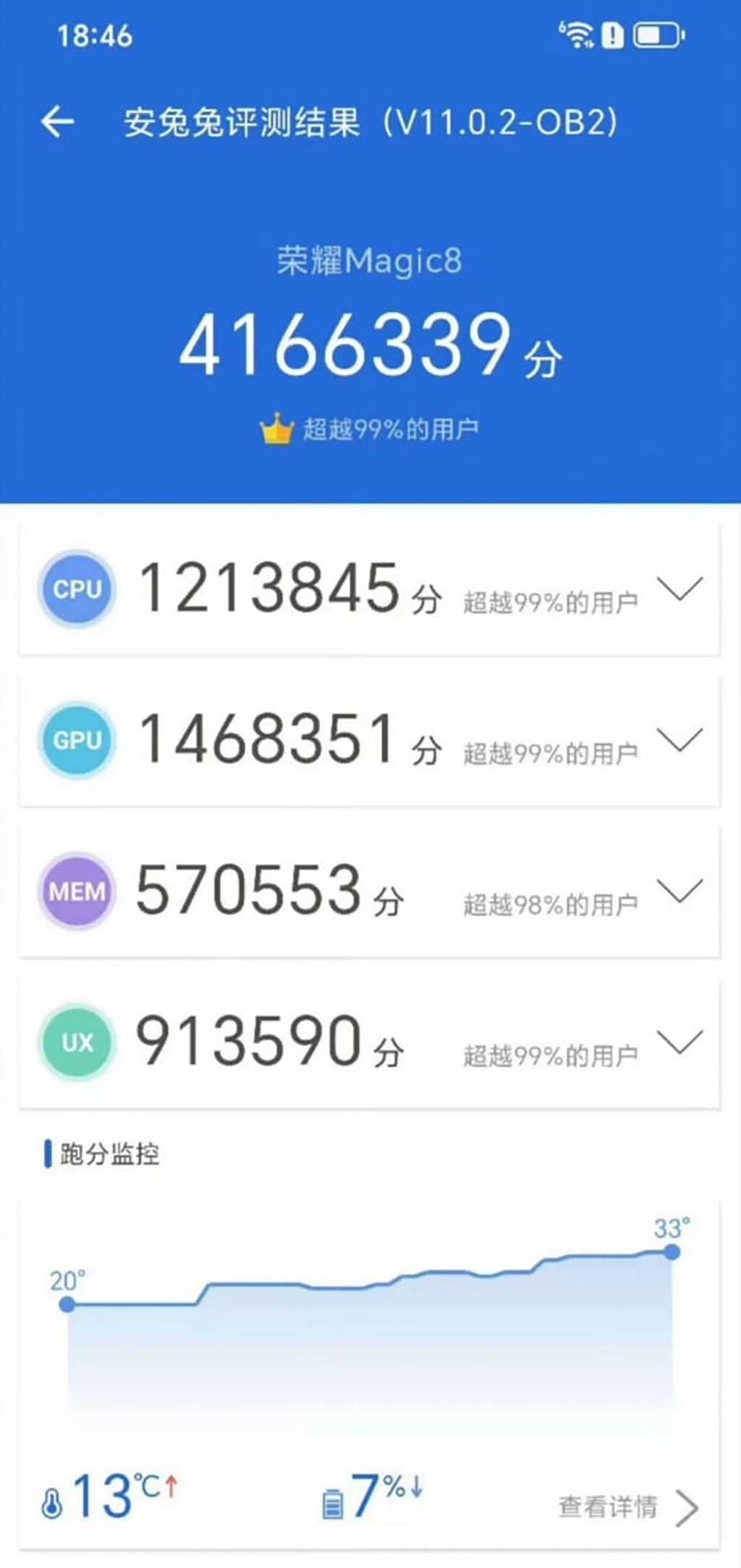
Today, a number of Weibo tipsters revealed the Honor Magic 8 phone’s AnTuTu score. At room temperature, the device’s real operating points are 4.16 million.
To surpass the performance score on AnTuTu by more than 4 million is a significant accomplishment for the flagship model. It implies that the Magic 8 series will provide users with reliable and smooth operation in every way.
The CPU, GPU, MEM, and UX scores are highlighted while looking at the AnTuTu listing. All of these scores are available for review below, along with the key points.
Honor Magic 8: AnTuTu Score
Total Points: 4166339
CPU: 1213845
GPU: 1468351
MEM: 570553
UX: 913590
The 5th generation Snapdragon 8 Elite chip will be available in Honor’s devices. It has a full-core architecture with two Oryon v2 super cores operating at 4.6GHz and six performance cores operating at 3.62GHz, and it is based on the TSMC 3nm technology.
One of the company’s execs even asserted that, in comparison to competitors like Xiaomi, the Honor Magic 8 series will provide the finest Snapdragon chipset experience.
“What do you think of Xiaomi’s first LOFIC technology? The next Honor Magic 8 series is coming, and it is also equipped with the same chip. Honor has always been very powerful in Snapdragon optimization. Will this Honor optimization achieve any better results?” – said Honor Li Kun.
Leaks of the Magic 8 smartphones have started to reveal additional features and technological possibilities. It’s possible that the business is prepared to launch its premier lineup by mid-October.
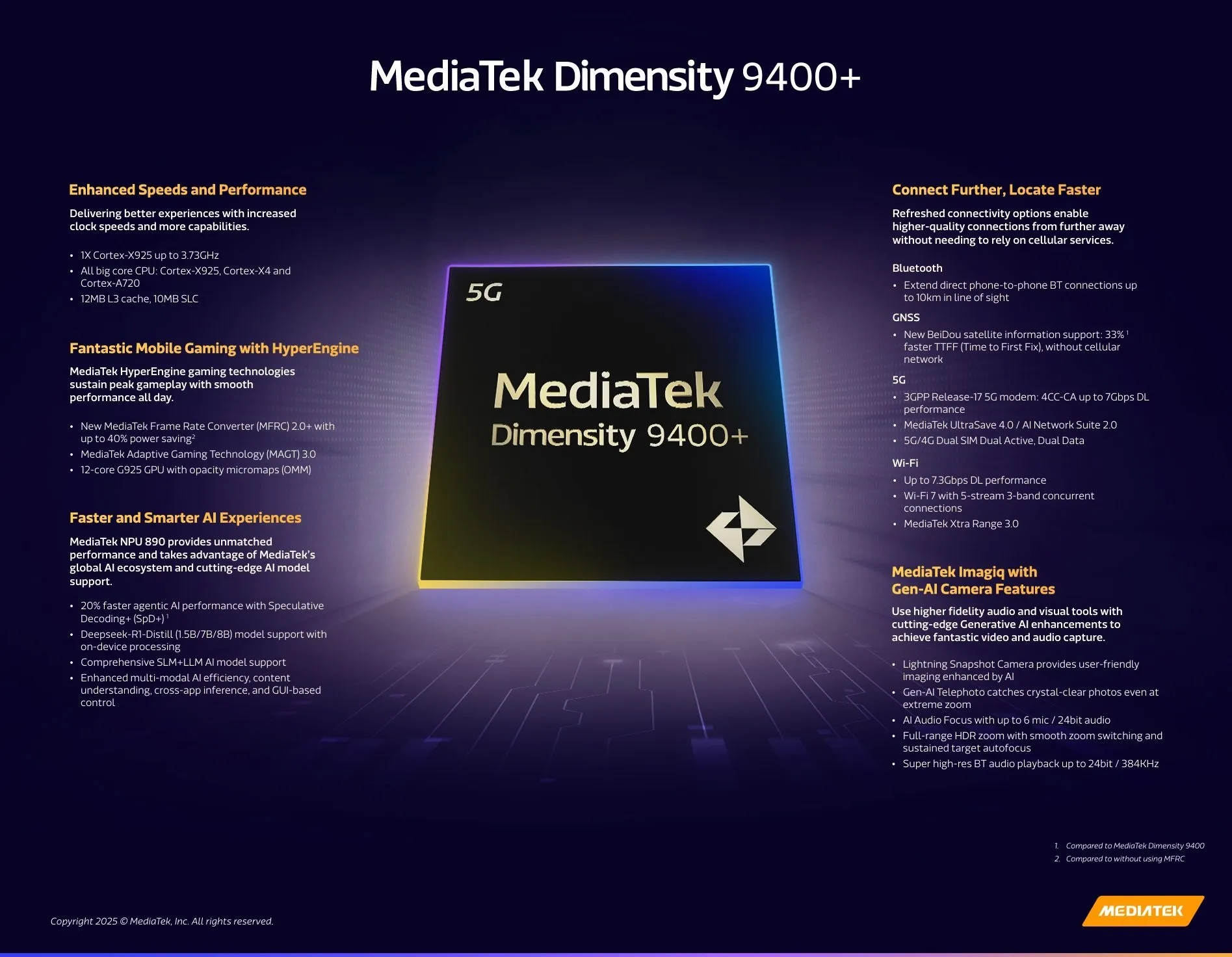
The flagship chipset, the Dimensity 9400+, was revealed in April as the replacement for the Dimensity 9400 from the previous year. It is constructed with TSMC’s state-of-the-art 3nm technology and has a powerful CPU and GPU that guarantee seamless operation even under demanding conditions.
To discover how the flagship-grade MediaTek Dimensity 9400+ chipset compares to its rivals, we’ll be examining its benchmark scores here.
Note: The Vivo X200s (powered by MediaTek Dimensity 9400+) underwent the following benchmark testing.
MediaTek Dimensity 9400+ AnTuTu score
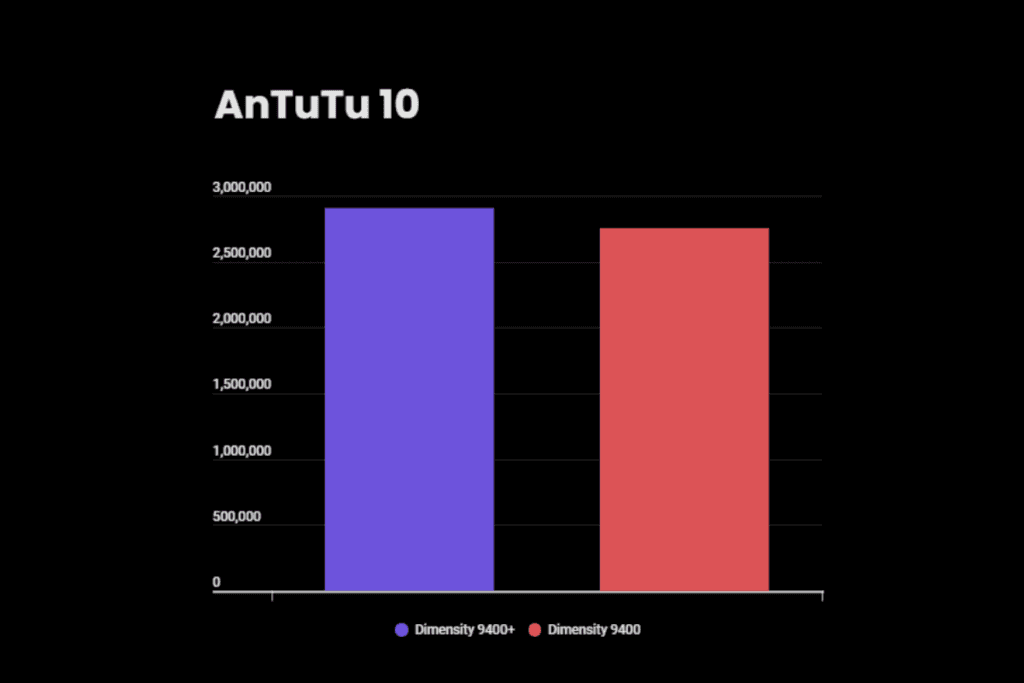
The Dimensity 9400+ receives more than 2.9 million points overall on AnTuTu v10. According to the breakdown, the CPU receives 625K points, the GPU receives 1.3 million, the memory receives 509K, and the user interface receives 459K.
In contrast, the Oppo Find X8, which is powered by the Dimensity 9400, has an overall AnTuTu score of about 2.7 million. There isn’t much of a difference between the two AnTuTu scores for the more recent chip.
Dimensity 9400+
Dimensity 9400
AnTuTu score
2,907,358
2,754,825
CPU
625,811
622,149
GPU
1,312,632
1,220,751
Memory
509,570
489,110
UX
459,344
422,815
Dimensity 9400+ Geekbench score
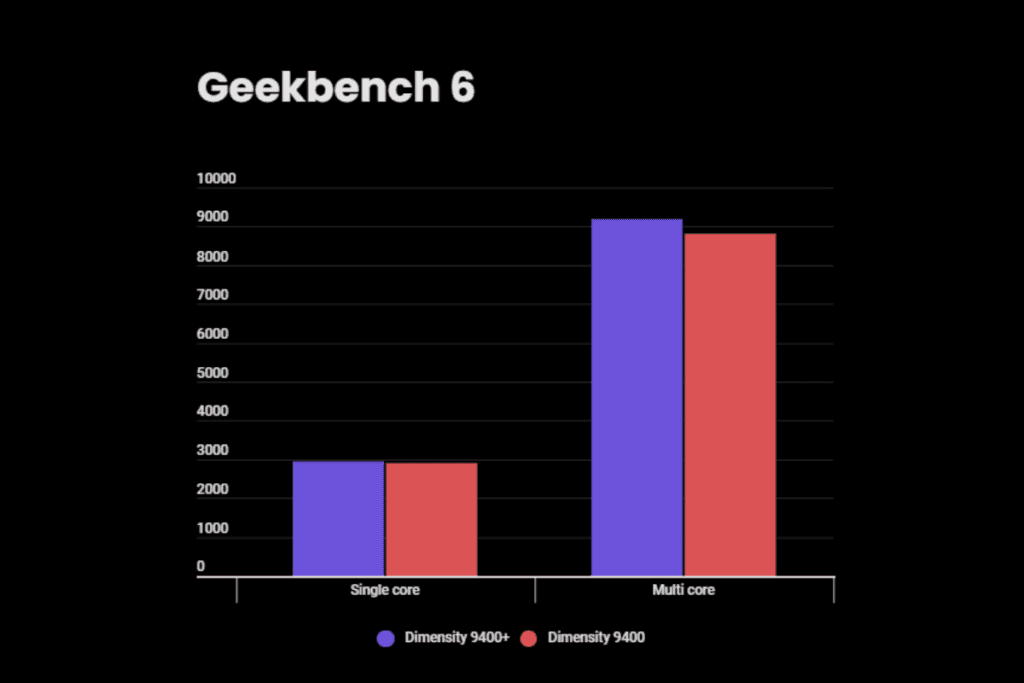
The Dimensity 9400+ receives 2,945 single-core and 9,184 multi-core marks in Geekbench 6. Once more, the Dimensity 9400, which boasts 2,904 single-core and 8,812 multi-core scores, is not a much better processor.
Dimensity 9400+
Dimensity 9400
Single core
2,945
2,904
Multi core
9,184
8,812
MediaTek Dimensity 9400+
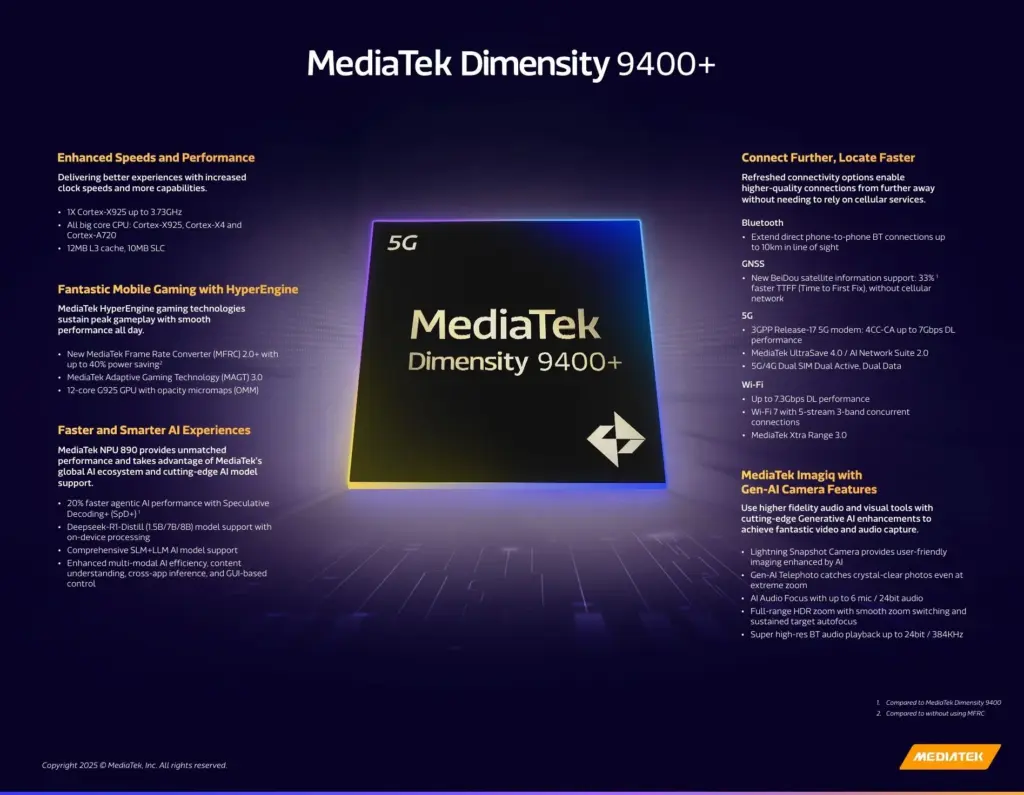
Compared to the Dimensity 9400, the Dimensity 9400+ isn’t much better. With the exception of a little boost in CPU speed for the big core, it still makes use of the same set of CPU cores—one Cortex-X925, three Cortex-X4, and four Cortex-A720. The manufacturing node (TSMC’s 4nm) and instruction set (ARMv9.2-A) remain unchanged.
The Mali-G9125 Immortalis MP12, which is based on ARM’s fifth-generation GPU architecture, offers no improvements at all. The MediaTek Frame Rate Converter tool has been improved, though not significantly. In well-known games, the updated version can provide twice the effective frame rate while also increasing power efficiency by up to 40%.
MediaTek would undoubtedly not miss out on the widespread use of agentic AI, as the Dimensity 9400+ offers a 20% quicker agentic AI performance than its predecessor with Speculative Decoding (SpD+). With on-device processing, the chip fully supports the DeepSeek-R1-Distill (1.5B/7B/8B) model.
With the exception of the newer Dimensity 9400+ chip, which increases phone-to-phone Bluetooth connections from 1.5km to 10km, connectivity isn’t getting any major changes. Everything else is the same, so it has a 3GPP Release-17 5G modem, Bluetooth 6.0, and Wi-Fi 7 (peak speed 7.3Gbps).
Dimensity 9400
Info
Announced
April 2025
Process node
3nm (TSMC)
CPU
1 x Cortex-X925 — 3.73GHz 3 x Cortex-X4 — 3.3GHz 4 x Cortex-A720 — 2.4GHz
GPU
Arm Immortalis-G925 MC12 MediaTek HyperEngine Gaming Ray tracing support
NPU
MediaTek NPU 890
Camera
MediaTek Imagiq 1090 ISP Up to 320MP single camera Up to 8K/60fp video recording Features: Gen-AI Telephoto, Full range HDR zoom, real-time AI segmentation in video
Stay connected with the latest from Droid Tools—follow us on X @droid_tools, like our page on Facebook, check out our updates on Instagram, and follow us on Google News for real-time news, device tips, and mobile tech insights.
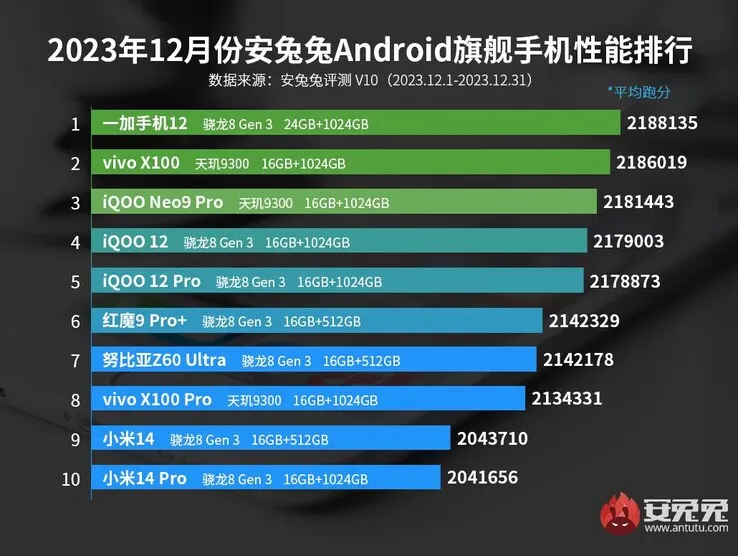
The two main flagship chipsets for Android this year are expected to be MediaTek’s Dimensity 9300 and Qualcomm’s Snapdragon 8 Gen 3. Both chipsets seem to deliver comparable performance, but AnTuTu’s most recent results suggest that the Dimensity 9300 in the new Vivo X100 has a slight advantage over the OnePlus 12 and its Snapdragon 8 Gen 3.
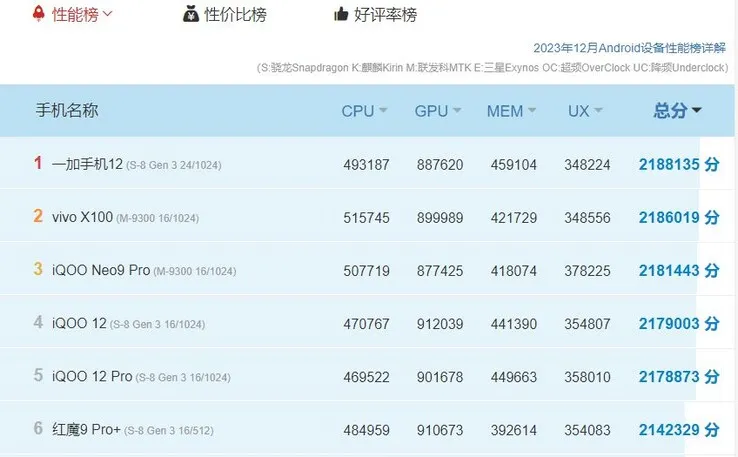
A closer look at the numbers reveals that the Dimensity 9300 outperforms the Snapdragon 8 Gen 3, with the MediaTek chipset scoring higher in the CPU and GPU tests. At first glance, the reverse seems to be true, with the OnePlus 12 ranking first with a total score of 2,188,135. The Vivo X100 comes in second with a score of 2,186,019.
The OnePlus 12 scores 493,187, whereas the Vivo X100 and its Dimensity 9300 register 515,745, indicating a roughly 5% CPU advantage for the MediaTek chipset. The difference is less pronounced in the GPU category, where the Vivo X100 scores 899,989, while the OnePlus 12 scores 887,620. Nevertheless, other Snapdragon 8 Gen 3-powered devices, such as the iQOO 12 duo, marginally outperform the Vivo X100 in this regard.
Evidently, the Dimensity 9300 edges over the Snapdragon 8 Gen 3 in both the CPU and GPU tests. The OnePlus 12 having the higher AnTuTu total score is completely down to it having superior memory, with the reported 24 GB of RAM earning it a higher score in the memory test than the Vivo X100’s 16 GB of RAM.
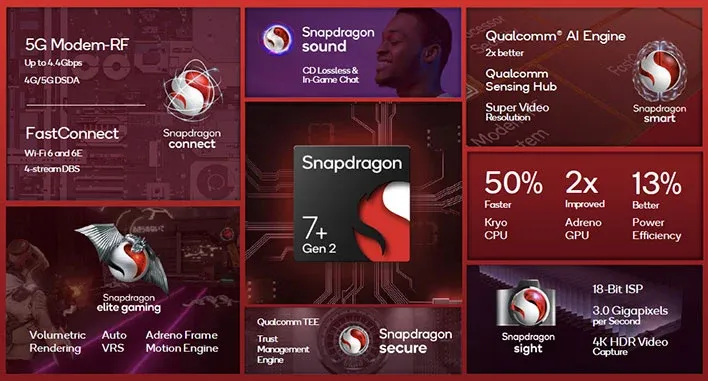
This week, Qualcomm unveiled the Snapdragon 7 Plus Gen 2, which is obviously a significant improvement over the mid-range Snapdragon 7 series on paper.
A single Cortex-X2 core running at 2.91 GHz, three Cortex-A710 cores running at 2.49 GHz, and four Cortex-A510 cores operating at 1.8 GHz make up the new chipset’s amazing CPU system, which is reminiscent of the Snapdragon 8 Gen 1 series. The Cortex-X CPU core is now present in a Snapdragon 7 series chipset for the first time. Moreover, Qualcomm claims that the Adreno GPU has been updated and will perform twice as well as the Snapdragon 7 Gen 1 did.
What does this all mean in terms of actual performance, though? We were able to benchmark a Snapdragon 7 Plus Gen 2 reference handset ahead of launch to get a better idea of what to expect.
Design
Obviously, the reference devices from Qualcomm are not smartphones. In essence, these are test versions intended for internal use. It’s important to remember that although this specific device is rather slim, reference designs often have a tendency to be fairly thick when compared to commercial handsets. But, due to software, cooling systems, and various designs, we are still anticipating diverse results for commercial devices.
Nonetheless, the Qualcomm reference design features a 4,192mAh battery, a 6.65-inch 144Hz OLED screen in FHD+, 12GB of LPDDR5 Memory, and 256GB of UFS 3.1 storage. Moreover, the phone lacks an active cooling system like a fan.
Snapdragon 7 Plus Gen 2 tests
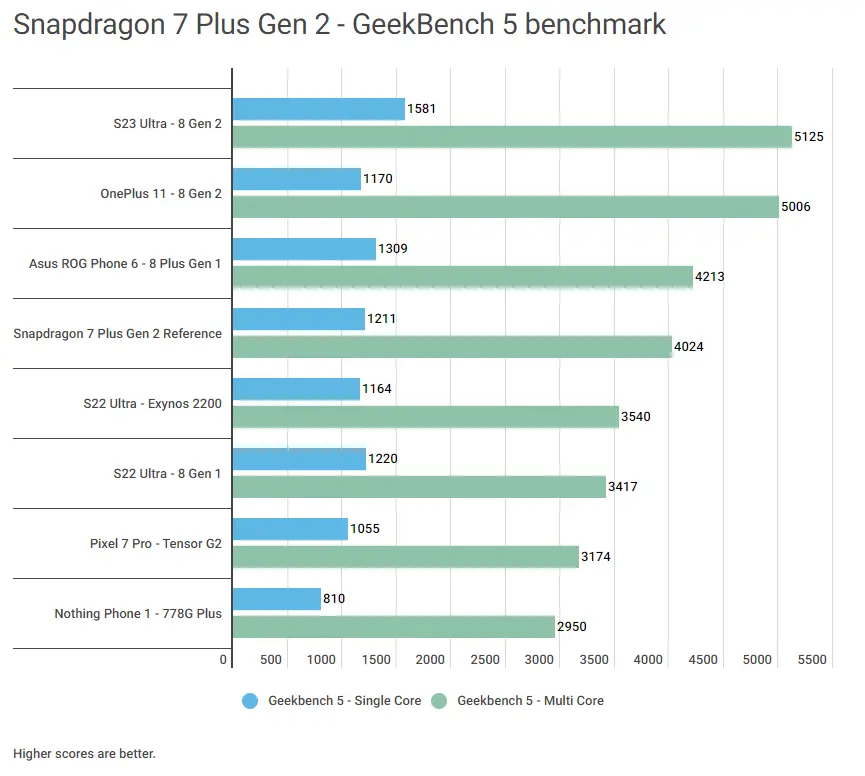
Since all three chipsets use the same CPU cores, we anticipated CPU-related results to be comparable to those of the Snapdragon 8 Gen 1 family going into this. Due to greater Processor clock speeds, nevertheless, we might anticipate the Snapdragon 8 Plus Gen 1 to have a slight advantage.
The normal Snapdragon 8 Gen 1 is a particularly interesting comparison because it is made using the lesser 4nm Samsung technology, whereas the 7 Gen 2 uses the superior 4nm TSMC process. Our research demonstrates that, at least in part as a result of the move from Samsung to TSMC, the Snapdragon 8 Plus Gen 1 enjoys a significant performance and efficiency increase. Let’s examine the 7 Plus Gen 2 to determine if the same is the case.
Furthermore, in single-core tests, the Snapdragon 7 Plus Gen 2 reference phone defeats the Exynos 2200-equipped and Snapdragon 8 Gen 1 S22 Ultra and even edges out the OnePlus 11 powered by the Snapdragon 8 Gen 2. To maximize efficiency, OnePlus is extremely careful with single-core performance in the latter circumstance. Yet the S23 Ultra, which has less restrictions, outperforms rivals like the recently released Snapdragon 7.
The reference design manages to outperform every Snapdragon 8 Gen 1 device on the list when looking at multi-core CPU results. Also, it has a score that is comparable to smartphones with Snapdragon 8 Plus Gen 1. However Qualcomm’s most recent flagship 8 Gen 2 chip continues to hold a significant lead.
Overall, it appears that, in terms of CPU performance, the Snapdragon 7 Plus Gen 2 is competitive with the Snapdragon 8 Gen 1 across the board. The Snapdragon 8 Plus Gen 1 phones, meanwhile, are also not far behind. The somewhat quicker CPU clock rates and possibly different cache capacities could account for this.
GPU testing
The question of graphical performance is a murkier one on paper, owing to the closed-box nature of the Adreno GPU architecture. However, Qualcomm has noted that the Snapdragon 7 Plus Gen 2 enjoys a two-fold performance boost over the Snapdragon 7 Gen 1. How does this compare to flagship silicon, though?
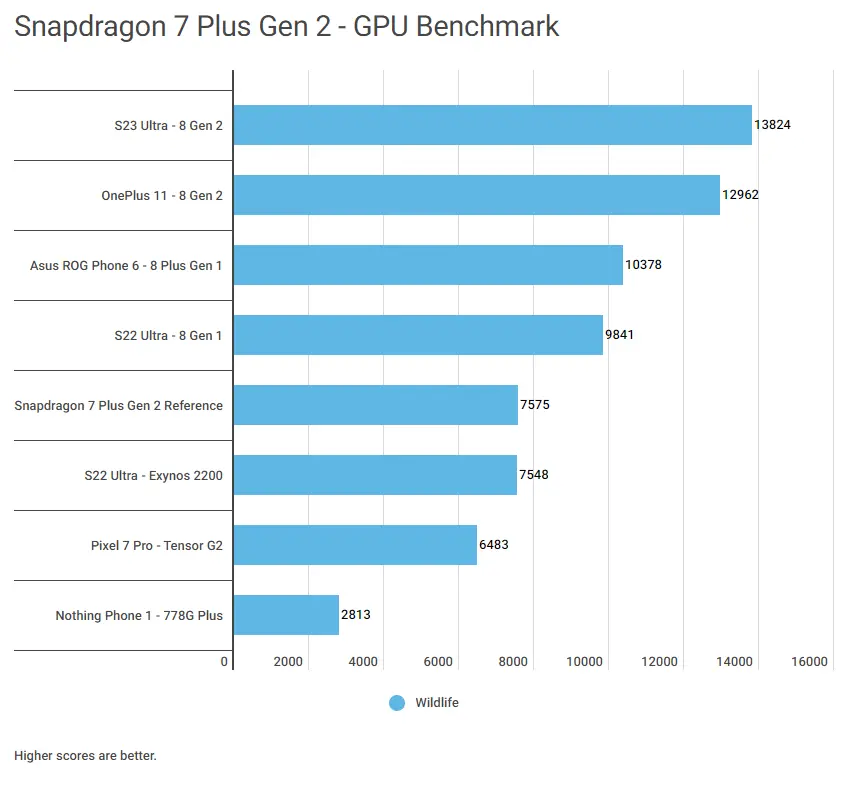
Comparing mid-range chipsets to their flagship counterparts, mid-range chipsets often perform worse in the GPU domain, and the traditional 3DMark Wild Life test confirms this is still the case. The 7 Plus Gen 2 reference design and the Snapdragon 8 Gen 1 series as a whole have significantly different scores.
Thankfully, the Snapdragon 7 Plus Gen 2 easily surpasses the Arm Mali GPU of the Pixel 7 Pro while matching the high-end AMD GPU of the Exynos 2200. Moreover, the reference design score indicates that the Snapdragon 778G Plus GPU in the Nothing Phone 1 offers 2.7x the GPU performance.
This score highlights that Snapdragon 7 Plus Gen 2 phones can handle today’s demanding games at respectable frame rates. Demanding gamers might still want a phone with a Snapdragon 8 Gen 1 series or Snapdragon 8 Gen 2 processor for advanced games down the line, but this is a significant win for the mid-tier chipset nonetheless.
Snapdragon 7 Plus Gen 2 stress testing
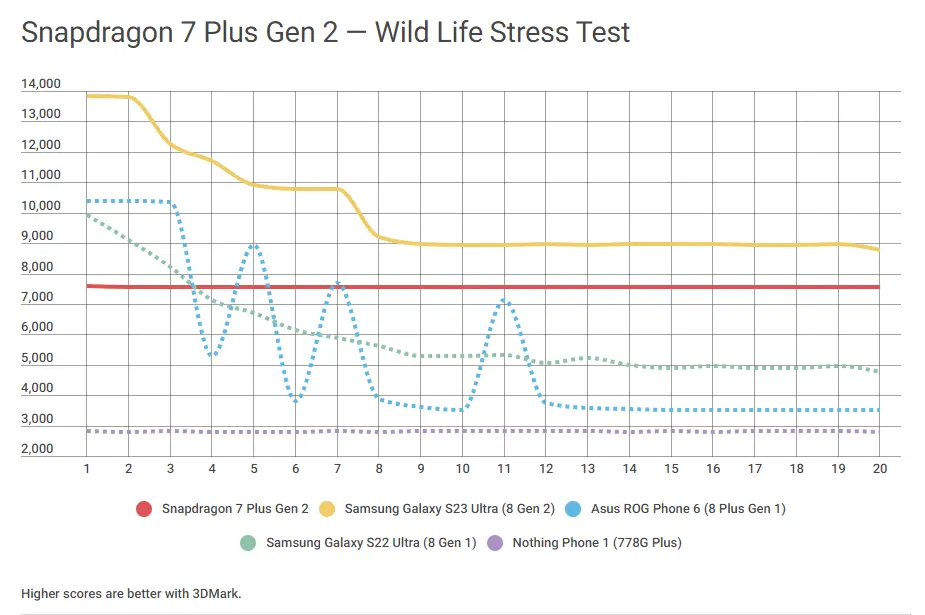
One-off GPU testing is one thing, but a lot can be gleaned from stress tests. We subjected the Snapdragon 7 Plus Gen 2 device to a 3DMark Wild Life Stress Test to get a better idea of sustained performance.
The stress test results make for very interesting reading, as the Snapdragon 7 Plus Gen 2 reference device displays rock-solid stability of 99.76%. In fact, this stability means that the Snapdragon 7 Plus Gen 2 handset can beat the Galaxy S22 Ultra (Snapdragon 8 Gen 1) when put under extended stress. Needless to say, the Nothing Phone 1 and its Snapdragon 778G Plus chipset is far behind as well.
What’s particularly intriguing is that over the course of the stress test, the Snapdragon 7 Plus Gen 2 smartphone closed the gap with the Galaxy S23 Ultra and its Snapdragon 8 Gen 2 chipset. This is primarily because the Galaxy handset only maintained 64.6% stability; other 8 Gen 2 handsets performed better.
Although the cynic in us suspects that commercial phones equipped with this chipset may not be as reliable, it still augurs well for prolonged play sessions.
Overall thoughts
Benchmarking reveals that we’re looking at a chipset that’s at least as powerful as the Snapdragon 8 Gen 1 from a CPU perspective. That’s no mean feat, and it’s a good sign for those who value speed, be it for everyday performance or those who intend to keep their phones for a few years.
Even when compared to more recent flagship chips, mid-range processors typically show a sizable GPU performance disparity. The bad news is that, in one-off GPU testing, the Snapdragon 7 Plus Gen 2 is not really an exception. Between Qualcomm’s mid-range and flagship chips, there is still a significant disparity. The less powerful GPU, however, was able to surpass Google and Samsung’s flagship CPUs.
The good news is that the 4nm TSMC architecture and purportedly lower GPU clock speed suggest that we could be looking at rock-solid sustained performance in this case. In a stress test, the chipset can even defeat some Snapdragon 8 Gen 1 series smartphones.
Again, this is just a reference design, but those on the hunt for sustained gaming performance on a budget should keep an eye on phones with the Snapdragon 7 Plus Gen 2. Fortunately, we won’t have to wait too long, as Qualcomm confirmed that the first phones are coming this month. The company also name-dropped Redmi and realme as brands working on devices with this chipset.