Category: OS

In‑depth coverage of any OS, new features, privacy tools and ecosystem changes to keep your devices current and secure.

  • HyperOS 2.1 update rolled out to seven Xiaomi devices

    HyperOS 2.1 update rolled out to seven Xiaomi devices

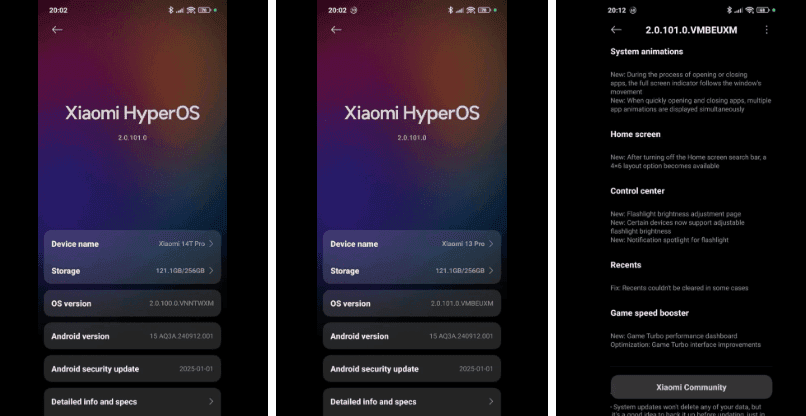
    Xiaomi keeps updating more of its devices to HyperOS 2.1 in an effort to reach a larger audience with the newest features and enhancements. The Chinese company just released an update for seven Xiaomi devices.

    The latest recipients of HyperOS 2.1 include some high-end Xiaomi phones, a Xiaomi tablet, and affordable Poco phones. Here’s the list:

    • Xiaomi 14 Ultra
    • Xiaomi 14T Pro
    • Xiaomi 13 Pro
    • Xiaomi Pad 6S Pro 12.4
    • POCO X6 Pro 5G
    • Poco F6
    • Xiaomi 13 Ultra

    You may be able to install the HyperOS 2.1 upgrade if you own any of these Xiaomi devices. Open the Settings app, select About Phone, and then hit the HyperOS logo to see whether there is a new update available. To find out if your device has an update available, click Check for updates.

    A number of internal improvements have been made in the latest HyperOS 2.1 software to enhance the user experience and animations. Voice chats without an internet connection are also possible with the new Networkless mode. In places with inadequate connectivity, this function enables users to converse efficiently.

    Xiaomi’s device connect prompts have been improved. Additionally, the file transfer function has been enhanced to provide a smooth experience. Better night vision is one of the camera enhancements brought about by the HyperOS 2.1 software. Additionally, the update enhances imaging performance in a range of lighting settings and snapshot capabilities.

    The update also brings a redesigned album layout and new album display columns. The search functions have also been improved. Xiaomi has also made improvements to the image recognition capabilities for the circle to search feature. The Gaming Toolbox now has a performance dashboard and offers an enhanced gaming experience.
  • Google Pixel March update – fixed bugs and more

    Google Pixel March update – fixed bugs and more

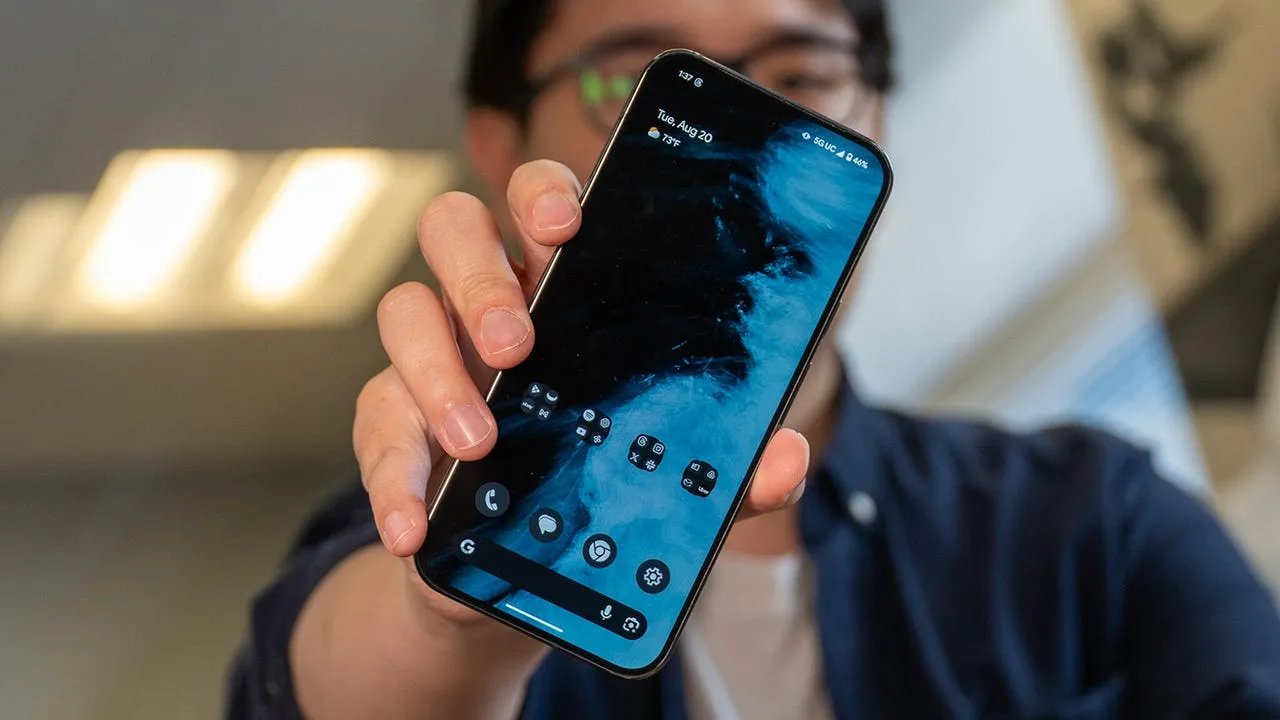
    Google’s March update bug list, which is already being rolled out to compatible devices, has been made public. Even if it is a short list, it is nevertheless wise to keep in mind in case you have been dealing with any of these problems.

    Although not every device is receiving the identical set of changes, these fixes are applicable to devices as far back as the Pixel 6 series. For instance, Google claims updates for Bluetooth headset loudness issues, camera stability, and display stability, among other things. You can use the number that corresponds to each item on the list to determine which device the fix is for.

    Pixel Update – March Bug Fixes

    Apps

    • Fix for stability or performance with certain apps using WebView

    Audio

    • Fix for issues with adjusting call volume on calls over BT headsets]

    Camera

    Display & Graphics

    • Fix for display stability and performance in certain conditions

    System

    Telephony

    • General improvements for network connection stability and performance in certain conditions

    User Interface

    • Fix for issue occasionally causing color theme in launcher preview to not match with the selected wallpaper in certain conditions
    • Fix for issue with home screen icons to appear transparent after unlocking or switching apps in certain conditions
    • Fix for issue with switching between apps when using third party launchers in certain conditions
    • Fix for issue with themed icons in certain conditions
    • General improvements for performance and stability in certain UI transitions and animations

    Fixes are available for all Pixel devices that are supported. Certain fixes can be region/carrier specific.

  • Samsung Galaxy S23 series receive One UI 7 and Android 15 in US

    Samsung Galaxy S23 series receive One UI 7 and Android 15 in US

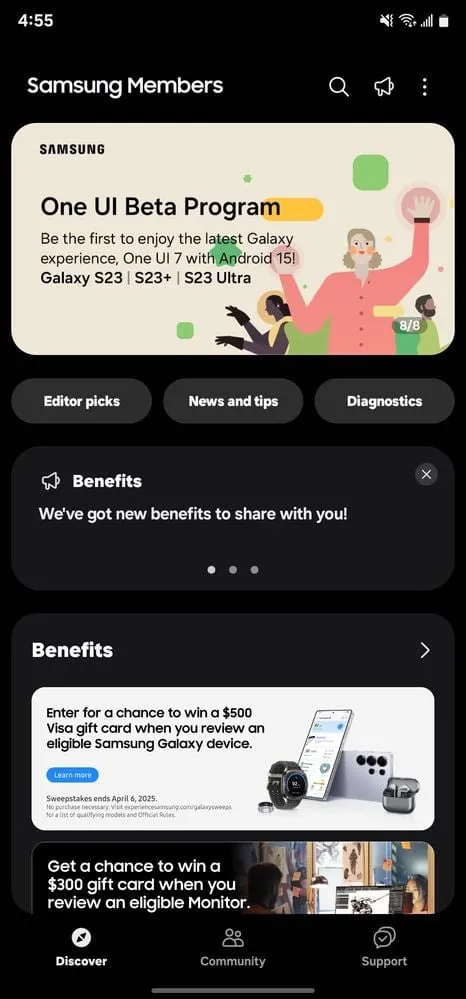
    After Korea and India, Samsung has extended the One UI 7 Beta Program for the Galaxy S23 series to the United States. Before the official release, users can try One UI 7 features with this program.

    The One UI 7 Beta update is now available for installation in the United States for users of the Galaxy S23, Galaxy S23 Plus, and Galaxy S23 Ultra. All T-Mobile (locked) and unlocked phones in this series can get the update.

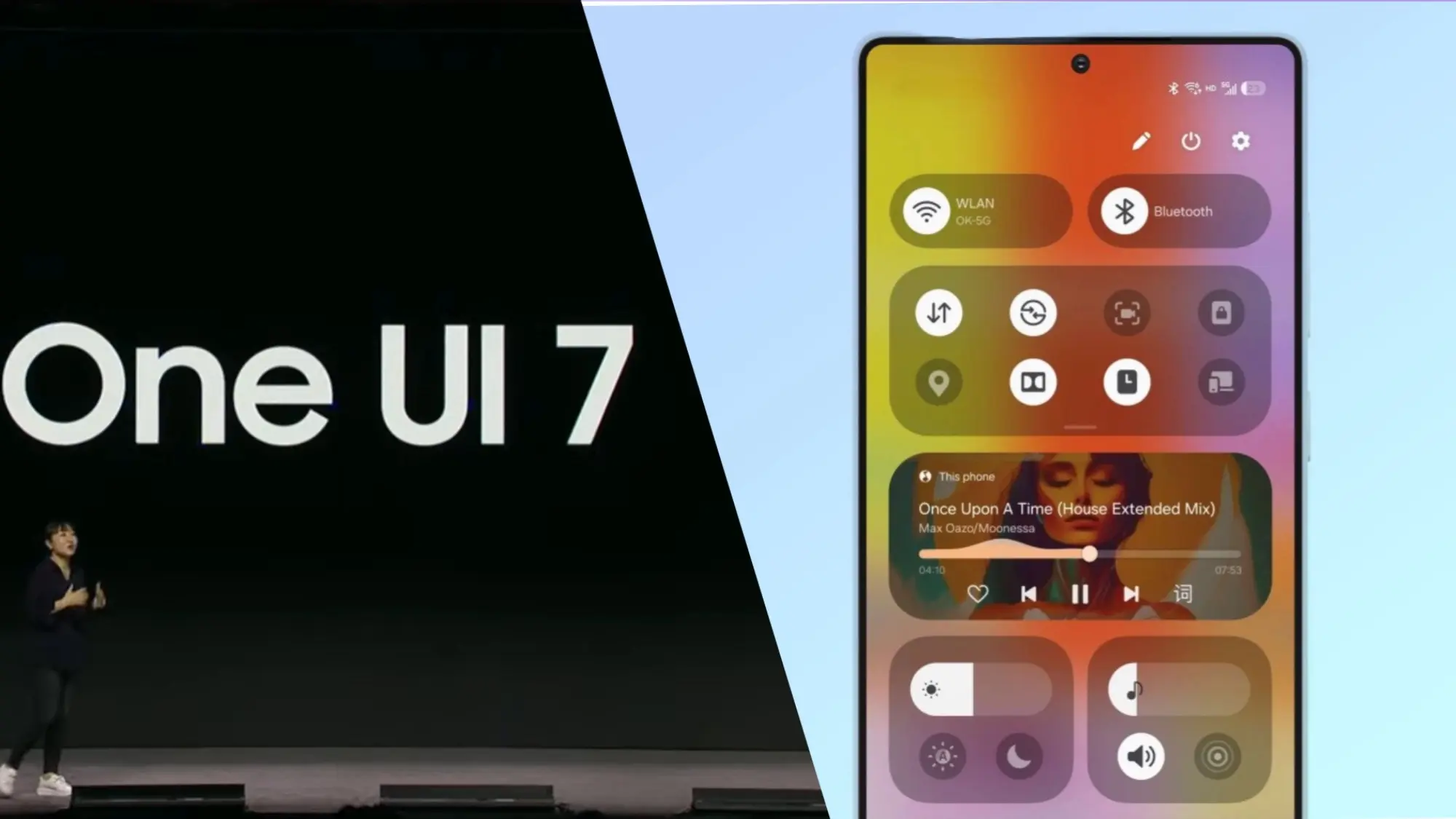
    Based on Android 15, the One UI 7 Beta upgrade offers exciting new features and enhancements to improve the user experience. It features a new Now Bar for convenient access to key information, a revised interface with new icons, and a separate quick settings panel for speedier alterations.

    One UI 7

    To provide an alternative method of app organization, the app drawer is now vertical. You can also add additional widgets to your home screen. More customization options are now available on the lock screen and home screen, and the camera app has been updated with new capabilities to enhance your experience taking pictures and videos. Several AI elements are included in One UI 7 to increase the intelligence of your device.

    You can participate in the Beta Program to test these features before others do if you own a Galaxy S23. Just launch the Samsung Members app, sign in using your Samsung Account, and adhere to the guidelines in the Beta section to enlist. Download the update by going to Settings >> Software Update >> after enrolling. Install after downloading.

  • Xiaomi accidentally discloses the release date for HyperOS 2.2.

    Xiaomi accidentally discloses the release date for HyperOS 2.2.

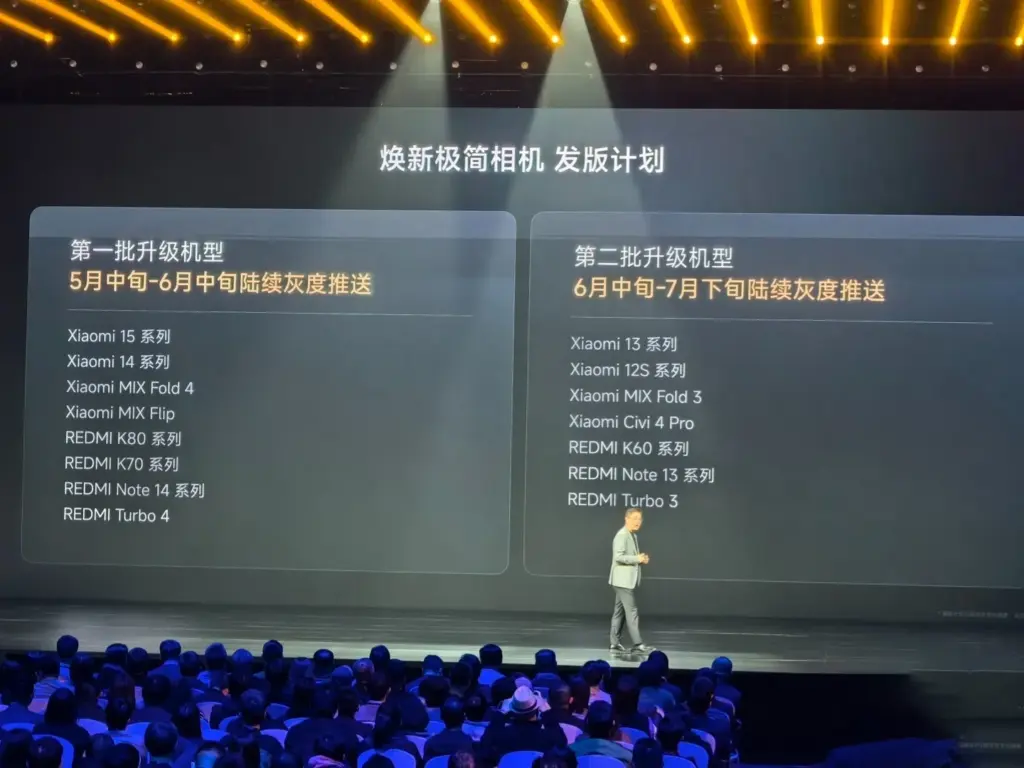
    Although Xiaomi has been working on HyperOS 2.2 in the background, the release date may have been unintentionally disclosed. Xiaomi just released a description of how it plans to roll out its new, minimalist camera app, which debuted alongside the Xiaomi 15 Ultra. However, a closer examination of the camera update’s deployment schedule suggests that HyperOS 2.2 might be released earlier than anticipated.

    HyperOS 2.2 launch date

    HyperOS 2.2 development is underway

    Based on Xiaomi’s standard rollout plan, the following can be expected:

    • Late April 2025: Mi Pilot releases of HyperOS 2.2
    • Early May 2025:  Stable releases of Mi Pilot
    • Mid-May 2025: Flagship devices stable release rollout
    • Jun–Jul 2025: Wider rollout to other models

    This is in line with Xiaomi’s previous actions. For instance, the new Game Turbo capabilities were introduced with the REDMI K80 series and were available on all HyperOS 2.1-compatible devices. The new simple camera app, which will come pre-installed on HyperOS 2.2, will experience the same thing.

    image 1

    Mid-May to Mid-June 2025

    • Xiaomi 15 Series
    • Xiaomi 14 Series
    • Mi Mix Fold 4
    • Mi MIX Flip
    • Redmi K80 Series
    • Redmi K70 Series
    • Redmi Note 14 Series
    • Redmi Turbo 4

    Mid-June through Late July, 2025

    • Xiaomi 13 Series
    • Xiaomi 12S Series
    • Xiaomi MIX Fold 3
    • Xiaomi Civi 4 Pro / Xiaomi 14 CIVI
    • Redmi K60 series
    • Redmi Note 13 series
    • Redmi Turbo 3 / POCO F6 series

    What to Expect in HyperOS 2.2

    Xiaomi has not yet formally confirmed all of the new features, but the following are some anticipated additions:

    • Simplified Camera UI – An overhauled interface with enhanced user experience
    • New AI Features – More sophisticated photo and video processing
    • Optimized Performance – Better efficiency and enhanced handling of memory
    • Enhanced Game Turbo 6.1 – More mobile gaming improvements
    • System-wide UI Adjustments – Slight design improvements and smoother animations

    In the near future, Xiaomi customers may anticipate some amazing new features as version 2.2 is a significant update.

  • ArkUI and other improvements available in Huawei HarmonyOS 5.0.3 Beta 2

    ArkUI and other improvements available in Huawei HarmonyOS 5.0.3 Beta 2

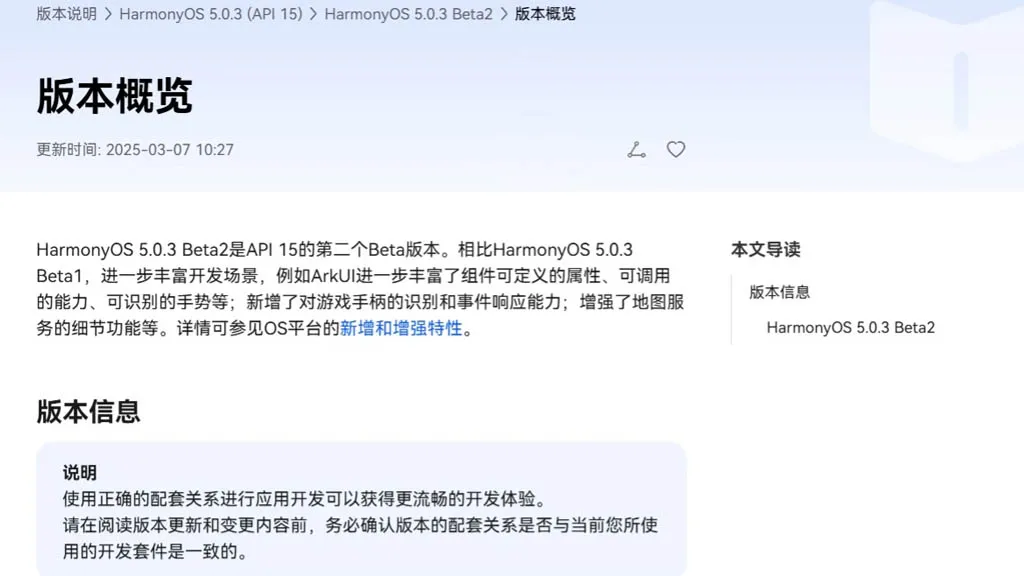
    With an extensive list of new features and improvements, Huawei has made the HarmonyOS 5.0.3 beta 2 rollout available to developers. Numerous areas have been enhanced by the company, such as ArkData, ArkUI, AppGallery Kit, Camera Kit, Core File Kit, and more.

    Also, it has expanded these segments’ capabilities to improve internal management and developers’ overall experience. The new HarmonyOS 5.0.3 Beta 2 was created by the Chinese phone manufacturer using API 15. In comparison to the previous edition, it significantly redesigns the development scenarios.

    harmonyos with arkui framework

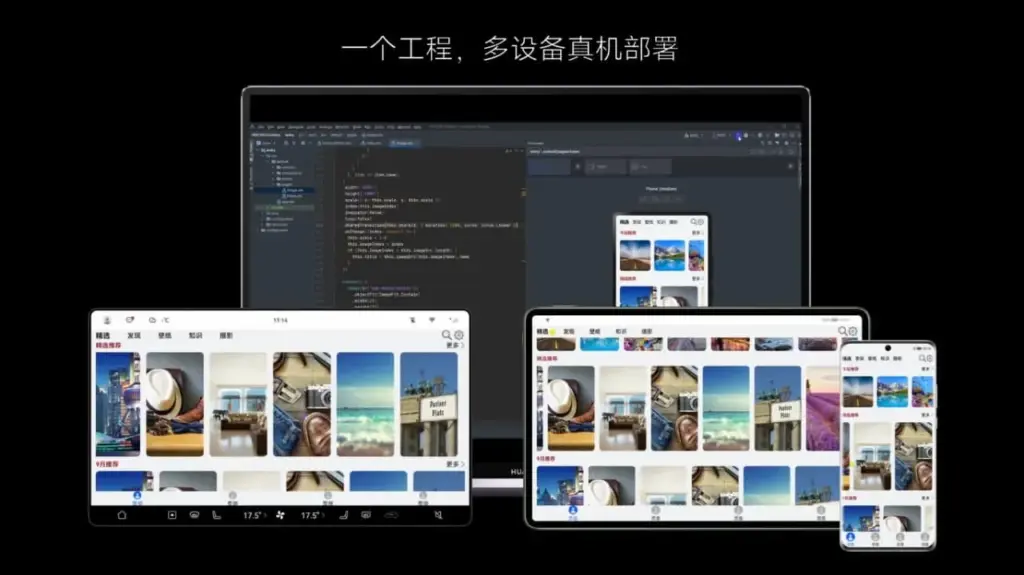
    Mainly ArkUI improves the responsiveness, callable capabilities, and customizable attributes for map services and game controllers. Only because of its graphical repercussions for the development of HarmonyOS 5.0.3 have we brought up the ArkUI in the vast changelog. The complete changelog is available at the source link below.

    harmonyos 5.0.3 Beta2

    HarmonyOS 5.0.3 Beta 2: ArkUI Changes

    • The basic component now supports the ability to insert text at a specified location in the edited text and delete the content in a specified area.
    • The focus axis event has been added to the general events to support responses to game controller axis events. The C API also supports obtaining the value of the operation type of the current axis event.
    • The pattern password lock component now supports setting whether unselected grid dots are automatically selected when the password path passes through them.
    • Window Management A new C API for window management is defined, which is mainly used to set and get the properties of a specified window, as well as to set the status bar style and navigation bar style of a specified window.
    • The Image component now supports color filling that can overwrite the original color. This feature is only available for image sources in SVG format.
    • The Image component now supports automatic transformation based on the image matrix, providing automatic transformation optimization when presenting grid-type thumbnails in scenes similar to galleries.
    • The Tabs component and Swiper component now support setting the mouse wheel page turning mode.
    • NavDestination adds support for callbacks when events return, which is used to pass parameters when events return.
    • The TextPicker component now supports configuring the text style of each selection item.
    • The Progress component adds a new C API to support the setting of the linear progress bar style.
    • The folding screen state enumeration in the screen property module adds multiple state definitions for the folding axis 2.
    • The Node attribute style of the C API adds the background blur effect attribute NODE_BACKDROP_BLUR.
    • FrameNode now supports cross-language capabilities.
    • FrameNode now supports the expansion mode of child nodes when traversing nodes.
    • Size settings now support setting width and height to adapt to the parent component layout.
    • Text components now support shortcut key tips (labelInfo) in TextMenuItem.
    • The three types of pop-up components now support setting the pop-up display level and related properties and effects (levelMode, levelUniqueId, immersiveMode).
    • BindSheet adds support for the radius property, which is used to set the radius of the semi-modal page corners, and adds support for the detentSelection property, which is used to set the non-gesture switching position.
    • Added a new navigation point component, providing two navigation point styles: dot navigation point and digital navigation point.
    • The Swiper and Tabs components now support animated transitions.
    • The Swiper component now supports sliding behavior interception events, which can determine whether sliding behavior is allowed. The C API controls this through a property named NODE_SWIPER_EVENT_ON_CONTENT_WILL_SCROLL.
    • Third-party platforms have added support for finding the previous or next focus (ARKUI_ACCESSIBILITY_NATIVE_ACTION_TYPE_NEXT_HTML_ITEM, ARKUI_ACCESSIBILITY_NATIVE_ACTION_TYPE_PREVIOUS_HTML_ITEM) when they are connected to the ArkUI accessibility framework.
    • The third-party platform is connected to the ArkUI accessibility framework to add support for multi-instance scenarios.
    • The NavDestination component information of the ohos.arkui.observer module adds the NavDestination type and uniqueId.
    • Added support for C API screenshot capability.
    • UIContext now supports getting screenshots of loaded components by unique Id.
    • UIContext now supports the ability to obtain the layout information of the meta-service menu bar relative to the window.
    • New C API for common events supports obtaining the ID of the current touch event trigger.
    • A new interface with the same name has been added to the window for 2-in-1 devices to set application window size limits.
    • A new interface of the same name is added to the window for specifying the position of the mouse within the window and moving the window.
    • The window adds an asynchronous callback for the window close event monitoring of 2-in-1 devices.
    • The window now supports enabling the monitoring of picture-in-picture window size change events.
    • The window now supports dynamically setting the title of the window title bar.
    • The window now supports setting the main window’s support modes (full screen, floating window, split screen, etc.).
    • NavDestination now supports setting whether to hide the back button in the title bar.
    • Added C API support for controlling focus and handling focus events.
    • Added C API to support forwarding of clone events.
    • The Popup component adds the keyboardAvoidMode property to set whether the Popup bubble avoids the soft keyboard.
    • The pop-up window now supports setting the distance to avoid the keyboard. The ArkTS API is provided as attributes. You can search for the keyword keyboardAvoidDistance in the table pointed to by the link.
    • The attribute string now supports the settings of ResourceStr type images.
    • The attributed string image object now supports obtaining the attributed string image color filter effect (colorFilter).
    • The drag capability now supports obtaining the drag data of the drag progress bar.
    • The component screenshot capability now supports defining component screenshot areas.
    • The Tabs component adds component parameters to support setting the tab position of the Tabs.
    • Text components now support triggering callbacks when the text content is about to change.
    • Added support for obtaining whether touch-related events come from the left or right hand, involving multiple modules: the event module added relevant C API, the gesture binding method added a hand attribute to the FingerInfo object, the touch event TouchObject object added a hand attribute, and the click event clickevent object added a hand attribute.
    • Added support for checking the number of fingers touching the screen, involving multiple modules: NDK added related C APIs, and components added the property isFingerCountLimited to set whether to check the number of fingers touching the screen. This property can be viewed in the reference page of each component.
    • Added support for setting the priority of key event processing and the ability to redistribute. Involved: NDK added a C API for setting the priority of key event processing, NDK added NODE_DISPATCH_KEY_EVENT to the ArkUI_NodeEventType enumeration, indicating the component key event redispatching event (C API), UIContext added an ArkTS API for setting the priority of key event processing, and UIContext added an ArkTS API for distributing key events to specified components.
    • The C API adds support for NODE_CHECKBOX_GROUP-related capabilities. You can search for this keyword in the API reference.
  • Samsung One UI 7 officially rolling up in April

    Samsung One UI 7 officially rolling up in April

    The release date of Samsung’s upcoming major software upgrade, One UI 7.0, for Galaxy customers has finally been revealed. Early April 2025 is when the Android 15-based update is expected to launch, most likely with the Galaxy S24 series before moving on to previous flagships and a few mid-range devices.

    You are not the only one who has been anticipating this update; Samsung has been testing One UI 7.0 through its beta program for months in order to improve the user experience prior to its official release. What specifically does this upgrade offer, though? Let us dissect it.

    Rollout Plan for One UI 7.0

    Multiple beta updates have been released since Samsung launched its One UI 7.0 beta program with the Galaxy S24 series in December 2024. Samsung is now anticipated to deliver a few more beta upgrades prior to the final deployment, with the stable version approaching.

    The Galaxy S24 series should be the first to get the update, followed by: Galaxy S23 series Galaxy Z Flip 6 Galaxy Z Fold 6 Galaxy A55

    Galaxy S23 series

    Galaxy Z Flip 6

    Galaxy Z Fold 6

    Galaxy A55

    In order to provide tablets a preview of the new software prior to its official release, Samsung is also extending the One UI 7.0 Beta Program to additional devices, such as the Galaxy Tab S10 series.

    What’s New in One UI 7.0?

    New in One UI 7.0

    One UI 7.0 is not just another small update; it also brings a new look and a number of usability and performance enhancements. What is noteworthy is this:

    Redesigned Quick Panel – A cleaner, more intuitive way to access essential settings.

    Smoother Animations & Transitions – Lighter, faster, and designed to improve the overall experience.

    Updated Iconography – A new look for system icons to match the refreshed design language.

    Now Bar – A persistent status bar that shows ongoing activities at a glance.

    Revamped Camera App – Controls are now easier to reach for one-handed use.

    New Battery Icon & Charging Animations – A subtle but noticeable visual upgrade.

    AI Features & Performance Optimizations

    The software’s AI-powered capabilities may be one of the reasons Samsung has taken its time with One UI 7.0. Samsung is probably striving to make sure its infrastructure can support these AI features across its wide range of devices, as some of them may need cloud processing.

    You will not have to wait long for One UI 7.0 if you are using a high-end mid-range mobile or a recent Samsung flagship. This version aims to provide a more sophisticated user experience than a mere refresh thanks to a revamped UI, smoother animations, and AI-driven optimizations.

    Samsung still has a few beta updates to go, but by April, Galaxy users should finally get the stable version.

  • Xiaomi HyperAI & HyperOS 2.0 global rollout scheduled

    Xiaomi HyperAI & HyperOS 2.0 global rollout scheduled

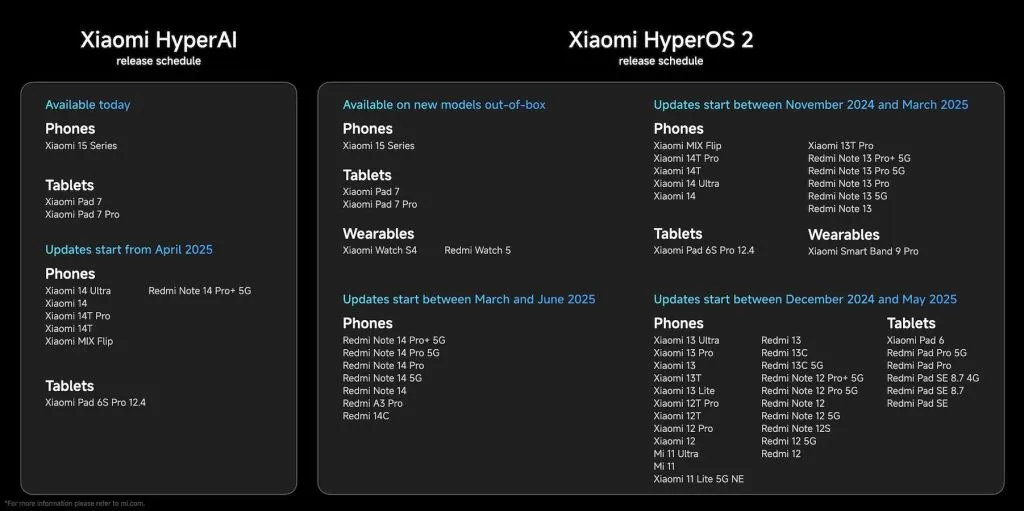
    At the worldwide launch event for the Xiaomi 15 series, Xiaomi revealed the timeline for the release of Xiaomi HyperAI and HyperOS 2.0, which are based on Android 15. These changes offer a more seamless, integrated user experience along with AI-powered improvements. The official upgrade schedule and a list of the new software’s key features are provided below.

    Xiaomi HyperOS 2.0 global update schedule for 2025

    TimeModels
    Available TodayPhones: Xiaomi 15 Series
    Tablets: Xiaomi Pad 7, Xiaomi Pad 7 Pro
    Updates Starting from April 2025Phones: Xiaomi 14 Ultra, Xiaomi 14, Xiaomi 14T Pro, Xiaomi 14T, Xiaomi MIX Flip, Redmi Note 14 Pro+ 5G
    Tablets: Xiaomi Pad 6S Pro 12.4

    Xiaomi HyperAI Update Schedule

    DateModels
    Pre-installed on New ModelsPhones: Xiaomi 15 Series
    Tablets: Xiaomi Pad 7, Xiaomi Pad 7 Pro
    Wearables: Xiaomi Watch S4, Redmi Watch 5
    Updates Starting Between November 2024 – March 2025Phones: Xiaomi MIX Flip, Xiaomi 14T Pro, Xiaomi 14T, Xiaomi 14 Ultra, Xiaomi 14, Xiaomi 13T Pro, Redmi Note 13 Pro+ 5G, Redmi Note 13 Pro 5G, Redmi Note 13 Pro, Redmi Note 13 5G, Redmi Note 13
    Tablets: Xiaomi Pad 6S Pro 12.4
    Wearables: Xiaomi Smart Band 9 Pro
    Updates Starting Between December 2024 – May 2025Phones: Xiaomi 13 Ultra, Xiaomi 13 Pro, Xiaomi 13, Xiaomi 13T, Xiaomi 13 Lite, Xiaomi 12T Pro, Xiaomi 12T, Xiaomi 12 Pro, Xiaomi 12, Xiaomi 12S Ultra, Xiaomi 12S Pro, Xiaomi 12S, Xiaomi 12X, Redmi 13, Redmi 13C, Redmi 13C 5G, Redmi Note 12 Pro+ 5G, Redmi Note 12 Pro 5G, Redmi Note 12 5G, Redmi Note 12S, Redmi Note 12, Mi 11, Mi 11 Lite 5G NE
    Tablets: Xiaomi Pad 6, Redmi Pad Pro 5G, Redmi Pad Pro, Redmi Pad SE 8.7 4G, Redmi Pad SE 8.7, Redmi Pad SE
    Updates Starting Between March – June 2025Phones: Redmi Note 14 Pro+ 5G, Redmi Note 14 Pro 5G, Redmi Note 14 Pro, Redmi Note 14 5G, Redmi Note 14, Redmi A3 Pro, Redmi 14C
    xiaomi hyperos and hyper ai launch scheduel

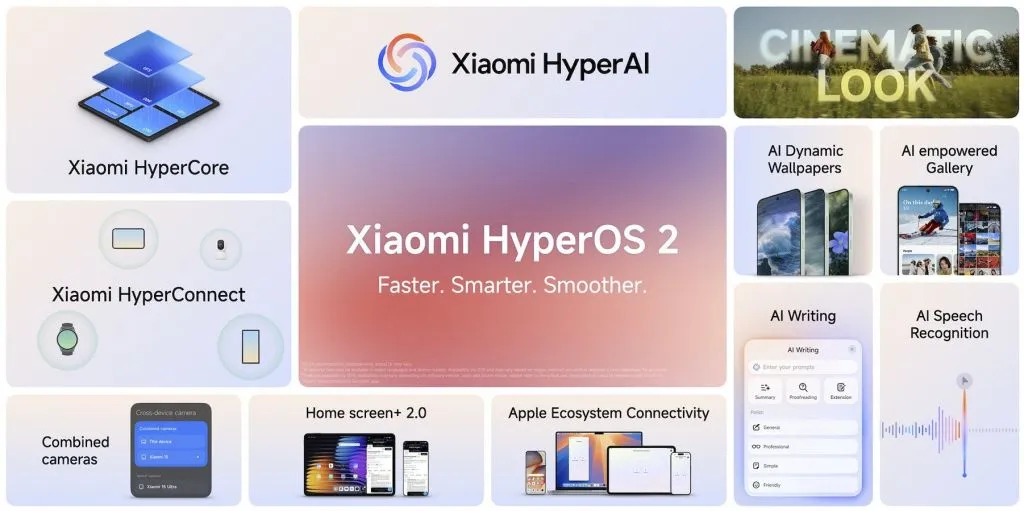
    Key Features

    A potent new system engine called Xiaomi HyperCore was created to improve efficiency and performance. With quicker app launches and longer battery life, it ensures a more seamless user experience by optimizing resource management.

    All Xiaomi devices can connect seamlessly thanks to Xiaomi HyperConnect. It makes it easier for users to switch between smartphones, tablets, wearables, and other smart devices in the Xiaomi ecosystem by improving multi-device synchronization.

    With Cinematic Look’s sophisticated image and video processing features, users may take pictures and films with a professional-caliber touch. This function produces visually spectacular content by improving lighting, sharpness, and color grading.

    AI Dynamic Wallpapers & AI Gallery customizes the user experience by utilizing artificial intelligence. The AI Gallery cleverly classifies and arranges images for convenient access and administration, while AI-powered wallpapers constantly adjust to user preferences.

    xiaomi hyperos launch event

    AI Speech Recognition and AI Writing offer more intelligent input techniques that improve communication. While AI Speech Recognition allows precise voice commands and real-time transcription, AI Writing assists with text summarizing, proofreading, and tone correction.

    Cross-device Camera & Home Screen 2.0 enhances multitasking and ecosystem integration. With improved app categorization and interactive widgets, the new home screen layout improves usability, and users may use cameras from various devices interchangeably.

    Better cross-platform compatibility is ensured by Apple Ecosystem Connectivity, which makes it possible for Xiaomi smartphones to function more effectively with Apple goods. Data exchange, notifications, and device synchronization across several operating systems are made easier by this functionality.

    With a planned deployment strategy that guarantees a smooth transition between devices, Xiaomi HyperAI and HyperOS 2.0 want to provide customers with a quicker, smarter, and more seamless experience.

  • Honor joins 7 years of updates club in 2025

    Honor joins 7 years of updates club in 2025

    Google shocked the Android smartphone community with the announcement that its new flagships, the Pixel 8 series, will receive an astounding seven years of Android updates. Samsung swiftly adopted this strategy for its premium Galaxy smartphones. Few brands have entered the “seven-year club,” though a few have extended their update commitments since then.

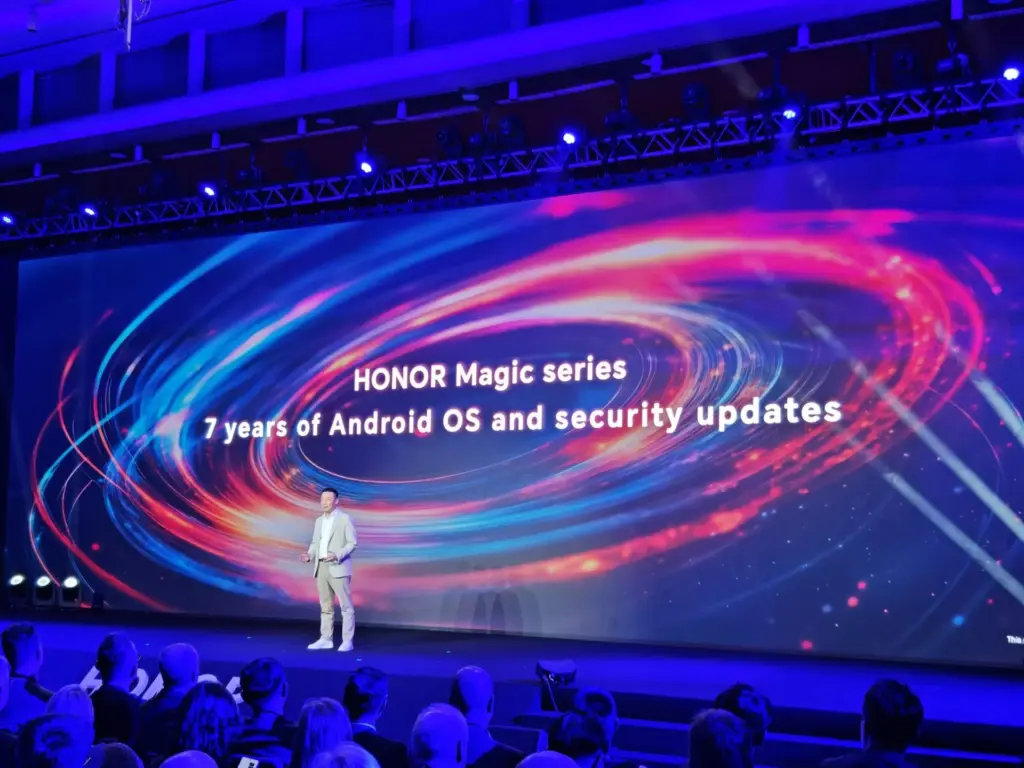
    Honor is the newest member of that exclusive group. During its ill-named HONOR ALPHA Plan keynote address at Mobile World Congress 2025 today, the company said that it will provide seven years of Android updates and security fixes for its top Magic series handsets.

    honor update life

    Honor updates are welcome

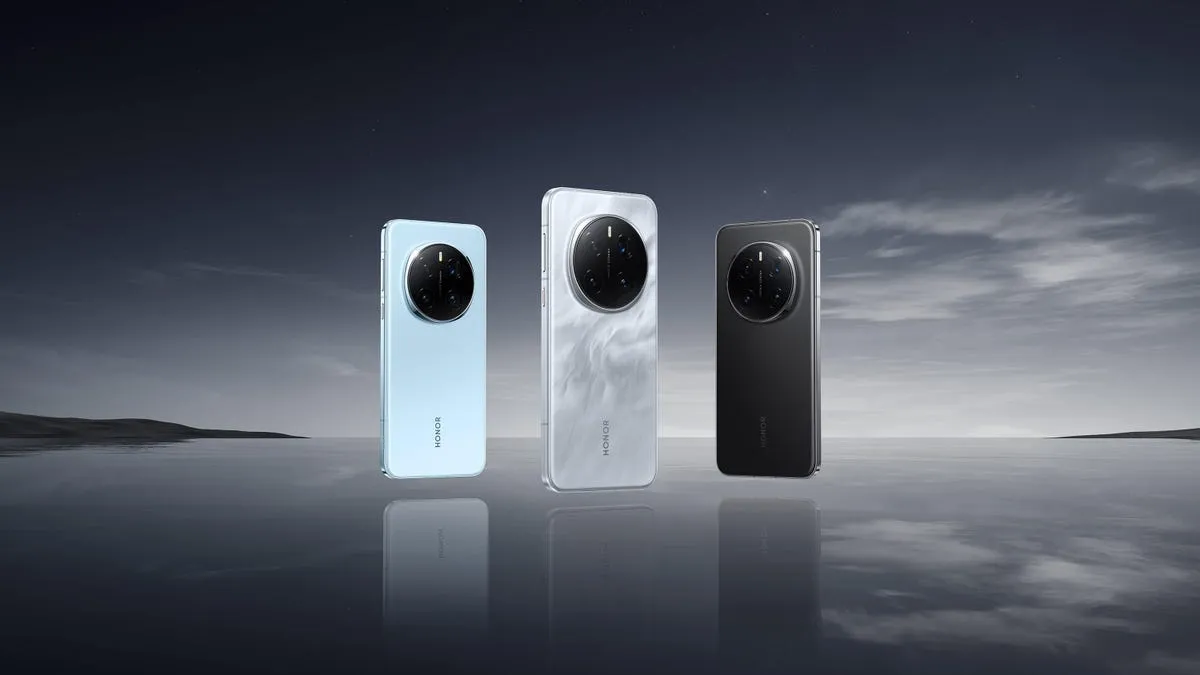
    Magic lineup are typically HONOR’s best Android gadgets, including as tablets, folding phones, and slate-style phones. The first gadget to receive this policy will be the Honor Magic 7 Pro. This is a welcome change from company’s previous assurance that the Magic 7 Pro would receive OS updates for four years and security updates for five.

    It is unclear, though, if this rule will apply to any other older devices in the past. It is also unknown which handsets in the future will have this, however the Magic V4, a foldable tablet, is probably going to be one. We will hopefully find out more details about this in the upcoming weeks and months. The Magic 7 Pro and other flagship devices will soon receive a far more comprehensive update commitment, which should delight HONOR enthusiasts for the time being.

  • 5 devices today receives HyperOS 2.1 global update

    5 devices today receives HyperOS 2.1 global update

    Xiaomi has widely distributed the HyperOS 2.1 worldwide update, which brings the newest features and enhancements to a wide variety of phones, including tablets, high-end flagships, and budget-friendly models. The update release is a significant step toward Xiaomi’s goal of offering consistent software updates across its range of devices worldwide.

    HyperOS 2.1 global update

    Devices receiving HyperOS 2.1 update

    The global update is now available on the following devices:

    Xiaomi’s worldwide software strategy has advanced significantly with this deployment, which offers the newest HyperOS capabilities across a range of device categories and pricing points. The inclusion of both high-end and mid-range devices in the rollout demonstrates Xiaomi’s dedication to maintaining software parity throughout its whole product line.

    Building on the basis established by the original HyperOS, this update 2.1 offers a number of enhancements on these products. Better UI elements, system animations, and enhanced system performance are in store for the users.

  • One UI 7 Beta 4 could be the final beta release

    One UI 7 Beta 4 could be the final beta release

    Samsung has not yet finished the Galaxy S24 beta phase, but it promised a stable One UI 7 update, based on Android 15, for qualified Galaxy S models by Q1. One UI 7 Beta 4 has now been made available; it is a more compact upgrade than earlier iterations, but it includes a crucial camera function from the Galaxy S25.

    Beta testers started posting on Reddit and other social media platforms that One UI 7 Beta 4 had begun to arrive on their devices a little more than a day ago. The United States, India, South Korea, and a few European nations are now implementing the update. The firmware is marginally smaller than earlier betas, with an average size of 1.4 GB, depending on the carrier and area.

    Log Video is available on Galaxy S24 on One UI 7 Beta 4

    Although the main focus of Beta 4 is bug repairs and speed enhancements, the Galaxy S24 trio now supports log (logarithmic) video recording, a capability that was formerly available with the Galaxy S25 and Galaxy S25 Ultra.

    Photographers and videographers can benefit from log video recording in a number of ways. It has a flat color profile, which gives post-production color grading and editing more freedom, and a higher dynamic range, which preserves more details in highlights and shadows.

    However, when compared to regular video recording, this format uses more storage space. Users must activate log video from the advanced video options in order to use it. Both pro mode and regular video mode are available for activation.

    getting one ui 7 beta 4 on my unlocked s24 ultra in us sc v0 12r9h8h0abke1

    One UI 7 Beta 4 Changes

    AI-powered camera filters are yet another noteworthy inclusion in Beta 4. These comprise pre-built filters like Shiver, Crystal, Breeze, Pulse, and Chill, to name a few. Additionally, users can use pre-existing photos to create custom filters.

    In addition to these enhancements, the firmware fixes a number of problems and improves performance. Notably, it improves performance in other areas while resolving some difficulties with the quick panel and home screen.

    Will this be final beta release?

    Whether One UI 7 Beta 4 is the last beta release or how many more Samsung intends to issue before the Galaxy S24 series’ stable release is still unknown. Samsung has reaffirmed its goal to provide the stable One UI 7 version by the first quarter of 2025. The distribution schedule is yet unknown for other devices, including as the Galaxy S23 series, Galaxy Z Fold 6, and Galaxy Z Flip 6. Whether these devices would go straight to the stable release or undergo a beta period has not been verified by the South Koreans.

    Some speculation suggests that One UI 7 could be skipped entirely, with Samsung instead opting to launch One UI 7.1 or even One UI 8.0 based on Android 16.