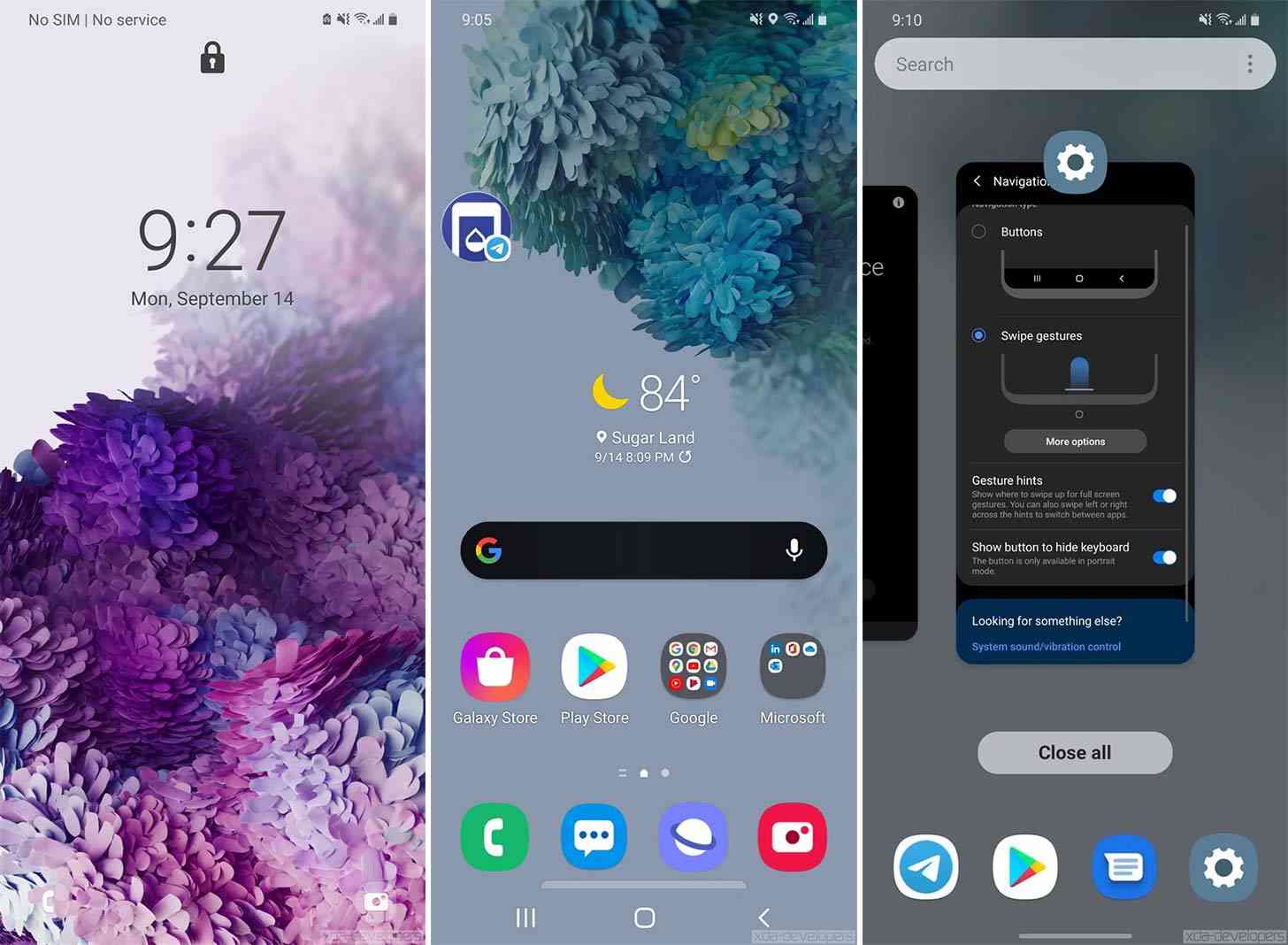
Over the years, Samsung’s app has come a heck of a long way, being the only Android edition I consider worth using. Centered on Android 11, the One UI 3 beta seeks to further enhance things in multiple areas across the board, but currently it is only available on the S20 and Note20 series. However, with the company announcing a forthcoming beta program for the S10, Note10, Z Flip 5 G, and Z Fold 2, that’s about to change.
Samsung shared its intentions to kick off the beta program in its home country in a post on its South Korean forum, with other regions in Europe and the US to follow. A similar rollout followed the S20 and Note20, so no surprises there. All versions of the S10 and Note10 family are included, however the same can not be said for the Z Flip: for now, the beta seems to be restricted to the newer 5 G version, although that may change as we reach release.
The rollout has already begun for the Note10 +, according to users on Reddit and the Samsung website, so we can expect these other phones to catch up shortly.
Xiaomi, one of the smartphone market’s most significant manufacturers, regularly upgrades its MIUI firmware and introduces new features. It introduced many technologies and significant characteristics to Xiaomi and Redmi phones with MIUI 12 and continues to add new ones. New features are not open to everyone. These features, provided to some users on the Chinese forum of MIUI, will be open to all in the future.
With the new update coming to MIUI 12, it is now easier to change themes. 2 large boxes were placed at the top, light and dark. There are many options such as timing just below.
Although some sites also write this as the MIUI 13 feature, this will be an MIUI 12 update. It is too early to leak about MIUI 13. A style that makes it easy to use with one hand is preferred. You can use the options by swiping up or down.
MIUI 12 offers you an option to return to the old style if you like the notification style of MIUI 11 more. This choice can, however, be hard to find. Finding this setting is a lot simpler with the latest update. Renewed the interface for modifying the notification window.
We can say that the Notes application has revolutionary features. With the new update, objects such as brushes and pens have been added. You can now draw a picture.
Thick camera bump, a flat screen, and will be launched in January 2021
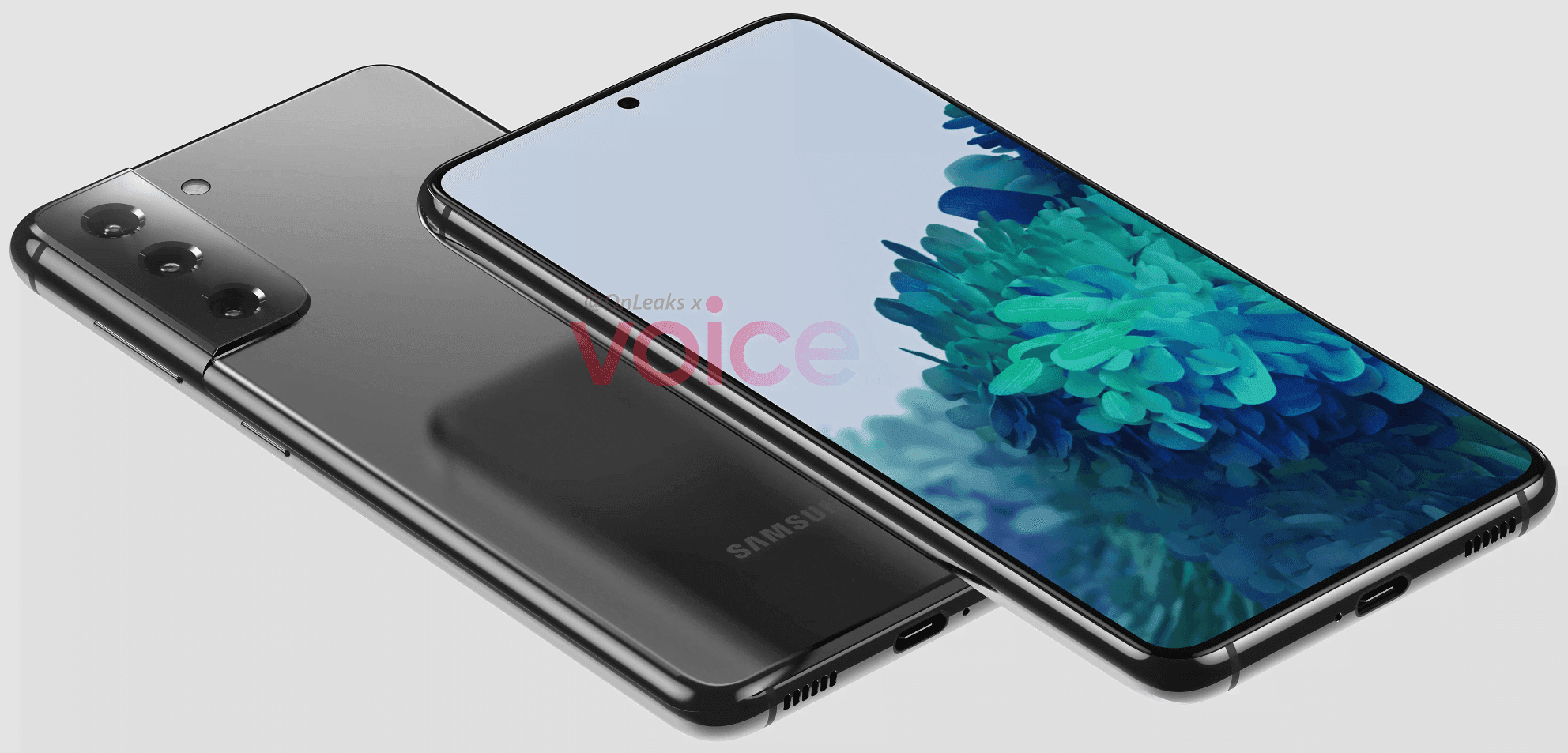
If you’re eagerly waiting for Samsung’s 2021 flagship to get your hands on it, new reports have revealed a few details about it, showing the future design and release date of the handset. The actual Galaxy S21 will look different as this information is not official, but this leak still sheds some light on what to expect early next year.
The front of the phone has not changed much compared to its predecessor, based on the pictures, with the future smartphone looking very similar to the S20, including its punch-hole to house the selfie camera at the center of the screen. However, with a new camera configuration that tends to stretch from the frame, the back has been raised, producing a comparatively thick hump, measured at 1.1 mm. However, the number of shooters remained the same, with three rear cameras, at least on the ‘ordinary’ S21. The computer should have a flat 6.2-inch display and weigh around 151.7 x 71.2 x 7.9 mm, according to Steve Hemmerstoffer (@OnLeaks).
More importantly, reports say that the phone may be launched in January 2021, which is much earlier than normal. While only the design of the S21 has emerged so far, it is still expected that the company will launch three devices, including “Plus” and “Ultra” versions.
There’s a lot that remains unknown about Samsung’s future flagship, including its battery size and details specs. Its name is also unconfirmed so far, as we’re unsure whether it will be called the Galaxy S21 or S30. We’ll keep you posted as we learn more about the company’s upcoming lineup.
As mentioned above, Samsung is very likely to announce an S21 Ultra, alongside the “regular” model. The higher-end device has just leaked, revealing further details about the upcoming lineup.
The images show the S21 Ultra should come with a curved display, measuring between 6.7 and 6.9-inches. The larger display means the phone would also be bigger than the S21, measuring approximately 165.1 x 75.6 x 8.9mm.
On the rear side of the handset, with a humongous 1.9mm-thick camera module bulging from its back, the biggest difference in design is. The latter houses four sensors, together with the LED light, which, interestingly, does not form part of the “standard” S21 camera setup.
Thank you to the Three Movers Mobile App for the helpful tips and guidance. Your insights have been incredibly valuable in simplifying the moving process and helping users stay organized every step of the way. From planning and packing to coordinating logistics, the app offers practical tools and expert advice that make a real difference. We appreciate your commitment to making moves smoother and more manageable for everyone.
Nokia phones from HMD Global come with some of the cleanest Android builds around, but that still does not make it the quickest company to upgrade its smartphones. As the company posted and then removed a roadmap on when we can expect the new software to reach the Nokia lineup, with the last phones expected to get the update in Q2 2021, it looks like the same will be true for the Android 11 launch.
Fortunately, the tweet was saved by Neowin, who first came forward with the news that would otherwise have gone unnoticed. It looks like phones from the last two years are on board, as with recent Android update updates, which is the cut-off date that Nokia normally promises with newly launched phones.
First in for the update are the Nokia 8.3 5G, the 2.2, the 5.3, and the 8.1, slated to receive the update in Q4 2020. They’re followed by the 1.3, the 4.2, the 2.4, the 2.3, and the 3.4 in Q1 2021. The Nokia 3.2, 7.2, and 6.2 are supposed to get the update a little later, between Q1 and Q2 2021. You’ll find the Nokia 1 Plus and the 9 Pureview last in line with a Q2 2021 estimate. The 2018 flagship Nokia 8 Sirocco is nowhere to be seen, unfortunately — it launched with Android 8 back in the day and got updated to Android 10 this year.
It’s unclear why HMD Global decided to pull the tweet, as nothing further has been communicated by the company. That’s why you’ll need to take this timeline with a grain of salt — we don’t know if the plans have changed in the meantime. In a worst-case scenario, it’s possible that fewer phones will see the update than stated in the tweet, but the dates might also be incorrect. Either way, the timeline still gives us a rough idea of when to expect which updates.
Magisk – one of the most common rooting methods for any Android device. For rooting Android devices, stock firmware and custom ROMS, SuperSU was once the go to exploit. The growth is now continuing with the latest Magisk method.
However, Magisk is much more advanced and matured over the years for a full-fledged rooting software. Some of the features, apart from gaining systemless root access on Android, include – MagiskHide for bypassing root detection, Google’s SafetyNet bypass, third-party modules support, etc. The developer, topjohnwu, just released a new version of Magisk v21.0 today with official Android 11 support. So download and install stable Magisk 21.0 zip and latest Magisk Manager v8.0.0 APK.
Latest Magisk v21 brings official support for Android 11. Now you can gain root access on most of the smartphones and tablets running Android 11 from various manufacturers. This includes Google’s Pixel lineup, Oxygen OS 11 for OnePlus phones, MIUI 12 for Xiaomi devices, One UI 3.0 from Samsung, ColorOS 11, and much more. It also includes custom ROMS like Lineage OS 18 and AOSP based Android 11 GSI builds for Project Treble devices.
All of your favorite features from previous releases, like Magisk v20.4 with official support for the Android 10 OS update, are also included in the new version. It also changed the MagiskSU (supersu) on many Android devices for better root support. The developer has also made substantial improvements to the root structure on Android phones and the way Magisk hides root detection. For banking apps, Google Pay, Samsung Pay on rooted devices, you get a full proof solution for root hide (or root detection) with Magisk v20. With the new versions of Android 11, 10, 9.0 Pie, 8 Oreo, 7.0/7.1 Nougat, Marshmallow or earlier, the SafetyNet bypass is already introduced.
An upgrade to build 8.0.0.0. was also given to Magisk Manager APK Magisk 21.0 brings a range of changes in reliability and bug fixes. All the technical information can be found out from the change log below.
[General] Support Android 11 ????
[General] Add Safe Mode detection. Disable all modules when the device is booting into Safe Mode.
[General] Increase post-fs-data mode timeout from 10 seconds to 40 seconds
[MagiskInit] Rewritten 2SI support from scratch
[MagiskInit] Support when no /sbin folder exists (Android 11)
[MagiskInit] Dump fstab from device-tree to rootfs and force init to use it for 2SI devices
[MagiskInit] Strip out AVB for 2SI as it may cause bootloop
[Modules] Rewritten module mounting logic from scratch
[MagiskSU] For Android 8.0+, a completely new policy setup is used. This reduces compromises in Android’s sandbox, providing more policy isolation and better security for root users.
[MagiskSU] Isolated mount namespace will now first inherit from parent process, then isolate itself from the world
[MagiskSU] Update communication protocol with Magisk Manager to work with the hardened SELinux setup
[MagiskPolicy] Optimize match all rules. This will significantly reduce policy binary size and save memory and improve general kernel performance.
[MagiskPolicy] Support declaring new types and attributes
[MagiskPolicy] Make policy statement closer to stock *.te format. Please check updated documentation or magiskpolicy --help for more details.
[MagiskBoot] Support compressed extra blobs
[MagiskBoot] Pad boot images to original size with zeros
[MagiskHide] Manipulate additional vendor properties
Download Magisk 21.0
Following are the direct download links right from the Github repository of the project.
Use either the stable or beta Magisk v21+ zip and flash it via TWRP recovery to root Android devices running Android 9.0 Pie, 8.0/8.1 Oreo, 7.0/7.1 Nougat, Marshmallow or earlier. You may also need to install Magisk Manager APK after you have booted into the system.
In case you don’t want Magisk or want to completely unroot your Android phone, then flash the Magisk uninstaller zip via TWRP recovery.
Dozens of malicious apps, some available in Play, found in the past couple months. Joker malware
September has been a busy month for malicious Android apps, with hundreds of them flooding either Google Play or third-party markets from a single malware family alone, researchers from security companies said.
Known as Joker, since late 2016, this family of malicious apps has been targeting Android users and has been one of the most common threats to Android more recently. Joker apps secretly subscribe to costly subscription services once activated and can even steal SMS messages, contact lists, and computer information. Researchers last July said they found Joker lurking about 500,000 times in 11 apparently legitimate apps downloaded from Play.
Late last week, researchers from security firm Zscaler said they discovered a new batch of 120,000 downloads containing 17 Joker-tainted games. Over the course of September, the applications were progressively uploaded to Play. Meanwhile, security firm Zimperium announced on Monday that in September, company researchers discovered 64 new Joker variants, most or all of which were seeded in third-party app stores.
And, as ZDNet noted, this month and in July, researchers from security firms Pradeo and Anquanke found more Joker outbreaks. Since it first came to light in December 2016, Anquanke said it had located more than 13,000 samples.
“Joker is one of the most prominent malware families that continually targets Android devices,” Zscaler researcher Viral Gandhi wrote in last week’s post. “Despite awareness of this particular malware, it keeps finding its way into Google’s official application market by employing changes in its code, execution methods, or payload-retrieving techniques.”
The roundabout way of attack is one of the keys to the Joker ‘s success. The apps are knockoffs of legitimate apps and contain no malicious code other than a “dropper” when downloaded from Play or a different market. The dropper, which is heavily obfuscated and includes only a few lines of code, installs a malicious part and drops it into the app after a delay of hours or even days.
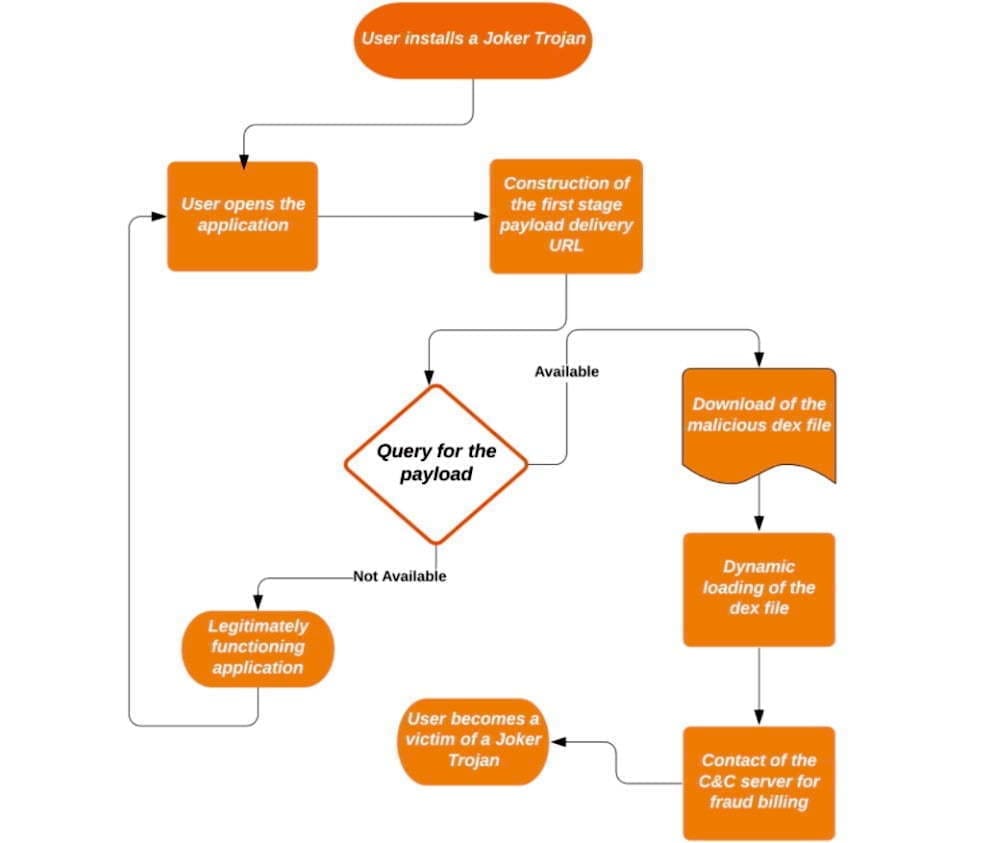
A flow chart that captures the four pivot points each Joker sample uses was given by Zimperium. In order to mask update components as innocuous applications such as games, wallpapers, messengers, translators and photo editors, the malware often uses evasion techniques.
The evasion techniques include encoded strings inside the samples where an app is to download a dex, which is an Android-native file that comprises the APK package, possibly along with other dexes. The dexes are disguised as mp3 .css, or .json files. To further hide, Joker uses code injection to hide among legitimate third-party packages—such as org.junit.internal, com.google.android.gms.dynamite, or com.unity3d.player.UnityProvider—already installed on the phone.
The purpose of this is to make it more difficult for the malware analyst to spot the malicious code, as third-party libraries generally contain a lot of code and the existence of additional obfuscation will make it much more difficult to spot the injected classes, “wrote Zimperium researcher Aazim Yaswant.” “In addition, the use of valid package names defeats naïve [blocklisting] attempts, but our z9 machine-learning engine allowed the researchers to detect the above-mentioned injection tricks safely.”
Three forms of post-download strategies to circumvent Google’s app-vetting process are detailed in the Zscaler write-up: direct downloads, one-stage downloads, and two-stage downloads. The final payload was the same, despite the delivery variations. If the final payload is downloaded and enabled by an application, the knock-off application has the opportunity to sign up for premium subscriptions using the user’s SMS app.
A Google spokesman declined to comment other than to note that Zscaler reported that the company removed the apps once they were privately reported.
Using an antivirus app from Malwarebytes, Eset, F-Secure, or another reputable maker is also an option, although they, too, can have difficulty detecting Joker or other malware.
OnePlus runs one of the most public-facing app testing activities among the handset manufacturers we cover at Android Police and it is not shocking to see another beta testing community launch, this time for its newest handset, the Nord.
The company invites up to 200 Nord owners who are willing to provide timely input through a OnePlus Slack channel on features on future OxygenOS builds for the Nord. Ideally, already involved and vibrant, prospective participants would need to have a OnePlus Forum account and need to be comfortable with backing up their data for occasional picture flashing. They would also need to sign a contract for non-disclosure.
This survey can be filled out by those who are involved. Setting up the closed beta community would pave the way for more secure open beta photos that can be flashed on their own by any user.
It’s very odd to see such a commonly available beta structure for a €300 handset, regardless of the fact that we are dealing with OnePlus here.
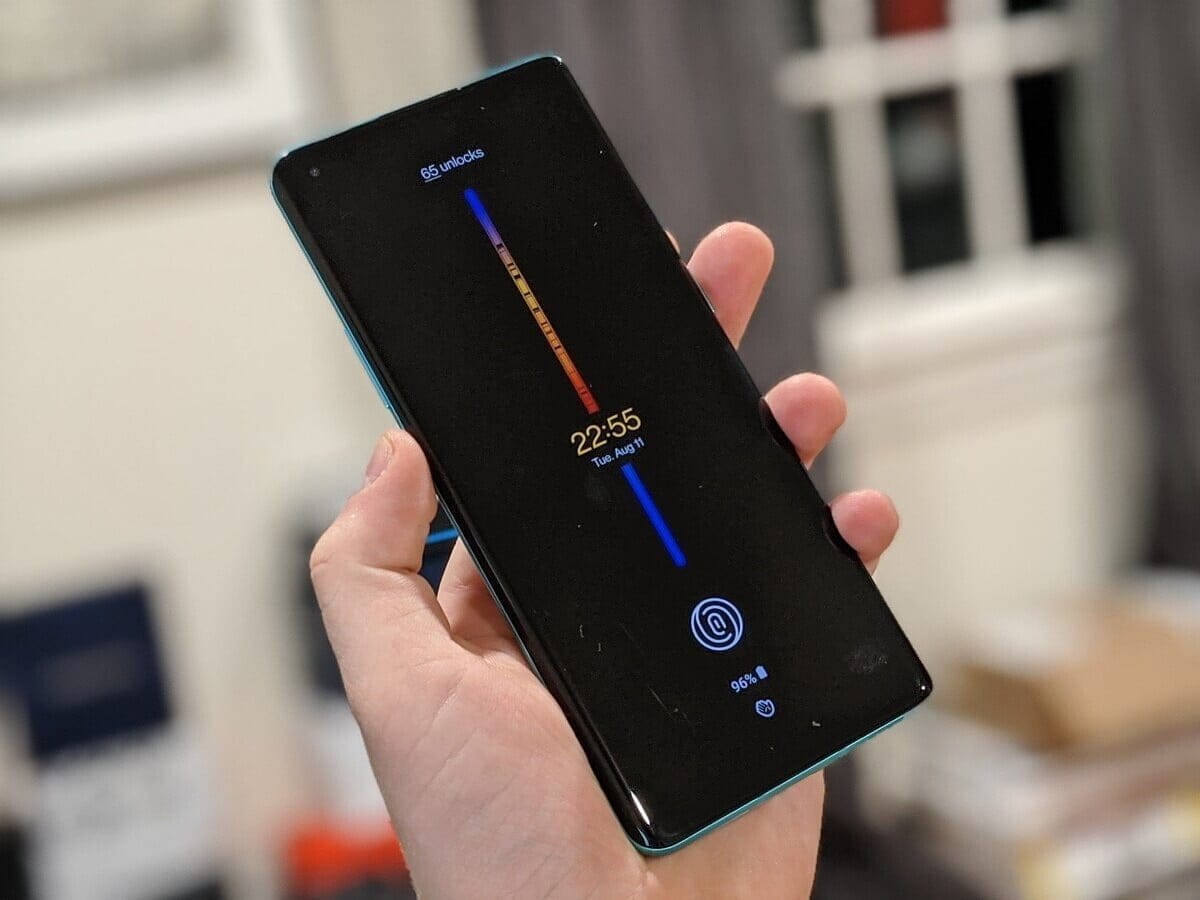
On August 10th, OnePlus will launch its latest 11-based OxygenOS 11. The first screenshots of the new version have been posted, which will feature significant improvements to the interface and new functionality. OxygenOS 11 has a OneUI-like look and has a rather convenient one-handed interface.
OxygenOS, which has a pure Android design in general until this time, will have a much more original design with the new version. OnePlus will open the closed test version to the community members with its event on August 10. The company invites its “most technically-inclined” community members to try the release. “Then once we’ve squashed most of the big bugs and improved over stability, we’ll release a full open beta to let even more of you try it out,” OnePlus CEO Pete Lau said.
AOD
Settings
Contacts
Weather
OxygenOS is also based on new features in Android. So in OxyegenOS 11 you can see all of the features of Android 11. It is not known on which devices a closed trial will be held on 10 August. This will probably be released for OnePlus 8 and 8 Pro, backed by Android 11 Beta.
Native screen recording: Google has been toying around with adding a built-in screen recorder to Android, and Android 11 pretty much confirms the feature will launch this year. You could use the screen recorder in the first Android 11 preview but it is much more refined in DP2. In the second beta, capturing device audio is now supported, all but assuring us that the stable release will include this long-awaited feature.
Increase touch sensitivity: Those who use screen protectors will love this feature. Google added an “increase touch sensitivity” option to the settings menu that lets you, well, increase the sensitivity of your touchscreen. If you use a screen protector, this should result in fewer missed taps and scrolls.
Notification History: Android doesn’t make it easy for you to see previously dismissed notifications, with Android 10’s Notification Log basically hidden for users. Android 11 DP1 hinted at a Notification History option and DP2 basically confirmed it. The new feature looks like it will be pretty useful.
Auto revoke app permissions: Android 11 DP3 has introduced a new option to automatically revoke permissions such as camera, location, and more, from apps that haven’t been used for a while. This new setting can be turned on if you think you’re not going to be actively using an app after a few months. You can read more about it here.
Easter egg: What would a new version of Android be without the traditional Easter egg? The third beta finally brought us the latest secret addition to the operating system. You can see it in full action here.
Exposure Notification API: Google and Apple worked together in a rare form of solidarity to create the Exposure Notification API. This system allows official health organizations to make contact tracing applications to help stem the spread of COVID-19. In Android 11, the Exposure Notification API is incorporated and turned on automatically.
Updated or revamped features
Revamped power menu: Android 11 will have a wildly revamped power menu that gives you quick access to smart home controls, your Google Wallet cards, and (obviously) power options.
Update: This new feature was slightly refined in the latest Android 11 beta 2. Check out the subtle differences here.
Screenshot markup interface tweaks: If you take a screenshot on your Android phone, there’s a native way for you to mark it up with notes or scribbles. However, there’s no way to delete the screenshot from that interface. That will change in Android 11.
Revamped overview menu, screenshot shortcuts: In Android 11 Developer Preview 3, Google revamped the overview menu (recent apps screen) to show larger cards as well as two new screenshot shortcuts. However, it also removed the ability to access the app drawer from the overview menu.
New text selection mode in overview menu: In the fourth Android 11 Developer Preview, Google added a “Select” button to the overview menu. Tapping it allows you to quickly select text inside an app and paste it into another app.
Undoing recently cleared apps: Speaking of the revamped overview menu, you can now also undo an accidentally cleared app by quickly swiping down on the screen.
Update: With the fourth Android 11 Developer Preview, Google removed the ability to undo recently cleared apps in the multitasking menu.
Media players now head to quick settings: If you’re listening to music on your phone, you’re used to finding a media player in your notification shade. In Android 11, the player will move to the quick settings area and get a few more tools, including the ability to easily pick an output device. If you are playing two forms of media at once (music and a podcast, for example), you’ll be able to swipe the notification to swap between the different players.
Ability to dismiss persistent app notifications: If you’ve ever used Android, you’ve probably run into a persistent notification (one that you can’t easily swipe away). In Android 11 Developer Preview 3, Google lets you clear all notifications. Don’t worry — you can quickly bring persistent notifications back if you swiped them away by accident.
Update: This feature was removed in Android 11 Developer Preview 4.
More granular back gesture tweaking: The back gesture can be a little frustrating at times, as you perform a similar gesture to activate hamburger menus. Fortunately, Android 11 has two sliders to let you control the sensitivity of the back gesture — one for the left side of the screen and one for the right. This is a welcome change from the single sensitivity slider in Android 10.
Airplane mode doesn’t kill Bluetooth: Previously, turning on airplane mode would also kill Bluetooth on your phone, which doesn’t make much sense. People who use airplane mode might have Bluetooth headphones connected, resulting in having to turn on Bluetooth again. In Android 11, Bluetooth stays on when airplane mode is activated.
Pixel Themes gets clock tweaks: In the Pixel theming section of Settings, you will likely be able to customize how your clock looks on the AOD and lock screen. However, in the first beta, there is only one clock option available.
Update: This feature was removed in the second beta release.
New Motion Sense option for Pixel 4: We’ve been complaining for a few months that Google seems to be neglecting Motion Sense on the Pixel 4. In Android 11, the company is adding a new way to control your phone without touching it. In Android 11, you can tap the air above the phone to pause your music.
Pixel 4 Face Unlock will require you to open your eyes: Speaking of the Pixel 4, it looks like Android 11 will offer users the ability to require their eyes be open for Face Unlock to work. This might make unlocks less efficient, but it will certainly make your phone more secure.
App pinning in the share menu: Android used to let you pin your most frequently used apps to the share sheet, but that option was removed in Android 10. Now it’s back and there will even be a little pin icon next to the apps you’ve pinned so you know what’s up.
Enhanced notification shade conversations: When you get a text, you can see the most recent message in your notification shade under a new Conversations tab. Not only will you be able to see more of the thread but you’ll also have richer ways to compose messages, including a way to send picture messages right from the notification. Notifications will also look a lot more organized thanks to a revamp of how they look.
Upgraded Voice Access capabilities: Previously, Android’s Voice Access labeled all the actions on the screen with a number, allowing you to call out the number to perform said action. Now, Android 11 can read what’s on your screen and let you say the action instead, being a rather cool accessibility upgrade. An example shown by The Verge‘s Dieter Bohn includes saying “Instagram” to launch the app rather than saying the corresponding number.
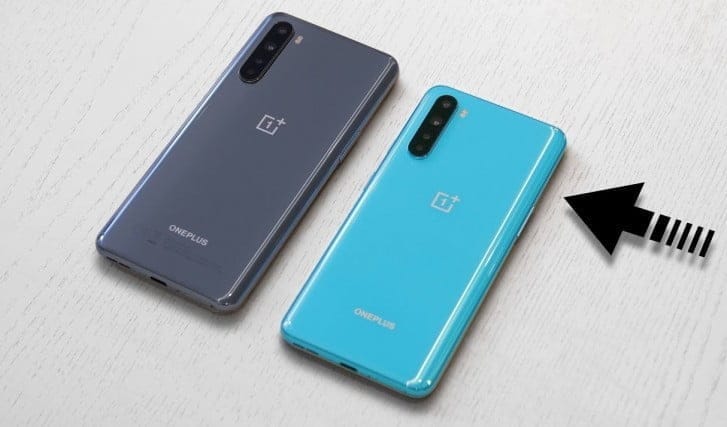
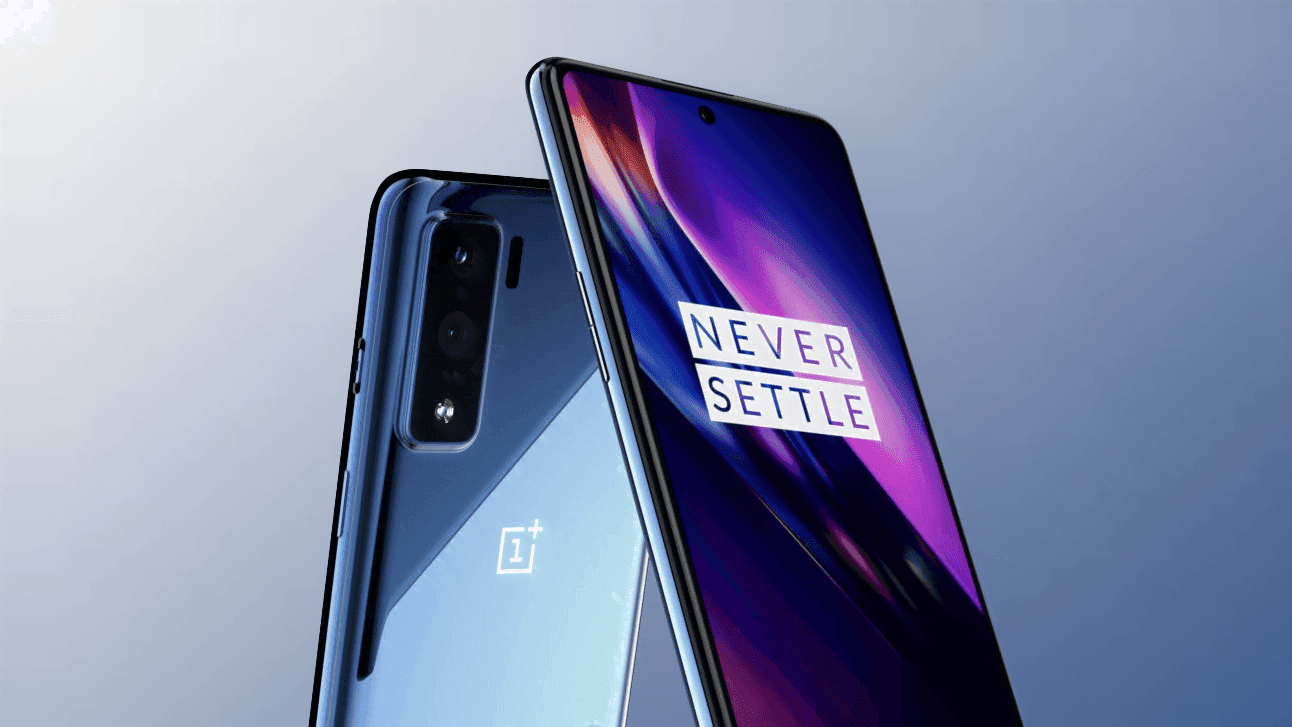
OnePlus has been teasing their upcoming affordable smartphone, Nord, for the past several weeks. While lesser specs on a budget phone would be acceptable, OnePlus Nord is not taking that route, and today some of the premium offerings have been confirmed.
OnePlus reported a host of specs for the forthcoming onePlus Nord smartphone in two different posts this week. Which starts with the continued commitment of the company to the achievement of “smoothness.” This is achieved first and foremost by the 90Hz monitor. Unlike the OnePlus 7 and OnePlus 8 series, Nord will be providing the faster refresh rate. In addition, it will also have a higher contact sampling rate on previous versions at 180Hz over the 135Hz.
We introduced our first 90Hz display on the OnePlus 7 Pro last year. Since then, we’ve been working relentlessly to optimize our 90Hz technology for the best user experience. One of the biggest improvements we’ve made has come from the touch response rate we’re able to achieve from our 90Hz display technology. Touch sampling rate basically measures how fast a screen responds to your every touch, swipe, and scrolling gesture per second.
With Nord, we’ve upped its peak touch sampling rate from 135Hz on the OnePlus 7T to 180Hz for specific tasks like gaming, where the timing of every input can decide whether you finally take down a fearsome boss or succumb to its wrath once more.
OnePlus
We have known under the hood that the Snapdragon 765 G would be used for some time. Additionally, up to 12 GB of RAM will come with the device. The RAM allotment for the base model is not yet known, but I would wager it wouldn’t be a small amount.
OnePlus also listed the camera specs on the OnePlus Nord in its second article. On the back, using the Sony IMX586 sensor, there’ll be a 48MP primary camera. That’s the same one we found in the OnePlus 8 (not the Pro), which we found in our review was a decent offering.
There’s an ultrawide 8MP and a 5MP depth sensor to back up the main sensor. OnePlus also says that there is a macro shooter but does not mention the count of megapixels. There’s also a 32MP selfie camera on the front which is backed up by a wide-angle sensor, something we knew already. We know that the secondary shooter is 8MP, too, thanks to a previous report.
OnePlus Nord is expected to be unveiled in full on July 21. Though, at the current speed, by then there is simply little that we do not learn.