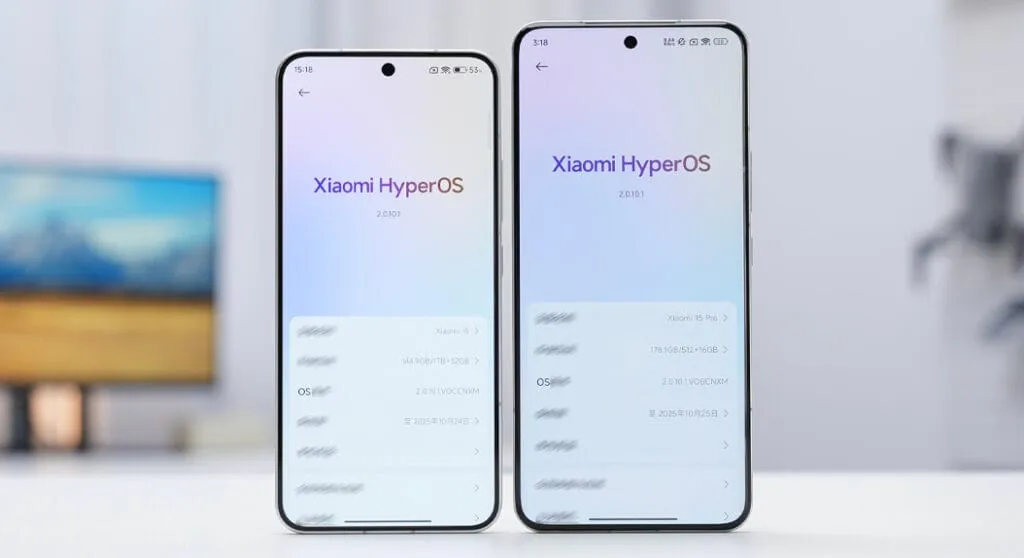
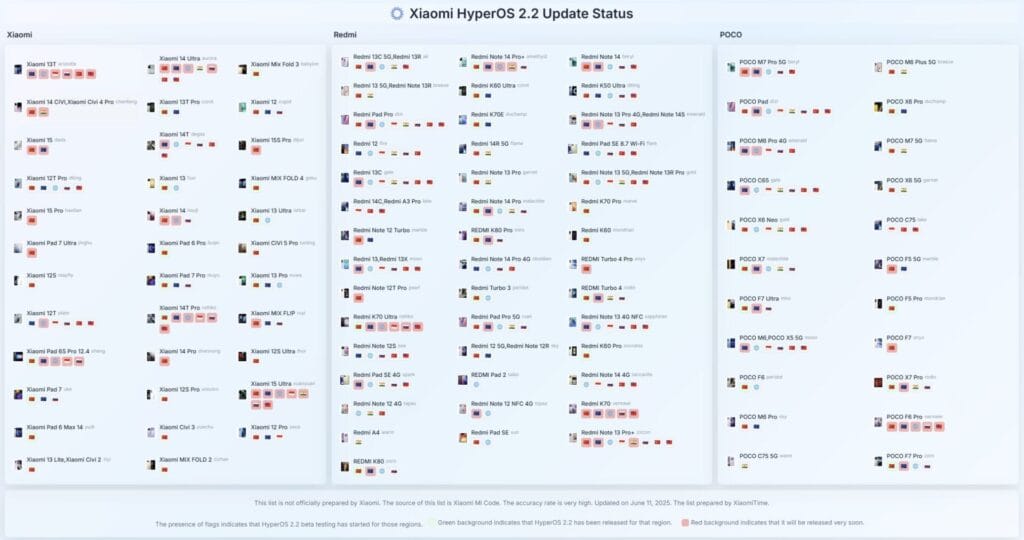
The second round of internal testing for HyperOS 2.2 has officially ended, and it now covers more than 130 devices from the Xiaomi, Redmi, and POCO portfolios. This upgrade is quite extensive, encompassing both premium smartphones and tablets as well as entry-level products. Many users will get the update at the same time when the worldwide public release starts. It is evident that Xiaomi is giving top priority to a seamless, well-organized updating procedure for all of its products.
While waiting for the official HyperOS 2.2 release, users can access the MemeOS Enhancer app through the Play Store to unlock more Xiaomi features and system improvements.
More than 130 items are currently included in Xiaomi’s internal testing program, guaranteeing extensive coverage across all significant price points and markets. Included are gadgets from Taiwan, Indonesia, Russia, China, Europe, India, and more. The update is appropriately customized for every user base thanks to this geographical attention.
Flagship and Premium Device Readiness
Xiaomi’s Flagship Lineup
All leading Xiaomi models have completed internal testing, including:
From the K series (K50 Ultra through K80 Pro) and Note series (Note 12 through Note 14 and all variations) to the Turbo lineup and more reasonably priced models like the Redmi 12–14R 5G, Redmi’s full spectrum is covered.
POCO’s gaming and performance-focused models are included as well. The F series (F5, F6, F7, including Pro and Ultra variants), X series (X6, X7, Pro, Neo), and the M and C series for budget users are all part of the rollout.
The HyperOS 2.2 internal rollout also covers:
Xiaomi Pad 6 and 7 series (including Pro, Ultra, Max, and S Pro models)
Redmi Pad Pro, Pad 2, and SE variants
POCO Pad
In conclusion, one of the biggest coordinated Android update rollouts in Xiaomi’s history is about to happen. With the launch of every major product line, millions of customers worldwide can anticipate improved performance and new features.
Forget what you thought you knew about a simple bonus. Brawl Stars is thinking bigger. The current buzz isn’t about a personal 1000% boost to your Mastery points, but something far grander: a community-wide challenge that’s got everyone brawling with purpose.
The Main Event: 1000 Billion Mastery Points for 1000 Random Starr Drops!
That’s right. Supercell has thrown down the gauntlet. The entire Brawl Stars community is tasked with collectively earning a staggering 1000 billion Mastery Points. If this monumental feat is achieved, every single player gets rewarded with 1000 Random Starr Drops. Imagine the loot! This isn’t just an event; it’s a global collaboration, a testament to the dedication of Brawlers everywhere.
So, while you won’t see your individual Mastery earnings multiply by a thousandfold, your efforts contribute to a massive prize pool that benefits everyone. Every win, every point you grind, pushes the community closer to that sweet, sweet cascade of Starr Drops.
What Were Typical “Mastery Madness” Events?
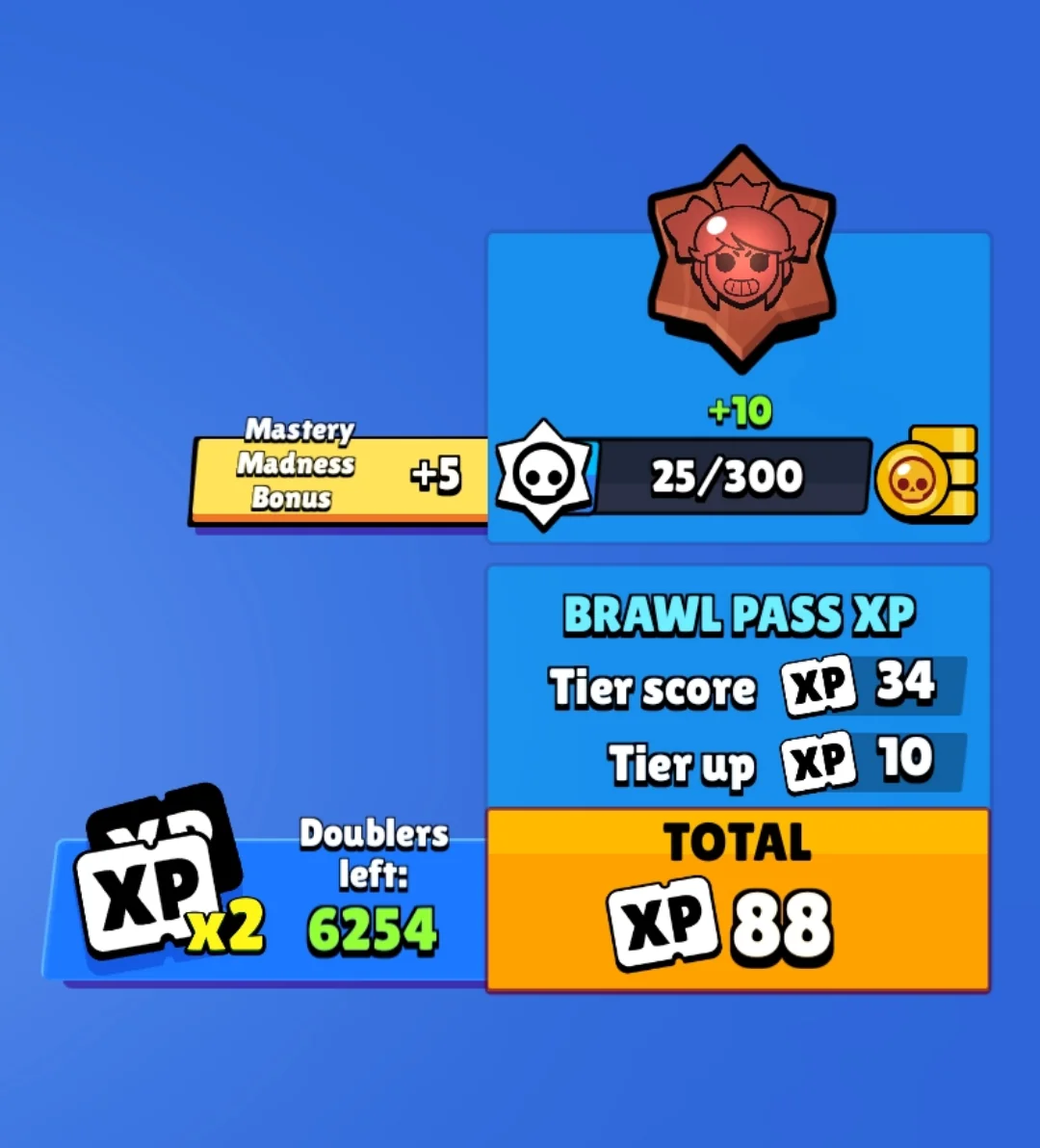
Before this colossal community challenge, “Mastery Madness” events were a more regular, straightforward affair. Typically, these events would offer a significant boost, often around 50% more Mastery Points, for every victory with any Brawler. These were prime opportunities to accelerate your progress on the Mastery Track for your favorite (or all) Brawlers, unlocking:
Coins
Power Points
Credits
Exclusive Pins
Coveted Player Titles
You’d earn these points through wins in Trophy Events, Power League (now Ranked), and Club League. There was usually a daily cap on how many bonus points you could rake in, ensuring even dedicated players had a reason to come back each day.
Mastery System Overhaul on the Horizon
Hold onto your hats, because this community event is also the grand finale for the Mastery system as we know it. That’s right, Brawl Stars is gearing up for a significant update that will see the current Mastery system phased out and replaced by a brand-new Achievement system.
This is a pivotal moment in how you’ll showcase your skills and dedication to specific Brawlers.
What to Expect
Cosmetics & Titles Move to Achievements: All those cool cosmetic rewards and unique player titles you previously earned by grinding Mastery? They’ll find a new home in the upcoming Achievement system. Unlocking a Brawler’s title will soon mean completing specific, often skill-based, in-game feats (think landing a tricky multi-hit Super with Mortis or pulling off a game-changing play).
Trophy Road Revamp: The Trophy Road is also getting a fresh coat of paint and some functional upgrades. Expect more Legendary and random Starr Drops, and even the introduction of Hypercharge drops into the progression path.
Reward Rebalance: There will be some adjustments to the in-game economy. Look for a modest increase in Credits and Coins, while Power Points might see a slight reduction in their availability through these progression tracks.
What Happens to Your Hard-Earned Mastery?
Panicking about your unclaimed Mastery rewards? Don’t. Supercell has confirmed that if you haven’t claimed your Mastery rewards before the system is officially retired, they will be automatically awarded to you. This will happen when the pass after the immediate next one begins, so there’s a bit of a waiting period, but your efforts won’t be lost.
Navigating the Mastery Shift
So, with a massive community event underway and a system overhaul looming, what’s the game plan?
Grind for the Community Goal: Now is absolutely the time to jump into matches and earn those Mastery Points. Not only are you contributing to the 1000 Billion point target for those 1000 Starr Drops, but you’re also banking progress in the current system before it changes. Every win counts, for you and the entire community!
Secure Last-Minute Mastery Rewards: If you’re close to specific Mastery track rewards for your favorite Brawlers, this is your final stretch to claim them under the current system.
Anticipate the Achievement Era: Start thinking about which Brawlers you excel with in terms of skillful plays. The new Achievement system will likely reward specific talents and impressive in-game actions over sheer volume of wins.
Old Mastery vs. New Achievements: A Quick Look
Feature
Current Mastery System (Being Phased Out)
Upcoming Achievement System
Primary Goal
Accumulate Mastery Points per Brawler
Complete specific Brawler tasks/feats
Unlocking Titles
Reaching high Mastery tiers
Completing designated achievements
Reward Focus
Coins, Credits, Power Points, Cosmetics
Cosmetics, Titles, Achievement-specific rewards
Progression Feel
General dedication through wins
Skill expression & specific accomplishments
System Lifespan
Ending soon
The new standard
This transition signals a fresh way to define what it means to “master” a Brawler. It’s moving from a measure of persistence to a showcase of skill and memorable moments. This new achievement-driven system will undoubtedly refine your playstyle, demanding true Brawler-specific skill. If you’d prefer to fast-track past the initial setup for this evolution, consider this: a premium Brawl Stars account propels you directly into the heart of high-level play.The current “1000 Mastery Madness” (the community challenge for 1000 Starr Drops) is your call to arms. It’s a chance to be part of something huge, earn a massive collective reward, and give the Mastery system a fitting send-off.
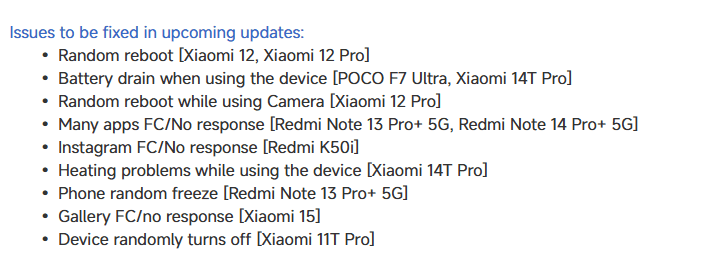
In its most recent bug report, Xiaomi describes how nine major vulnerabilities affecting flagship and mid-range smartphones have been fixed. This continuous openness strengthens trust in Xiaomi’s technical procedures and quality control by highlighting the company’s dedication to software stability and proactive customer assistance.
Addressing Critical Device Stability
Engineering teams are prioritizing random device reboots, especially on the Xiaomi 12 and 12 Pro. In order to guarantee a flawless shooting experience, the Xiaomi 12 Pro’s camera application crashes are also being actively reviewed.
Battery and performance
Additionally, they are releasing updates to address battery depletion that affects users of the 14T Pro and POCO F7 Ultra. Additionally, enhancements to thermal management and power efficiency measures are being implemented to solve the 14T Pro’s overheating problems.
Multiple application-specific problems are in the process of being resolved:
These updates cover the whole ecosystem, guaranteeing consistent software optimization for premium and low-cost models alike. The company’s strategy ensures that users in every sector get the same level of assistance and attention.
Stay connected with the latest from Droid Tools—follow us on X @droid_tools, like our page on Facebook, check out our updates on Instagram, and follow us on Google News for real-time news, device tips, and mobile tech insights.
A mid-range gaming PC used to boast about having sixteen gigabytes, but a common sale slip now attributes that amount to a rectangular glass slab that fits in your pocket. A pre-Independence Day fireworks show for spec hunters, Walmart’s business section quickly revealed details about Nothing’s next Phone 3, including 16 GB of LPDDR5X, 512 GB of UFS 4.0, and a July first street date. This is also the first time Nothing is formally bringing its phone to the US borders.
Nothing Phone 3 price and specs
The price of that top-tier configuration is anticipated to be $899, whereas a 12 GB/256 GB device costs about $799. Finally, AT&T and T-Mobile 5G capability is available to North American customers, removing the import-phone issues that plagued previous versions. This high pricing betrays Nothing’s confidence that, if the focus switches from camera count to brain horsepower, hardware alone may overtake established titans.
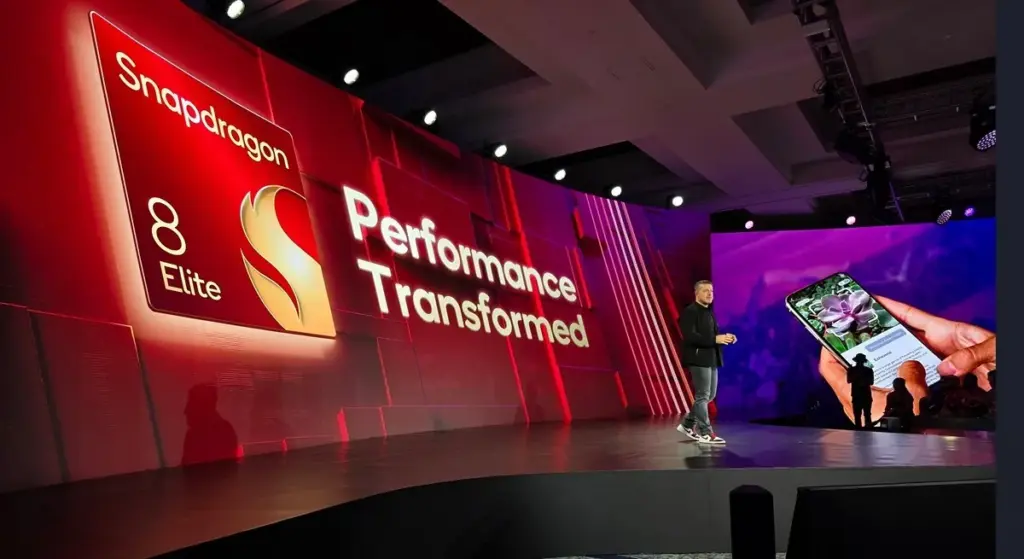
According to reports, Qualcomm’s next Snapdragon 8 Elite has 60 TOPS of on-chip AI grunt, but if Android continues to remove tensor weights, the hungry silicon will still lag. While you doom-scroll, translate, and sketch-to-image simultaneously, a seven-billion-parameter language model is residing in sixteen terabytes. When the Gemini Nano failed to load on 8 GB Pixels, Google realized the limit; it would be better to go overboard than to subsequently apologize.
AI is coming to Nothing
AI-generated wallpapers, offline transcription, and a ChatGPT-lite that never spills a byte outside of your SIM are all features you can expect to see at the keynote. The true magic will be subtle: frame buffers, tensor cues, and next-step suggestions finally coexisting in memory, resulting in perceptual haptics that feel instantaneous and predictive caching. RAM will be the new battery in 2025; consumers won’t feel any pain until it runs out.
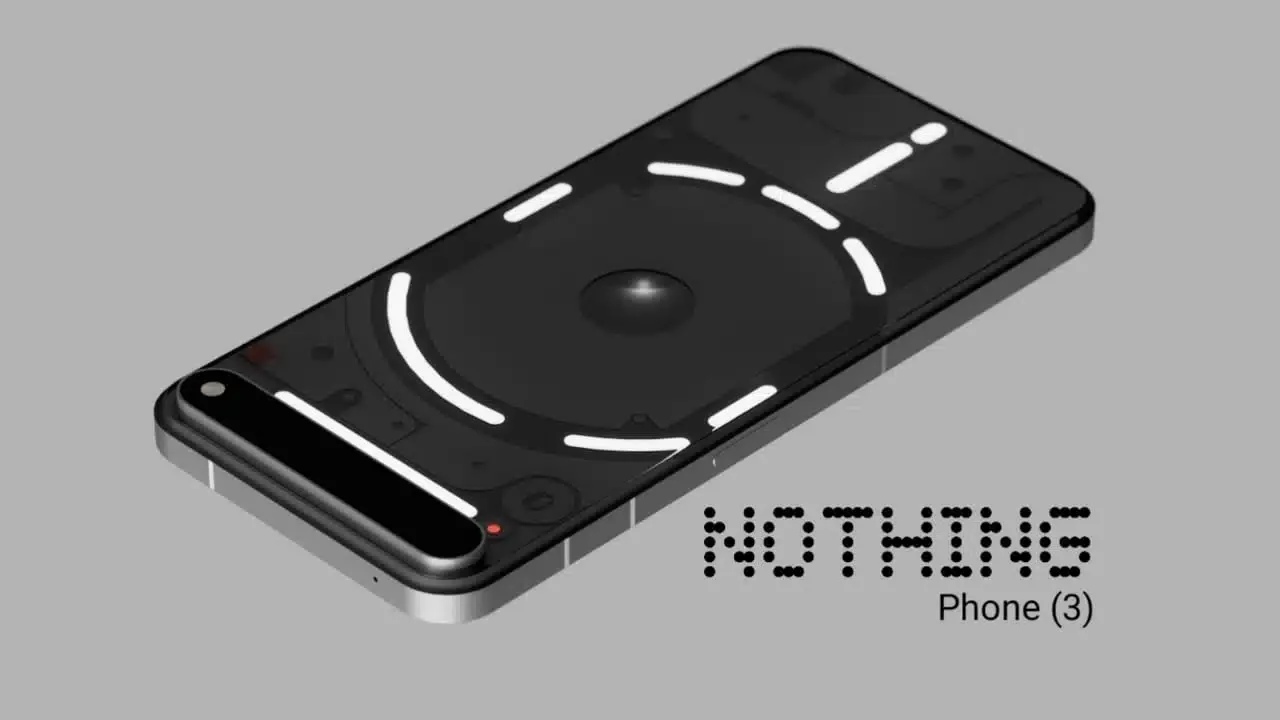
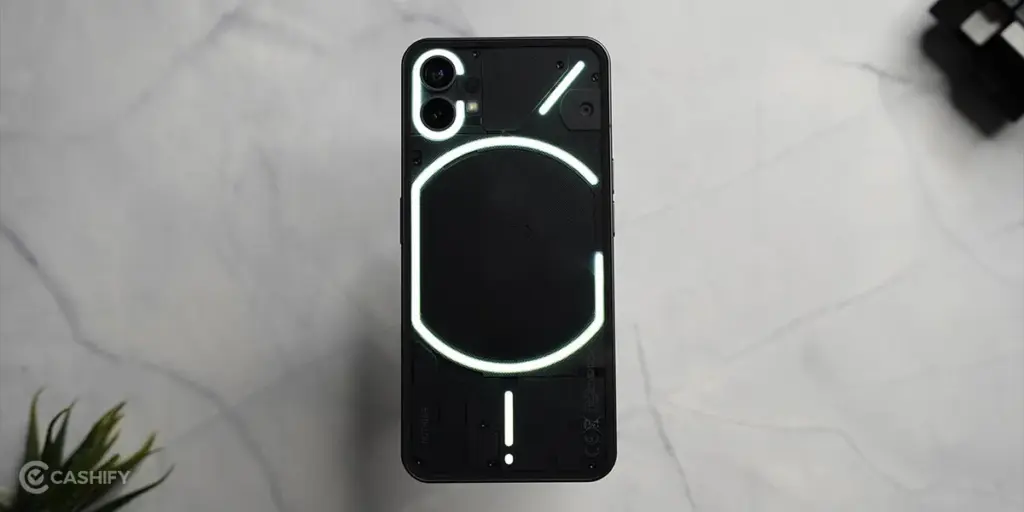
However, realistic theater and performance theater must share the focus. Its recognizable Glyph light bars have not been given a death certificate. In dim subway trains, two generations of Morse-code strips became cult favorites, but improvement necessitates development. The Glyph Matrix is a transparent rear plate with a dotted halo of individually programmable LEDs that can scroll text and trace icons and emoticons.
We don’t know for sure, but it appears that the wireless charging coil has also been removed in the ultimate bear hug due to the Glyph Interface’s demise. Rumor has it that the new Glyph Matrix occupies the space that was previously occupied by the wireless charging coil, which essentially became a crucial component of the flagship phone’s iconic design. The matrix seems to be the ideal location for the circular light grid, but there is no reliable way to tell if it actually replaces the Qi2 coil.
Mischief ensues when that canvas is combined with on-device AI inference. The LEDs may turn into a silent progress bar as diffusion models create an illustration, pulse in harmonic waves that reflect the mood of your playlist, or remain inactive until a predictive engine determines the alert is actually worth looking at. At last, hardware transforms from a ringtone to ambient UX.
Ambition rarely moves by itself. Whatever watt-hour benefits come with the anticipated 5,000 mAh battery could be erased by more than two hundred LEDs using power in addition to a more demanding NPU. Moving the coil could result in reduced wireless charging speed or the complete elimination of reverse charging. While you wait for an AI recipe recommendation, your pocket might serve as a hand warmer if the temperature calculations are incorrect.
The arc is still pointing ahead. Smartphones used to compete on the basis of megapixels, then refresh rates; in 2025, neural FLOPS and programmable lumens will choose the winners. Phone 3 outlines a future in which the interface and hardware literally light up one another by fusing 16 GB of breathing room with a light-spewing, AI-aware rear panel. The concept pushes the industry toward gadgets that think more deeply, glow more intelligently, and feel distinctly alive, even if the first Matrix flickers.
Stay connected with the latest from Droid Tools—follow us on X @droid_tools, like our page on Facebook, check out our updates on Instagram, and follow us on Google News for real-time news, device tips, and mobile tech insights.
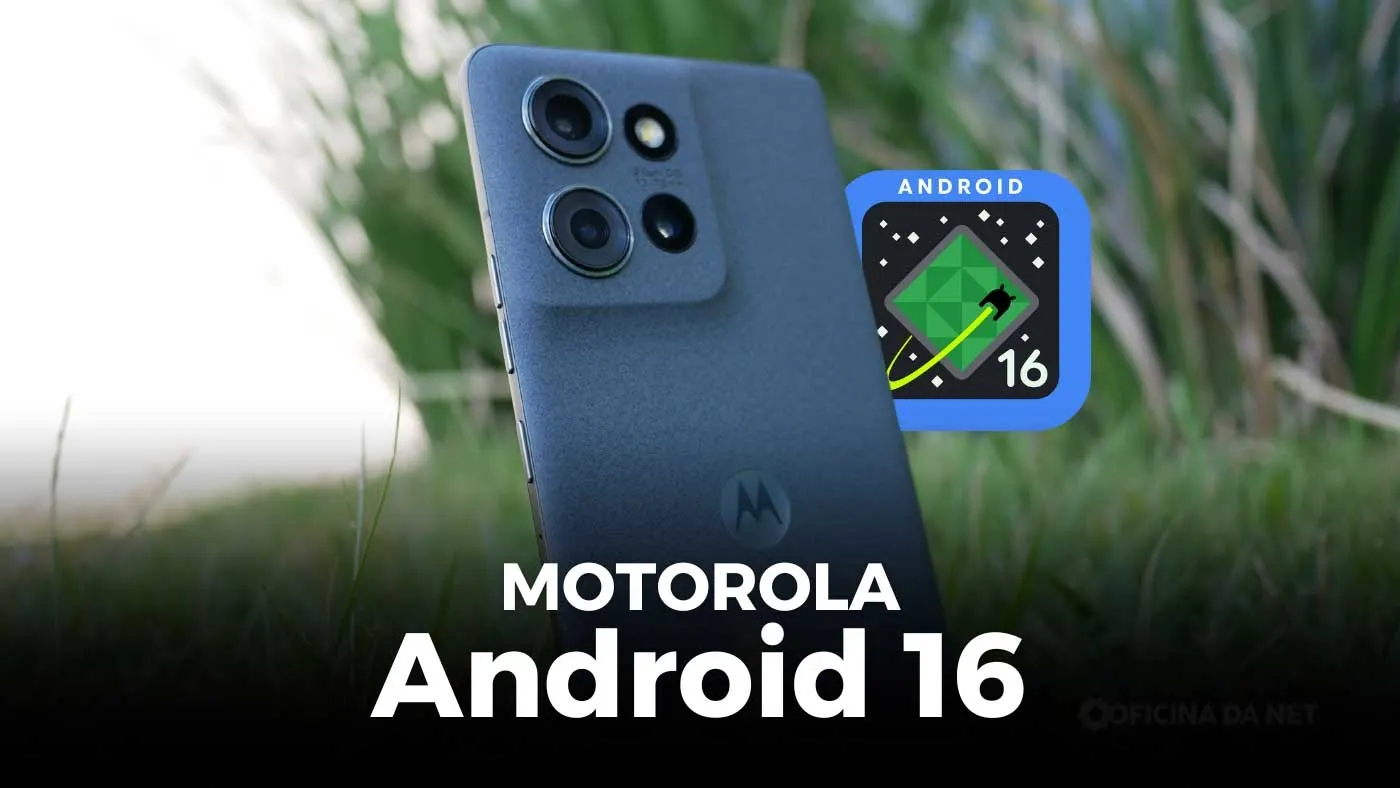
Owners of Motorola phones, take note! For you, this monsoon has a unique timeline of occurrences. In addition to the recent Motorola phone releases and the strong market demand for these phones, current patterns indicate that you should expect an Android update soon. Indeed, it is correct. Numerous Moto phones will soon be running Android 16, so you should update to the newest OS version as soon as you can. To learn which devices will get the Android 16 upgrade, let’s read this article.
Android 16 Update: Key Insights That You Should Know
With the latest updates and improvements that your Android devices undoubtedly require Android 16.
For example, Android 16 mimics iOS Live updates by introducing dynamic features like real-time status bar apps updates.
Additionally, by removing forced screen points on large devices, it improves tablet usage. Additionally, it offers adjustable refresh rate, which helps to improve battery smoothness and efficiency.
The most recent version of Android 16 has it all: bundled notifications, cooldown choices, streamlined alerts, a new volume slider, divided quick settings, and small heads-up displays. The floating bubbles, which previously only supported notifications, now support entire apps, giving you some unique UI elements.
Speaking of widgets, Android 16 brings back the lock screen widgets along with Gemini access and clearer notification icons. iOS Dynamic Island is mirrored in Rich Ongoing Notifications.
Last but not least, this OS update offers amazing camera support. HDR10+ and 8K are supported by its Advanced Professional Video (APV) Codec. Gemini extensions, vertical text support, Privacy Sandbox, cloud compilation, and improved tablet desktop mode are some of the other standout improvements of the most recent Android 16 version.
Motorola devices that will get Android 16 in 2025
In June 2025, the Android 16 version will be released, and all of the most recent updates will be available on popular Motorola devices. The Android 16 Update may be available for phones that were just released, those that are now available, and those that will be released between July 2025 and September 2025. Let’s view the entire list right here.
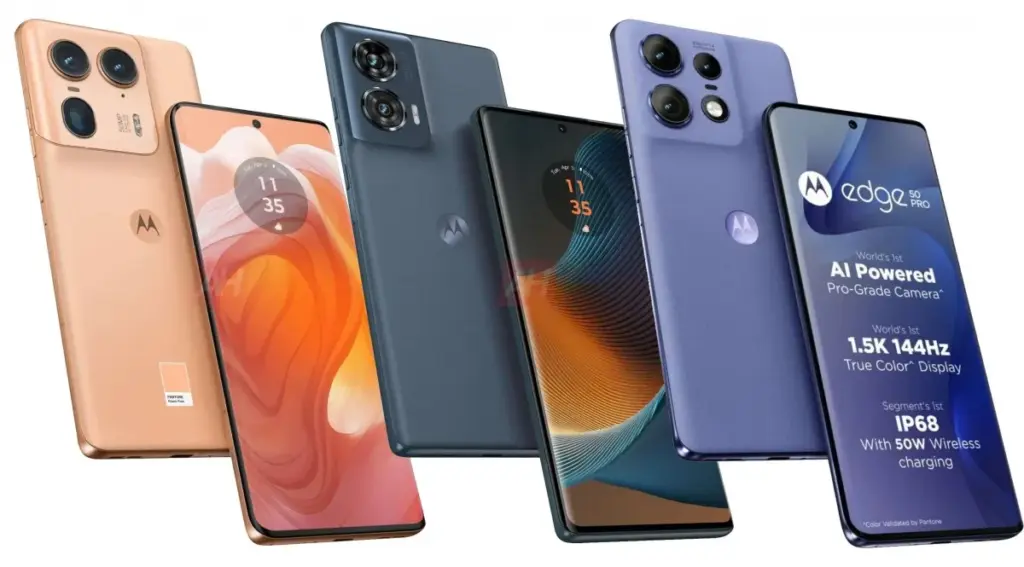
The Edge series phones are an amazing flagship line in the phone industry, with curved edges, a bright display, a sleek design, and never-before-seen capabilities with every new version. The Edge series phones’ price range and “value for money” label have been their main selling points.
Motorola Edge Series
Here is the list of all the Motorola Edge series phones which will receive the Android 16 update:
Edge 50
Edge 50 Fusion
Edge 50 Neo
Edge 50 Ultra
Edge 50 Pro
Edge 60
Edge 60 Stylus
Edge 60 Fusion
Edge 60 Pro
Edge 40 Pro
Motorola Razr Series
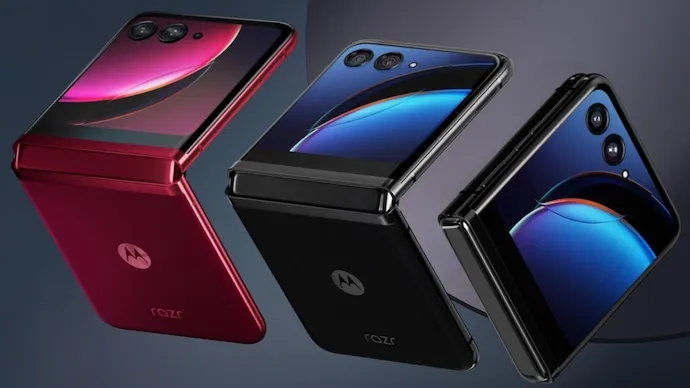
Motorola produced the most inventive foldable phones. In the market, Motorola’s Razr series phones have enjoyed an incredible run of popularity. For instance, the Motorola Moto Razr 40 boasts a sizable 6.9-inch full-HD+ pOLED display with an inventive foldable design. It also boasts a high refresh rate of 144 Hz, which makes for a fluid and engaging viewing experience. The robust Snapdragon 7 Gen 1 SoC and 12GB of RAM enhance the performance features for smooth and quick operation.
Motorola produced the most inventive foldable phones. In the market, Motorola’s Razr series phones have enjoyed an incredible run of popularity. For instance, the Motorola Moto Razr 40 boasts a sizable 6.9-inch full-HD+ pOLED display with an inventive foldable design. It also boasts a high refresh rate of 144 Hz, which makes for a fluid and engaging viewing experience. The robust Snapdragon 7 Gen 1 SoC and 12GB of RAM enhance the performance features for smooth and quick operation.
Here is the list of all the Motorola Razr series phones which will receive the Android 16 Update.
Moto Razr 50
Moto Razr 50 Ultra
Moto Razr 60
Moto Razr 60 Ultra
Moto Razr 40
Moto Razr 40 Ultra
Moto G Series
The Motorola G series phones are the market’s favorite among consumers on a tight budget. The Motorola G series phones are very impressive, catering to lower budget categories while offering some of the newest features.
Here are the Motorola G series phones which will get the Android 16 Update:
G85
G56
G75
G64
G54
In conclusion, the Android 16 update will be available for all of the most recent Motorola phones from the Edge, Razr, and G series. These Moto phones will get cutting-edge features with the QPR beta version, the most recent release of Android 16.
As a result, all Moto users can anticipate improved performance, more intelligent features, and a more streamlined user interface. The capabilities of your phone will be enhanced by this upgrade, regardless of whether you’re using a stylish Edge, a folding Razr, or an affordable G series!
Stay connected with the latest from Droid Tools—follow us on X @droid_tools, like our page on Facebook, check out our updates on Instagram, and follow us on Google News for real-time news, device tips, and mobile tech insights.
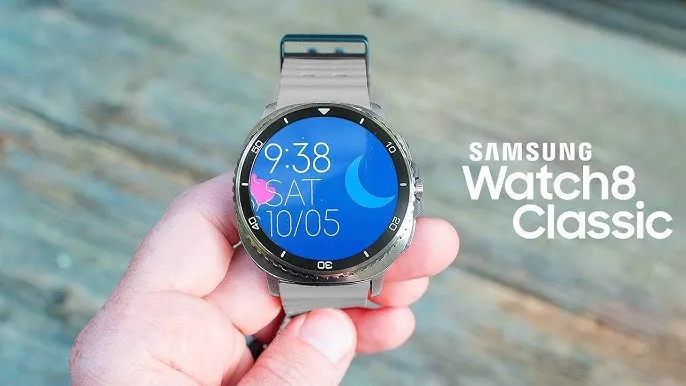
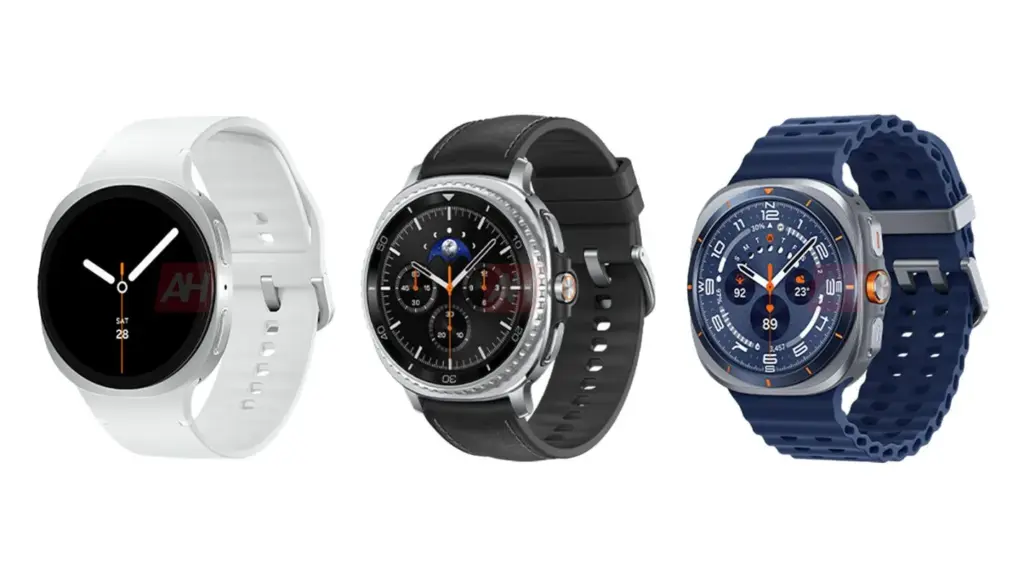
Next month, Samsung will be launching new smartwatches at its Unpacked presentation. We already know that the business will release a new version of the Galaxy Watch Ultra, the Galaxy Watch 8, and the Galaxy Watch 8 Classic.
The design of these smartwatches and the new color options that the firm will provide are revealed in new renders that were posted online today by Android Headlines. In 2025, Samsung has decided to use a squircle design for their complete portfolio.
Samsung’s new high-end goods feature blue as their hero color.
The next Samsung Galaxy Watch models won’t be completely square or round like earlier models, as we’ve seen in other leaks as well. The term “squircle” refers to the design’s intermediate position between a circle and a square.
Additionally, it is believed that this year will see the reintroduction of the Classic model, which features a distinctive physical bezel. Neither the new Galaxy Watch Ultra nor the standard Galaxy Watch 8 will have a physical bezel. The Quick button will also be available on the Galaxy Watch 8 Classic, according to these renders.
The new blue color option for the 2025 Galaxy Watch Ultra is an intriguing development. Previously available exclusively in orange and dark gray, the Galaxy Watch Ultra is a colorful new addition. Given that the next Galaxy Z Fold 7 will also be offered in a striking shade of blue, blue is probably Samsung’s hero color for new devices.
Although Samsung has not officially confirmed any information regarding the upcoming devices, we should anticipate more leaks in the days ahead. With the new products arriving on store shelves before the end of the month, the event itself is probably scheduled for mid-July.
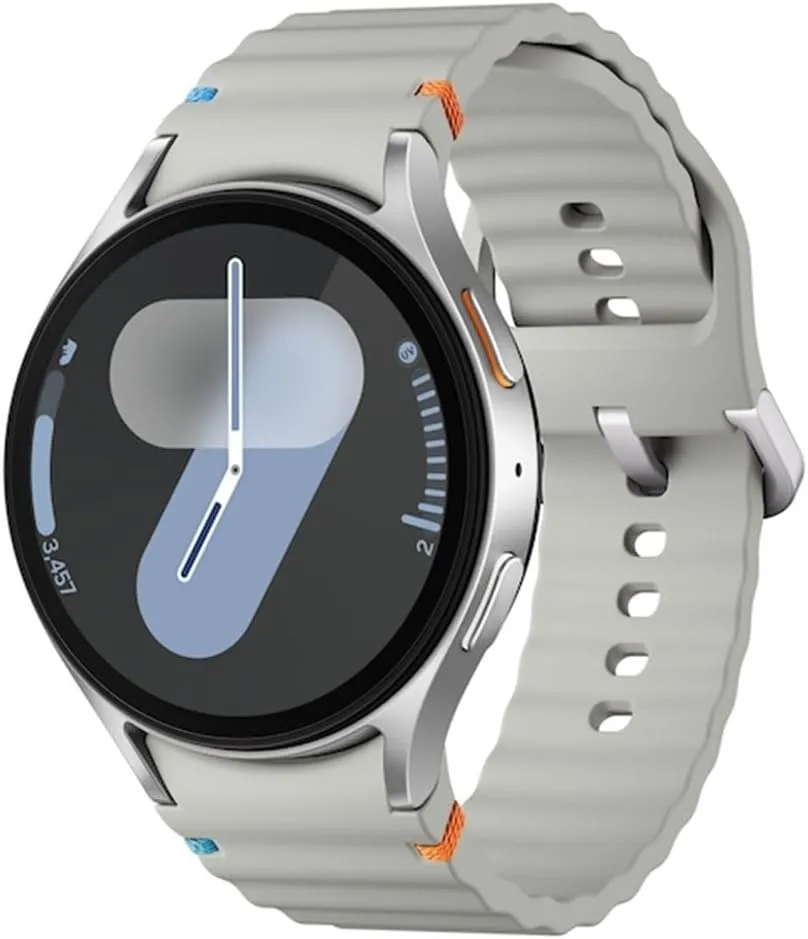
Samsung Galaxy Watch 7
Looking for a great way to bring out your personal best every day? Challenge yourself to excel on your next run or bike ride using tracking with Galaxy AI that lets you compare your current performance to your last one
The 2025 Snapdragon Summit is scheduled by Qualcomm for September 23–26, 2025. The US-based chipmaker is probably going to reveal the Snapdragon 8 Elite 2, which will power the premium phones of the future. According to a recent Weibo post by trustworthy tipster Digital Chat Station, this next SoC will have significant improvements in processing and graphics capabilities.
According to the leak, Qualcomm’s second-generation Oryon CPU architecture would be available in the Snapdragon 8 Elite 2. According to reports, the chipset is aiming for single-core test scores of over 4,000 points and multi-core scores of up to 11,000 points on Geekbench 6. The new chip promises a considerable performance boost over the first-generation Snapdragon 8 Elite, which scored about 3,100 and 9,800, respectively.
Snapdragon 8 Elite 2: big upgrade in CPU and GPU performance
A 16MB GMEM cache and an updated Adreno 840 GPU are also anticipated to be included in the platform, which will enable it to easily handle demanding visuals and graphics-intensive applications. These improvements imply that future flagship smartphones will prioritize improved thermal management and performance efficiency.
Snapdragon 8 Elite 2 known specs
According to rumors, the Snapdragon 8 Elite 2 will offer notable upgrades over its predecessor with a 2+6 CPU structure and a potential clock speed of up to 5GHz. With a base frequency of 4.4GHz, which is marginally higher than the 4.32GHz of the previous iteration, the CPU is anticipated to be constructed using TSMC’s third-generation 3nm process.
Xiaomi is probably going to be the first company to release phones with this chipset, specifically the Xiaomi 16 and Xiaomi 16 Pro, based on past trends. The OnePlus 15, iQOO 15, 15 Pro, Honor Magic 8 series, Realme GT 8 Pro, Nubia Red Magic 11 series, and Redmi K90 series are possible more early adopters.
The new processor is anticipated to be included in the Vivo X300 Ultra and Oppo Find X9 Ultra, which are scheduled to launch next year. It’s unclear, meanwhile, if the Xiaomi 16 Ultra will use the company’s proprietary Xring SoC or the Snapdragon processor.
Google withheld the release of the Pixel device trees and hardware repositories, which are crucial for makers of custom ROMs, when Android 16 was released earlier this week. Some began to speculate that “AOSP is being discontinued” as a result of this. Despite Google’s denials, the Pixel modification appears to be deliberate.
Google made the source code for Android 16 available to the Android Open Source Project on Tuesday. In a significant departure from previous releases, the Pixel device trees and other code that were utilized to modify the AOSP release to fit particular (made by) Google hardware were not made available.
Custom Android ROMs will struggle to produce their OS updates without the Pixel hardware repos, which contain the device trees, driver binaries, and other components. Security (vulnerability) researchers may also be affected by this.
As a result, some community members conjectured that AOSP was being phased out. Seang Chau, the vice president and general manager of Android, said on Wednesday night that “AOSP is NOT going away” in general. Google has stated that it will continue to be “dedicated to AOSP updates,” speaking directly to developers.
The Android team’s statement does appear to indicate that Pixel device trees will no longer be available. A “reference target” that is “independent of any particular hardware, even those from Google” is what AOSP hopes to provide in the future.
AOSP needs a reference target that is flexible, configurable, and affordable – independent of any particular hardware, including those from Google. For years, developers have been building Cuttlefish (available on GitHub as the reference device for the project) and GSI targets from source. We continue to make those available for testing and development purposes.
Once more, Google is “dedicated to AOSP,” but the future will be more difficult for people who run custom ROMs.
Stay connected with the latest from Droid Tools—follow us on X @droid_tools, like our page on Facebook, check out our updates on Instagram, and follow us on Google News for real-time news, device tips, and mobile tech insights.
Only a few weeks remain until Nothing’s third significant smartphone release, and as anticipated, the pre-launch storyline includes equal parts carefully planned confusion and controlled leaks.
The form, functionality, and placement of Nothing Phone 3 remain unclear despite the device’s July 1 introduction date. It’s either the brand’s first attempt at a real flagship or a continuance of its affordable-premium recipe, depending on whatever official teaser or leak you read.
In any case, this is more than just specs. In 2025, design, interface minimalism, and possibly artificial intelligence will be the main topics of discussion in classic Nothing fashion. Here is everything we currently know about Nothing Phone (3).
No more Glyph interface
For a brand that has leaned so heavily on design for differentiation, it was surprising when Nothing publicly claimed it has “killed” the Glyph interface.
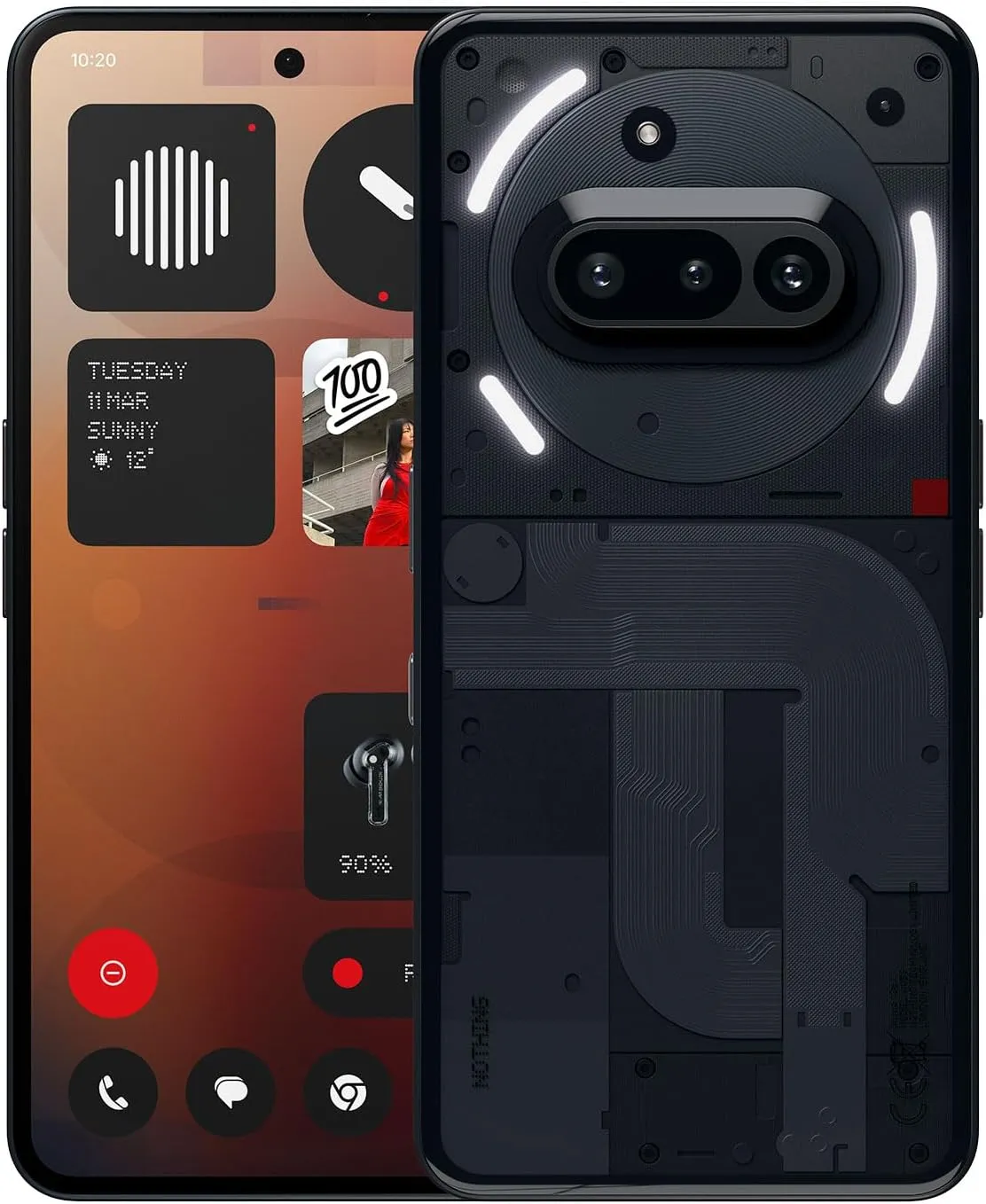
Together with a transparent back panel, these distinctive LED lighting strips have come to represent the brand. Additionally, they served as camera fill illumination, charging status lights, and notification indications.
The Glyph interface has turned into a more specialized function than a common one, though, and nothing seems to have recognized this. The company’s recent public confirmation that it is discontinuing the Glyph interface for the Phone 3 is probably due to this.
As with the Asus ROG Phone 9, the gadget might instead include a more customisable LED panel. Recent teases suggest that this could feature animations and icons in addition to simple glyph-like warnings.
Design
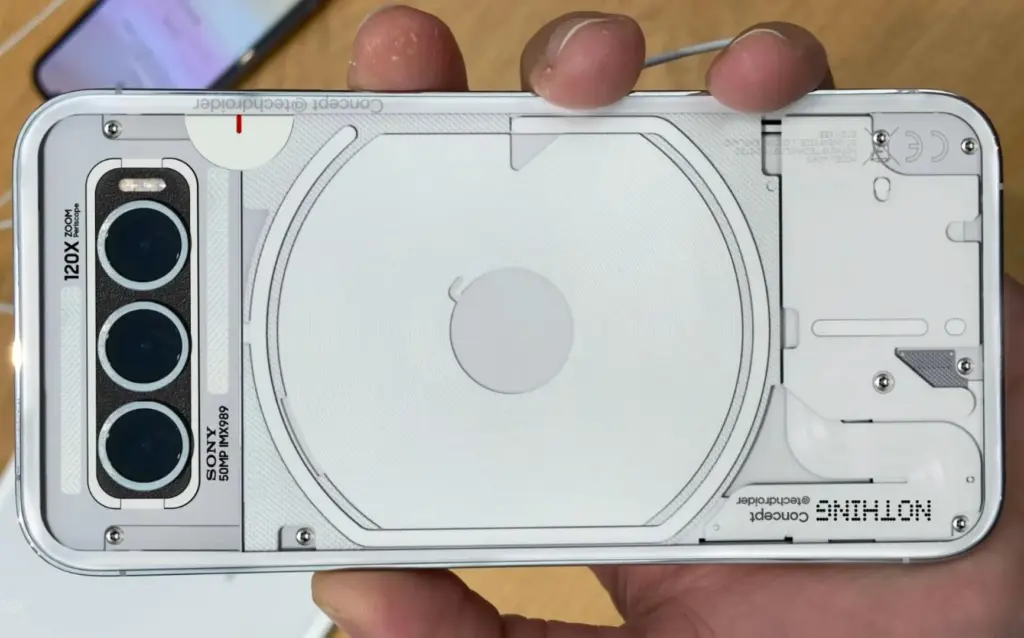
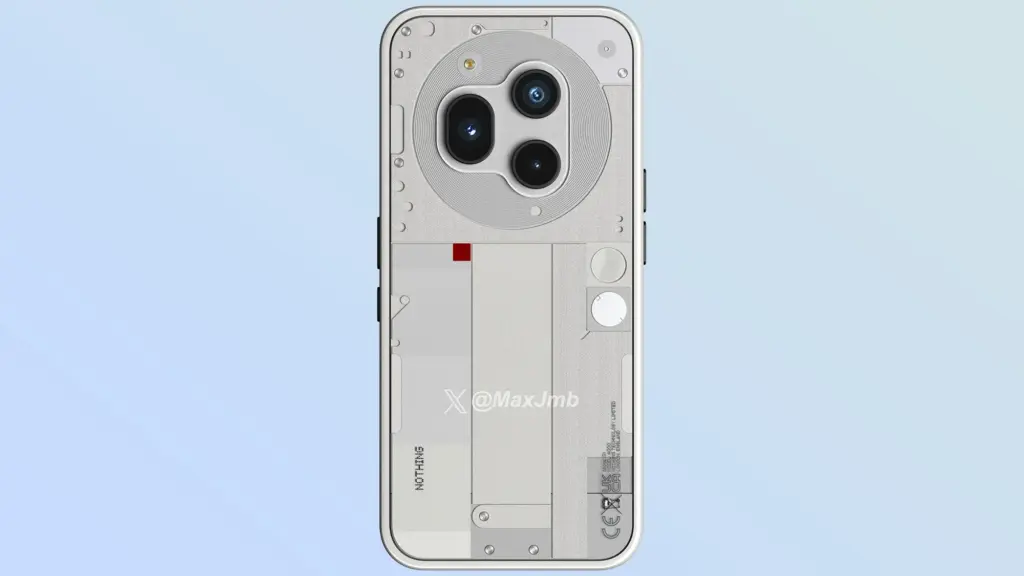
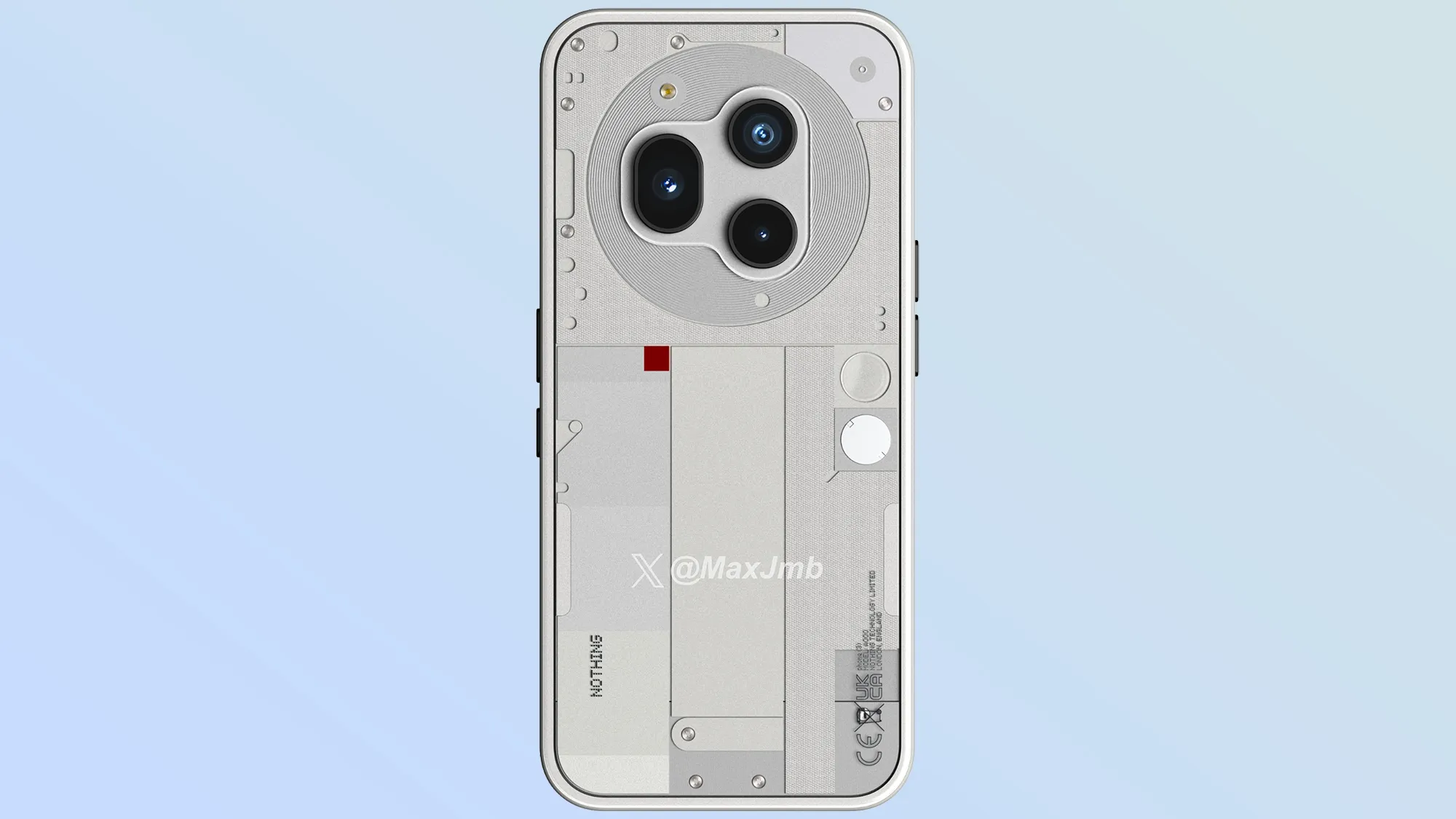
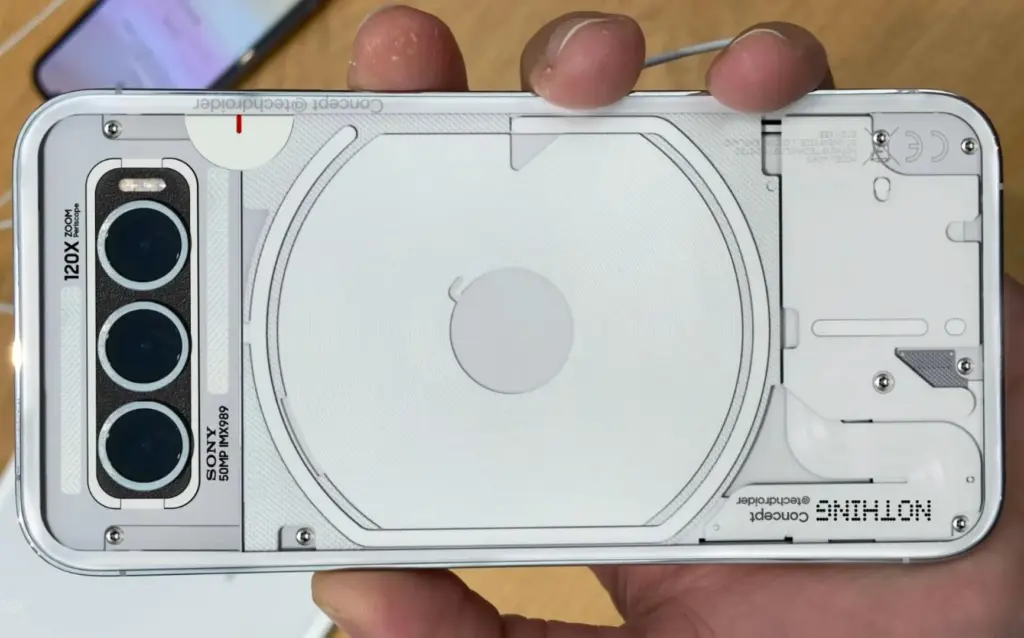
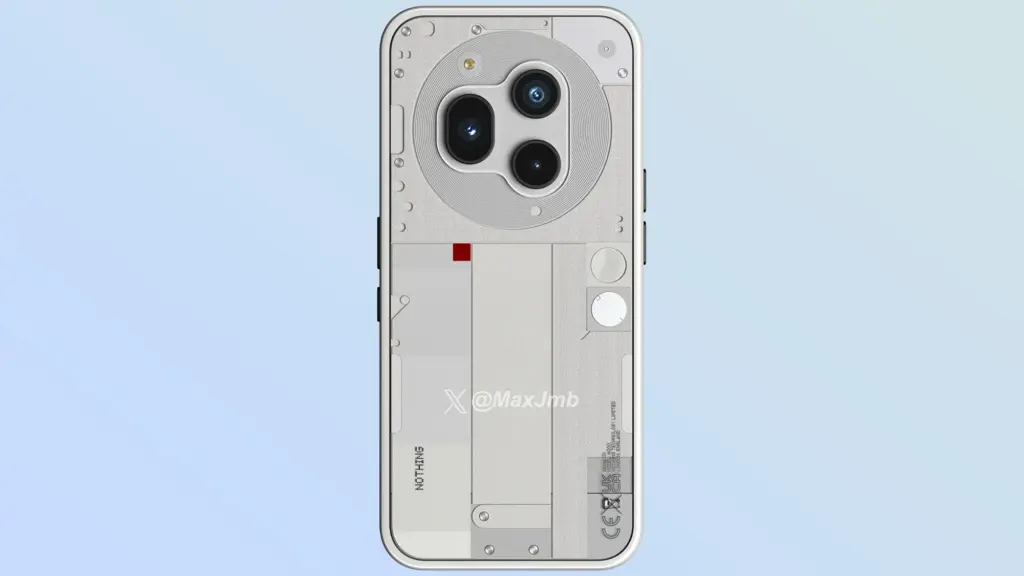
The Nothing Phone 3 differs significantly from its predecessor in terms of design. Recently, a leak revealed the entire design, which had the anticipated translucent appearance. However, it appears that there are more differences than commonalities.
Notably, there is no Glyph interface, and three cameras have been added to the back in an unusual configuration. At first appearance, it’s a daring and divisive look, but whether or not users would accept it is a different matter.
Specs
According to reports, the Nothing Phone 3 would have a 6.7-inch LTPO AMOLED screen with a refresh rate of 120 Hz. According to reports, the camera configuration consists of a 50MP primary sensor in addition to telephoto and ultrawide lenses.
The next device’s performance is arguably its most contentious feature. Since Nothing CEO Carl Pei has already said that the Nothing Phone 3 will be a flagship product, it is reasonable to anticipate a processor from the Snapdragon 8 series or perhaps even a MediaTek Dimensity chip.
It’s noteworthy to note that nothing has ever put delivering consistent performance ahead of aiming for the best specifications. Therefore, it wouldn’t surprise us if the Nothing Phone 3 ran on a flagship chip from a prior generation instead of the newest one.
A 5,000mAh battery, an improvement over the Phone’s 4,700mAh unit, is reportedly going to power all of this (2). It is anticipated that 20W wireless and 50W wired charging would be available.
Essential Key and Android 15
Depending on when the final build is released, the device is anticipated to come with Android 15 overlaid with either Nothing OS 3.0 or 3.2. According to Pei, this OS update will have a “cleaner” appearance and include AI into the user interface.
Nothing’s AI vision is dubbed “Essential Space,” a system-level interface that facilitates context-aware tasks, recordings, and snapshot management. With integrations like ChatGPT, the firm is already experimenting with AI in its earbuds to offer voice-activated assistants.
However, as with a lot of what Nothing promises, it’s still uncertain how useful AI will be in real life. It’s difficult to predict if this will be truly beneficial or merely superficial branding until we see it in action.
Is Nothing Phone 3 going to be a flagship?
The Nothing Phone 3 will adhere to the company’s basic principles of utilitarian aesthetics, minimalist design, and a purposefully simplified software experience, if the initial indications are any indication. However, it’s unclear how the business plans to define “flagship.”
Competition is intense at the upper end of the market, and factors like camera performance, AI integration, display quality, and long-term software support are becoming more and more important.
The lack of verified high-end capabilities like a telephoto lens, variable refresh rates above 120Hz, or real-time AI picture processing could keep it one step behind true flagships from Samsung, OnePlus, or Apple, even though Nothing’s design is unique.
Availability and pricing
On July 1, 2025, the Phone (3) will make its debut, right before Samsung’s summer Galaxy Unpacked presentation. According to reports, the cheapest edition of the Phone (3) with 12GB RAM and 256GB storage costs $799, or roughly Rs 68,320.
In comparison to the same model of the Nothing Phone 2, this is essentially a $100 (about Rs 5,560) price increase. In contrast, the more expensive 16/512GB variant will set you back $899, or around Rs 77,500. Finally, there will be two color options for the Phone (3): Black and White.
Nothing Phone (3a)
The Nothing Phone (3a) features a high-performance Snapdragon 7s Gen3 processor built on a 4nm TSMC process, 8-core, up to 2.5 GHz, and is equipped with WiFi 6, Bluetooth 5.4, GPS/Glonass/Galileo positioning.
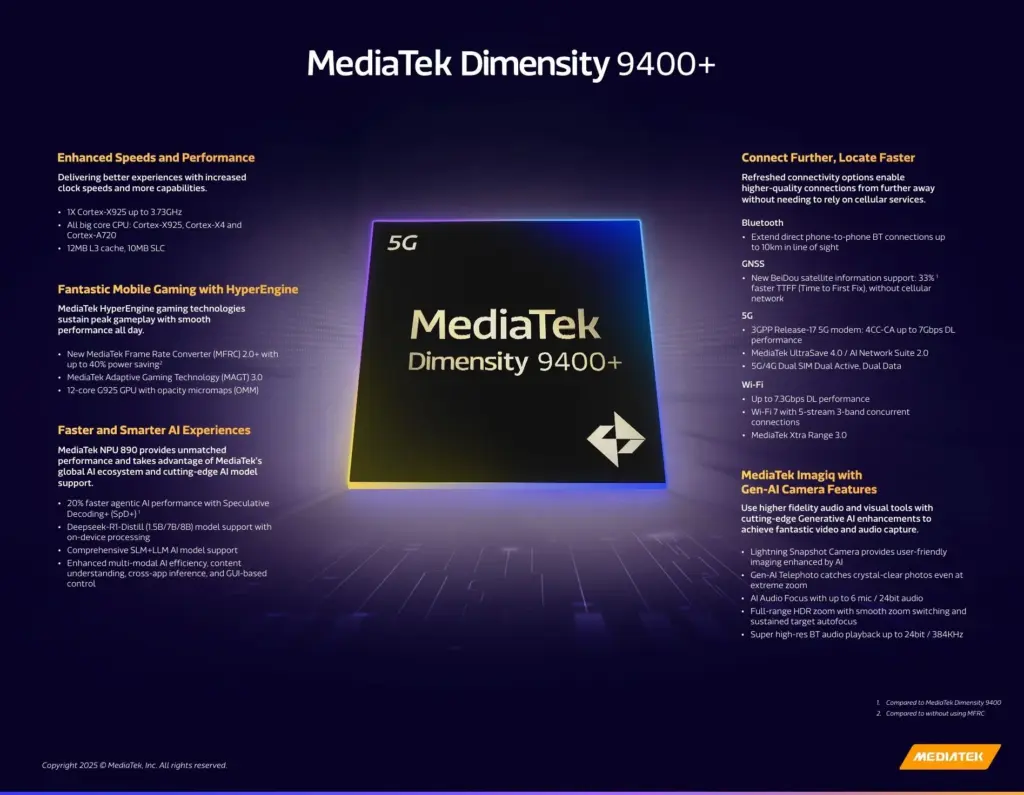
The flagship chipset, the Dimensity 9400+, was revealed in April as the replacement for the Dimensity 9400 from the previous year. It is constructed with TSMC’s state-of-the-art 3nm technology and has a powerful CPU and GPU that guarantee seamless operation even under demanding conditions.
To discover how the flagship-grade MediaTek Dimensity 9400+ chipset compares to its rivals, we’ll be examining its benchmark scores here.
Note: The Vivo X200s (powered by MediaTek Dimensity 9400+) underwent the following benchmark testing.
MediaTek Dimensity 9400+ AnTuTu score
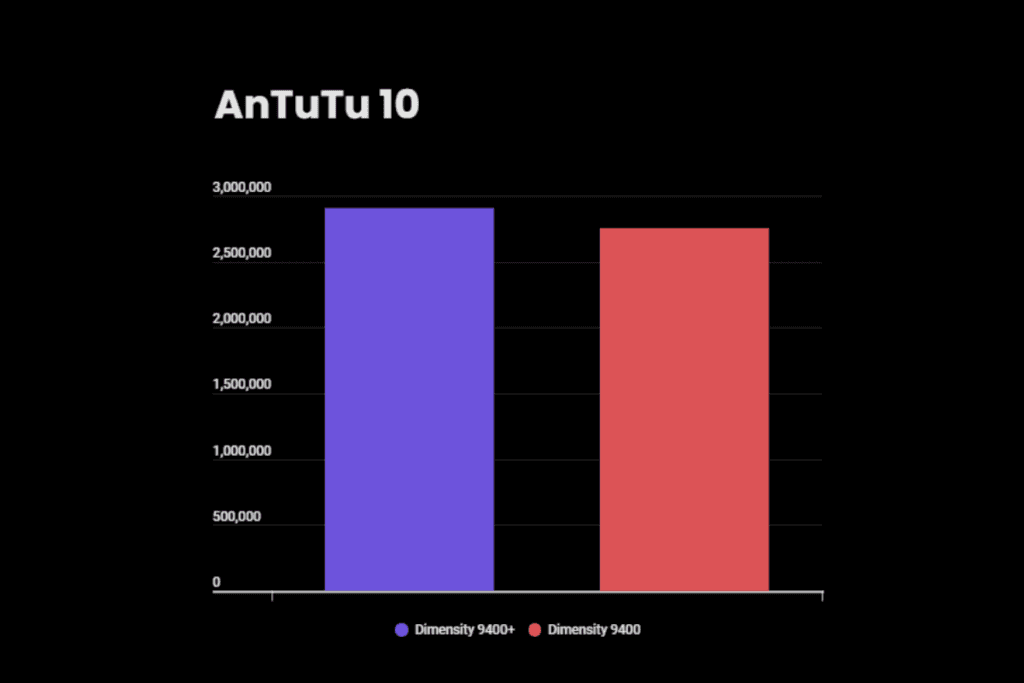
The Dimensity 9400+ receives more than 2.9 million points overall on AnTuTu v10. According to the breakdown, the CPU receives 625K points, the GPU receives 1.3 million, the memory receives 509K, and the user interface receives 459K.
In contrast, the Oppo Find X8, which is powered by the Dimensity 9400, has an overall AnTuTu score of about 2.7 million. There isn’t much of a difference between the two AnTuTu scores for the more recent chip.
Dimensity 9400+
Dimensity 9400
AnTuTu score
2,907,358
2,754,825
CPU
625,811
622,149
GPU
1,312,632
1,220,751
Memory
509,570
489,110
UX
459,344
422,815
Dimensity 9400+ Geekbench score
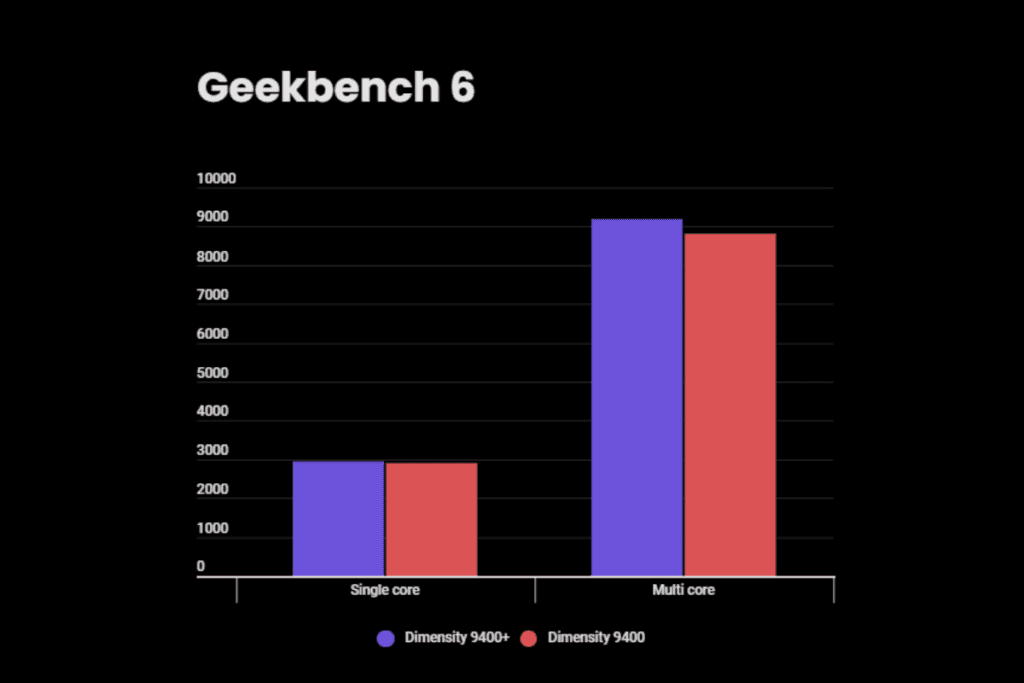
The Dimensity 9400+ receives 2,945 single-core and 9,184 multi-core marks in Geekbench 6. Once more, the Dimensity 9400, which boasts 2,904 single-core and 8,812 multi-core scores, is not a much better processor.
Dimensity 9400+
Dimensity 9400
Single core
2,945
2,904
Multi core
9,184
8,812
MediaTek Dimensity 9400+
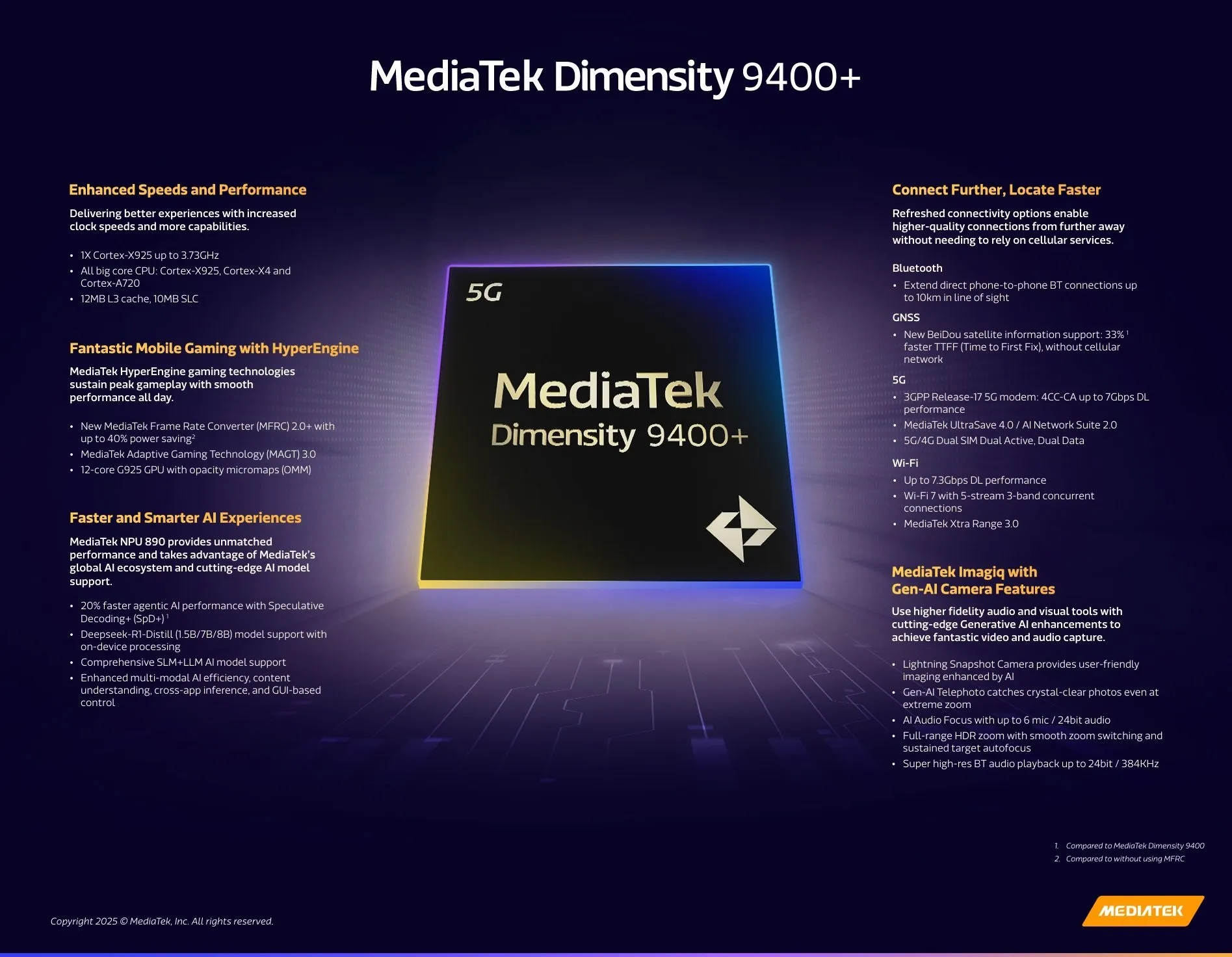
Compared to the Dimensity 9400, the Dimensity 9400+ isn’t much better. With the exception of a little boost in CPU speed for the big core, it still makes use of the same set of CPU cores—one Cortex-X925, three Cortex-X4, and four Cortex-A720. The manufacturing node (TSMC’s 4nm) and instruction set (ARMv9.2-A) remain unchanged.
The Mali-G9125 Immortalis MP12, which is based on ARM’s fifth-generation GPU architecture, offers no improvements at all. The MediaTek Frame Rate Converter tool has been improved, though not significantly. In well-known games, the updated version can provide twice the effective frame rate while also increasing power efficiency by up to 40%.
MediaTek would undoubtedly not miss out on the widespread use of agentic AI, as the Dimensity 9400+ offers a 20% quicker agentic AI performance than its predecessor with Speculative Decoding (SpD+). With on-device processing, the chip fully supports the DeepSeek-R1-Distill (1.5B/7B/8B) model.
With the exception of the newer Dimensity 9400+ chip, which increases phone-to-phone Bluetooth connections from 1.5km to 10km, connectivity isn’t getting any major changes. Everything else is the same, so it has a 3GPP Release-17 5G modem, Bluetooth 6.0, and Wi-Fi 7 (peak speed 7.3Gbps).
Dimensity 9400
Info
Announced
April 2025
Process node
3nm (TSMC)
CPU
1 x Cortex-X925 — 3.73GHz 3 x Cortex-X4 — 3.3GHz 4 x Cortex-A720 — 2.4GHz
GPU
Arm Immortalis-G925 MC12 MediaTek HyperEngine Gaming Ray tracing support
NPU
MediaTek NPU 890
Camera
MediaTek Imagiq 1090 ISP Up to 320MP single camera Up to 8K/60fp video recording Features: Gen-AI Telephoto, Full range HDR zoom, real-time AI segmentation in video
Stay connected with the latest from Droid Tools—follow us on X @droid_tools, like our page on Facebook, check out our updates on Instagram, and follow us on Google News for real-time news, device tips, and mobile tech insights.