Tag: harmonyos

  • Huawei’s HarmonyOS leads over iOS in China for 6th quarter running

    Huawei’s HarmonyOS leads over iOS in China for 6th quarter running

    With its proprietary HarmonyOS, Huawei is gaining ground in the mobile operating system market and has overtaken iOS in China for the sixth consecutive quarter. It now seeks to displace Android as the market leader for mobile operating systems.

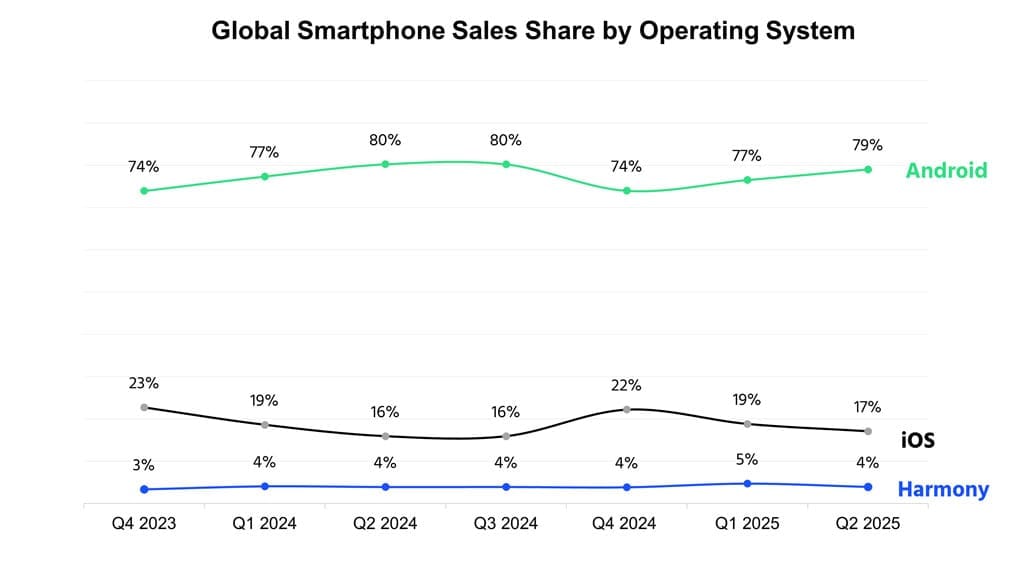
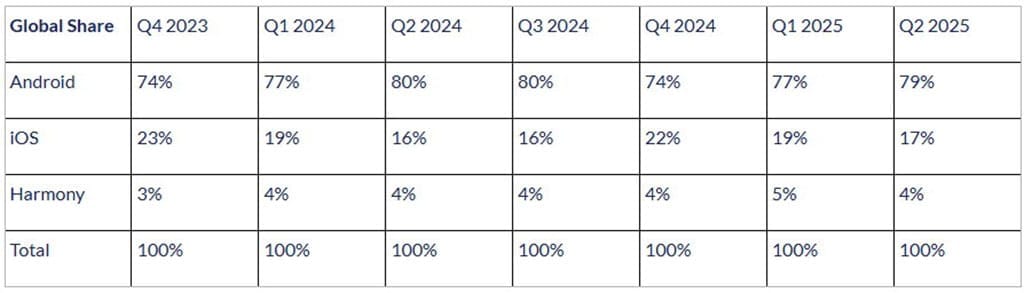
    At the moment, Android dominates the worldwide smartphone operating system market. Globally, it holds 79% of the shares. Huawei, however, intends to outperform this US-based competitor with its “NEXT” offering.

    According to the operating system report for Q2 2025, Counterpoint holds a share of the worldwide smartphone sales market. Despite gaining a sizable portion of the market, Android is losing ground in China as a result of HarmonyOS‘s quick ascent there.

    According to the research organization, Android is mostly restricted in China because of the escalating rivalry, and in India because of premiumization. However, the OS has been supported by companies like Vivo, Samsung, Motorola, and Honor during the quarter.

    For the 6th quarter, Huawei HarmonyOS stays ahead
    OS

    However, iOS also saw a 1% growth in its market share worldwide. It has performed admirably in a number of markets, including Brazil, the Middle East, and India.

    Because of the affordable iPhones and the recently released iOS 26 build version, iOS has also had the highest upgrade rate in the second quarter of this year.

    However, for the sixth straight quarter, Huawei’s HarmonyOS has pushed iOS further back in China. The legendary Pura X foldable and the latest Nova 14 versions deserve a lot of praise. Both models have attracted a lot of interest.

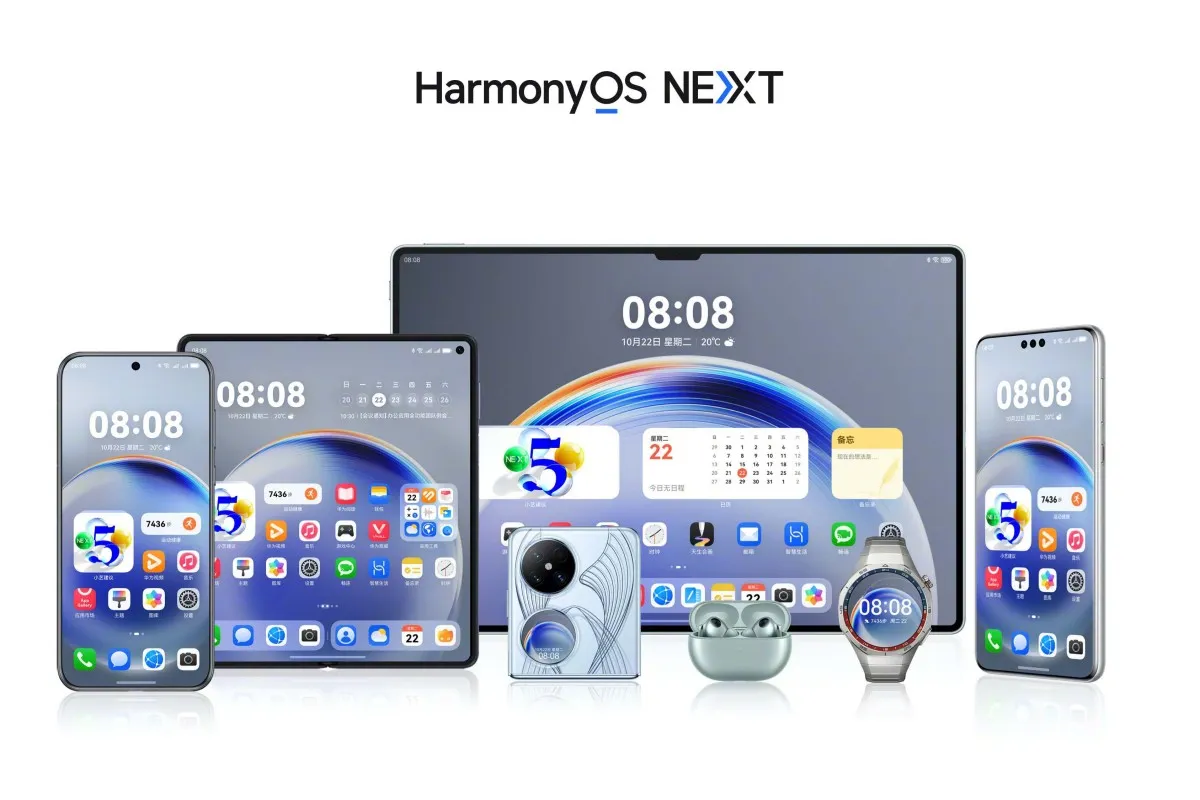
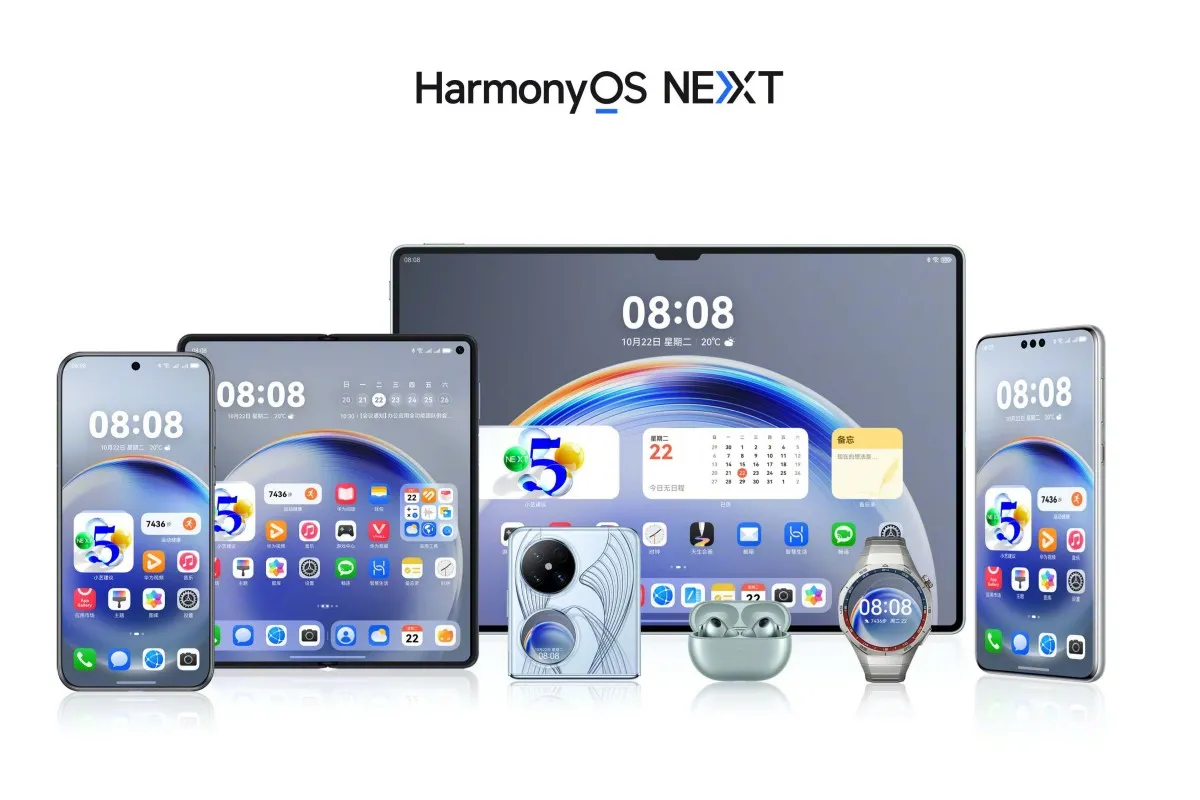
    The first device to release the stable HarmonyOS NEXT was the Pura X. Eye-tracking and a super Celia AI assistant were among the intriguing technologies it brought in.

    In order to provide a more dependable user experience, the Nova 14 series was the first conventional phone device to be pre-installed with the stable HarmonyOS 5.0.

    “HarmonyOS continues to grow in China and remains the second largest smartphone OS in the country for the sixth consecutive quarter. Huawei’s Nova series smartphones contributed heavily, and the foldable Pura X was also received well, keeping the brand competitive.” – said Counterpoint.

    Following this, Huawei plans to provide HarmonyOS 5.0 to the global market, initially with wearables and then with tablets. It would be interesting to observe when the operating system would overtake Android as the dominant player in the global smartphone market.
    global share1
  • Huawei Pura 80 Ultra – the new top DxOMark champion

    Huawei Pura 80 Ultra – the new top DxOMark champion

    Almost every year, the same story is told. The Huawei Pura 80 Ultra, a Huawei flagship that is technically unique on the smartphone market because to its unusual dual-lens telephoto construction, leads the DxOMark rankings in 2025. Charges of corruption in DxOMark’s purportedly impartial scoring methodology and criticism of Huawei’s continuously dominant position are frequent. This year is no different, with criticism and misunderstanding predominating in the comments section of an official social media post.

    In the most recent Huawei Pura 80 Ultra camera test, the Chinese manufacturer set a new record with a total score of 175 points. The Oppo Find X8 Ultra and the Vivo X200 Ultra came in second and third, respectively, a considerable distance behind. In the portrait, low light, indoor, and outdoor photography categories, the Huawei Pura 80 Ultra scores highly. Given the Pura 80 Ultra’s advanced telephoto solution, the Vivo X200 Ultra’s one-point victory in the newly released DxOMark test report was just in the zoom category.

    Huawei Pura 80 Ultra - the new top DxOMark champion

    Huawei Pura 80 Ultra camera has now drawbacks

    The testers’ criticisms of Huawei’s flagship model are remarkably limited. Only sporadic exposure and color fidelity instability, somewhat odd texturing in challenging lighting conditions, and certain image distortions like ghosting in video mode are listed as drawbacks. The current Pura flagship’s camera performs admirably in every other situation. Its strong dynamic range and, according to the test report, its superb color reproduction in challenging scenes—which is reportedly noticeably better than that of its competitors—are praised.

    Additionally, specifically listed as benefits are skin tones, detail, focusing, video stabilization, and the ultra-wide-angle camera. The test result states that there is very minimal noise in the images taken in low light. Many comparison images are included in the whole test report so that interested readers may determine whether the significant ranking difference between Xiaomi, Vivo, Oppo, and other companies is truly warranted.

  • Honor Phone Clone app now compatible with Android, iOS and HarmonyOS

    Honor Phone Clone app now compatible with Android, iOS and HarmonyOS

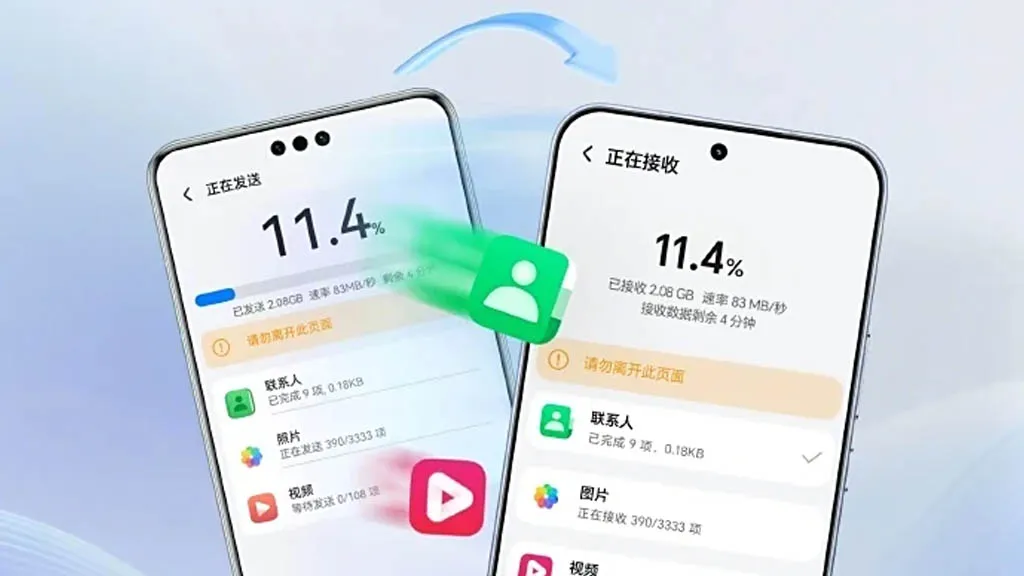
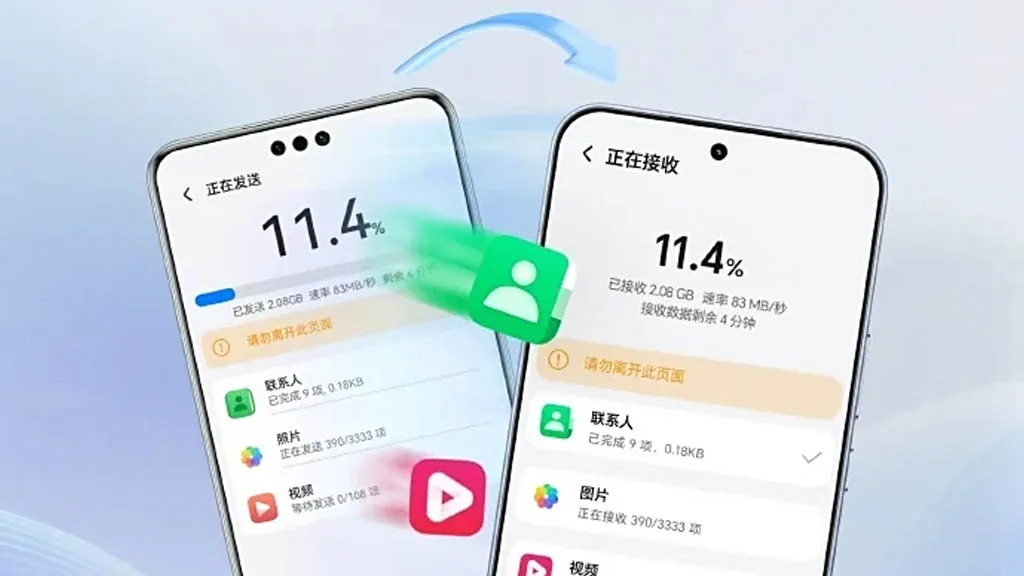
    A few months ago, Honor unveiled AI Connect, a technology that allows wireless file sharing between Honor and iOS devices from Apple. The company has now developed a new device cloning capability that is compatible with Huawei’s HarmonyOS Next, iOS, and Android.

    To enable device cloning with devices running the three smartphone operating systems listed above, Honor has updated its Device Clone software. Through cloning, users will be able to effortlessly move data between devices without the need for extra gear or attachments.

    Device Clone 1

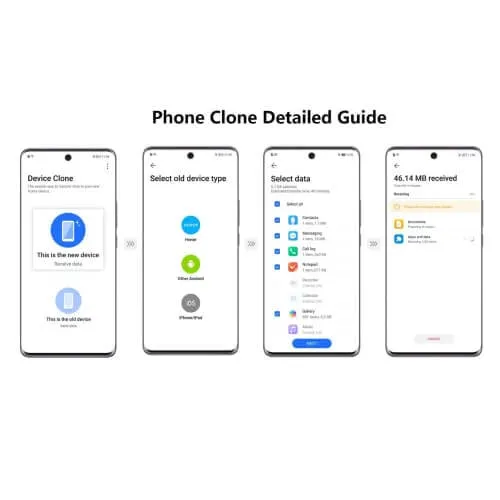
    Honor is the first brand to offer HarmonyOS Next data transmission as a result of this advancement. Users of Honor smartphones can download and install the “Device Clone” app from the official app store on both new and old devices in order to clone an old device.

    Next, open the Settings menu on the new smartphone and select Device Clone. Select Updates & System > Select Device Clone. Select the “This is a new device” option. Choose the “HarmonyOS” device type.

    blog mb

    On the old device, repeat the previous steps, but choose “This is an old device” rather than “This is a new device.” Next, link the two devices by scanning the QR code on the new device with the old one. Next, choose the data that needs to be moved to the new device and click “Next.”

  • Huawei HarmonyOS NEXT upgrade plan: Devices and Rollout Time

    Huawei HarmonyOS NEXT upgrade plan: Devices and Rollout Time

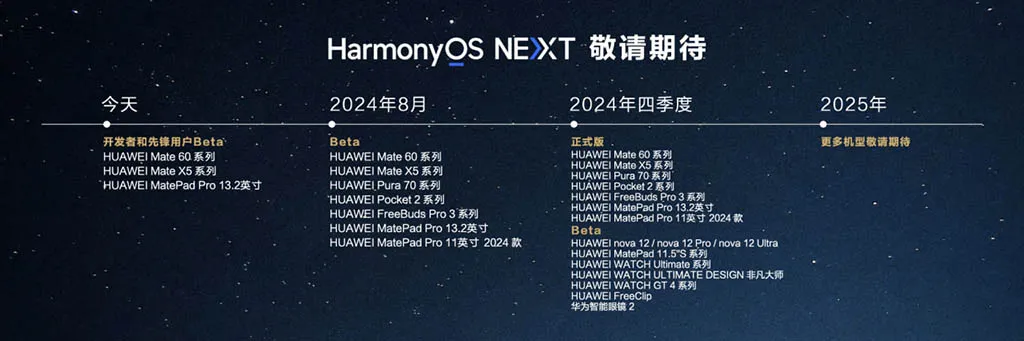
    Along with the distribution date, Huawei has revealed the official HarmonyOS NEXT update plan for its devices. Developers and pioneer users with flagship devices can now get the latest beta version. However, it will soon be available on additional devices.

    The HarmonyOS NEXT upgrade information were given by Yu Chengdong. He mentioned that the corporation has started beta testing the top models with developers. In Q4 2024, the tech manufacturer plans to deploy a stable HarmonyOS NEXT update and gradually cover devices.

    Currently, the Chinese OEM is hiring 3000 pioneer users and developers. After this, the business will start a consumer beta program using high-end phones.

    harmonyos next calendar

    HarmonyOS NEXT Upgrade Plan: Devices

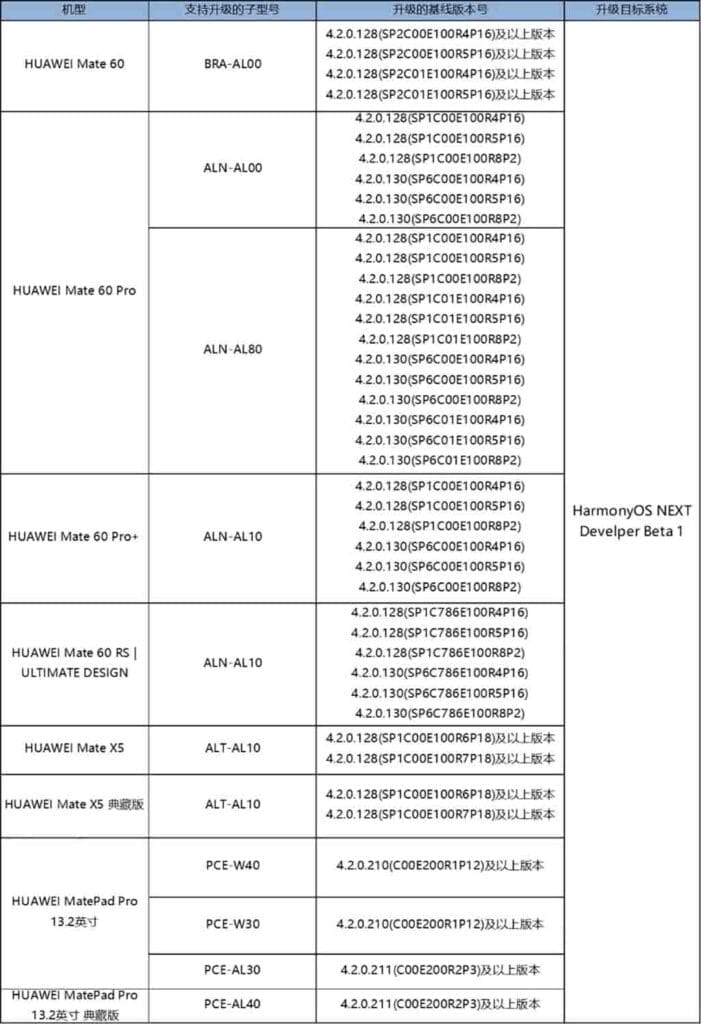
    Developer Beta Testing: June 21

    • Huawei Mate 60 Series
    • Huawei Mate X5 Series
    • Huawei MatePad Pro 13.2 tablet

    August 2024 (Beta)

    • Huawei Mate 60 series
    • Huawei Mate X5 series
    • Huawei Pura 70 series
    • Huawei Pocket 2 series
    • Huawei FreeBuds Pro 3
    • Huawei MatePad Pro 13.2
    • Huawei MatePad Pro 11 2024

    Q4 2024 (Stable)

    • Huawei Mate 60 series
    • Huawei Mate X5 series
    • Huawei Pura 70 series
    • Huawei Pocket 2 series
    • Huawei FreeBuds Pro 3
    • Huawei MatePad Pro 13.2
    • Huawei MatePad Pro 11 2024

    Q4 2024 (Beta)

    • Huawei Nova 12 series
    • Huawei MatePad 11.5-inch S series
    • Huawei Watch Ultimate
    • Huawei Watch Ultimate Design Edition
    • Huawei Watch GT 4 series
    • Huawei FreeClip
    • Huawei Smart Glasses 2

    2025

    • Stay tuned for more models.

    From June 21 to June 28, developers and Pioneer users can register for the ongoing beta activity. Based on the log and nolog builds, the organization will evaluate the applications that were submitted between June 24 and July 09 and modify the users.

    Huawei HarmonyOS NEXT upgrade plan

    Please take note that this activity will give preference to developers whose apps are currently available in the AppGallery. Following the selection, Huawei will send out an official email or SMS to developers and pioneer users.

    To prevent any loss, those taking part in the developer beta version should make a backup of their data in advance. Additionally, by going to Settings > System > Developer Mode > System Rollback, one can revert to the most recent version.

  • HarmonyOS 6 is coming – dev beta 2 is out for some devices

    HarmonyOS 6 is coming – dev beta 2 is out for some devices

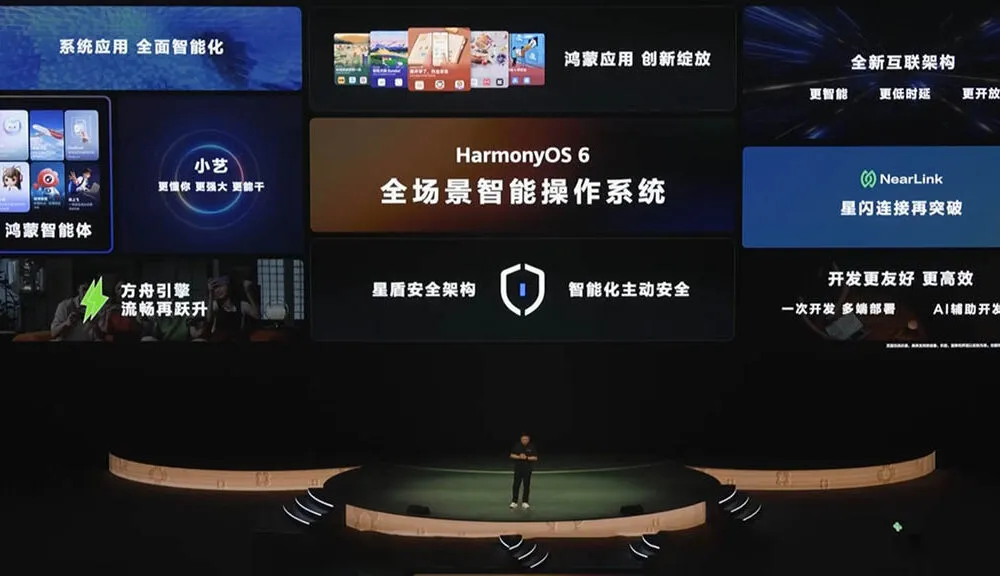
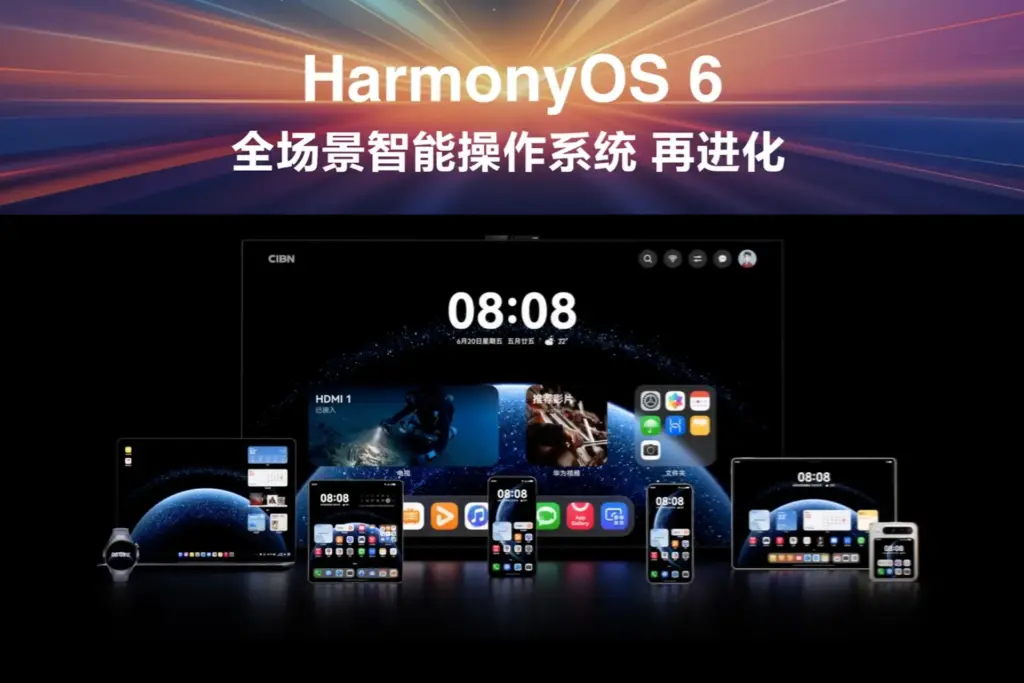
    Phase 2 of Huawei’s HarmonyOS 6 developer beta was launched on July 30. According to official information, the corporation has given developers access to new features and functionalities that will improve app development and increase software utilization efficiency.

    The HarmonyOS 6.0 Developer Preview was revealed by Huawei at the June HDC25 event. Simultaneously, it released the first developer beta only for developers.

    For the first phase, the corporation only opened a certain amount of devices. However, Huawei is now including three more models in the HarmonyOS 6 development beta phase 2 eligibility list.

    harmonyos launch event

    According to the information, developers have until today, August 10, to register for the second phase. From August 1 to August 25, the business will begin going over the paperwork that were turned in. When developers sign up for the first time, they must meet these requirements:

    1. Real-name authentication with Huawei Developer Alliance
    2. Have at least one of the eligible models given below
    3. Answer a few questions related to the beta phase

    One can further register by clicking on the Avatar icon in the upper right corner of the page and completing the on-screen procedure. If your form passes the review, you will receive confirmation through email or SMS.

    Eligible devices:

    • Huawei Mate 60
    • Huawei Mate 60 Pro
    • Huawei Mate 70
    • Huawei Mate 70 Pro
    • Huawei Mate X5
    • Huawei Mate XT
    • Huawei Pura X
    • Huawei Pura 70 Pro
    • Huawei MatePad Pro 11 2024
    • Huawei MatePad Pro 13.2 2025

    Keep in mind that developers can only use the application to test their apps. HarmonyOS 6.0 Developer Preview, which may remove old data from your device, will be sent to you after you pass the review. Therefore, make a backup before continuing.

    How to register for HarmonyOS 6 beta?

    Developers can complete the on-screen instructions by logging into their account. To participate in the beta activity, tap the Sign Up button and provide your application details.

    If developers are experiencing problems with app development, they can use the HarmonyOS 6 Application Development Issue Feedback portal to provide feedback.

  • Xiaomi and BBK to develop an Android and iOS alternative

    Xiaomi and BBK to develop an Android and iOS alternative

    The president is back in the White House after limiting Huawei’s access to American-made technology. This is most likely the reason why other top Chinese businesses have chosen to work together on a new operating system. I believe this is a positive step, even though it might only be a preventative measure and it might be some time before the efforts pay off.

    Huawei is prepared to abandon Android entirely, six years after the US government first imposed limitations on the Chinese corporation. Huawei will now help OnePlus, Vivo, OPPO, and Xiaomi develop an Android substitute that doesn’t use Google. The market for smartphones needs this shock.

    huawei harmony os android alternative

    Smartphones aren’t as thrilling anymore. Each firm used to have a distinct advantage, but these days they all make phones with essentially the same design.

    Operating systems for smartphones have been copying one another for so long that they hardly distinguish one another. Apple’s iOS imitated Android features last year, and Samsung debuted a new One UI 7 version this year that draws inspiration from iOS.

    That isn’t always a terrible thing. For example, I’m happy to see Android get its own version of Dynamic Island as I use both iOS and Android phones.

    Additionally, I miss the days when smartphone makers were free to try new things and different devices didn’t all have the same user experience.

    Microsoft makes sporadic attempts to add some spice, but it never succeeds. Although Google’s Fuchsia OS offered some promise, it appears that smart gadgets would never be able to use this operating system.

    Xiaomi and OnePlus’s rumored operating system may make smartphones exciting again.

    Being self-sufficient is always beneficial.

    Every business is on its own as nationalism grows. Chinese businesses must become more independent than ever before because of the ongoing hostility between the US and China. Chinese businesses need to prepare their operating system in case they run afoul of the US government as a precaution.

    This has nothing to do with supporting a certain nation or business. Every business, including Samsung, should create its own operating system, in my opinion.

    As of right now, though, Android is the only option available to businesses looking to sell phones.

    When it comes to purchasing a smartphone, the options are already limited. The majority of consumers will no longer want to purchase phones from Xiaomi and BBK-owned OnePlus, Vivo, and OPPO if they are unable to access Android.

    This has already happened with Huawei. However, Huawei has made a resurgence in China as its HarmonyOS matures. The wise course of action is to begin developing a new operating system if Chinese Android manufacturers don’t want to be taken by surprise.

    No more Samsung and Apple monopoly

    Apple and Samsung stand to gain the most from any possible rift between the US government and Chinese smartphone manufacturers. Google stands to benefit greatly as well because, although producing some of the greatest phones available today, its market share is quite small.

    Xiaomi reportedly began developing an in-house microprocessor after learning about potential sanctions. Therefore, even if there hasn’t been any sign that the US wishes to restrict its access to Android, it is still possible.

    In the worst case scenario, Apple and Samsung will see exponential growth, potentially leading to a duopolistic market. For this reason, we are in greater need than ever of a third mobile ecosystem.

    This will not be a simple undertaking. For example, even after years of development and investment, Huawei’s operating system is still not a full substitute for iOS and Android. There are still not many well-known apps in the company’s app store.

    Xiaomi and BBK-owned companies risk alienating customers in international markets if they cease selling Android-powered phones. A redesigned Android skin with cutting-edge functionality and distinctive aesthetic improvements would be a smart place to start.

  • #rumor – Xiaomi might build HyperOS 3 free of Google services

    #rumor – Xiaomi might build HyperOS 3 free of Google services

    There is currently a precarious scenario between the United States and China, with Huawei being the unlucky subject of trade sanctions. The constraints imposed on the erstwhile smartphone behemoth indicate that other Chinese corporations, like as Xiaomi, are not immune to incurring the same fate, which is why it is critical that these companies be well-prepared for any shocks. For the time being, the first order of business is a report that a HyperOS version devoid of Google Play apps and services, akin to Huawei’s HarmonyOS, is in the works, with BBK assisting with the changeover.

    Huawei’s experience in dealing with hardship will help Xiaomi develop its latest HyperOS 3 version.

    HyperOS 3 version

    A highly speculative rumor from XiaomiTime claims that Xiaomi is collaborating with Huawei and the BBK Group, the parent company of OPPO, Vivo, and OnePlus, to create a HyperOS 3 version that is free of Google’s apps and services. Xiaomi now has a license to use the Mountain View company’s smartphone operating system, but no one knows when the Trump administration may reconsider this collaboration.

    The US government’s concerns about Xiaomi may have been exacerbated when it was revealed that the company had successfully taped-out its custom 3nm chipset and was on track to launch its first in-house solution, Xring, later this month, though the intended timeline may be pushed back. Unfortunately, the only market where Xiaomi can achieve the majority of its success if it abandons Android is China, unless it can provide millions of customers with a custom app store that includes all of the essential alternatives, which is extremely difficult.

    It is likely that Xiaomi is keeping HyperOS 3 as a “ace up its sleeve” in case the Trump administration imposes a trade ban on the company, which would also prevent it from using Google Play services or apps. Until such an incident occurs, Xiaomi will most likely avoid losing a large number of consumers and millions of dollars in income.

  • ArkUI and other improvements available in Huawei HarmonyOS 5.0.3 Beta 2

    ArkUI and other improvements available in Huawei HarmonyOS 5.0.3 Beta 2

    With an extensive list of new features and improvements, Huawei has made the HarmonyOS 5.0.3 beta 2 rollout available to developers. Numerous areas have been enhanced by the company, such as ArkData, ArkUI, AppGallery Kit, Camera Kit, Core File Kit, and more.

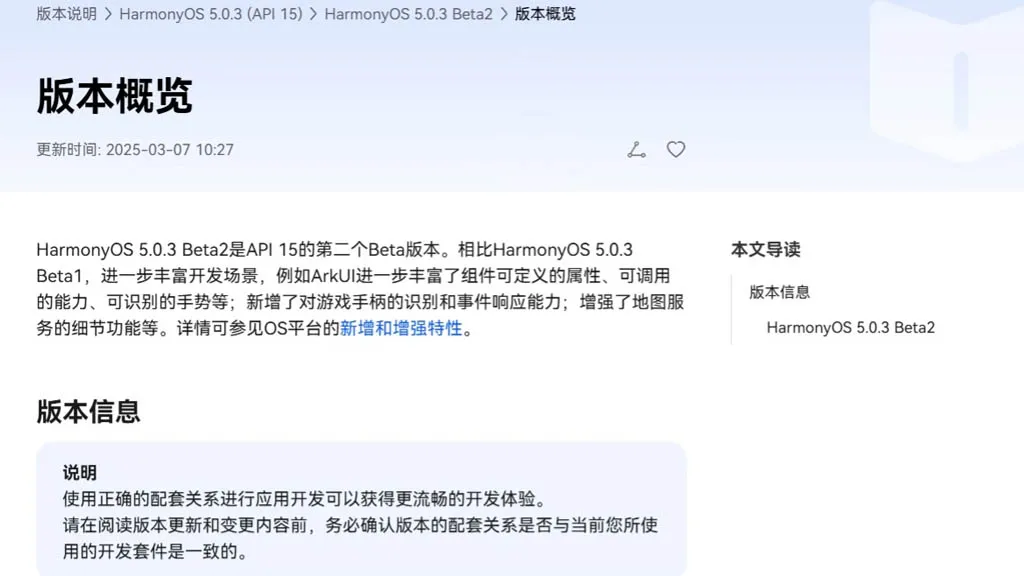
    Also, it has expanded these segments’ capabilities to improve internal management and developers’ overall experience. The new HarmonyOS 5.0.3 Beta 2 was created by the Chinese phone manufacturer using API 15. In comparison to the previous edition, it significantly redesigns the development scenarios.

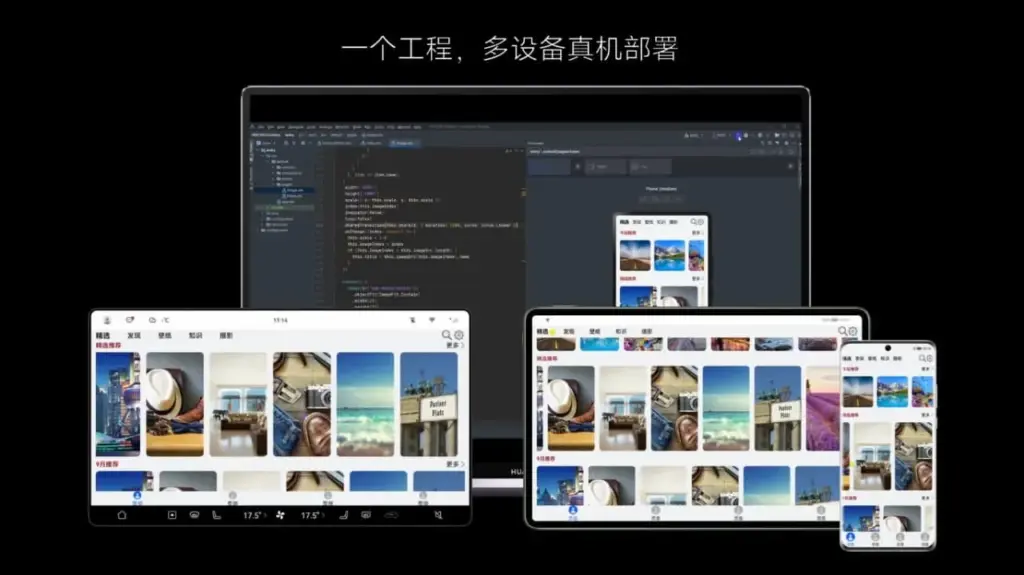
    harmonyos with arkui framework

    Mainly ArkUI improves the responsiveness, callable capabilities, and customizable attributes for map services and game controllers. Only because of its graphical repercussions for the development of HarmonyOS 5.0.3 have we brought up the ArkUI in the vast changelog. The complete changelog is available at the source link below.

    harmonyos 5.0.3 Beta2

    HarmonyOS 5.0.3 Beta 2: ArkUI Changes

    • The basic component now supports the ability to insert text at a specified location in the edited text and delete the content in a specified area.
    • The focus axis event has been added to the general events to support responses to game controller axis events. The C API also supports obtaining the value of the operation type of the current axis event.
    • The pattern password lock component now supports setting whether unselected grid dots are automatically selected when the password path passes through them.
    • Window Management A new C API for window management is defined, which is mainly used to set and get the properties of a specified window, as well as to set the status bar style and navigation bar style of a specified window.
    • The Image component now supports color filling that can overwrite the original color. This feature is only available for image sources in SVG format.
    • The Image component now supports automatic transformation based on the image matrix, providing automatic transformation optimization when presenting grid-type thumbnails in scenes similar to galleries.
    • The Tabs component and Swiper component now support setting the mouse wheel page turning mode.
    • NavDestination adds support for callbacks when events return, which is used to pass parameters when events return.
    • The TextPicker component now supports configuring the text style of each selection item.
    • The Progress component adds a new C API to support the setting of the linear progress bar style.
    • The folding screen state enumeration in the screen property module adds multiple state definitions for the folding axis 2.
    • The Node attribute style of the C API adds the background blur effect attribute NODE_BACKDROP_BLUR.
    • FrameNode now supports cross-language capabilities.
    • FrameNode now supports the expansion mode of child nodes when traversing nodes.
    • Size settings now support setting width and height to adapt to the parent component layout.
    • Text components now support shortcut key tips (labelInfo) in TextMenuItem.
    • The three types of pop-up components now support setting the pop-up display level and related properties and effects (levelMode, levelUniqueId, immersiveMode).
    • BindSheet adds support for the radius property, which is used to set the radius of the semi-modal page corners, and adds support for the detentSelection property, which is used to set the non-gesture switching position.
    • Added a new navigation point component, providing two navigation point styles: dot navigation point and digital navigation point.
    • The Swiper and Tabs components now support animated transitions.
    • The Swiper component now supports sliding behavior interception events, which can determine whether sliding behavior is allowed. The C API controls this through a property named NODE_SWIPER_EVENT_ON_CONTENT_WILL_SCROLL.
    • Third-party platforms have added support for finding the previous or next focus (ARKUI_ACCESSIBILITY_NATIVE_ACTION_TYPE_NEXT_HTML_ITEM, ARKUI_ACCESSIBILITY_NATIVE_ACTION_TYPE_PREVIOUS_HTML_ITEM) when they are connected to the ArkUI accessibility framework.
    • The third-party platform is connected to the ArkUI accessibility framework to add support for multi-instance scenarios.
    • The NavDestination component information of the ohos.arkui.observer module adds the NavDestination type and uniqueId.
    • Added support for C API screenshot capability.
    • UIContext now supports getting screenshots of loaded components by unique Id.
    • UIContext now supports the ability to obtain the layout information of the meta-service menu bar relative to the window.
    • New C API for common events supports obtaining the ID of the current touch event trigger.
    • A new interface with the same name has been added to the window for 2-in-1 devices to set application window size limits.
    • A new interface of the same name is added to the window for specifying the position of the mouse within the window and moving the window.
    • The window adds an asynchronous callback for the window close event monitoring of 2-in-1 devices.
    • The window now supports enabling the monitoring of picture-in-picture window size change events.
    • The window now supports dynamically setting the title of the window title bar.
    • The window now supports setting the main window’s support modes (full screen, floating window, split screen, etc.).
    • NavDestination now supports setting whether to hide the back button in the title bar.
    • Added C API support for controlling focus and handling focus events.
    • Added C API to support forwarding of clone events.
    • The Popup component adds the keyboardAvoidMode property to set whether the Popup bubble avoids the soft keyboard.
    • The pop-up window now supports setting the distance to avoid the keyboard. The ArkTS API is provided as attributes. You can search for the keyword keyboardAvoidDistance in the table pointed to by the link.
    • The attribute string now supports the settings of ResourceStr type images.
    • The attributed string image object now supports obtaining the attributed string image color filter effect (colorFilter).
    • The drag capability now supports obtaining the drag data of the drag progress bar.
    • The component screenshot capability now supports defining component screenshot areas.
    • The Tabs component adds component parameters to support setting the tab position of the Tabs.
    • Text components now support triggering callbacks when the text content is about to change.
    • Added support for obtaining whether touch-related events come from the left or right hand, involving multiple modules: the event module added relevant C API, the gesture binding method added a hand attribute to the FingerInfo object, the touch event TouchObject object added a hand attribute, and the click event clickevent object added a hand attribute.
    • Added support for checking the number of fingers touching the screen, involving multiple modules: NDK added related C APIs, and components added the property isFingerCountLimited to set whether to check the number of fingers touching the screen. This property can be viewed in the reference page of each component.
    • Added support for setting the priority of key event processing and the ability to redistribute. Involved: NDK added a C API for setting the priority of key event processing, NDK added NODE_DISPATCH_KEY_EVENT to the ArkUI_NodeEventType enumeration, indicating the component key event redispatching event (C API), UIContext added an ArkTS API for setting the priority of key event processing, and UIContext added an ArkTS API for distributing key events to specified components.
    • The C API adds support for NODE_CHECKBOX_GROUP-related capabilities. You can search for this keyword in the API reference.
  • Huawei will speed up the public beta launch of HarmonyOS NEXT.

    Huawei will speed up the public beta launch of HarmonyOS NEXT.

    In March, Huawei is probably going to speed up the HarmonyOS NEXT public beta release. For a few mid-range phones and flagship tablets, the business is presently concentrating on closed beta testing. However, it might soon expedite software testing for the general public.

    The HarmonyOS NEXT public beta program will begin operating on the fast track in March, according to FixedFocus. The new update will soon be available to users who have been waiting for it.

    According to official information, the HarmonyOS NEXT closed beta second wave for the MatePad Pro 12.2, Nova 13 series, and Nova 12/Pro has begun. Next month, these models might go into public beta testing. Owners of the corresponding devices can get ready for installation and take advantage of certain stable software.

    Harmonyos Next scaled 1

    According to the tipster, NEXT will be pre-installed on the Pocket 3 foldable, which is anticipated to make its debut next month. In the meantime, work on the HarmonyOS PC version might also start in earnest in March.

    The estimated weight of the public beta firmware is 2.0GB. The size of the software package may differ depending on the model. We advise having 8 to 10GB of storage available so that the update may be installed without any problems.

    Since HarmonyOS NEXT has the ability to erase all data for improved optimization, make a backup of your device’s data in beforehand. For a smooth installation process, make sure you have a reliable internet or Wi-Fi connection. The battery needs to be charged, which you can do quickly!

    Public beta journey for HarmonyOS NEXT

    In October of last year, the business started the HarmonyOS NEXT public beta test. The Mate 60 series, Mate X5, and MatePad Pro 13.2 2024 tablet were among the flagship products for which it was first made available. It then made its way to Pocket 2 and Pura 70.

    The HarmonyOS NEXT public beta pool now includes devices such as the MatePad Pro 11 2024 tablet and the Nova 12 Ultra/Star Edition. Compared to the closed beta versions, it provides a little more stable software experience. Huawei plans to expand this batch of smartphones in the near future.

  • Native HarmonyOS is a tremendously inventive platform: Huawei

    Native HarmonyOS is a tremendously inventive platform: Huawei

    On the third day of Huawei Connect 2024, the OEM showcased the revolutionary capabilities of the native HarmonyOS. In terms of the user experience, efficiency, and self-developed software system, it also shares a few other accomplishments.

    According to Zhu Yonggang, President of Huawei Mobile Cloud, users will receive a fresh and inventive experience at their doorstep with the native HarmonyOS NEXT.

    The newest system architecture serves as the foundation for the new HarmonyOS, which is powered by distributed soft buses, native intelligence, and Star Shield protection. Together with ensuring an amazing appearance, these parts also guarantee quicker, more seamless, and safer device operation.

    HarmonyOS NEXT does away with all conventional foreign components. Compared to Linux, it is three times more efficient thanks to its pioneering microkernel. Because of its high level of security, this kernel has been certified at several higher industry levels.

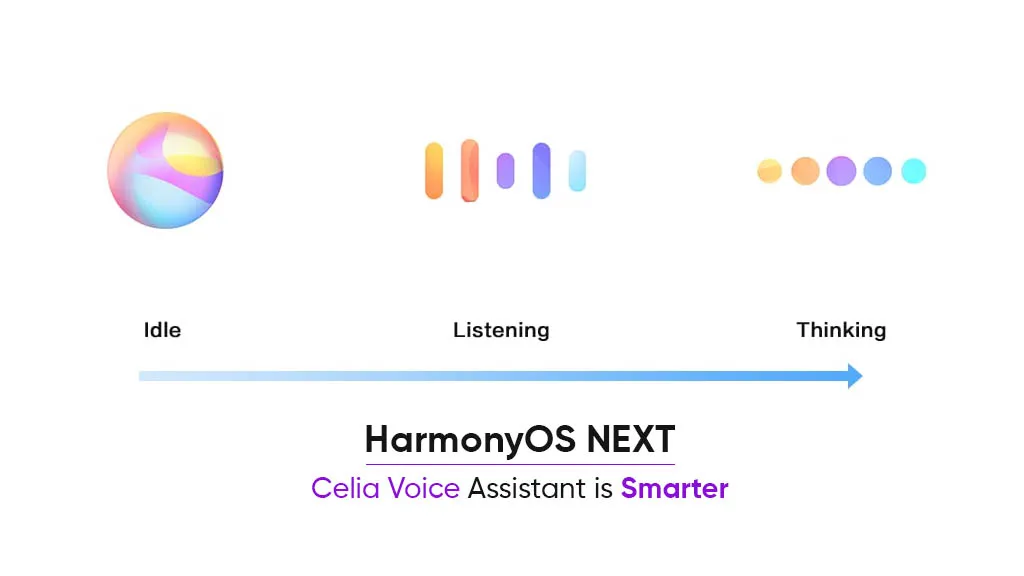
    The new self-developed OS’s intrinsic intelligence is another important component. To get the best and most complete intelligence for system apps, the company has reformed AI-centered intelligence. Celia is an excellent illustration of this element.

    The Assistant

    celia harmonyos

    Celia has reached a higher level. It has a ton of useful services and intriguing features. It links third-party apps to the HarmonyOS native app ecosystem and empowers the expansive Pangu AI model to oversee them. A new and more intelligent virtual assistant developed by Huawei is also ready and is built on the high-level interaction of large models.

    This helper is capable of thought, planning, artistic expression, and more organic user involvement. It provides a simple understanding so that users may more easily enjoy taking notes, asking inquiries, obtaining document intelligence, and recognizing dialogue on screen.

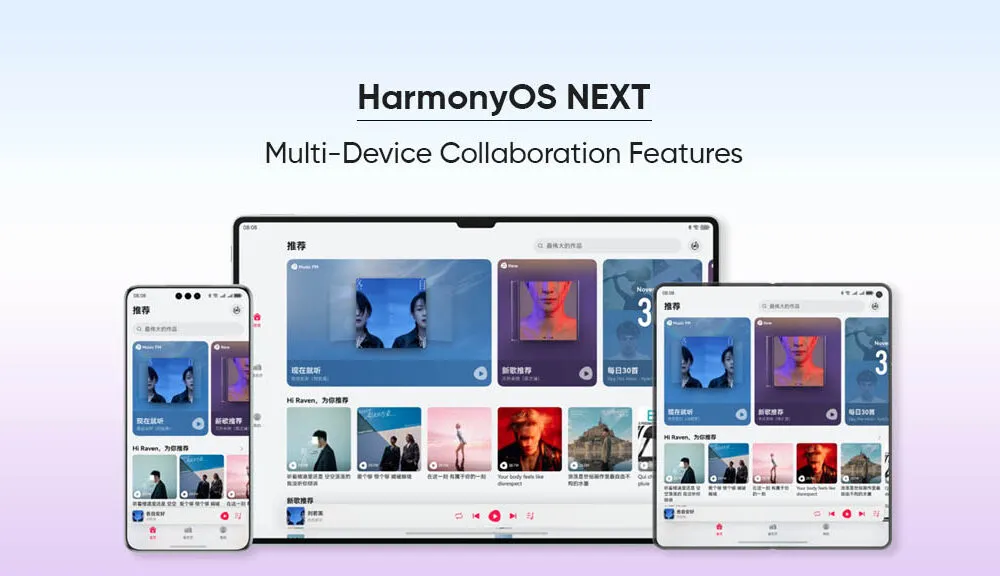
    Easier multi-device collaboration

    Multi Device harmonyos

    According to Zhu, the HarmonyOS NEXT provides a smooth service flow and sharing encounter. Additionally, app continuation is supported. To seamlessly carry out one device’s task on another, just bring the two devices close together and click the pop-up icon.

    These gadgets might include laptops, smartphones, tablets, and even smart automobiles. Right now, the best instances of app continuation are Amap, DingTalk, and WPS. They even offer features like a copy-and-paste tool for the gallery that works across devices.

    The President goes on to say that HarmonyOS NEXT’s new Star Shield Security architecture makes it the most potent OS to date in terms of security and privacy. It oversees full-process purity, system security, and kernel security.

    The Huawei representative claims that HarmonyOS NEXT operates on a “one system, one ecosystem” basis. For this reason, it seeks to bring many objects and circumstances under the purview of interaction. The corporation makes an annual investment of about 6 billion yuan to support innovation inside the HarmonyOS ecosystem.

    Following the release of the HarmonyOS NEXT beta, the company released more than six versions. Additionally, it got more than a million comments and ideas.

    Perhaps the stable HarmonyOS NEXT version would be an extremely better software system for Huawei device owners.