OnePlus has been busy reshaping its Android lineup lately. The company launched the OnePlus Nord 6 earlier this month as a follow-up to the Nord 5, and it’s now reportedly working on two more additions to round out the series at lower price points — the Nord CE6 and Nord CE6 Lite. A new OnePlus device, carrying the model number CPH2943 and widely believed to be the Nord CE 6 Lite, has now surfaced on the Geekbench benchmarking platform.
Mysterious CPH2943 could be the Nord CE 6 Lite
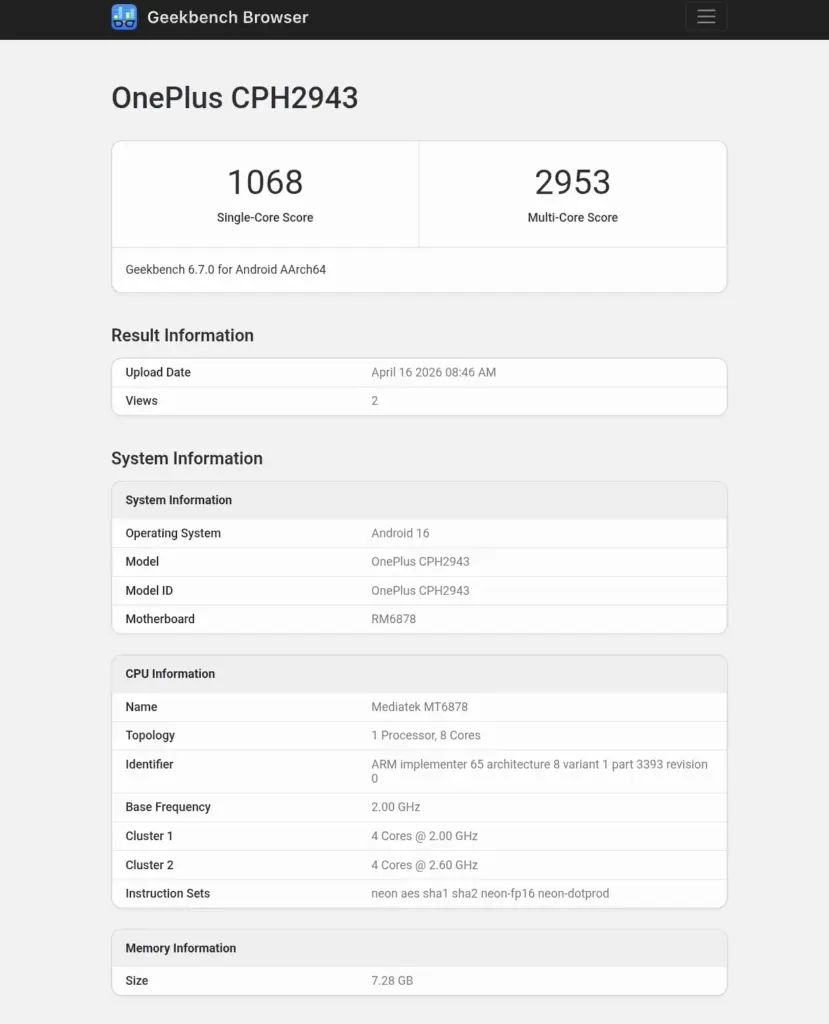
The Geekbench listing doesn’t name the device outright, but tipster Abhishek Yadav has identified it on X as the OnePlus Nord CE 6 Lite. On the performance front, the phone posted a single-core score of 1,068 and a multi-core score of 2,953. The listing also reveals a handful of key specs: the device runs Android 16, which will almost certainly ship with OxygenOS 16 on top, and it comes with 8GB of RAM — though additional memory configurations could be available at launch.
The benchmark points to a MediaTek Dimensity 7400 SoC paired with a Mali-G615 MC2 GPU under the hood. That said, Abhishek Yadav notes that the final chipset branding may differ slightly — possibly Dimensity 7400 Max, Extreme, or Pro — though the underlying silicon will remain the same regardless of what OnePlus ends up calling it. The core configuration listed shows four cores running at 2.0GHz and four performance cores clocked at 2.60GHz.
May launch expected in India
Since the marketing name isn’t confirmed in the listing, there’s a slim possibility this could turn out to be the standard Nord CE 6 rather than the Lite variant. Nothing is set in stone at this point. Either way, current rumors suggest both the Nord CE 6 and Nord CE 6 Lite are headed to India sometime in May.
Separately, OnePlus has a more immediate launch on the calendar. The OnePlus Pad 4 is set to debut in India on April 30th, and it’s shaping up to be a powerhouse tablet. It’s powered by the Snapdragon 8 Elite Gen 5 chip and houses a massive 13,380mAh battery. The display is expected to measure 13.2 inches with a 3.4K resolution and a 144Hz refresh rate, while charging is handled by 80W fast charging. The tablet may also support an external smart keyboard and stylus accessory.
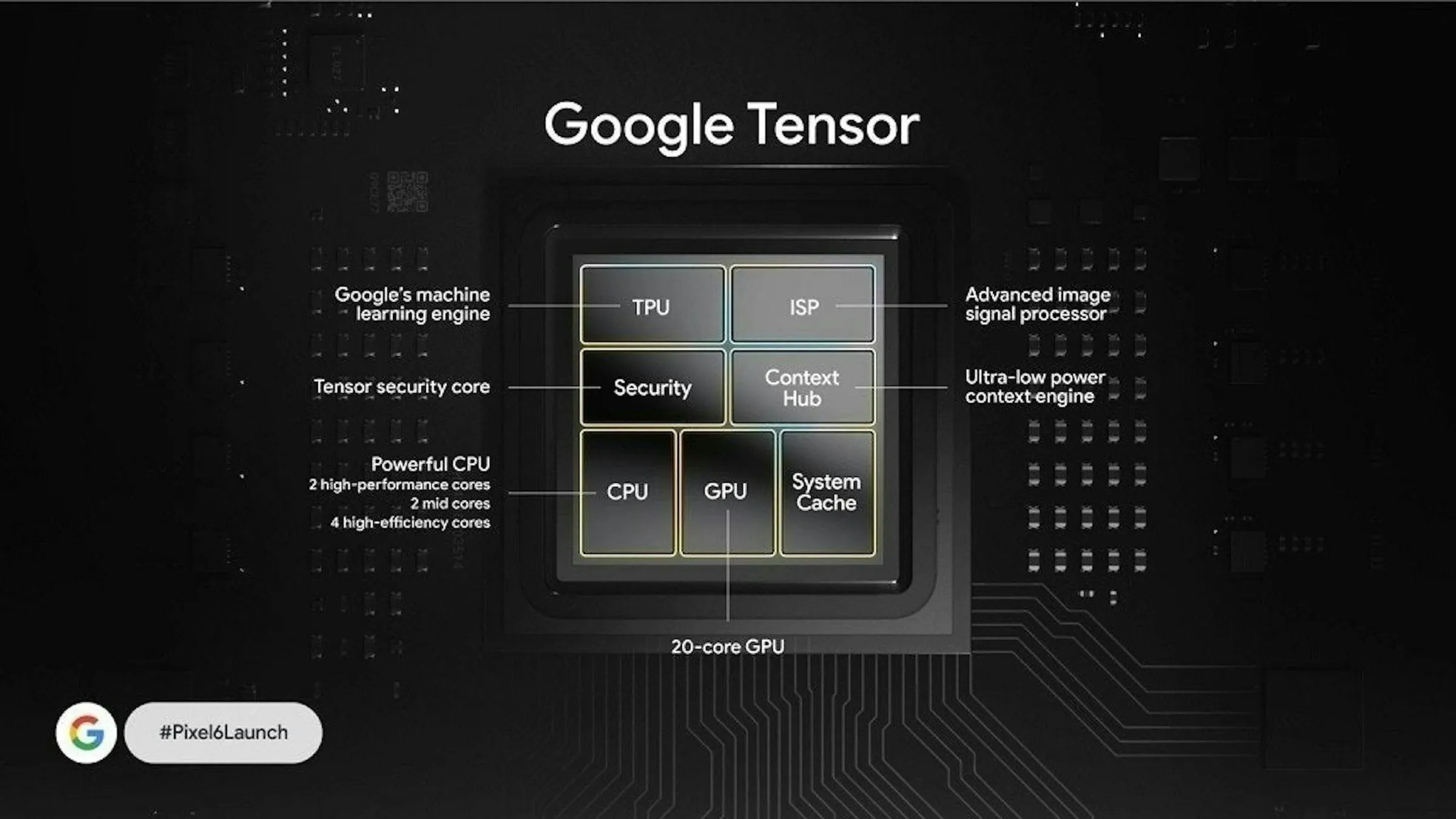
Over the years, Google’s proprietary Tensor chips have progressively advanced to become a dependable everyday driver with strong energy economy. However, performance has frequently been a source of contention. Previous Tensor chips performed well on routine tasks, but not so well on intensive workloads like gaming. That might change with the upcoming Tensor G5, which promises notable performance improvements.
“Tensor G5 is our greatest upgrade yet and gives a huge performance gain,” the tech giant claims. The newest Tensor chip, which launched with the Pixel 10 series last month, is said to feature a 30% faster average CPU and a 60% more potent TPU. Additionally, this is Google’s first mobile chipset produced at TSMC’s facility; Samsung previously produced Tensor chips. Better performance and increased battery economy are promised by the Tensor G5’s use of a more sophisticated 3nm manufacturing node.
Will the Tensor G5’s major improvements, as promised by Google, significantly improve benchmark scores where earlier Tensor chips have underperformed? We’ll examine the benchmark numbers. Here is the specification document to view the differences on paper before that:
Samsung Exynos 5400 5G modem Wi-Fi 7, Wi-Fi 6E Bluetooth 6.0
Samsung Exynos 5400 5G modem Wi-Fi 7 Bluetooth 6.0
AnTuTu
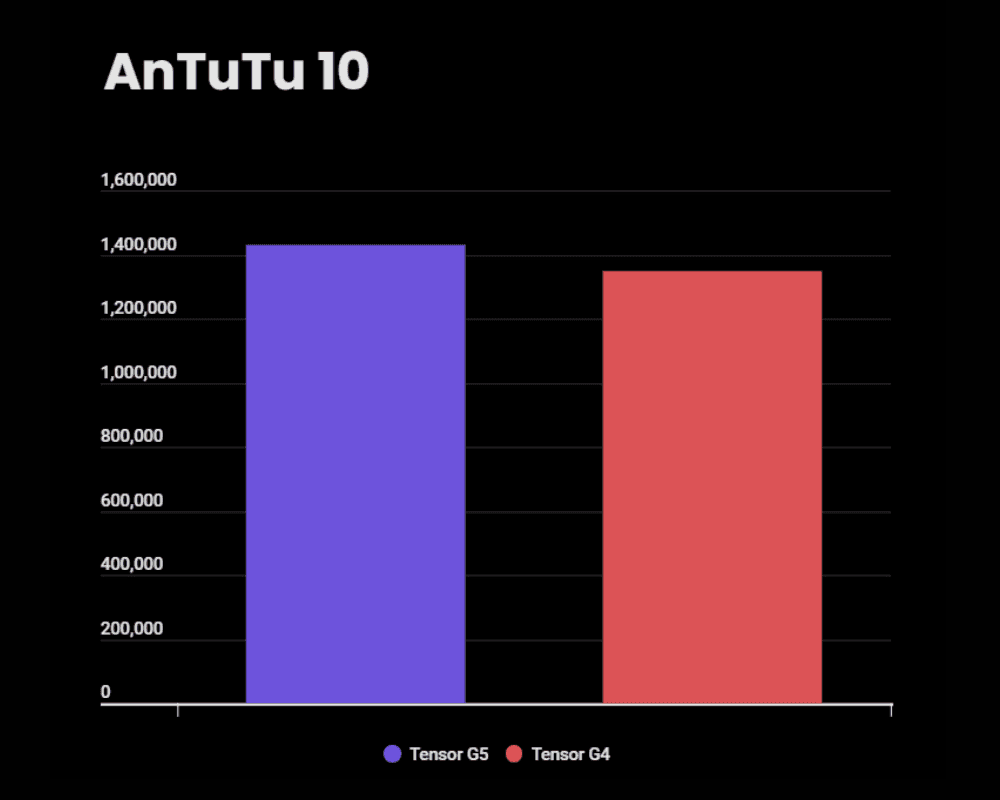
According to the AnTuTu (version 10) benchmark, the new Tensor G5 chip has a little overall improvement of 6%, scoring 1,429,557 as opposed to 1,348,226 for the Tensor G4. However, there is a pleasant 20% rise in the CPU (483,989 vs. 401,746). The RAM and UX scores also favor the newer chip with an improvement of roughly 10%.
The most unexpected of all is the GPU score, which is actually 10% lower than the G4 from the previous year. This implies that rather than promoting sheer graphics performance, Google might have placed greater emphasis on efficiency.
Tensor G5
Tensor G4
AnTuTu score
1,429,557
1,348,226
CPU
483,989
401,746
GPU
416,313
462,415
Memory
293,467
266,535
UX
235,788
217,530
Geekbench
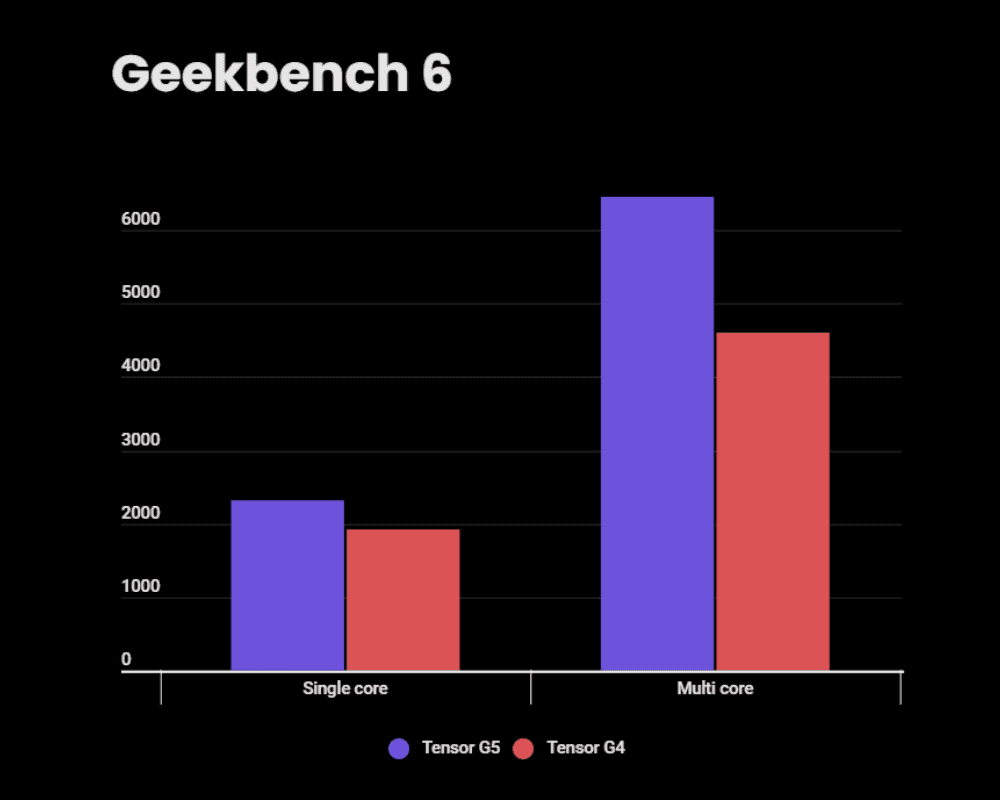
The Tensor G5 clearly outperforms the Tensor G4 in Geekbench 6. Its 2,316 single-core test score is around 20% higher than the G4’s 1,923, indicating faster responsiveness for daily tasks like UI navigation and app launches.
Stronger performance in multitasking, productivity apps, and heavier workloads is highlighted by the multi-core score, which soars to 6,452, a staggering 40% increase over the G4’s 4,602.
Overall, the results from Geekbench point to encouraging gains in Tensor G5’s raw CPU performance, particularly in multi-core efficiency, which could result in considerably more fluid performance.
G5
G4
Single core
2,316
1,923
Multi core
6,452
4,602
3DMark score
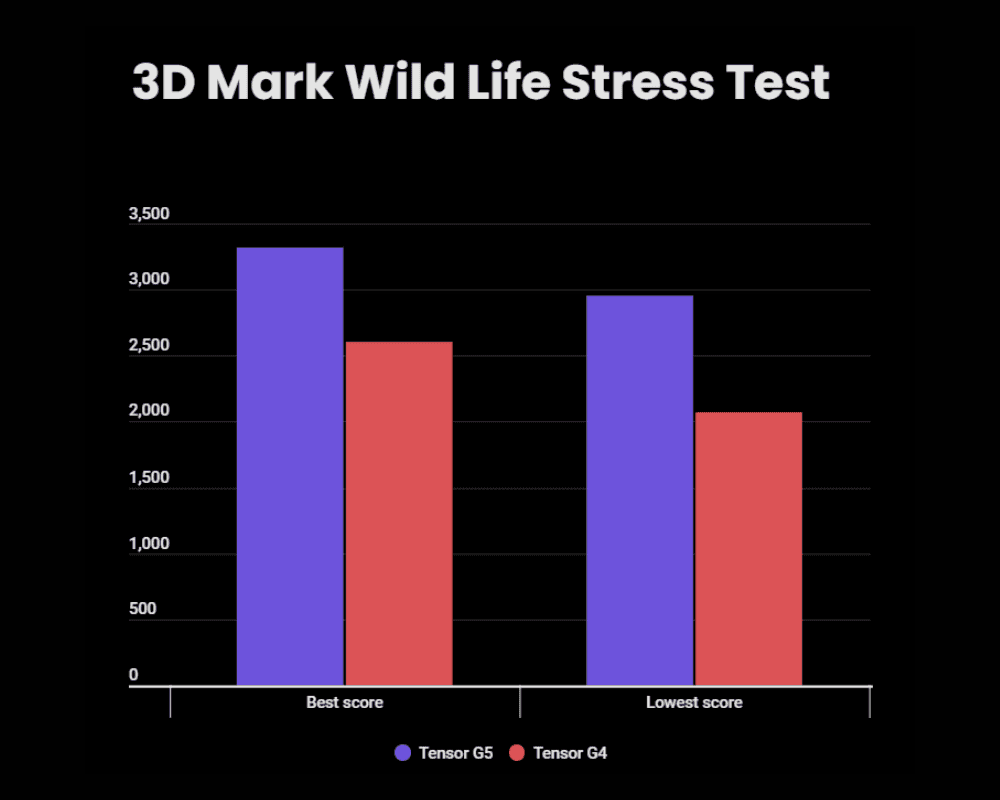
In the 3DMark Wild Life Extreme Stress Test, which gauges sustained GPU performance under high load, the Tensor G5 clearly outperforms the Tensor G4. With a highest loop score of 3,319 as opposed to 2,603 for the G4, the G5 scores an astounding 27% improvement in peak graphics performance.
More significantly, the G5 offers improved consistency as well. The G4 descends to 2,071, and its lowest loop score is 2,954. 89% vs. 79.6% is not only better performance, but also significantly more stability. As a result, the Tensor G5 is far less likely to experience thermal throttling and ought to offer more consistent, fluid gaming over extended periods.
Tensor G5
Tensor G4
Best loop score
3,319
2,603
Lowest loop score
2,954
2,071
Stability
89%
79.6%
Tensor G5 vs Tensor G4
Thanks to enhanced CPU cores and more sophisticated TSMC manufacturing, the Tensor G5 exhibits encouraging improvements in CPU performance. GPU performance and consistency have also significantly improved, according to the 3DMark test. A better gaming experience and faster daily performance should follow from this. The majority of the heating and throttling problems users had with earlier Tensor chips are likewise fixed by the new chip.
Even while the latest Tensor chip offers significant improvements, Google still needs to catch up in order to compete with Qualcomm and MediaTek’s top offerings. We have contrasted the Snapdragon 8 Elite and Snapdragon 8 Gen 3 with the Tensor G5. To see how Google’s most recent chip compares to the finest in the business, you can look through those comparisons.
After a while, we discovered that the Snapdragon 8 Elite Gen 2 from Qualcomm might actually be the Snapdragon 8 Elite Gen 5. After a short lull, a new rumor has surfaced that offers some data about the specifications, allowing us to examine the advancements between the two generations more closely—at least on paper—because there is more. We should start investigating this report right away because the whistleblower who supplied these details also stated that the AnTuTu score is purportedly 50% higher what the Snapdragon 8 Elite achieved.
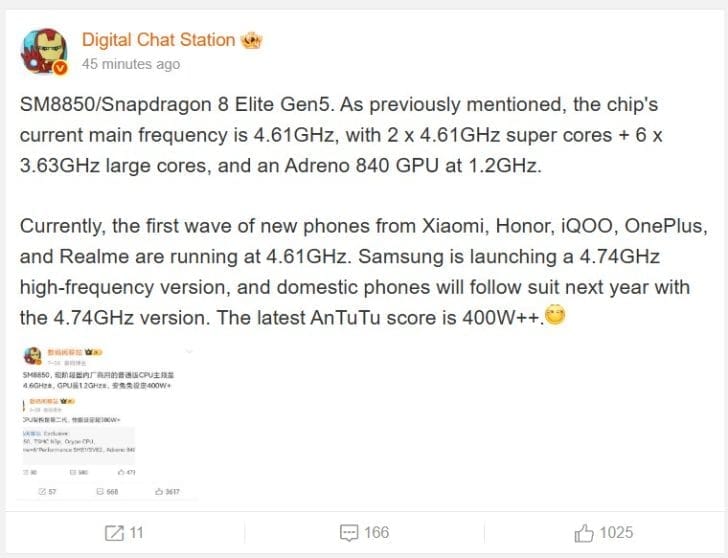
The Digital Chat Station, a Weibo tipster, has returned with some important information on the Snapdragon 8 Elite Gen 5. As its performance cores recorded on Geekbench 6 were 4.74GHz rather than the normal 4.61GHz mentioned in the most recent rumor, it appears that the version tested on the Galaxy S26 Edge was a higher-binned part. According to reports, the efficiency cores are capped at 3.63GHz, and the Snapdragon 8 Elite Gen 5 has a “2 + 6” CPU cluster, just like the Snapdragon 8 Elite.
As for the GPU, Qualcomm will couple its forthcoming flagship SoC with the Adreno 840, with the source adding that its default clock speed is 1.20GHz, making it slightly faster than the Adreno 830’s 1.10GHz speeds. The San Diego company seems to have some latitude in raising those frequencies thanks to TSMC’s third-generation 3nm technology, but how much of a difference will that translate into benchmarks? The Snapdragon 8 Elite Gen 5 allegedly scored over 4 million points in AnTuTu, according to the rumor.
The REDMAGIC 10 Pro, which has a Snapdragon 8 Elite processor, is the quickest Android smartphone according to benchmark leaderboards. The final score for this device was 2,662,615. These numbers will be 50% greater than those of its straight predecessor, assuming the Snapdragon 8 Elite Gen 5’s AnTuTu findings are genuine. Due to an exclusive arrangement with Qualcomm, Samsung will be the only company able to debut the Galaxy S26 series with the quickest flagship out of all the companies anticipated to do so. Stay tuned for additional developments as the chipset maker’s Snapdragon Summit gets underway on September 23. Any elusive specifics will be revealed throughout the event.
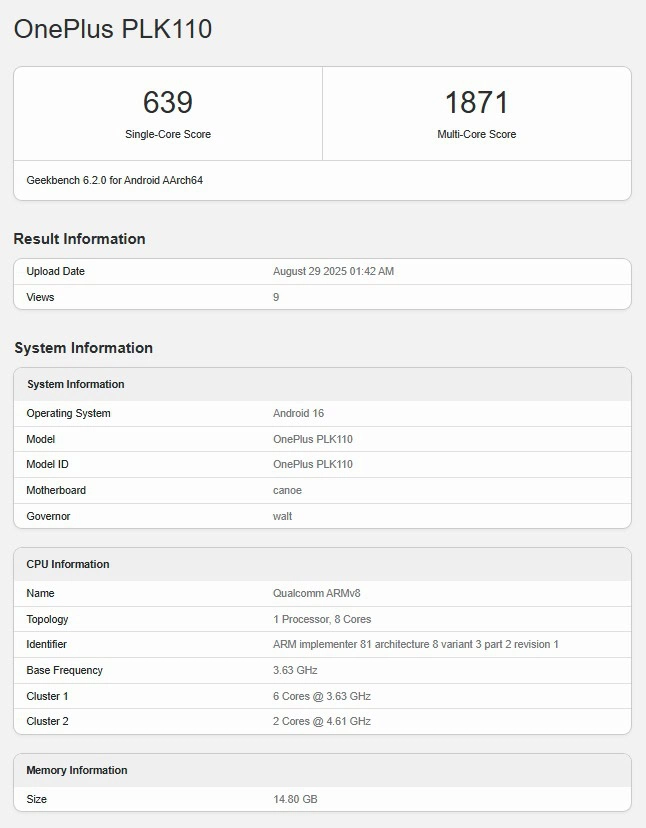
The benchmarking website Geekbench recently featured the OnePlus 15. In addition to providing testing results and other information you might find useful, this listing verifies the phone’s processor.
It is clear which phone this is, even if it was listed with the OnePlus PLK110 model number. The results of its benchmarking are one thing you should absolutely ignore. Naturally, this is a test unit, and it isn’t even operating at full capacity. The results displayed are unrelated to the real power of the next phone or processor.
In relation to that, the Snapdragon 8 Elite 2 processor will power the OnePlus 15. October is when that chip is anticipated to arrive. One of the first devices to use it will be the OnePlus 15.
The smartphone will come with 16GB of RAM, according to this listing. Well, 16GB of RAM will be present in at least one of its models. LPDDR5X RAM is what we anticipate OnePlus to use, but we’ll have to wait and see.
OnePlus 15 will come with OxygenOS16 on top of Android 16
This listing also disclosed that, as anticipated, Android 16 will be pre-installed. Naturally, Google’s OS will have OxygenOS 16 pre-installed on top of it.
This listing indicates that the Snapdragon 8 Elite 2 will have six secondary cores operating at 3.63GHz and two prime cores operating at 4.61GHz. That portion is very likely accurate, but the outcomes aren’t worth mentioning, as was already said.
Although the global version will be delayed, the OnePlus 15 will ship before the year ends, most likely in October. It’s probably going to arrive in Q1 of next year. Additionally, OnePlus is eschewing the OnePlus 14 moniker. The OnePlus 4 moniker was omitted by the corporation since the number four is unlucky in China.
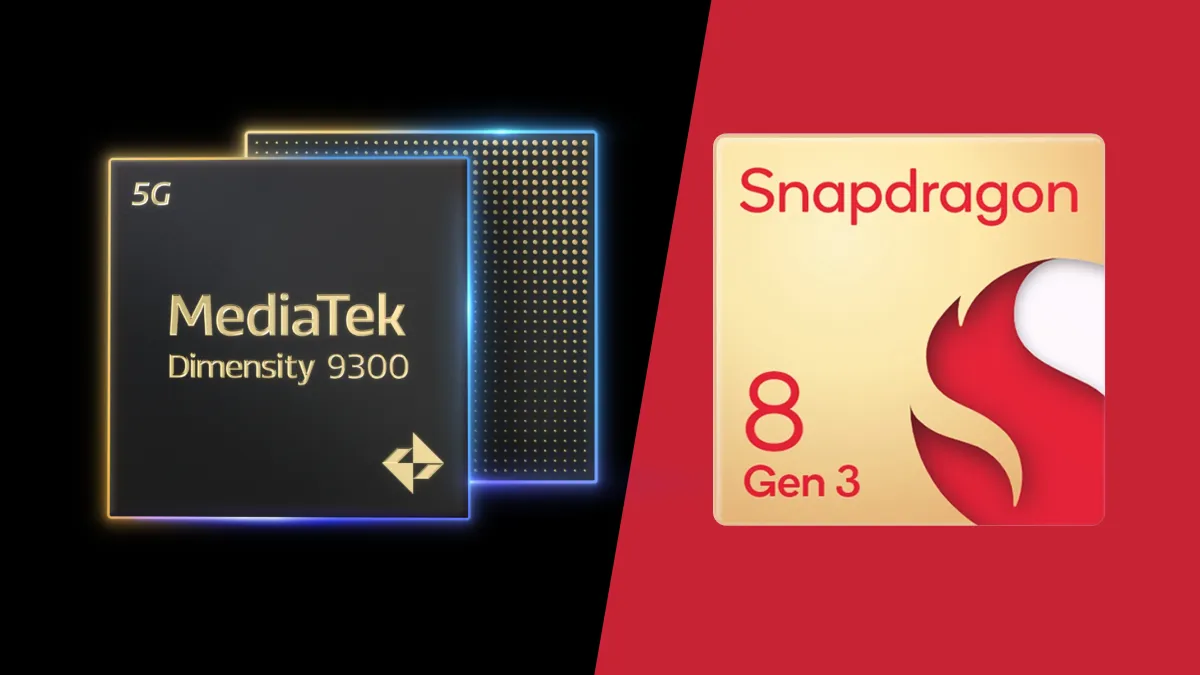
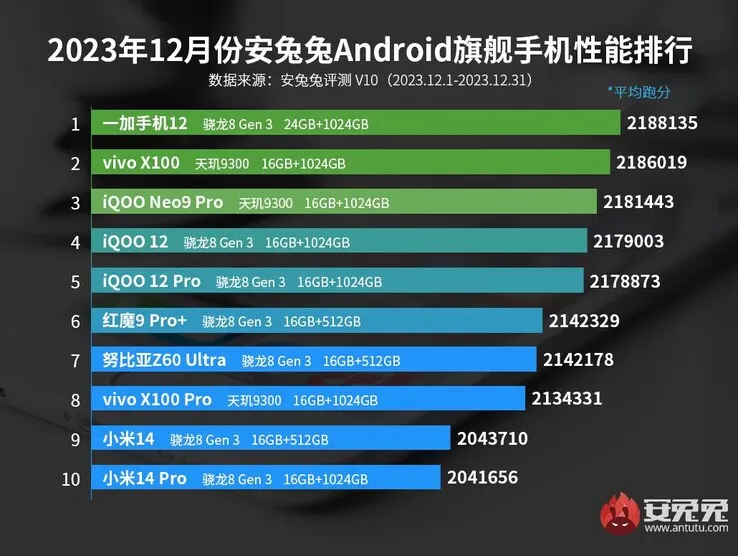
The two main flagship chipsets for Android this year are expected to be MediaTek’s Dimensity 9300 and Qualcomm’s Snapdragon 8 Gen 3. Both chipsets seem to deliver comparable performance, but AnTuTu’s most recent results suggest that the Dimensity 9300 in the new Vivo X100 has a slight advantage over the OnePlus 12 and its Snapdragon 8 Gen 3.
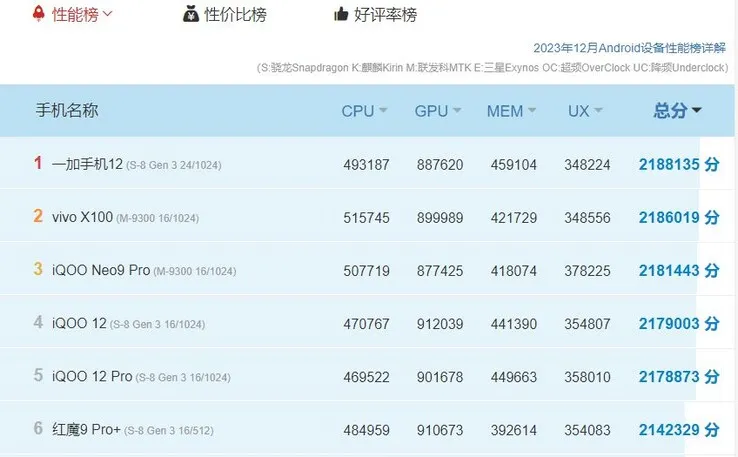
A closer look at the numbers reveals that the Dimensity 9300 outperforms the Snapdragon 8 Gen 3, with the MediaTek chipset scoring higher in the CPU and GPU tests. At first glance, the reverse seems to be true, with the OnePlus 12 ranking first with a total score of 2,188,135. The Vivo X100 comes in second with a score of 2,186,019.
The OnePlus 12 scores 493,187, whereas the Vivo X100 and its Dimensity 9300 register 515,745, indicating a roughly 5% CPU advantage for the MediaTek chipset. The difference is less pronounced in the GPU category, where the Vivo X100 scores 899,989, while the OnePlus 12 scores 887,620. Nevertheless, other Snapdragon 8 Gen 3-powered devices, such as the iQOO 12 duo, marginally outperform the Vivo X100 in this regard.
Evidently, the Dimensity 9300 edges over the Snapdragon 8 Gen 3 in both the CPU and GPU tests. The OnePlus 12 having the higher AnTuTu total score is completely down to it having superior memory, with the reported 24 GB of RAM earning it a higher score in the memory test than the Vivo X100’s 16 GB of RAM.
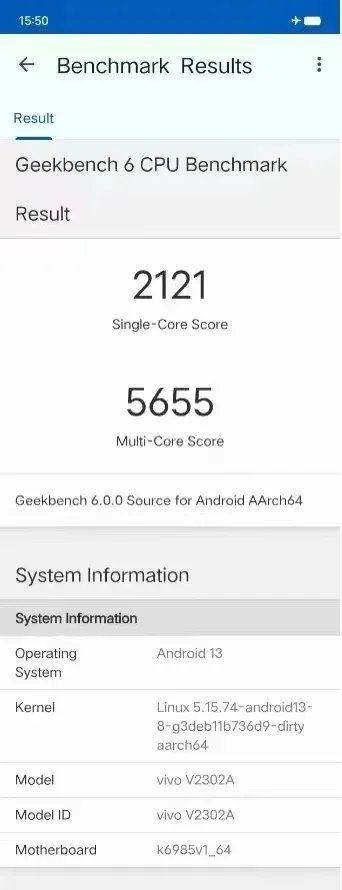
Recently, the much awaited Dimensity 9200+ processor has been in the news for its ground-breaking performance on Geekbench V6. The Dimensity 9200+ reportedly broke all existing Android CPU performance records with a single-core score of 2121 points and a multi-core score of 5655 points.
Rumored specifications
The Dimensity 9200+ has cemented its reputation as a potent chipset thanks to this amazing result and the Dimensity 9200+’s superb AnTuTu performance. The Dimensity 9200+ has an octa-core architecture with four A510 small cores, three 3.0GHz A175 big cores, and a 3.35GHz Cortex-X3 super large core. Additionally, it has a GPU with an immortalis-G715MC11 core. One of the factors contributing to the processor’s potent performance is the big core’s 3.0GHz clock speed.
The official release from MediaTek states that the Dimensity 9200+ will go on sale on May 10. The “strength depends on flagship+” poster indicates that the Dimensity 9200+ has performed admirably. Furthermore, the flagship smartphone market is about to heat up again given MediaTek’s trend of releasing “Plus” versions of its flagship processors every six months. The iQOO Neo 8 Pro is anticipated to be the first smartphone to use the Dimensity 9200+ chipset, according to benchmark listings.
New CPUs are being developed by Qualcomm and other significant industry players. The next Snapdragon Gen 3 from Qualcomm is anticipated to have a new architecture and a potent 3.7GHz prime core, which could potentially perform better than the Dimensity 9200+.
How these two processors compare and which one wins out will be interesting to observe. Nevertheless, the Dimensity 9200+ is positioned to compete fiercely in the high-end smartphone market thanks to its impressive benchmark results and promised performance capabilities.