Tag: cortex

  • Unisoc T9300 5G chipset launched with major camera and gaming boosts

    Unisoc T9300 5G chipset launched with major camera and gaming boosts

    The new Unisoc T9300 5G mobile chipset for smartphones has been discreetly introduced. According to the business, the chip is a high-performance 5G SoC intended to provide improved gaming and video experiences. To find out more specific information about the new chipset, keep reading.

    Unisoc T9300 specs

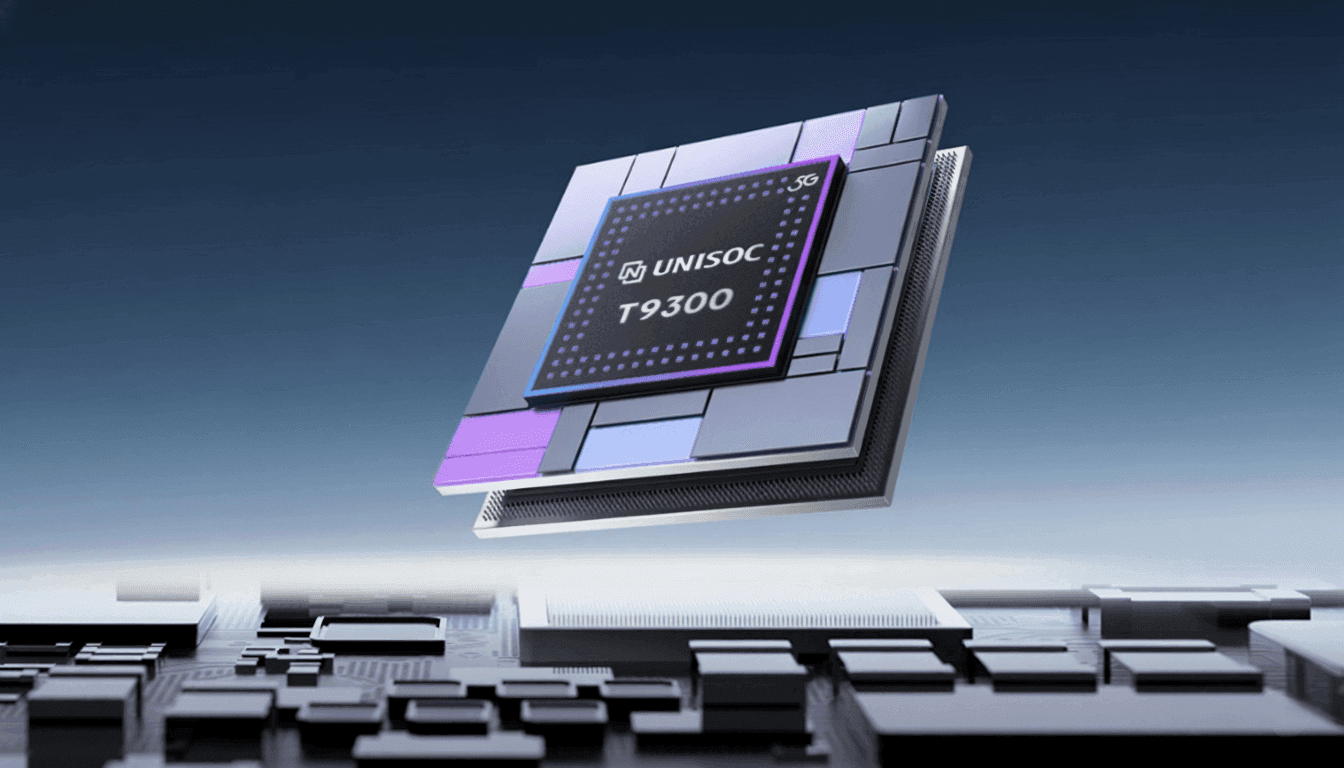
    The high-performance 5G SoC Unisoc T9300 is intended to improve gaming and photography. It has an octa-core CPU with two Cortex A78 cores operating at 2.4GHz and six Cortex A55 cores operating at 2.2GHz, all built on a 6nm technology.

    According to Unisoc, efficiency has increased by about 38% over the preceding generation. The Mali G57 dual-core GPU handles graphics, and UFS 2.2 flash and LPDDR4X RAM are supported for storage. According to reports, benchmark scores on AnTuTu V10 approach 550,000.

    Unisoc T9300 5G chipset

    3GPP Release 17 support, the integration of 5G NR NTN satellite communication, and 5G MBS broadcast significantly improve connectivity. In typical 5G scenarios, the chipset has enhanced power efficiency and AI-driven network management. Dual VoNR, VoWiFi, SA and NSA modes, and full multi-band compatibility from 2G to 5G are all supported.

    With a quad-core ISP, support for up to 200-megapixel sensors, 32-megapixel at 25 frames per second ZSL output, and 20-megapixel dual camera combinations, the T9300 unveils the seventh-generation Vivimagic imaging engine. Along with enhanced portrait segmentation and HDR photography, it also features enhanced multi-frame and time domain noise reduction, improved 3A algorithms, and AI-backed night mode.

    Advanced noise reduction, improved echo control, improved stereo playback, and HiFi-grade output driven by a dedicated DSP are among the audio features. In addition to VRR and other eye protection settings, display support includes FHD+ at 144Hz, 1.5K at 90Hz, HDR10+, and Netflix certification.

    The Unisoc Miracle Gaming engine, which emphasizes frame stability, network optimization, and improved visual processing with AI codec support for increased voice clarity in bad network conditions, enhances the gaming experience.

  • Google Tensor G5 comes on 3nm build and a new GPU

    Google Tensor G5 comes on 3nm build and a new GPU

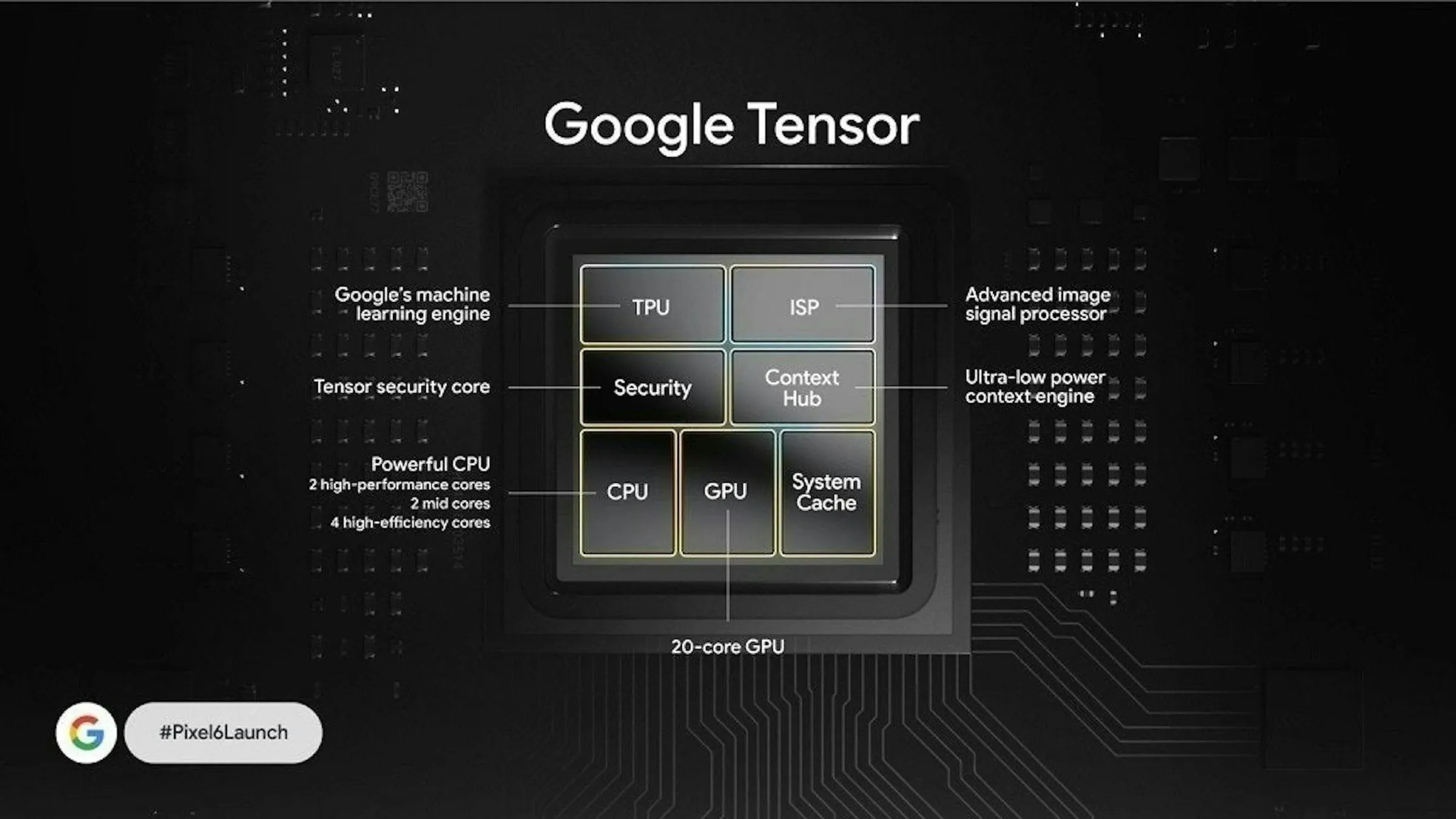
    According to reports, Google’s Pixel 10 series will use the Tensor G5 as its next processor. According to reports, it will be manufactured under the codename “Laguna” under a multi-year agreement with TSMC, which would completely replace Samsung. There have been major architectural modifications in this flagship processor.

    According to reports, the Google Tensor G5 has an 8-core CPU and makes use of TSMC’s 3nm node. One Cortex-X4 prime core at 3.4 GHz, three to five Cortex-A725 performance cores at roughly 2.85 GHz, and two to four Cortex-A525 efficiency cores at 2.4 GHz are typical configurations, though reports vary significantly. Using the Cortex-A725, the design prioritizes efficiency and long-term performance, which is further improved by the 3nm technology. The goal of switching to more modern efficiency cores is to enhance the user experience in general.

    google tensor g5 soc

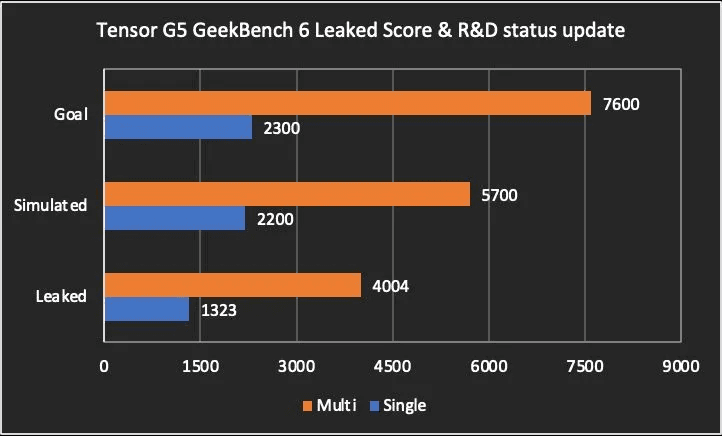
    A single-core score of roughly 1323 and a multi-core score of roughly 4004 are displayed in the leaked Geekbench 6 results. These are preliminary findings, but they fall short of the Tensor G4’s scores (about 1950 single-core and 4741 multi-core).

    There is potential for improvement through software optimization, as indicated by projected scores of 2200 single-core and 5700 multi-core, as well as a company objective of maybe surpassing 2300 single-core and 7600+ multi-core. Early software optimization or certain test setups could be the cause of the initial lower scores. In early incarnations, the emphasis on a more efficient production process may put power efficiency ahead of peak performance.

    image 7

    Despite architectural modifications and the switch to a 3nm technology, early benchmarks indicate that the Tensor G5 might not much outperform its predecessor in Geekbench 6. The particular setups of the testing devices or early software optimization may be to blame for this. In early generations, the shift to a more efficient manufacturing process may put power efficiency ahead of peak performance benefits.

    The Tensor G5 is anticipated to include a dual-core Imagination Technologies IMG DXT-48-1536 GPU clocked at 1.1 GHz, whereas the Google Tensor G4 used an Arm Mali-G715 MP7 GPU. This marks a substantial shift away from Google’s prior dependence on Arm Mali GPUs. This points to a change in strategy, either motivated by discontent with Mali’s performance in some domains or a keen interest in the capabilities of the IMG DXT.

    The highest level in the Ray Tracing Level System (RTLS), Level 4 ray tracing, is supported by the IMG DXT GPU, allowing for powerful visuals with low power consumption. This attempts to give the Pixel 10 more lifelike and captivating visual and gaming experiences. Users that value visual quality and game performance will find Level 4 ray tracing’s cutting-edge visuals appealing.

    image 8

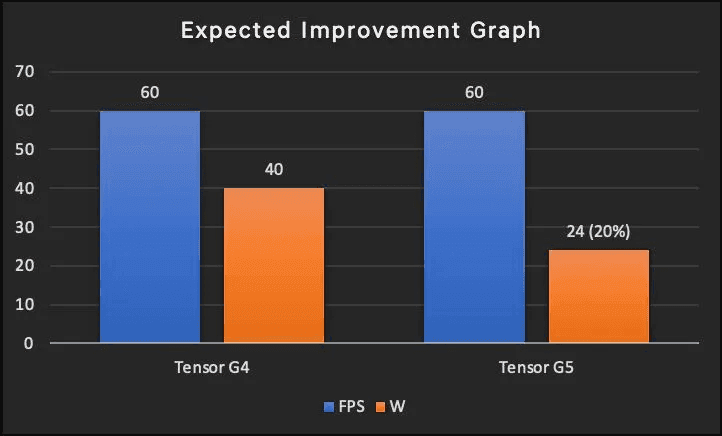
    Power efficiency is a key component of the IMG DXT, and its successor, the DXTP, offers up to 20% more power efficiency (FPS/W). Although DXT is used by the Tensor G5, this suggests a common pattern in Imagination’s designs. By switching to IMG DXT, the Pixel 10’s graphics subsystem may become more power efficient, which could solve a persistent problem with Tensor-based devices’ short battery life. A major benefit would be increased power efficiency over the Mali-G715 MP7.

    Stay connected with the latest from Droid Tools—follow us on X @droid_tools, like our page on Facebook, check out our updates on Instagram, and follow us on Google News for real-time news, device tips, and mobile tech insights.

  • The Qualcomm Snapdragon 8s Gen 4 with Kryo CPU and Adreno 825 GPU was announced.

    The Qualcomm Snapdragon 8s Gen 4 with Kryo CPU and Adreno 825 GPU was announced.

    Qualcomm recently unveiled the Snapdragon 8s Gen 4, their newest high-end smartphone chipset. Internally referred to as the SM8735, it is built on TSMC’s N4P 4nm production node and uses the older Kryo CPU rather than the Oryon core that is present in the top Snapdragon 8 Elite chip.

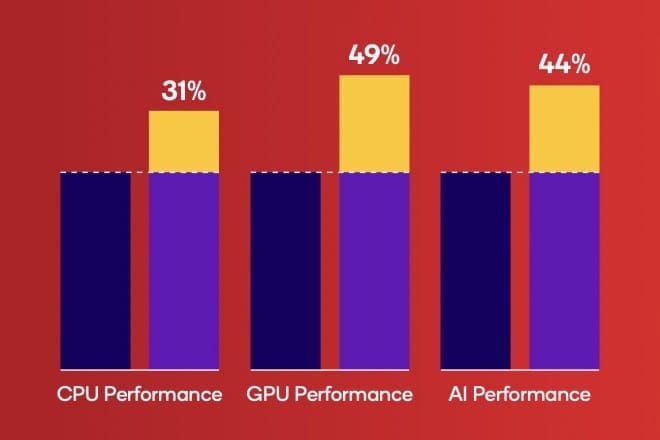
    Three Cortex-A720 cores at 3.0GHz, two at 2.8GHz, two at 2.0GHz, and one Cortex-X4 prime core clocked at up to 3.2GHz make up the CPU layer. Qualcomm claims that the new chip uses 39% less power and is 31% faster than the Snapdragon 8s Gen 3 from the previous year.

    Additionally, the chip has a new Adreno 825 GPU, which Qualcomm claims will increase graphics by 49% over the Snapdragon 8s Gen 3. Additionally, Snapdragon Elite Gaming capabilities including Snapdragon Game Super Resolution 2.0 and Adreno Image Motion Engine 2.0 are included, along with support for on-device ray tracing.

    On-device AI operations are performed 44% better with the upgraded Qualcomm Hexagon NPU. Additionally, Qualcomm included an 18-bit triple image signal processor (ISP) that can record HDR video at 4K60 frames per second and accommodate up to 320MP camera sensors.

    8s Gen 4 performance

    The integrated Snapdragon X75 5G modem in the new chip can download files at up to 4.2Gbps, however it only supports sub-6GHz spectrum rather than the speedier mmWave frequency ranges. Additionally, the chip has Bluetooth 6.0 and Wi-Fi 7.

    LPDDR5X RAM, USB 3.1 Gen 2 connection, and UFS 4.0 storage are all supported by the 8s Gen 4. Additionally, it has Qualcomm’s Extended Personal Area Network (XPAN) connectivity, which is currently available on certain new wireless earbuds like the Xiaomi Buds 5 Pro and uses Wi-Fi to send music.

    Later this month, the iQOO Z10 Turbo is anticipated to be the first gadget to use the Snapdragon 8s Gen 4, with other Xiaomi, Oppo, Meizu, and other products to follow shortly.

    snapdragon 8s Gen 4 features

    Main Snapdragon 8s Gen 4 Features

    • Our Qualcomm® AI Engine includes:
      • Qualcomm® Hexagon™ NPU
        • 2x larger shared memory for improved memory bandwidth
      • Qualcomm® Sensing Hub
      • Support for INT4 and INT8 precisions 
    • Snapdragon Elite Gaming™ Features
      • Real-time Hardware Accelerated Ray Tracing with Global Illumination for improved lighting, shadows, and reflections
      • Qualcomm Adaptive Performance Engine provides ultra-fast and super-smooth performance while providing longer gameplay sessions
      • Snapdragon Game Super Resolution 2.0 intelligently upscales low-res game scenes in up to 4K
    • Our Qualcomm Spectra™ AI ISP features:
      • Real-time Semantic Segmentation for photo/video with up to 250 layers
      • Real-time skin and sky tone correction intelligently captures natural color tones even in challenging environments
      • Night Vision 2.0 captures detailed videos in low light at 4K30 FPS
      • An always-sensing camera enables features like hand gestures, face unlock, and QR code scanning
    • Featuring our integrated AI-accelerated Snapdragon® 5G Modem-RF System
    • Qualcomm® FastConnect™ Mobile Connectivity System offers leading Wi-Fi 7 with speeds up to 5.8 Gbps and Bluetooth® 6.0 technology 
    • Supports Snapdragon Sound™ Technology Suite
      • Qualcomm® Expanded Personal Area Network Technology (XPAN) keeps earbuds and headphones connected via Wi-Fi for untethered, whole-building audio coverage
    • Snapdragon Seamless experience connects all your compatible devices so you can switch between them intuitively and quickly