Tag: 5g

  • Xiaomi HyperOS secret codes: uncover hidden features and more

    Xiaomi HyperOS secret codes: uncover hidden features and more

    For users of Xiaomi smartphones running the Xiaomi HyperOS operating system, there are hidden codes that can unlock additional features and settings, providing a deeper level of customization and control. In this article, we’ll explore some of these secret codes and the functionalities they offer to enhance your Xiaomi HyperOS experience.

    *#06# – IMEI

    Need to check your device’s International Mobile Equipment Identity (IMEI) number? Dial *#06# to quickly access this information.

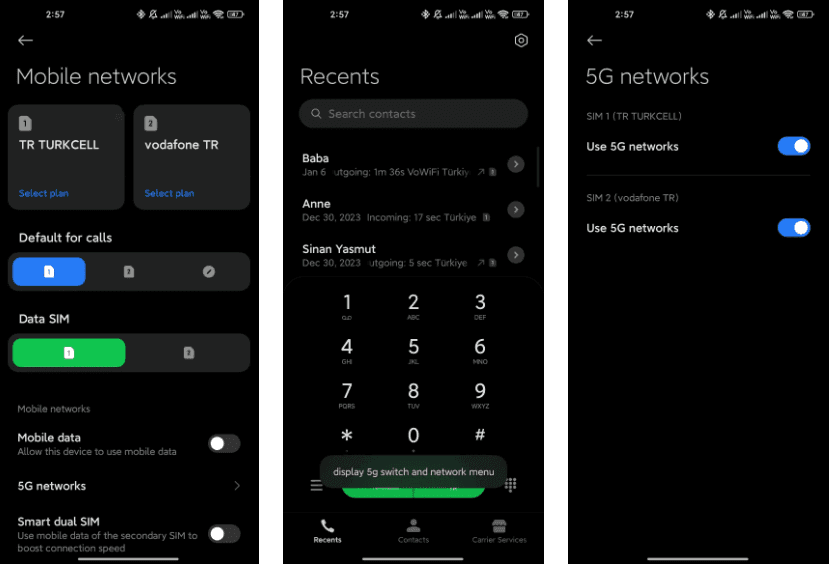
    *#*#*54638#*#* – Enable/Disable 5G Carrier Check

    Toggle the 5G carrier check with this code, giving you control over your network settings and the ability to enable or disable 5G functionality.
    5g switch

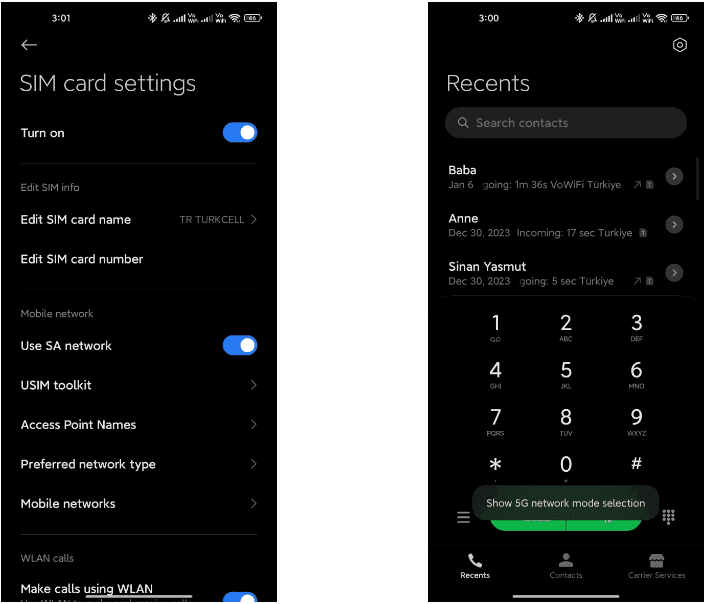
    *#*#726633#*#* – Enable/Disable 5G SA Option on HyperOS

    Unlock the 5G Standalone (SA) option on your network settings using this code, providing more control over your device’s connectivity.
    5g sa

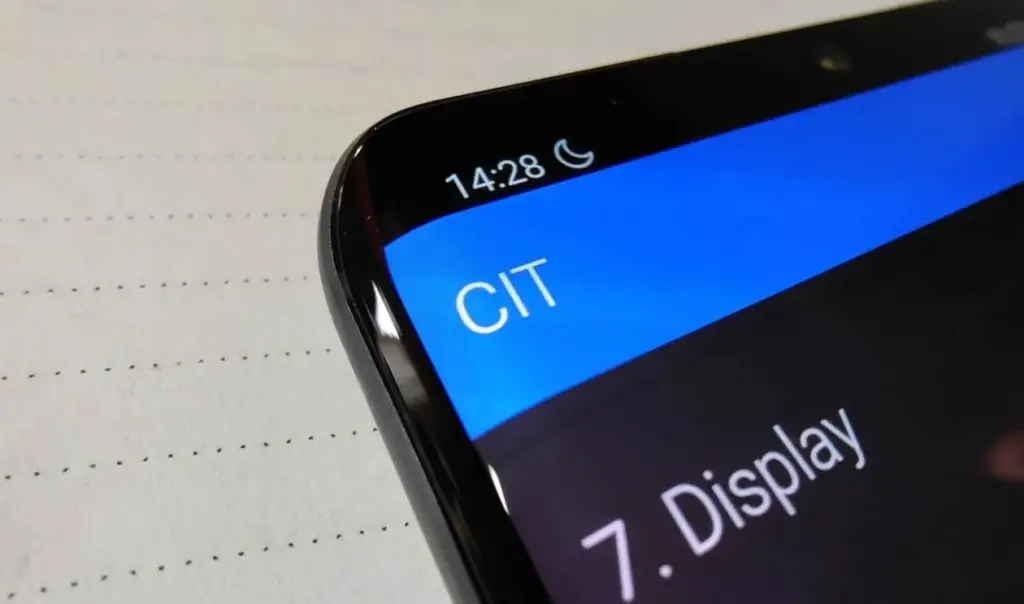
    *#*#6484#*#* – Xiaomi Factory Test Menu (CIT)

    Explore the Xiaomi Factory Test Menu for advanced testing and configuration options.
    xiaomi cit menu

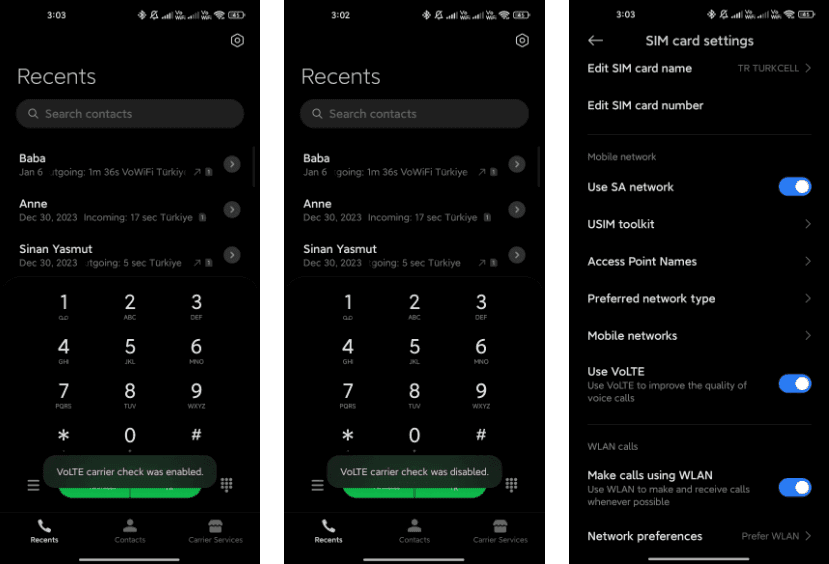
    *#*#86583#*#* –  Enable/Disable VoLTE Carrier Check

    Toggle the VoLTE (Voice over LTE) carrier check to customize your network settings and enable or disable this feature.
    volte carier check

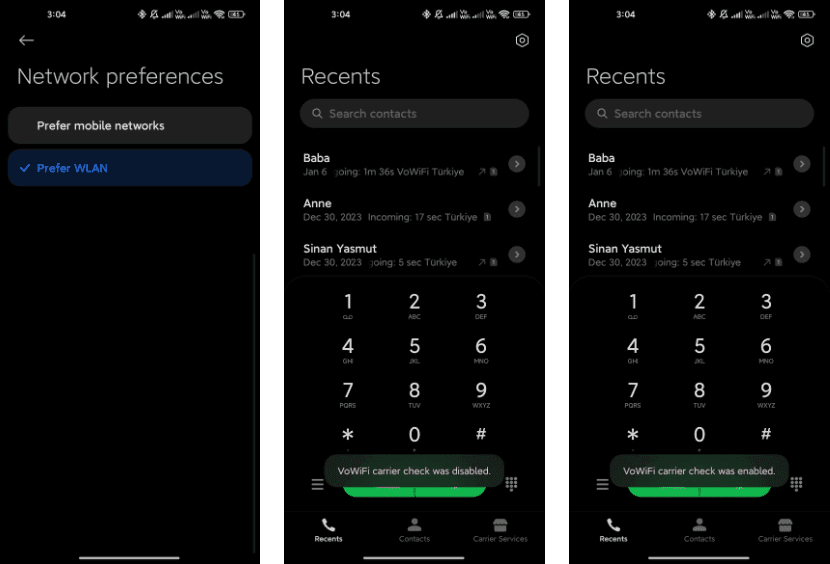
    *#*#869434#*#* –  Enable/Disable VoWi-Fi Carrier Check

    Take control of your Voice over Wi-Fi (VoWi-Fi) settings by using this code to enable or disable the carrier check.
    wofi

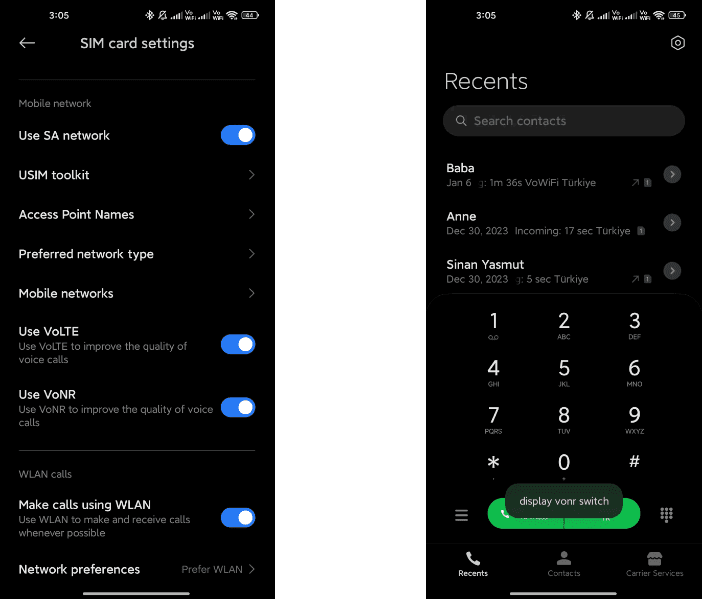
    *#*#8667#*#* – Enable/Disable VoNR

    Manage Voice over New Radio (VoNR) settings with this code, providing more options for your device’s voice capabilities.
    vonr

    *#*#4636#*#* – Network Information

    Access detailed network information to check your device’s status and connection details.

    *#*#6485#*#* – Battery Information

    Get insights into your device’s battery, including cycle information, actual and original capacity, charging status, temperature, health status, and charging protocol type.

    6485.jpg

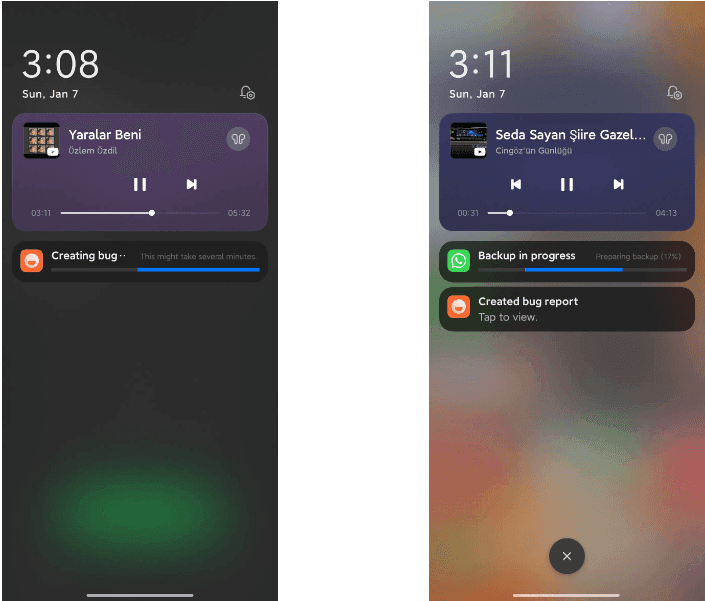
    *#*#284#*#* – Capture System Log

    Generate a BUG report to capture system logs, providing valuable information for debugging purposes. The report is saved in the MIUI\debug-log\ folder.
    system log

    *#*#76937#*#* – Disable Thermal Check

    Turn off thermal checking with this code, potentially preventing your device from throttling performance due to high temperatures.

    *#*#3223#*#* – Turn on DC DIMMING Option

    Activate the DC DIMMING option using this code, allowing you to adjust the display settings for a more comfortable viewing experience.

    Unlock the full potential of your Xiaomi device with these secret codes, and improve your Xiaomi HyperOS experience. These hidden codes offer Xiaomi HyperOS users a range of functionalities, from network customization to battery insights and advanced testing options. Users should exercise caution and be mindful of potential impacts on device settings while exploring these codes.
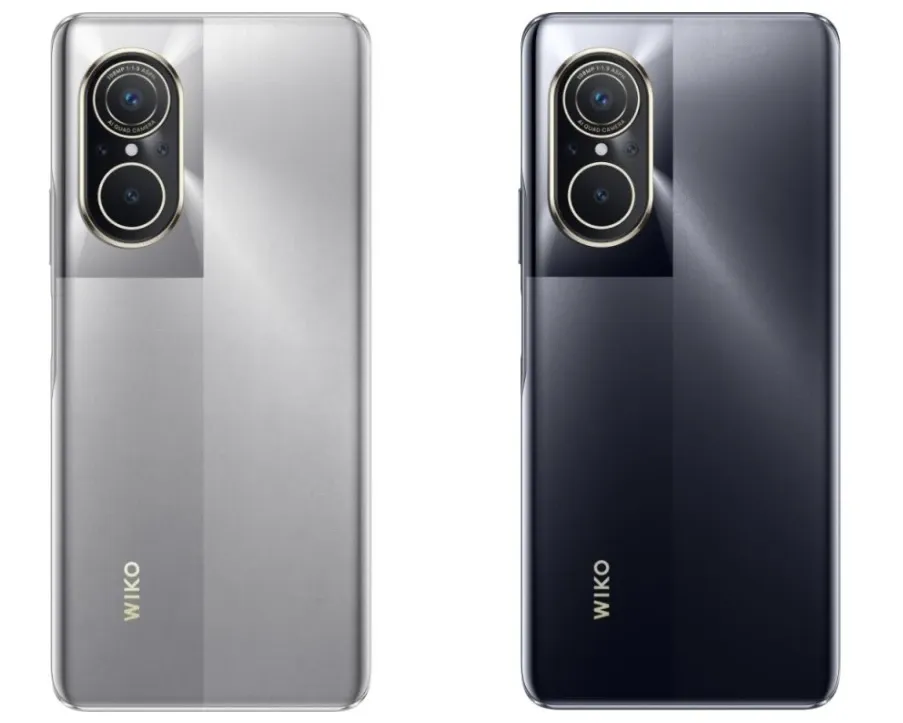
  • Huawei rebranded to support 5G and escape U.S. restrictions

    Huawei rebranded to support 5G and escape U.S. restrictions

    The Huawei Nova 9 SE was released in March, and of course, the specifications of the device had to abide with the limitations imposed on Huawei by the US. This indicates that the 6nm Snapdragon 680 4G SoC powers the phone. You see, a current export regulation forbids foundries employing American technology from exporting chips to Huawei, even if those chips are created by the company itself, preventing Huawei from having its devices enable 5G.

    In order to get around this, Huawei has filed a patent for parts that would be used by an ultra-violet lithography device (EUV). There is only one business in the world that makes this equipment, and that company, ASML, does not send EUV machines to China. This machine etches circuity patterns on a silicon wafer that are thinner than the width of a human hair. In order to cram billions of transistors into a chip, smaller designs are required. A chip becomes more powerful and energy-efficient as its transistor count increases.

    huawei wiko rebrand

    Huawei might make a significant comeback in the smartphone industry if it can construct its own EUV machine, which is something that isn’t totally evident right now. Its ecosystem, app marketplace, and operating system are all unique. Huaweri only need cutting-edge chips, and if it develops its own EUV, it might be able to assist SMIC, China’s top foundry, in producing chips that are compatible with the silicon offered by TSMC and Samsung Foundry.

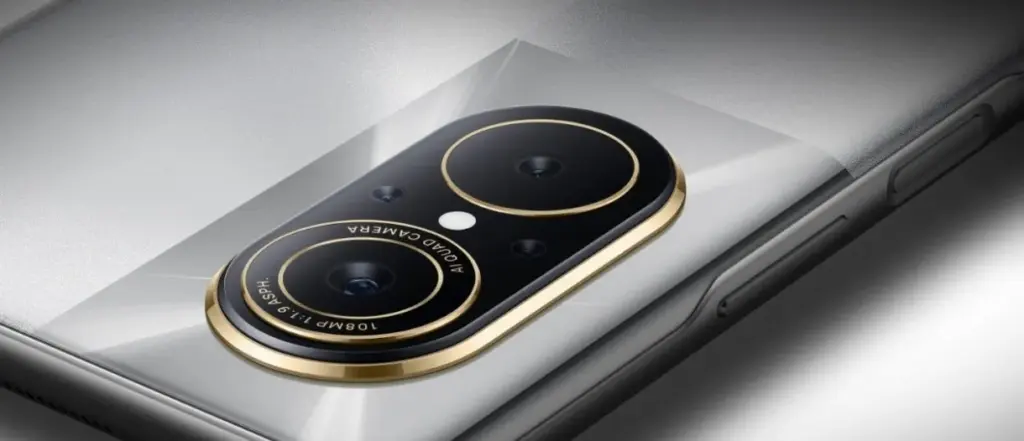
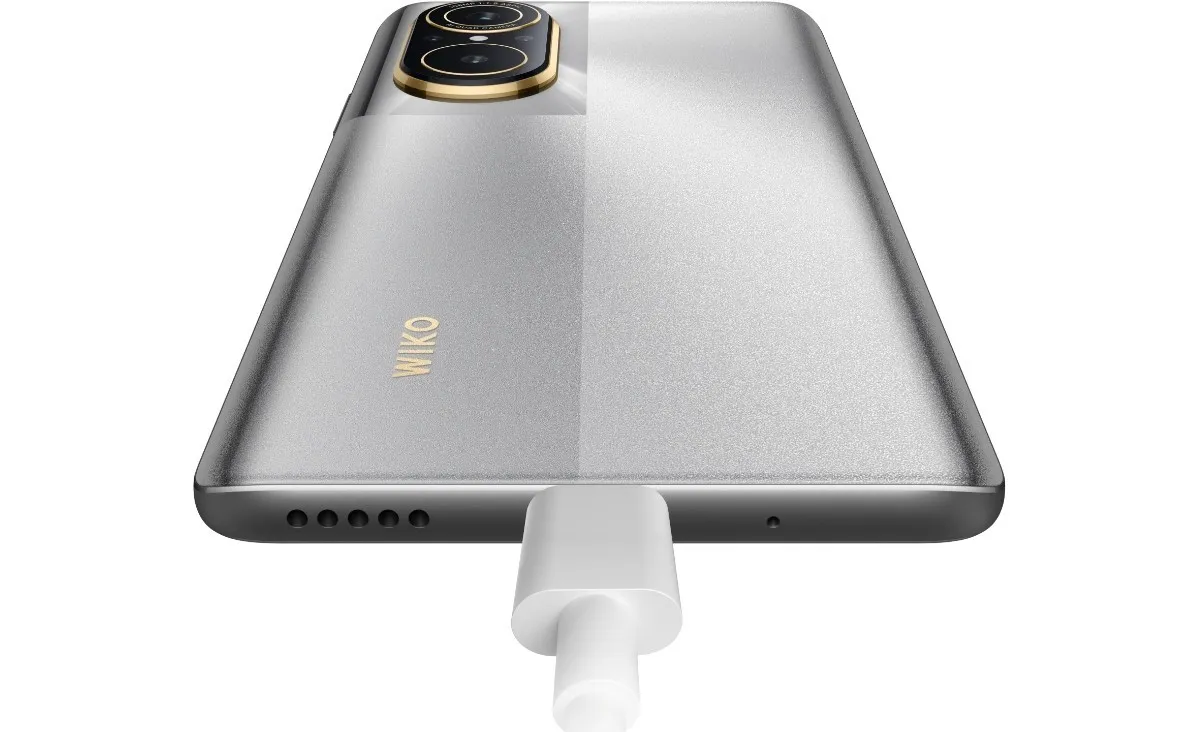
    According to GSMArena, a French company using the Wiko brand name is trying to make a comeback in the marketplace by rebranding the Huawei Nova 9 SE as the Wiko 5G. The phone uses a chipset that Huawei doesn’t have access to, the Snapdragon 695 SoC which does feature 5G support. The Wiko 5G, like the Nova 9 SE, sports a 6.78-inch LCD display with an FHD+ resolution of 1080 x 2388 and a 120Hz refresh rate.

    wiko phone

    The Wiki 5G features 8GB of RAM along with either 128GB or 256GB of storage. Keeping the lights on is a 4000mAh battery with 66W wired charging. The rear camera array is intriguing as it comes with a 108MP Primary camera, an 8MP Ultra-wide camera, a 2MP Macro camera for extreme close-ups, and a 2MP depth sensor. The front-facing selfie snapper weighs in at 16MP. The handset is pre-installed with HarmonyOS which means that software updates for the device will be coming straight from Huawei.

    The price for the Wiko 5G is 1,999 Chinese yuan ($287) for the model with 128GB. The model with 256GB of storage is priced at 2,199 Chinese Yuan ($315).

  • What’s next in Qualcomm’s 5G smartphones world

    What’s next in Qualcomm’s 5G smartphones world

    Qualcomm’s annual 5G Summit is taking place in San Diego this year, and the company has a few major announcements to make about its technology for future 5G products. These developments coincide with the widespread use of 5G connectivity and smartphones in many regions of the world.

    Smart Transmit 3.0 is maybe the most notable reveal. Qualcomm’s 5G speed and coverage optimization technology has reached its third generation. The significant change in this version is that Smart Transmit now includes Bluetooth and Wi-Fi for the first time, allowing you to optimize your phone’s whole radio stack. Smart Transmit 3.0, according to Qualcomm, supports Wi-Fi 6, Wi-Fi 6E, and Wi-Fi 7.

    5g

    We asked Qualcomm about specific performance and efficiency gains for Bluetooth and Wi-Fi when using Smart Transmit 3.0, but the company didn’t divulge any figures. It’s also worth noting that future Wi-Fi and Bluetooth versions will likely offer a bigger improvement, but even a small improvement to current standards would be welcomed.

    You can expect to find this tech in the previously revealed Snapdragon X70 5G modem, which is due to arrive in phones by “late 2022,” according to Qualcomm.

    Standalone mmWave for X70

    5g

    Qualcomm also stated at the 5G Summit that the X70 modem will handle independent mmWave connections, showcasing a connection. The feat was accomplished with a test device powered by the forthcoming modem.

    The majority of 5G networks are non-standalone, which means they still rely on 4G technology for some functions. Separate 5G uses only 5G radio and backend technology, resulting in more flexible networks and services. This announcement also demonstrates that 5G backend technology can work in locations where there is no sub-6GHz connection.

    It’s worth noting that Qualcomm previously announced a standalone mmWave 5G data connection milestone in July 2021. The firm told us that the previous milestone was related to 200MHz support, which is a requirement for the Chinese market.

    What to expect from the Snapdragon X70 modem?

    The X70 is the first 5G modem featuring an AI processor, and Qualcomm has unveiled a few more advantages of this silicon ahead of its launch.

    In particular, the company claims that mmWave coverage will be increased by 20% in “dense metropolitan situations.” Mobility-based sub-6GHz 5G at the edge of coverage might see a throughput jump of up to 73 percent, while pedestrians at the edge of coverage could see a 28 percent rise. However, it’s likely that consumers will only realize these increases under perfect circumstances.

    Qualcomm previously noted it uses this AI suite for 5G channel optimization, smart network selection, mmWave beam management, and antenna tuning. This should theoretically result in performance and efficiency gains, but we’ll wait for the first X70-toting devices to see if this is indeed the case.

  • TCL 30 XE 5G – budget phone with 90Hz display

    TCL 30 XE 5G – budget phone with 90Hz display

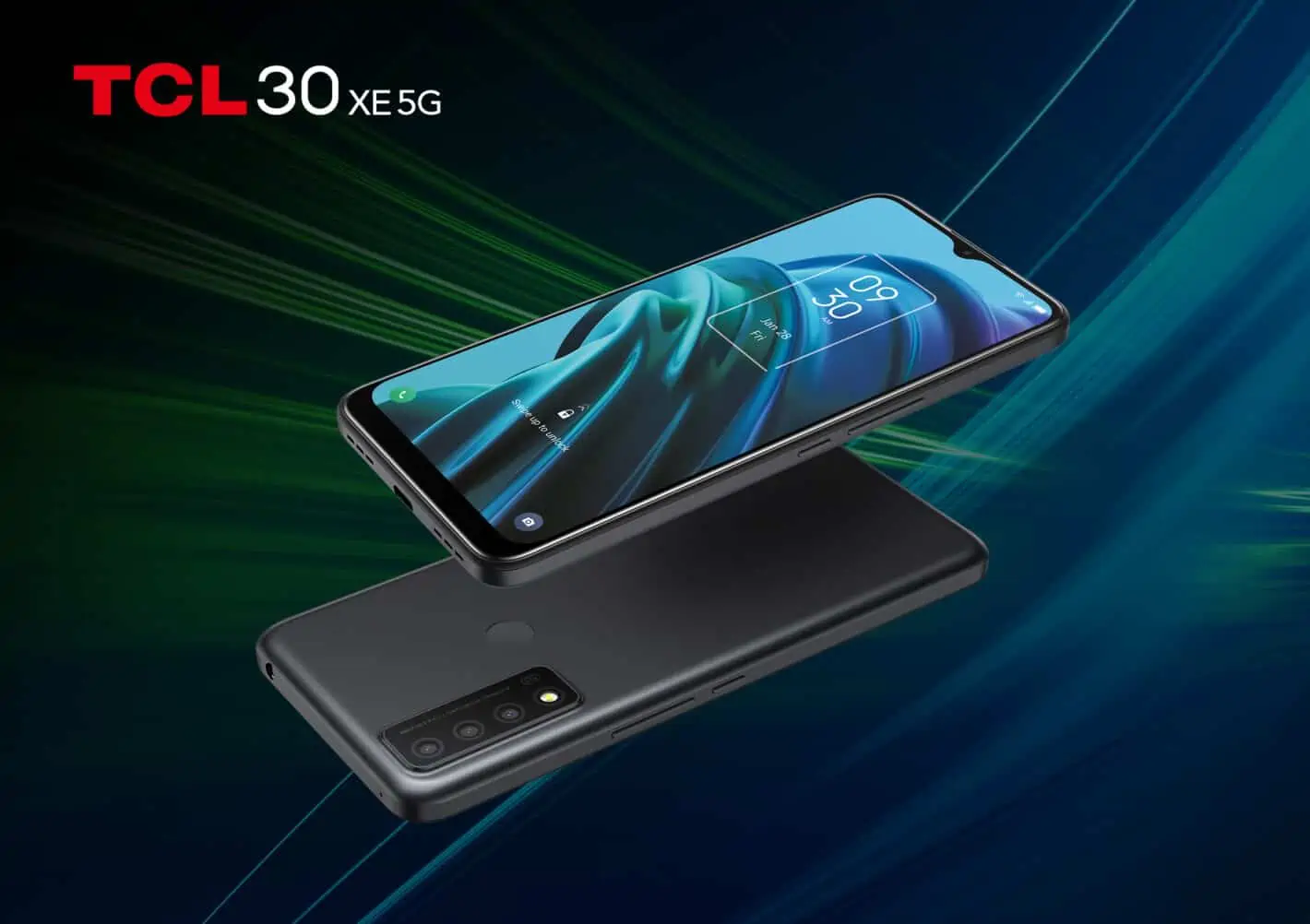
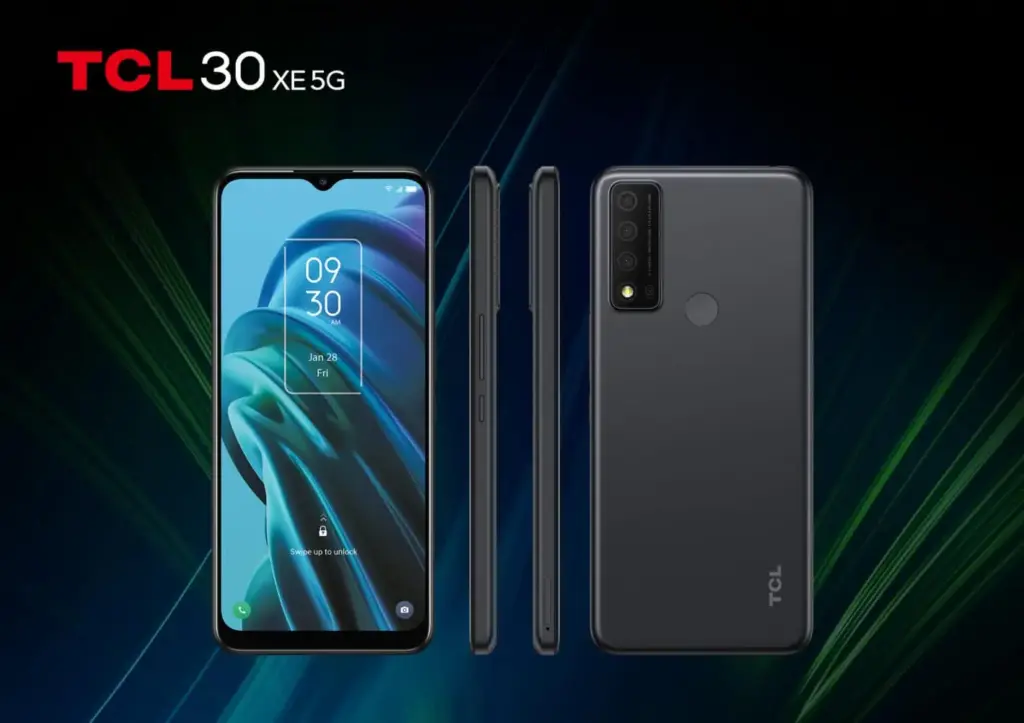
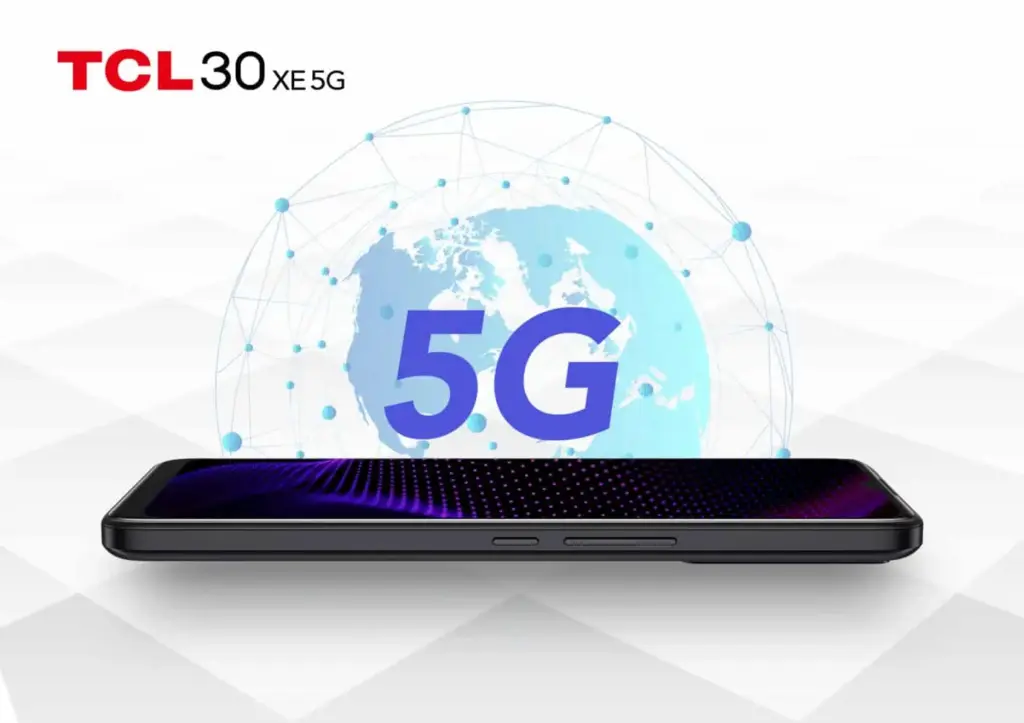
    TCL has just released the TCL 30 XE 5G, a low-cost phone with some impressive specs.

    TCL has produced a number of fascinating phones since establishing its own brand. This company is focusing on manufacturing affordable phones as well as challenging the luxury market and working on a foldable phone.

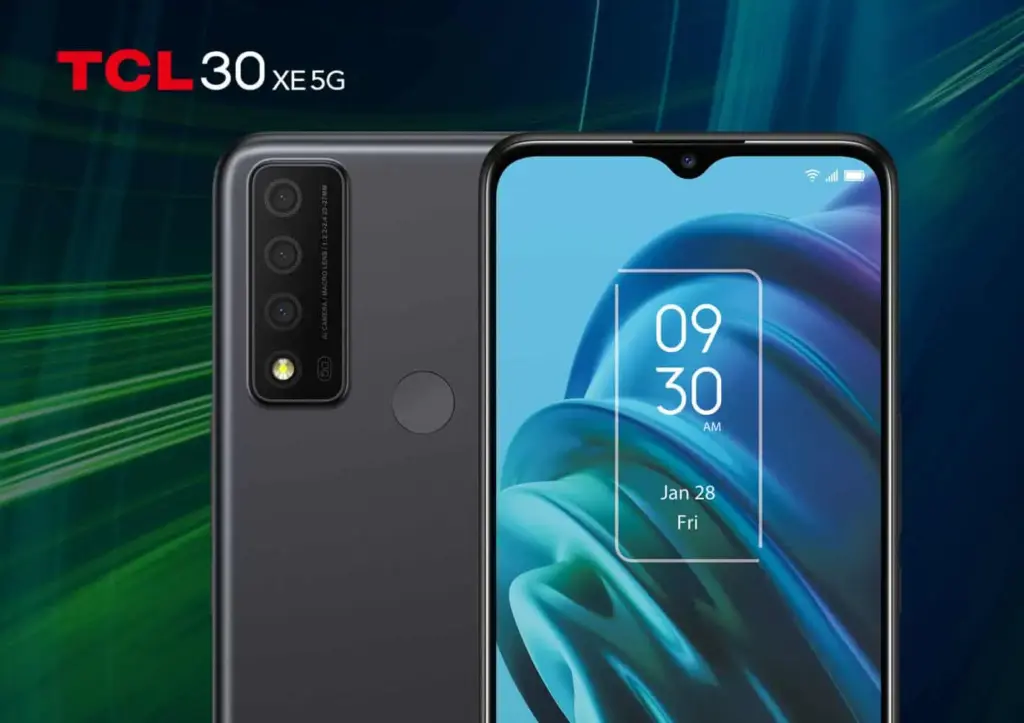
    TCL 30 XE 5G

    The TCL 30 XE 5G has a 1080p display at 90Hz

    We’re not dealing with any high-end or ground-breaking specifications right away. This is a simple phone with some interesting features. It features a 6.52-inch 1080p+ LCD display with a 90Hz refresh rate. While that may seem insignificant, it is enhanced by TCL’s NXTVISION technology. The display also features a touch sample rate of 180Hz.

    The octa-core MediaTek Dimensity 700 SoC clocked at 2.2GHz powers the TCL 30 XE 5G. There are 4GB of RAM and 64GB of storage, which should suffice for most casual users. If it isn’t, this phone can be expanded with a microSD card up to 512GB.

    A triple camera package is available in the camera package. The main camera on this phone is 13 megapixels, with a 2 megapixel macro camera and a 2 megapixel depth sensor. The main camera can record 1080p video at 30 frames per second. There’s an 8MP selfie camera on the front. It appears to be a camera combo that will simply do the job.

    TCL included a 3.5mm headphone jack, a 4,500mAh battery, mobile hotspot, a rear-mounted fingerprint reader, face unlock, Android 11 out of the box, and an 18W charger in the box to round out the features. So, this is a really basic start into the TCL 30 phone series.

    Complete spec sheet on GSMArena

    Other details on this phone are scarce

    We don’t know much about the TCL 30 XE 5G at the moment. We don’t know when or where this phone will be released, or how much it will cost when it does. We can expect a similar price to the TCL 30 V 5G, which is roughly midrange and costs $299. It could be a little lower due to some of the specifications being less reliable.

    While this phone does not compete in the premium smartphone market, it is still a good option for individuals who do not require much from their phones. For those who aren’t used to more expensive screens, the 90Hz refresh rate should be a nice touch. While we don’t know when this phone will be released, it shouldn’t be long.

  • Motorola Edge 20 5G series: All You Need to Know

    Motorola Edge 20 5G series: All You Need to Know

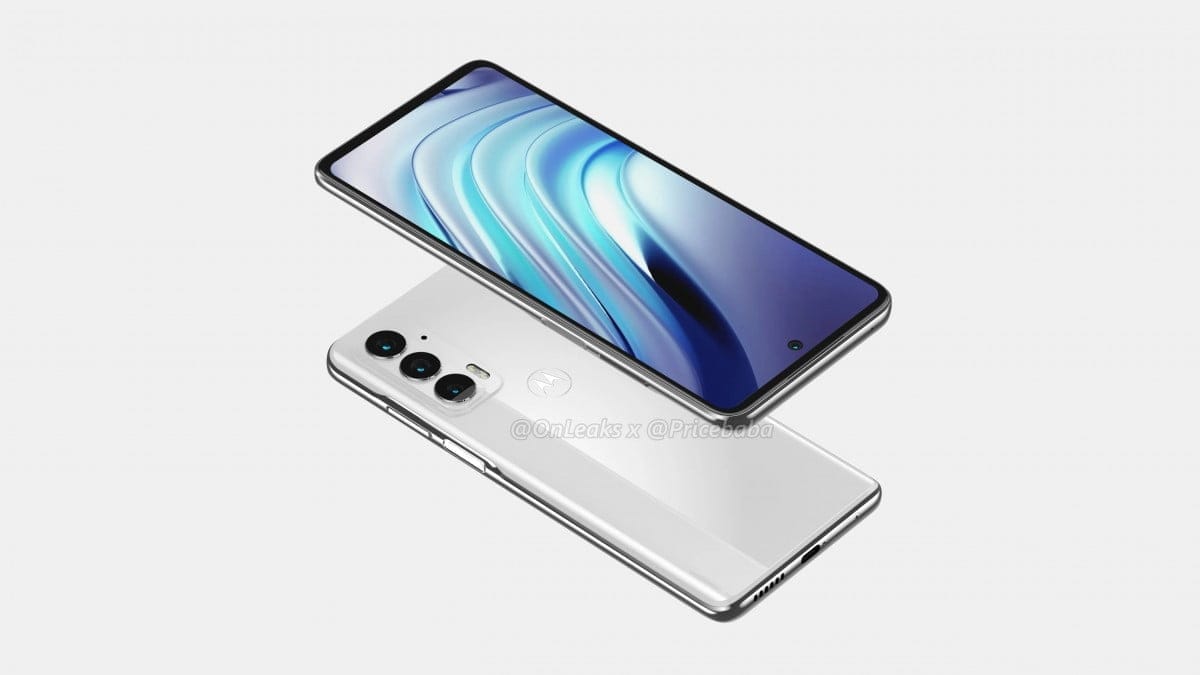
    Motorola Edge 20 Pro, the most costly handset in the series, is said to be powered by the Qualcomm Snapdragon 870, an overclocked version of the Snapdragon 865 found in the original Edge+. It comes with 12GB of RAM and 256GB of storage as standard, but no support for micro SD cards. Owners will also get access to a 6.7-inch Full-HD+ screen with a 144Hz refresh rate, according to the report. The Motorola Edge 20 Pro, however, does not have a curved-edge display, as evidenced by the leaked press renders below. A flat panel with a centred punch-hole has been substituted for that aesthetic element.

    A rectangular camera bump sits on the back, housing an LED flash, some branding, and three sensors. The main camera is a 108-megapixel sensor, but there’s also a 16-megapixel ultra-wide sensor and an 8-megapixel 5x periscope zoom camera. A 4,500mAh battery with 30W fast charging capabilities completes the Edge 20 Pro’s kit. Android 11 is most likely pre-installed as well, with Android 12 apparently on the way. In Europe, the Motorola Edge 20 Pro is projected to cost €699 at launch. Midnight Blue and Blue Vegan Leather will be the two colours offered. The official announcement is set for August 5, and shipments are expected to begin soon after.

    Motorola Edge 20 is a 5G smartphone.

    In addition to the high-end Edge 20 Pro, Motorola is developing the Motorola Edge 20 5G, which will employ the Qualcomm Snapdragon 778G chipset. In this case, 8GB of RAM and 128GB of storage are combined. It can’t be expanded using a micro SD card, so if you run out of space, you’ll have to rely on cloud storage to keep papers and photographs.

    When it comes to photographs, the Edge 20 5G’s cameras are still rather good. The main and ultra-wide sensors are taken from the Pro model, and previous rumours suggested that an 8-megapixel 3x telephoto zoom camera would be included as well. The phone also has the same 6.7-inch 144Hz display as the Pro model, a flat iPhone 12-like aluminium frame, and a 4,000mAh battery with 30W fast charging capabilities. Bluetooth 5.2, NFC, and WLAN 6 are among the connectivity standards supported.

    The Motorola Edge 20 5G, as well as the Pro model, should be introduced next week. It will be available in Frosted Gray and Frosted White finishes and will retail for €499 in Europe. A specific North American version with a larger display and a downgraded camera system is in the works, however, details have yet to be revealed.  The devices will be able to carry out tasks such as file switch with ease.

    Motorola Edge 20 Lite.

    We have no idea how much the Motorola Edge 20 Lite will set you back. However, we do know that it will be the most cost-effective phone in the series, and one of the top budget 5G phones in 2021. Motorola has chosen the Dimensity 720G 5G chipset, which includes 8GB of RAM and 128GB of storage. The Edge 20 Lite, unlike the other smartphones, will accept micro SD cards, allowing you to take as many images as you want without worrying about running out of space.

    The 6.7-inch display with the centred punch-hole is still there, but the refresh rate has been reduced to 90Hz, which is still acceptable. On the rear, there’s a triple-camera array as well as a 32-megapixel selfie sensor. A 108-megapixel primary camera, an 8-megapixel ultra-wide, and a 2-megapixel depth camera for greater bokeh make up the latter.

    The Edge 20 Lite is essentially a glorified dual-camera system. A 5,000mAh battery with 30W fast charging support, a 3.5mm headphone jack for hard-core users, Android 11, and Bluetooth 5 connectivity round out the remainder of the specs.

  • #leak OnePlus 9 5G early hands-on photos

    #leak OnePlus 9 5G early hands-on photos

    oneplus 9

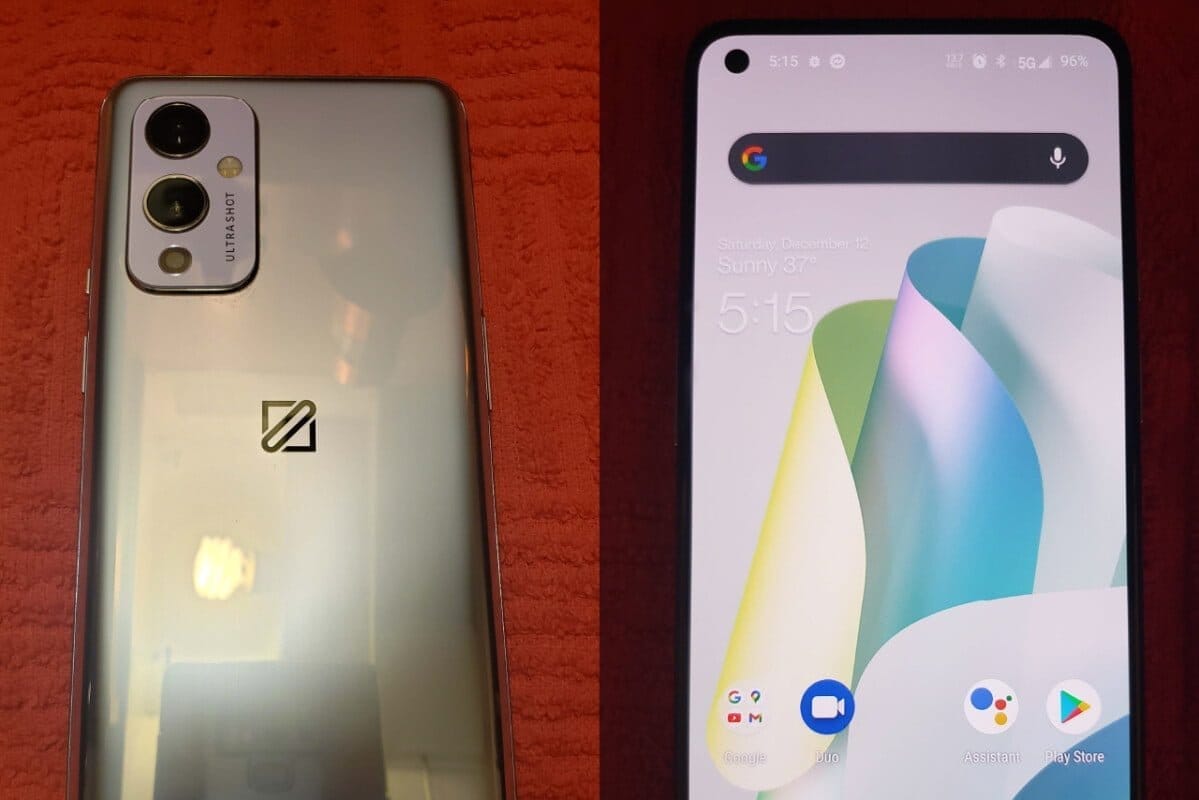
    We’re only a few months away from the next launch of the OnePlus flagship, but that definitely hasn’t dissuaded a sea of leaks from pouring out and giving away almost all the OnePlus 9 needs to know. PhoneArena recently released a bunch of pictures of the regular OnePlus 9, entering the leak spree, giving us a better idea of what the final version would look like.

    The OnePlus 9 does not look all that distinct from the 8T in these purported images of a prototype unit from the front and sides. You get the same hole-punch positioned to the top-left corner of the monitor and no headphone jack is found again. The display seems to have slightly more rounded corners, but given the low quality of these pictures, it’s hard to be certain.

    What’s really changed is the phone’s back. The camera lenses further stick out of the already protruding housing and have a metal ring encircling them, possibly just for aesthetics and to mimic recent iPhones. However, the arrangement looks closer to the Oppo Reno4 Pro, including the ‘Ultra Shot’ branding, which seems like the OnePlus take on Oppo’s ‘Ultra Steady.’ This is likely since both sister companies often share their underlying device development platforms.

    The OnePlus 9 5G is also expected to have a 16MP camera on the front, while the main camera will have a 48MP sensor on the front (even though the on-device specs tell a different tale). Some phone screenshots point to the new Qualcomm Snapdragon 888 chip and an 8/128GB memory/storage setup, with likely more options on the cards. With the newly redesigned OxygenOS 11 running on top, the phone will run Android 11. In both the resolution and refresh rate, the display will continue to measure 6.55-inches, matching its predecessor.

    These images are closely associated with the CAD renders we saw as part of a separate leak earlier. At this point, we expect OnePlus to add another phone, the OnePlus 9E, which sounds like a step down from the regular 9, to its main flagship lineup.

    A previous report suggested that OnePlus could opt for an early release, moving up to March from its usual timeframe of May, which would probably be a move intended to counter Samsung’s earlier Galaxy S21 launch.