Category: Guides

Expert Android guides that help you master phones, apps, operating systems and wearables with clear, step‑by‑step advice for real‑life use.

  • Enhance privacy on your device

    Enhance privacy on your device

    Android and its pre-installed apps come practically free, but Google still earns a pretty big penny thanks to targeted web-wide ads. Your phone is actually helping the company tailor marketing strategies to you. There are a few options to make Google less invasive on your smartphone by turning off any default monitoring settings, if you don’t like that and a move to iOS isn’t your jam. However, you need to be aware that this will break a couple of features.

    Not all monitoring is poor per se, in my view, but we should also pause to consider what we’re really learning from it. For example, you may see little point in continuously sharing your location history with Google, but you might still be interested in being able to find and/or delete your device remotely if it’s stolen or misplaced — that’s why I ‘d recommend not turning off the Locate My Device feature of Google.

    privacy control android

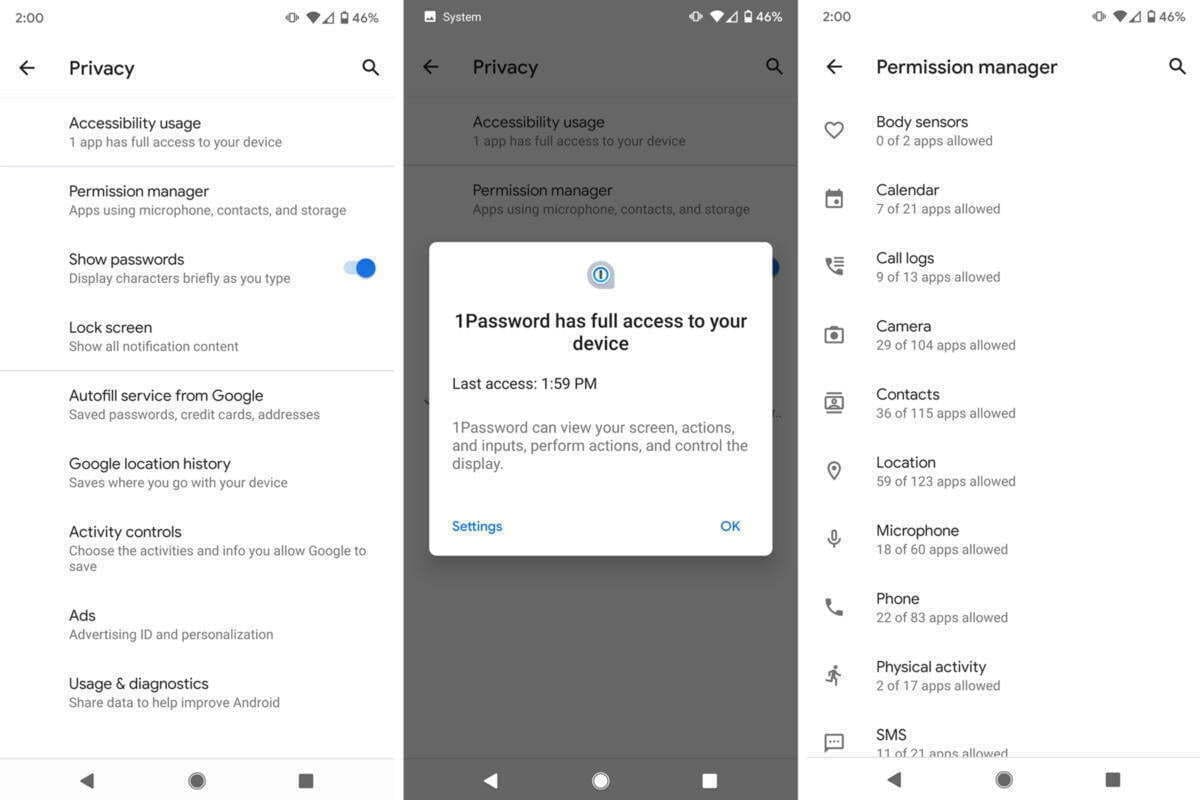
    If you’re one of the fortunate few who have already received Android 10, head to Settings-> Privacy to tweak what personal details you ‘re sharing with Google. You will find in it everything this article discusses about your Google Account and Android settings. These solutions are spread around Android for everyone else, but don’t worry: we ‘re here to help you find them all and we’ll also share the benefits and drawbacks that come with changing them.

    Location History and Tracking

    You may know that Google stores a history of all the places you’ve visited by default, accessible via Google Maps -> Your Timeline. While Google says it protects this data and doesn’t share it with third parties, you might still be uncomfortable knowing the company has a complete track record of your every step (while carrying your phone). It’s possible to turn off this location tracking altogether, but to do so thoroughly, you need to flip quite a few switches. That’s why we’ve published a whole other article on the issue. Check it out here.

    Keep in mind that turning off Location History comes with some minor disadvantages: Your timeline in Google Maps won’t update anymore, your Google Assistant will lose some capabilities, and your automatic commuting notifications will stop appearing.

    Prevent apps from tracking your location in background

    Android 10 improves some of Android’s notoriously bad privacy practices of old, as you can finally prevent both third-party and first-party apps from polling your location in the background, limiting their location access to only while in use.

    Head to Settings -> apps & notifications -> Permissions manager -> Location. There, you’ll find a list of all apps installed on your phone. You can individually set limits for each by choosing a tier: Allowed all the time, allowed only while in use, or denied. I keep most of my apps on the medium setting, as many of them offer added benefits when they have access to my location, especially navigation apps.

    On older versions of Android, you’ll need to choose between always allowing and always prohibiting access to the location. You should carefully evaluate which apps you trust, and check what you gain from sharing your location with an app. For example, in a hotel booking app, you probably won’t be searching for accommodation in your current vicinity, and probably won’t need to offer it access to your place. Other apps allow you to set your address manually, too, like weather apps or food delivery services. With the slight inconvenience of typing in your address they give the same features.

    Opt out of Google’s personalizations

    google account auto delete data 1

    To hinder Google from following you around the web, head to your Google Account’s activity controls, accessible here and under Settings -> Google -> Manage your Google Account -> Manage your data & personalization.

    In there, you can turn off Web & App Activity, but note that Google results might become less accurate when you do this. You’ll also stop Google from collecting data on your Google Assistant usage which severely limits its usefulness. For example, the Assistant won’t respond to personal queries like “What’s on my calendar?” or “Read my messages” on any device, including Home speakers — Google sure wants you to supply your data to continue using the Assistant. If you’re adamant about protecting your privacy, you should probably stop using Google Home speakers and the Assistant altogether anyway.

    You can proceed by turning off YouTube History and, more importantly, Ad personalization. When you do that, Google will stop pushing personalized advertisements to you and will instead show you more generic, less relevant content. According to Google, it will solely be based on “general factors, like the subject of what you’re looking at, the time of day, or your general location.”

    You’ll also need to head to myactivity.google.com to delete previously stored information. On that website, open the hamburger menu by tapping the three bars in the top left corner and choose “Delete activity by.” Then you can select which activity you’d like to remove.

    On Android 10, all of these settings have been moved to one location, easily accessible in Settings -> Privacy. While you’re there, be sure to turn off the following, too:

    • Turn off Autofill service from Google.
    • Turn off Usage & Diagnostics.

    Turn off backups

    google drive backup

    To turn off backups to Google’s servers, head to Settings -> System -> Backup. There, you can toggle off Back up to Google Drive.

    Keep in mind that none of your precious data will be automatically restored when you lose or break your phone when you do this. You’ll have to back up your contacts or ask friends and family for their phone numbers, you’ll need to manually sign back into apps you’ve used on your old phone, you’ll lose custom device settings including Wi-Fi passwords, and your photos and videos won’t be backed up. Assess carefully whether having some peace of mind regarding this data is worth a privacy tradeoff or not.

    Also consider switching to a privately hosted server using ownCloud or similar open source solutions to sync your files and backup your data.

    Third-party software if is possible

    If you don’t want to get Google tracked, consider using third-party software over pre-installed Google apps. There are plenty of email providers, cloud storage tools, note-taking applications, and navigation systems out there that don’t rely on Google software like Microsoft Outlook, Dropbox, Bundled or Evernote, and Here Maps. If you want to go all in on privacy, you should even consider open-source substitutions. That’s no guarantee that your data is secure, but code is mostly peer-controlled and often not in a single company’s hands. My colleague Corbin has created a series of articles that highlight alternatives to rising Google apps.

    Some Google apps can even be safely deactivated by tapping and holding their icons in the app drawer or homescreen, tapping the i button, and choosing disable. Be careful with this, though, as some apps like Google Search are necessary to keep your phone up and running. Something like Play Music or YouTube should be safe to disable, though.

    Other browser

    If you’re concerned about Google Chrome’s tracking mechanisms, consider switching to another browser that keeps your privacy intact. I’d argue Firefox (especially the all-new preview version) and Firefox Focus are the best choices since they rely on a browser engine not created by Google. Many other third-party browsers use Google Chrome’s rendering engine, which is not good for the health of the web. If you’re not satisfied with Firefox, you might still want to try Microsoft Edge, Samsung Internet, or Vivaldi.

    You can make any of these your default browser by choosing “Always open with this app” when you tap a link in another application. If you use the Google app, you’ll notice that it still opens links in a custom Chrome tab. To make the search engine use your preferred third-party browser, head to the More bottom tab -> Settings -> General and turn off Open web pages in the app.

    Make Chrome less hungry for your data, head to the browser’s settings (three-dot menu -> Settings -> Search engine) and change the search engine to another provider — among the ones listed, DuckDuckGo.com is your best option concerning privacy. Its results often aren’t as spot on as Google’s, though — there’s a reason why the company is still king of search.

    Incognito mode?

    Contrary to popular belief, any browser’s incognito or private mode only goes so far when you want to stay low-profile online. Your ISP and public Wi-Fi providers might still be able to see which websites you visit. The same is true for some ad trackers that rely on a unique combination of your hardware, software, and IP address rather than cookies to track you across both incognito and regular mode. If you truly want to stay anonymous, consider trying the Firefox-based Tor Browser. It routes your queries through a bunch of servers to obscure your online movements.

    Custom ROMs

    One surefire way to avoid being tracked by Google altogether is installing a custom ROM without any Google apps on it. Many apps rely on Google Play Services, which provide essentials like push notifications and location data. What you can do is use a ROM with microG, an open-source replacement for many functions provided by Play Services.

    However, just because custom ROMs are open source doesn’t mean that someone went looking for malicious code in the source. You should stay away from obscure forks and you should absolutely preface any custom ROM installation with a ton of research. Google promises not to sell your data to third parties and would face severe consequences if it did because so many people, businesses, and governments rely on its services. An individual ROM developer distributing free software to a few people would be much harder to keep in check.
  • Enable Google Assis­tant Ambi­ent Mode

    Enable Google Assis­tant Ambi­ent Mode

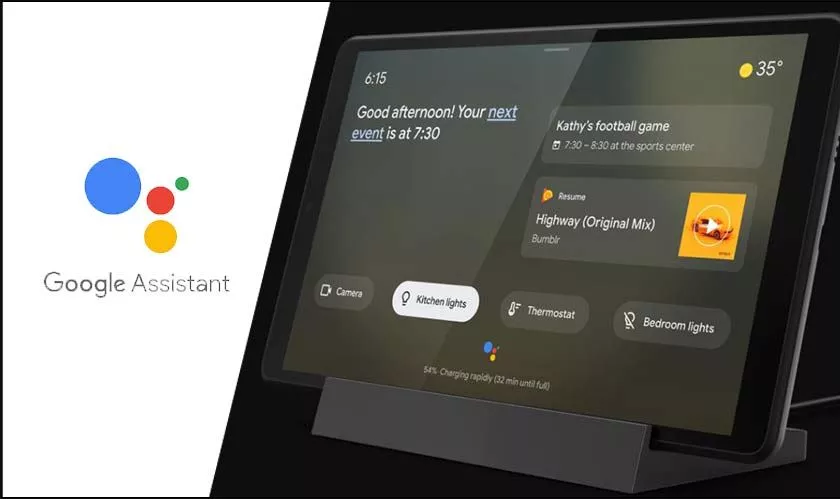
    If you are using Google Assistant on your Android phone, you can add interactive features to the lock screen by activating the Ambient mode function.

    This is a smart sorts screen that turns on while your phone is charging and replaces the lock screen. Without opening the lock screen, you can view alerts, weather forecasts, play music, display pictures and perform a host of other functions. This article shows how to allow Ambient Mode in Google Assistant.

    Activating Ambient Mode

    First of all, if you haven’t already, you will need to download and install the Google Assistant app on your phone.

    Once Google Assistant is installed, start the app and go to the main page.

    Here you will notice the explorer option (the compass icon) near the bottom corner of the page. Tap on the icon.

    This will take you to the Explore section of the app – the part where you can configure settings like alarms, the weather forecast, etc.

    For now, ignore all the other functions on the Explore page and tap on your profile picture in the top corner.

    A new list of options will drop down. Scroll down the list and select the Settings option.

    A new page that shows your Google Account profile page will appear.

    Scroll left from the page to the Assistant section. Once again, scroll down past the list of options presented to you. Near the bottom, you will find a section entitled “Assistant Devices.” There is a phone option under that section which you need to select.

    On the new page that opens, scroll down the options available until you see the one titled “Ambient Mode.” Toggle on this option by tapping on the gray button next to it so that it turns blue.

  • How to cancel a Google Play store subscription

    How to cancel a Google Play store subscription

    In recent years, app subscriptions have become much more popular, with many Google Play applications offering free trials, too. But if you don’t use your subscription much, or were not pleased with what it had to do, you can cancel at any time. Not sure if the app itself would do that?

    Instead you should go up to Google Play. And here’s how to cancel a Play Store subscription.

    Pause a Google Play Store subscription

    The first thing you need to know is that canceling is not the only available option. If you are short on cash, in some cases, you can pause payment for a month and continue your subscription on the next. Only some apps offer this, but it’s worth checking if they do.

    Here is how to do that:

    1. Open Google Play on your Android phone or tablet.
    2. Check which account is currently signed in if you are using multiple or sharing the device with family members.
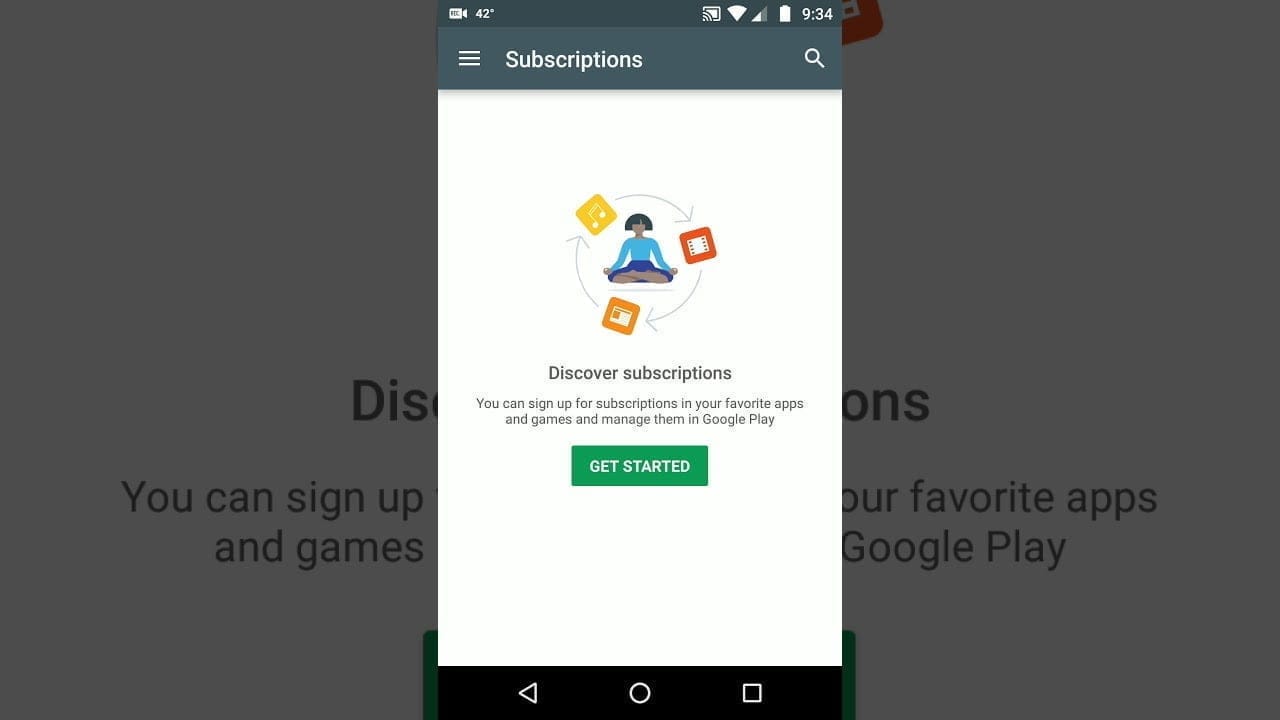
    3. Tap the menu button in the upper left corner (three lines), followed by Subscriptions.
    4. Select the subscription you want to pause.
    5. Tap Manage. If the app offers this option you will see Pause payments. Tap it.
    6. If you will be able to select the time period you’d like to cause for. All that’s left to do after is tap Confirm.

    We should note, however, that your subscriptions will be paused at the end of your current billing period.

    Cancel a Google Play Store subscription

    Not satisfied with what your subscription had to offer? Then it’s time to cancel. Follow these steps to do so:

    1. Open the Google Play Store app and make sure you’re signed into the right account.
    2. Tap the menu button in the upper left corner, then go to Subscriptions.
    3. Find the subscription you want to cancel and select it.
    4. Tap Cancel subscription and follow the on-screen instructions.
    5. You may be asked to select a reason for the cancellation. Choose one from the options and tap Continue followed by Cancel subscription.
    Cancel Google Play subscription

    Don’t worry about losing part of your subscription — you’ll be able to use the software for the time during which you’ve already charged or the remainder of your free trial. The same goes with annual subscriptions. For example, if you signed up in March and cancelled shortly after, you’ll still be able to use the application until March 2021. It will not be automatically renewed after that.

  • 4K 60fps video capture mode will be available on Pixel

    4K 60fps video capture mode will be available on Pixel

    Google’s Pixel portfolio has raised the bar when it comes to mobile image manipulation the past few years, but the company has struggled to offer a comparable experience when it comes to filming images. The 2018 Pixel 3 suffered from a bad audio recording problem and last year’s Pixel 4 entered the market with 4 K video capture which was limited at 30fps while most other 2019 flagship smartphones were capable of 4 K video capture at 60fps.

    google camera pixel 4

    Once the Pixel 4 was introduced, Google said that the feature was not incorporated solely because 4 K video capturing on smartphones wasn’t nearly as commonplace as 1080p. This may certainly be accurate, but a later study showed that the Pixel 4 actually didn’t have enough bandwidth to handle simultaneous 4 K 60fps feeds from the phone’s two rear cameras. Other manufacturers have gotten around this issue by limiting 4K/60 video capture to just one camera or reducing the bit rate slightly.

    Since the Pixel 4 just receive a feature drop this past week, if Google doesn’t figure out a way to implement 4K/60 video capture on the Pixel 4, don’t expect it to show up until later this spring. If the feature is only made available on the Pixel 4a, Google will have some explaining to do.

  • How to enable VoLTE/VoWifi

    How to enable VoLTE/VoWifi

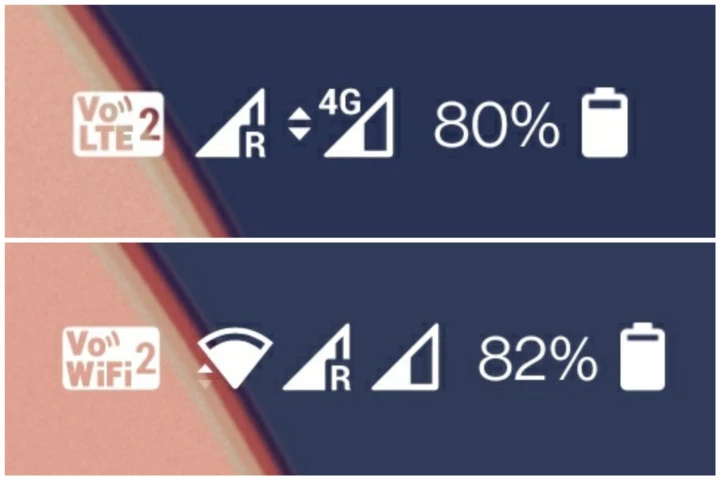
    If your carrier supports VoLTE/VoWiFi but not on your device you can easily enable it with some modifications. There is even a Magisk module to forcefully enable.

    To enable VoLTE/VoWifi you need to add below lines in your build.prop file.

    # Debug Options
    persist.dbg.ims_volte_enable=1 
    persist.dbg.volte_avail_ovr=1 
    persist.dbg.vt_avail_ovr=1
    persist.dbg.wfc_avail_ovr=1
    
    # Radio Options
    persist.radio.rat_on=combine
    persist.radio.data_ltd_sys_ind=1
    persist.radio.data_con_rprt=1
    persist.radio.calls.on.ims=1

    How to edit your build.prop file

    All you need to edit the build.prop file is a text editor, and a file browser that can access the root directory. Most of these file browsers come with an integrated text editor so you don’t have to think about downloading one just to edit the build.prop file if you don’t already have a favorite editor enabled. Root Explorer, File Explorer Root Browser, and Solid Explorer are some common file browsers capable of doing just about anything a file browser could do. If you have another favorite file browser please let us know in the comments.

    When you have a root enabled file browser, navigate to the /system/ folder and scroll down to find the build.prop file. Tap on it and choose ES Note Editor or any other editor installed on the device that you wish to use.

    Move the original file into a separate folder and rename it as build.prop.bak before we change the build.prop file and then transfer this file back to the /system/ folder. This way, if anything goes wrong you don’t have to worry, because your system fails to boot. You should delete the changed build.prop from TWRP recovery, and remove the.bak from the name of the backup build.prop. Again your system is booting properly.

  • Samsung S9/+/Note 9 – enable night mode on front camera and telephoto lens

    Requirements

    • A samsung S9/S9+/Note9 on One UI 2
    • Root

    Add these lines to /system/system/cameradata/camera-feature.xml and reboot.

    <local name="SHOOTING_MODE_NIGHT" back="NIGHT" front="NIGHT" enable="true" more="true" order="4"/>
    <local name="SUPPORT_NIGHT_MODE_ZOOM" value="true"/>

    Wipe the camera app’s data and you’ll have night mode working on front cam and telephoto lens.

  • What you need to know about custom kernels

    What you need to know about custom kernels

    With an incredible 13 million lines of code, the Linux kernel is one of the biggest open source projects in the world, possibly. Initially put together by Trovalds, the originally intended Linux kernel currently supports about 30 different architectures with no cross-platform intentions.

    If you’re on XDA, you probably have heard about kernels before. The amazing custom kernel that offers a lot of features including but not limited to, more battery life, a smoother interface, maybe exFAT or OTG support, custom color controls, wake-up gestures etc. So, what exactly are custom kernels, and where did a kernel’s entire image get into Android?

    Since the inception of computers and devices, there has been a three-tier interaction model.

    android kernel

    As you can see, either way the kernel arrives at the second tier. That means that the kernel is the middle man if there is any contact between the operating system and the hardware (such as a volume increase trigger) or between the hardware and the operating system (such as an insertion of a USB device).

    So, the next time you increase the volume on your Android device, what actually happens is that Android sends a request to the kernel indicating that the volume needs to be increased, and since the kernel manages the hardware, it raises the voltage for the speaker (which translates loosely into sending a request for a volume increase ‘ to the speaker); or the time you plug-in a USB device into your OTG-enab

    The boot sequence for an Android device looks something like this:

    BIOS->Bootloader->Kernel->Operating System.

    Google wanted to go with the linux kernel when Android was brought up, a move that was rightly made. The’ mainline’ linux kernel is the kernel used in desktops that can be compiled and run from the linux branch of Trovalds, whereas the kernel of Android is a fork with (relatively) few additions off this mainline kernel. The key reason we can’t run the mainline kernel (the one running on desktops) is due to the lack of support for some of those elements that are required for Android.

    1. The android binder, an Android-specific interprocess communication mechanism, and remote method invocation system. If android decides to write to the display, the OS and the GPU talk through the binder. That should fairly give the idea that *almost* all communications are made through binders.
    2. ashmem/pmem/ion: memory allocators specifically designed for android
    3. logger: to write various logs like kmsg, radio, events, etc.
    4. wakelocks: ever wondered why you get that facebook message on your phone even though it seems to be turned off? voilà. wakelocks at work. (psst. the facebook for Android application holds a LOT of wakelocks, but that’s discussion for another day)
    5. oom handling: OOM stands for Out Of Memory. Since Android devices run low on memory, this is a process killer, the Linux LMK (Low Memory Killer). This is what prevents the device from hanging up by clearing a few running background apps when you open too many of them.
    6. support for YAFFS/JFFS/ file systems: If you’re running older devices, you are probably running a device with flash file systems. These are different from the conventional ext2/3 file systems, and need to be supported by the kernel.

    There are various custom kernels to choose from, giving you a plethora of choices. You can either go for a high-performance, overclocked gaming kernel or a battery booster under-clocked, or go with a fair share of both. If you can’t decide, you can go ahead very well and build your own custom kernel with the features that you like since most OEMS release the kernel sources for their devices.

  • Install Google apps on Huawei

    Install Google apps on Huawei

    There is no official way for Google apps to be enabled on Huawei smartphones, like the Mate 30 Pro. We want to make this clear from the start. And this is where you should stop reading if you were expecting an official way. Yet there are other ways to do this that give us an alternative way. That’s an open secret. Most of Google’s applications are also free online and easy to use

    Installation takes less than 5 minutes to complete. No protection is assured, however, because the circumstances surrounding the situation in Google–Huawei attract people with malicious intent. Copy security specifications for HD streaming of different services can not be enabled. Furthermore, you can not install Google Bill, too.

    Install Google Service

    All you need is the Chat Partner app. Only a few clicks, you can install mobile services on Google more easily than ever before. No prior experience, technical know-how or accessories are needed. Download Partner Chat app HERE

    • Download, install & start the app
    • Follow the instructions in the app (see screenshots above)
    • – Detect device
    • – Repair Now
    • – Activate
    • Restart (!)
    • Log in to the installed Google Play Store (again) with a Google account
    • Create additional Google accounts or install Google Apps via the Play Store
    Youtube video

    Notes!

    • Despite our extensive tests, app appraisal and observation of possible illegal account activity in the days after the installation, we received a legitimate security
    • Notice: The login via Webview can be potentially unsafe.
    • It also seems to be possible to skip this step and restart the device directly in order to then create a Google account via the Play Store or the system settings (secure).
    • So far, we have not been able to test whether this will lead to restrictions in subsequent use – which we do not assume, however.
    • The app can also be uninstalled after achieving your goal.
  • Boot into recovery – Android

    Boot into recovery – Android

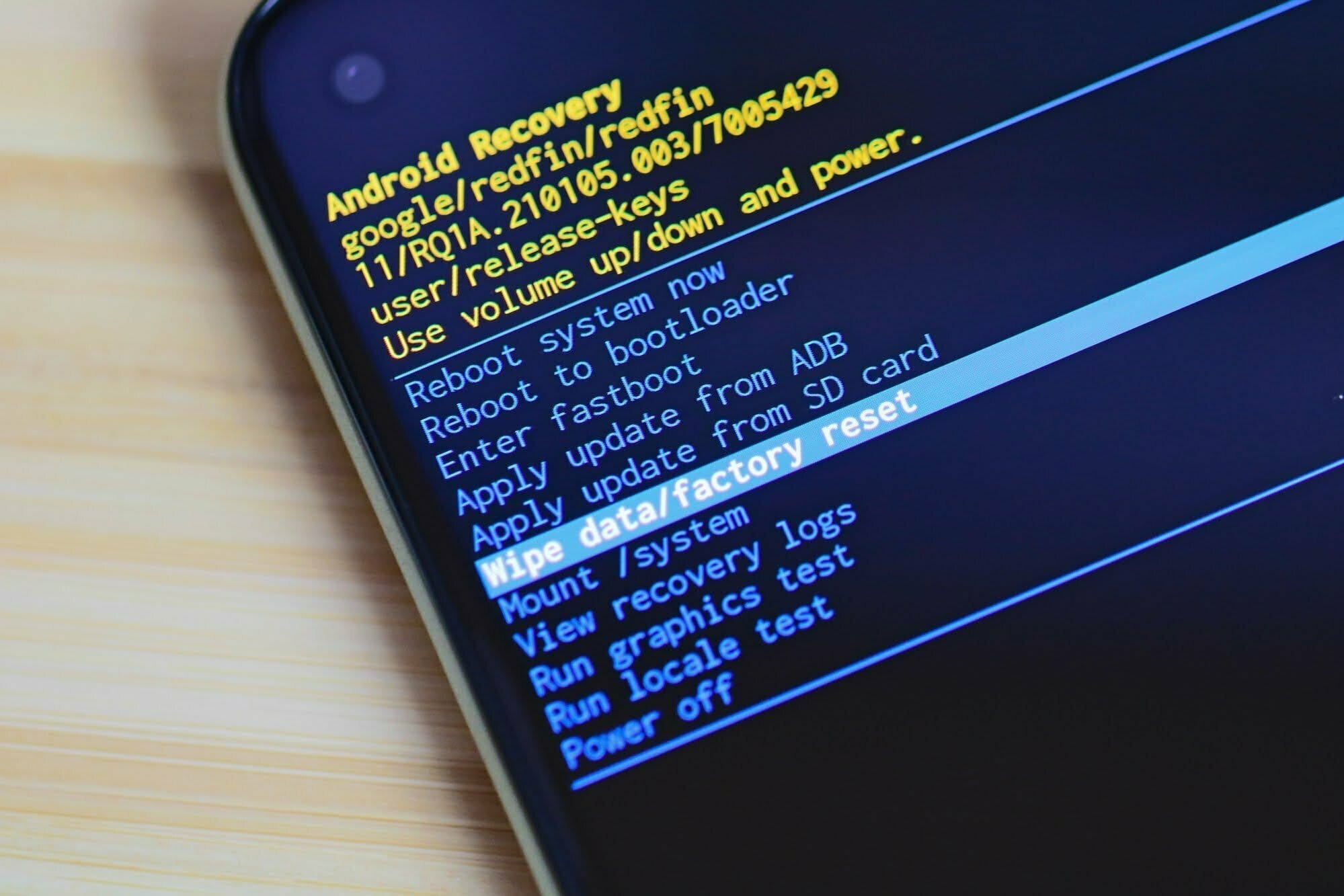
    Recovery in Android refers to the dedicated, bootable partition which has mounted the recovery console. A combination of key presses (or command line instructions) will boot your phone back to recovery, where you will find tools to help patch (recover) your computer and install official OS updates. Since Android is open and has the source code available for recovery, it’s also fairly easy to build a customized version with more and different choices.

    You can access your phone’s recovery, and perform a number of different functions that are useful to troubleshoot your phone. You can do a factory reset, clear cache, and run system updates with the stock recovery. You can also do system backups and flash. ZIP files like those that will modify your ROM or make big changes to your system if you have a custom recovery.

    To begin you need to power off your device

    Each device have a specific method by which you can enter the recovery on your phone, please see below.

    Samsung GalaxyPress and hold on both the volume up and Bixby buttons (the button just beneath the volume rocker), then press and hold the power button.
    GoogleStep 1: Long press the power button and volume down button at same time until screen turns on
    Step 2: Press the volume down button until Recovery mode show
    Step 3: Press the Power button to enter your Google Pixel 4 XL into recovery mode
    OnePlusHold down Volume Down + Power key
    XiaomiPress and hold Volume Up key and Power key simultaneously.
    HTCNavigate to Settings> Battery> Uncheck FASTBOOT.
    Power phone off
    Hold VOLUME DOWN + POWER for 5 seconds
    Release POWER but continue to hold VOLUME DOWN
    Once you are in the bootloader, use the VOLUME buttons to navigate to RECOVERY
    Press POWER to select and enter recovery
    LGPOWER + VOLUME DOWN Hold until the LG Logo appears
    Release and immediately press POWER + VOLUME DOWN again until you see the Reset Menu
    Press the POWER button to hard reset, then you will reboot into recovery

  • Remove Bloatware From Your MIUI – Xiaomi and Redmi Devices (non-root)

    Remove Bloatware From Your MIUI – Xiaomi and Redmi Devices (non-root)

    MI User Interface, abbreviated MIUI is an Android-based operating system for smartphones and tablet computers developed by Chinese electronics manufacturer Xiaomi. It is powered by the Android Operating System. MIUI includes various features such as theme support.

    Xiaomi’s budget devices are good at taking over the smartphone world.

    The company, dominating on the Indian and Chinese markets, manages to deliver low priced smartphones coupled with some high end device specs.

    Bloatware on Xiaomi Devices?

    The word Bloatware is used for smartphone apps which the vendor locks. Some known vendors include Samsung, Xiaomi, HTC and so on. Developers are using this irksome tactic of locking apps on the phone to make the device’s user interface exclusive.

    Uninstall/Disable MIUI Apps in Xiaomi/Redmi Devices Without Rooting

    1. MIUI Hidden Settings

    The MIUI app Hidden Settings make it easy for developers to perform previously complex tasks in just a few taps. You can, for example, view the Notification log, which has been difficult to get into before.

    With the help of MIUI hidden features, you can get rid of some (not all) pre-installed app(You can also uninstall the Google apps).

    miui hidden settings bloatware
    MIUI Hidden Settings app
    • Open the MIUI Hidden Settings app.
    • Choose the Android version.
    • Tap on the Manage Applications.
    • Scroll over and tap on whichever app you want to remove from your device.Open the MIUI Hidden Settings app.
    • Choose the Android version.
    • Tap on the Manage Applications.
    • Scroll over and tap on whichever app you want to remove from your device.
    • Tap on the “Disable” or “Uninstall” option.
    • Then tap on the “Disable app” button in the pop-up.

    Now you can get rid of most of the unused apps which were earlier impossible to remove.

    2. ADB and Fastboot

    Bloatware removal using ADB and Fastboot is a simple method and works with just about any device powered by Android.

    This method is a little more complicated and you need a P.C. and ADB installed. You need to follow the steps accurately.

    You need to enable USB debugging by going to Settings > About Phone > Tap 7-10 times on MIUI Version. A popout will appear telling you that you have activated Developer Settings.

    Then go to Additional Settings and pap on Developer Options, scroll down and activate USB debugging and press OK.

    On your PC go to ADB installation folder and type cmd in the adress bar. A command prompt windows will appear.

    Now once you have device connected via USB, run adb devices command in terminal to see if your device is connected via ADB.

    adb devices command prompt

    Now copy and run the commands from below list for the app which you want to remove.

    The command is adb shell pm uninstall -k --user 0 package.name

    adb shell pm uninstall -k --user 0 com.google.android.apps.docs # Google Drive
    adb shell pm uninstall -k --user 0 com.google.android.apps.maps # Google Maps
    adb shell pm uninstall -k --user 0 com.google.android.apps.photos # Google Photos
    adb shell pm uninstall -k --user 0 com.google.android.apps.tachyon # Google Duo
    adb shell pm uninstall -k --user 0 com.google.android.googlequicksearchbox # Google App
    adb shell pm uninstall -k --user 0 com.google.android.music # Google Music
    adb shell pm uninstall -k --user 0 com.google.android.videos # Play Movies
    adb shell pm uninstall -k --user 0 com.android.browser # Mi Browser
    adb shell pm uninstall -k --user 0 com.miui.bugreport # Mi Feedback
    adb shell pm uninstall -k --user 0 com.miui.compass # Mi Compass
    adb shell pm uninstall -k --user 0 com.miui.notes # Mi Notes
    adb shell pm uninstall -k --user 0 com.miui.screenrecorder # Mi Screen Recorder
    adb shell pm uninstall -k --user 0 com.miui.videoplayer # Mi Video
    adb shell pm uninstall -k --user 0 com.miui.player # Mi Music
    adb shell pm uninstall -k --user 0 com.xiaomi.midrop # Mi Drop
    adb shell pm uninstall -k --user 0 com.xiaomi.mipicks # Mi Apps
    adb shell pm uninstall -k --user 0 com.xiaomi.scanner # Mi Scanner

    So if you mess something up, do factory reset to get out of trouble.