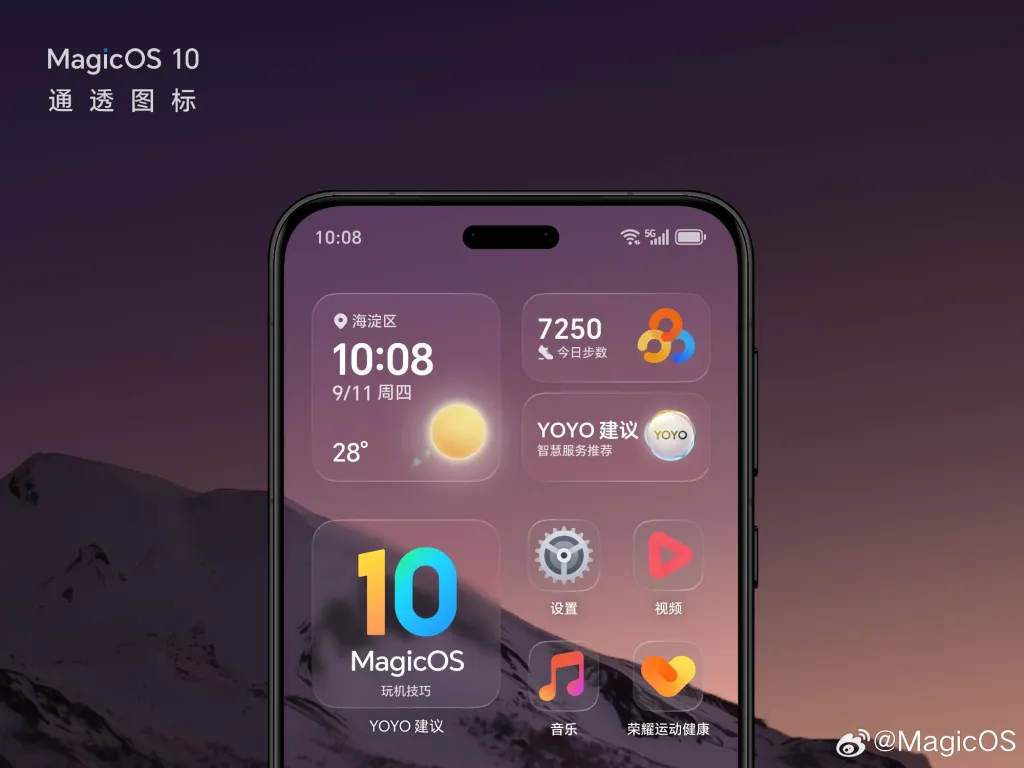
The MagicOS 10 upgrade plan has been released by Honor, and these are all the models that qualify for the new software rollout. The business has also disclosed the precise release dates for every model, from flagship phones to low-cost phones.
On October 15, MagicOS 10 made its debut alongside the Magic 8 series. The company discovered new AI capabilities and a number of intriguing features with the updated software version.
Honor also released the list of devices that qualify for the MagicOS 10 software update. The new version will be available this month for a few flagship devices, including the Magic V5 foldable, the Magic 7 series, and the digital 400 models.
Later, the new software version will be tested on other phones, such as the Magic V3 series, GT phones, and others. It is likely that the MagicOS 10 rollout will be completed by the first quarter of the next year.
You must participate in both public and closed beta testing in order to upgrade the official MagicOS 10 features. By registering for the Beta Program and downloading the build through Settings > System & Upgrades > Software Updates, you can install the testing versions.
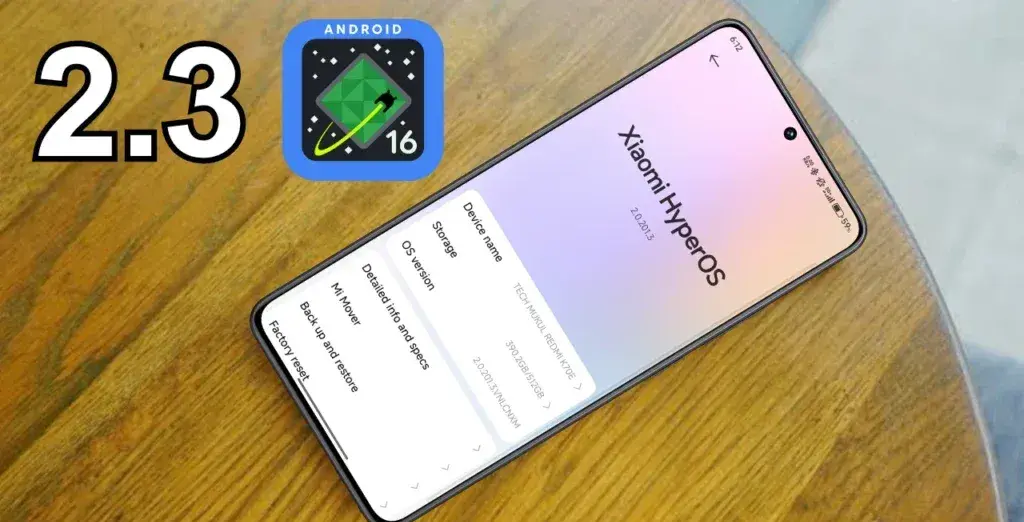
With Android 16 serving as its foundation, Xiaomi’s next HyperOS 2.3 update is expected to bring about the biggest leap in the company’s own Android experience. This significant system update introduces improved security measures and improved user experience components while expanding on the foundation of the current HyperOS 2.2 framework.
Although the major emphasis is still on security improvements rather than ground-breaking new features, the update demonstrates Xiaomi’s dedication to offering state-of-the-art software experiences that capitalize on Google’s most recent Android advances. Through official channels and specialized monitoring tools, users can monitor their device compatibility and eligibility for updates.
New features in HyperOS 2.3
The Android 16 foundation, which offers better system stability, more performance optimization, and—above all—advanced security features that safeguard user data and privacy, is the main improvement in HyperOS 2.3.
Enhanced Security Framework
HyperOS 2.3’s security improvements include:
Advanced encryption protocols for sensitive data protection
Improved app permission management system
Enhanced biometric authentication security
Strengthened system-level protection against malicious applications
Device compatibility and release
Only those devices that qualify for the Android 16 upgrade will be able to get the HyperOS 2.3 update. While preserving system stability, this phased deployment guarantees the best possible performance and compatibility throughout Xiaomi’s device ecosystem.
Eligible Device Categories
Flagship smartphones from recent generations
Select mid-range devices with adequate hardware specifications
Compatible tablets and other smart devices in Xiaomi’s ecosystem
All of Google’s normal services and security upgrades are available on the Android 16 base, even though Google hasn’t added any new Android features specifically for Xiaomi’s HyperOS version. Preserving system security and guaranteeing compatibility with Google’s ecosystem services are the major goals of the integration.
Update eligibility
With the MemeOS Enhancer app on the Play Store, users may find out if their device is compatible with Android 16 and eligible for HyperOS 2.3. In addition to system app updates, access to secret Xiaomi features, and direct update access from the device screen, the app offers instant visibility into update status upon activation.
Stay connected with the latest from Droid Tools—follow us on X @droid_tools, like our page on Facebook, check out our updates on Instagram, and follow us on Google News for real-time news, device tips, and mobile tech insights.
The Huawei Band 8 is the newest fitness tracker that Huawei has unveiled in China. The item was unveiled alongside the Huawei Enjoy X mid-range phone, the Nova 11 line of smartphones, and the Matebook D 14 and MateBook D 16 notebooks for 2023. Below are a complete list of the Band 8’s features, specifications, and cost.
Huawei Band 8 specifications and features
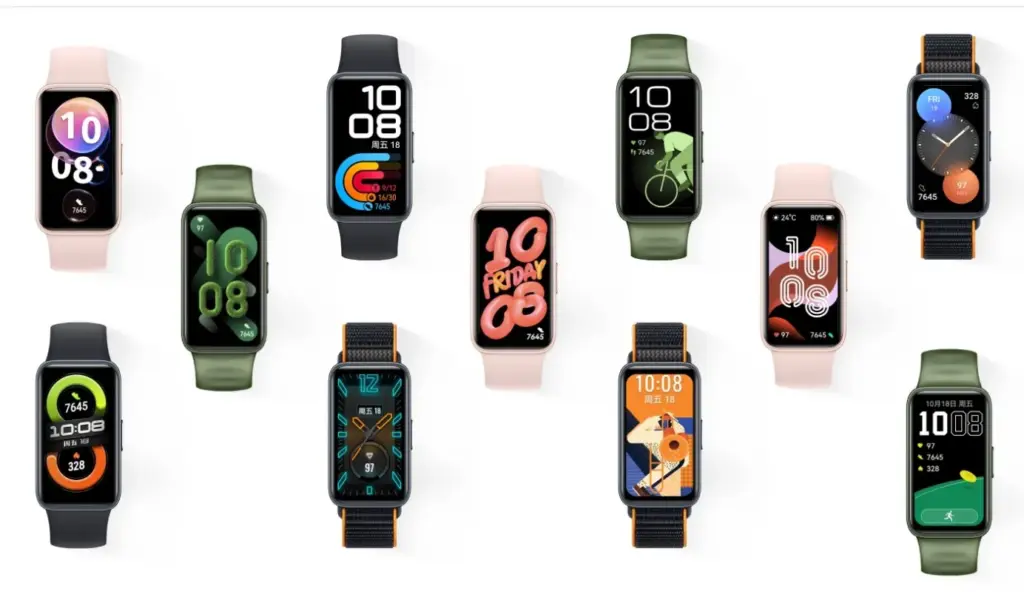
The company’s lightest and smallest large-screen fitness tracker is the Huawei Band 8. The device has an 8.99mm thickness and weighs only 14 grams, making it somewhat lighter than the previous model. Due to its small bezels, it has a 1.47-inch AMOLED screen with a 368 x 194-pixel resolution, a screen-to-body ratio of 65 percent, and a 2.5D high-quality curved glass screen that gives it a beautiful aesthetic. There are more than 10,000 different watch face designs for the Band 8 fitness tracker.
Fast charging is supported by the Huawei Band 8; a full charge takes 45 minutes and 5 minutes of charging gives 2 days’ worth of usage. Any worries about the Band 8’s battery life are put to rest by the fact that a fully charged battery can last up to 14 days. It is the first Huawei fitness band that have HarmonyOS 3.1 installed.
Huawei’s TruSleep 3.0 sleep tracking technology, which is included with the Band 8, has a 10% increase in accuracy over earlier versions. The enhanced algorithm offers users expert and credible sleep advice. In addition, the business has introduced the “Smart Sleep Improvement Plan” in partnership with the China Sleep Research Association to provide users with sleep issues with systematic and individualized sleep interpretation and improvement programs.
With HUAWEI TruSeen 5.0 heart rate monitoring technology, the Band 8 has also gotten an upgrade to its heart rate algorithm, increasing accuracy by 10%. It has a function called “7-day resting heart rate” that plots the user’s resting heart rate over the last seven days. In addition to supporting automatic blood oxygen detection, heart health research, women’s health management, and 24/7 stress monitoring, Band 8 has professional health management capabilities.
It is also the first fitness tracker made by Huawei to use a smart negative screen. Users can access smart scene information such as timetables, hotels, airlines, and trains by swiping the screen to the right, which brings up the negative screen. The gadget can quickly morph from a “smart travel secretary” and into an access control card, traffic card, and smart flash card.
Huawei Band 8 price and availability
The standard version of the Huawei Band 8 is priced at only 269 Yuan (~$39), and the NFC version is priced at 309 Yuan (~$45). It will be available for purchase starting April 26 on Huawei Mall, major e-commerce platforms, and authorized experience stores. It comes in four colours: Magic Night Black, Cherry Pink, Emerald Green, and Vibrant Orange.
Users can use WhatsApp on numerous devices without their primary smartphone’s primary smartphone needing to have an active internet connection thanks to WhatsApp’s multi-device capability. WhatsApp is still in the early stages of multi-device compatibility; the firm releases new functionality every other week. You may now use WhatsApp on both expensive and low-cost Android tablets thanks to a recent beta release from WhatsApp. Here’s how to set up and use WhatsApp on several devices if you haven’t already used this function.
Using WhatsApp on multiple devices: What you need to know
End-to-end encryption for WhatsApp is supported by its support for multiple devices. This implies that the implementation has certain constraints, though. Your primary phone is one of the five connected devices that WhatsApp supports. You cannot link the service to several phones because your WhatsApp account can only be connected to one phone number.
The WhatsApp upgrade makes it simpler to communicate with others because you may send messages from your computer or browser without your phone being connected to the internet. However, if your main phone does not go online at least once every 14 days, you are immediately logged out from all devices. In order to connect any new device to your account, you also need the phone.
On desktops, the multi-device capability is functional, while on tablets, it is currently in beta. Additionally, only Android tablets are compatible with WhatsApp’s multi-device capability in the current beta. You can access your chats on your tablet using the WhatsApp Web client if you use an iPad or are not a beta tester. For more information, see our guide on using WhatsApp on tablets.
Also, certain WhatsApp features can only be used on your smartphone:
Clearing or deleting chats on linked devices if your primary device is an iPhone.
Messaging or calling someone who uses an older version of WhatsApp on their phone.
Viewing live location on linked devices.
Creating and viewing broadcast lists on linked devices.
Sending messages with link previews from WhatsApp Web.
How to link a device to your WhatsApp account
Follow these steps to connect your phone or tablet to your WhatsApp account:
Open the Google Play Store and make sure the latest version of WhatsApp is installed on your phone.
Open WhatsApp.
Tap the three-dot menu button in the upper-right corner, and then tap Linked devices.
Select Link a Device option.
Verify your identity using your fingerprint or the device pattern/pin unlock.
Give WhatsApp access to your phone’s camera if you have not done so.
Scan the QR code shown on the page using your phone.
On your iPhone, open WhatsApp, go to Settings > Linked Devices > Link a Device, and scan the QR code.
WhatsApp loads your chats and group conversations.
How to unlink a device from your WhatsApp account
The process to unlink a device from your WhatsApp account is relatively simple. Follow these steps:
Open WhatsApp.
Tap the three-dot menu button in the upper-right corner, and then tap Linked devices.
The devices linked to your WhatsApp account appear here.
Tap any device name to unlink it.
Confirm your selection by selecting Log Out from the dialog box that appears.
To unlink a device on your iPhone, go to Settings > Linked Devices, and tap the device you want to unlink. Use the Log Out button to unlink the device. You can re-link any removed device again without any issues.
Autocorrect on Android devices may be both a benefit and a burden. It will spare you an embarrassing typo in a communication to your boss by a minute. Then, you’ll be embarrassed as you text a family member something utterly improper.
It’s time you regained initiative. Continue reading to find out how to enable autocorrect on your Android device as well as how to disable it once more. In order to assist you get the autocorrect feature working the way you want it to, we’ll also touch on a few other settings.
How to Turn Off Autocorrect on Android
Gboard, Google’s proprietary keyboard program, comes preinstalled on the majority of Android smartphones by default. You can disable autocorrect by following our instructions if you’re using Gboard.
However, if you prefer a different keyboard, you can quickly switch to an alternative with one of the numerous third-party apps offered in the app store. However, the directions for disabling autocorrect may vary significantly. For more details, go to the official material produced by the keyboard’s creator. Additionally, this process could differ slightly depending on your device.
Gboard’s autocorrect toggle is tucked away in the Settings menu of your phone.
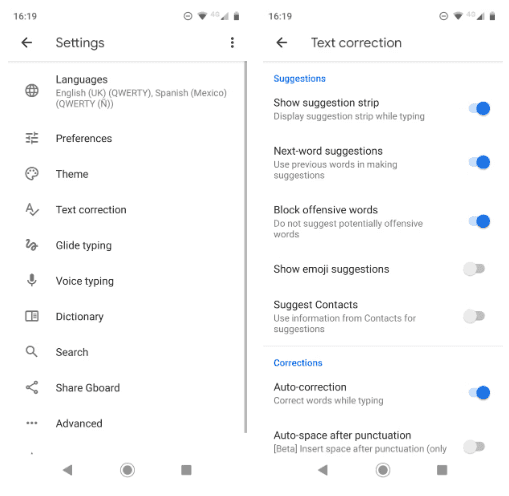
You must access it by opening the Gboard settings. You can do this by navigating to Settings > System & updates > Languages and input > Keyboards > Gboard in the Settings app. On Android smartphones, you may access the autocorrect section more quickly by opening your keyboard, holding down the comma key for a long time, and then tapping the gear symbol that appears.
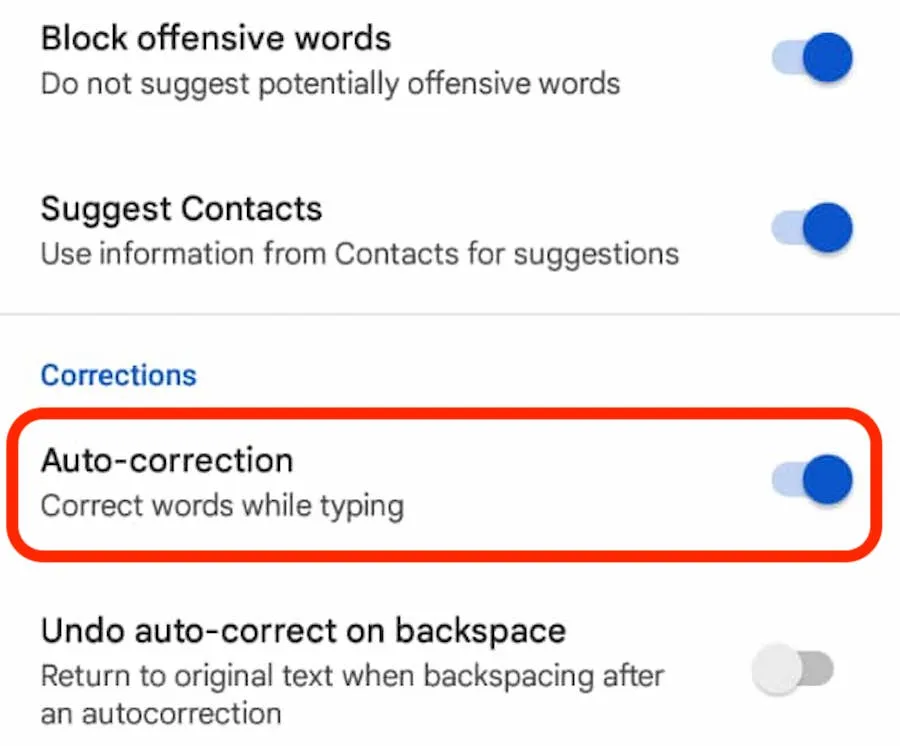
Once you reach Gboard’s settings with either method, select Text correction. Next, under the Corrections heading, slide the toggle for Auto-correction into the Off position.
Turn On Autocorrect on Android
If you change your mind later, you can re-enable the autocorrect feature at any time. Simply perform the same instructions as above, tweaking the final step:
Open the Settings app and go to System & updates > Languages and input > Keyboards >Gboard. Alternatively, you can also open the keyboard, hold the comma key, and tap the gear icon to reach the settings area.
Choose Text correction and scroll down to the Corrections section.
Locate the toggle labeled Auto-correction and slide it into the On position.
Again, if you’re using a different Android keyboard, you might find that the instructions vary. Any keyboard you have installed should appear under the Keyboards section of the Settings app. Open it from there, and then you’ll need to look for the appropriate setting.
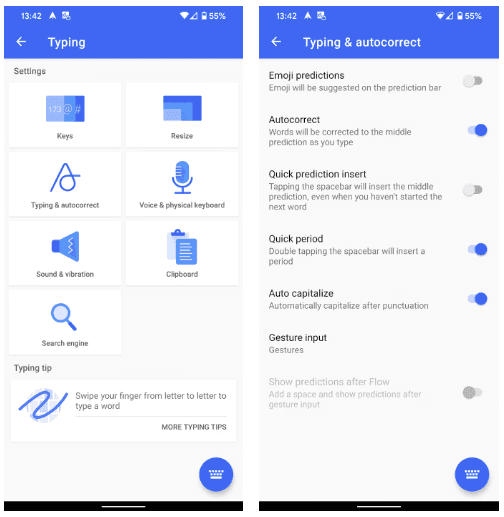
SwiftKey, for example, has the autocorrect feature stored under Typing > Autocorrect. You can easily toggle the feature anytime you want.
Turn Off Autocorrect on Samsung Devices
You are aware that Samsung does not use the original Android operating system if you have ever acquired a Samsung smartphone or tablet. Samsung smartphones instead use a specialized Android skin called One UI.
Stock Android and Samsung’s skin differ in a lot of ways, one of which is how to turn autocorrect on and off. Below are instructions on how to turn off autocorrect on Samsung devices running Android 11 and up:
Open the Settings app.
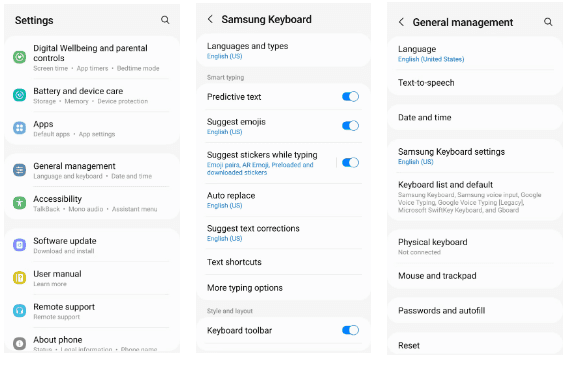
Go to General management and select Samsung Keyboard Settings assuming that you’re using the built-in solution.
Turn Predictive text off under Smart typing.
If you want to know how to turn off autocorrect on Samsung phones and tablets that are from older generations, you’ll need to follow these instructions:
Open the Settings app by heading to Apps > Settings.
Scroll down to the System section.
Tap on the icon labeled Language and input.
Select Default from the list of options available. This may have a different name if you have a different keyboard installed.
Scroll down until you find the Auto replace menu item and select it.
Flick the toggle in the upper right-hand corner into the Off position.
As you can see, disabling autocorrect on Samsung devices isn’t a particularly difficult process. Of course, you may use the same steps but modify the final step if you’re curious about how to enable autocorrect on your Samsung device.
Improve Autocorrect on Android
Everyone has seen those hilarious screenshots of autocorrect. It makes sense why you might feel the sudden need to turn off autocorrect on your Android device after reading some of these.
But in reality, such extreme steps are rarely necessary. There are a ton of choices available on Android keyboards that let you adjust, hone, and enhance the autocorrect feature to better suit your needs.
Auto-Capitalization
As you type, Android can automatically correct capitalization of proper nouns and the beginning of phrases.
It is a valuable feature in most situations. But it might not be the best option for everyone. Many words function as both proper nouns and common nouns (for example, “Turkey” the country, and “turkey” the bird). If you frequently use words like these, you may want to disable the auto-capitalization option.
You can do so by heading to Settings > System > Language and input > Keyboards > Gboard > Text correction > Auto-capitalization. Slide the toggle into the Off position to disable it.
Spell Check
Instead of relying on autocorrect to correct your mistakes, you could just turn on spell checking for Android. It will use those recognizable red squiggly lines under the text to highlight typos and other misspelled words for you.
To turn spell check on or off on Android, you need to go to Settings > System > Language and input > Keyboards > Gboard > Text correction > Spelling > Spell check and flick the toggle into the desired position. In order for this feature to work, you’ll need to ensure you’ve selected a default language for your keyboard.
Customize the Android Dictionary
There are always going to be some real terms that aren’t in the dictionary that comes with Android. Common offenders include obscure place names, brand names, and specialized lingo connected to your line of work.
When Android consistently tries to autocorrect words like “Sonos” or “Logitech,” it quickly becomes tiresome. You should include the words into your own personal vocabulary to avoid this from occurring and relieve some of your stress in the process.
You can access the dictionary by heading to Settings > System > Language and input > Keyboards > Gboard > Dictionary > Personal Dictionary. Tap the language you’d like to edit the dictionary for, even if you only have one installed. Then you can use the Plus button to add new words.
Voice Typing
You may find several functions on some keyboards, like Gboard, to help you become a better typist. As an alternative, you can begin speaking instead of utilizing the touch-screen keyboard.
When speaking as opposed to typing, you’re less likely to make a mistake in autocorrect. However, if you have any kind of accent, you run the risk of your remarks being misinterpreted. You can always use our advice for quick Android typing if you desire both speed and accuracy.
If you would like to try voice typing, go to Settings > System > Language and input > Keyboards > Gboard > Voice typing and turn the toggle on. Then you can tap the Microphone icon at the top-right of the keyboard to speak.
Learn More About Typing on Android
Your typing experience on an Android device can be enhanced by using autocorrect and understanding how to turn it on and off. For instance, you can install third-party features, alter the keyboard’s style, or even select a different keyboard layout than the QWERTY.
If you do decide to switch to a new keyboard, you should always make sure to go with a reputable manufacturer.