Tag: advanced

  • Android 16’s Best Security Feature Is Just One Tap Away – Here’s How to Turn It On

    Android 16’s Best Security Feature Is Just One Tap Away – Here’s How to Turn It On

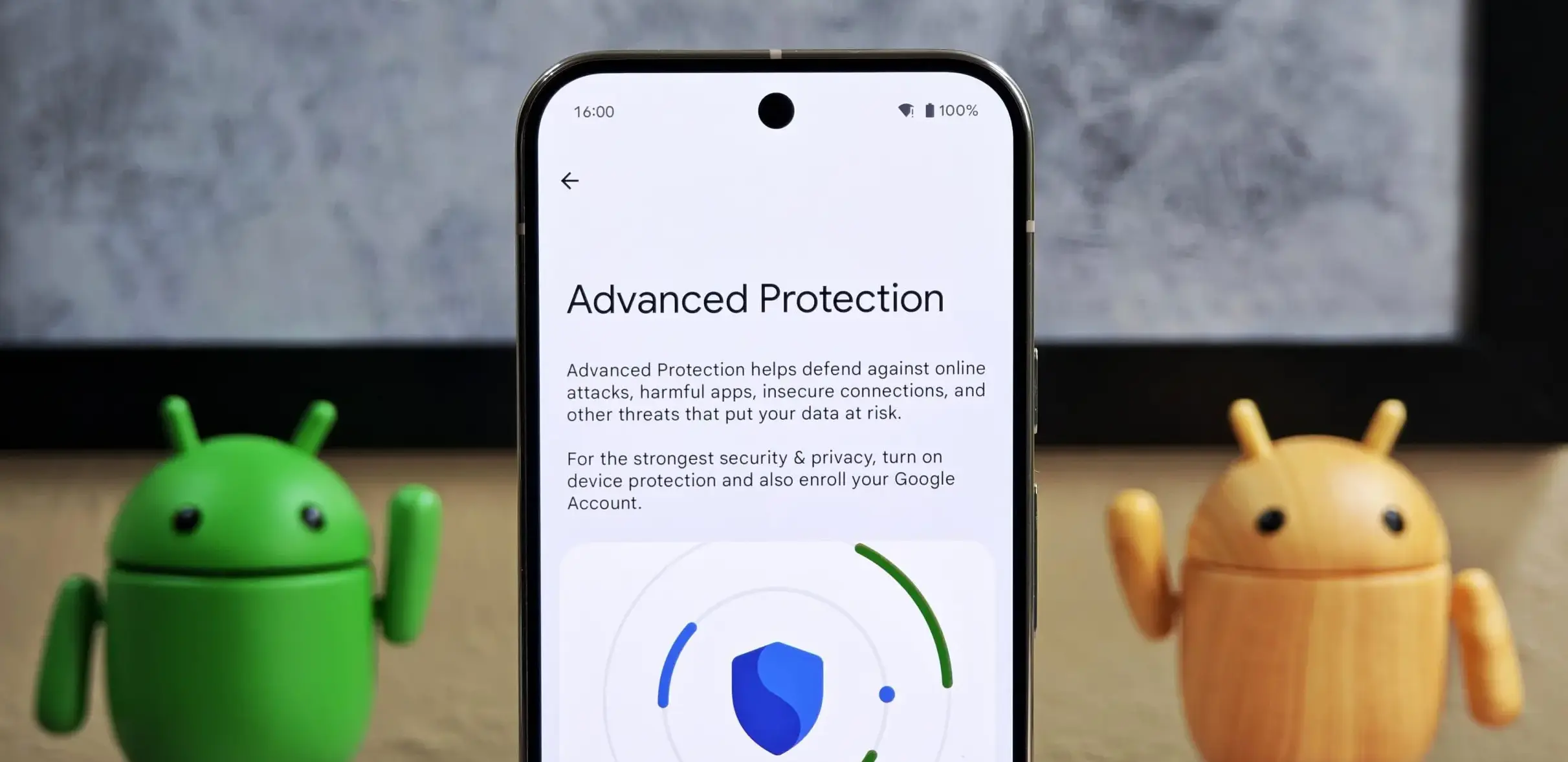
    Android 16 quietly shipped with a feature called Advanced Protection, and it’s the closest thing Android has to a panic button for your privacy. Instead of digging through a maze of settings menus to harden your phone, you flip one switch — and Google activates its strongest security defenses all at once.

    Think of it like Apple’s Lockdown Mode, but for Android. It protects you against theft, shady apps, unsecured networks, scam texts, and spam calls. The reason it’s off by default? It’s deliberately strict. There’s some friction involved. But if you actually care about who’s watching your data, that friction is worth it.

    Here’s how to turn it on.
    android 16 advanced protection

    What you need first

    Advanced Protection only works on Android 16. Before you do anything, check that your phone is up to date: go to Settings > System > Software update (or System update, depending on your device) and install anything pending. Android 16 is available on most Pixel phones and major Android models. You’ll also need a screen lock set up.
    anable Android 16 Advanced Protection feature

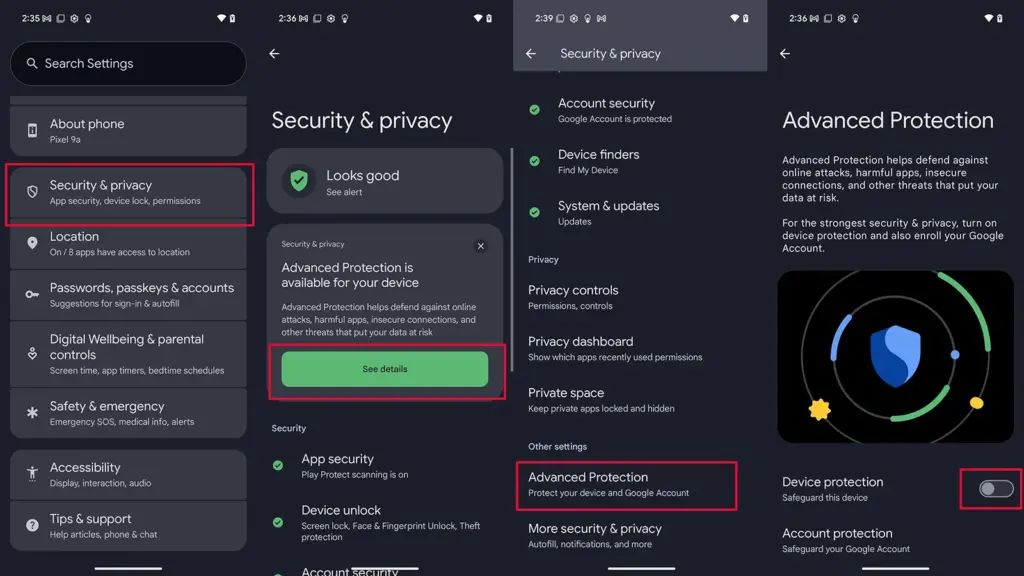
    Step 1 — Find the setting

    1. Open Settings
    2. Tap Security and privacy
    3. Select Advanced Protection (on some devices it’s tucked under Other settings)

    Step 2 — Turn it on

    1. Under Advanced Protection, toggle on Device protection
    2. Tap Turn on
    3. Restart your phone if prompted

    That’s it. One switch activates a stack of protections: always-on malware scanning, a block on sideloading unknown apps, theft and offline device locks, spam and scam text filters, a block on weak 2G connections, tighter call screening, and stronger Chrome security settings — among other things.

    Step 3 (optional) — Protect your Google account too

    Turning on Advanced Protection for your device secures what’s on your phone. But your Google account — Gmail, Drive, Docs, Photos — is a separate story.

    Google’s Advanced Protection Program is an opt-in service that locks down your account with stronger sign-in requirements, like passkeys or physical security keys, and limits which third-party apps can touch your data. If you’re a journalist, activist, executive, or anyone else with a good reason to be more cautious online, this is worth setting up.

    To enroll:

    1. Go to Advanced Protection in your Google Account settings and sign in
    2. Follow the on-screen steps — you’ll likely be asked to set up a passkey or security key, and add a backup phone number and email
    3. Tap Enroll to finish

    To unenroll later: tap your Google Account profile photo > Manage your Google Account > Security > Advanced Protection Program > Manage Advanced Protection, then select Unenroll.

    For most people, enabling device-level protection alone is a meaningful upgrade. If you want the full picture, pair it with account-level enrollment. Either way, it takes about two minutes — and it’s two minutes well spent.
  • Make your phone hackproof with Advanced Protection feature

    Make your phone hackproof with Advanced Protection feature

    Google has released the Material 3 Expressive design language for Android 16 QPR1 Beta. In addition to the new UI changes, it comes with a new Advanced Protection feature, which is a collection of security measures intended to keep Android users safe. Here’s how to activate it and when you should think about activating it.

    The Advanced Protection feature was included in the Android 16 QPR1 update for Pixel devices, but it is anticipated that the final stable update will make it available on further devices in the future.

    What is Advanced Protection?

    Advanced Protection, as the name implies, is a new mode that gives your Android device and linked Google account overall increased security. When you believe there are security risks or breaches, you can activate it.

    It combines and activates a number of current and future Android features, despite sounding like a brand-new security feature. Put differently, it’s a feature that combines multiple protections in one location and activates them all at once when required. This is especially helpful when you just want to make sure your device and account are as safe as possible but are unable to pinpoint a threat or assault.

    This features enable different security tools

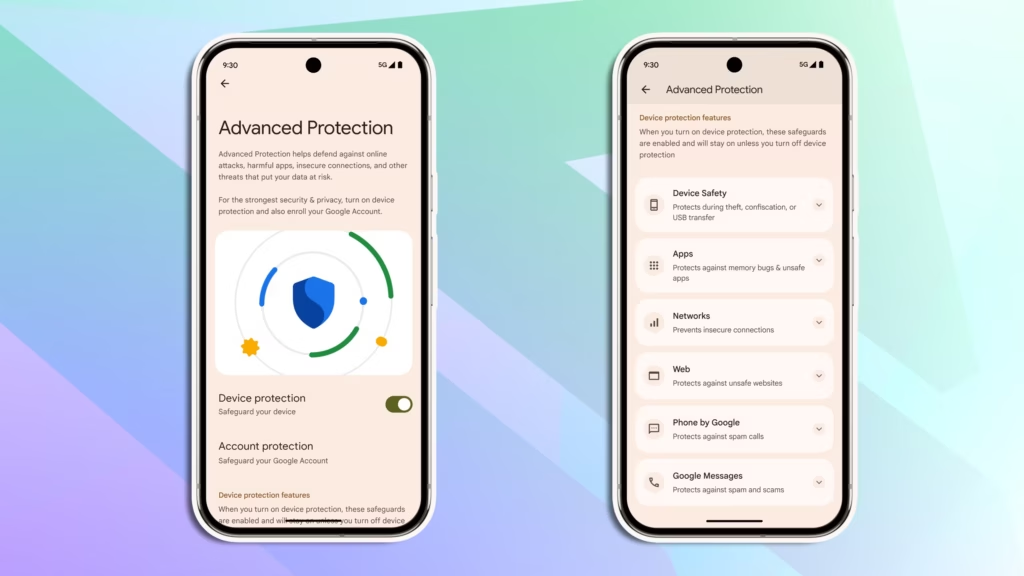
    Device theft, app, network, browser, and phone protections are among the options available in Pixels’ Advanced Protection mode.

    In order to further prevent access to stored data, device theft prevention, an anti-theft feature for stolen phones that is already commonly present on the majority of contemporary Android smartphones, will immediately lock the device and compel a restart if it stays locked for three days. Additionally, it will prevent unwanted USB access.

    App protection, meanwhile, checks for memory problems in apps, screens for malware and dangerous apps, and prevents installations from unreliable developers and sources. At the same time, the network tool prevents the device from using 2G, which is based on a less secure protocol, and requires it to utilize 3G and newer networks.

    These protections apply to browsing as well as making and receiving calls and messages. While the Phone by Google and Messages applications check numbers during calls and chats to determine whether they are spam or real businesses using Google’s scam detection, the web blocker prevents non-HTTPS and malicious websites.

    How to Enable Advanced Protection

    Advanced Protection feature on Android 16

    Once enabled, the feature is located in the Security & Privacy section of the settings on your Google Pixel or compatible Android smartphone. To turn it on, follow these steps:

    1. Go to Settings > Security & Privacy.
    2. Scroll down and look for Other security settings.
    3. Tap on Advanced Protection.
    4. Toggle on Device protection.
    5. Confirm the step.
    6. Restart your device.

    To disable it again after it has been enabled, you must authenticate using biometrics or your password and PIN.

    Stay connected with the latest from Droid Tools—follow us on X @droid_tools, like our page on Facebook, check out our updates on Instagram, and follow us on Google News for real-time news, device tips, and mobile tech insights.